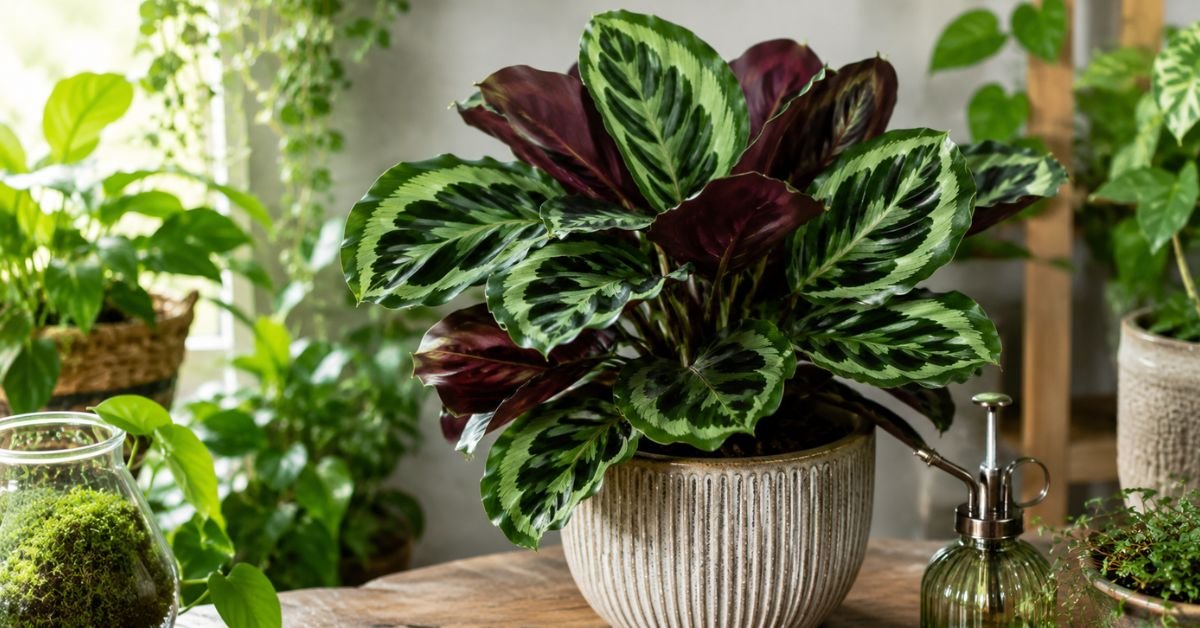
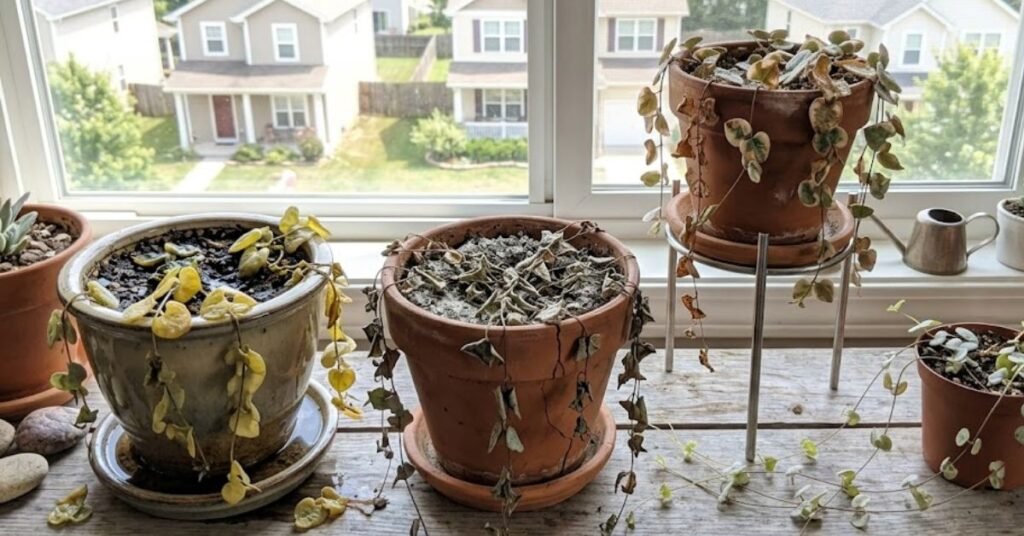
If you are tired of wasting money on plants that die within a month of bringing them home, you are not alone. I’ve been a horticulturist for over a decade, and in my years of growing everything from backyard tomatoes in USDA Zone 7 to temperamental indoor tropicals, I’ve realized one frustrating truth: we all have that one leafy victim. Today, I’m focusing on the ultimate heartbreak plant the Calathea and showing you exactly how to break the cycle of buying gorgeous greenery only to watch it fade away.
The Quick Care Breakdown for Skimmers
I know you’re busy. Here is the absolute bare minimum you need to know to keep this specific diva alive.
Requirement
The Sweet Spot
Light
Bright but strictly indirect. Direct sun burns them.
Water
Keep moist. Use filtered water from the faucet if you can.
Soil
Loose, airy potting soil. Needs drainage.
Climate
65°F – 85°F. USDA Zones 10-11 (if moved outdoors in Summer).
Toxicity
100% Pet Safe.
Personal Pro-Tip: I never use straight tap water for these. I fill a jug from the kitchen faucet and leave it out overnight so the chlorine dissipates. It literally stops the leaf edges from burning.
Why Do These Plants That Die So Easily Hate US Homes? (Common Mistakes)
Americans love central heating and cooling. Our indoor jungles usually hate it. In my experience, the environment inside a typical US house is the exact opposite of a tropical rainforest.
The Air Conditioning Death Trap
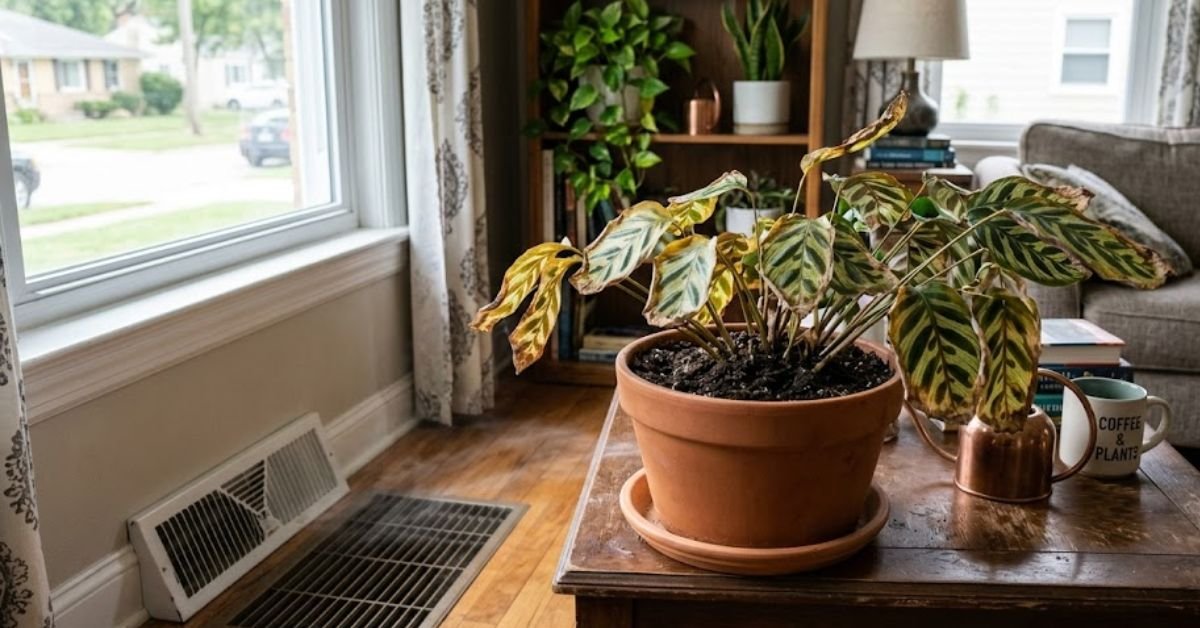
Calatheas want humidity. Your AC unit sucks all the moisture out of the air. When you blast the AC from May to September, you are essentially freeze-drying your foliage. I’ve seen so many plants that die simply because they were placed right over a floor vent. Move them away from cold drafts immediately.
Personal Pro-Tip: Grouping your fragile indoor greenery close together creates a micro-climate. They literally sweat on each other, raising the local humidity. It looks amazing and it works.
Drowning Them in Heavy Potting Soil
We tend to over-love our greenery. You see the top of the dirt looks dry, so you grab the watering can. Stop. If your potting soil is dense and holds water like a wet sponge, the roots will rot. Root rot is the number one killer of fading houseplants. Period.
Troubleshooting Plants That Die: Fixing Yellow Leaves and Brown Tips
So things are looking grim. The leaves are changing color. You are panicking. Take a breath. Here is how I diagnose and fix the most common issues before it’s too late.
Exactly How to Fix Yellowing Leaves on Dying Houseplants
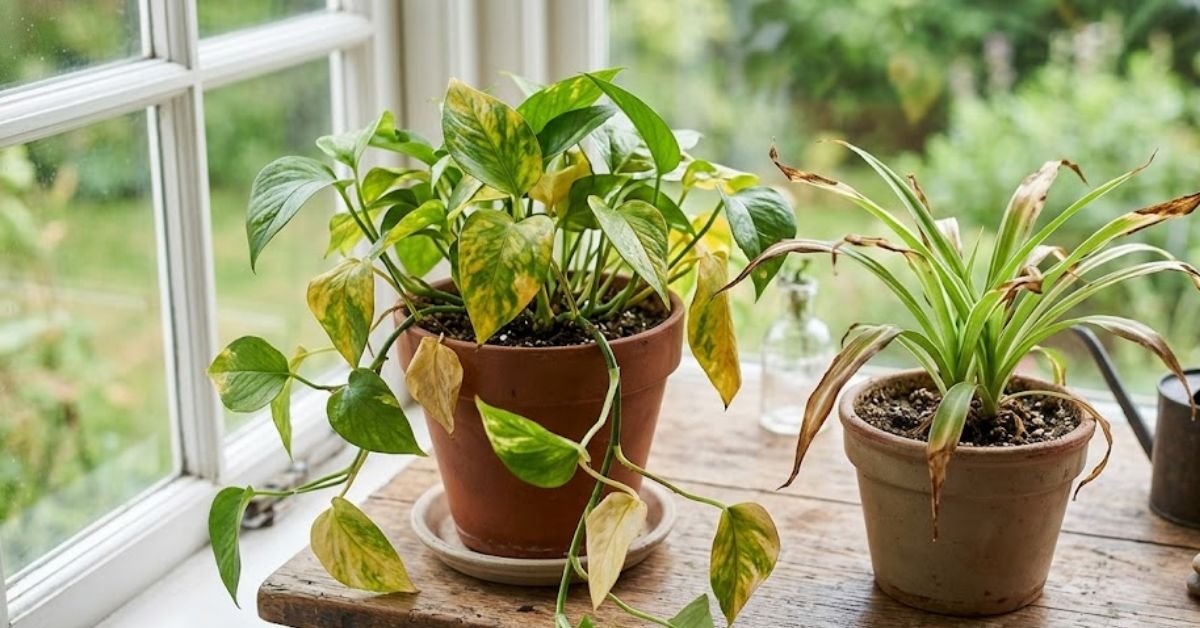
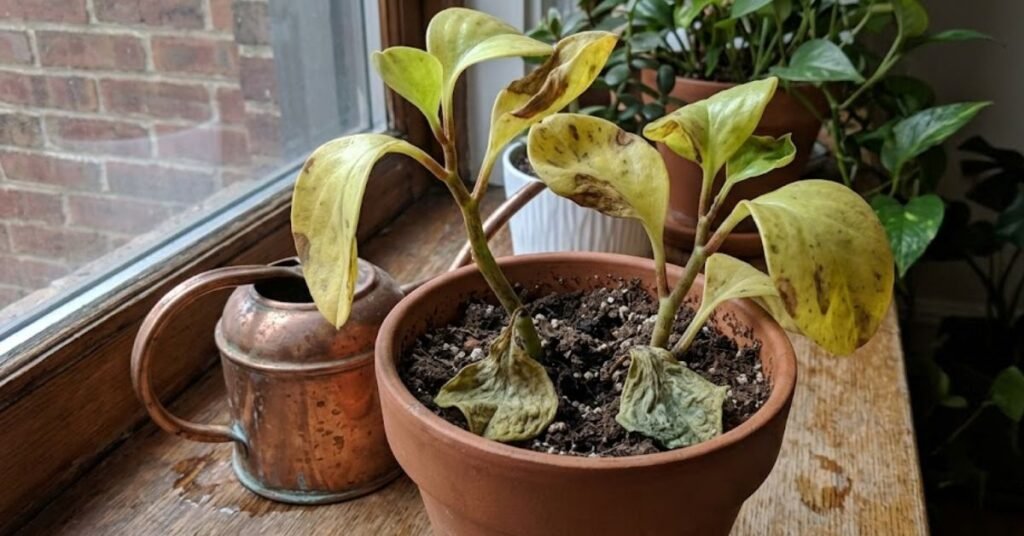
Yellowing usually means one of two things: too much water or not enough light. Check the dirt. If it feels like a wet brownie, you are drowning the roots. Let it dry out immediately. If the soil is fine, the plant is probably starving for light. Move it closer to an east-facing window.
Personal Pro-Tip: When I repot a waterlogged plant, I mix a huge handful of perlite into standard potting soil. It forces the water to drain faster.
Curing Crispy Brown Tips
Crispy edges mean your air is too dry or your water has too many chemicals. Switch to filtered water. Get a cheap humidifier for the Fall and Winter when the furnace is running nonstop.
Toxicity Warning: Are These Fading Plants Safe for Dogs and Cats?
Yes. Finally, some good news. The Calathea is completely non-toxic to both cats and dogs. Even if your golden retriever decides to chew on the leaves, the only thing that will be hurt is your pride.
Personal Pro-Tip: Even non-toxic foliage can give a cat a stomach ache if they eat too much. I usually put a sprinkle of cayenne pepper on the topsoil to keep curious noses away.
FAQs About Plants That Die (Straight From Reddit & Quora)
I spend a lot of time reading panicked posts online. Here are the questions I see every single day.
Q1: Why do my plants that die always look fine one day and collapse the next? Because root rot happens underground. By the time the leaves collapse, the root system has already been dead for weeks.
Q2: Can I save a houseplant with no leaves left? Sometimes. If the stem is still firm and green, there is hope. If the stem is mushy, it’s garbage.
Q3: Does misting actually help prevent indoor plants from dying? Barely. Misting raises the humidity for about ten minutes. You are much better off using a pebble tray or a real humidifier.
Q4: How often should I fertilize fussy foliage? Only in the Spring and Summer. Stop fertilizing in the Fall and Winter when growth slows down naturally.
Q5: Is it okay to use water straight from the outside hose? In the Summer, hose water can be boiling hot if it’s been sitting in the sun. Always let it run cold first.
Q6: Why are there tiny bugs flying around my potting soil? Those are fungus gnats. They love wet dirt. Let the top two inches of your pot dry out completely to kill the larvae.
Q7: Should I cut off the dead yellow leaves? Absolutely. The plant is wasting energy trying to keep those dead leaves attached. Snip them off at the base with clean scissors.
Personal Pro-Tip: Don’t throw away your nursery pots. I always keep my tricky indoor greenery in their plastic nursery pots and drop those inside the decorative ceramic ones. It makes checking for sitting water so much easier.
Final Thoughts on Keeping Stubborn Foliage Alive
Look, everyone kills a few green things when they start gardening. I certainly have. The secret isn’t having some magical touch. It’s just an observation. Pay attention to your light, feel your potting soil before you water, and keep them away from your AC vents. You don’t have to keep bringing home plants that die. Adjust your habits, and your living room will look like a jungle in no time.
Amin Khalid is a professional horticulturist and the founder of LeafyWisdom. With a deep passion for home gardening and horticultural research, he specializes in providing practical, easy-to-follow care guides for indoor plants. Amin’s goal is to simplify gardening for everyone and help fellow plant lovers build their own thriving green spaces.
Look, I get it. You saw a stunning picture of a dense, towering bamboo grove on Pinterest, and now you want that exact tropical privacy screen in your own backyard. It is a brilliant idea, but you absolutely must get your containment strategy right from day one. If you want to avoid a massive landscaping headache, planting bamboo barrier rolls underground is non-negotiable to keep those aggressive roots from hijacking your entire property. In my years of fixing landscaping disasters across the US, I’ve seen running bamboo punch straight through asphalt driveways and ruin neighbor’s lawns. You don’t have to be afraid of this plant; you just need to box it in. Let’s talk about doing this right the first time.
Quick Care & Setup
The Ground Rules
Trench Depth
24 to 30 inches deep.
Material Specs
60-mil to 80-mil thick HDPE plastic roll.
Above-Ground Lip
Leave 2 to 3 inches exposed above the dirt.
USDA Hardiness
Zones 5-10 (varies heavily by running species).
Sunlight
Full Sun to Part Shade.
Soil Preference
Well-draining native dirt mixed with quality potting soil.
Quick Checklist Before Planting Bamboo Barrier
For the skimmers out there, the table above shows exactly what you need to know before picking up a shovel. Getting this step correct is the difference between a lush property border and a neighborhood feud.
Personal Pro-Tip: Never use roofing metal or poured concrete for your enclosure. Concrete cracks when the ground freezes during an East Coast winter. Metal will rust out in the damp earth. Always stick to heavy-duty HDPE plastic on a continuous roll.
The Realities of Setting Up a Bamboo Rhizome Barrier
I’ve spent a massive chunk of my career ripping out renegade yards.
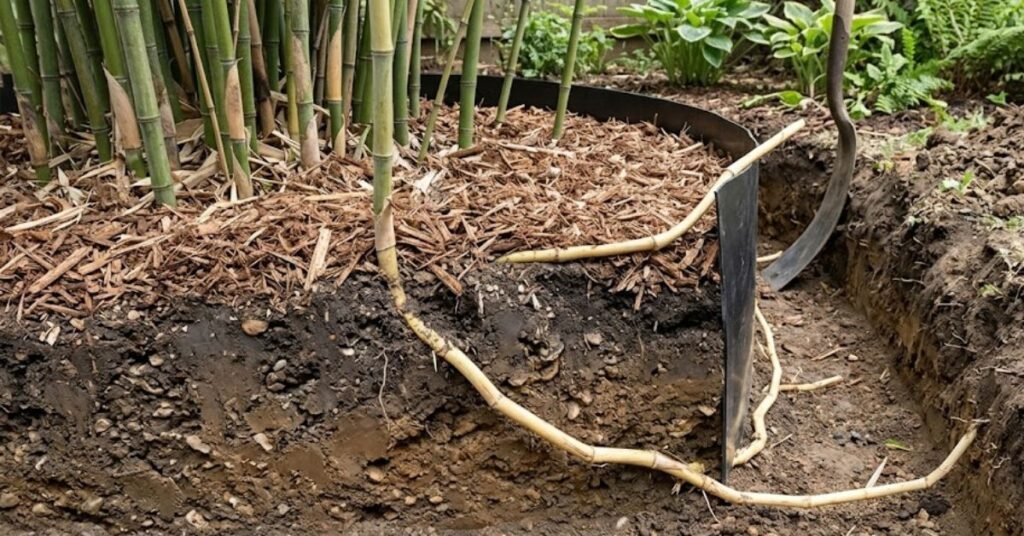
People plant running varieties for quick privacy. Then, three years later, it’s coming up through their deck. Running bamboo spreads via underground horizontal stems called rhizomes. These things are absolutely relentless. But setting up a physical blockade is all it takes to tame them.
Personal Pro-Tip: Fall or early Spring is the absolute best time for this project. Digging a deep trench in the middle of a sweltering July afternoon is a miserable experience.
How to Go About Planting Bamboo Barrier Without Losing Your Mind
The Realities of Setting Up a Bamboo Rhizome Barrier
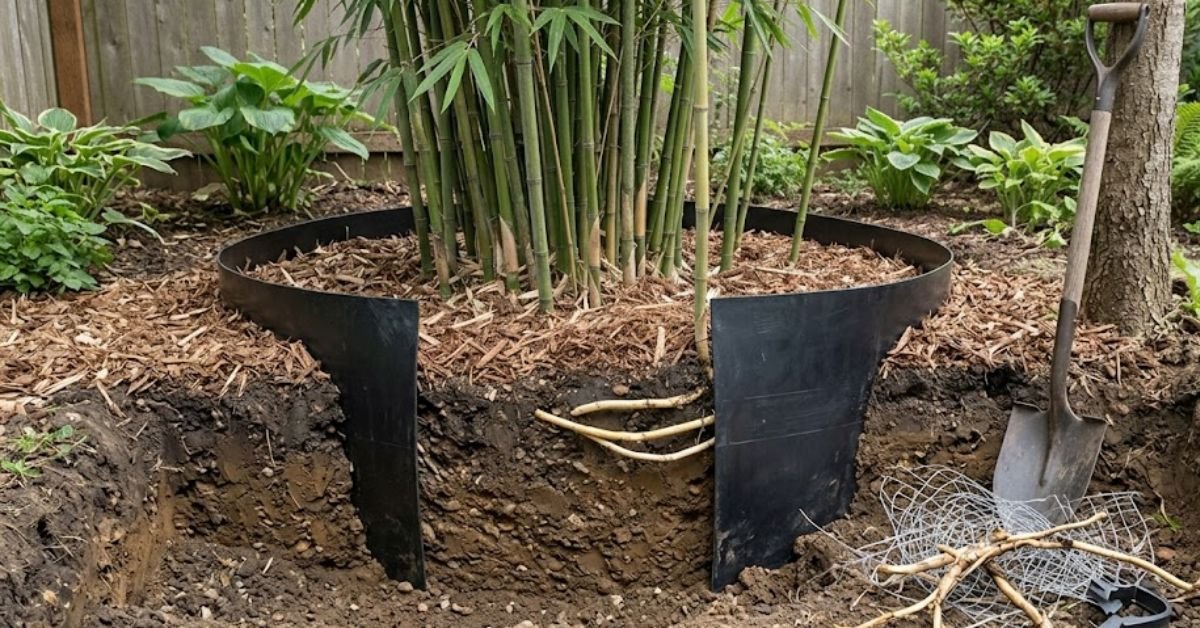
The physical labor will definitely make you sweat. The strategy itself is pretty simple, though. You are essentially building an underground plastic swimming pool without a bottom.
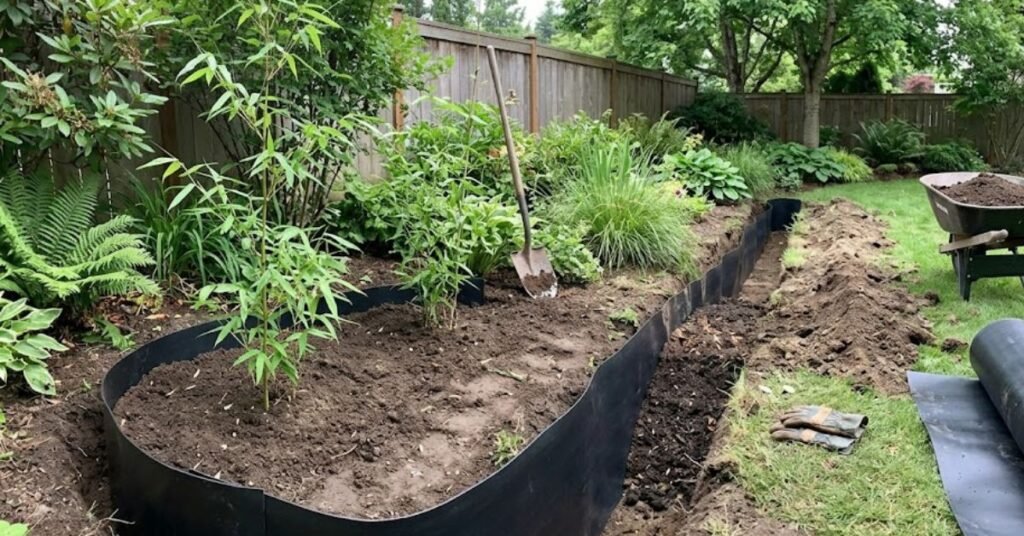
Digging the Trench for Your Plastic Wall
You need a narrow trench encircling the entire planting area. If you live in a rocky area like New England, do yourself a favor and rent a mechanical trencher from a local hardware store. For softer soils down South, a trenching spade will do the trick just fine. You need to dig down about 24 to 28 inches.
Angling and Sealing the Enclosure
Drop your plastic sheet into the trench.
You must leave a 2-inch lip sticking out above the ground. If you bury it flush with the lawn, rhizomes will sneak right over the top under the cover of fallen autumn leaves. You’ll never see them until they’ve already escaped.
When connecting the two ends of the plastic, overlap them by at least a few feet. Seal them tightly with heavy-duty double-sided seam tape or stainless steel clamping bars.
Personal Pro-Tip: Angle the barrier slightly outward at the top. When an underground root hits the plastic, the outward angle forces it to bend upwards to the surface instead of diving down deeper. Once it pops out of the dirt, you just snip it off with your garden pruners.
Common Mistakes Americans Make When Planting Bamboo Barrier
Common Mistakes Americans Make When Planting Bamboo Barrier
We love taking shortcuts. Taking shortcuts with this specific plant is a disaster waiting to happen.
Burying it too shallow. Going 18 inches down isn’t enough for larger timber varieties. They will just dive right under.
Ignoring the AC unit. I see this constantly. People plant a grove right next to their outdoor air conditioning compressor to hide the ugly metal box. The constant blast of hot, dry exhaust air will scorch the leaves fast. Keep the planting area at least a few feet away.
Suffocating roots in clay. Sitting in a bathtub of heavy clay soil will rot the root system. If your yard doesn’t drain well, mix in some good potting soil and coarse sand to loosen it up.
Personal Pro-Tip: Don’t put black weed fabric over the top of the contained area. It makes it impossible to see when runners are trying to jump the plastic lip.
Troubleshooting Growth and Bamboo Root Barrier Breaches
Things happen in the garden. Even with the best setup, you have to keep an eye on things.
Leaves turning yellow? This is usually a sign of poorly draining soil or severe overwatering. Let the top few inches of dirt dry out before you hit it with the hose again. If you’re watering from an outdoor faucet with heavily chlorinated city water, let the water sit in a bucket for a day to off-gas before pouring it on young, sensitive shoots.
Crispy brown leaf tips? The air is just too dry. This is often exacerbated by strong winds outside or indoor AC vents if you have smaller varieties potted inside your house. Give the leaves a gentle misting during dry spells.
Finding random shoots in the lawn? Your barrier has a leak somewhere. Either a seam burst, or a rhizome dove underneath the plastic. You will have to trace that stray shoot back to the source, cut it, and patch the breach.
Personal Pro-Tip: Every autumn, I walk the perimeter of my beds and physically scrape away the mulch touching the plastic lip. I am looking for any sneaky rhizomes trying to vault over the edge.
Toxicity Warning: Pets and Bamboo
Toxicity Warning Pets and Bamboo
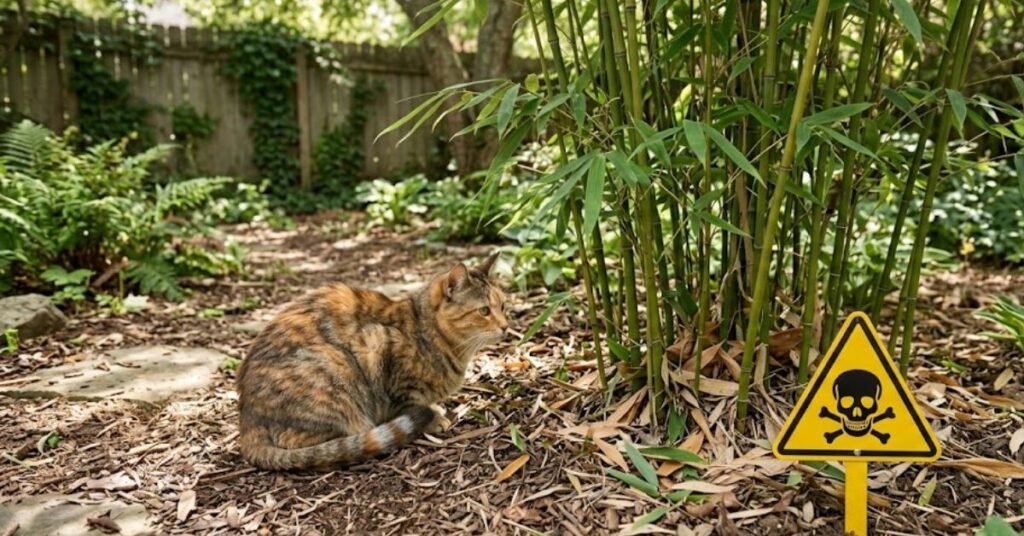
This is a huge relief for a lot of US homeowners. True bamboo (Phyllostachys species) is generally non-toxic to dogs and cats.
However, beware of “Heavenly Bamboo” (Nandina domestica) or “Lucky Bamboo” (Dracaena sanderiana). Neither of these are actual bamboos, and both are toxic to pets. If you are growing the real running stuff, your Golden Retriever is totally safe.
Personal Pro-Tip: Even though it’s non-toxic, don’t let your dog chew on the thick woody canes. The fibrous material can splinter and cause severe digestive blockages.
FAQs on Planting Bamboo Barrier
Q1: How thick does the plastic really need to be?
A minimum of 60-mil. If you are putting in massive timber bamboo, step up to 80-mil.
Q2: Can I just grow clumping types instead of planting bamboo barrier?
Yes. Clumping types grow in tight circles and generally stay put. But they don’t give you that spread-out, open-grove look that running types do. Also, many clumpers aren’t cold-hardy enough to survive northern USDA Zones.
Q3: How much above ground should the barrier be?
Leave 2 to 3 inches completely exposed.
Q4: Will a metal barrier work?
No. Galvanized metal eventually rusts in damp soil. Once it rusts through, the roots escape immediately.
Q5: Can it break through concrete?
Absolutely. Over time, ground freezing and thawing creates micro-cracks in concrete. The plant will find those cracks and shatter them.
Q6: What happens if I just mow the escaped shoots?
Mowing kills the new leafy shoots. The underground network, however, remains alive and connected to the main plant. It will just keep trying to pop up elsewhere in your yard.
Q7: Can I use an old pond liner instead?
Pond liners are usually too soft and pliable. The underground stems have sharp points and can easily pierce through flexible rubber. Stick to rigid HDPE.
Personal Pro-Tip: If you’re overwhelmed by the digging, call your local utility locator first (dial 811 in the US). Slicing through a buried internet or gas line with a shovel will ruin your entire month.
Final Thoughts on Planting Bamboo Barrier
Taking the time to do this the right way saves you endless headaches down the road. Running bamboo is a spectacular, fast-growing plant that can totally transform a boring yard into a private sanctuary. Put in the sweat equity this weekend. Lock down that perimeter. You’ll get to enjoy the greenery for decades without the constant stress of chasing rogue roots across your lawn.
Amin Khalid is a professional horticulturist and the founder of LeafyWisdom. With a deep passion for home gardening and horticultural research, he specializes in providing practical, easy-to-follow care guides for indoor plants. Amin’s goal is to simplify gardening for everyone and help fellow plant lovers build their own thriving green spaces.
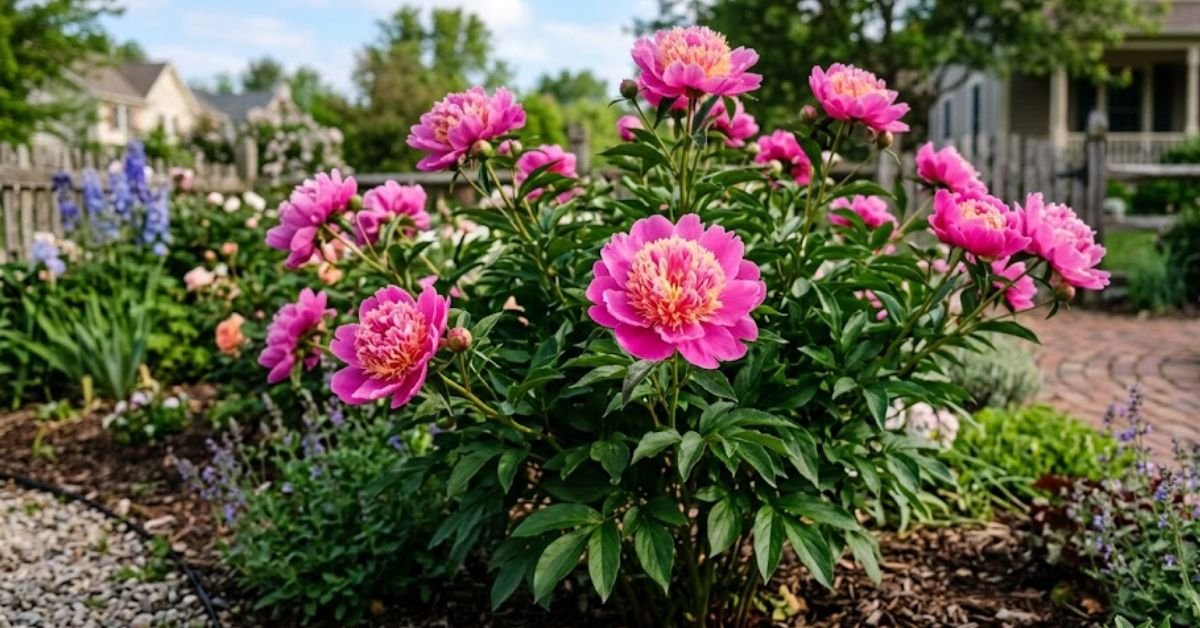
I still remember the first time I saw a japanese peony plant in full bloom. It was in a historic garden in Virginia, right around mid-May. While the classic French double peonies were completely flopped over in the dirt after a heavy spring thunderstorm, the Japanese varieties were standing tall, looking absolutely pristine.That was the moment I fell in love with them.If you are tired of building elaborate cage supports for your flowers or watching your heavy peony heads turn into soggy tissue papers after a rain, this is the plant you need in your yard. They are tough, sculptural, and spectacularly beautiful.But you can’t just throw them in the ground and hope for the best. They have specific rules, especially regarding our varied US climates. Let’s get into how to actually grow them successfully.
Quick Care Guide for the Japanese Peony Plant
If you just crawled out of the garden to look up a quick stat, here is the fast-scan version of what this plant needs.
Care Factor
Requirements
USDA Hardiness Zones
Zones 3 through 8 (Needs cold winters)
Sun Exposure
Full sun (6+ hours); Afternoon shade in hot Southern zones
Soil Preference
Rich, organic, sharply draining soil (pH 6.5 to 7.0)
Water Needs
1 inch per week; damp but never soggy
Fertilizer
Low nitrogen, high phosphorus (apply in early Spring)
Toxicity
Toxic to dogs, cats, and horses
Personal Pro-Tip: If you live in a notoriously windy region like the Midwest plains, try to plant your peony near a fence line or a cluster of sturdy shrubs. Even though their stems are much stronger than double peonies, a severe spring storm can still snap the heavy flower buds right before they open if they have zero wind protection.
What Makes the Japanese Peony Plant Different?
What Makes the Japanese Peony Plant Different
A lot of folks get confused about what a “Japanese” peony actually is. It is not a separate species. It refers to a specific flower form.
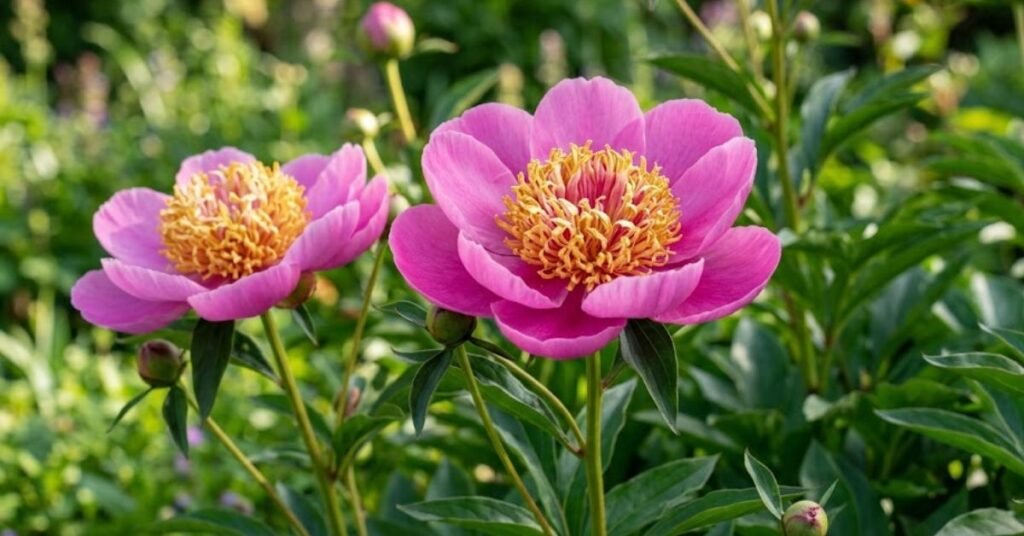
These plants have a single or double row of large outer guard petals. These petals act like a satin bowl. Inside that bowl sits a cluster of transformed stamens called staminodes. They look like thick, crinkly, golden shredded ribbons.
Because they don’t have the hundreds of heavy petals that a standard double peony has, the flower heads are incredibly light. The stems can actually hold them up.
They also bloom right in the middle of the peony season, bridging the gap between the early singles and the late-season doubles.
Personal Pro-Tip: Don’t expect an overwhelming, sugary perfume from these like you get with old-fashioned pink double peonies. Most Japanese varieties have a much lighter, slightly spicy, or clean scent. They are grown primarily for their visual drama and unique shape rather than a heavy fragrance.
Ideal Growing Conditions for Your Japanese Peony Plant
Getting your environment right is 90% of the battle. If you put this plant in the wrong spot, it will sit there and pout for years without giving you a single bud.
The Critical Role of USDA Hardiness Zones
I cannot stress this enough: these are northern plants at heart. They need a distinct winter rest. They require hundreds of hours of temperatures below 45°F to trigger the chemical reaction that creates flower buds.
Zones 3-6: You are in the sweet spot. Plant them in the absolute full sun. They will love it.
Zones 7-8: You can grow them, but you need to be strategic. Give them a spot that gets blasted with morning sun but is protected by a shadow from a tree or your house by 2:00 PM. The intense Southern heat will scorch the leaves early if you aren’t careful.
Zone 9 and higher: Honestly? Save your money. It just doesn’t get cold enough over the winter for them to produce flowers.
Soil Mix and the Container Trap
Peonies love rich soil, but they absolutely hate wet feet. If you are planting in the ground, dig in plenty of organic matter like aged leaf mold.
If you want to try growing a japanese peony plant on a patio in a large container, do not buy cheap yard dirt. And do not use standard garden compost inside a pot—it packs down too tightly and drowns the roots. Instead, purchase a premium, lightweight potting soil and mix in a couple of handfuls of perlite or coarse poultry grit to ensure water rushes right out the bottom holes.
Good Drainage = Happy Roots = Massive Blooms
Poor Drainage = Root Rot = Dead Peony
Water Directly From the Faucet
When summer hits and the rain stops, you will need to supplement. Hook up your garden hose and run water directly at the base of the plant from the outdoor faucet. Avoid overhead sprinklers. Wet leaves invite fungal issues that can ruin the entire plant before the season ends.
Personal Pro-Tip: When buying bare roots online or at a nursery, look for specimens that explicitly state they have at least 3 to 5 “eyes” (the small buds on the root). Cheaper roots with only 1 or 2 eyes will eventually grow, but you’ll be waiting an extra two years just to see your first flower.
Step-by-Step Planting Guide for US Gardeners
Step by Step Planting Guide for US Gardeners
Timing is everything. In the US, the absolute best time to plant a bare-root peony is late Fall, usually October or November before the ground freezes solid. This gives the tiny feeder roots time to develop before the spring rush.
Pick the spot: Look for a place away from large tree roots. Peonies do not like competing for nutrients.
Dig a wide hole: Dig a hole about two feet wide and a foot deep. Loose soil around the root ball makes it easy for the plant to spread out.
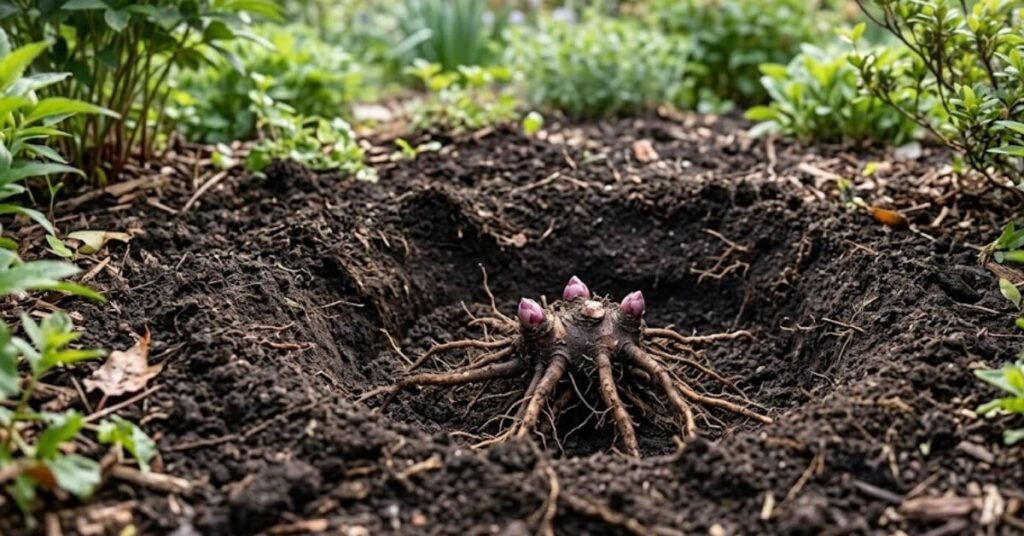
Check the depth: This is where most people mess up. Look at the bare root. You will see small, pinkish buds called “eyes.” When you place the root in the hole, those eyes must face upward and sit exactly 1.5 to 2 inches below the natural surface of the soil.
Fill and settle: Fill the hole back in with your soil mix. Firm it gently with your hands—don’t stomp on it with your boots, or you might snap the eyes off. Water it deeply to settle the dirt.
Personal Pro-Tip: If your established peony bush has been in the ground for over a decade and the flowers are starting to get noticeably smaller each year, the root system might be overcrowded. Late October is the perfect window to dig up the entire clump and carefully split it into smaller sections using a sharp, sterilized knife.
Why Do Americans Fail with the Japanese Peony Plant?
We love to fuss over our gardens. Sometimes, that is exactly why things go wrong. Here are the three most common reasons I see people fail with this specific plant.
Over-Fertilizing With Lawn Chemicals
Most US homeowners love a bright green lawn, so we spread high-nitrogen fertilizers everywhere. If that runoff hits your peony bed, you are going to get a massive, lush green bush with absolutely zero flowers. High nitrogen forces the plant to spend all its energy making leaves.
If you want flowers, you need phosphorus. I give my plants a single handful of bone meal or a low-nitrogen bulb food in early spring when the red shoots first poke out of the ground. That is it for the whole year.
Burying the Crown Too Deep
I see this happen all the time when people add fresh wood mulch to their garden beds every spring. If you dump three inches of mulch right on top of the center of your peony, you have effectively buried the eyes too deep. The plant will grow leaves, but the buds will fail to form. Keep the center of the plant free of heavy mulch layers.
Moving the Plant Around
Peonies are homebodies. They hate being dug up, split, or relocated. Pick a spot where the plant can stay for the next twenty years. If you move it, it will often enter a state of shock and refuse to bloom for two to three seasons while it tries to recover.
Personal Pro-Tip: To maximize the lifespan of your flowers on the bush, stop all overhead watering the moment you see the buds starting to crack open and reveal color. Water hitting the delicate open petals under the hot afternoon sun will cause them to brown and drop days earlier than normal.
Troubleshooting Common Problems with Japanese Peonies
Gardening is full of surprises, and not all of them are good. If your plant is looking a little sick, don’t panic. Here is how to diagnose and fix it.
The Mystery of the Missing Blooms
If your plant looks completely healthy but simply won’t produce flowers, run through this quick checklist:
Is it getting less than six hours of direct sun? (Move it next Fall if it’s too shady).
Was it planted within the last two years? (Young bare-root plants take time to establish).
Are the eyes buried more than two inches deep? (Carefully scrape away some surface soil).
Fuzzy Gray Spots or Black Stems
This is Botrytis blight, a fungal disease that loves wet, humid spring weather. It turns the young buds black and can cause the stems to wilt and fall over.
If you see this, grab your pruners, dip them in rubbing alcohol to sterilize them, and cut away the infected parts. Put the diseased stems straight into the garbage. Do not compost them, or the spores will spread all over your yard next year.
Botrytis Action Plan:
1. Cut out diseased tissue immediately.
2. Sterilize pruners between cuts.
3. Throw waste in the trash (never compost).
4. Improve air circulation around the plant base.
The Ant Invaders
Every spring, I get frantic messages from friends saying, “My peony buds are covered in ants! What bug spray should I use?”
Do not spray them! The ants are your friends. Peony buds secrete a very sweet, sticky sap as they grow. The ants are simply harvesting that sugar. In exchange, they protect the bud from worse pests like thrips. Once the flower opens, the ants move on.
Personal Pro-Tip: Once you cut your peonies and bring them inside for a vase display, change the water completely every single morning and clip a tiny quarter-inch off the bottom of the stems at a sharp angle. This simple routine keeps bacteria from blocking the stems and easily pushes your indoor vase life past a full week.
Is the Japanese Peony Plant Safe for Pets?
Is the Japanese Peony Plant Safe for Pets?
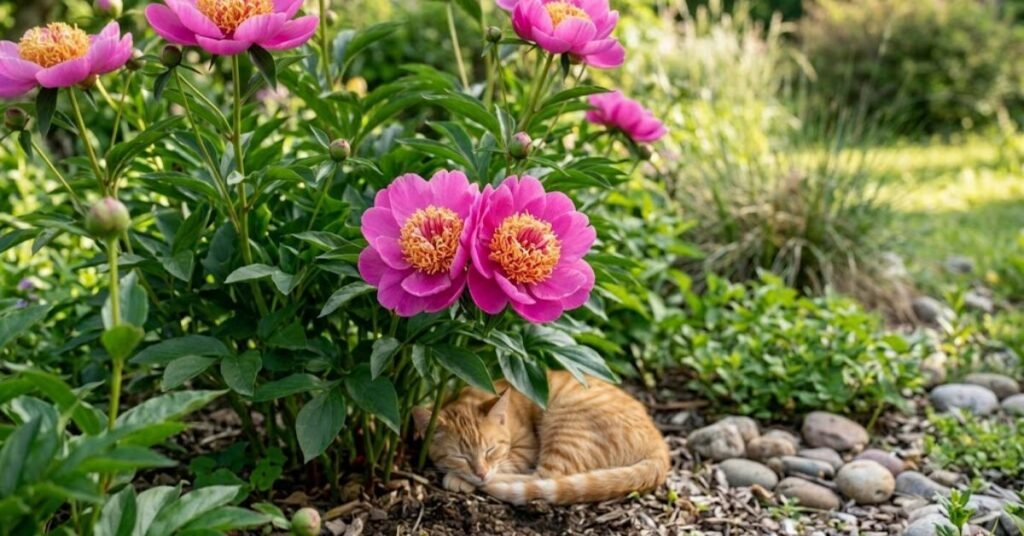
This is a major consideration for most US households. The short answer is no.
The Japanese peony plant contains a chemical compound called paeonol. It is concentrated heavily in the root system, but it is present throughout the entire plant. If your dog or cat decides to use your garden bed as a snack bar, they can get pretty sick.
Symptoms of Peony Poisoning in Pets:
Severe vomiting
Diarrhea
Lethargy or depression
Increased heart rate
If you have a young puppy who loves to dig up roots, or a cat that chews on everything green, you need to protect the plant. I use small, decorative iron border fences around my peony beds. It keeps my dogs from trampling the young spring shoots or digging around the base.
Personal Pro-Tip: If you have a dog that loves to dig up fresh dirt, try planting a dense border of completely pet-safe flowers like Snapdragons or Marigolds around your peony bed. They act as a natural physical buffer zone that discourages pets from reaching the sensitive root area.
Frequently Asked Questions About Japanese Peonies
Q1. How long do these plants actually live?
They can easily outlive you. If you put a japanese peony plant in a good spot with well-draining soil and leave it alone, it can live for 50 to 100 years. There are countless stories of families digging up peonies from historic homesteads that were planted generations ago.
Q2. Do I need to cut the plant back for the winter?
Yes. After the first hard frost in late Fall, the leaves will turn ugly, brown, and collapse. Cut all the stems down to about one inch above the ground line. Throw all the dead footage in the trash to prevent fungal issues from overwintering in your soil.
Q3. Can I use a standard wire tomato cage to support them?
You can, but you probably won’t need to. The beauty of the Japanese flower form is its lighter weight. Unlike heavy double varieties that collapse under their own weight, these stems are usually strong enough to stand up completely on their own without any cages.
Q4. Why are the leaves on my plant turning powdery white in August?
That is powdery mildew. It happens across much of the US during hot, humid late-summer stretches. It looks ugly, but it won’t kill an established plant because the root system has already stored its energy for the year. Just cut the plant down to the ground in the late Fall and discard the leaves.
Q5. What is the “marshmallow stage” for cutting flowers?
It’s the perfect time to harvest flowers for indoor vases. Gently squeeze the tight flower bud. If it feels hard like a marble, leave it alone. If it feels soft and squishy like a marshmallow, and you can see a hint of color breaking through the green outer sepals, cut it. It will open perfectly indoors and last much longer.
Q6. Can I plant them close to my walnut trees?
No. Black walnut trees produce a toxin called juglone in the soil that kills off many sensitive garden plants. Peonies are notoriously susceptible to juglone toxicity. Keep them at least 50 feet away from the drip line of any walnut tree.
Q7. Do I need to deadhead the flowers after they fade?
Yes, it helps. Once the beautiful petals drop, use your pruners to snip off the green seed pod right above the first strong set of leaves. This stops the plant from wasting energy producing seeds, allowing it to redirect that strength back down into the root system for next year’s show.
Personal Pro-Tip: Always leave at least two-thirds of the leafy green stalks completely untouched when you cut flowers for a bouquet. The remaining leaves are crucial for gathering sunlight all summer long, which directly builds up the energy needed to form next year’s flower buds underground.
Final Thoughts on the Japanese Peony Plant
Growing these stunning plants isn’t about having a master’s degree in botany. It really just comes down to respect. Respect their need for a cold winter, give them plenty of sunshine, and don’t bury those root eyes too deep.
They are incredibly self-sufficient once they get through their first couple of years in the ground. Every single May, when those architectural, golden-centered blooms open up perfectly straight despite whatever wild spring weather the US throws at them, you will realize they are worth every bit of effort.
Personal Pro-Tip: If you are ready to start shopping, look for reliable, time-tested varieties like ‘Gay Paree’ (deep magenta outer petals with a fluffy white center) or ‘Sword Dance’ (vibrant cherry-red with a blazing golden center). Both handle typical US weather shifts like absolute champs.
Amin Khalid is a professional horticulturist and the founder of LeafyWisdom. With a deep passion for home gardening and horticultural research, he specializes in providing practical, easy-to-follow care guides for indoor plants. Amin’s goal is to simplify gardening for everyone and help fellow plant lovers build their own thriving green spaces.
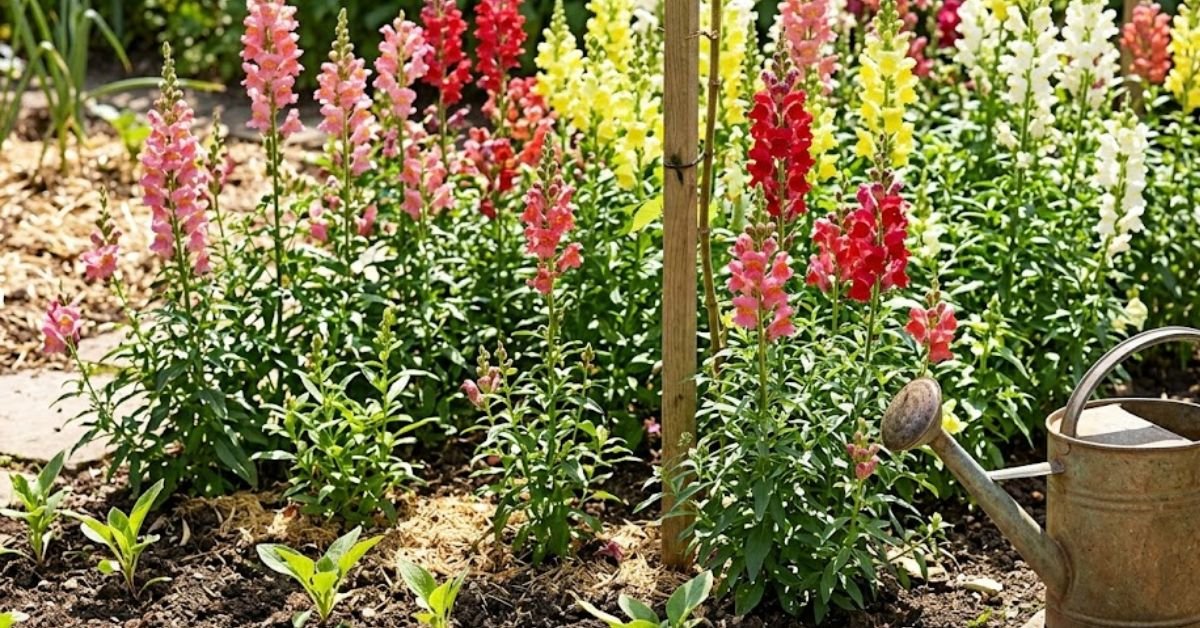
If you have ever walked through an American cottage garden in the peak of summer, you have likely seen the dragon flower plant. More commonly known across the United States as the Snapdragon, these architectural wonders get their name because you can gently squeeze the sides of the blossom to make the “dragon mouth” snap open and shut.
In my years of running a greenhouse, I have found that while these are technically short-lived perennials in warmer climates, most US gardeners treat them as annuals. They provide a massive burst of color when the rest of your garden is either waking up or winding down.
Here is my practical, no-nonsense guide to keeping your dragon flower plants happy, vibrant, and blooming.
Quick Care Guide for the Dragon Flower Plant
For those in a hurry, here is the baseline blueprint to keep your plants alive.
Care Factor
Requirements
USDA Zones
Annual nationwide; Perennial in Zones 7–11
Sunlight
Full sun (6 to 8 hours daily)
Soil Type
Rich, well-draining potting soil or garden loam
Watering
1 inch per week; keep soil moist but never soggy
Temperature
Prefers cool weather ($40^\circ\text{F}$ to $70^\circ\text{F}$)
Fertilizer
Balanced, water-soluble food applied monthly
Personal Pro-Tip: When buying these at your local US garden center, look for packs where the buds are mostly closed. If you buy a flat that is already in full bloom, the plant puts its energy into finishing those flowers rather than establishing strong roots in your garden bed.
Where Should You Plant Your Dragon Flower Plant?
Where Should You Plant Your Dragon Flower Plant
Finding the right spot in your yard is half the battle. These plants absolutely crave sunlight, but they have a complicated relationship with classic American summer heat.
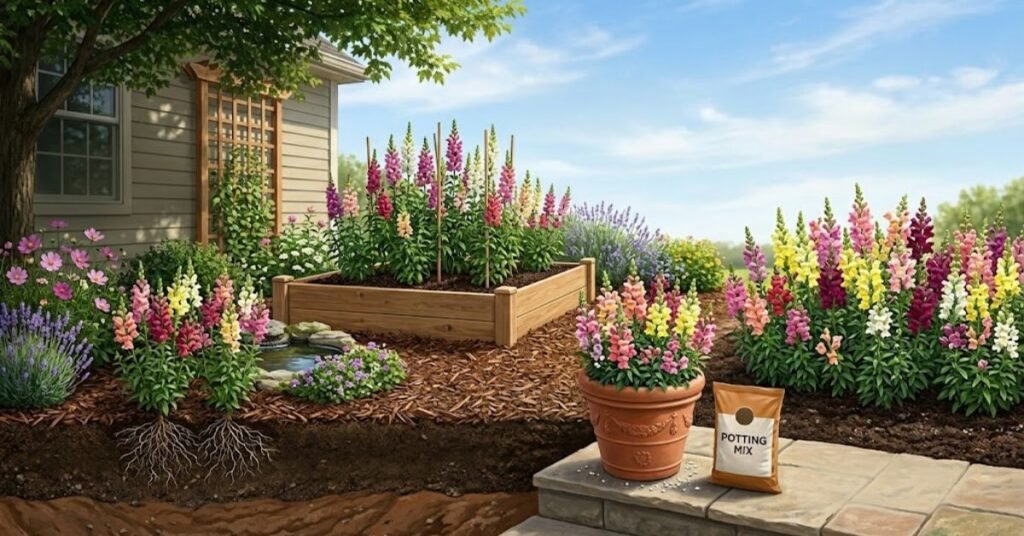
In northern states like Michigan or New York, plant your dragon flower plant in a spot that gets blasted with full sun all day long. The cool northern air keeps them happy. However, if you are gardening down south in Georgia or Texas, that brutal afternoon sun will fry them by July. Down south, pick a spot that gets bright morning light but offers some afternoon shade to give the roots a break.
Choosing the Right Soil Mix
If you are planting in containers on a porch or deck, skip the cheap backyard dirt. Grab high quality, well-draining potting soil. I always mix in a few handfuls of perlite to ensure the water moves through freely. In the ground, ensure your soil isn’t heavy clay. Clay traps water, and trapped water spells death for these roots.
Personal Pro-Tip: If you live in an area with heavy clay soil, build a quick raised bed or use fabric grow bags for your dragon flower plant. It is much easier than trying to dig out and amend feet of stubborn clay.
How Often Should You Water a Dragon Flower Plant?
Watering is where most beginners trip up. You want the soil to feel like a wrung-out sponge.
When you establish a young dragon flower plant, keep the soil consistently damp. Once their root systems settle in, they become surprisingly resilient. Aim for about an inch of water a week. Soak the base of the plant thoroughly rather than giving it frequent, shallow sprinkles.
Always target the soil right at the base of the stems. If you blast the foliage with a hose or a lawn sprinkler every evening, you are practically inviting fungal diseases to move into the dense leaves.
Personal Pro-Tip: I like to mulch the base of my plants with an inch of shredded bark. This keeps the soil cool during random early-summer heatwaves and prevents water from evaporating too quickly from your potting soil.
Common Mistakes Americans Make with the Dragon Flower Plant
Common Mistakes Americans Make with the Dragon Flower Plant
I see the same errors repeated every single season in backyard gardens.
The AC Vent Trap: If you try to grow a dwarf variety of the dragon flower plant indoors, never place the pot near an active air conditioning vent. The constant blast of dry, artificial cold air saps moisture from the leaves faster than the roots can drink.
Ignoring the Mid-Summer Slump: Many folks freak out when their plants stop blooming in late July. They think the plant is dead and rip it out. Don’t do that. They are just resting because of the heat. Keep watering them, and they will flush back out with gorgeous blooms the moment the crisp Autumn air rolls around.
Crowding the Stems: We all want an instant jungle look, but packing these plants too close together stops air from circulating. Space them at least 6 to 12 inches apart.
Personal Pro-Tip: If your plants look ragged and completely stop blooming in August, take a pair of clean shears and cut the entire plant back by about half its height. It feels aggressive, but this encourages a massive second wave of flowers in the Fall.
Troubleshooting Your Dragon Flower Plant
Plants can’t talk, but they will tell you exactly what is wrong through their leaves.
Yellowing Leaves
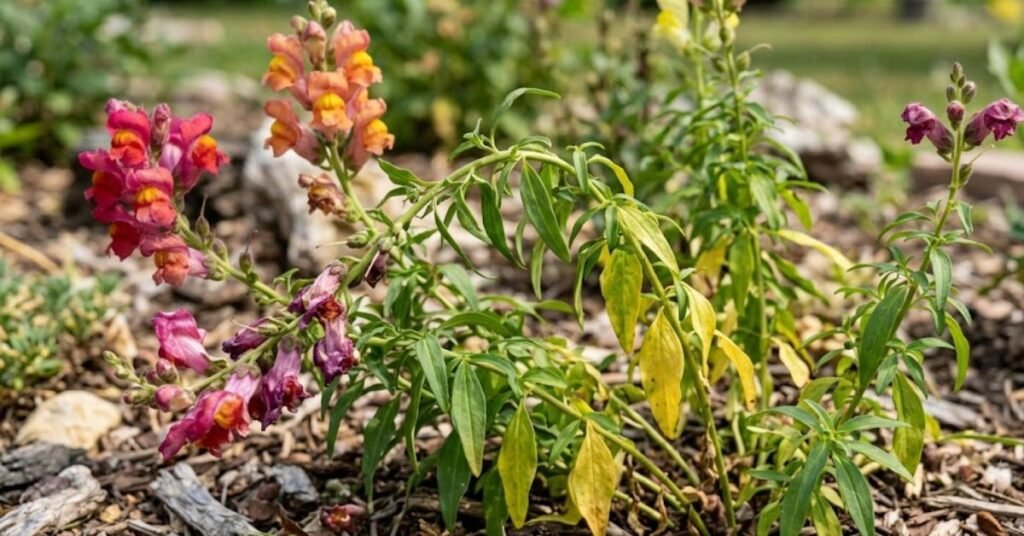
If the lower leaves turn a pale yellow and feel mushy, you are overwatering. Let the soil dry out completely before you even think about touching them with a watering can again. If the leaves are yellowing but the veins stay bright green, your soil might lack nutrients, meaning it is time for a dose of liquid fertilizer.
Brown, Crispy Tips
This is a classic sign of drought stress or sun scorch. If you notice this happening during a heatwave, increase your watering frequency or set up a temporary shade cloth to block the harsh afternoon sun.
A Fuzzy Gray Coating
This is powdery mildew or botrytis blight. It happens when leaves stay wet for too long or plants are packed together too tightly. Snip off the worst-affected areas immediately and throw them in the trash, do not compost them, or you will spread the fungus.
Toxicity Warning: Is the Dragon Flower Plant Safe for Pets?
Toxicity Warning Is the Dragon Flower Plant Safe for Pets
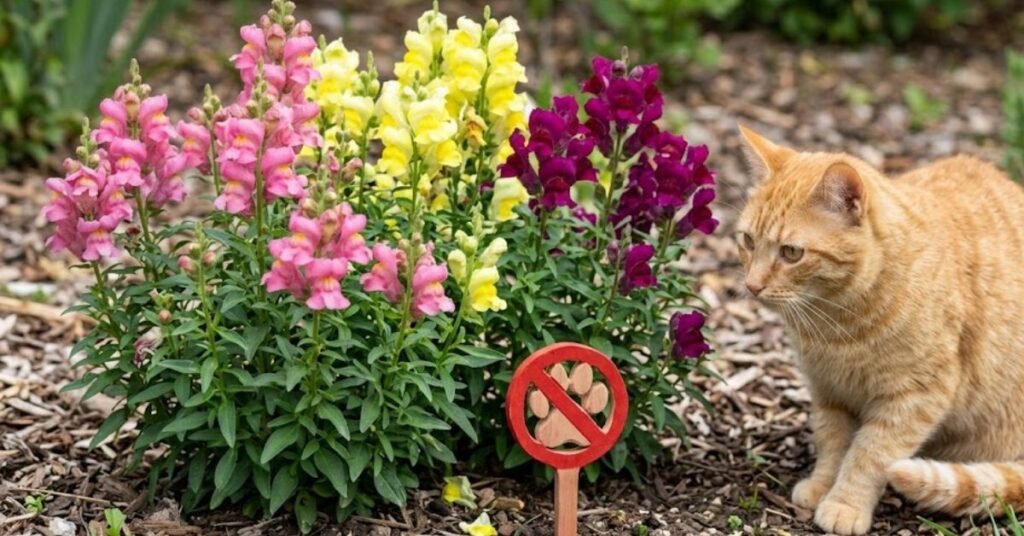
Here is some fantastic news for pet owners: the dragon flower plant is completely non-toxic to dogs and cats.
According to the ASPCA, snapdragons are safe. You do not have to worry if your curious retriever takes a nibble out of your garden bed or if your cat bats at the low-hanging blooms on your patio containers. It is one of my top recommendations for homes with furry family members.
Frequently Asked Questions
Q1: Is the dragon flower plant an annual or a perennial?
It depends entirely on where you live in the United States. In colder northern climates (USDA Zones 1 through 6), it behaves strictly as an annual that dies off with the first hard winter freeze. If you live in milder zones like parts of California, Arizona, or the deep South (Zones 7 through 11), they can survive the winter and return for a second year.
Q2: How tall do these plants actually grow?
They vary wildly depending on the specific variety you buy. Dwarf varieties only reach about 6 to 10 inches tall, making them perfect for window boxes. Medium varieties hit around 1 to 2 feet, while tall heirloom types can shoot up to 3 or 4 feet high and will require staking to keep them from flopping over in summer storms.
Q3: When should I plant them outside in the Spring?
You can plant them quite early! They love cool air and can tolerate a light, brief morning frost. As soon as your backyard soil is workable and the ground isn’t frozen solid, they can go into the garden. This is usually late March or April for most of the country.
Q4: Why are my flower stalks falling over?
This usually happens to the taller varieties when they are exposed to strong winds or heavy summer thunderstorms. Another culprit is too much shade; if the plant doesn’t get enough sunlight, the stems grow tall, weak, and “leggy” as they stretch toward the light, eventually collapsing under their own weight.
Q5: Do I need to remove old flowers to get new ones?
Yes, this process is called deadheading, and it makes a massive difference. When a flower spike finishes blooming and starts fading, snip it off down to the next set of leaves. This stops the plant from wasting energy on producing seeds and forces it to send up brand-new flower stalks.
Q6: Can I grow a dragon flower plant indoors?
You can, but it is challenging. They need an immense amount of light that standard indoor windows rarely provide. If you want to keep them inside, place them in a south-facing window or use a dedicated LED grow light running for 12 to 14 hours a day, keeping them far away from dry AC vents.
Q7: What bugs do I need to worry about?
Aphids and spider mites are the most common pests. Check the undersides of the leaves regularly. If you see tiny green bugs or fine webbing, blast the plant down with a sharp stream of water from your garden hose faucet, or spray them thoroughly with an organic insecticidal soap.
Final Thoughts
The dragon flower plant is one of the most rewarding additions you can make to your yard. They offer rich, saturated colors during the cool seasons when most other plants look dull. Give them a spot with great drainage, plenty of morning sun, and keep them clear of harsh indoor AC air or soggy garden puddles, and they will reward you with a spectacular show from Spring right through the first frost.
Amin Khalid is a professional horticulturist and the founder of LeafyWisdom. With a deep passion for home gardening and horticultural research, he specializes in providing practical, easy-to-follow care guides for indoor plants. Amin’s goal is to simplify gardening for everyone and help fellow plant lovers build their own thriving green spaces.
If you are searching for a unique indoor plant with butterfly leaves that literally look like a flock of purple wings, you are almost certainly hunting for Oxalis triangularis. As a professional horticulturist working in the US, I get asked about this stunning species more than almost any other houseplant. It is an absolute showstopper, plain and simple, but it does have a few quirks you need to know about.
Most everyday gardeners just call it the Purple Shamrock, but its dramatic daily movement is what really steals the show. The foliage actually folds down tight at night like a tiny umbrella, then pops wide open the second the morning sun hits. Let’s make sure you know exactly how to keep yours happy in a typical American home environment without accidentally triggering a sudden dormancy period.
Quick Care Guide for the Plant With Butterfly Vibes
If you are a skimmer, I get it. Here is the fast track to keeping your False Shamrock happy.
Care Need
My Expert Recommendation
Light
Bright, indirect light. A few hours of morning sun is fine.
Water
Let the top inch of potting soil dry out before watering.
Soil
Standard, well-draining indoor potting soil.
Temp
60°F to 75°F. Keep it away from drafts.
USDA Zones
Zones 8-11 outdoors. Grown as a houseplant everywhere else.
Personal Pro-Tip: I always lift the nursery pot before watering. If it feels as light as a feather, it is time to turn on the faucet. If it has some weight to it, wait another day.
Where to Grow Your Butterfly Plant (Zones & Light)
Where to Grow Your Butterfly Plant
A plant with butterfly features isn’t just a novelty. It’s a living, breathing thing that needs the right home.
Indoor Care vs. Outdoor Hardiness Zones
In the US, we have wild temperature swings. If you live in USDA Hardiness Zones 8 through 11 (think the Deep South or Southern California), you can plant this straight into your garden beds. The corms will survive the winter just fine.
For the rest of the country? Keep it in a pot. Bring it outdoors onto your patio in the Spring, but the second the Fall temperatures drop below 50°F, bring it right back inside.
Personal Pro-Tip: I like to place mine in an East-facing window. The gentle morning sun wakes the leaves up beautifully without scorching them.
Choosing the Right Potting Soil
Stop using outdoor garden dirt for your indoor pots. You need a high-quality indoor potting soil. I mix standard potting soil with a handful of perlite to make sure the water drains fast. Muddy roots equal a dead plant.
Personal Pro-Tip: Don’t pack the potting soil down too hard when repotting. The delicate corms (they look like little pinecones) need loose soil to push their stems through.
Common Mistakes: Why Your Plant With Butterfly Leaves is Struggling
Why Your Plant With Butterfly Leaves is Struggling
I see Americans fail with this plant for two very specific reasons. Let’s fix them before they happen to you.
The AC Vent Disaster
We love our air conditioning. Plants hate it. A blast of freezing, dry air from an AC vent will send this plant straight into dormancy. It will drop its leaves, look completely dead, and break your heart.
The Overwatering Trap
Taking a plant with butterfly shaped foliage and drowning it under the faucet is the number one killer. The corms store water. If they sit in wet mud, they rot.
Personal Pro-Tip: If your plant suddenly “dies” after a cold shock, don’t throw it out! Stop watering, put it in a dark closet for a month, and then bring it back into the light with a fresh watering. It will resprout.
Troubleshooting the Purple Butterfly Plant
Something looks off? Here is how I diagnose the issues.
Why Are the Leaves Turning Yellow?
You are watering it too much. Period. The roots are suffocating. Let the potting soil dry out completely before you even look at your watering can again.
How to Fix Crispy Brown Tips
Your air is too dry, or you are using harsh tap water. Our municipal water often has heavy chlorine.
Personal Pro-Tip: I fill my watering can and let it sit on the counter overnight. This allows the chlorine to evaporate before I water my plants.
Toxicity Warning: Keep the Plant With Butterfly Foliage Away From Pets
Toxicity Warning for pets
This is crucial for US pet owners. Yes, Oxalis triangularis is toxic to cats and dogs.
It contains oxalic acid. If Fluffy takes a bite, it can cause heavy drooling, vomiting, and kidney issues in extreme cases. If you have a curious cat that chews on everything, keep this plant on a high shelf or pick something else.
Personal Pro-Tip: I use hanging macramé planters to keep my toxic plants completely out of reach from my Golden Retriever.
FAQs About the Purple Butterfly Plant
I spend a lot of time on Reddit plant forums, and these are the questions I see pop up every single week.
Q1. Why do the leaves close at night?
It is called nyctinasty. The plant reacts to light levels, folding up at night to conserve energy and moisture, and opening wide during the day to catch the sun.
Q2. Can I propagate a plant with butterfly leaves easily?
Yes. You don’t take cuttings, though. You gently dig up the soil and divide the little corms (bulbs) at the roots, then plant them in fresh potting soil.
Q3. Do I need to fertilize it?
Only during the active growing seasons (Spring and Summer). I use a standard liquid houseplant fertilizer diluted to half strength once a month.
Q4. Does it bloom?
Absolutely. It shoots up delicate, pale pink or white trumpet-shaped flowers that contrast perfectly with the dark purple foliage.
Q5. Why did my plant randomly lose all its leaves in winter?
It probably went dormant. This is natural. Cut back the dead stems, stop watering, and let it rest for a few weeks before coaxing it back to life with a fresh drink.
Q6. Is it safe to put outside in the summer?
Yes, but keep it shaded. Direct, blazing summer sun will burn the leaves crisp. Dappled shade under a tree is perfect.
Q7. How big does it get?
Usually, it tops out around 12 to 18 inches tall and wide. It is the perfect size for an end table or a desk.
Final Thoughts
Growing a plant with butterfly charm is deeply rewarding. The daily movement of the leaves makes it feel like a true companion in your home. Respect its need to dry out, protect it from the harsh AC, and it will reward you with years of stunning color.
Amin Khalid is a professional horticulturist and the founder of LeafyWisdom. With a deep passion for home gardening and horticultural research, he specializes in providing practical, easy-to-follow care guides for indoor plants. Amin’s goal is to simplify gardening for everyone and help fellow plant lovers build their own thriving green spaces.
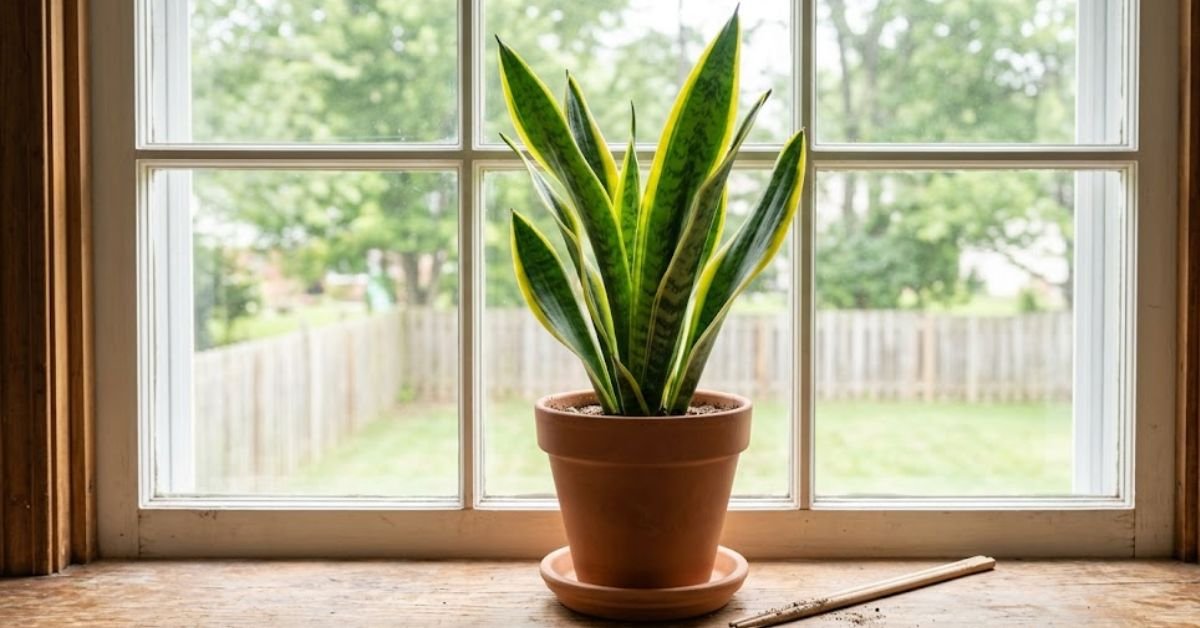
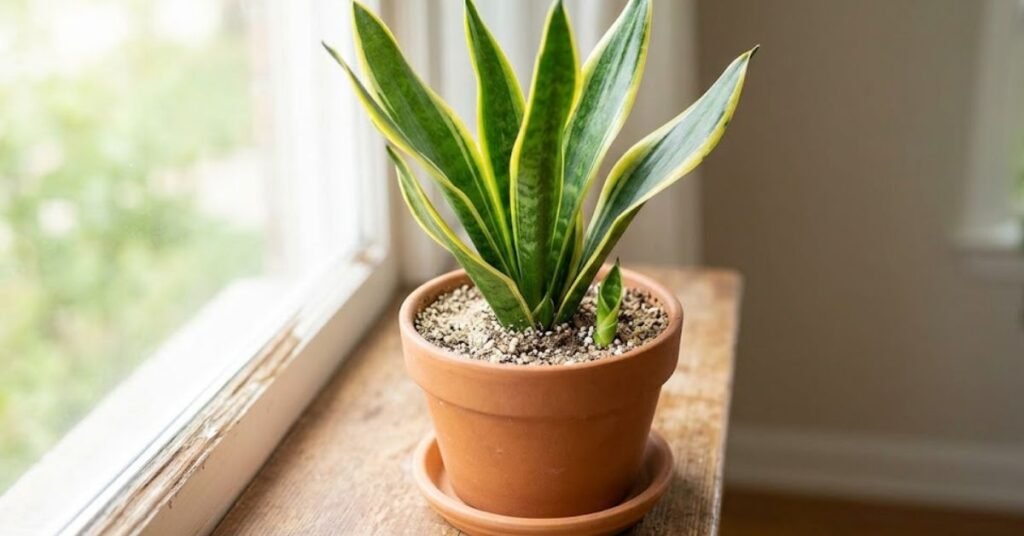
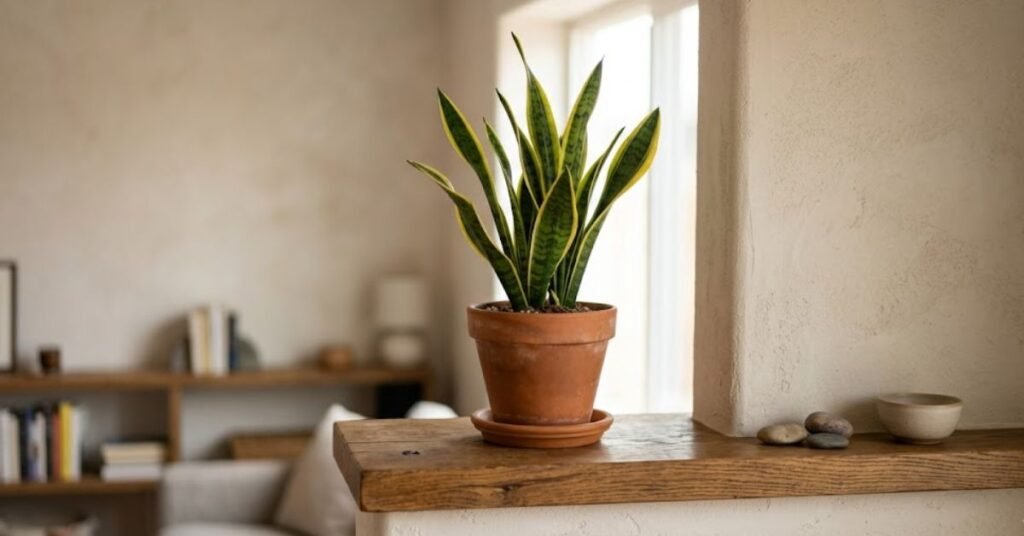
If you are struggling to keep your indoor greenery alive, mastering snake plant care is the ultimate game changer. I have filled my own home with these hardy plants because they tolerate almost anything, but a few common mistakes can still ruin them. Here is exactly how I keep mine healthy without losing my mind.
Care Element
Fast Guidelines
Light
Low to bright indirect sunlight
Water
Every 2–3 weeks (let soil dry completely)
Soil Mix
Well-draining potting soil mixed with perlite
Temperature
60°F – 85°F (Keep away from AC vents)
Toxicity
Toxic to dogs and cats
Why My Approach to Snake Plant Care Works
Why My Approach to Snake Plant Care Works
I used to think I could ignore these guys forever. Everyone online says they are indestructible, right? Well, my first Sansevieria turned into a mushy, rotten mess within three months because I treated it like a regular houseplant. That failure taught me that proper snake plant care isn’t about ignoring the plant entirely; it’s about knowing exactly when to step away.
In my years of growing this plant on my windowsills and in dark corners, I’ve found that they react heavily to your home’s hidden environment, especially things like artificial air currents.
Personal Pro-Tip: Don’t just stick your finger in the top inch of dirt to check for moisture. Buy a cheap wooden chopstick, push it all the way to the bottom of the pot, and pull it out. If it comes up damp or with dark potting soil sticking to it, walk away. Do not water it.
Master the Basics of Indoor Snake Plant Care
Getting the fundamentals right saves you a ton of headaches down the road. You don’t need a green thumb, just a basic understanding of how these tough desert survivors handle an indoor environment.
Finding the Right Light for Your Snake Plant
Here is the truth: they can survive in that gloomy corner of your home office, but they won’t grow. I have one sitting right near a bright, east-facing window behind a sheer curtain, and it pushes out new pups every single Spring. If you put it in total darkness, it just sits there, frozen in time.
Personal Pro-Tip: If your plant starts looking stretched out, leggy, or the beautiful variegated yellow edges start fading into a dull green, it is begging for more light. Move it closer to a window, but do it gradually over a week so the leaves don’t get sunburned.
How to Water a Snake Plant Without Killing It
Watering is where most people mess up. When you do water, run it fully under the kitchen faucet until it drains out of the bottom holes. Then, forget about it.
In the hot Summer months, I might water mine every two weeks. But when Fall hits and the days get shorter, I stretch that out to once a month.
Personal Pro-Tip: Always dump out the saucer underneath the pot after watering. If the base sits in a pool of stagnant water for more than twenty minutes, you are practically inviting root rot to destroy your plant.
The Secret Rhizome: The Engine Behind Snake Plant Care
Underneath the potting soil, your snake plant hides thick, horizontal underground stems called rhizomes. They look remarkably like thick, orange-tinted ginger roots, and they run the entire show.
Think of these rhizomes as heavy-duty water storage vaults. When you run water from the faucet over the plant, these underground structures drink up the moisture and lock it away for weeks. It is the exact reason the plant can hang out for months without a single drop of water.
But there is a cool hack here. If you ever overwater and your plant suffers from severe root rot at the soil line, you do not have to toss the whole thing in the trash. I have saved a few of mine by simply slicing away the mushy parts, locating a healthy, firm section of that orange rhizome, and letting it dry out and callous over on my kitchen counter for two days. After that, you just pop it straight into fresh potting soil, and it will regenerate a brand-new root system.
Personal Pro-Tip: When you are repotting and notice these orange roots, do not panic and cut them off thinking they are diseased. That orange color is totally normal and a sign of a healthy, functioning root system.
Common Mistakes Americans Make with Snake Plant Care
Common Mistakes Americans Make with Snake Plant
Living in the US means dealing with modern home comforts that plants absolutely hate.
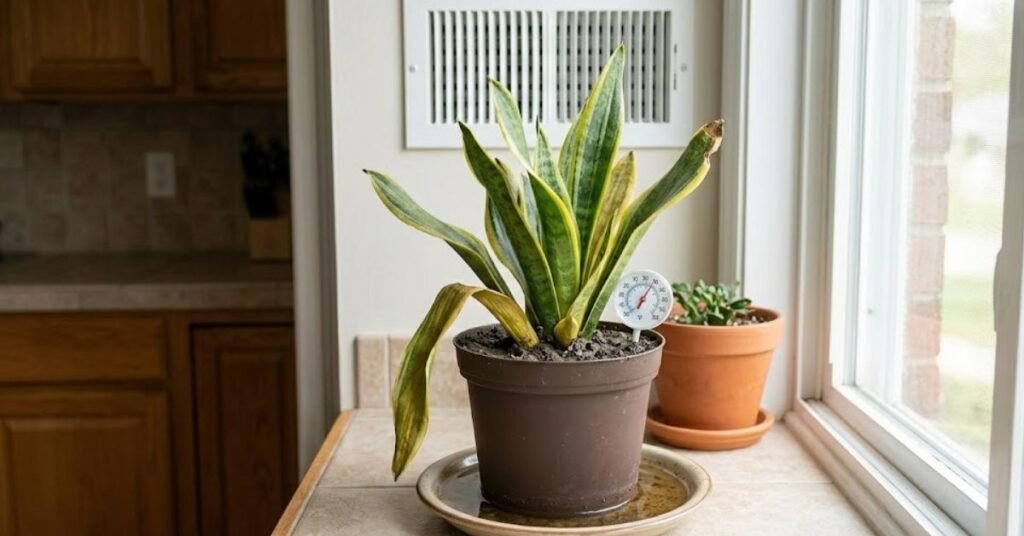
The biggest silent killer? Your central air conditioning system. I once placed a gorgeous five-foot specimen directly under an AC vent in July. Within two weeks, the cold blasting air shocked the tropical roots, causing the outer leaves to wrinkle and drop.
Another massive blunder is using heavy, standard garden soil or regular potting soil right out of the bag without adding drainage elements. It holds moisture for way too long.
Personal Pro-Tip: When you buy a new plant from a big-box store, the soil is usually cheap and holds too much water. I always recommend repotting it within a few weeks into a terra-cotta pot using a mix of two parts succulent soil and one part perlite.
Troubleshooting Common Problems
Plants can’t talk, but they sure can complain. Here is how to decode what your green roommate is trying to tell you.
Mushy, Yellowing Leaves: This is a classic sign of overwatering. The roots are literally suffocating. Cut the yellow leaf off at the base with clean shears, pull the plant out of its pot, and let the root ball dry out in the air for a day before putting it back in fresh, dry potting soil.
Wrinkly Leaves: Surprisingly, this means it’s too dry. If the soil is bone dry and the leaves look shriveled like a raisin, it’s time for a deep soak under the faucet.
Brown, Crispy Tips: Usually caused by super low indoor humidity from winter heating or direct blast from your HVAC system.
Personal Pro-Tip: If only the very tip of a leaf is brown and dry, you can trim it off. Cut at an angle to mimic the natural pointed shape of the leaf so it doesn’t look awkward.
Is Your Snake Plant Safe for Pets?
Is Your Snake Plant Safe for Pets
I love my pets, and if you have furry family members, you need to be careful here.
Snake plants contain saponins, which are natural compounds that make the plant taste bitter but also make it toxic to dogs and cats. If your curious cat decides to use the tall leaves as a chew toy, it can cause nausea, vomiting, and diarrhea.
Personal Pro-Tip: If you have a persistent pet, place your pots up high on a heavy floating shelf or a sturdy plant stand where paws can’t reach. If they do ingest any, call your local vet immediately.
Frequently Asked Questions
Q1: Can I use tap water from my faucet to water my plant?
Yes, standard tap water is usually fine. However, if your city treats its water heavily with chlorine, let the water sit out in a pitcher overnight before using it so the chemicals can evaporate.
Q2: Why is my plant falling over?
It’s usually because the roots or the underground rhizomes have rotted away from overwatering, leaving nothing to anchor the heavy leaves. Check the base. If it’s soggy, you need to propagate the healthy tops.
Q3: How fast do these plants grow?
Slowly. Especially indoors. Don’t expect massive growth bursts unless it’s the peak of Spring and the plant is getting excellent indirect light.
Q4: Do I need to fertilize my plant?
Hardly ever. I give mine a diluted, balanced liquid houseplant fertilizer just twice a year—once in early Spring and once in mid-Summer. Skip it completely during the Winter.
Q5: What kind of pot is best?
Terra-cotta, hands down. The porous clay breathes and helps excess moisture evaporate from the potting soil much faster than plastic or ceramic pots.
Q6: Can they live outside in the US?
Only if you live in a frost-free zone like Southern Florida or Southern California. For the rest of us, you can put them out on a shaded patio during the hot Summer, but bring them inside before the first Fall frost hits.
Q7: How do I know if it needs a bigger pot?
These plants actually like being root-bound. You only need to repot when the expanding rhizomes start cracking the plastic pot or pushing their way completely out of the drainage holes.
My Final Thoughts on Keeping This Plant Alive
At the end of the day, successful snake plant care comes down to restraint. It’s the perfect plant for busy people, forgetful college students, or anyone who wants a splash of green without a stressful chore list. Give it some light, keep it out of the direct path of your air conditioner, and stop watering it so much. Your plant will thank you by staying beautiful and green for years to follow.
Amin Khalid is a professional horticulturist and the founder of LeafyWisdom. With a deep passion for home gardening and horticultural research, he specializes in providing practical, easy-to-follow care guides for indoor plants. Amin’s goal is to simplify gardening for everyone and help fellow plant lovers build their own thriving green spaces.
Bringing a coffee plant into your home is like inviting a piece of the tropics into your living room. I’ve been growing Coffea arabica for years, and while they can be fussy, they are incredibly rewarding. In the US, our indoor environments with their dry air and artificial heating are quite different from a misty mountain hillside. If you’re ready to master your own coffee plant, let’s get into the practical side of things.
Quick Care for Your Coffee Plant
Feature
Requirement
Light
Bright, filtered light (East-facing windows are ideal)
Water
Keep evenly moist; never let it go bone-dry
Humidity
High (50%+); use a humidifier or pebble tray
Temperature
65°F to 75°F; keep away from AC vents
Soil
Rich, acidic, well-draining potting soil
Understanding Why Your Coffee Plant Struggles
Understanding Why Your Coffee Plant Struggles
Most Americans fail with their coffee plant because we treat them like low-maintenance succulents. I remember my first one; I tucked it near a sunny window and forgot about it. Within a week, the leaves were crispy. The truth is, these plants hate erratic conditions.
Our homes often have dry, forced air in the winter and blasting air conditioning in the summer. A coffee plant senses these changes instantly. If you place yours near a drafty window or a vent, expect leaf drop.
Personal Pro-Tip: I keep a simple digital hygrometer next to my plant. If the humidity dips below 40%, I know it’s time to fire up my dedicated plant humidifier.
How Often Should You Water Your Coffee Plant?
The biggest mistake I see is “calendar watering.” Please, don’t water on a schedule. Your coffee plant needs water when the top inch of potting soil feels dry to the touch.
When you do water, soak it until you see it running out the bottom of the pot. Since most of our US tap water is treated with chlorine or minerals, I prefer using room-temperature filtered water.
Personal Pro-Tip: Use a pot with drainage holes. If you use a decorative pot without one, keep the plant in its nursery plastic container inside the decorative one. This prevents the “swampy roots” that kill so many houseplants.
Keeping Your Coffee Plant Clean and Pest-Free
Keeping Your Coffee Plant Clean and Pest Free
Because coffee plants have broad, shiny leaves, they love to collect dust. I gently wipe my plant’s leaves with a soft, damp cloth every month. This isn’t just for looks; dust blocks the light, preventing your plant from photosynthesizing efficiently. While I’m cleaning, I also scan for spider mites or scales. Keeping the foliage clean is the best way to discourage pests from moving in.
Personal Pro-Tip: Use a mix of a few drops of mild dish soap and water on your cloth to give the leaves a gentle shine while cleaning.
Troubleshooting: Why Are My Coffee Plant Leaves Turning Brown?
When my coffee plant starts showing brown tips or yellowing leaves, it’s usually screaming one of three things:
Low Humidity: Those crispy brown edges are a classic sign of dry, indoor US air.
Overwatering: If the leaves are yellowing and dropping, your roots might be suffocating.
Mineral Buildup: If you use hard tap water, salts can build up in the soil and burn the leaf tips.
If you’re seeing these signs, take a deep breath. Move the plant away from any direct heat or AC flow and check your soil moisture.
Personal Pro-Tip: If the tips are brown, don’t just snip them straight across. Cut at an angle that mimics the natural leaf shape. It looks much cleaner!
Is the Coffee Plant Safe for Your Pets?
Is the Coffee Plant Safe for Your Pets
I get this question constantly. According to the ASPCA, the Coffea arabica is considered toxic to cats and dogs. The berries and leaves contain compounds that can cause vomiting or irritation if ingested. If you have curious pets, please place your coffee plant on a high shelf or in a room where your furry friends aren’t allowed.
Frequently Asked Questions
Q1: Can I grow a coffee plant outdoors in the US?
Yes, but only in warm climates (USDA Zones 10-11) or during the summer months in other zones. Bring it indoors before the first frost.
Q2: Will my indoor coffee plant ever grow coffee beans?
It’s possible! It usually takes 3-5 years for a healthy plant to flower and produce fruit, provided it has excellent light and consistent care.
Q3: How do I tell why my leaves are yellowing?
It depends on the feel. If the yellow leaves feel soft, mushy, or translucent, you are likely overwatering. If the leaves are turning pale yellow and feel thin or limp, the plant is usually starving for light or nutrients.
Q4: Do I need special soil for a coffee plant?
Use high-quality, rich potting soil. I like to add a bit of perlite to ensure it drains well so the roots don’t sit in water.
Q5: How do I handle pests on my coffee plant?
Keep an eye out for spider mites or scale. A gentle wipe-down of the leaves with a damp cloth every few weeks keeps them clean and discourages pests.
Q6: Should I prune my coffee plant?
Yes. Pruning encourages it to grow as a bushy, full plant rather than a single, spindly stem.
Q7: Can I use regular houseplant fertilizer?
Use a balanced, water-soluble fertilizer at half-strength during the Spring and Summer. Stop fertilizing in the Fall and Winter when growth naturally slows down.
Final Thoughts
Growing a coffee plant is a commitment, but one that rewards you with glossy, beautiful foliage that makes any room feel alive. Don’t be discouraged if it loses a leaf or two when you first bring it home; it’s just adjusting to your space. Take your time, observe how it reacts to your home’s unique light and airflow, and you’ll find that “sweet spot” where it really starts to take off. Happy growing up!
Amin Khalid is a professional horticulturist and the founder of LeafyWisdom. With a deep passion for home gardening and horticultural research, he specializes in providing practical, easy-to-follow care guides for indoor plants. Amin’s goal is to simplify gardening for everyone and help fellow plant lovers build their own thriving green spaces.
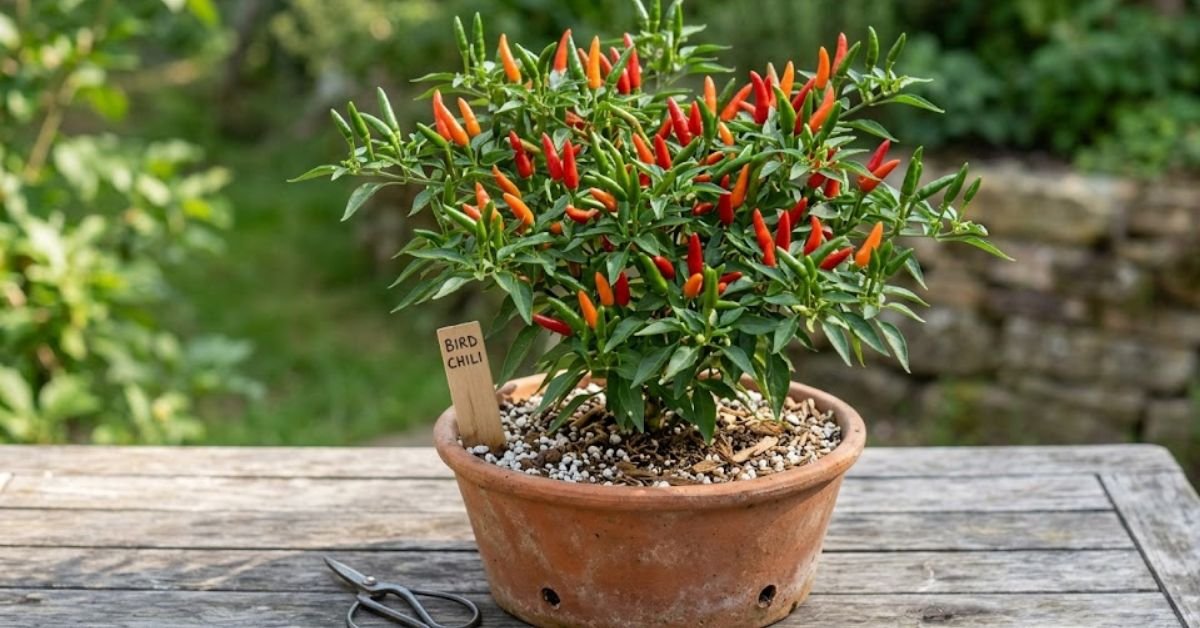
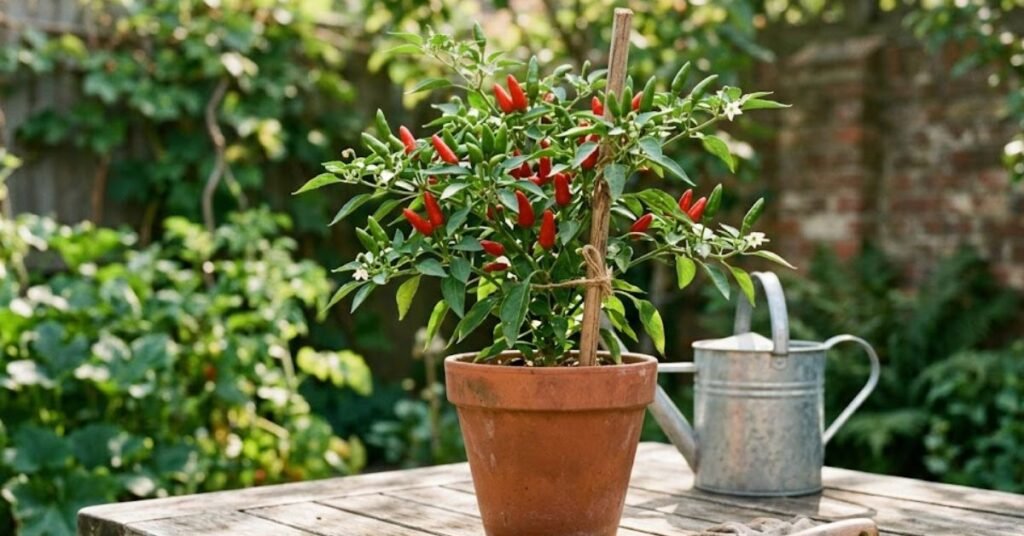
If you love spicy food but lack a massive backyard, learning how to grow bird chili plant in pots is a total game-changer. I used to think you needed a huge garden plot for a decent pepper harvest, but these fiery little plants actually prefer container life. Let’s get into how you can turn a tiny patio or sunny windowsill into your own personal spice factory.
Quick Care Guide for Potted Bird Chilis
Plant Need
Quick Requirement
Sunlight
6 to 8 hours of direct, blazing sun daily
Soil Type
Loose, well-draining potting soil (pH 6.0–7.5)
Watering
Only when the top inch of soil feels completely dry
Temperature
Ideal range: 70°F to 85°F (Protect below 55°F)
USDA Zones
Grown as annuals everywhere; perennial in Zones 9–11
Pot Size
Minimum 2 to 3 gallons with great drainage
Why I Love Learning How to Grow Bird Chili Plant in Pots
Why I Love Learning How to Grow Bird Chili Plant in Pots
I still remember the first time I harvested a handful of bright red bird’s eye chilis from my own patio. There is something intensely satisfying about walking out with a pair of pruners and gathering spice for your dinner. These little peppers pack a monstrous punch, but the plants themselves are surprisingly polite guests on a small deck or sunny windowsill.
When I first figured out how to grow bird chili plant in pots, I made a ton of mistakes. I treated them like regular houseplants, which was a complete disaster. Containers give you incredible con
trol over the environment, but they also mean you are the plant’s entire life support system. If you live in an apartment or a house with limited yard space, containers are your ticket to hot pepper heaven.
Personal Pro-Tip: Don’t start with a giant 10-gallon pot for a tiny sprout. I always step my plants up gradually. A small seedling belongs in a 4-inch nursery pot before moving to its final home. This stops the excess soil from holding onto stagnant water and drowning the baby roots.
Setting Up the Best Containers and Potting Soil for Bird Chili Plants
You cannot just scoop dirt from your backyard into a container and expect a pepper harvest. Yard dirt compacts like concrete inside a plastic pot. It suffocates the roots.
Instead, buy a high-quality, lightweight potting soil from your local garden center. Look for something mixed with perlite or vermiculite. These little white rocks create tiny air pockets in the soil. Air is just as important to roots as water.
For the container itself, drainage is non-negotiable. If your pot doesn’t have holes at the bottom, don’t use it. I highly prefer terracotta or fabric grow bags because they let the soil breathe from all sides.
Personal Pro-Tip: If you fall in love with a beautiful ceramic pot that lacks drainage holes, don’t despair. I use the “cachepot” method. Keep the chili in a cheap plastic nursery liner with holes, and simply slip that liner inside the gorgeous decorative pot. Pull it out when you water so it never sits in a puddle.
The Ultimate Guide on How to Grow Bird Chili Plant in Pots From Scratch
If you want to master how to grow bird chili plant in pots, timing your planting with early spring is vital. Peppers are slow starters.
I start my seeds indoors about 8 to 10 weeks before our last expected spring frost. They need warmth to wake up. I put my seed trays on top of a refrigerator or use a seedling heat mat to keep the soil around 80°F. Once they pop up and get their second set of leaves, they need intense light.
When daytime temperatures consistently stay above 70°F, I start the “hardening off” process. This just means giving them a few hours of outdoor sun a day so they don’t get sunburned or shocked by the sudden change in environment.
Personal Pro-Tip: When transplanting your seedling into its final pot, bury it slightly deeper than it sat in its nursery plug. Just like tomatoes, peppers can grow extra anchor roots along the buried portion of the stem, giving you a sturdier plant.
Balancing Sun, USDA Zones, and AC Vents for Potted Chilis
Balancing Sun, USDA Zones, and AC Vents for Potted Chilis
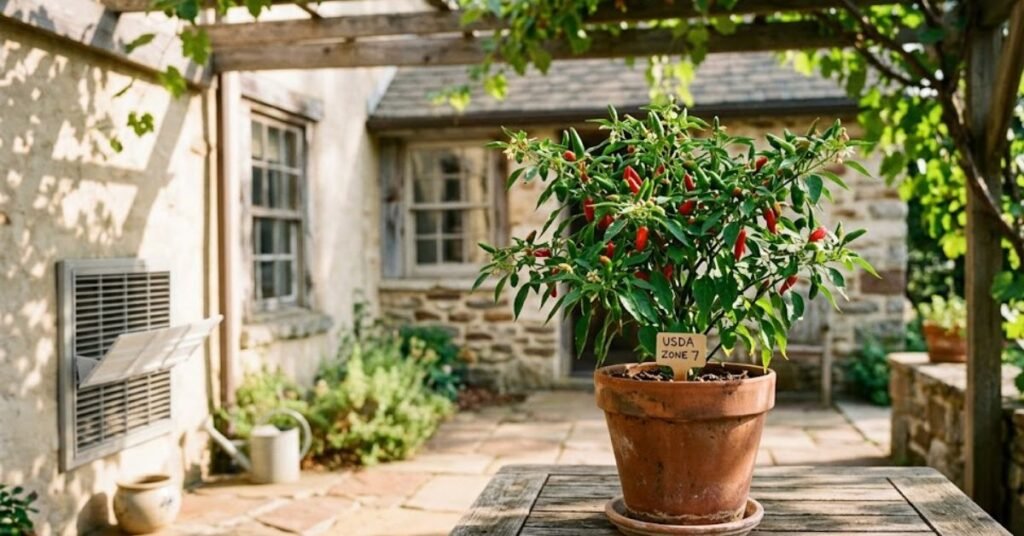
Bird chilis are tropical creatures at heart. If you live in Southern California, Florida, or Texas (USDA Hardiness Zones 9 through 11), you can treat these plants as perennials. They will live for years if protected from the occasional weird cold snap. For the rest of the country, they are grown as summer annuals.
Sunlight is the fuel that creates the heat in your peppers. They need at least 6 hours of direct sun, but 8 to 10 hours is the sweet spot.
However, indoor growing comes with a massive hidden trap: your air conditioning.
Americans love ice-cold AC in July, but your chili plant hates it. Placing your pot directly under or near an AC vent will cause the air to dry out violently. The temperature drop will shock the plant, causing it to drop its flowers. No flowers means zero peppers. Keep indoor pots in a south-facing room well away from any forced-air drafts.
Personal Pro-Tip: If you’re growing indoors during a hot summer, mist the air around the plant occasionally or use a simple pebble tray. The ambient humidity helps the flowers stay viable for self-pollination.
Common Mistakes When Discovering How to Grow Bird Chili Plant in Pots
Let’s look at why people fail. The biggest killer is overwatering.
When you overwater a potted pepper, you fill all the tiny air spaces in the soil with water. This causes root hypoxia. The roots literally suffocate from a lack of oxygen. They stop taking up nutrients, turn mushy, and the plant rots from the bottom up.
Another classic mistake is running to the faucet every single day. Chili plants actually like a tiny bit of drought stress; it makes the fruits hotter!
Using the wrong fertilizer: Flooding your pot with high-nitrogen fertilizer (like standard lawn food) will give you a massive, lush bush with absolutely zero peppers. Use a balanced vegetable food instead.
Leaving them out in early Fall: When night temperatures drop below 55°F, bring the pots inside. Cold nights stunt growth instantly.
Personal Pro-Tip: Get used to the weight of your pot. Pick up the pot right after you water it feel how heavy it is. Then pick it up when it’s dry. You will quickly learn to tell if your plant needs water just by lifting it an inch off the ground.
Troubleshooting Your Potted Bird Chili Plant Problems
Even experienced gardeners run into issues. Here is how to read your plant’s body language.
Leaf Turning Yellow
This is almost always a sign of overwatering or nitrogen deficiency. Check the soil. If it feels like a soggy sponge, stop watering immediately and let it dry out completely. If the soil is dry and leaves are still pale yellow, give the plant a half-strength dose of liquid organic fertilizer.
Brown Tips on Leaves
Brown, crispy edges usually point to low humidity or fertilizer burn. If you recently added a lot of granular fertilizer, you might have fried the roots. Flush the pot with clean water from the faucet to wash away excess salts.
Flowers Falling Off Without Setting Fruit
This happens when temperatures are too extreme. If it’s over 95°F during the day or drops below 60°F at night, the plant gets stressed and discards its blossoms. Move the pot into a spot with light afternoon shade during extreme summer heatwaves.
Personal Pro-Tip: If your plant is blooming indoors but not making peppers, give the stem a gentle shake every day. Peppers are self-pollinating, but they need a little vibration (which wind or bees usually provide) to drop the pollen inside the blossom.
Toxicity Warning: Is Your Potted Chili Safe for Pets?
Toxicity Warning Is Your Potted Chili Safe for Pets
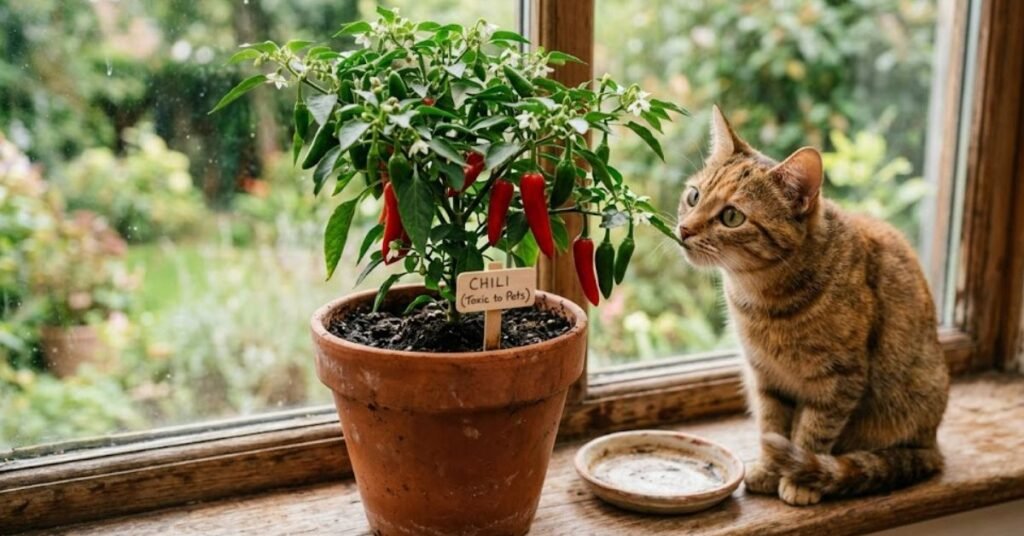
This is incredibly important for pet owners. Bird chili plants are toxic to dogs and cats. The danger comes from capsaicin, the very chemical that makes the peppers spicy. While a nibble won’t necessarily kill them, it causes severe gastrointestinal distress. Your pet will experience intense burning in the mouth, excessive drooling, vomiting, and diarrhea.
The leaves and stems also contain solanine, which is common in the nightshade family and harmful to animals. Keep your pots up high on plant stands or behind barriers if you have curious pets.
Personal Pro-Tip: If your dog happens to eat a fallen bird chili, do not give them water capsaicin is an oil and water will only spread the burn. Instead, check with your vet immediately. I keep my fruiting plants strictly on an outdoor patio table where my dog can’t reach them.
FAQs: Real-World Questions on How to Grow Bird Chili Plant in Pots
Q1: How big of a pot do I actually need for a bird chili plant?
You need a pot that is at least 10 to 12 inches in diameter, which holds roughly 2 to 3 gallons of soil. Anything smaller will restrict the roots, meaning you’ll get a stunted plant with very few peppers.
Q2: Can I grow bird chilis indoors year-round?
Yes, but you will almost certainly need a supplemental LED grow light. Standard window glass filters out a lot of the UV rays peppers need to produce a heavy fruit harvest.
Q3: Why are my bird chilis not spicy?
Potted chilis lose their heat if they are overwatered or overfertilized. To ramp up the heat, cut back on watering right when the peppers start to form. Let the plant wilt just a tiny bit before giving it a drink.
Q4: How long does it take to get peppers from seed?
Expect to wait about 100 to 120 days from sowing the seed to harvesting your first ripe red chili. They take their sweet time, but the harvest window lasts for months.
Q5: Should I pinch off the first flowers?
Yes! I know it hurts to do it, but plucking off the very first set of blossoms tells the plant to put its energy into growing a stronger, bushier frame. A larger frame means triple the peppers later in the season.
Q6: What is the best fertilizer for container chilis?
Look for an organic fertilizer with a ratio like 5-10-10 or 4-18-38 once the plant starts blooming. You want lower nitrogen (the first number) and higher phosphorus and potassium to encourage fruit production.
Q7: How do I know when to harvest bird chilis?
Wait until they change completely from green to a vibrant, shiny red. They can be eaten green, but they reach their full flavor profile and maximum fiery heat when they turn fully red.
Personal Pro-Tip: Always wear gloves when harvesting or pruning these plants. I once rubbed my eyes after handling bruised bird chilis without gloves, and it is an experience I wouldn’t wish on anyone!
Final Thoughts
Growing these fiery little powerhouses in containers is one of the most rewarding weekend projects you can take on. By avoiding heavy soils, dodging the blast of your indoor air conditioning vents, and letting the soil dry out between waterings, you will have a stunning, heavy-yielding plant right on your doorstep. Keep it safe from frost and away from your pets, and you will be enjoying homegrown heat all summer long.
Amin Khalid is a professional horticulturist and the founder of LeafyWisdom. With a deep passion for home gardening and horticultural research, he specializes in providing practical, easy-to-follow care guides for indoor plants. Amin’s goal is to simplify gardening for everyone and help fellow plant lovers build their own thriving green spaces.
Hey there, fellow plant lover. If you’ve ever brought home a gorgeous new green companion only to watch it turn to mush a week later, you are definitely not alone. Peperomias are incredibly charming, compact, and packed with personality, but they can be a bit dramatic if you treat them like a standard, thirsty tropical houseplant. That’s why I’ve put together these essential peperomia plant care tips for beginners to help you bypass the usual guesswork. Forget the overly complicated botanical jargon. We are going to look at what actually keeps these unique beauties happy right inside a typical American home.
Care Factor
Quick Requirement
Light Level
Bright, indirect sunlight (keep away from blazing hot glass)
Watering Strategy
Allow the top 2 inches of potting soil to dry out completely
Soil Blend
Chunky, highly aerated potting soil (mix with perlite or coarse bark)
Temperature Range
Ideal between 65°F and 80°F (keep clear of freezing AC vents)
Essential Environmental Setup and Peperomia Plant Care Tips for Beginners
Essential Environmental Setup and Peperomia
I remember my very first Peperomia. It was a little Watermelon Peperomia I picked up at a local nursery in Ohio during a crisp, chilly Fall afternoon. I brought it home, stuck it right on a drafty windowsill, and practically drowned it within two weeks. We all start somewhere.
These little green guys are native to the tropical rainforests of Central and South America, where they often grow as epiphytes nestled on tree branches. Because of this, their root systems are tiny, shallow, and absolutely obsessed with oxygen. If you treat them like a traditional, thirsty tropical houseplant, you will run into trouble fast. They give you the gorgeous, thick-leaf look of a succulent without needing desert levels of blistering sun. They are often called radiator plants because they adore warm spaces.
Modern American homes present a unique challenge. Our heavy air conditioning in the Summer and forced-air heating in the Winter create intense indoor microclimates that can shock a fresh plant.
Getting the Light Right for Your Radiator Plants
Light makes or breaks this plant. In the wild, they sit under a dense canopy of trees. They want filtered, bright indirect light. If you stick them right up against a South-facing window under the blazing July sun, their leaves will scorch, lose their color, and bleach out.
On the flip side, dark corners are a total dead end. If your home has very low natural light, you will quickly notice the stems getting long, stringy, and “leggy” as they stretch toward the nearest lamp. An East or West-facing windowsill is usually the sweet spot in most American home layouts.
Mastering the Faucet: Watering Your Peperomia
Listen to me closely: put the watering can down. The number one killer of these plants in the US is over-enthusiastic watering. Because their leaves store moisture, they do not need a constantly wet root zone.
You need to let the potting soil dry out significantly. I wait until the top two inches of the soil feel completely dry almost like dust before I even consider taking the pot to the kitchen faucet. When you do water, soak it thoroughly until water pours out of the bottom drainage holes, then empty the saucer completely. Never let it sit in a pool of standing water.
In the chilly Fall and Winter months, cut your watering frequency in half. The plant’s growth naturally slows down, and cold, soggy soil is a fast track to fungal issues.
Personal Pro-Tip: Use the “taco test.” Gently squeeze the sides of a lower leaf between your fingers. If it feels stiff and rigid, the plant is hydrated. If it bends easily like a soft corn taco shell, it is finally ready for a drink.
Common Mistakes: Why Many Americans Fail with Peperomia Plant Care Tips for Beginners
Common Mistakes Why Many Americans Fail with Peperomia Plant Care Tips for Beginners
We live in comfortable, climate-controlled environments, but our indoor foliage doesn’t always love our HVAC settings. The biggest trap I see beginner gardeners fall into is placing their pots directly in the line of fire of an air conditioning vent. That icy blast mimics a sudden frost, causing healthy leaves to drop without warning.
Another classic blunder is using standard, heavy backyard dirt or dense container soil without adding drainage elements. Peperomias need a loose, chunky potting soil. If the mix stays muddy for over a week after watering, your roots are suffocating.
Finally, using freezing cold water straight from the faucet can shock the delicate, shallow root system.
Personal Pro-Tip: Always let your tap water sit out in a pitcher overnight. This brings it perfectly to room temperature and allows some of standard municipal treatment chemicals to dissipate before you pour it.
Troubleshooting Sick Plants with Peperomia Plant Care Tips for Beginners
When things go sideways, your plant will talk to you through its foliage. Let’s decode what those structural changes mean so you can fix them immediately.
Yellow Leaves and Mushy Stems: This is the classic signature of overwatering. If the soil is soaking wet, slip the plant out of its pot and check the roots. If they look black and slimy instead of white and firm, you have root rot. Cut away the dead roots and repot into fresh, dry potting soil.
Crispy Brown Leaf Tips: This usually points to low humidity or underwatering. While they tolerate average home air well, our winter heating systems dry things out terribly.
Dull, Faded Foliage: If your variegated plant is losing its beautiful marbling or turning a pale, solid green, it is starving for light. Move it closer to a bright window.
Personal Pro-Tip: If your home gets super dry in the winter due to forced-air heat, place your pot on a tray filled with pebbles and water. Just make sure the bottom of the pot sits securely on top of the dry rocks, not directly submerged in the water.
Toxicity Warning: Are Peperomias Safe for Your Pets?
Toxicity Warning Are Peperomias Safe for Your Pets
Here is some fantastic news for pet parents across the country. The ASPCA classifies the entire Peperomia genus as completely non-toxic to cats and dogs.
If your curious cat decides to take a bite out of a trailing String of Turtles, or your dog knocks over a Ripple Peperomia, you do not need to panic or rush to the emergency vet. They might get a minor upset stomach from consuming raw plant matter, but it contains no dangerous toxins or harmful calcium oxalate crystals like pothos or philodendrons do.
Personal Pro-Tip: Even though they are safe, I still keep my trailing varieties on high shelves or hanging baskets. Cats find those cascading strings completely irresistible as toys, and a playful swat can break the fragile stems!
FAQs on Peperomia Plant Care Tips for Beginners
Q1: How fast do Peperomia plants grow?
They are generally slow to moderate growers. Do not expect them to explode overnight. In my experience, varieties like the Baby Rubber Plant move a bit faster during the Spring growing season, but they remain wonderfully compact, rarely exceeding a foot or two in height. This makes them perfect for desk spaces.
Q2: Can I grow Peperomia outdoors in the United States?
Yes, but only if you live in USDA Hardiness Zones 10 through 12. Think Southern Florida, parts of Southern California, or Hawaii. For the rest of us, they must be kept indoors. However, you can absolutely move them to a shaded porch during the hot Summer months once nighttime temperatures stay reliably above 60°F.
Q3: Do I need to fertilize my Peperomia?
They are very light feeders. I give mine a diluted, half-strength liquid houseplant fertilizer once a month during the active Spring and Summer months. Skip the food entirely during the Fall and Winter when the plant goes semi-dormant.
Q4: Why is my Peperomia dropping green leaves?
Sudden leaf drop of healthy green leaves usually indicates an environmental shock. Check for cold drafts from windows or direct air currents from your HVAC vents. It can also happen if you suddenly move the plant from a very dark room to bright light without an adjustment period.
Q5: What is the best potting soil for these plants?
Look for a high-quality potting soil mix and amend it yourself. I like to blend 2 parts standard houseplant soil with 1 part perlite and a big handful of orchid bark. This keeps the mix loose, chunky, and packed with air pockets.
Q6: How do I propagate a Peperomia?
They are incredibly easy to multiply! You can take a stem cutting with a couple of leaves attached and pop it directly into a small jar of filtered water. Within a few weeks, you will see roots sprout from the nodes. Once the roots are an inch long, plant it back into a small pot with fresh potting soil.
Q7: How do I know if my Peperomia needs a bigger pot?
Because their root systems are so shallow and compact, they actually prefer being slightly root-bound. You only need to repot them every two to three years just to refresh the old soil nutrients. If you see roots densely swirling around the bottom drainage holes, go up exactly one pot size.
Personal Pro-Tip: When choosing a new pot, avoid giant leaps. Moving a plant from a 4-inch pot straight into an 8-inch pot leaves too much empty soil that holds onto water, which invites root rot. Only go up 1 to 2 inches in diameter at most.
My Final Thoughts on Keeping Radiator Plants Happy
Growing these quirky little plants has been one of the most rewarding parts of my indoor gardening journey. They pack a massive visual punch with zero high-maintenance drama. Just remember the golden rule: when in doubt, leave it alone. Let the potting soil dry out, protect it from your AC vents, give it plenty of bright indirect light, and you will have a stunning, healthy companion for years to come.
Personal Pro-Tip: Pick up a cheap wooden chopstick and push it down into the soil before you water. If it comes up with dark soil sticking to it, like a freshly baked cake, hold off on the water. If it comes out clean and dry, it’s safe to give your plant a drink.
Amin Khalid is a professional horticulturist and the founder of LeafyWisdom. With a deep passion for home gardening and horticultural research, he specializes in providing practical, easy-to-follow care guides for indoor plants. Amin’s goal is to simplify gardening for everyone and help fellow plant lovers build their own thriving green spaces.
I still remember the day I brought home my first Ceropegia woodii. It looked so delicate, hanging from its tiny plastic nursery pot like a cascade of miniature, silver-veined valentine cards. At the time, I had absolutely no clue how to care for string of hearts plant collections properly.
I almost killed it within a month.
I treated it like a standard tropical houseplant, watering it every time the top layer of dirt felt dry. Big mistake. This plant is succulent at heart, hiding tiny water-storing tubers right beneath the surface. Once I changed my strategy, it started growing like absolute wildfire. Truly mastering how to care for a string of hearts plant hanging baskets comes down to avoiding that heartbreak and tailoring your routine to your actual home environment.
Quick Reference: How to Care for String of Hearts Plant at a Glance
Care Factor
Requirements
Light
Bright, indirect sunlight (needs light on the top of the pot)
Watering
Soak and dry method; let the top 2/3 of soil dry completely
Potting Soil
Cactus or succulent mix with plenty of perlite or pumice
Temperature
60°F to 85°F (Protect from AC vents)
USDA Zones
Zones 10-11 (Keep indoors for most of the US)
Toxicity
Safe for cats and dogs
Personal Pro-Tip: Don’t rely on a calendar to tell you when to water. Lift the pot. If it feels light as a feather, walk it over to the faucet. If it has some weight to it, walk away.
Lighting Requirements for a Happy String of Hearts
Lighting Requirements for a Happy String of Hearts
Light is the true secret behind those deep purple undersides and tight leaf spacing. In my years of growing this beauty, I’ve found that it completely rebels in low-light corners. The vines will stretch out, leaving wide, ugly gaps between the heart-shaped leaves.
It looks leggy and sad.
To keep it lush, give it four to six hours of bright, filtered sun. An East-facing window sill is an absolute paradise for them. A West window works beautifully too, just make sure a sheer curtain blocks the harsh afternoon rays so the delicate leaves don’t get scorched.
Personal Pro-Tip: Pay close attention to where the sun hits. If the vines get plenty of light but the top of the pot sits in pitch darkness, the crown will go completely bald over time. Prop it up or lower your hanger so the sun strikes the soil surface directly.
Choosing the Right Potting Soil and Container
Never use heavy yard dirt or standard dense potting mixes straight out of the bag. They retain way too much moisture for a plant that hates wet feet.
I always mix my own.
A blend of two parts succulent potting soil to one part perlite works like magic. This setup ensures that when you pour water from the faucet, it runs straight out of the drainage holes in seconds. Speaking of pots, drainage is non-negotiable. Terracotta is my absolute favorite choice because the porous clay breathes, helping the roots dry out evenly.
Personal Pro-Tip: When you repot which you only need to do every few years don’t jump up to a massive container. These guys have incredibly shallow root systems. A pot that is too large holds excess soil, which acts like a wet sponge and invites root rot.
How to Care for String of Hearts Plant in a Drafty US Home
American homes present a unique challenge for indoor plants. We love our central air conditioning in the summer and blast the forced-air heating all winter.
Your plant hates both.
During peak summer, an AC vent blowing freezing air directly onto your hanging basket will stun its growth and cause immediate leaf drop. The same thing happens in winter when dry heat toasts the soil too quickly. If you live in USDA Hardiness Zones 10 or 11, you can technically keep this plant outside on a shaded patio year-round. For the rest of us across the country, it’s strictly an indoor roommate once the chilly Fall air rolls in.
Personal Pro-Tip: If your home gets incredibly dry during the winter heating season, don’t put this plant right next to a heavy humidifier. High ambient humidity slows down how fast the potting soil dries out, which inadvertently increases your risk of overwatering.
Common Mistakes Americans Make with String of Hearts Care
Common Mistakes Americans Make with String of Hearts Care
Let’s talk about why so many plant parents fail with this species. The biggest culprit is treating it like a pothos or a philodendron. It is not a jungle plant.
It is a survivor from South Africa.
Watering on a strict weekly schedule: This is a death sentence. In the dark winter months, your plant might only need water once every four to six weeks.
Hanging it too high: We love putting trailing plants on the highest shelf possible. But if the top of the soil is completely shadowed by the ceiling, the base of the plant will die off.
Neglecting the faucet routine: Giving it tiny sips of water from a small cup leads to weak, shallow roots. You want to drench it completely and let it drain.
Personal Pro-Tip: If you realize you’ve hung your plant too high and it’s balding, take a few of the long strands, loop them back up, and rest them directly on the soil. Use a couple of bent hairpins to clamp the nodes down. They will root into the soil and fill the top right back up.
Troubleshooting Guide: Fixing Your String of Hearts Plant Care Issues
When things go wrong, the plant usually gives you clear warning signs. Here is how to diagnose and fix the most common issues.
Yellow, Mushy Leaves
This is a classic sign of overwatering and impending root rot. Stop watering immediately. Check the bottom of the pot. If the potting soil feels like a swamp, pull the plant out of the container and check the roots. Healthy roots are pale and firm; rotted roots are black, slimy, and smell foul. Snip away the rot and repot into fresh, dry soil.
Wrinkled or Papery Hearts
Your plant is parched. When the leaves lose their plumpness and feel soft enough to fold easily, it is screaming for moisture. Take it to the sink and let the faucet run through the soil until it’s completely saturated.
Pale, Tiny Leaves with Massive Gaps
Your plant is starving for light. It is stretching its vines out to look for the sun. Move it closer to a bright window or invest in a small LED grow light to give it an extra boost during the short winter days.
Personal Pro-Tip: If a vine gets completely bare and leggy, don’t be afraid to give it a haircut. Chop the string right above a leaf node. This stimulates the plant to branch out, creating a much bushier look.
Toxicity Warning: Is the String of Hearts Safe for Pets?
Toxicity Warning Is the String of Hearts Safe for Pets
As a pet owner myself, this is always my first question before bringing a new green friend home. Fortunately, the String of Hearts is completely non-toxic to both cats and dogs.
You can breathe a sigh of relief.
Even though it won’t poison your furry friends, those long, swaying vines are an irresistible temptation for cats who love to play tetherball. A heavy yank can pull the whole plant off the shelf, breaking the delicate stems. Keep it securely out of reach for the sake of the plant’s structural integrity.
Personal Pro-Tip: If your cat does manage to snap off a long vine, don’t throw it away! Chop the broken strand into small sections with two leaves each, stick them in a glass of water on a sunny window sill, and you’ll have brand-new rooted plants in less than two weeks.
Frequently Asked Questions About How to Care for String of Hearts Plant
Q1: How often do you water a string of hearts?
There is no fixed number of days. In the hot spring and summer, it might be every 10 to 14 days. In the winter, it could easily be once a month. Always check the soil depth or use the taco test before fetching your watering can.
Q2: What does an overwatered string of hearts look like?
The leaves turn a sickly yellow, lose their firmness, and feel incredibly mushy. The stems near the soil line might also start to turn black and rot away entirely.
Q3: Can a string of hearts get direct sunlight?
Yes, but keep it limited. Soft morning sun from an East window is phenomenal. Intense, blazing afternoon sun in the middle of July will scorch the leaves and turn them crisp and brown.
Q4: Why is my string of hearts balding on top?
This happens when the top of the pot isn’t getting enough light. If the plant is hung too high near the ceiling, only the trailing vines get sun, causing the top leaves to wither and drop.
Q5: How do I make my string of hearts grow faster?
Give it plenty of bright indirect light, keep it warm (around 75°F), and apply a diluted, balanced houseplant fertilizer once or twice during the spring active growing season.
Q6: What is the “taco test” for string of hearts?
Gently squeeze a mature leaf near the base of the plant. If it’s firm and resists bending, the plant is fully hydrated. If it folds easily like a taco shell and feels flexible, it is thirsty.
Q7: Can I grow a string of hearts outside in the US?
Only if you live in a tropical climate like southern Florida, parts of southern California, or Hawaii (USDA zones 10-11). Otherwise, keep it indoors and only bring it out to a shaded porch during warm summer days.
Personal Pro-Tip: When using the taco test, always test the older leaves near the soil. The young leaves at the very tips of the vines are naturally soft and flexible because they are still developing, which can give you a false reading.
My Final Thoughts on Growing This Beautiful Vine
Caring for this gorgeous trailing succulent doesn’t require a master’s degree in botany. It just requires you to slow down, resist the urge to fuss over it constantly, and let it dry out. Once you align your watering habits with the natural flow of your US home environment, you’ll be amazed at how quickly those heart-shaped vines take over your living room.
Amin Khalid is a professional horticulturist and the founder of LeafyWisdom. With a deep passion for home gardening and horticultural research, he specializes in providing practical, easy-to-follow care guides for indoor plants. Amin’s goal is to simplify gardening for everyone and help fellow plant lovers build their own thriving green spaces.