
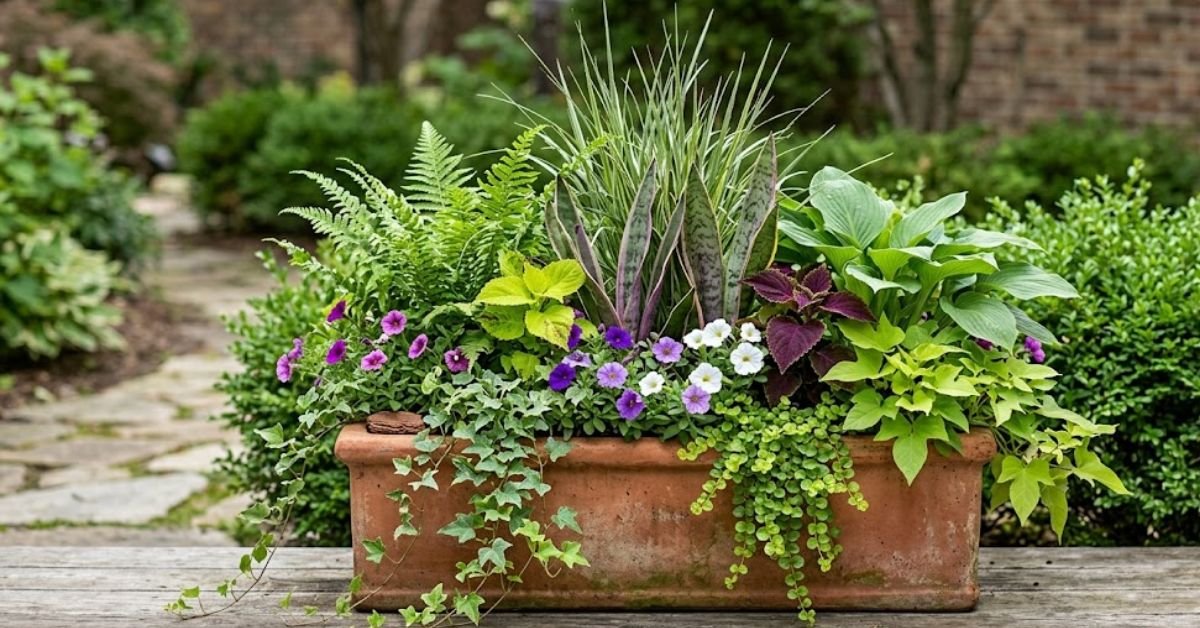
Choosing a rectangle planter represents one of the easiest ways to instantly elevate your outdoor patio or indoor living space. Specifically, these sleek, elongated containers provide a clean architectural line that standard round pots simply cannot replicate.
However, many homeowners struggle to properly arrange their flowers or maintain adequate soil moisture in these elongated troughs. Don’t worry, though. Once you understand the basic setup rules, it is an incredibly rewarding container to style. Let’s look at exactly how to make your greenery flourish.
Quick Care Table for Rectangular Containers
| Care Aspect | Ideal Requirement | US Home Environment Consideration |
| Sunlight | Dependent on plant choice (Match all plants in the box to the same light level) | Rotate the box 180 degrees every two weeks so back plants don’t starve. |
| Watering | Soak thoroughly until water runs out the bottom; let the top 2 inches dry out. | Blast the soil less during humid summer months; water more when winter heating kicks on. |
| Soil Type | Premium, lightweight indoor/outdoor potting soil (never backyard dirt). | Mix in extra perlite to keep the middle section from staying swampy. |
| Drainage | Critical. At least 2 to 3 holes spaced evenly along the base. | Use a tray indoors to save your hardwood floors from stains. |
| Temperature | Keep between 60°F and 85°F for most standard setups. | Keep the box completely clear of direct blasting from vents or air conditioning units. |
Why You Need a Rectangle Planter in Your US Home
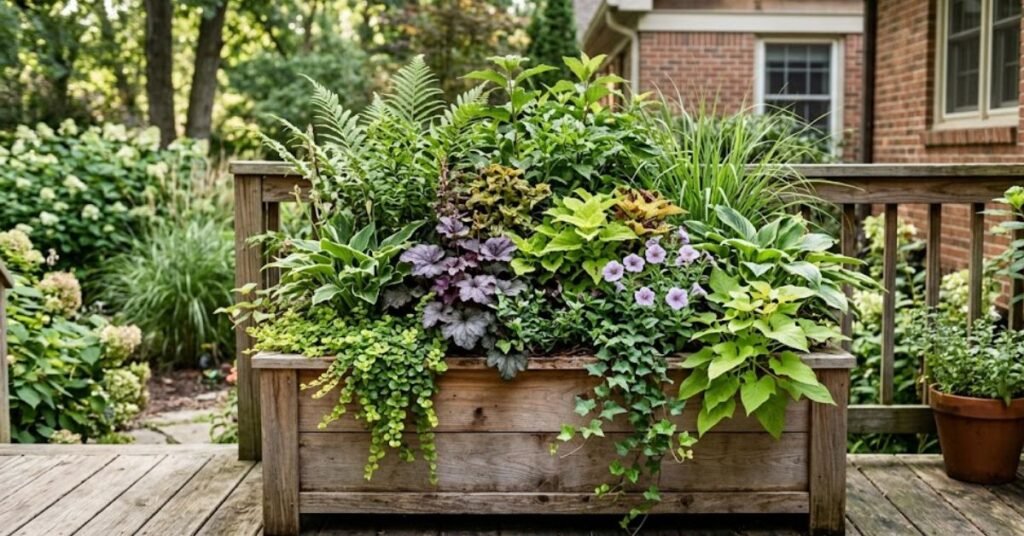
I love using these containers because they solve architectural problems that round pots just can’t touch. They act as natural room dividers.
Personal Pro-Tip: If you live in an apartment or a modern open-concept home, placing a 36-inch trough planted with tall snake plants right behind your couch instantly creates a gorgeous, distinct entryway zone.
When you pack plants into a linear space, they behave differently. The roots have room to spread out horizontally rather than just down. I’ve found that grouping compatible species together in a single long box actually creates a tiny, resilient microclimate. They trap humidity around each other’s leaves, which helps them stay green even when your air conditioning runs all day during a blistering July heatwave.
Choosing the Right Soil Mix for Your Rectangular Container
Please don’t just scoop dirt from your backyard. I see folks do this all the time in Zone 7 where the heavy clay just suffocates the roots within a month.
Containers need oxygen. You must use a dedicated, high-quality potting soil.
Because a rectangle planter holds a larger volume of soil in a concentrated block, the center can easily become a stagnant, muddy mess if the mix is too heavy. I always buy a standard peat or coco-coir based potting mix and manually toss in a few handfuls of coarse perlite or orchid bark before planting. This ensures that when you pour water from the faucet, it moves freely through the entire length of the box instead of pooling in the middle.
[Correct Soil Structure for Long Planters]
Top: 1 inch of mulch or space for watering
Middle: Premium potting soil + Perlite mix (High aeration)
Bottom: Drainage holes + Fine mesh screen to prevent soil loss
Personal Pro-Tip: Before putting any soil into your long box, lay down a single layer of paper towels or a strip of drywall mesh over the drainage holes. It lets water escape freely while keeping your soil from washing out onto your patio bricks or indoor rugs.
How to Plant a Stunning Arrangement in a Rectangle Planter
Designers love the “Thriller, Filler, Spiller” method, and it works beautifully in a linear setup.
First, place your tall focal points (the Thrillers) toward the back or center. Think structural options like Sansevieria or feather reed grass if you are outdoors in a milder climate. Next, surround them with your bushier mid-sized options (the Fillers). Finally, tuck trailing plants like Pothos or English Ivy near the front rim so they can cascade over the edge (the Spillers).
[ Thriller ] [ Thriller ]
[Filler] [Filler] [Filler] [Filler]
[Spiller] [Spiller]
Keep your spacing realistic. It is incredibly tempting to jam twelve individual 4-inch pots into a single 24-inch rectangle planter to make it look full on day one. Don’t do it. Give each plant a few inches of breathing room. They will fill out the space by the end of Spring, and you won’t have to rip them apart next year because their roots choked each other out.
Personal Pro-Tip: Always match your plants’ hydration personalities. Never mix a thirsty fern with a desert succulent in the same long box. One of them will end up miserable.
Common Mistakes People Make with a Rectangle Planter
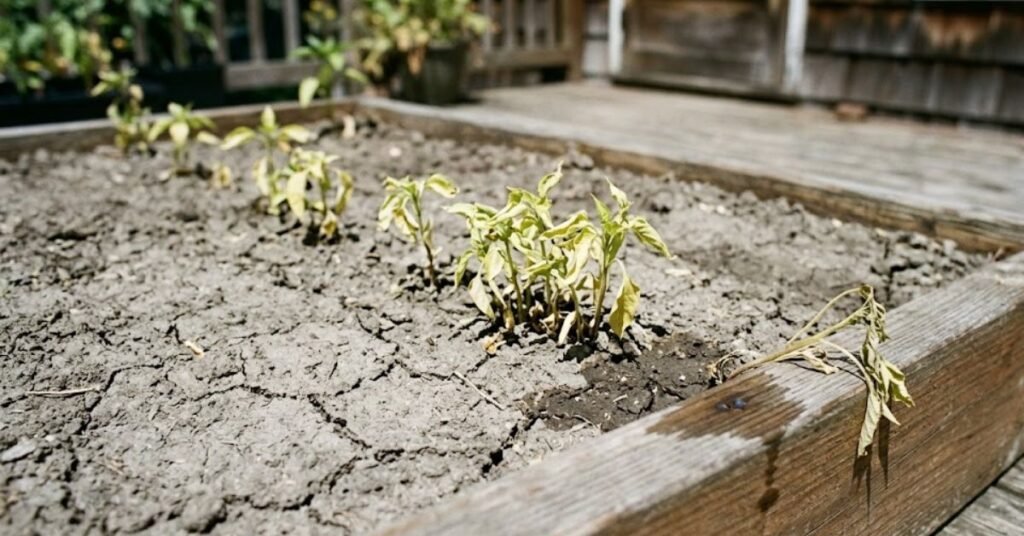
The absolute number one reason people fail with a long planter box is uneven watering.
When people use a watering can, they tend to dump all the water right into the center of the box, leaving the far left and right edges completely bone dry. Over time, the plants on the flanks slowly wither away while the centerpiece rots from overwatering.
Another major issue for indoor growers is placement relative to windows and home climate control. If you place a long box parallel to a window, the side facing the glass gets blasted with sun while the backside stays in deep shadow.
And watch those vents! If half of your long planter sits directly under an air conditioning vent, that specific section will drop leaves rapidly due to the constant, icy draft.
Personal Pro-Tip: When watering a long container, treat it like painting a line. Start at one far end and walk the stream slowly across the entire surface twice.
Troubleshooting Issues with Your Rectangular Planter Box
Are things looking a bit sad? Let’s fix it fast.
Yellowing Leaves at the Base
If leaves throughout the planter are turning pale yellow and dropping, the middle of your soil mass is likely waterlogged. Feel the bottom drainage holes. If they feel muddy, hold off on watering until the top half of the container feels totally dry.
Crispy, Brown Leaf Tips
This is a classic sign of low humidity or chemical sensitivity from city tap water. If you notice this happening mostly during the winter when your home heater is running, mist the plants occasionally or set up a small humidifier nearby.
Stunted Growth on One Side
If one half of your arrangement is exploding with growth while the other side looks stunted, your light source is uneven. Give the entire container a half-turn every couple of weeks to distribute the sunshine evenly.
Personal Pro-Tip: Keep a pair of clean pruning shears handy. Snip off any yellow or dead leaves immediately so the plants don’t waste precious energy trying to save dying foliage.
Is a Rectangle Planter Setup Safe for Pets?
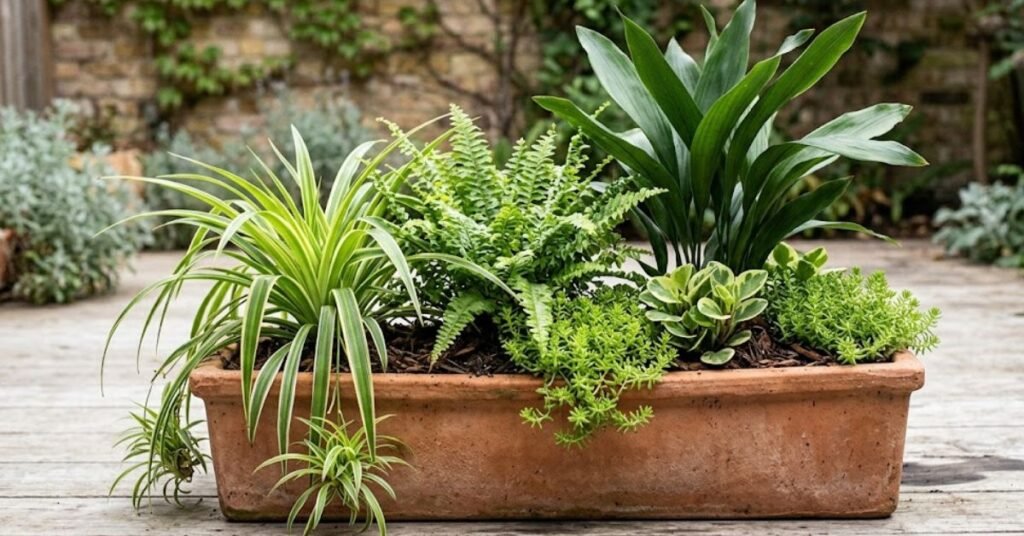
As a pet owner myself, this is the very first thing I look at. Because these boxes often sit low on the floor or on low windowsills, they are prime targets for curious cats and dogs.
If you want a gorgeous, completely pet-safe arrangement, skip the toxic options like peace lilies or English ivy. Instead, build your layout using a mix of Cast Iron Plants (for height), Boston Ferns (for fullness), and Spider Plants (to trail over the edge). All of these are completely non-toxic according to the ASPCA, giving you total peace of mind if your dog decides to take a sniff.
Personal Pro-Tip: If your cat thinks your new long planter is an excellent alternative litter box or a personal salad bar, push a few decorative pinecones or wooden skewers into the open soil spaces. It safely deters them from stepping inside.
Frequently Asked Questions About Rectangle Planters
Q1Do rectangle planters absolutely need drainage holes?
Yes. Without holes, water pools at the very bottom, rots the roots, and turns the soil sour. If you find a gorgeous box without holes, use it as a “cachepot”—keep your plants in plastic pots with drainage, and sit those plastic pots inside the decorative outer box.
Q2How do I prevent a long wooden or plastic planter from bowing outward in the middle?
The sheer weight of wet soil exerts massive outward pressure. Look for premium boxes that feature internal cross-braces or heavy-duty rolled lips. If you are building your own out of wood, always screw a support block right across the inside center.
Q3What can I plant in a very skinny rectangle planter for a narrow windowsill?
Stick to shallow-rooted beauties. Small succulents, echeverias, or a kitchen herb collection of thyme, oregano, and chives will do incredibly well without needing massive amounts of deep soil space.
Q4How many individual plants can I comfortably fit in a standard 24-inch box?
As a general rule, you can comfortably fit about 4 to 5 standard 4-inch nursery plants. This gives them enough immediate presence without crowding out their root zones too quickly.
Q5Can I leave a resin or plastic rectangle planter outside during freezing winter months?
It depends entirely on the material quality. Cheap plastic will turn brittle and snap when the temperature drops below freezing. Look specifically for frost-resistant resin or thick, UV-inhibited plastics if you live in northern USDA Zones where winters get severe.
Q6Why does the soil in my long container dry out so much faster than my round pots?
Long, shallow containers have a massive amount of surface area exposed to the air relative to their total volume of soil. This high evaporation rate means you will generally need to check them for water a bit more frequently than deep, round pots.
Q7How do I stop dirt from leaking out of the bottom holes and ruining my deck?
Line the inside base with a strip of fine landscape fabric, a coffee filter, or even a piece of old window screen before you add your soil. The water will flow out completely clear.
Final Thoughts on Mastering the Look
Creating a beautiful display in a long arrangement takes a tiny bit of planning, but the visual payoff is absolutely worth it. Just keep your soil light, watch your watering pattern from end to end, and make sure every plant sharing the box loves the same amount of sunlight. Once you get the balance right, your linear green wall will look incredible for years to come.

Amin Khalid is a professional horticulturist and the founder of LeafyWisdom. With a deep passion for home gardening and horticultural research, he specializes in providing practical, easy-to-follow care guides for indoor plants. Amin’s goal is to simplify gardening for everyone and help fellow plant lovers build their own thriving green spaces.

No responses yet