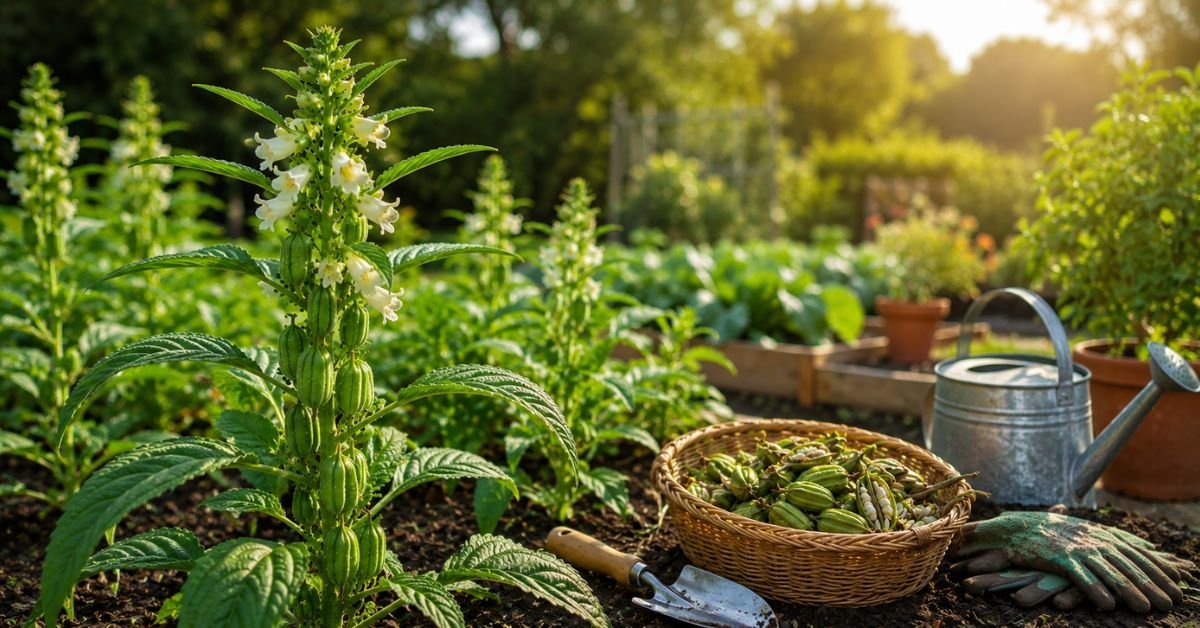
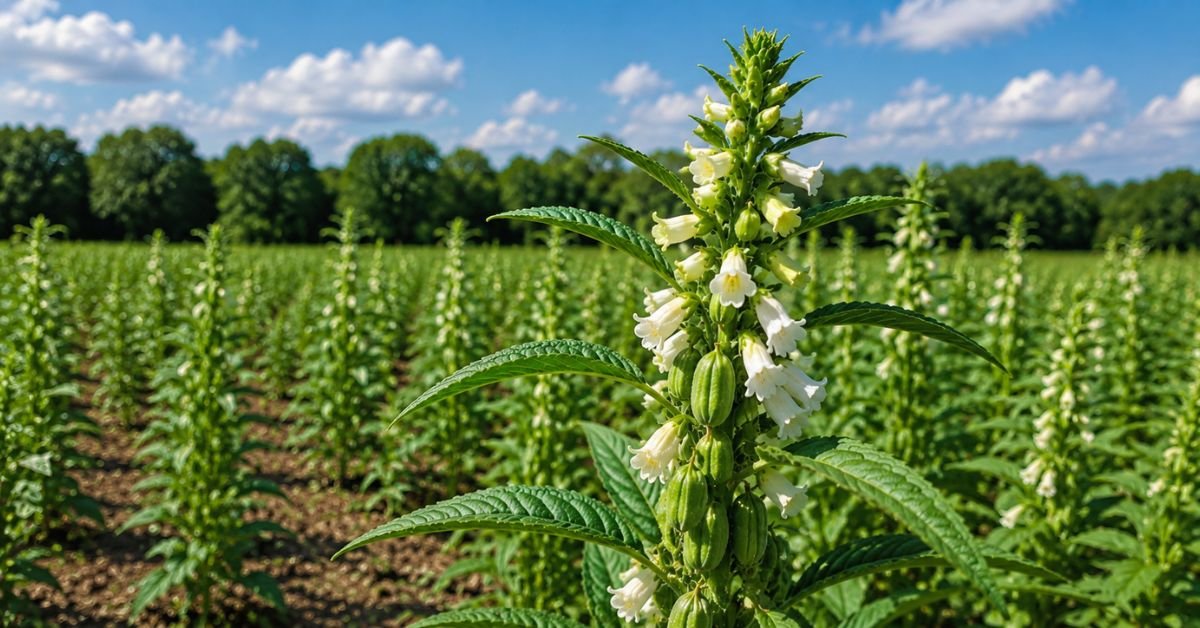
Ever wondered how those tiny sesame seeds on your favorite bagel actually grow? Mastering sesame plant care is surprisingly simple, even if you have never grown an oilseed crop before. In this guide, I will walk you through everything you need to know to grow, tend, and harvest your own fresh sesame seeds right in your home garden.
Quick Care Facts
What You Need to Know
Botanical Name
Sesamum indicum
USDA Hardiness Zones
Zones 7–10 (Grown as a summer annual elsewhere)
Sunlight
Full sun (8+ hours of direct light)
Best Soil
Well-draining potting soil or sandy loam
Watering
Low. Loves dry spells between soakings
Pet Safety
Non-toxic to cats and dogs (ASPCA safe)
I used to think sesame seeds were just something factory-packaged on top of my hamburger buns. That changed five years ago when I planted my first row of Sesamum indicum in my home garden plot.
It completely blew me away.
The plant produces gorgeous, pale pink and white tubular flowers that look like exotic bellflowers. Neighbors kept walking by asking what ornamental flower I was growing. I loved telling them I was actually working on my seasonal seed crop.
If you want a low-maintenance, heat-loving project this summer, this plant is an absolute blast. Here is my completely original, battle-tested routine for sesame plant care.
Understanding Sesame Plant Care Across US Zones
This plant is native to warm tropical climates, meaning heat is its best friend. If you live down South or out West in USDA Hardiness Zones 7 through 10, you can sow seeds straight into your garden beds once the ground heats up.
Living in a colder northern region? Don’t sweat it. You just need to jumpstart your growing season. Start your seeds indoors about a month before your region’s last expected spring frost.
Personal Pro-Tip: Always sow indoor seeds in biodegradable peat pots. Sesame taproots are extremely sensitive. When I transfer my seedlings out to the yard in late May, I plant the whole pot right into the ground. No root shock, no wilted plants.
Light Needs for Growing Healthy Sesame
Do not try to hide this plant in partial shade. It wants full, intense heat.
Aim for at least eight hours of unfiltered sunlight every day. If your yard lacks light, the central stem gets long, spindly, and fragile. Good lighting keeps the stalk sturdy enough to hold heavy seed pods later in late summer.
Soil and Watering Steps for Sesame Plant Care
Soil structure makes or breaks this crop.
If you choose patio containers, stick to a lightweight potting soil. Skip dense topsoils or heavy clay that traps moisture. Outdoors in garden beds, a loose, sandy loam works wonders.
When it comes to watering, less is definitely more. I have killed my fair share of plants by overwatering, but sesame handles dry spells like a champ.
Wait until the soil dries out deep beneath the surface before pulling out the hose. When you do water, direct the flow straight from your outdoor faucet to the base of the stem. Damp foliage leads to leaf spot quickly.
Personal Pro-Tip: Do the simple finger check. Push your index finger two inches deep into your potting soil. If you feel any dampness at all, leave your watering can in the shed.
Smart Fertilizer Choices for Sesame Care
You don’t need expensive feeding regimens here.
Over-fertilizing produces massive green leafy plants that completely forget to set flowers. If your dirt is stripped of nutrients, a single dose of balanced organic fertilizer right when bloom buds open in mid-summer is all you need.
Where Most People Fail with Sesame Plant Care
Over my years advising home gardeners across the US, I see two massive mistakes repeat themselves every single spring.
First, folks rush to plant outdoors during early spring spells. Sure, the air feels warm in April, but if the dirt is under 70°F, your seeds will rot in the cold mud. Wait for true early-summer heat.
Second, indoor air conditioning creates serious problems. If you start seeds inside, keep them away from cold blasts coming off your AC vents. Cold drafts stunt young seedlings in hours.
Personal Pro-Tip: Put your seed trays on a heated propagation mat inside. It creates that warm, southern-soil atmosphere right on your kitchen counter.
Quick Fixes for Common Sesame Plant Care Problems
Things go wrong even for experienced growers. Here is how I diagnose issues when inspecting garden plots:
Foliage turning yellow: Too much water. Let the soil dry out completely and check that your pots have drain holes.
Crispy, browning leaf edges: Strong hot winds paired with weeks of neglected water. Give the root zone a deep soak.
Seed pods popping open early: This natural opening is called “shattering.” You held off on harvesting too long! Cut the stems as soon as the lower pods turn tan and dry.
Personal Pro-Tip: Pods ripen from the ground up. I harvest the lower mature pods mid-season while the top of the stalk is still blooming. This stops seeds from falling into the dirt and blowing away.
Toxicity Check: Safe for Dogs and Cats?
Pet safety is a top priority in my home, especially with my dogs running through garden beds.
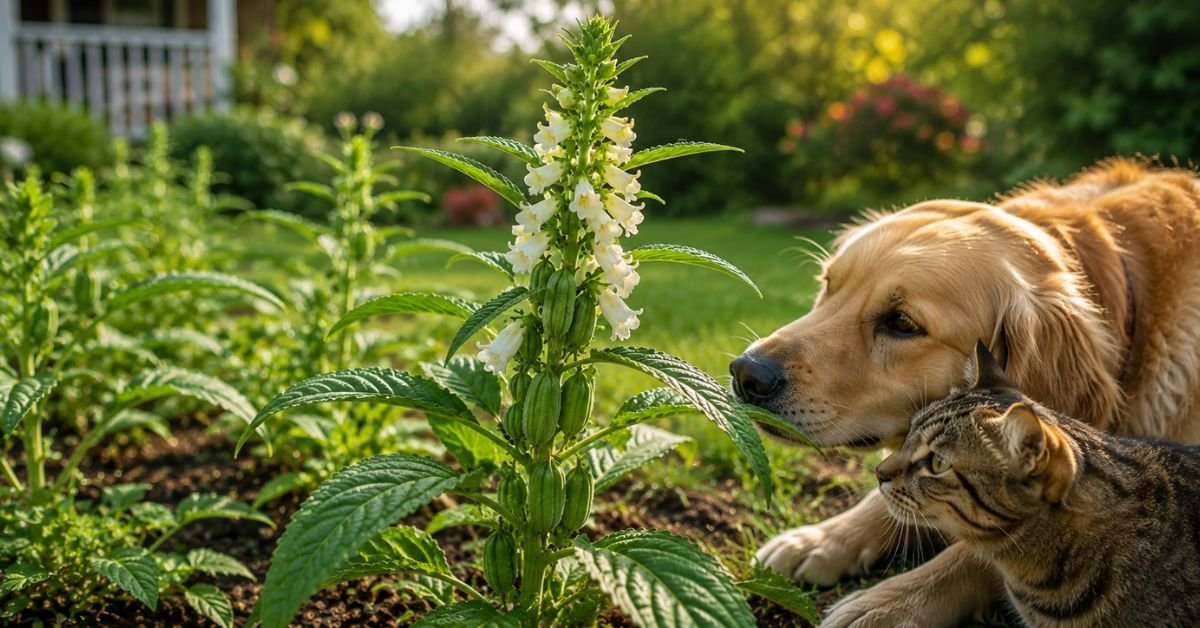
You can rest easily. The ASPCA lists the sesame plant as completely non-toxic to dogs and cats.
If your pet snatches a loose pod off the stem, it won’t poison them. Just keep an eye out so they don’t eat huge piles of raw foliage, which can cause minor stomach upset in curious pets.
Frequently Asked Questions About Sesame Care
Q1: What USDA Hardiness Zones are best for sesame?
Zones 7 through 10 offer the long, warm seasons needed for direct outdoor planting. In Zones 6 or colder, start your seeds indoors early.
Q2: Can I grow sesame indoors year-round?
It rarely works out. These plants need massive amounts of direct sun and reach up to five feet tall. Indoor AC and window glass limit their growth dramatically.
Q3: How many seeds do you get from one sesame plant?
A healthy plant produces dozens of pods along its central stem, giving you hundreds of individual seeds per stalk.
Q4: Does sesame plant care require pruning?
No pruning necessary! They naturally grow on a main vertical stem. Just let them grow upright freely.
Q5: What kind of pests eat sesame plants?
Aphids sometimes cluster on soft flower buds. I just spray them off with a quick blast from the garden hose or apply mild neem oil spray.
Q6: Do I need multiple plants for pollination?
No. Sesame blooms are self-pollinating. A single pot on a sunny balcony will set seeds just fine on its own.
Q7: Can I plant raw sesame seeds from the grocery store?
Yes, as long as they are unhulled, raw, and unroasted. Roasted grocery seeds are dead and won’t germinate. I prefer using fresh seed packets from trusted US seed companies for consistent germination.
Final Thoughts
Adding sesame to your garden is one of the most fun summer experiments you can try. It thrives in scorching summer sun that wilts standard garden veggies.
Keep your soil dry, plant late enough to dodge spring chills, and keep seedlings clear of cold AC vents. Grab a pack of seeds this season and give it a shot!
Amin Khalid is a professional horticulturist and the founder of LeafyWisdom. With a deep passion for home gardening and horticultural research, he specializes in providing practical, easy-to-follow care guides for indoor plants. Amin’s goal is to simplify gardening for everyone and help fellow plant lovers build their own thriving green spaces.
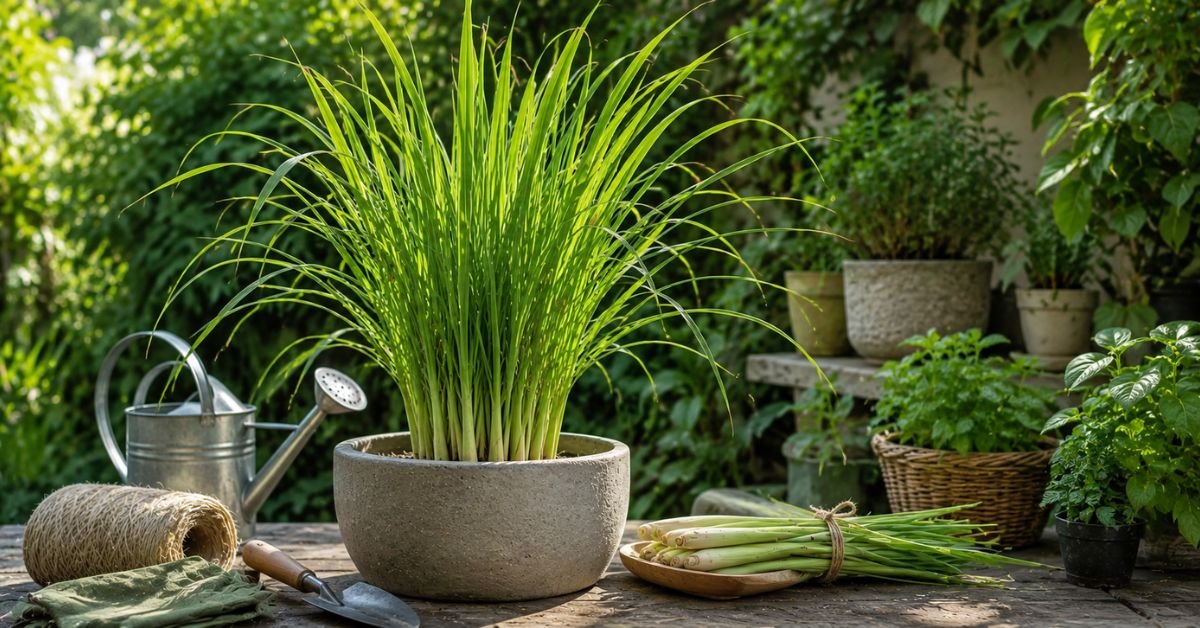
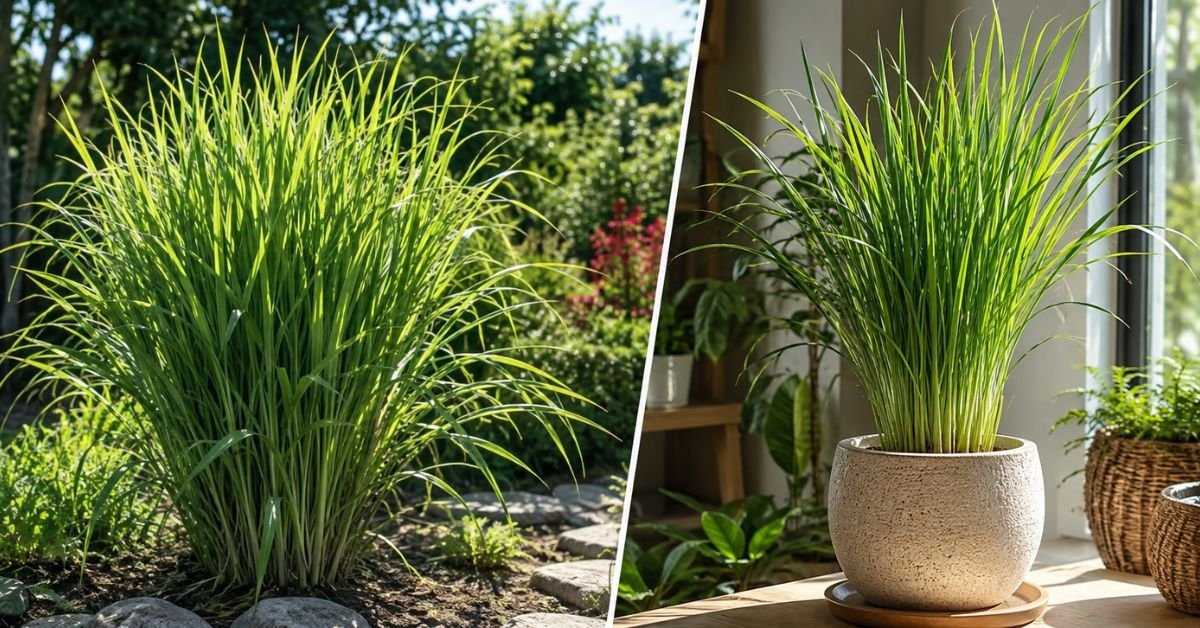
In my 15 years of digging around in garden beds and nursing potted herbs on back porches, few plants earn their keep quite like lemongrass (Cymbopogon citratus). It gives you that brilliant, sharp citrus smell every time you brush past it, repels pests, and supplies your kitchen with fresh stalks for teas and curries all season long.
People think tropical herbs are fussy. Honestly, this one isn’t provided you don’t make a few classic mistakes with your setup. Below is everything I’ve learned about practical lemon grass plant care, whether you’re planting in ground down in Florida or trying to keep a container alive through an Ohio winter.
Quick Reference for Lemon Grass Plant Care
Light: 6–8+ hours of direct sun daily (a south-facing porch or garden bed is best)
Watering: Deep, consistent moisture; water when the top inch of soil feels dry
Temperature: 65°F to 95°F (18°C to 35°C); protect from temperatures below 45°F
USDA Zones: Perennial in Zones 9–11; grown as an annual or potted plant in Zones 3–8
Fertilizer: High-nitrogen liquid feed every 2–4 weeks during Spring and Summer
Toxicity: Mildly toxic to cats and dogs (contains essential oils that cause upset stomachs)
Understanding Outdoor & Indoor Environments for Your Lemon Grass Plant
Getting your environment right solves 80% of your problems before they start. Lemongrass comes from tropical Asia, which means it likes heat, humidity, and unbroken sunlight.
Hardiness Zones and Sunlight Needs
If you live in USDA Hardiness Zones 9 through 11 (think South Florida, Southern California, or parts of the Gulf Coast), you can pop your plant straight into your yard’s soil. It will grow as a perennial, forming massive, lush clumps up to 5 feet tall.
For the rest of us in Zones 3 through 8, freezing winter temps will kill the roots overnight. That doesn’t mean you can’t grow it. It just means you need to use containers so you can haul the plant inside before the first autumn frost hits.
When it comes to sunlight, don’t skimp. This plant wants direct, blazing sun. Put it in the sunniest spot on your deck or backyard. If you’re growing it indoors near a window, a south-facing spot is non-negotiable. If your home gets weak natural light during late Fall, set up a simple grow light set to 12 hours a day.
Personal Pro-Tip: When moving your potted lemongrass outdoors in the Spring, don’t jump straight from your living room to full noon sun. You will scorch the leaves. Give it 3 or 4 days in partial shade on the porch to acclimate first.
Essential Lemon Grass Plant Care: Water, Soil, and Fertilizer
Grass plants are heavy feeders and heavy drinkers. You can’t treat lemongrass like a snake plant or a cactus it will shrivel up fast if you neglect the watering can.
How Often to Water Your Lemongrass Plant
Outdoors in the heat of July, your lemon grass plant will drink water like crazy.
Check the soil every morning. If the top inch is dry, soak the pot deeply until water runs freely out of the bottom drainage holes. Never let the pot sit in a standing saucer full of water for days, but don’t let the potting soil dry out into a dusty brick either. Hook your hose up to the outdoor faucet and give it a good, long soak right at the base of the stalks early in the morning.
Best Potting Soil Mix for Containers
If you’re planting in garden beds, mix a generous couple of inches of aged compost into your native soil.
For containers, never use heavy topsoil from the yard. It gets compacted, suffocates the roots, and turns into mud. Instead, buy a high-quality loose potting soil enriched with organic matter and perlite. The goal is a mix that holds moisture without getting soggy.
Feeding Your Plant for Maximum Growth
Since we grow lemongrass for its green blades and thick stalks, it needs plenty of nitrogen.
Starting in late Spring, feed your plant every two to three weeks with a balanced, water-soluble plant food or fish emulsion. Once September rolls around and growth slows down, stop fertilizing completely for the season.
Personal Pro-Tip: I like to top-dress my potted lemongrass with a half-inch layer of worm castings right around May. It acts as a slow-release feed that keeps the foliage dark green without burning the roots.
Common Mistakes People Make with Lemongrass Plant Care
I’ve made plenty of mistakes with this plant over the years. Here are the three main ways home gardeners accidentally kill their lemongrass:
Placing pots near indoor AC vents: Summer heat means indoor central air is blasting. If you keep a potted lemongrass inside near an air conditioning vent, the dry draft will sap moisture out of the leaves faster than the roots can pull it up from the soil. Keep it clear of cold drafts!
Using a pot that is way too small: Lemongrass root systems grow fast and thick. If you put a healthy starter plant in a tiny 6-inch pot, it will become root-bound in a month and dry out twice a day. Use a heavy pot that is at least 12 to 14 inches wide with solid drainage.
Leaving it outside during early cold snaps: A sudden dip down into the 30s will turn your crisp green stalks into brown mush. Keep an eye on your local weather forecast when Fall arrives.
Personal Pro-Tip: Choose a heavy ceramic or terracotta pot rather than a thin plastic one. Lemongrass grows top-heavy by August, and strong afternoon wind gusts on your deck will easily knock lightweight plastic pots over.
Troubleshooting Your Lemon Grass Plant: Yellow Leaves & Brown Tips
Plants talk to us through their leaves. If your lemongrass looks sad, here is how to read the signs and fix them.
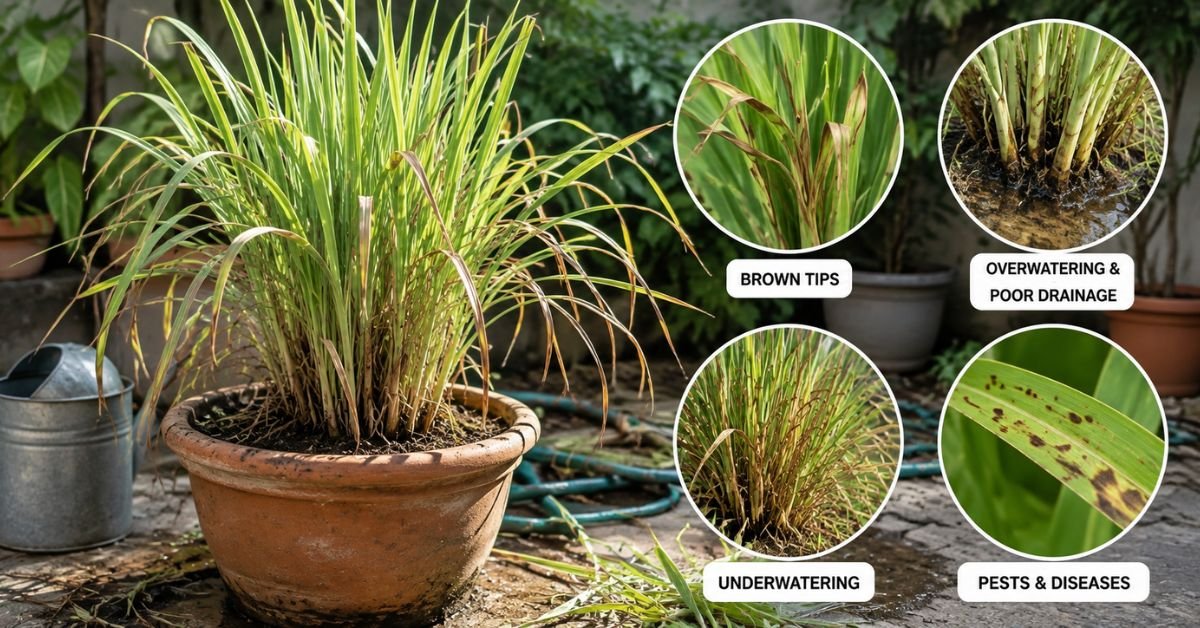
Problem 1: Crispy Brown Leaf Tips
Cause: Low humidity or under-watering.
Fix: Increase deep watering and move the plant away from cold AC vents or dry heating drafts.
Problem 2: Yellowing Lower Leaves
Cause: Lack of nitrogen or root rot from soggy soil.
Fix: If the soil is too wet, check the pot drainage holes and let the top inch dry slightly. If the soil moisture is fine, feed the plant with a nitrogen-rich liquid fertilizer.
Fix: If you notice tiny webs between the stalks, wipe the leaves down with a damp cloth and spray the plant with neem oil or mild insecticidal soap.
Personal Pro-Tip: Sharp edge warning! Lemongrass leaves have microscopic serrated edges that cut skin just like a fresh sheet of printer paper. Wear sturdy gardening gloves when pruning, harvesting, or wiping down mature leaves.
Toxicity Warning: Is a Lemon Grass Plant Safe for Pets?
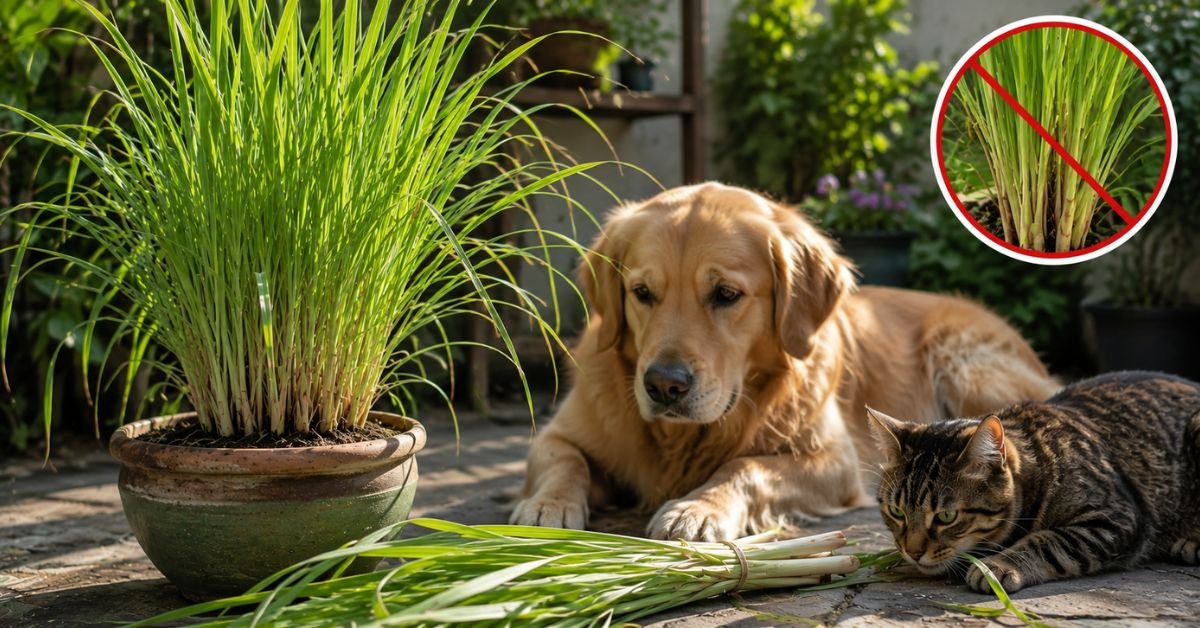
This is critical for dog and cat owners. Lemongrass is toxic to cats and dogs when ingested in large quantities.
The plant contains cyanogenic glycosides and essential oils. Cats are especially attracted to the long, green blades because they mimic normal lawn grass.
If your pet nibbles a tiny tip, they might just get a mild upset stomach. However, if a curious cat chews down a whole bunch of foliage, it can cause severe vomiting, diarrhea, abdominal pain, or even an intestinal blockage due to the tough, fibrous nature of the stalks.
Keep potted indoor plants elevated on plant stands out of reach of pets, or place outdoor containers in fenced patio spaces where your pets can’t graze on them.
Frequently Asked Questions About Lemon Grass Plant Care
Q1: Can I grow a lemon grass plant from grocery store stalks?
Yes! Buy fresh stalks from your local market that still have a solid stem base attached. Trim the leafy tops down to 6 inches, stand the stalks in a glass with two inches of fresh water from your kitchen faucet, and place it on a sunny windowsill. You’ll see white roots sprout within 10 to 14 days, after which you can plant them into potting soil.
Q2: How do I overwinter my lemon grass plant indoors during winter?
Before the first frost in Fall, cut the stalks back to about 6 inches tall. Dig up the root clump from your garden bed (or bring your container inside) and place it in a bright spot indoors. Water sparingly—just enough to keep the root ball from completely drying out—until Spring arrives.
Q3: Why is my potted lemon grass plant turning brown at the bottom?
Outer leaves naturally dry up and turn tan or papery as the plant matures and expands. Simply peel away those dried outer sheath layers at ground level to keep the plant neat and clean.
Q4: How often should I fertilize my lemongrass during the growing season?
Apply a balanced liquid fertilizer every 2 to 4 weeks from late Spring through mid-Summer. Stop feeding by late Summer so the plant naturally slows down growth before cold weather arrives.
Q5: Can a lemon grass plant survive a hard frost in Zone 7 or below?
No. Sustained freezing temperatures will freeze the root system solid, killing the plant. In Zone 7 and lower, treat it as an annual or overwinter it indoors.
Q6: Does keeping a lemon grass plant on my porch really repel mosquitoes?
While lemongrass contains citronella oil, simply sitting next to a potted plant won’t create an insect barrier. You have to crush the leaves between your hands to release the aromatic oils that naturally ward off pests.
Q7: How do I harvest lemongrass stalks without hurting the main plant?
Choose mature stalks that are at least a half-inch thick at the base. Use a sharp knife to slice the stalk right at the soil line, or give it a firm twist and pull outward from the base of the cluster.
Final Thoughts on Lemon Grass Plant Care
Proper lemon grass plant care comes down to three basic rules: give it loads of sunlight, keep the root zone moist, and protect it from freezing temperatures. Once you set up those conditions, this herb practically takes care of itself, rewarding you with fresh citrus scents and endless garden harvests all summer long.
Amin Khalid is a professional horticulturist and the founder of LeafyWisdom. With a deep passion for home gardening and horticultural research, he specializes in providing practical, easy-to-follow care guides for indoor plants. Amin’s goal is to simplify gardening for everyone and help fellow plant lovers build their own thriving green spaces.
I remember staring at the green, murky mess in my backyard a few summers ago. It smelled exactly like a swamp, and my first attempt at growing pond plants was an absolute disaster.
I had spent a whole weekend digging a beautiful water garden. I filled it straight from the garden faucet. Then, I crossed my fingers. I completely underestimated the power of aquatic greenery, assuming the expensive mechanical filter would do all the work.
I learned the hard way. A water feature is a living ecosystem, and the secret to crystal-clear water isn’t chemicals. It’s the vegetation. Today, I want to share exactly how to grow a balanced water garden without making the same costly mistakes I did.
Quick Care Cheat Sheet for Skimmers
Detail
What You Need to Know
Water Depth
Bog plants like 1-6 inches of water. Lilies want 12-36 inches.
Sunlight
6+ hours of full sun for the best blooms.
USDA Zones
Hardy types survive Zones 3-8 easily. Tropicals need Zones 9-11 (or a warm garage in Winter).
Soil Needs
Heavy aquatic clay. Never use standard houseplant soil.
Personal Pro-Tip: Don’t buy everything at once. I start every Spring by buying my surface floaters first, letting them multiply, and then adding my heavy bottom-dwellers a few weeks later once the water warms up.
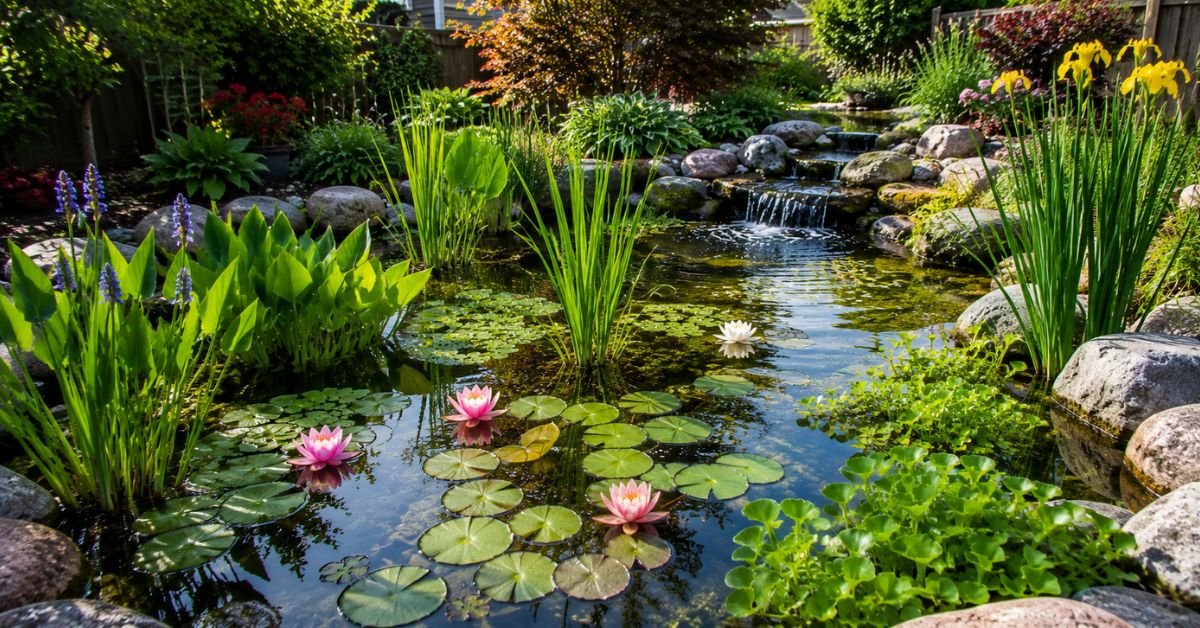
The Core Categories of Pond Plants
You need a diverse mix to keep things balanced. Think of it like building a healthy meal. You need different ingredients to do different jobs.
Floating Pond Plants
These are your natural sunshades. Their roots dangle freely in the water while the leaves sit on the surface. Water Hyacinth and Water Lettuce are incredibly popular across the US for this exact reason. They block the brutal July sun and literally starve out green algae by eating up the nutrients.
Deep Water Pond Plants
Here is where the magic happens. Water lilies and lotuses get planted in heavy pots resting at the very bottom of the water. They shoot long stems upward, finishing with massive, showy blooms on the surface. If you buy hardy varieties, they will easily survive freezing mid-western winters as long as the tuber at the bottom doesn’t freeze solid into ice.
Marginal Pond Plants
These live in the shallow edges. Creeping Jenny, Marsh Marigold, and Pickerelweed soften the harsh look of black rubber liners or ugly rocks. They also give frogs a safe place to rest.
Submerged Oxygenators
You won’t even see these. Hornwort and Anacharis live entirely under the surface. They pump pure oxygen directly into the water, which your koi and beneficial bacteria desperately need.
Personal Pro-Tip: I aim to cover about 50% to 60% of the water’s surface with foliage. If you cover more than that, you risk cutting off the oxygen exchange at the surface.
Why Americans Kill Their Pond Plants
I see the same exact failures every single season. Usually, it comes down to a few basic misunderstandings about how aquatic ecosystems work.
Using the Wrong Soil
Do not grab a bag of standard indoor potting soil for your lilies. Just don’t do it. Standard soil is full of perlite, peat moss, and wood chips. The second you drop that pot into the water, a massive cloud of white perlite will float to the top and instantly clog your pump. You must use unscented baked clay (kitty litter works!) or heavy aquatic loam.
The Garden Faucet Trap
Evaporation happens fast in August. It’s tempting to just leave the garden hose running to top off the water. But city tap water contains chlorine and chloramines. If you do a big water change without adding a water conditioner, you’ll burn the roots of your plants and nuke your good bacteria.
Frying Them With Air Conditioning
Folks in colder states (Zones 3-6) often bring their expensive tropical lilies indoors for the Fall and Winter. That’s smart. But placing them near your indoor AC vents or forced-air heating registers is a death sentence. The dry air will turn the leaves to literal dust in a matter of days. Keep them in a bucket of water near a sunny, draft-free window instead.
Personal Pro-Tip: When planting new marginals in plastic baskets, I always line the inside of the basket with a piece of burlap or newspaper before adding the clay. It keeps the dirt from washing out into the water while the roots establish themselves.
Troubleshooting Unhappy Pond Plants
Sometimes they get sick. It happens. But aquatic foliage is actually really good at telling you what it needs.
Leaves Turning Yellow: If your lily pads are turning a pale, sickly yellow but the veins remain dark green, they are starving. A brand-new water garden often lacks the fish waste needed to feed heavy bloomers. Shove an aquatic fertilizer tablet deep into the soil of the pot.
Crispy Brown Tips: This is almost always chemical burn. If you recently treated your backyard oasis with a harsh liquid algaecide, your vegetation is going to suffer.
Mushy, Black Stems: You planted them too deep. A marginal plant likes wet roots, but if you drop the whole thing two feet underwater, it will drown and rot. Move it to a shallower rock shelf.
Personal Pro-Tip: Older lily pads naturally turn yellow and rot by late summer. I pull on a pair of waders, get in there, and pinch the dying pads off at the base. It keeps the water from turning brown from decaying organic matter.
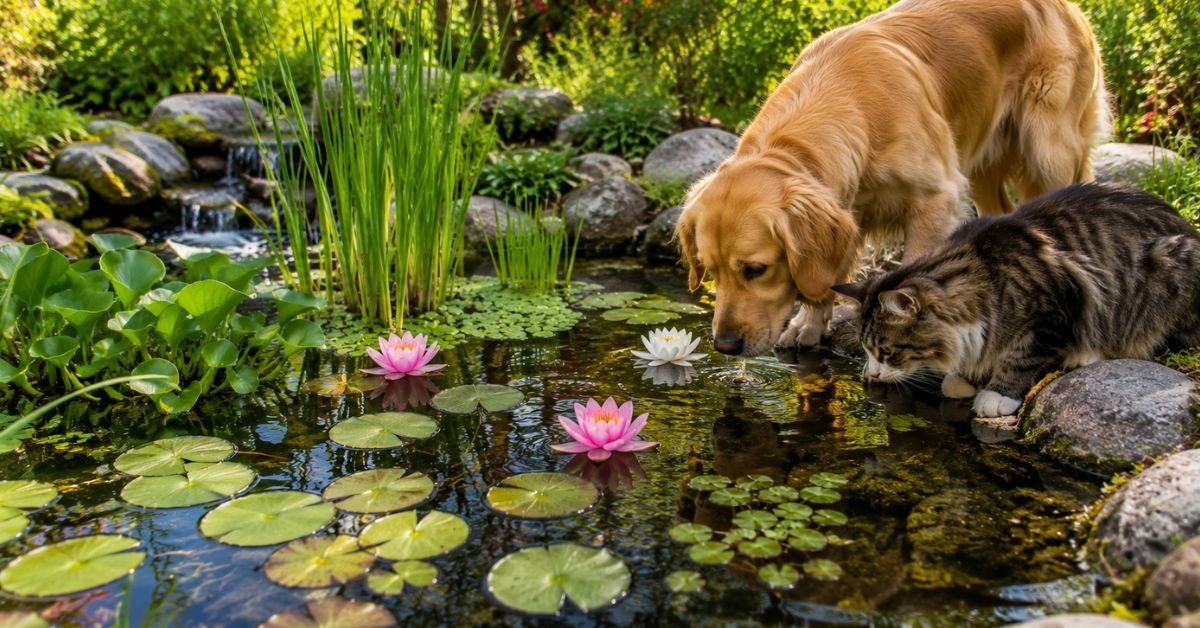
Are Pond Plants Toxic to Dogs and Cats?
We love our pets. A thirsty Labrador is definitely going to take a sip from your backyard water feature, so you need to be careful about what you plant.
According to the ASPCA, true Water Lilies are generally non-toxic to dogs and cats.
However, Water Hyacinth can trigger heavy vomiting if your dog decides the floating bulbs look like chew toys. Similarly, Irises and Marsh Marigolds (which we use heavily on the shallow edges) contain toxins that cause bad gastrointestinal upset.
Personal Pro-Tip: I plant my pet-safe greenery (like Sweet Flag) on the easily accessible edges of the rocks. I put the riskier, toxic stuff right in the middle where my dog can’t reach it without going for a full swim.
Essential FAQs About Pond Plants
Here are the questions I constantly see popping up on Reddit and from my local landscaping clients.
Q1: How often should you water pond plants?
You don’t! That is the absolute best part. They live in the water. Just make sure the sun doesn’t evaporate the water level down below their pots during a dry spell.
Q2: Will my koi eat everything I plant?
Yes. Big koi are underwater lawnmowers. They will demolish the roots of floating vegetation. I use floating plastic rings to protect the roots, or I isolate the greens in a shallow bog area where the big fish can’t swim.
Q3: Do pond plants need fertilizer?
Your floaters and submerged oxygenators will pull everything they need straight from the fish waste in the water. Potted deep-water lilies, however, need a monthly aquatic fertilizer spike pushed into their clay from Spring through late Summer.
Q4: Can I use dirt from my own yard?
If your yard has heavy, dense clay that has never been sprayed with weed killer, yes. If you have sandy soil or use lawn chemicals, no.
Q5: Why are my floaters shrinking and dying?
Usually, your water is too clean. If you have no fish and a massive filtration system, there is no nitrogen in the water. The floaters will literally starve to death.
Q6: Can pond plants survive the winter outside?
It depends on your USDA Hardiness Zone. Hardy marginals and hardy lilies survive freezing temperatures just fine, provided their roots are below the solid ice line. Tropical varieties will turn to mush the moment the water hits 50°F.
Q7: Will adding plants really clear up my green water?
Yes. Green water is just single-celled algae feeding on sunlight and nutrients. Add floating vegetation to block the sun, and submerged oxygenators to eat the nutrients. The algae will starve, and your water will clear up naturally.
Personal Pro-Tip: In late Fall, cut all the dead, brown stems off your hardy marginals right above the water line. If you leave them to rot over the Winter, they will foul your water quality by Spring.
Final Thoughts
Creating a backyard water garden is an incredibly rewarding process, but you have to respect the biology of it.
Start small. Grab a single hardy water lily, a couple of marginals for the rocky edges, and a handful of floaters. Watch how they react to your specific yard’s sunlight. You will absolutely make a few mistakes along the way, but that is just part of gardening. Stick with it, keep an eye on your water quality, and you will eventually build a peaceful, balanced ecosystem that takes care of itself.
Amin Khalid is a professional horticulturist and the founder of LeafyWisdom. With a deep passion for home gardening and horticultural research, he specializes in providing practical, easy-to-follow care guides for indoor plants. Amin’s goal is to simplify gardening for everyone and help fellow plant lovers build their own thriving green spaces.
If you want to stop traffic in your neighborhood this spring, you need to plant something much bolder than the usual suburban hydrangea. I’m talking about California lilac plants. These stunning native shrubs produce explosions of electric blue flowers that literally make people pull their cars over to ask what you are growing. I have grown several of these in my own landscaping over the years. They are remarkably low-maintenance once you understand their wild nature. Let’s get into exactly how to grow them in your yard without the usual headaches.
Feature
Requirement
Botanical Name
Ceanothus spp.
USDA Hardiness Zones
7 – 10 (Varies by specific cultivar)
Sun Exposure
Full Sun (6+ hours direct light daily)
Soil Type
Well-draining, sandy, or gravelly
Water Needs
Low (Very drought-tolerant after year one)
Toxicity
Non-toxic to cats and dogs
Bloom Season
Mid-Spring to Early Summer
Where Do California Lilac Plants Grow Best in the US
Despite the name, these shrubs aren’t actually true lilacs. They belong to the Ceanothus genus. Native to the American West Coast, they evolved to flourish in dry, sunny, and breezy environments. In my garden, these bushes become absolute bee magnets every single May.
Understanding your local US climate is the first hurdle. California lilac plants perform best in USDA Hardiness Zones 7 through 10. If you live in a region with brutal freezing winters like Zone 5, planting them outdoors in the ground year-round simply won’t work. However, if you are in the West, the Southwest, or temperate parts of the South, these evergreens will reward you heavily.
Personal Pro-Tip: Do not plant these anywhere near your outdoor air conditioning unit! The hot exhaust dry-blast will scorch the glossy leaves in a matter of days, leaving you with a brittle, dead bush. Put them in open beds where the natural breeze circulates.
Essential Sunlight and Potting Soil Needs for Ceanothus Shrubs
These shrubs demand the sun. You must place them where they catch at least six full hours of unshaded sunlight every single day. If you stick them in dense shade, the branches stretch out, get ugly and leggy, and refuse to produce flowers.
Soil drainage is where I see most American gardeners fail. Ceanothus hate wet feet.
In my early days of landscaping, I lost two expensive bushes because I planted them in heavy, unamended clay soil in my backyard. The roots literally suffocated. If your garden soil stays muddy days after a rainstorm, you need to fix it. Mix in crushed pumice, coarse builder’s sand, or pea gravel to speed up the drainage.
Growing one on a patio in a large container? Skip the standard, heavy garden dirt. Fill your pot with a fast-draining potting soil mixture blended specifically for succulents or Mediterranean plants.
Personal Pro-Tip: Always double-check the drainage holes on outdoor pots. If water pools near the base for even an hour, grab a power drill and add three or four more holes to the bottom of the planter.
How to Water California Lilac Plants Without Killing Them
Here is the absolute golden rule for this plant: less is more.
During the first spring and summer after you plant it, your fresh shrub needs regular moisture to build a tough root system. Give it a deep soak about once a week during dry stretches. Fill your watering can right from the outdoor faucet and pour it slowly around the base.
Once established after the first year, stop babying it.
Summer irrigation in warm inland climates often triggers deadly fungal root rot. I almost never touch my established bushes with a hose once June arrives. Natural rainfall during fall and winter is usually completely sufficient.
Personal Pro-Tip: Never run automatic overhead sprinklers that blast the leaves every evening. Wet leaves sitting in warm summer night air will foster powdery mildew incredibly fast. Always water right at the soil level.
Common Mistakes Americans Make With These Blue Beauties
Why do so many homeowners struggle with this species? It usually happens because they treat it like a traditional English garden rose.
Here are the biggest pitfalls I see out in the field:
Over-fertilizing: Pumping them with heavy nitrogen fertilizers produces soft, weak green leaves and absolutely zero flowers. It also shortens the plant’s lifespan. They actually prefer poor, lean soil.
Hard Pruning: Never cut back into thick, old woody stems that lack green leaves. They will not sprout fresh shoots from old wood. Only trim the soft green stems lightly right after the spring flowers fade.
Volcano Mulching: Piling heavy bark mulch directly against the main trunk traps moisture. This invites rot.
Indoor Air Conditioning: Trying to grow a full-size Ceanothus inside your house under heavy central AC drops the humidity too fast and starves the plant of the intense UV light it craves.
Personal Pro-Tip: Keep your garden mulch at least four inches away from the base of the stem. I always create a bare “donut” of clean soil right around the trunk to let the crown breathe.
Troubleshooting Your California Lilac Plants
When things go wrong, your bush will give you obvious visual clues.
Yellowing Leaves
If the lower leaves turn pale yellow and drop off during early summer, you are overwatering. Period. Let the top three inches of soil bake dry completely before you even think about turning on the faucet.
Brown, Crispy Leaf Tips
Brown tips usually signal extreme dry heat combined with high winds, or a synthetic fertilizer burn. If you live in an inland valley where summer heat hits triple digits, provide some afternoon shade using taller companion trees. If you dumped fertilizer on it, flush the root zone heavily with fresh water.
Sudden Branch Collapse
If an entire stem suddenly wilts and turns brown while the rest of the plant looks fine, a soil pathogen has likely infected one side of the root system. Snip off the dead branch down to clean wood and completely stop all summer watering.
Personal Pro-Tip: I always wipe my pruning shears with rubbing alcohol between every single cut when removing dead branches. This stops you from accidentally spreading invisible diseases across healthy limbs.
Are Ceanothus Bushes Safe for Dogs and Cats?
Pet safety is a massive priority. The great news is that true california lilac plants (Ceanothus species) are completely non-toxic to dogs, cats, and horses.
Do not confuse this with the Persian lilac (Melia azedarach, also known as Chinaberry). Persian lilac is highly toxic to animals.
While Ceanothus isn’t poisonous, munching on the dense twigs or fibrous leaves can still cause a mild upset stomach in a bored puppy.
Personal Pro-Tip: If your dog loves digging around the base of your young garden shrubs, lay a piece of chicken wire flat over the soil and cover it lightly with coarse gravel. It stops digging paws instantly without hurting the plant.
Frequently Asked Questions About California Lilac Plants
Q1: How fast do they actually grow? Most cultivars grow moderately fast. You can expect them to add 12 to 24 inches of new growth per season until they hit their mature size.
Q2: Can I grow one in a container on my deck? Yes. Smaller dwarf varieties like ‘Centennial’ or ‘Diamond Heights’ do wonderfully in pots, provided you use a gritty, fast-draining potting soil.
Q3: Why is my bush not blooming this year? A lack of flowers almost always boils down to insufficient sunlight (getting less than 6 hours a day) or accidental exposure to high-nitrogen lawn fertilizer.
Q4: Do deer eat these shrubs? Generally, deer leave them alone because of their coarse, crinkly leaf texture. However, a starving deer in early spring might nibble the softest young shoots.
Q5: When is the best time to plant them in the US? Fall is the absolute best planting window in USDA Zones 8-10. This lets the roots establish during mild winter rains. Early spring is your backup option.
Q6: How long do they live? They are relatively short-lived compared to a maple or oak tree. Expect a healthy shrub to last between 10 to 15 years in a residential landscape.
Q7: Should I add compost to the planting hole? No. They fix their own nitrogen in the soil naturally through beneficial root microbes. Rich compost can actually shock them.
Personal Pro-Tip: Keep a cheap notebook in the garage tracking when your region’s last spring frost hits. Planting your new shrub exactly two weeks after that last freeze gives the roots the perfect head start before the brutal summer heat arrives.
Final Thoughts on Growing Ceanothus
Adding these shrubs to your yard is one of the smartest landscaping moves you can make. Give them relentless sun, poor soil, and keep the watering can away. They ask for almost nothing and give back brilliant blue color that completely transforms a spring garden. Respect their wild nature, avoid over-caring for them, and you will have a spectacular focal point for years to come.
Amin Khalid is a professional horticulturist and the founder of LeafyWisdom. With a deep passion for home gardening and horticultural research, he specializes in providing practical, easy-to-follow care guides for indoor plants. Amin’s goal is to simplify gardening for everyone and help fellow plant lovers build their own thriving green spaces.
I’ve spent decades working in commercial greenhouses and managing private estates across the country. In my time cultivating potted plants, I’ve found that most folks overcomplicate container gardening. We tend to forget that a plant sitting in a pot relies on us for absolutely everything from the specific potting soil we select to the quality of the water we pull right out of the faucet.
Whether you’re fighting aggressive summer air conditioning in Texas or a short, frosty Fall in New England, growing healthy potted plants doesn’t have to be a miserable guessing game. Forget the sterile textbook advice you see buried on page 10 of search results. Here is the exact, greenhouse tested breakdown of how to keep your greenery looking incredible year-round.
Quick Care Guide for Potted Plants
Factor
Ideal Target
My Honest Notes
Light
Varies strictly by species
South-facing windows will scorch delicate leaves if you aren’t careful.
Soil
Well-draining potting soil
Never use heavy yard dirt. It chokes the roots completely.
Water
When top 2 inches dry out
Use room-temperature water straight from the faucet.
Climate
65°F to 80°F indoor average
Keep foliage far away from drafty AC vents!
Pro-Tip from my Bench: A cheap moisture meter takes the guesswork out entirely. It’s the number one tool I recommend to prevent accidental root rot from overwatering.
Matching Indoor Potted Plants to Your Environment
Checking your local USDA Hardiness Zone is mandatory if you are buying outdoor greenery for your patio. In my years of consulting, I see people buying gorgeous tropicals at big-box stores in Zone 4, only to watch them freeze solid by October.
For indoor potted plants, the USDA zone matters less. Your specific indoor microclimate is everything. US homes are sealed tight for energy efficiency, which means central heating drops winter humidity down to desert levels.
Pro-Tip from my Bench: Grouping humidity-loving container plants together on a large pebble tray filled with water creates a tiny, localized humid microclimate right in your living room.
The Real Secret to Watering Your Potted Plants
How often should you water? It’s the highest-volume search query for a reason, but rigid watering schedules are a myth.
You have to read the soil. Stick your finger about two inches deep into the potting soil. If it feels completely dry, head to the sink and give the roots a good soak until water runs out the bottom drainage holes. If it’s still damp, walk away. Put the watering can down.
Pro-Tip from my Bench: Don’t shock tropical roots with ice-cold water straight from the pipes during a northern winter. Keep your watering can at room temperature to keep the root system resting easy.
Common Mistakes: Why Potted Plants Struggle
We Americans love our climate control. Blasting the air conditioning in July feels fantastic to us, but it usually spells disaster for container gardens. AC vents blow freezing, bone-dry air directly onto delicate leaves, stripping moisture faster than the root system can absorb it.
Another massive failure is potting up into containers without drainage holes. People buy a beautiful ceramic pot, dump some heavy topsoil in it, and essentially drown their greenery. Always use proper potting soil and pots with holes.
Pro-Tip from my Bench: If you fall in love with a decorative pot that lacks a drainage hole, use it as a “cachepot.” Keep the greenery in its ugly plastic nursery pot, slip it inside the fancy container, and just pull it out when it’s time to water.
Troubleshooting Sick Foliage
When things go wrong, the foliage gives you very visible clues.
Yellow Leaves (Lower half): You are almost certainly overwatering. The roots are sitting in mud and literally suffocating. Let the potting soil dry out.
Crispy Brown Tips: This usually points to a lack of humidity or a buildup of harsh minerals from the faucet. Flush the soil with a heavy watering in the sink and move the pot away from heating vents.
Leggy, Stretched Stems: The foliage is begging for more light. Drag it closer to a bright window.
Pro-Tip from my Bench: Cut completely yellow leaves off immediately with sterilized shears. A plant wastes valuable energy trying to heal dying tissue that can’t be saved.
Toxicity Warning: Are Your Potted Plants Safe for Dogs and Cats?
If you share your home with furry friends, you cannot skip this step. Some of the most popular house species sold across the country are highly toxic to pets.
Lilies, Sago Palms, and Dieffenbachia are massive red flags for pet owners. If a cat chews on a true lily, it can trigger fatal kidney failure in just days. Always check the ASPCA toxic plant list before bringing anything new through your front door.
Pro-Tip from my Bench: For homes with curious cats, stick strictly to Spider Plants, Boston Ferns, and Peperomias. They look fantastic and are completely non-toxic if a pet takes a bite.
FAQs
Q1: Can I use regular garden dirt for my indoor potted plants?
Absolutely not. Yard dirt is way too dense, carries pests, and compacts heavily in containers. Buy a dedicated indoor potting soil.
Q2: Should I put rocks at the bottom of the pot for drainage?
No. This old myth actually creates a “perched water table.” It moves the soggy soil closer to the roots. Just use a pot with a hole and standard potting soil.
Q3: When is the best time to repot container plants?
Early Spring is ideal. The natural increase in daylight triggers a rapid growth phase, helping roots recover from the shock before Fall arrives.
Q4: Why are there tiny black flies flying around my living room?
Those are fungus gnats. They breed in constantly wet soil. Let the top layer of dirt dry out completely between waterings, and grab some yellow sticky traps.
Q5: Should I mist the leaves to increase humidity?
Misting only raises humidity for a few minutes. A small room humidifier is much more effective against dry AC air.
Q6: Do I really need to fertilize my indoor greenery?
Yes. Every time you water, essential nutrients wash out of the drainage holes. Feed them a diluted liquid fertilizer during the active Spring and Summer seasons.
Q7: How do I know if my pot is too small?
If you see thick roots poking out of the top soil or escaping through the bottom drainage holes, it’s time to bump up to a pot that is one to two inches wider.
Final Thoughts on Your Container Garden
Gardening is basically one long series of experiments. I’ve killed my fair share of greenery over the decades, and that’s exactly how you learn.
Pay attention to your specific environment. Understand how your summer AC and winter heating change the game entirely. Use good potting soil. Respect your USDA zone for the outdoor stuff. Stop overwatering. You’ll be amazed at how quickly things improve when you actually listen to what the leaves are telling you.
Amin Khalid is a professional horticulturist and the founder of LeafyWisdom. With a deep passion for home gardening and horticultural research, he specializes in providing practical, easy-to-follow care guides for indoor plants. Amin’s goal is to simplify gardening for everyone and help fellow plant lovers build their own thriving green spaces.
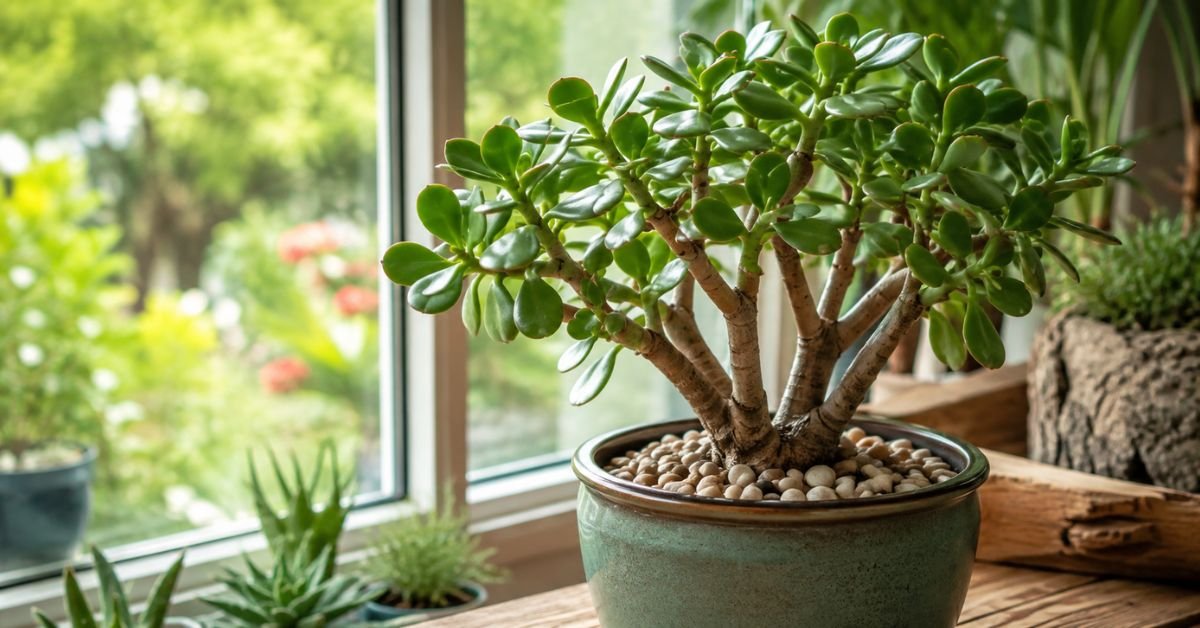
I’ve been a horticulturist for over a decade here in the States. I have watched countless indoor gardening crazes hit the market and fade away just as fast. But this resilient little succulent remains an absolute staple in American homes.
It looks exactly like a miniature, ancient forest tree sitting right on your windowsill. I absolutely love them.
However, here is the hard truth I’ve learned from helping hundreds of frustrated plant owners: people kill these tough little guys all the time. Usually, it happens because we give them way too much love and tap water.
Let’s fix that. Here is my practical, no-nonsense approach to keeping yours alive.
Quick Care Table
Care Need
My Exact Recommendation
Light Requirement
Bright, indirect sunlight (South or West-facing windows).
Watering Routine
Drench fully at the faucet, then wait until completely dry.
Soil Type
Chunky potting soil with lots of added perlite.
USDA Zones
Zones 10-11 outdoors. Strictly an indoor plant everywhere else.
Pet Toxicity
Highly toxic to cats and dogs.
Setting Up Your Jade Plant Money Tree for the Real World
When I got my very first one, I planted it in standard, heavy indoor dirt. That was a huge mistake.
These plants need fast draining potting soil to stay healthy. I always buy a cheap cactus mix and mix in a giant handful of perlite. This creates air pockets so the roots never suffocate in mud.
Location matters, too. If you live down south or out west in USDA Hardiness Zones 10 or 11, you can plant this guy right in your backyard. For the rest of us dealing with freezing Fall and Winter temperatures, it has to stay indoors.
When watering day finally arrives, I take the pot straight to the kitchen sink. I run it under the faucet until water pours out the bottom. Then, I don’t touch that faucet again until the soil is completely bone dry.
Personal Pro-Tip: Never water on a calendar schedule! I just gently pinch a lower leaf. If it feels rock hard, I walk away. If it feels slightly soft or bendy, it’s sink time.
Why Do We Ruin Our Jade Plant Money Trees?
I see the same two massive mistakes happening in US homes all the time.
First is chronic overwatering. A jade plant stores its own water supply right inside those thick, fleshy leaves. If you give it a little splash of water every single day, the roots will rot away into black mush.
The second major issue is central air conditioning.
During a particularly hot summer, I once left my favorite pot directly over a floor AC vent. The constant blast of cold, dry air shocked the plant. Within two weeks, it was dropping leaves everywhere. They despise drafts of any kind. Keep them far away from AC vents in the summer and heating vents in the winter.
Personal Pro-Tip: Find a spot with stable room temperatures. A quiet, sunny corner away from exterior doors and climate-control vents is the perfect home.
Fixing Yellow Leaves on Your Jade Plant Money Tree
Even with the best care, things can go sideways. Here is exactly how I troubleshoot the problems I see most often.
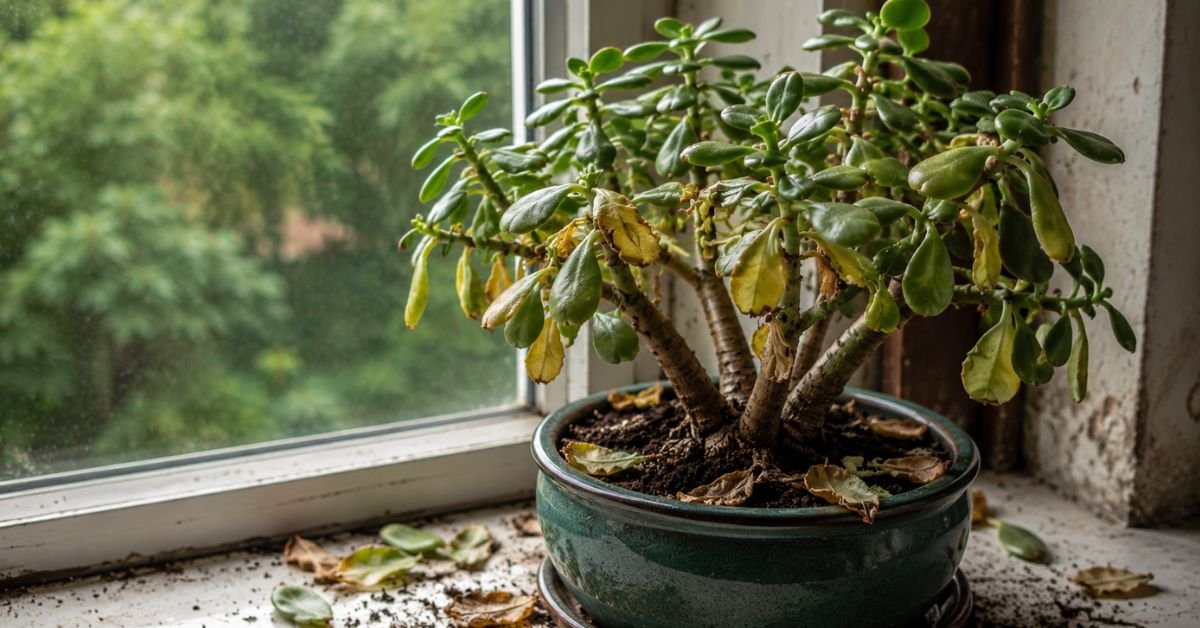
Yellowing, Mushy Leaves
This is the universal sign that you are drowning the plant. Stop watering right now. Check your potting soil. If it is soaking wet and smells slightly sour, pull the plant out of the pot. Trim off any slimy roots and repot it in fresh, dry soil.
Crispy Brown Tips
Sunburn. Yes, they need bright light, but you can’t move a plant from a dark living room right into the scorching afternoon sun. The sudden intensity bakes the edges of the leaves. Move it back into the shade and introduce it to the brighter window gradually over a week.
Shriveled, Wrinkled Leaves
Your plant is incredibly thirsty. If the soil is completely dry and the leaves look like raisins, take it to the sink for a heavy soak.
Personal Pro-Tip: If a healthy stem accidentally snaps off while you are rotating the pot, keep it! Let the broken end dry out on your counter for three days, then stick it into a small pot of damp soil. It will grow a brand new root system.
Toxicity: Protect Your Pets from the Jade Plant Money Tree
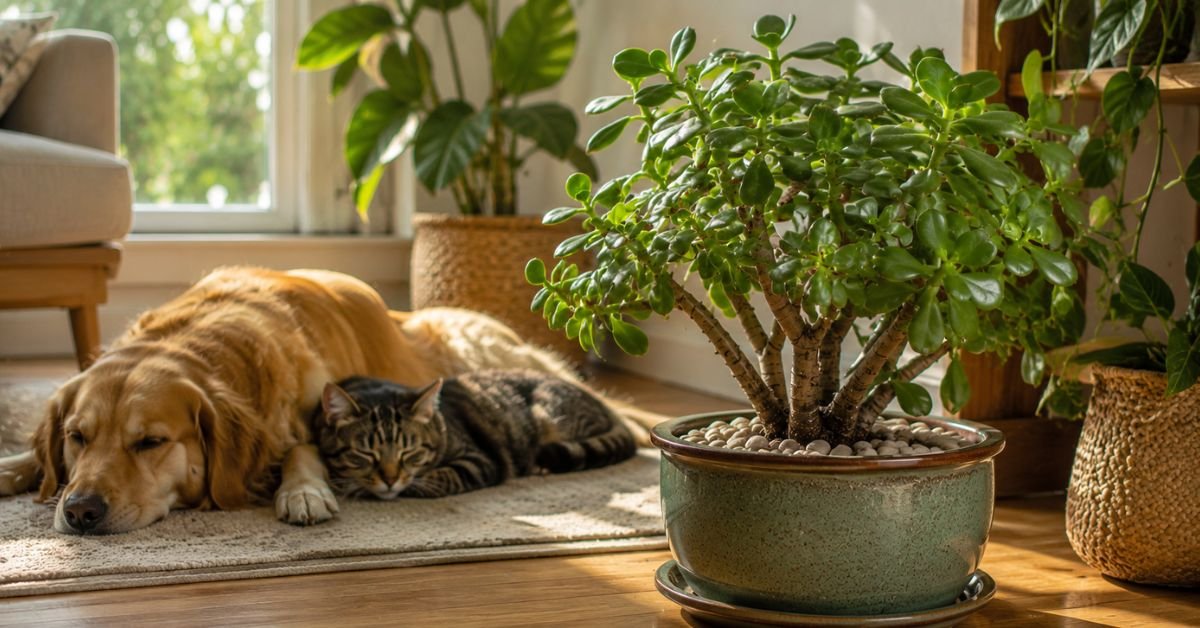
I have a golden retriever who eats almost everything. Because of this, plant safety is a massive priority in my house.
Sadly, the jade plant money tree is completely toxic to dogs and cats.
If they chew on the stems or leaves, it can cause severe vomiting, loss of coordination, and a dangerously low heart rate. I keep all of mine on tall plant stands. If you own a cat that likes to jump on shelves, you really need to keep this plant in a room where the door stays closed.
Personal Pro-Tip: Always use a heavy ceramic or terracotta pot. These plants get very top-heavy as the branches grow thick. A heavy pot stops your cat or dog from easily knocking the whole thing over if they bump into it.
FAQs About the Jade Plant Money Tree
I get bombarded with questions about these plants. I also spend a lot of time on Reddit reading what normal people actually struggle with. Here are the answers you need.
Q1: How often should I water my jade plant money tree in the winter?
Almost never. During the short days of Winter, the plant basically goes to sleep. I regularly go five or six weeks without giving mine a single drop of water.
Q2: Can I put my jade outside in the summer?
Absolutely. I transition mine out to the back porch every Spring once the overnight temperatures stay safely above 50°F.
Q3: Why is my jade dropping healthy, bright green leaves?
This is almost always a shock response. Did you recently move it? Is it sitting near a drafty window? Find a stable, warm spot and leave it alone. It will recover.
Q4: Should I mist the leaves with a spray bottle?
No. Never do this. They originate from dry regions in South Africa. Spraying water on the leaves just invites powdery mildew and fungal diseases.
Q5: How fast do they actually grow?
Painfully slowly. They might add an inch or two of growth in a year.
Q6: Do I need to buy special fertilizer?
Not really. I use a cheap, standard liquid succulent fertilizer diluted to half-strength. I only use it twice a year during the Spring.
Q7: Can one single leaf grow an entire new plant?
Yes! It is my favorite party trick. Just rest a healthy leaf on top of some soil. Give it a month, and you will see tiny pink roots sprout from the end, followed by miniature leaves.
Final Thoughts
Taking care of a jade plant money tree doesn’t require a botany degree or hours of your time.
It just requires restraint.
Give it a sunny spot, use the right chunky potting soil, and ignore it until the leaves tell you they need a drink. Watching that thick, woody trunk slowly develop year after year is incredibly satisfying. Go pick one up from your local nursery, get your hands a little dirty, and enjoy having a piece of nature in your house.
Amin Khalid is a professional horticulturist and the founder of LeafyWisdom. With a deep passion for home gardening and horticultural research, he specializes in providing practical, easy-to-follow care guides for indoor plants. Amin’s goal is to simplify gardening for everyone and help fellow plant lovers build their own thriving green spaces.
Growing deer hardy plants is the single best way to protect your landscape if you’re tired of local wildlife turning your flowers into an overnight snack. Planting a fresh bed only to wake up to chewed-down stems is beyond frustrating. Fortunately, strategically picking resilient, critter-resistant varieties lets you build a colorful, full yard that deer naturally pass right over.
Quick Care Summary for Deer Hardy Plants
Feature
Details for Deer Hardy Plants
USDA Zones
Varies widely (typically Zones 3-9). Always check your local zone map.
Varies by species. Check dirt moisture before turning on the faucet.
Soil Preference
Well-draining potting soil for containers; loose soil in garden beds.
Natural Defense
Repels browsers using potent scents, rough foliage, or bitter sap.
The Best Plants for American Gardens
Finding options that look great while deterring hungry critters takes a bit of testing. Here are two standout performers I rely on across various USDA Hardiness Zones.
Russian Sage: A Drought-Tolerant Deer Hardy Plant
USDA Zones 4-9. Russian Sage is an absolute workhorse in my garden. It throws up silvery stems topped with light purple spikes that bloom for weeks. Deer dislike the pungent herbal scent of its foliage. Even better, once its root system gets settled, it rarely asks for extra water.
Personal Pro-Tip: Mix a handful of coarse perlite into your potting soil when planting Russian Sage in patio containers. It hates wet, heavy dirt around its roots.
Bee Balm: A Deer Hardy Plant for Pollinators
USDA Zones 3-9. Also sold as Monarda. If you want to welcome hummingbirds without attracting deer, this is a top-tier choice. Its intense minty fragrance acts as a strong natural deterrent against browsing animals.
Personal Pro-Tip: Late-summer humidity in many US regions can lead to powdery mildew on Bee Balm. I always run a soaker hose along the ground rather than spraying foliage overhead.
Common Mistakes We Make With Deer Hardy Plants
Even rugged, critter-resistant flora can struggle if we make simple growing errors. I have lost a few good varieties over the years by making these basic mistakes.
Overwatering is the biggest killer. We often feel compelled to drench our garden beds daily with the hose. In reality, most deer hardy plants prefer the dirt to dry out slightly between waterings.
Another frequent issue involves indoor and outdoor climate control. If you start young seedlings inside during early Spring, keep them far away from central air conditioning vents. Cold AC drafts strip moisture right out of tender leaves. Outside, avoid planting right next to an air conditioner condenser unit. The intense hot air exhaust will scorch your greenery in mid-July.
Personal Pro-Tip: Push your index finger an inch into the dirt. If it feels moist, hold off on using the faucet for another day or two.
Troubleshooting Issues With Deer Hardy Plants
When trouble strikes, quick action saves the plant. Here is how I address the two most common symptoms in my garden beds.
Foliage turning pale yellow? Root suffocation from overwatering is usually the culprit. Heavy clay soil holds stagnant water around root systems. If growing in containers, ensure drainage holes are open. In garden beds, work organic matter into the dirt to loosen it up.
Crispy brown leaf tips? This typically indicates excess fertilizer or prolonged dry heat. Give the soil a thorough flush with clean water from your garden hose to leach out built-up salts.
Personal Pro-Tip: Grab an inexpensive moisture meter from your local hardware store. It takes all the guessing out of your daily routine.
Toxicity Warning: Are Deer Hardy Plants Safe for Pets?
This is a critical consideration for pet owners. The exact characteristics that keep wildlife away like toxic compounds or bitter sap can also harm domestic animals.
Foxglove and Bleeding Heart are fantastic deer hardy plants, but they are highly toxic to dogs and cats. If you have pets that chew on outdoor foliage, stick with safe options such as Coral Bells or creeping thyme. Always check the ASPCA plant safety database before introducing new species to your yard.
Personal Pro-Tip: Keep toxic, deer-resistant varieties strictly in your front yard beds. Keep your enclosed backyard 100% safe for pets to roam freely.
Frequently Asked Questions
Q1: What specific features make a plant deer hardy? Deer usually pass on foliage with strong herbal scents, rough or prickly textures, or bitter, milky sap. They prefer soft, mild-tasting greenery.
Q2: Are any deer hardy plants 100% deer-proof? No. During harsh winters when natural food sources are scarce, hungry deer will sample almost any foliage to survive.
Q3: Can I grow deer hardy plants in patio containers? Yes. Ensure you fill your containers with a lightweight, free-draining potting soil and choose pots with open drainage holes.
Q4: Do I still need spray repellents on deer hardy plants? Applying a mild repellent during early Spring helps protect soft, tender shoots on young plants while they establish their natural defenses.
Q5: How do I find my local USDA Hardiness Zone? Enter your zip code into the official USDA Plant Hardiness Zone Map online to find your exact regional growing zone.
Q6: Why is my deer hardy plant wilting in high summer heat? Check both your soil moisture and placement. Planting near heat sources like AC exhaust vents or overwatering heavy clay dirt can both cause severe wilting.
Q7: Is Spring or Fall better for planting deer hardy plants? Fall is ideal in most US regions. Warm soil lets root systems settle while cool air reduces stress on the foliage before winter dormancy.
MYFinal Thoughts
Building a gorgeous landscape shouldn’t mean fighting an endless war with local wildlife. By stocking your beds with established deer hardy plants matched to your USDA zone, you can sit back and enjoy the view. Don’t hesitate to move a shrub or perennial if it isn’t happy in its original spot. Gardens are always a work in progress!
Personal Pro-Tip: Take a few quick photos of your garden beds before the winter frost. It makes planning new additions much easier when Spring rolls back around.
Amin Khalid is a professional horticulturist and the founder of LeafyWisdom. With a deep passion for home gardening and horticultural research, he specializes in providing practical, easy-to-follow care guides for indoor plants. Amin’s goal is to simplify gardening for everyone and help fellow plant lovers build their own thriving green spaces.
If you’re tired of spending a small fortune on annuals every single May only to watch them turn to black sludge after the first frost, you’ve come to the right spot. I’ve spent over two decades digging in the dirt across various American backyards, and I can tell you that perennial plants are the ultimate cheat code for a stunning landscape. They rest through the winter cold and pop back up every Spring, bigger and better than before.
Below is my raw, practical guide to making them work in your own yard.
Quick Care Guide for Perennial Plants
Care Aspect
Standard Advice
My Real-World Backyard Rule
Light Needs
Full sun to deep shade depending on species
Match the tag, but give full-sun varieties at least 6 hours of direct summer sun.
Watering Routine
1 inch of water per week
Deep soak twice a week during hot July heat instead of shallow daily squirts from the hose.
Soil Type
Rich, well-draining garden soil
Mix local garden soil with organic compost; use fresh potting soil for outdoor patio pots.
Hardiness
Check plant tag for USDA Zone
Buy varieties rated one zone colder than your home zone for maximum winter survival.
Fertilizer
Balanced fertilizer in early Spring
A light top-dressing of organic leaf mold or compost in April is usually all you ever need.
What Are Perennial Plants and How Do They Work?
I still remember the first flower border I planted over twenty years ago. I dumped way too much cash on annual petunias and marigolds, only to watch a single October cold front wipe out the whole bed in Zone 6. That was the exact year I converted completely to perennial plants.
Simply put, perennials are long-term investments for your property. Unlike annuals that finish their whole life cycle in one quick burst, perennials go quiet when winter hits, keeping their root systems safe underground until warmth returns.
Some hold onto their foliage all year. Others known as herbaceous perennials die clear back to the soil line when real cold sets in. Don’t let that fool you. The roots are wide awake down below, just waiting for March or April.
Personal Pro-Tip: In my years of growing these long-lived garden staples, I’ve learned that patience is everything. Keep the classic gardener’s adage in mind: Year one they sleep, year two they creep, year three they leap. Don’t panic if your new bed looks a little sparse during its first summer!
Choosing the Best Perennial Plants for Your USDA Zone
If you buy a specimen rated for USDA Zone 8 and stick it in a Zone 4 Minnesota yard, it isn’t going to make it through December. It’s that simple.
Our American climate varies wildly. A muggy July afternoon in Georgia feels nothing like a dry, windy afternoon in Eastern Washington. That is why USDA Hardiness Zones matter so much when selecting perennial plants.
Northern Climates (Zones 3-5): Look for ultra-hardy options like Coneflowers (Echinacea), Siberian Iris, and Hostas. These actually require a solid winter chill to set proper spring flowers.
Mid-Atlantic & Midwest (Zones 6-7): You hit the sweet spot. Black-Eyed Susans, Russian Sage, and Salvia flourish easily in these regions without much babysitting.
Southern & Southwestern Climates (Zones 8-10): Focus on brutal heat and drought tolerance. Agastache, Lantana, and heat-tolerant Daylilies handle blazing summer sun without crisping up.
Personal Pro-Tip: Microclimates exist right in your own yard! A south-facing brick wall traps radiant heat all day. I often use those warm nooks to push the envelope and grow perennial plants rated one zone warmer than my local climate zone.
Why Perennial Plants Fail in American Gardens
Ever wonder why your neighbor’s flower bed looks like a botanical garden while yours struggles? I see the same three mistakes across suburban yards year after year.
First off, folks overwater with spray nozzles. Misting leaves for two minutes every evening does nothing except invite powdery mildew. You need deep soaking down where the roots live.
Second, poor drainage in heavy clay soil kills more roots during winter freezes than cold air ever could. Wet, frozen roots equal dead stock by March.
Third, bringing outdoor patio containers inside for winter without accounting for indoor environments. Place a pot next to an active heat register or air conditioning vent, and those drafts will zap the moisture right out of the leaves within forty-eight hours.
Personal Pro-Tip: Always grab water directly from an outdoor spigot or faucet rather than running softened indoor tap water outside. Home water softeners use sodium salts that build up in garden soil over time and stunt plant growth.
How to Fix Common Problems with Perennial Plants
Plants talk to us; we just need to learn their language. Here is how I diagnose trouble in the garden bed:
Yellowing Leaves on Perennial Plants
This almost always means roots are suffocation-level wet. Check your drainage. If the soil feels like swampy grease three inches down, put down the hose and let the bed dry out.
Crispy Leaf Edges During Summer
Crispy edges point to heat stress or severe underwatering. During 90°F heatwaves in August, set a slow drip near the base early in the morning so the moisture reaches the taproots before noon.
Weak Flowers and Flopping Stems
If tall stems fall over like sleepy toddlers, they either aren’t getting enough direct sunlight or you gave them way too much nitrogen fertilizer. Excess nitrogen creates weak, floppy green growth instead of sturdy flower stems.
Personal Pro-Tip: Every three to four years, lift crowded clumps in Fall with a sharp spade and split the root ball in half. Replanting these divided sections instantly restores vigor and gives you free extra stock for the rest of your beds!
Pet Safety: Keeping Dogs and Cats Safe Around Perennial Plants
As a dog owner myself, this is something I check before putting anything in the ground. Not all beautiful choices play nice with curious noses and paws.
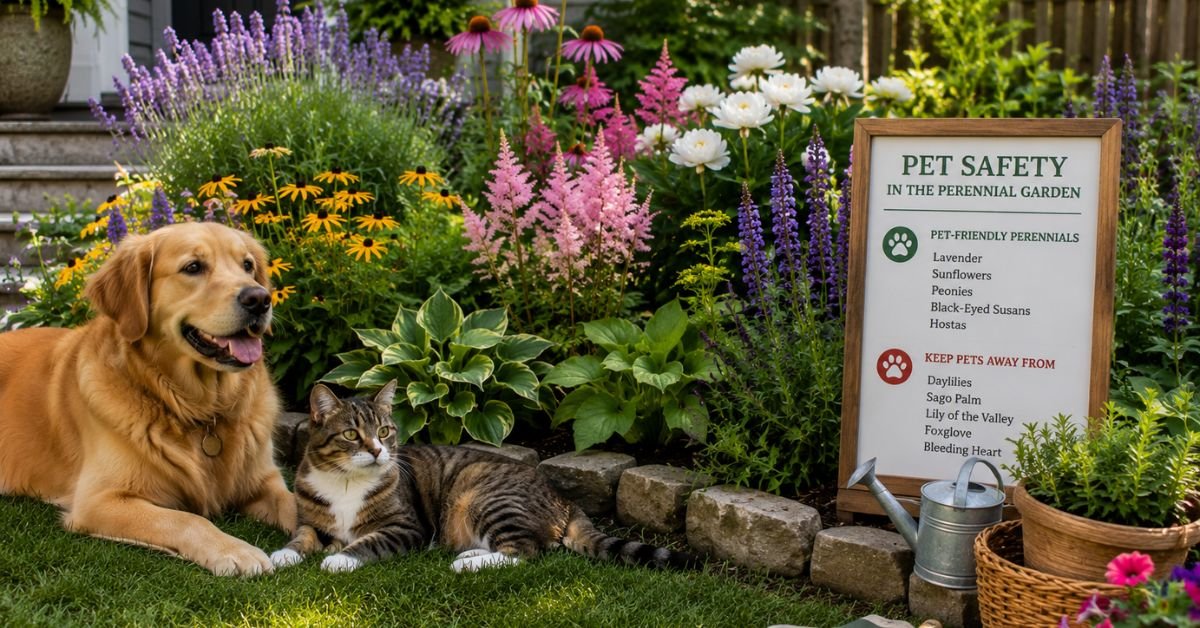
True lilies (like Daylilies and Easter Lilies) are dangerously toxic to cats even small amounts of pollen licked off their fur can trigger acute kidney issues. Hostas, while wildly popular in American shadier spots, contain saponins that cause stomach upset in both dogs and cats.
Safe & Pet-Friendly Options:
Catmint (Nepeta): Extremely hardy, pollinators love it, and cats find it absolute paradise.
Coneflowers (Echinacea): Non-toxic, tough as nails, and colorful.
Coral Bells (Heuchera): Excellent foliage color for shady spots, completely safe for pets.
Personal Pro-Tip: Check the official ASPCA toxic plant database on your phone while standing in the checkout aisle at the nursery. It takes thirty seconds and saves endless worry later.
Frequently Asked Questions
Q1: When is the absolute best time to put perennial plants in the ground?
Early Fall is my absolute favorite time, followed closely by early Spring. Autumn planting allows roots to establish in cool, moist soil without battling scorching summer heatwaves right away.
Q2: How often should I water newly set perennial plants?
Water thoroughly right after planting. For the first two weeks, give them a deep soak every two to three days. Once established, ease back to about an inch of water a week from rainfall or supplemental hose soaking.
Q3: Do perennial plants come back every year automatically?
Yes! As long as you choose varieties rated for your local USDA Hardiness Zone and give them decent soil, they will return year after year.
Q4: Can I grow perennial plants in containers on an outdoor patio?
You sure can. Just use a high-quality potting soil mix and select a container with plenty of drainage holes. Remember: plants in pots freeze faster in winter, so pick varieties rated two zones colder than your local area.
Q5: How do I cut back perennial plants before winter hits?
Wait until a hard frost turns foliage brown in late Fall. Use clean hand pruners to snip dead herbaceous stems down to about two inches above ground level. Leave ornamental grasses and seed-head plants like coneflowers intact for winter texture and bird food.
Q6: What are the easiest perennial plants for beginners in Zone 6 or 7?
You can’t go wrong with Black-Eyed Susans, Salvia, Sedum (‘Autumn Joy’), or Catmint. They are practically bulletproof and forgive minor watering oversights.
Q7: Why are my perennial plants blooming less this season?
They are likely overgrown and rootbound, or getting too much shade as nearby trees mature. Try dividing the clump in early Spring or late Fall to jumpstart bloom production.
Final Thoughts
Building a vibrant garden takes a little patience, but nothing beats the feeling of seeing green shoots poke through thawing soil every Spring. Pick the right spot for your sun exposure, pay attention to your hardiness zone, and keep your hose routines simple. Once your roots get established, these heavy lifters will do most of the work for you.
Amin Khalid is a professional horticulturist and the founder of LeafyWisdom. With a deep passion for home gardening and horticultural research, he specializes in providing practical, easy-to-follow care guides for indoor plants. Amin’s goal is to simplify gardening for everyone and help fellow plant lovers build their own thriving green spaces.
I’ve spent years growing plants indoors in homes with forced-air heating, dry winter air, and windows that don’t open past three inches (thanks, apartment building codes). So when people ask me for the best indoor plants for air quality, I don’t just hand them the NASA list and walk away. I tell them what actually survives a real American living room, not a sealed lab chamber in Mississippi.
This guide covers eight plants I’ve grown myself, how to keep them alive through a Midwest winter or a Texas summer with the AC blasting, what to do when the leaves start looking sad, and whether your cat or dog can be in the same room as them. No fluff, no stock-photo advice. Just what works.
Quick Care Table for the Best Indoor Plants for Air Quality (For Skimmers)
How I Actually Picked This List of Air-Purifying Indoor Plants
Most lists of the best indoor plants for air quality just copy the old NASA Clean Air Study and call it a day. That study is real. Researchers tested common houseplants for their ability to remove pollutants like formaldehyde, benzene, and trichloroethylene, and the results are still cited decades later. But here’s the part people leave out: that study happened in sealed, small chambers. Your living room has open doors, a running HVAC system, and probably a lot more square footage than a lab box.
That doesn’t mean the plants don’t help. It means one philodendron on a bookshelf isn’t going to fix a house with a mold problem. What it does mean is that a cluster of the right plants, grown well, genuinely improves the air you breathe and the humidity in your home, especially during winter when the furnace dries everything out. I picked plants based on three things: real air-cleaning performance, whether a normal person with a normal schedule can keep it alive, and pet safety, since so many of you are asking me that in the comments.
1. Snake Plant: My Top Pick for Low-Maintenance Indoor Air Quality
If I could only recommend one plant on this entire list, it’s the snake plant (Sansevieria, sometimes sold as Dracaena trifasciata). It’s one of the plants NASA specifically flagged for filtering out benzene and formaldehyde, and unlike most air-purifying plants, it releases oxygen at night instead of during the day. That makes it one of the few genuinely good choices for a bedroom.
How Often Should You Water Your Snake Plant?
Barely at all. This plant stores water in its thick leaves, so it’s built for drought, not for a daily splash from the faucet. Water once the top two inches of potting soil are completely dry, roughly every three to four weeks. In winter, when growth slows down, I stretch that to once a month or longer. Snake plants are outdoor perennials in USDA zones 9 through 11, but for most of us, they’re staying inside year-round.
Why Is My Snake Plant Turning Yellow or Getting Brown Tips?
Almost always, it’s water. Soft, mushy, yellowing leaves near the base mean you’re overwatering and the roots are starting to rot. Crispy brown tips usually mean the opposite: the plant went too long without a drink, or it’s sitting too close to a heating vent. Pull it out of the pot and check the roots if you’re not sure. Healthy roots are firm and pale. Rotten ones are dark, soft, and smell bad.
Is Snake Plant Toxic to Cats and Dogs?
Mildly, yes. Chewing on the leaves can cause drooling, vomiting, or diarrhea in pets. It’s not an emergency-room situation for most animals, but I’d still keep it out of reach if you’ve got a chewer.
Personal Pro-Tip: I keep my snake plants in terracotta pots instead of plastic. The unglazed clay pulls moisture out of the soil faster, which basically pet-proofs you against the most common way people kill this plant: watering it like a normal houseplant.
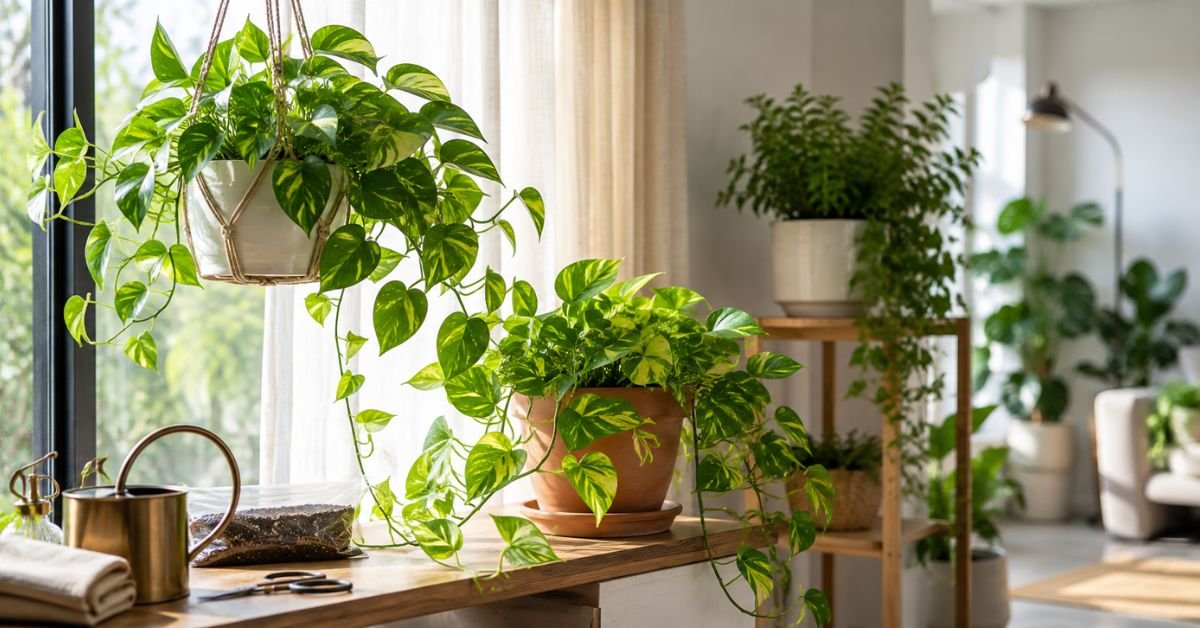
2. Pothos: The Easiest Air-Purifying Indoor Plant for Beginners
Pothos (Epipremnum aureum) is the plant I hand to every single person who tells me they “can’t keep anything alive.” It tolerates low light, irregular watering, and general neglect better than almost anything else on this list, and it’s one of the more effective plants for pulling common household toxins out of the air.
Pothos Care: Light, Water, and the Mistakes People Make
Bright, indirect light gives you the fastest growth and the prettiest variegation, but pothos will hang on in a dim hallway too. Water when the top inch of potting soil feels dry, usually once a week. The number one mistake I see: people leave pothos sitting in a saucer full of water after they water it. Dump that saucer out. Standing water is how you get root rot in a plant that’s otherwise nearly impossible to kill.
Is Pothos Safe Around Pets?
No. Pothos contains calcium oxalate crystals that irritate the mouth and throat if chewed, causing drooling and vomiting. It’s one of the most common houseplants involved in pet poison control calls, mostly because it’s also one of the most common houseplants, period.
Personal Pro-Tip: Trailing plants like pothos look best in a hanging basket anyway, and putting it up high solves your pet problem and your styling problem in one move.
3. Peace Lily: Best Indoor Plant for Air Quality in Low-Light Rooms
Peace lilies (Spathiphyllum) show up on nearly every list of the best indoor plants for air quality, and for good reason. They’re rated highly for removing alcohols, acetone, and formaldehyde, and the white blooms give you something most air-purifying plants don’t: an actual flower.
How Much Water Does a Peace Lily Actually Need?
More than a snake plant, less than you’d think. Keep the soil lightly moist, never soggy, and water roughly once a week. Peace lilies are dramatic communicators. When they’re thirsty, the whole plant droops like it’s fainting. Give it a drink and it usually perks back up within an hour. That said, don’t wait for the drama every time, it’s hard on the plant.
Peace Lily Troubleshooting: Brown Tips and Yellow Leaves
Brown leaf tips usually point to too much fertilizer, chlorinated tap water, or overwatering. I let a pitcher of faucet water sit out overnight before using it, which lets the chlorine evaporate off. Yellow leaves that show up on top of the plant usually mean it’s getting too much direct sun. Peace lilies want bright, indirect light, not a south-facing window blasting them all afternoon.
Peace Lily Toxicity Warning
Peace lilies are toxic to both cats and dogs, and mildly toxic to humans as well. They contain calcium oxalate crystals that cause mouth and stomach irritation. They’re not cold-hardy outside of USDA zones 10 and 11, so realistically, this is an indoor-only plant for almost everyone reading this.
Personal Pro-Tip: Wash your hands after handling a peace lily, especially if you’re repotting or trimming it. Those oxalate crystals can irritate your skin too, not just your pet’s mouth.
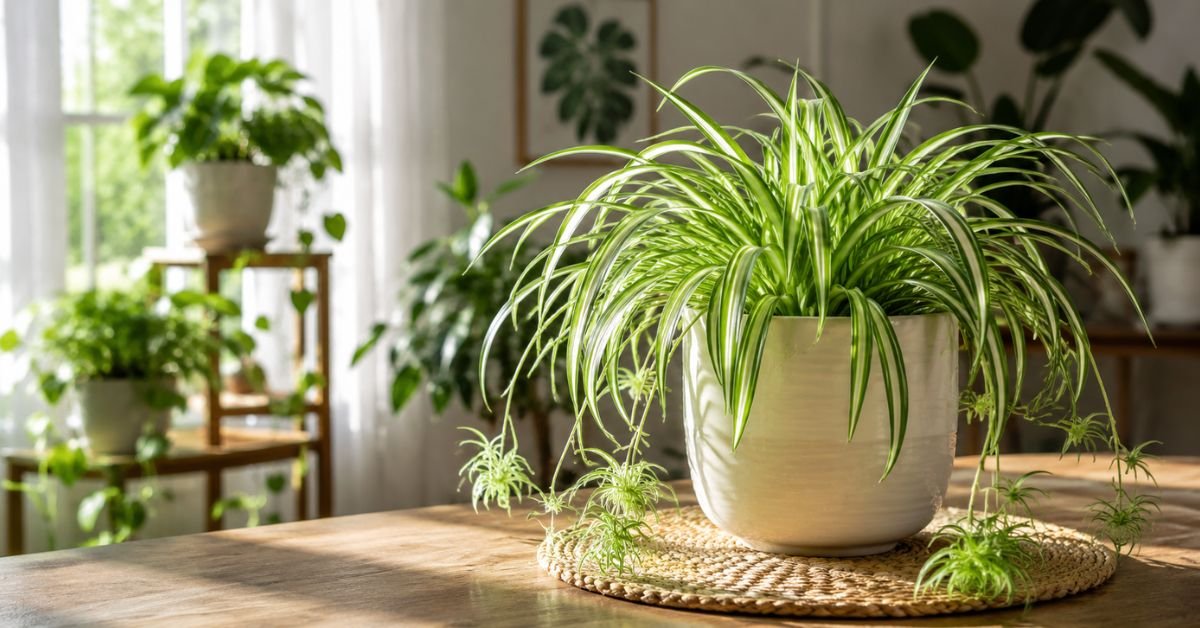
4. Spider Plant: The Safest Air-Purifying Plant for Homes With Pets
If you’ve got cats, dogs, or a toddler who eats things off the floor, start here. Spider plants (Chlorophytum comosum) are non-toxic to both cats and dogs according to the ASPCA, and they’re one of the plants NASA credited with pulling carbon monoxide and formaldehyde out of the air.
Spider Plant Care Basics
Bright, indirect light gets you the fastest growth and the most “babies,” those little plantlets that dangle off runners and can be snipped and repotted for free. Water weekly, letting the top inch dry out between waterings. One plant in a room of about 200 square feet is genuinely enough to make a measurable dent in that room’s air.
Common Spider Plant Mistakes
The biggest one is water quality, not water quantity. Spider plants are sensitive to the fluoride in a lot of US municipal tap water, which shows up as brown tips even when your watering schedule is fine. Switching to filtered water or rainwater usually clears it up within a few weeks.
Personal Pro-Tip: Don’t panic about brown tips on a spider plant. Just trim them off with clean scissors at an angle, following the natural shape of the leaf. Nobody will notice, and the plant genuinely doesn’t care.
5. ZZ Plant: The Air-Purifying Plant for People Who Forget to Water
The ZZ plant (Zamioculcas zamiifolia) has thick, waxy leaves and underground rhizomes that store water like a camel stores fat. It’s basically designed for the person who waters their plants once a month, if that.
ZZ Plant Watering and Light Needs
Let the soil dry out completely, then water. That’s it. In a low-light apartment, that might mean once every three to four weeks. This plant handles neglect far better than it handles kindness. Overwatering is by far the most common way people kill a ZZ plant.
Is the ZZ Plant Toxic to Cats and Dogs?
Mild to moderate toxicity. It won’t cause serious harm from casual contact, but ingestion can irritate the mouth and stomach. Keep it up high or in a room your pets don’t frequent.
Personal Pro-Tip: If your ZZ plant’s leaves start looking wrinkled or a little limp, that’s actually thirst, not overwatering, which trips a lot of people up since it looks similar to root rot at first glance. Check the soil before you assume the worst.
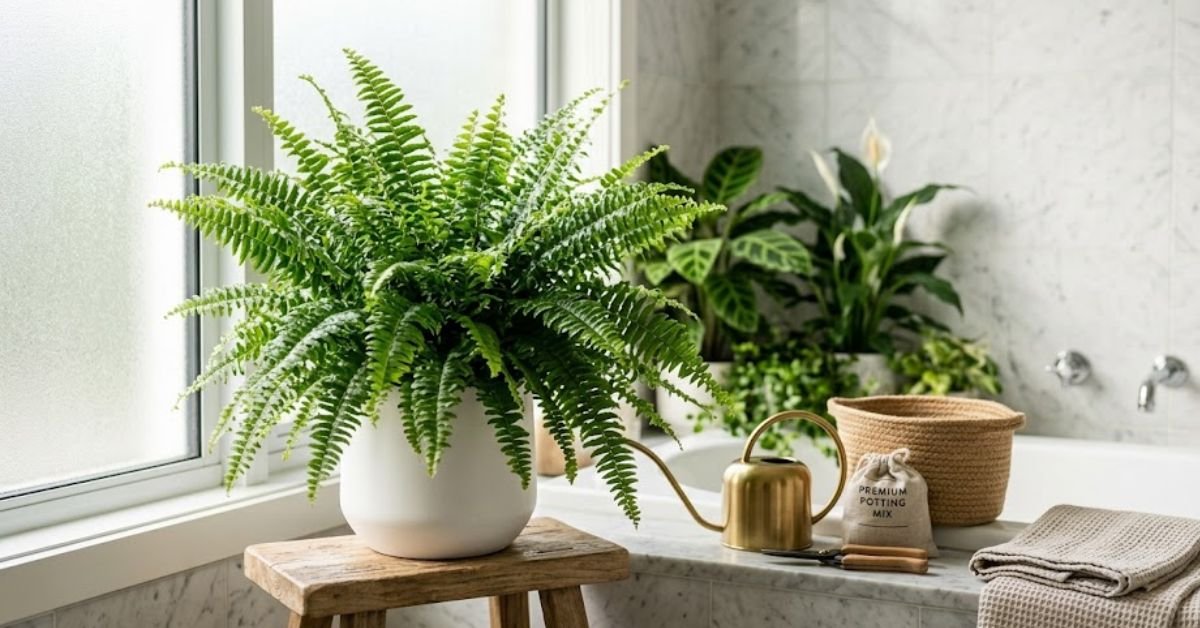
6. Boston Fern: A Humidity-Loving Air Purifier for Bathrooms
Boston ferns (Nephrolepis exaltata) are some of the most efficient plants at filtering xylene, toluene, and benzene out of the air. They’re also the plant most likely to make you feel like a failure, because they’re fussier than everything else on this list.
Why Boston Ferns Struggle in AC-Dried Indoor Air (and How to Fix It)
Central air conditioning and forced-air furnaces both strip humidity out of your home, and Boston ferns hate that. If you’re growing one outside of a steamy bathroom, mist it a few times a week or set the pot on a tray of pebbles and water so it sits above, not in, the moisture. Keep the soil consistently moist, never bone dry, and never fully waterlogged either.
Personal Pro-Tip: A cheap little humidifier running near your fern during winter, when your furnace is working overtime, will do more for this plant than any amount of extra watering.
7. Areca Palm: A Bigger Statement Plant for Cleaner Indoor Air
Also sold as the bamboo palm, the areca palm (Dypsis lutescens) is what I recommend when someone wants a bigger, more dramatic plant that still pulls its weight on air quality. It’s rated well for removing benzene and formaldehyde and works as a natural humidifier thanks to its large leaf surface area.
Areca Palm Care and Common Problems
Bright, indirect light and evenly moist soil are what this plant wants. It’s more forgiving of a little overwatering than it is of drying out completely, which is the opposite of most plants on this list, so don’t apply your snake plant instincts here. Outdoors, it only survives in USDA zones 10 and 11, meaning South Florida and not much else.
Personal Pro-Tip: Brown leaf tips on an areca palm are almost always a sign of low humidity or hard tap water, not a watering schedule problem. Try filtered water for a month before you change anything else.
8. Aloe Vera: A Sunny Windowsill Plant That Also Cleans the Air
Aloe vera earns its spot on any list of the best indoor plants for air quality for filtering formaldehyde and benzene, and it comes with a built-in bonus: the gel inside the leaves soothes minor burns, which makes it a genuinely useful kitchen windowsill plant.
Aloe Vera Care and Toxicity Notes
This is a succulent, so treat it like one. Bright light, including some direct sun, and infrequent watering, letting the soil dry out completely between drinks, roughly every two to three weeks. It’s hardy outdoors in USDA zones 9 through 11 but does best as a container plant almost everywhere else, especially anywhere that sees frost.
Aloe vera is mildly toxic to cats and dogs, causing vomiting, diarrhea, or lethargy if chewed. It’s an easy one to miss since it’s marketed so heavily as a “natural, healthy” plant, but that reputation is about the gel’s use for human skin, not about pet safety.
Personal Pro-Tip: Aloe leaves that turn brown or mushy at the base almost always mean overwatering. This plant would rather you forget about it for three weeks than remember it every three days.
Common Mistakes Americans Make With Indoor Air Quality Plants
A few problems show up over and over in my inbox, and almost none of them are about the plants being difficult. They’re about home environments most of these plants weren’t built for.
Placing pots directly under an AC vent or heating register. The blast of dry, temperature-swinging air stresses tropical plants fast, especially ferns and palms.
Overwatering out of guilt. More houseplants die from too much water than too little. If you’re not sure, wait another day.
Skipping drainage holes. A pretty ceramic pot with no hole in the bottom is a slow-motion swamp. Use a plastic nursery pot with drainage inside a decorative outer pot instead.
Watering on a fixed schedule instead of checking the soil. Your plant’s water needs change with the seasons. A snake plant that needed water every two weeks in July might go a full month in January.
Using straight tap water on sensitive plants. Spider plants and ferns in particular can react to fluoride and chlorine. Let water sit out overnight, or use filtered water if you’re seeing consistent brown tips.
Troubleshooting Guide: Fixing the Most Common Air-Purifying Plant Problems
Yellow leaves, soft and mushy: Overwatering or root rot. Let the soil dry out fully, check the roots, and repot into fresh, well-draining potting soil if they’re dark or slimy.
Yellow leaves, dry and crispy: Underwatering, or the plant is simply shedding an old leaf, which is normal. Check if it’s the oldest growth before you panic.
Brown, crispy tips: Usually low humidity, hard tap water, or too much direct sun. Rarely an emergency.
Drooping all over: For peace lilies, this is almost always thirst. For most other plants on this list, it’s more likely overwatering or a sudden temperature swing, like a cold draft from a window in fall.
No new growth for months: Check the light first. Most “stalled” houseplants are just sitting in a spot too dim to support active growth, especially in winter when daylight hours drop.
Which Indoor Plants for Air Quality Are Safe for Cats and Dogs?
Non-toxic, based on the ASPCA’s plant database: spider plant, Boston fern, areca palm.
Toxic or mildly toxic, keep away from pets: pothos, peace lily, snake plant, ZZ plant, aloe vera.
If pet safety is your top priority, build your collection around spider plants, ferns, and palms, and treat anything from the second list as a hanging or high-shelf plant only.
FAQs About the Best Indoor Plants for Air Quality
Q1. Do air-purifying plants actually work, or is it just marketing? The underlying science is real. NASA’s Clean Air Study showed certain plants remove measurable amounts of common indoor toxins. The catch is that the study used sealed chambers. In a normal home with airflow, you’d need a lot of plants to match those lab results, but a healthy cluster of plants still measurably helps.
Q2. How many plants do I actually need to notice a difference? There’s no magic number, but a commonly cited rule of thumb is roughly one plant per 100 square feet for a noticeable effect, more if the room has poor ventilation.
Q3. Can I keep plants in my bedroom, or will they steal my oxygen at night? Most plants do release a small amount of carbon dioxide at night through respiration, but it’s negligible for a normal-sized room. Snake plants and orchids are actually unusual in that they release oxygen at night, making them solid bedroom choices.
Q4. My apartment barely gets any natural light. Can I still do this? Yes. Snake plant, pothos, and ZZ plant all tolerate low light and are three of the best indoor plants for air quality if your windows are small or north-facing.
Q5. Are these plants a replacement for an air purifier? No, and I wouldn’t market them that way. Think of plants as one layer of a healthier home, alongside good ventilation and source control, not a replacement for an actual HEPA filter if you have allergies or a real air quality issue.
Final Thoughts on the Best Indoor Plants for Air Quality
You don’t need a greenhouse or a horticulture degree to get real air-quality benefits from houseplants. Start with one or two from this list based on your light, your pets, and honestly, how forgetful you are on a normal week. A snake plant or ZZ plant in a dim corner, a spider plant if you’ve got a curious cat, or a peace lily by an east-facing window will all do more for your indoor air than an empty shelf ever will.
Watch the soil, not the calendar. Match the plant to the room you actually have, not the one in a magazine photo. That’s really the whole secret.
Amin Khalid is a professional horticulturist and the founder of LeafyWisdom. With a deep passion for home gardening and horticultural research, he specializes in providing practical, easy-to-follow care guides for indoor plants. Amin’s goal is to simplify gardening for everyone and help fellow plant lovers build their own thriving green spaces.
Figuring out the right types of plants for your home or yard is harder than it sounds, and I’ve spent years with soil under my fingernails watching people get it wrong in the same handful of ways. My neighbor asked me this exact question last spring while I was hauling a dying fiddle leaf fig out to the curb. Fair question. There are thousands of species out there, and most guides just dump a list on you without telling you which ones actually survive in a real American living room with a dry HVAC vent blowing on them all winter.
This guide breaks down the major types of plants you’ll actually encounter, whether you’re filling a windowsill in Ohio or planting a border bed in Zone 8b Georgia. I’m going to be blunt about what fails and why, because that’s more useful to you than another glossy list of “50 gorgeous plants.”
Quick Care Table: Types of Plants at a Glance
Plant Category
Light Needs
Water Frequency
Difficulty
Pet Safe?
Succulents & Cacti
Bright, direct
Every 2-3 weeks
Easy
Mostly no
Tropical Foliage (Pothos, Monstera)
Bright, indirect
Weekly
Easy-Moderate
No
Flowering Houseplants (African Violet)
Bright, indirect
1-2x weekly
Moderate
Varies
Ferns
Low-medium, indirect
Frequent, keep moist
Moderate-Hard
Mostly yes
Herbs (Basil, Mint)
Full sun / bright
Frequent
Easy
Yes
Perennial Garden Flowers
Full sun to part shade
Weekly (established)
Easy-Moderate
Varies
Annual Bedding Plants
Full sun
Frequent
Easy
Varies
Trees & Shrubs
Depends on species
Deep, infrequent
Moderate
Varies
Keep this table bookmarked. I’ll go section by section below, because “it depends” is the honest answer to almost every plant question, and I want to actually tell you what it depends on.
Succulents and Cacti: The Types of Plants for People Who Forget to Water
These are usually where I point beginners, and for good reason. In my years growing these, the plant almost never dies from neglect. It dies from love. Specifically, overwatering.
Succulents store water in their leaves and stems, so they evolved for drought, not for a well-meaning owner topping them off every Sunday like clockwork. Common ones you’ll find at Home Depot or your local nursery: Echeveria, Haworthia, Jade Plant, and true cacti like Barrel or Bunny Ears.
How Often Should You Water Succulents and Cacti? Only when the potting soil is bone dry, all the way down. In summer that might be every 10 days. In winter, when growth slows, you could stretch it to a month. Stick your finger two inches in before you even think about the watering can.
Personal Pro-Tip: I keep my succulents on the driest side of a south-facing windowsill, away from the AC vent that blows cold, dry air directly onto my Monstera across the room. Succulents actually don’t mind that dry blast. It’s the tropical plants that hate it.
Common Mistakes Americans Make With Succulents
Regular potting soil holds too much moisture for these guys. You need a cactus/succulent mix, or regular potting soil cut with perlite or coarse sand at about 50/50. And please, use a pot with a drainage hole. I don’t care how cute the ceramic pot without a hole is at TJ Maxx.
Troubleshooting Succulent Problems
Leaves turning mushy and translucent? That’s overwatering, not a disease. Stop watering immediately and check the roots for rot.
Stretching and leaning toward the window (etiolation)? Not enough light. Move it closer to a south or west-facing window.
Brown, crispy patches? Usually sunburn from moving a plant too fast from low light to a hot window. Ease them into bright spots over a week or two.
Toxicity Warning: Most succulents are non-toxic, but Jade Plant, Aloe Vera, and several Euphorbia species (like the Pencil Cactus) are mildly to moderately toxic to cats and dogs. Check the ASPCA’s plant list before buying if you’ve got a curious pet who eats everything.
Tropical Foliage Plants: The Types of Plants That Dominate Instagram
Pothos, Monstera Deliciosa, Snake Plant (now technically Dracaena trifasciata, botanists keep renaming it), Philodendron, ZZ Plant. This category is where most “plant person” starter homes live, and it’s also where I see the most frustration.
How Often Should You Water Your Snake Plant? Honestly, less than you think. Every 2-3 weeks is plenty, and even less in winter. The Snake Plant is basically a succulent wearing a tropical plant’s clothes, and it’s one of the most forgiving plants you can own.
How Often Should You Water Your Pothos or Monstera? Weekly, roughly, but check the top inch of soil first. My rule of thumb: when the leaves start to look slightly less perky than usual, that’s your cue, not a fixed calendar day.
Personal Pro-Tip: Central heating and air conditioning are the silent killers of tropical foliage in American homes. These plants evolved under a rainforest canopy with humidity in the 60-80% range. Your living room in January is probably sitting at 20-30% humidity. I run a small humidifier near my Calathea from October through March, and it made a night-and-day difference in leaf browning.
Common Mistakes With Tropical Houseplants
Placing them directly in the path of an AC vent or a heating register is the number one mistake I see. The constant blast of dry, temperature-swinging air stresses these plants badly, even if the room temperature itself seems fine. Second mistake: watering on a schedule instead of checking the soil. Third: using a pot with no drainage and letting water pool at the bottom.
Troubleshooting Yellow Leaves and Brown Tips
Yellow leaves, especially lower ones, feeling soft? Overwatering. Let the soil dry out more between waterings.
Brown, crispy tips but the rest of the leaf is green? Usually low humidity or a buildup of minerals/salts from tap water. Try filtered water from your faucet or let tap water sit out overnight before using it.
New leaves coming in small or pale? Probably needs more light, or it’s hungry. A diluted liquid fertilizer during spring and summer usually fixes this.
Toxicity Warning: This is a big one for US pet owners. Pothos, Philodendron, and Monstera all contain calcium oxalate crystals and are toxic to cats and dogs if chewed. Snake Plant is mildly toxic too. If you’ve got a chewer, look at Parlor Palm, Spider Plant, or Calathea instead, all of which are pet-safe.
Flowering Houseplants: Types of Plants That Bloom Indoors
African Violets, Peace Lily, Orchids, Anthurium. These bring color indoors, but they’re generally fussier than foliage plants.
Personal Pro-Tip: African Violets hate getting water on their leaves. I water mine from the bottom, setting the pot in a saucer of water for 20 minutes and letting it wick up through the drainage hole. Water sitting on the fuzzy leaves causes ugly brown spotting.
Common Mistakes
People treat Peace Lilies like they need constant water because they’re dramatic droopers. Actually, that drooping is useful. It tells you exactly when to water. The problem is people panic-water at the first sign of a slightly less perky leaf, and root rot follows.
Troubleshooting
Peace Lily not flowering? Needs brighter, indirect light. It’ll survive in low light but won’t bloom there.
Orchid roots turning brown and mushy? Overwatering, almost always. Orchid roots should look silvery-green when dry and bright green after watering, never brown and soft.
Toxicity Warning: Peace Lily is toxic to cats and dogs. True lilies (Lilium species, different from Peace Lily) are extremely dangerous to cats specifically, capable of causing kidney failure from even small amounts of pollen. If you own a cat, I’d skip true lilies entirely. Orchids and African Violets are generally pet-safe.
Ferns: Types of Plants for Humid Corners and Bathrooms
Boston Fern, Maidenhair Fern, Bird’s Nest Fern. I’ll be honest, ferns are the category where I’ve killed the most plants personally, and I’m supposed to be the expert.
Personal Pro-Tip: A bathroom with a window is honestly the best spot in most American homes for a fern, because the daily shower steam gives it the humidity it’s begging for. My Boston Fern lives in my bathroom now after two failed attempts in my dry home office.
Common Mistakes
People place ferns in a typical living room and expect them to thrive with weekly watering like a Pothos. Ferns want consistent moisture, not the dry-out-between-waterings approach that works for tropicals.
Troubleshooting
Fronds turning brown and crispy at the edges? Low humidity, almost every time. Group plants together, use a pebble tray, or move it to a steamier room.
Whole fronds collapsing? The soil probably dried out completely at some point. Ferns don’t forgive that the way a Pothos does.
Toxicity Warning: Most true ferns, including Boston Fern and Bird’s Nest Fern, are non-toxic to cats and dogs, making them a solid pick for pet households that still want lush greenery.
Herbs: Edible Types of Plants for Kitchen Windowsills
Basil, Mint, Rosemary, Thyme, Parsley. These straddle indoor and outdoor life depending on your climate zone.
Personal Pro-Tip: Mint will take over an entire garden bed if you let it. I learned this the hard way and now I only grow mine in a container, even when it’s sitting right in the middle of my garden. Sink the whole pot into the ground if you want the look of an in-ground herb without the invasion.
Common Mistakes
Basil in a north-facing kitchen window rarely gets enough light and turns leggy and pale. It really wants 6+ hours of direct or very bright light, a south or west window at minimum, or a grow light in winter.
Troubleshooting
Basil going to flower quickly? Pinch off flower buds as soon as you see them, or the plant redirects energy away from leaf production and the leaves turn bitter.
Rosemary dying indoors over winter? This is incredibly common. Rosemary hates the combo of low light and constant warm, dry indoor air. A cool, bright spot works better than a warm one.
Toxicity Warning: Culinary herbs are generally safe for pets in small amounts, though large quantities of some (chives and their onion-family relatives) can cause issues. Basil, mint, rosemary, and thyme are all considered pet-safe.
Perennial Garden Flowers: Outdoor Types of Plants That Come Back Every Year
Coneflower, Black-Eyed Susan, Hosta, Daylily, Peony. This is where USDA Hardiness Zones actually matter, a lot.
Your zone tells you the average minimum winter temperature in your area, and it determines whether a perennial will survive your winter or need to be treated as an annual instead. A Peony that comes back reliably in Zone 5 Minnesota might actually struggle in Zone 9 Florida because it needs a certain number of winter chill hours to bloom well.
Personal Pro-Tip: Before I buy any perennial now, I check two numbers on the plant tag: the hardiness zone range and my own zone. If my zone falls outside that range, I either skip it or accept I’m growing it as an annual. Saves a lot of disappointment in April when nothing comes back.
Common Mistakes
Planting too early in spring before the last frost date for your region is a classic one. Also, a lot of people plant perennials too deep, burying the crown, which invites rot.
Troubleshooting
Perennial didn’t come back this spring? Check if it was actually hardy in your zone, or if the site had poor drainage over winter, which is often a bigger killer than cold itself.
Lots of leaves, no flowers? Usually too much nitrogen fertilizer or not enough sun.
Toxicity Warning: Daylilies are extremely toxic to cats, even causing kidney failure. Hostas are toxic to dogs and cats too. Coneflower and Black-Eyed Susan are generally considered pet-safe.
Annual Bedding Plants: Types of Plants for Instant Seasonal Color
Petunias, Marigolds, Impatiens, Zinnias. These live one growing season and then die, but they give you fast, reliable color for a Spring or Fall planting.
Personal Pro-Tip: I always deadhead my Zinnias, snipping off the spent blooms, because it tricks the plant into producing more flowers instead of going to seed. Takes five minutes a week and roughly doubles how much bloom I get out of a bed.
Common Mistakes
Planting annuals outside too early, before your last frost date, is probably the single most common mistake in American gardens every Spring. Impatiens especially sulk or die outright in a late cold snap.
Troubleshooting
Leggy, stretched-out plants with few flowers? Not enough sun, or they need a light pinch-back early in the season to encourage bushier growth.
Wilting despite regular watering? Check for root-bound plants that were never properly loosened at planting time.
Toxicity Warning: Marigolds and Zinnias are pet-safe. Petunias are non-toxic too. Impatiens are generally considered safe in small amounts, though I’d still discourage a pet from grazing on any ornamental.
Trees and Shrubs: The Long-Term Types of Plants for Your Yard
Japanese Maple, Hydrangea, Boxwood, Arborvitae. These are the bones of a landscape, and mistakes here are expensive because you’re not replacing a $4 annual, you’re replacing a $150 tree.
Personal Pro-Tip: I always dig the planting hole twice as wide as the root ball but no deeper than it. Planting too deep is the single biggest killer of new trees and shrubs I see in client yards, and it’s completely avoidable.
Common Mistakes
Overwatering a newly planted tree because people assume “more water equals faster establishment.” Actually, deep, infrequent watering that encourages roots to grow downward beats frequent shallow watering every time.
Troubleshooting
Hydrangea not blooming? Depends on the type. Some bloom on old wood, and pruning at the wrong time of year removes next season’s flower buds entirely.
Boxwood turning brown patches? Could be Boxwood Blight, a real problem spreading through parts of the US, or simply winter burn from cold wind and sun.
Toxicity Warning: Japanese Maple is generally non-toxic. Hydrangea is mildly toxic to pets if large amounts are eaten. Boxwood and Arborvitae contain compounds that are toxic to pets and livestock in quantity, so keep grazing animals and curious dogs away from hedges.
Frequently Asked Questions
Q1: What are the 4 main types of plants? Botanically, plants are often grouped into four broad categories: flowering plants (angiosperms), conifers, ferns, and mosses. For home gardening purposes though, most people think in terms of houseplants, perennials, annuals, and trees/shrubs, which is the breakdown I used throughout this guide.
Q2: What is the easiest type of plant to keep alive indoors? Snake Plant and Pothos are usually my top two recommendations for beginners. Both tolerate irregular watering, low light, and general neglect better than almost anything else you’ll find at a nursery.
Q3: What plants are safe if I have cats? Spider Plant, Boston Fern, Parlor Palm, and Calathea are all non-toxic and pet-safe options that still look lush. Avoid Lilies, Pothos, Philodendron, and Peace Lily if your cat likes to chew on leaves.
Q4: How do I know my USDA Hardiness Zone? You can look it up on the official USDA Plant Hardiness Zone Map by entering your zip code. It’s the single most useful piece of information before buying any perennial, tree, or shrub, since it tells you whether that plant will actually survive your winter.
Q5: Why do my houseplants keep dying in winter even though I water them the same? Central heating dries the air out drastically in winter, often dropping indoor humidity to 20-30%, far below what most tropical plants prefer. It’s usually not your watering routine that changed, it’s the air around the plant.
Q6: What type of plant grows fastest for a new gardener who wants quick results? Annuals like Marigolds or Zinnias from seed, or a fast-growing houseplant like Pothos, will show visible growth within just a couple weeks, which is encouraging for someone just starting out.
Q7: Can I keep an outdoor perennial as a houseplant, or vice versa? Generally no, not successfully long-term. Outdoor perennials are adapted to seasonal temperature swings and dormancy periods that an indoor environment doesn’t provide, and true houseplants usually can’t handle direct outdoor sun or frost. There are exceptions, like moving potted tropicals outside for summer, but they need to come back in before the first frost.
Final Thoughts
If I had to boil down everything above into one sentence, it’d be this: match the plant to the actual conditions in your home or yard, not the conditions you wish you had. A north-facing apartment in Chicago and a south-facing patio in Phoenix need completely different plant strategies, even if the plant tag says the same thing at the garden center.
Start with something forgiving if you’re new to this, a Snake Plant or a Pothos indoors, a Black-Eyed Susan outdoors. Get a feel for how your specific space behaves, the light, the humidity, the way your heating system dries the air out every winter. Then branch into the fussier categories once you’ve got a read on your own home.
Amin Khalid is a professional horticulturist and the founder of LeafyWisdom. With a deep passion for home gardening and horticultural research, he specializes in providing practical, easy-to-follow care guides for indoor plants. Amin’s goal is to simplify gardening for everyone and help fellow plant lovers build their own thriving green spaces.