
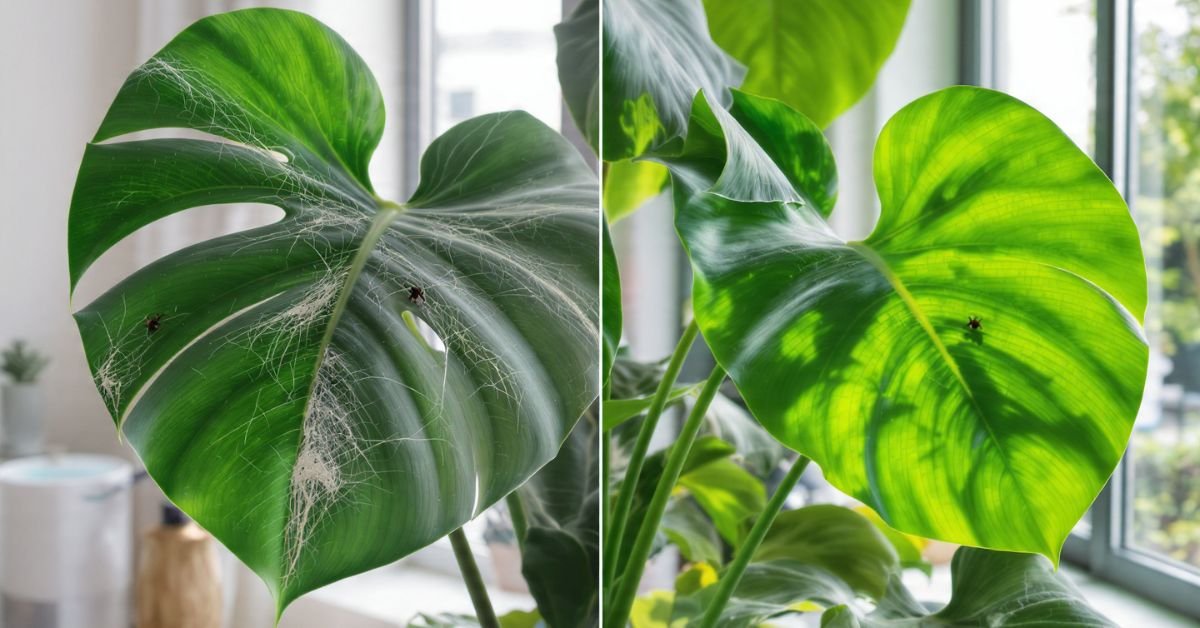
If you want to learn how to get rid of spider mites on indoor plants naturally, you are not alone. These tiny pests can quickly damage healthy houseplants by causing yellow leaves, webbing, and weak growth. Fortunately, you can stop spider mites naturally with simple organic methods like Neem oil, humidity control, and proper plant cleaning—without using harsh chemicals.
Quick Care & Identification Table
| Feature | What to Look For |
| Primary Symptom | Tiny yellow or white “stippling” (dots) on leaves. |
| Visual Confirmation | Fine, silky webbing, usually in the joints of stems. |
| Mite Color | Tiny red, brown, or pale specks (use a magnifying glass!). |
| Favorite Conditions | Hot, dry air (near AC vents or heaters). |
| Primary Organic Fix | High humidity and Neem oil or Castile soap. |
Why Common Mistakes Make Spider Mites Worse in US Homes
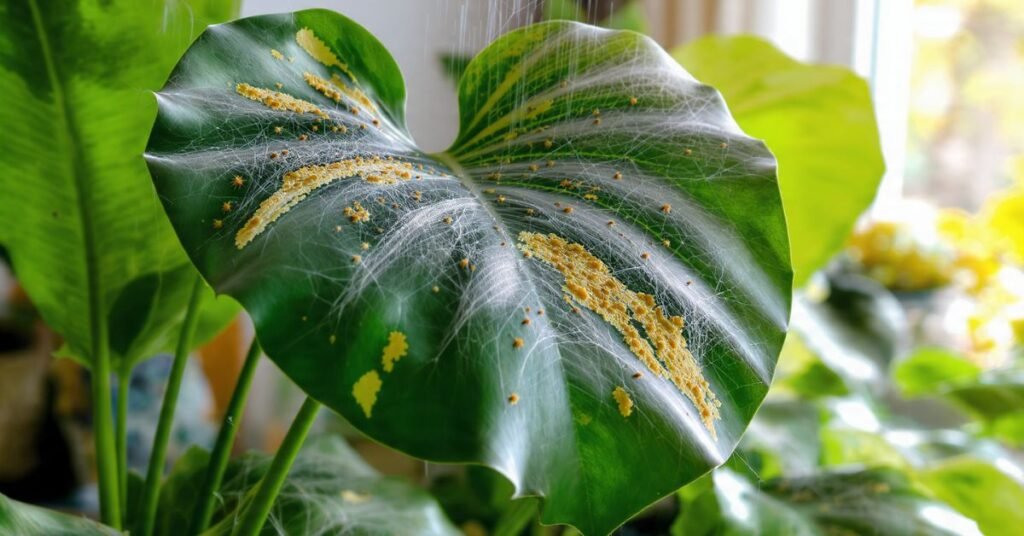
One of the biggest reasons I see my fellow American plant parents struggle is our love for Air Conditioning. In many USDA Hardiness Zones (especially the hot, humid South or the dry Southwest), we blast the AC or the furnace year-round. This creates a “desert-like” micro-climate inside that spider mites absolutely adore.
Common US Gardening Blunders:
- The AC Vent Trap: Placing a plant directly in the path of an AC or heater vent dries out the foliage, making it a buffet for mites.
- The “Nursery Hitchhiker”: Bringing a plant home from a big-box store without a “quarantine” period in a separate room.
- Over-fertilizing with Nitrogen: Research suggests that high nitrogen levels in potting soil can actually increase mite density (Zhao et al., 2023).
Personal Pro-Tip: Whenever I bring a new plant home, it stays in the “guest room” (my makeshift quarantine zone) for at least two weeks. I also keep a cheap hygrometer next to my plants to ensure the humidity stays above 50%.
Step 1: The First Bath—How to Get Rid of Spider Mites on Indoor Plants Naturally with Water
Before you reach for any sprays, the most effective first step is a simple trip to the faucet. Physically knocking the mites off the plant is 70% of the battle.
- Take your plant to the sink or shower.
- Use a lukewarm, steady stream of water to blast the undersides of every leaf.
- Pro-Tip: Don’t forget the “elbows” of the plant where the leaf meets the stem; that’s their favorite hiding spot.
Personal Pro-Tip: For larger plants like a heavy Bird of Paradise, I use a damp microfiber cloth to wipe every single leaf individually after the “shower” to ensure no stragglers remain.
Step 2: The Neem Strategy for How to Get Rid of Spider Mites on Indoor Plants Naturally
If the water bath doesn’t finish them, it’s time for Neem oil. Neem is a natural derivative of the Azadirachta indica tree and is incredibly effective because it interferes with the mites’ ability to feed and lay eggs (Souto et al., 2021).
My Go-To Organic Spray Recipe:
- 1 quart of warm water
- 1.5 tsp organic Neem oil
- 0.5 tsp Dr. Bronner’s Peppermint Castile Soap (this acts as an emulsifier and a natural repellent)
Note: Always test a single leaf first. Some sensitive plants, like ferns, can be “burned” by oils.
Personal Pro-Tip: Only apply this spray in the evening. If you spray your plants and then they sit in a sunny window, the oil can “cook” the leaves, leading to ugly brown patches.
Step 3: Using Rubbing Alcohol to Spot-Treat Spider Mites Naturally
For smaller infestations, I’ve found that a simple bottle of 70% Isopropyl (rubbing) alcohol is a lifesaver. You can take a cotton swab, dip it in the alcohol, and dab it directly onto the webbing and the mites.
The alcohol melts the mites’ exterior on contact. It’s strangely satisfying, but be careful—do not use higher concentrations (like 90%) as it evaporates too quickly and can chill and damage the plant tissue (Johnson, 2008).
Personal Pro-Tip: I keep a pre-mixed spray bottle of 1 part alcohol to 4 parts water for a quick “preventative” misting on my more “mite-prone” plants like Ivies or Calatheas.
Troubleshooting: Why Are My Leaves Still Turning Yellow?
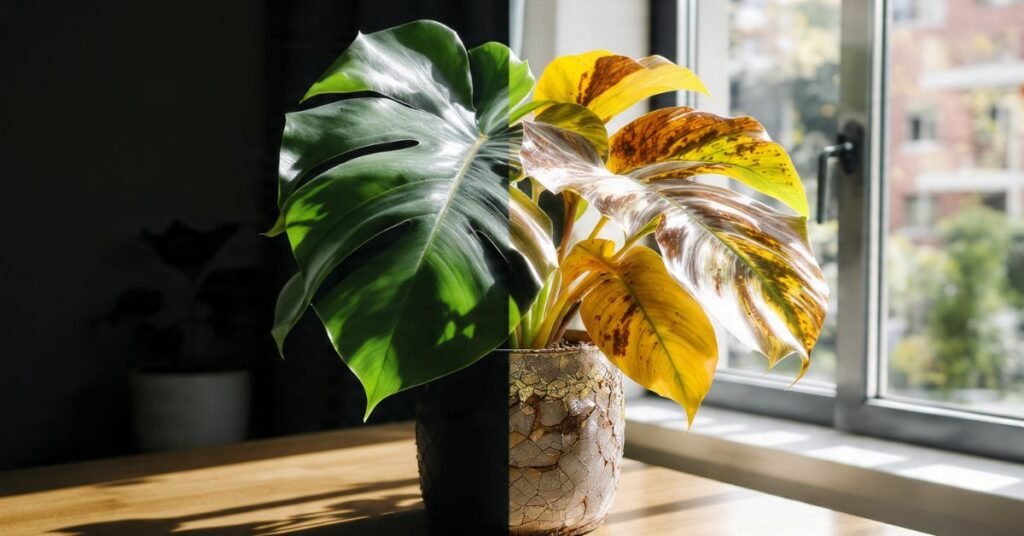
If you’ve followed the steps for how to get rid of spider mites on indoor plants naturally and you’re still seeing damage, check these three things:
- The Egg Cycle: Most natural treatments don’t kill eggs. You must repeat your treatment every 3-5 days for at least two weeks to catch the new “hatchlings.”
- Humidity: If your home is below 30% humidity (common in US winters), the mites will just keep coming back. Buy a humidifier!
- Hidden Reservoirs: Check the rim of your potting soil and the bottom of the nursery pot. Mites often hide in the cracks of the plastic.
Toxicity Warning: Is This Safe for Pets?

As a dog owner myself, I’m always cautious.
- Neem Oil: Generally considered non-toxic to dogs and cats in diluted forms (Wylie & Merrell, 2022). However, if your cat is a “leaf-chewer,” it might cause a mild upset stomach.
- Castile Soap: Safe, but ensure it doesn’t contain essential oils like tea tree, which can be toxic to cats.
- Rubbing Alcohol: Highly toxic if ingested. Ensure the plant is completely dry before letting your pets back into the room.
Final Thoughts on How to Get Rid of Spider Mites on Indoor Plants Naturally
Getting rid of these pests is a marathon, not a sprint. I’ve had “wars” with spider mites that lasted a month, but with consistency and a bit of humidity, you will win. Remember, a healthy plant is its own best defense—keep that soil rich and that air moist!
Frequently Asked Questions
Q1. Can I use dish soap to get rid of spider mites naturally?
Yes, but avoid “detergents” with degreasers (like Dawn). Stick to true soaps like Castile soap, which are gentler on the plant’s natural wax coating.
Q2. How do I know if the spider mites are actually gone?
The “Paper Test” is my favorite method. Shake a leaf over a white piece of printer paper. If you see tiny specks moving, they’re still there.
Q3. Do predatory mites actually work for indoor plants?
Absolutely! In the US, you can order Phytoseiulus persimilis online. They are “good bugs” that eat the “bad bugs” and then die off once the food source is gone (Zhao et al., 2023).
Q4. Why do spider mites love my AC vents so much?
AC vents create localized areas of low humidity and moving air, which prevents moisture from settling on leaves—creating the perfect dry environment for mites to thrive.
Q5. Can spider mites live in my potting soil?
While they primarily live on the leaves, they can certainly hide in the top layer of dry soil or on the rim of the pot. Always wipe down the pot when treating.
Q6. Does cinnamon help get rid of spider mites?
It’s a great antifungal, but it’s not a very effective miticide. It might deter them slightly, but it won’t stop an infestation.
Q7. How often should I spray my plants to get rid of spider mites naturally?
Every 3 to 5 days. You have to break their life cycle, and since eggs hatch quickly in warm US homes, a weekly spray usually isn’t frequent enough.

Amin Khalid is a professional horticulturist and the founder of LeafyWisdom. With a deep passion for home gardening and horticultural research, he specializes in providing practical, easy-to-follow care guides for indoor plants. Amin’s goal is to simplify gardening for everyone and help fellow plant lovers build their own thriving green spaces.

No responses yet