
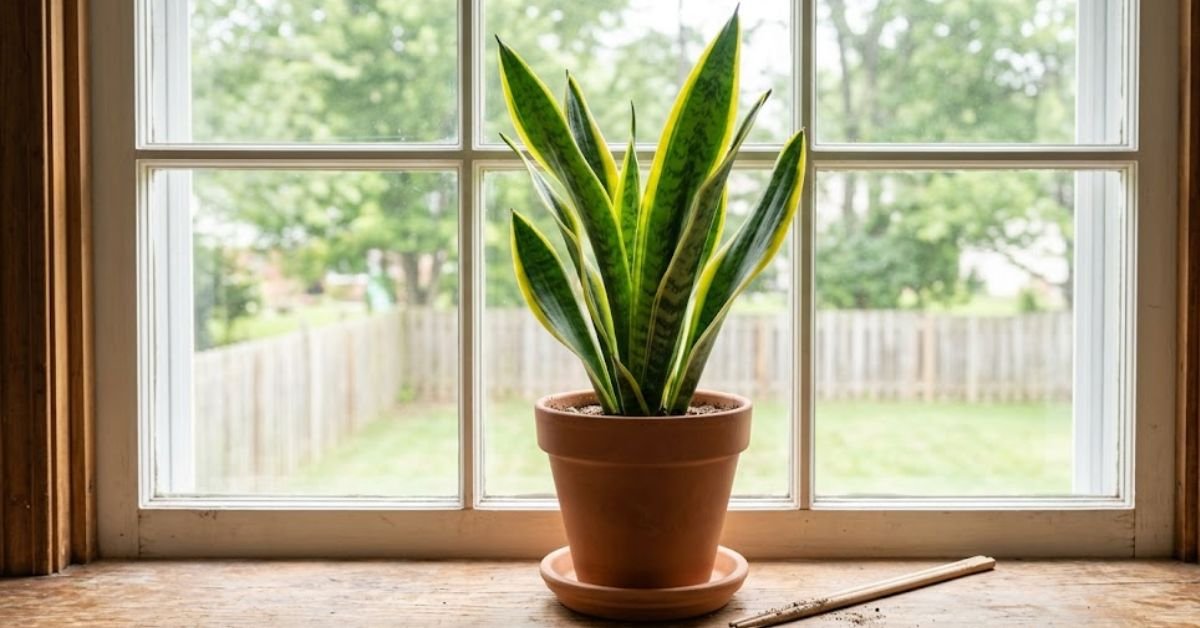
If you are struggling to keep your indoor greenery alive, mastering snake plant care is the ultimate game changer. I have filled my own home with these hardy plants because they tolerate almost anything, but a few common mistakes can still ruin them. Here is exactly how I keep mine healthy without losing my mind.
| Care Element | Fast Guidelines |
| Light | Low to bright indirect sunlight |
| Water | Every 2–3 weeks (let soil dry completely) |
| Soil Mix | Well-draining potting soil mixed with perlite |
| Temperature | 60°F – 85°F (Keep away from AC vents) |
| Toxicity | Toxic to dogs and cats |
Why My Approach to Snake Plant Care Works
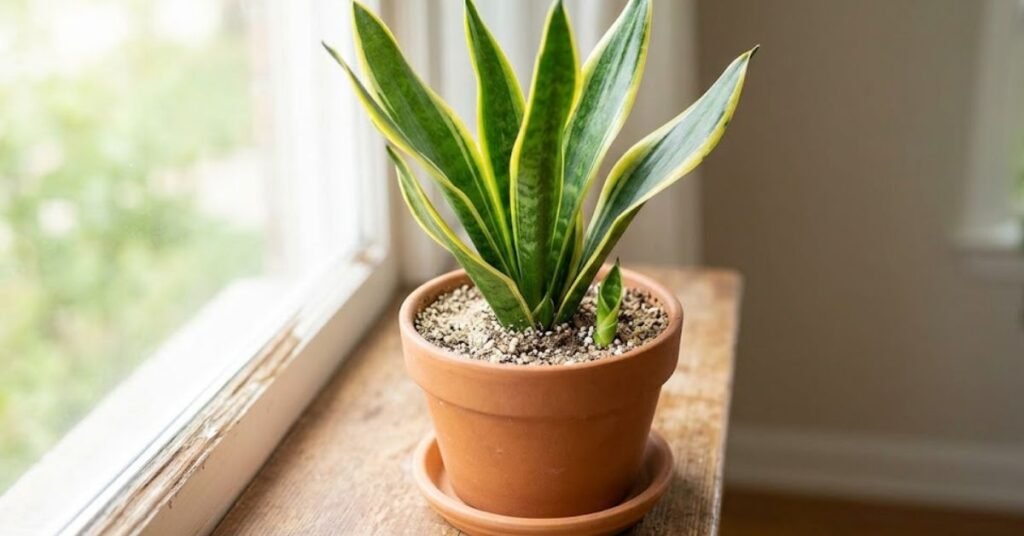
I used to think I could ignore these guys forever. Everyone online says they are indestructible, right? Well, my first Sansevieria turned into a mushy, rotten mess within three months because I treated it like a regular houseplant. That failure taught me that proper snake plant care isn’t about ignoring the plant entirely; it’s about knowing exactly when to step away.
In my years of growing this plant on my windowsills and in dark corners, I’ve found that they react heavily to your home’s hidden environment, especially things like artificial air currents.
Personal Pro-Tip: Don’t just stick your finger in the top inch of dirt to check for moisture. Buy a cheap wooden chopstick, push it all the way to the bottom of the pot, and pull it out. If it comes up damp or with dark potting soil sticking to it, walk away. Do not water it.
Master the Basics of Indoor Snake Plant Care
Getting the fundamentals right saves you a ton of headaches down the road. You don’t need a green thumb, just a basic understanding of how these tough desert survivors handle an indoor environment.
Finding the Right Light for Your Snake Plant
Here is the truth: they can survive in that gloomy corner of your home office, but they won’t grow. I have one sitting right near a bright, east-facing window behind a sheer curtain, and it pushes out new pups every single Spring. If you put it in total darkness, it just sits there, frozen in time.
Personal Pro-Tip: If your plant starts looking stretched out, leggy, or the beautiful variegated yellow edges start fading into a dull green, it is begging for more light. Move it closer to a window, but do it gradually over a week so the leaves don’t get sunburned.
How to Water a Snake Plant Without Killing It
Watering is where most people mess up. When you do water, run it fully under the kitchen faucet until it drains out of the bottom holes. Then, forget about it.
In the hot Summer months, I might water mine every two weeks. But when Fall hits and the days get shorter, I stretch that out to once a month.
Personal Pro-Tip: Always dump out the saucer underneath the pot after watering. If the base sits in a pool of stagnant water for more than twenty minutes, you are practically inviting root rot to destroy your plant.
The Secret Rhizome: The Engine Behind Snake Plant Care
Underneath the potting soil, your snake plant hides thick, horizontal underground stems called rhizomes. They look remarkably like thick, orange-tinted ginger roots, and they run the entire show.
Think of these rhizomes as heavy-duty water storage vaults. When you run water from the faucet over the plant, these underground structures drink up the moisture and lock it away for weeks. It is the exact reason the plant can hang out for months without a single drop of water.
But there is a cool hack here. If you ever overwater and your plant suffers from severe root rot at the soil line, you do not have to toss the whole thing in the trash. I have saved a few of mine by simply slicing away the mushy parts, locating a healthy, firm section of that orange rhizome, and letting it dry out and callous over on my kitchen counter for two days. After that, you just pop it straight into fresh potting soil, and it will regenerate a brand-new root system.
Personal Pro-Tip: When you are repotting and notice these orange roots, do not panic and cut them off thinking they are diseased. That orange color is totally normal and a sign of a healthy, functioning root system.
Common Mistakes Americans Make with Snake Plant Care
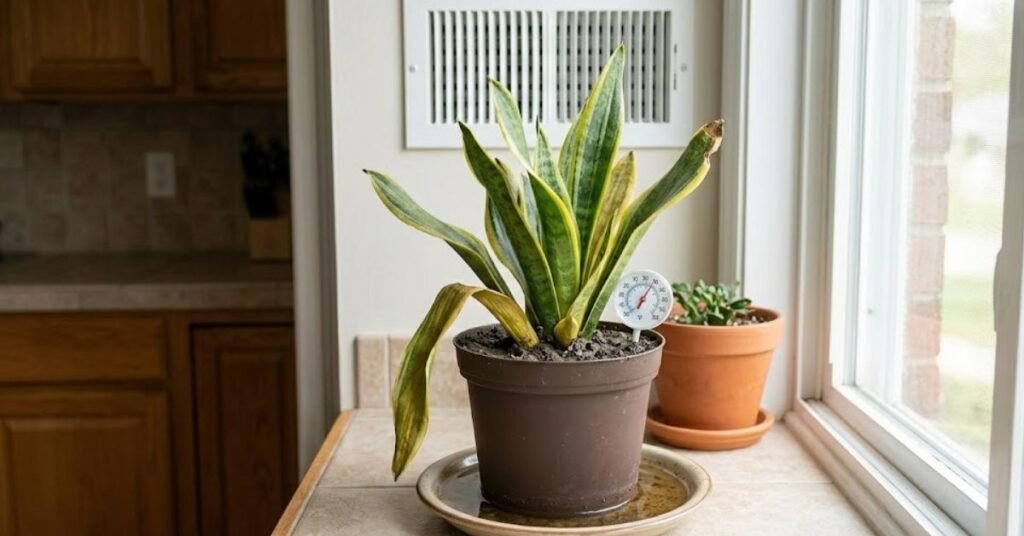
Living in the US means dealing with modern home comforts that plants absolutely hate.
The biggest silent killer? Your central air conditioning system. I once placed a gorgeous five-foot specimen directly under an AC vent in July. Within two weeks, the cold blasting air shocked the tropical roots, causing the outer leaves to wrinkle and drop.
Another massive blunder is using heavy, standard garden soil or regular potting soil right out of the bag without adding drainage elements. It holds moisture for way too long.
Personal Pro-Tip: When you buy a new plant from a big-box store, the soil is usually cheap and holds too much water. I always recommend repotting it within a few weeks into a terra-cotta pot using a mix of two parts succulent soil and one part perlite.
Troubleshooting Common Problems
Plants can’t talk, but they sure can complain. Here is how to decode what your green roommate is trying to tell you.
- Mushy, Yellowing Leaves: This is a classic sign of overwatering. The roots are literally suffocating. Cut the yellow leaf off at the base with clean shears, pull the plant out of its pot, and let the root ball dry out in the air for a day before putting it back in fresh, dry potting soil.
- Wrinkly Leaves: Surprisingly, this means it’s too dry. If the soil is bone dry and the leaves look shriveled like a raisin, it’s time for a deep soak under the faucet.
- Brown, Crispy Tips: Usually caused by super low indoor humidity from winter heating or direct blast from your HVAC system.
Personal Pro-Tip: If only the very tip of a leaf is brown and dry, you can trim it off. Cut at an angle to mimic the natural pointed shape of the leaf so it doesn’t look awkward.
Is Your Snake Plant Safe for Pets?
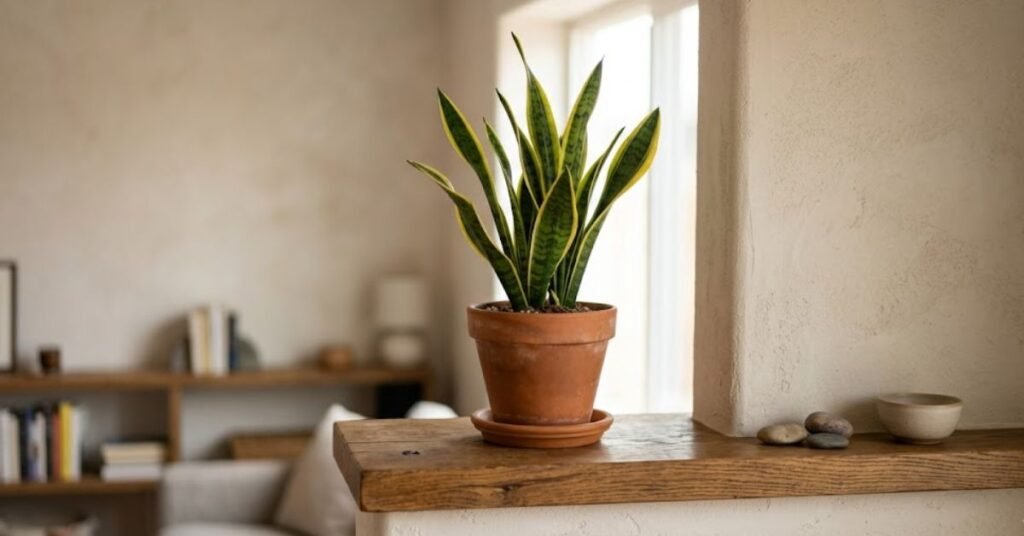
I love my pets, and if you have furry family members, you need to be careful here.
Snake plants contain saponins, which are natural compounds that make the plant taste bitter but also make it toxic to dogs and cats. If your curious cat decides to use the tall leaves as a chew toy, it can cause nausea, vomiting, and diarrhea.
Personal Pro-Tip: If you have a persistent pet, place your pots up high on a heavy floating shelf or a sturdy plant stand where paws can’t reach. If they do ingest any, call your local vet immediately.
Frequently Asked Questions
Q1: Can I use tap water from my faucet to water my plant?
Yes, standard tap water is usually fine. However, if your city treats its water heavily with chlorine, let the water sit out in a pitcher overnight before using it so the chemicals can evaporate.
Q2: Why is my plant falling over?
It’s usually because the roots or the underground rhizomes have rotted away from overwatering, leaving nothing to anchor the heavy leaves. Check the base. If it’s soggy, you need to propagate the healthy tops.
Q3: How fast do these plants grow?
Slowly. Especially indoors. Don’t expect massive growth bursts unless it’s the peak of Spring and the plant is getting excellent indirect light.
Q4: Do I need to fertilize my plant?
Hardly ever. I give mine a diluted, balanced liquid houseplant fertilizer just twice a year—once in early Spring and once in mid-Summer. Skip it completely during the Winter.
Q5: What kind of pot is best?
Terra-cotta, hands down. The porous clay breathes and helps excess moisture evaporate from the potting soil much faster than plastic or ceramic pots.
Q6: Can they live outside in the US?
Only if you live in a frost-free zone like Southern Florida or Southern California. For the rest of us, you can put them out on a shaded patio during the hot Summer, but bring them inside before the first Fall frost hits.
Q7: How do I know if it needs a bigger pot?
These plants actually like being root-bound. You only need to repot when the expanding rhizomes start cracking the plastic pot or pushing their way completely out of the drainage holes.
My Final Thoughts on Keeping This Plant Alive
At the end of the day, successful snake plant care comes down to restraint. It’s the perfect plant for busy people, forgetful college students, or anyone who wants a splash of green without a stressful chore list. Give it some light, keep it out of the direct path of your air conditioner, and stop watering it so much. Your plant will thank you by staying beautiful and green for years to follow.

Amin Khalid is a professional horticulturist and the founder of LeafyWisdom. With a deep passion for home gardening and horticultural research, he specializes in providing practical, easy-to-follow care guides for indoor plants. Amin’s goal is to simplify gardening for everyone and help fellow plant lovers build their own thriving green spaces.

No responses yet