
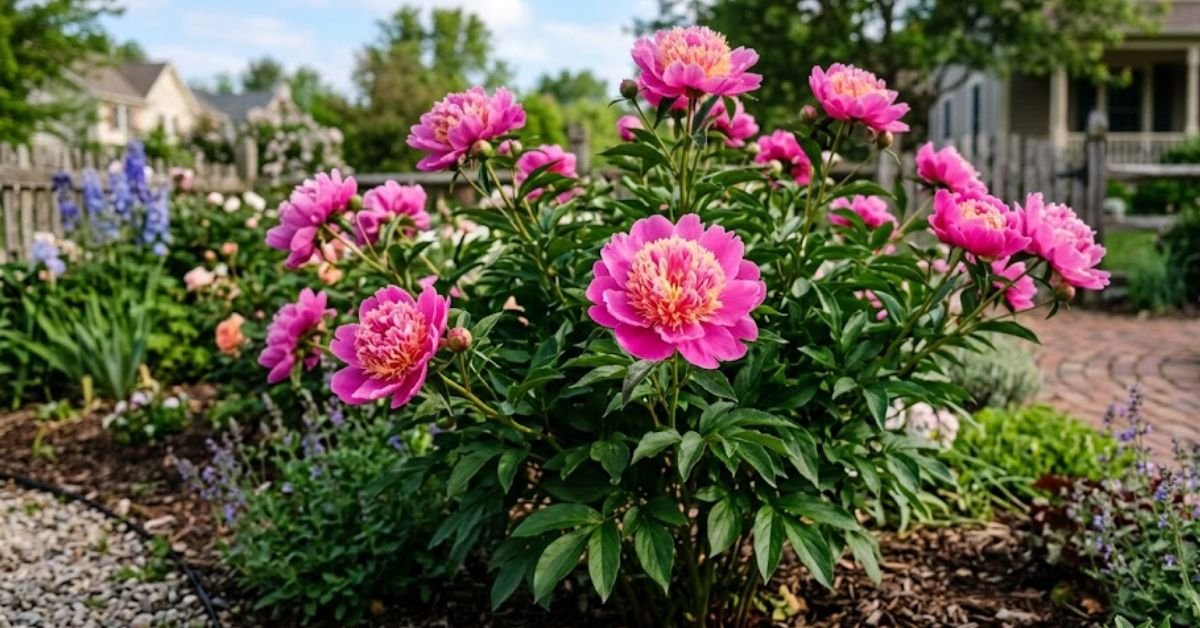
I still remember the first time I saw a japanese peony plant in full bloom. It was in a historic garden in Virginia, right around mid-May. While the classic French double peonies were completely flopped over in the dirt after a heavy spring thunderstorm, the Japanese varieties were standing tall, looking absolutely pristine.That was the moment I fell in love with them.If you are tired of building elaborate cage supports for your flowers or watching your heavy peony heads turn into soggy tissue papers after a rain, this is the plant you need in your yard. They are tough, sculptural, and spectacularly beautiful.But you can’t just throw them in the ground and hope for the best. They have specific rules, especially regarding our varied US climates. Let’s get into how to actually grow them successfully.
Quick Care Guide for the Japanese Peony Plant
If you just crawled out of the garden to look up a quick stat, here is the fast-scan version of what this plant needs.
| Care Factor | Requirements |
| USDA Hardiness Zones | Zones 3 through 8 (Needs cold winters) |
| Sun Exposure | Full sun (6+ hours); Afternoon shade in hot Southern zones |
| Soil Preference | Rich, organic, sharply draining soil (pH 6.5 to 7.0) |
| Water Needs | 1 inch per week; damp but never soggy |
| Fertilizer | Low nitrogen, high phosphorus (apply in early Spring) |
| Toxicity | Toxic to dogs, cats, and horses |
Personal Pro-Tip: If you live in a notoriously windy region like the Midwest plains, try to plant your peony near a fence line or a cluster of sturdy shrubs. Even though their stems are much stronger than double peonies, a severe spring storm can still snap the heavy flower buds right before they open if they have zero wind protection.
What Makes the Japanese Peony Plant Different?
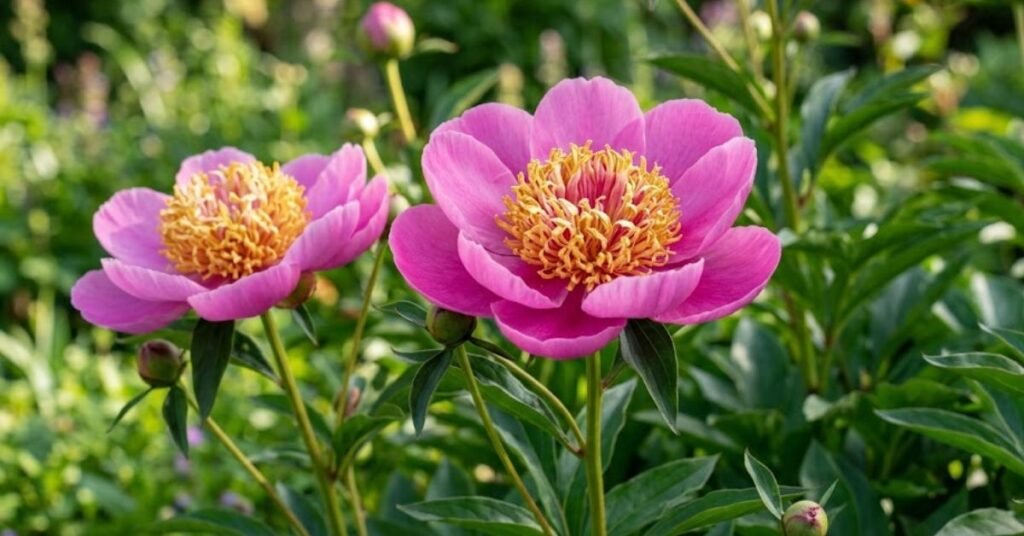
A lot of folks get confused about what a “Japanese” peony actually is. It is not a separate species. It refers to a specific flower form.
These plants have a single or double row of large outer guard petals. These petals act like a satin bowl. Inside that bowl sits a cluster of transformed stamens called staminodes. They look like thick, crinkly, golden shredded ribbons.
Because they don’t have the hundreds of heavy petals that a standard double peony has, the flower heads are incredibly light. The stems can actually hold them up.
They also bloom right in the middle of the peony season, bridging the gap between the early singles and the late-season doubles.
Personal Pro-Tip: Don’t expect an overwhelming, sugary perfume from these like you get with old-fashioned pink double peonies. Most Japanese varieties have a much lighter, slightly spicy, or clean scent. They are grown primarily for their visual drama and unique shape rather than a heavy fragrance.
Ideal Growing Conditions for Your Japanese Peony Plant
Getting your environment right is 90% of the battle. If you put this plant in the wrong spot, it will sit there and pout for years without giving you a single bud.
The Critical Role of USDA Hardiness Zones
I cannot stress this enough: these are northern plants at heart. They need a distinct winter rest. They require hundreds of hours of temperatures below 45°F to trigger the chemical reaction that creates flower buds.
- Zones 3-6: You are in the sweet spot. Plant them in the absolute full sun. They will love it.
- Zones 7-8: You can grow them, but you need to be strategic. Give them a spot that gets blasted with morning sun but is protected by a shadow from a tree or your house by 2:00 PM. The intense Southern heat will scorch the leaves early if you aren’t careful.
- Zone 9 and higher: Honestly? Save your money. It just doesn’t get cold enough over the winter for them to produce flowers.
Soil Mix and the Container Trap
Peonies love rich soil, but they absolutely hate wet feet. If you are planting in the ground, dig in plenty of organic matter like aged leaf mold.
If you want to try growing a japanese peony plant on a patio in a large container, do not buy cheap yard dirt. And do not use standard garden compost inside a pot—it packs down too tightly and drowns the roots. Instead, purchase a premium, lightweight potting soil and mix in a couple of handfuls of perlite or coarse poultry grit to ensure water rushes right out the bottom holes.
Good Drainage = Happy Roots = Massive Blooms
Poor Drainage = Root Rot = Dead Peony
Water Directly From the Faucet
When summer hits and the rain stops, you will need to supplement. Hook up your garden hose and run water directly at the base of the plant from the outdoor faucet. Avoid overhead sprinklers. Wet leaves invite fungal issues that can ruin the entire plant before the season ends.
Personal Pro-Tip: When buying bare roots online or at a nursery, look for specimens that explicitly state they have at least 3 to 5 “eyes” (the small buds on the root). Cheaper roots with only 1 or 2 eyes will eventually grow, but you’ll be waiting an extra two years just to see your first flower.
Step-by-Step Planting Guide for US Gardeners
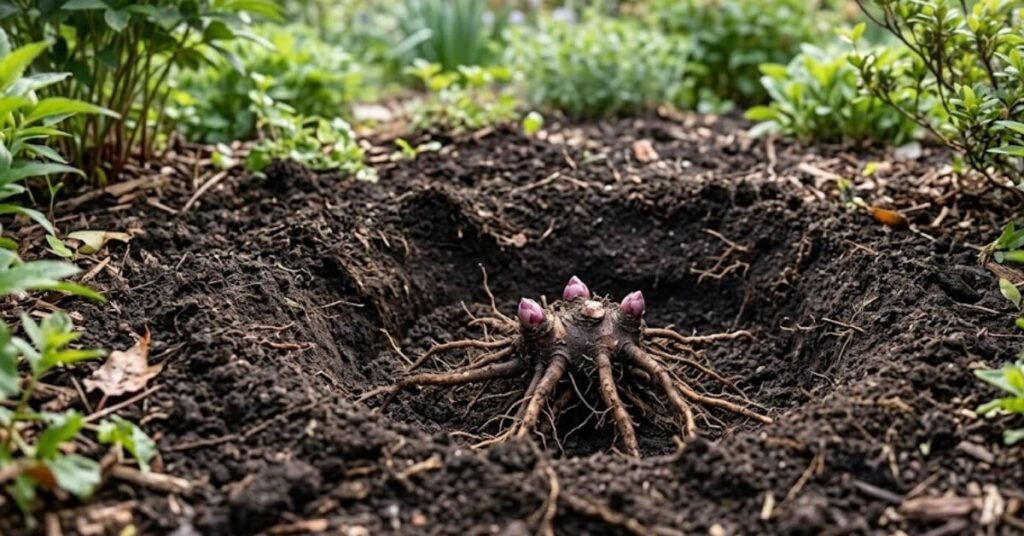
Timing is everything. In the US, the absolute best time to plant a bare-root peony is late Fall, usually October or November before the ground freezes solid. This gives the tiny feeder roots time to develop before the spring rush.
- Pick the spot: Look for a place away from large tree roots. Peonies do not like competing for nutrients.
- Dig a wide hole: Dig a hole about two feet wide and a foot deep. Loose soil around the root ball makes it easy for the plant to spread out.
- Check the depth: This is where most people mess up. Look at the bare root. You will see small, pinkish buds called “eyes.” When you place the root in the hole, those eyes must face upward and sit exactly 1.5 to 2 inches below the natural surface of the soil.
- Fill and settle: Fill the hole back in with your soil mix. Firm it gently with your hands—don’t stomp on it with your boots, or you might snap the eyes off. Water it deeply to settle the dirt.
Personal Pro-Tip: If your established peony bush has been in the ground for over a decade and the flowers are starting to get noticeably smaller each year, the root system might be overcrowded. Late October is the perfect window to dig up the entire clump and carefully split it into smaller sections using a sharp, sterilized knife.
Why Do Americans Fail with the Japanese Peony Plant?
We love to fuss over our gardens. Sometimes, that is exactly why things go wrong. Here are the three most common reasons I see people fail with this specific plant.
Over-Fertilizing With Lawn Chemicals
Most US homeowners love a bright green lawn, so we spread high-nitrogen fertilizers everywhere. If that runoff hits your peony bed, you are going to get a massive, lush green bush with absolutely zero flowers. High nitrogen forces the plant to spend all its energy making leaves.
If you want flowers, you need phosphorus. I give my plants a single handful of bone meal or a low-nitrogen bulb food in early spring when the red shoots first poke out of the ground. That is it for the whole year.
Burying the Crown Too Deep
I see this happen all the time when people add fresh wood mulch to their garden beds every spring. If you dump three inches of mulch right on top of the center of your peony, you have effectively buried the eyes too deep. The plant will grow leaves, but the buds will fail to form. Keep the center of the plant free of heavy mulch layers.
Moving the Plant Around
Peonies are homebodies. They hate being dug up, split, or relocated. Pick a spot where the plant can stay for the next twenty years. If you move it, it will often enter a state of shock and refuse to bloom for two to three seasons while it tries to recover.
Personal Pro-Tip: To maximize the lifespan of your flowers on the bush, stop all overhead watering the moment you see the buds starting to crack open and reveal color. Water hitting the delicate open petals under the hot afternoon sun will cause them to brown and drop days earlier than normal.
Troubleshooting Common Problems with Japanese Peonies
Gardening is full of surprises, and not all of them are good. If your plant is looking a little sick, don’t panic. Here is how to diagnose and fix it.
The Mystery of the Missing Blooms
If your plant looks completely healthy but simply won’t produce flowers, run through this quick checklist:
- Is it getting less than six hours of direct sun? (Move it next Fall if it’s too shady).
- Was it planted within the last two years? (Young bare-root plants take time to establish).
- Are the eyes buried more than two inches deep? (Carefully scrape away some surface soil).
Fuzzy Gray Spots or Black Stems
This is Botrytis blight, a fungal disease that loves wet, humid spring weather. It turns the young buds black and can cause the stems to wilt and fall over.
If you see this, grab your pruners, dip them in rubbing alcohol to sterilize them, and cut away the infected parts. Put the diseased stems straight into the garbage. Do not compost them, or the spores will spread all over your yard next year.
Botrytis Action Plan:
1. Cut out diseased tissue immediately.
2. Sterilize pruners between cuts.
3. Throw waste in the trash (never compost).
4. Improve air circulation around the plant base.
The Ant Invaders
Every spring, I get frantic messages from friends saying, “My peony buds are covered in ants! What bug spray should I use?”
Do not spray them! The ants are your friends. Peony buds secrete a very sweet, sticky sap as they grow. The ants are simply harvesting that sugar. In exchange, they protect the bud from worse pests like thrips. Once the flower opens, the ants move on.
Personal Pro-Tip: Once you cut your peonies and bring them inside for a vase display, change the water completely every single morning and clip a tiny quarter-inch off the bottom of the stems at a sharp angle. This simple routine keeps bacteria from blocking the stems and easily pushes your indoor vase life past a full week.
Is the Japanese Peony Plant Safe for Pets?
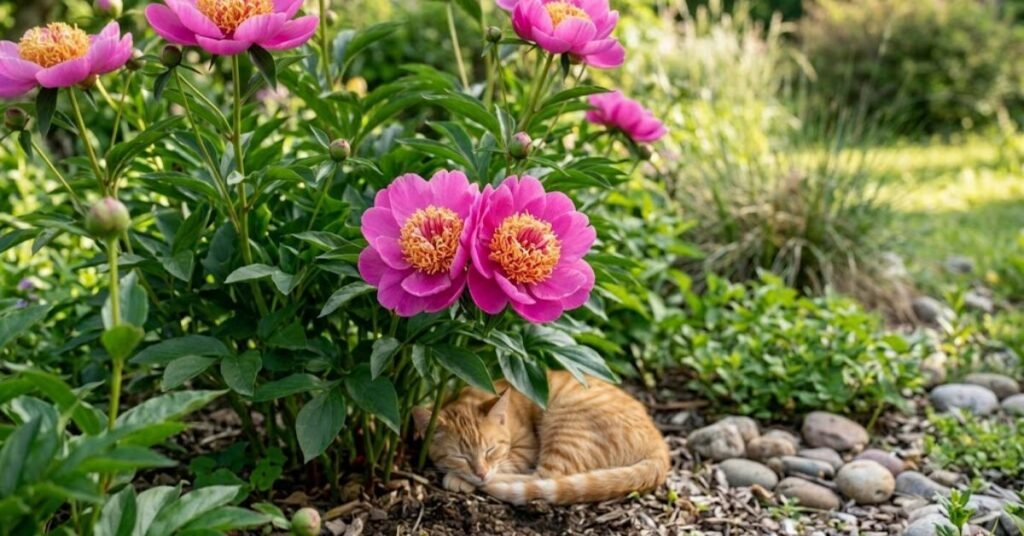
This is a major consideration for most US households. The short answer is no.
The Japanese peony plant contains a chemical compound called paeonol. It is concentrated heavily in the root system, but it is present throughout the entire plant. If your dog or cat decides to use your garden bed as a snack bar, they can get pretty sick.
Symptoms of Peony Poisoning in Pets:
- Severe vomiting
- Diarrhea
- Lethargy or depression
- Increased heart rate
If you have a young puppy who loves to dig up roots, or a cat that chews on everything green, you need to protect the plant. I use small, decorative iron border fences around my peony beds. It keeps my dogs from trampling the young spring shoots or digging around the base.
Personal Pro-Tip: If you have a dog that loves to dig up fresh dirt, try planting a dense border of completely pet-safe flowers like Snapdragons or Marigolds around your peony bed. They act as a natural physical buffer zone that discourages pets from reaching the sensitive root area.
Frequently Asked Questions About Japanese Peonies
Q1. How long do these plants actually live?
They can easily outlive you. If you put a japanese peony plant in a good spot with well-draining soil and leave it alone, it can live for 50 to 100 years. There are countless stories of families digging up peonies from historic homesteads that were planted generations ago.
Q2. Do I need to cut the plant back for the winter?
Yes. After the first hard frost in late Fall, the leaves will turn ugly, brown, and collapse. Cut all the stems down to about one inch above the ground line. Throw all the dead footage in the trash to prevent fungal issues from overwintering in your soil.
Q3. Can I use a standard wire tomato cage to support them?
You can, but you probably won’t need to. The beauty of the Japanese flower form is its lighter weight. Unlike heavy double varieties that collapse under their own weight, these stems are usually strong enough to stand up completely on their own without any cages.
Q4. Why are the leaves on my plant turning powdery white in August?
That is powdery mildew. It happens across much of the US during hot, humid late-summer stretches. It looks ugly, but it won’t kill an established plant because the root system has already stored its energy for the year. Just cut the plant down to the ground in the late Fall and discard the leaves.
Q5. What is the “marshmallow stage” for cutting flowers?
It’s the perfect time to harvest flowers for indoor vases. Gently squeeze the tight flower bud. If it feels hard like a marble, leave it alone. If it feels soft and squishy like a marshmallow, and you can see a hint of color breaking through the green outer sepals, cut it. It will open perfectly indoors and last much longer.
Q6. Can I plant them close to my walnut trees?
No. Black walnut trees produce a toxin called juglone in the soil that kills off many sensitive garden plants. Peonies are notoriously susceptible to juglone toxicity. Keep them at least 50 feet away from the drip line of any walnut tree.
Q7. Do I need to deadhead the flowers after they fade?
Yes, it helps. Once the beautiful petals drop, use your pruners to snip off the green seed pod right above the first strong set of leaves. This stops the plant from wasting energy producing seeds, allowing it to redirect that strength back down into the root system for next year’s show.
Personal Pro-Tip: Always leave at least two-thirds of the leafy green stalks completely untouched when you cut flowers for a bouquet. The remaining leaves are crucial for gathering sunlight all summer long, which directly builds up the energy needed to form next year’s flower buds underground.
Final Thoughts on the Japanese Peony Plant
Growing these stunning plants isn’t about having a master’s degree in botany. It really just comes down to respect. Respect their need for a cold winter, give them plenty of sunshine, and don’t bury those root eyes too deep.
They are incredibly self-sufficient once they get through their first couple of years in the ground. Every single May, when those architectural, golden-centered blooms open up perfectly straight despite whatever wild spring weather the US throws at them, you will realize they are worth every bit of effort.
Personal Pro-Tip: If you are ready to start shopping, look for reliable, time-tested varieties like ‘Gay Paree’ (deep magenta outer petals with a fluffy white center) or ‘Sword Dance’ (vibrant cherry-red with a blazing golden center). Both handle typical US weather shifts like absolute champs.

Amin Khalid is a professional horticulturist and the founder of LeafyWisdom. With a deep passion for home gardening and horticultural research, he specializes in providing practical, easy-to-follow care guides for indoor plants. Amin’s goal is to simplify gardening for everyone and help fellow plant lovers build their own thriving green spaces.

No responses yet