
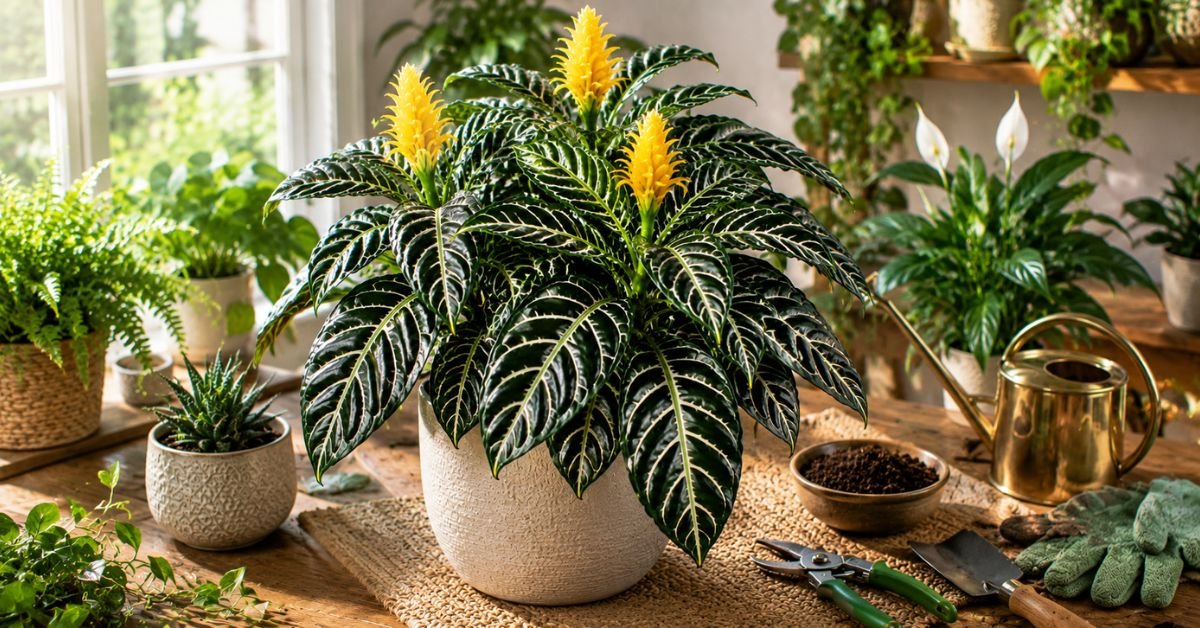
A zebra plant, usually Aphelandra squarrosa, is a tropical houseplant known for glossy green leaves, bold white veins, and striking yellow flower bracts. It grows best in bright indirect light, warm conditions, higher humidity, and potting soil that stays evenly moist without becoming soggy. The main challenge is finding the right balance between keeping the roots hydrated and preventing the soil from staying wet for too long.
Once you understand that balance, caring for this plant becomes much easier. Instead of following a rigid watering calendar, watch the soil, leaves, light, and room conditions.
Personal Pro-Tip: My practical rule is to keep the environment as stable as possible. Constantly moving the plant, changing watering habits, or placing it beside an AC vent can create more problems than the original issue.
Quick Zebra Plant Care Guide
| Care need | Best starting point |
|---|---|
| Botanical name | Aphelandra squarrosa |
| Light | Bright, indirect light |
| Water | Keep the potting mix evenly moist |
| Humidity | High humidity preferred |
| Temperature | Warm conditions, avoid cold drafts |
| Soil | Moisture-retentive but well-draining potting soil |
| Fertilizer | Feed during active growth |
| Propagation | Stem cuttings |
| Flowering | Bright indirect light and consistent care |
| USDA Zones | 11 to 12 outdoors |
| Indoor growing | Suitable far beyond those outdoor zones |
| Pet safety | ASPCA lists it as non-toxic to dogs, cats, and horses |
The USDA hardiness range is mainly useful for outdoor growing. Someone living in a much colder state can still grow this tropical species successfully as an indoor plant.
Personal Pro-Tip: Treat the table as a starting point, not a fixed schedule. Your home’s light, temperature, humidity, and pot size will determine what the plant actually needs.
Which Zebra Plant Do You Have?
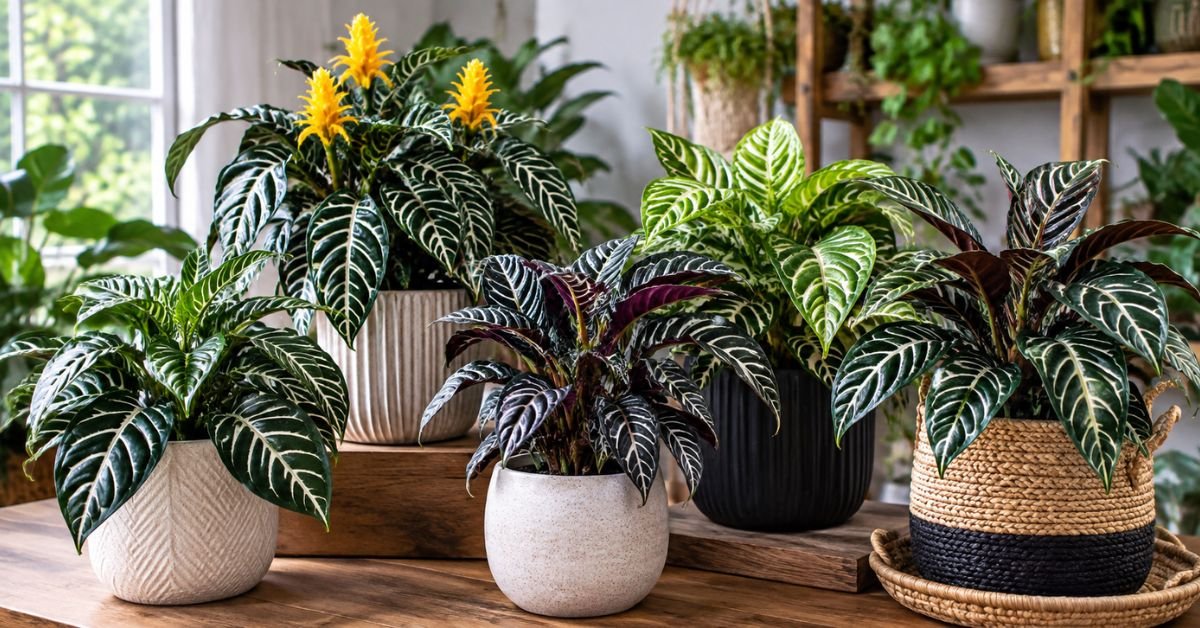
The common name can cause confusion because several unrelated plants are sold as zebra plants. Their care requirements are not interchangeable.
Aphelandra Squarrosa, the Tropical Plant
This is the species covered throughout this guide. It has broad, glossy leaves with strong white veins and can produce yellow bracts with small tubular flowers.
Zebra Haworthia, the Zebra Succulent
This is a compact succulent with pointed leaves and raised white markings. It prefers a much drier watering routine and should not be treated like Aphelandra squarrosa.
Why Plant Identification Matters
A tropical foliage plant and a zebra succulent may share a common name while needing almost opposite watering habits.
Personal Pro-Tip: Check the botanical name on the nursery tag whenever possible. The words “zebra plant” alone are not enough to determine the right care routine.
Zebra Plant Light Requirements: How Much Does It Need?
Bright, indirect light is the best starting point. In its tropical habitat, the plant receives filtered light rather than constant exposure to intense direct sunshine.
An east-facing window can be an excellent location. Bright south- or west-facing windows may also work if strong afternoon sun is filtered.
Too little light can result in weak growth and poor flowering. Too much intense direct light can scorch the foliage.
For a typical US home, focus on the brightness of the actual room rather than simply choosing a window by direction.
Personal Pro-Tip: “Indirect light” does not mean dim. If your plant sits in a gloomy corner and rarely casts even a soft shadow, the location may be too dark.
How Often Should You Water a Zebra Plant?
Watering is probably the most misunderstood part of growing this plant.
The potting mix should remain moist but not waterlogged. Allowing the roots to dry out completely can cause stress, but keeping the container saturated can create its own problems.
Instead of watering on a fixed day, check the soil.
When the upper layer has started to dry and the container feels lighter, water thoroughly. Allow excess water to escape through the drainage holes.
Then let the mix begin drying again before watering.
Should You Water a Drooping plant?
Not automatically.
Drooping plus dry soil: underwatering is more likely.
Drooping plus wet soil: investigate drainage and root conditions before adding more water.
A wilted plant is asking you to inspect the growing conditions, not automatically pour in more water.
Personal Pro-Tip: Pick up the container after watering and remember how heavy it feels. Comparing that weight a few days later can become a surprisingly useful way to judge moisture.
Plant Humidity and Temperature
Higher humidity and warm temperatures suit this tropical species. Dry indoor air can become a problem during both winter heating and summer air conditioning.
Keep the plant away from direct streams of hot or cold air.
A humidifier is usually one of the most controllable ways to increase room humidity. A naturally humid bathroom can also work if it receives sufficient light.
Avoid placing the pot right beside a heating register, AC vent, or drafty exterior door.
Personal Pro-Tip: Check the air movement at leaf level. A plant directly beside an HVAC vent can experience a much harsher microclimate than another plant across the room.
Best Soil for a Zebra Plant
The best mix holds enough moisture for the roots while allowing excess water to drain away.
A quality indoor potting mix combined with an aeration material such as perlite can provide a useful balance. The exact recipe is less important than the final texture.
The roots need both moisture and access to air.
Always choose a pot with drainage holes.
Personal Pro-Tip: I prefer keeping a houseplant in a simple nursery pot inside a decorative container. It makes it much easier to control and remove excess water.
How to Fertilize a Zebra Plant During Active Growth
Feed during periods of active growth and follow the dilution and frequency instructions on the fertilizer label.
Do not use extra fertilizer as a rescue treatment for a plant suffering from poor lighting, dry roots, or waterlogged soil.
Overfeeding can contribute to salt buildup in container soil and may worsen leaf-tip problems.
As growth slows in late fall and winter, fertilizer demand generally decreases.
Personal Pro-Tip: Solve the light and watering problem first. A plant in the wrong environment will not become healthy simply because you add more fertilizer.
How to Get a Zebra Plant to Bloom
The yellow flower bracts are one of the most attractive features of this houseplant.
Bright indirect light is particularly important if you want flowers. Consistent moisture, warm conditions, and reasonable nutrition also help support healthy growth.
If you have plenty of foliage but no flowers, check:
- Light intensity
- Watering consistency
- Room temperature
- Recent stress or heavy pruning
- Fertilizer routine
- Overall plant maturity
After flowering, spent growth can be removed to help maintain a compact shape.
Personal Pro-Tip: Don’t panic when flowering ends. Strong leaves and healthy new growth are more important signs of long-term health than having flowers all year.
How to Propagate a Plant From Stem Cuttings
Stem cuttings are a practical way to produce new plants.
Choose healthy growth, remove unnecessary lower leaves, and place the cutting into a suitable propagation medium. Keep the cutting warm and evenly moist while roots develop.
Higher humidity can reduce moisture loss while the cutting is establishing.
Propagation is easiest when you begin with healthy plant material rather than trying to save severely damaged growth.
Personal Pro-Tip: Take cuttings during normal pruning whenever possible. That way, propagation becomes part of your regular plant care instead of an emergency project.
Plant Problems: Quick Diagnosis
Why Are My Zebra Plant Leaves Turning Brown?
Brown tips can develop when humidity is too low, the soil repeatedly becomes too dry, the plant receives excessive direct sun, or watering is inconsistent.
Start with four checks:
- Is the soil too dry?
- Is the room very dry?
- Is the plant near an AC or heating vent?
- Is strong direct sunlight hitting the leaves?
Existing brown tissue will not turn green again. Focus on protecting the new growth.
Personal Pro-Tip: New leaves are your progress report. If the newest foliage looks healthier after a change, your care adjustment is probably moving in the right direction.
Why Are Zebra Plant Leaves Turning Yellow?
Yellowing does not always mean overwatering.
If the potting mix stays wet for a long time, investigate drainage and excess moisture. If the soil is extremely dry, drought stress becomes more likely.
Look at the whole plant before deciding what the yellow color means.
Personal Pro-Tip: Touch the soil first. Leaf color alone rarely tells you the whole story.
Why Is My Zebra Plant Drooping?
A wilted plant with dry soil needs a different response from one sitting in constantly wet soil.
When the mix is dry, thorough watering may solve the problem. When the mix is wet, investigate drainage and root health before adding more.
Personal Pro-Tip: Never make watering your automatic response to every drooping leaf.
Why Is My Zebra Plant Losing Leaves?
Leaf loss can be associated with dryness, excessive moisture, cold conditions, strong sunlight, or sudden environmental changes.
Think backward. Ask what changed during the previous week or two.
Did the plant move? Did the AC start running more often? Did you repot it? Did your watering routine change?
Personal Pro-Tip: Several symptoms can come from one environmental mistake. Look for the common thread before treating each symptom separately.
Common Zebra Plant Mistakes That Cause Trouble
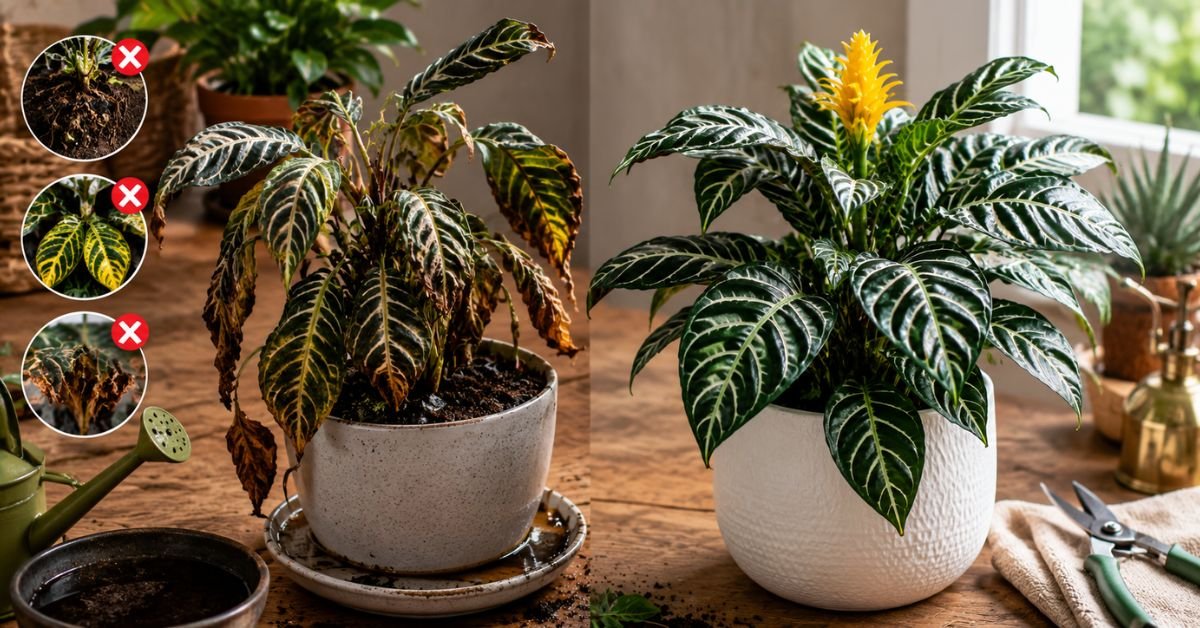
This tropical species often struggles because it is treated like a tougher, drought-tolerant houseplant.
Letting the soil become completely dry: The roots prefer more consistent moisture.
Keeping the pot constantly saturated: Moist soil and waterlogged soil are not the same thing.
Choosing a dark corner: Indirect light still needs to be bright.
Placing it beside an AC vent: Constant dry airflow can stress the foliage.
Using a container without drainage: Excess water needs somewhere to escape.
Changing everything at once: Moving, repotting, fertilizing, and changing the watering routine simultaneously makes diagnosis much harder.
Personal Pro-Tip: When a plant struggles, simplify first. Stable light, appropriate moisture, good drainage, and suitable humidity usually matter more than adding another product.
Zebra Plant Care Through the US Seasons
Spring Plant Care
As growth becomes more active, monitor the soil more frequently. This is also a good time to review your fertilizer routine and consider repotting if the current container is genuinely too small.
Summer Plant Care
Warmer rooms can increase moisture loss. Bright windows may also raise the plant’s water demand, while air conditioning can reduce humidity around the foliage.
Fall Plant Care
As daylight decreases, growth may slow. A watering schedule that worked during July may be too frequent later in the year.
Winter Plant Care
Indoor heating can create very dry air, and growth usually slows. Reduce watering as appropriate, but do not allow the potting mix to become completely dry.
Personal Pro-Tip: Seasonal care is not about memorizing four separate routines. It is about responding to changes in light, temperature, humidity, and growth.
Is the Zebra Plant Safe for Cats and Dogs?
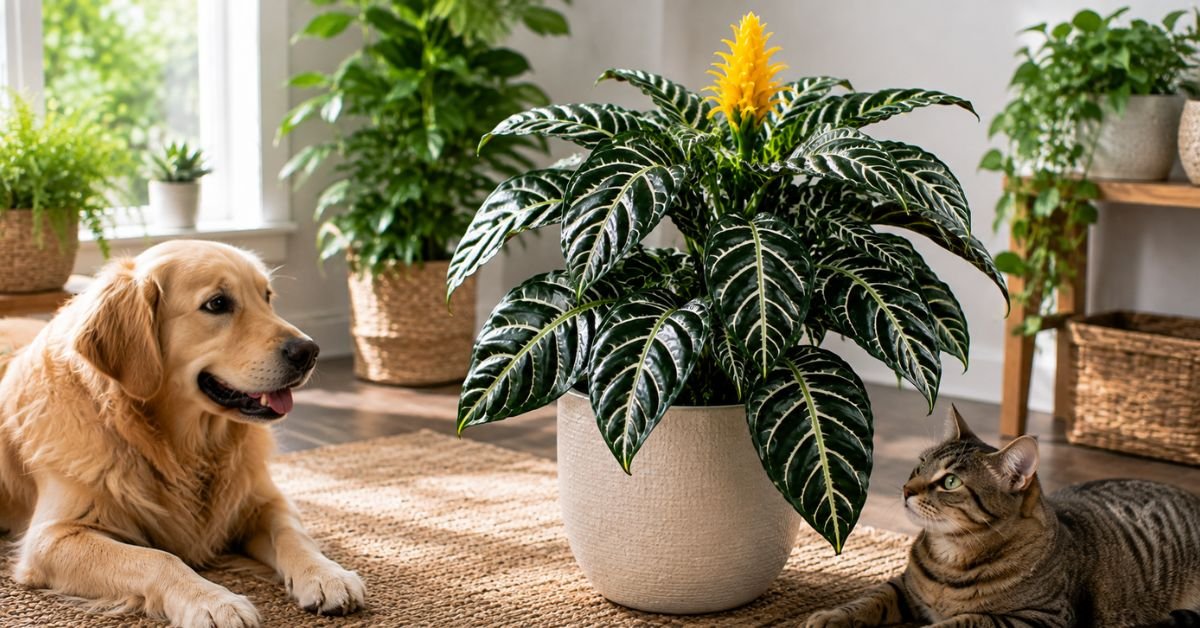
ASPCA lists Aphelandra squarrosa, also known as saffron spike zebra, as non-toxic to dogs, cats, and horses.
That does not mean pets should regularly chew on houseplants. It is also important to identify the plant correctly because several unrelated species can share the zebra plant common name.
Personal Pro-Tip: Keep the botanical name somewhere on the pot or plant tag. It makes future care and safety checks much easier.
Zebra Plant FAQs
Why Does My Zebra Plant Droop So Dramatically?
The cause may be underwatering, but a wet root zone can also lead to drooping. Check the soil before deciding whether more water is needed.
Why Are My Zebra Plant Leaves Turning Brown?
Dry air, inconsistent watering, strong sunlight, and other environmental stresses can all play a role. Check humidity, soil moisture, drainage, and light together.
Does a Zebra Plant Need Direct Sunlight?
No. Bright indirect light is the better target. Strong direct sunlight can damage the leaves.
Is a Zebra Plant a Succulent?
Aphelandra squarrosa is not a succulent. Some other plants sold as zebra plants are succulents, which is why identification matters.
How Can I Get a Zebra Plant to Flower?
Focus on bright indirect light, consistent moisture, warmth, and healthy active growth. Avoid treating fertilizer as a substitute for proper light.
Can a Zebra Plant Recover After Losing Many Leaves?
Recovery is possible when the underlying problem is corrected and healthy roots and growing points remain. Avoid repeatedly changing the environment while the plant is stressed.
Can a Zebra Plant Grow in a Dry US Home?
Yes, but low humidity can make care more difficult. A humidifier, a naturally humid room, and distance from HVAC vents can make conditions more suitable.
Personal Pro-Tip: When troubleshooting, start with four things: light, soil moisture, drainage, and humidity. Those checks often reveal the real problem faster than changing fertilizer or buying another treatment.
Final Thoughts
A zebra plant is a little more demanding than many common houseplants, but it becomes much easier once you understand its preferences.
Give Aphelandra squarrosa bright indirect light, warmth, higher humidity, and potting soil that stays evenly moist without becoming saturated. Keep it away from harsh direct sun and drying HVAC airflow. Most importantly, look at the soil and environment before reacting to a symptom.
The goal is not to create a perfect routine that never changes. It is to create a stable growing environment and adjust when the conditions change.
Have your own experience with this plant? Share what happened, especially your light, watering, soil, and humidity conditions, and it may help another indoor gardener solve the same problem.

Amin Khalid is a professional horticulturist and the founder of LeafyWisdom. With a deep passion for home gardening and horticultural research, he specializes in providing practical, easy-to-follow care guides for indoor plants. Amin’s goal is to simplify gardening for everyone and help fellow plant lovers build their own thriving green spaces.

No responses yet