
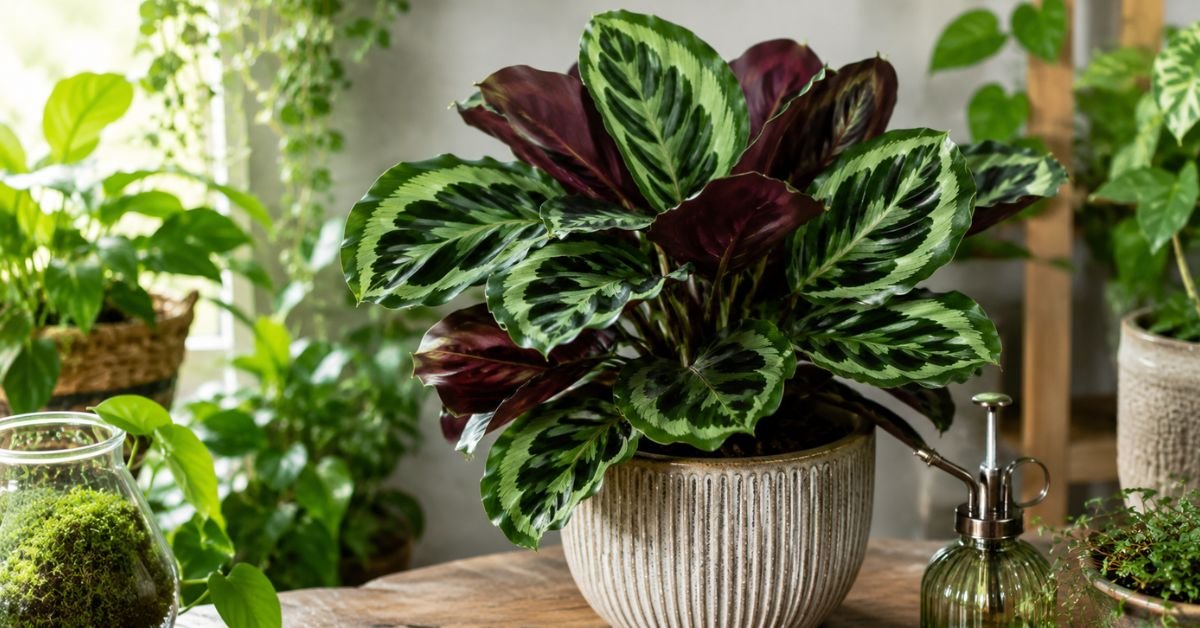
If you are tired of wasting money on plants that die within a month of bringing them home, you are not alone. I’ve been a horticulturist for over a decade, and in my years of growing everything from backyard tomatoes in USDA Zone 7 to temperamental indoor tropicals, I’ve realized one frustrating truth: we all have that one leafy victim. Today, I’m focusing on the ultimate heartbreak plant the Calathea and showing you exactly how to break the cycle of buying gorgeous greenery only to watch it fade away.
The Quick Care Breakdown for Skimmers
I know you’re busy. Here is the absolute bare minimum you need to know to keep this specific diva alive.
| Requirement | The Sweet Spot |
| Light | Bright but strictly indirect. Direct sun burns them. |
| Water | Keep moist. Use filtered water from the faucet if you can. |
| Soil | Loose, airy potting soil. Needs drainage. |
| Climate | 65°F – 85°F. USDA Zones 10-11 (if moved outdoors in Summer). |
| Toxicity | 100% Pet Safe. |
Personal Pro-Tip: I never use straight tap water for these. I fill a jug from the kitchen faucet and leave it out overnight so the chlorine dissipates. It literally stops the leaf edges from burning.
Why Do These Plants That Die So Easily Hate US Homes? (Common Mistakes)
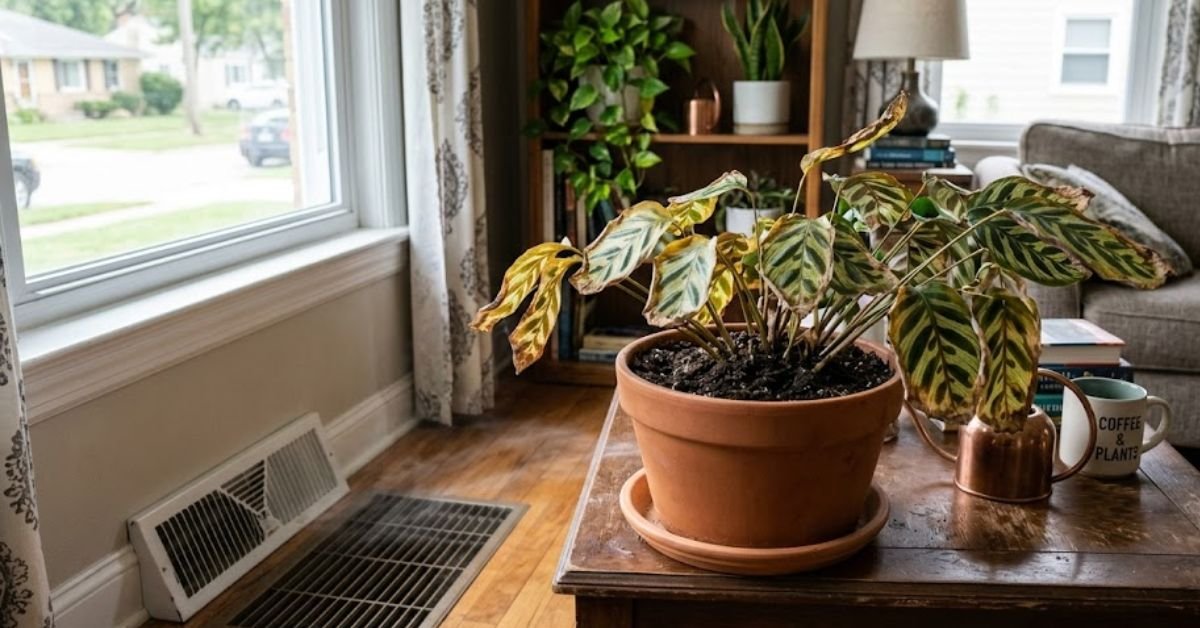
Americans love central heating and cooling. Our indoor jungles usually hate it. In my experience, the environment inside a typical US house is the exact opposite of a tropical rainforest.
The Air Conditioning Death Trap
Calatheas want humidity. Your AC unit sucks all the moisture out of the air. When you blast the AC from May to September, you are essentially freeze-drying your foliage. I’ve seen so many plants that die simply because they were placed right over a floor vent. Move them away from cold drafts immediately.
Personal Pro-Tip: Grouping your fragile indoor greenery close together creates a micro-climate. They literally sweat on each other, raising the local humidity. It looks amazing and it works.
Drowning Them in Heavy Potting Soil
We tend to over-love our greenery. You see the top of the dirt looks dry, so you grab the watering can. Stop. If your potting soil is dense and holds water like a wet sponge, the roots will rot. Root rot is the number one killer of fading houseplants. Period.
Troubleshooting Plants That Die: Fixing Yellow Leaves and Brown Tips
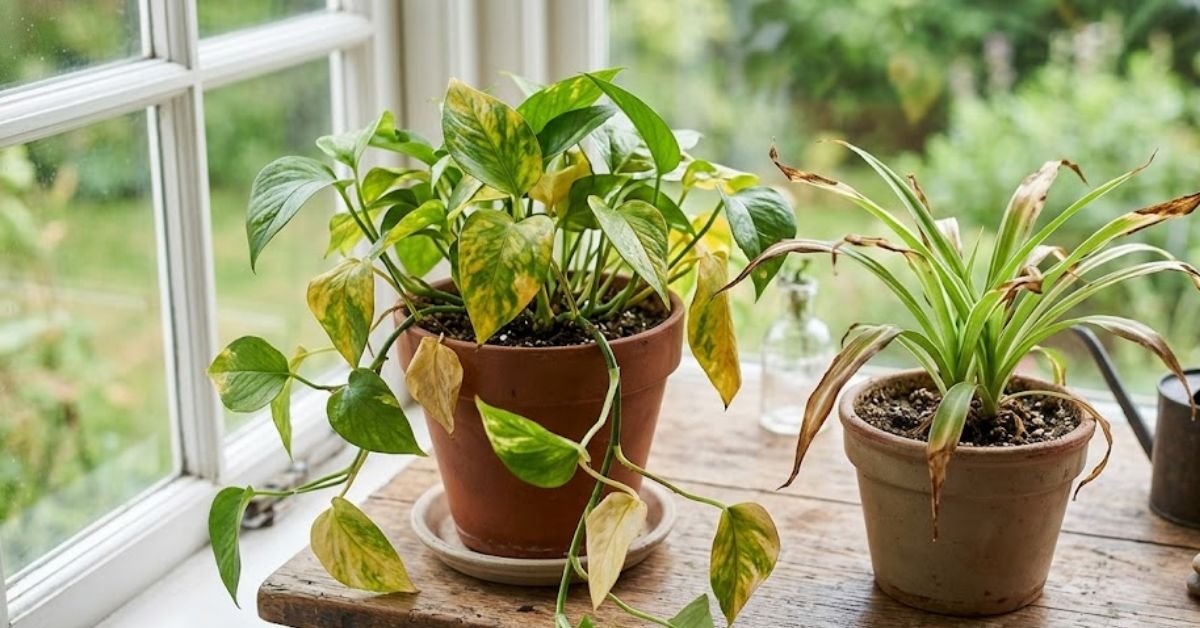
So things are looking grim. The leaves are changing color. You are panicking. Take a breath. Here is how I diagnose and fix the most common issues before it’s too late.
Exactly How to Fix Yellowing Leaves on Dying Houseplants
Yellowing usually means one of two things: too much water or not enough light. Check the dirt. If it feels like a wet brownie, you are drowning the roots. Let it dry out immediately. If the soil is fine, the plant is probably starving for light. Move it closer to an east-facing window.
Personal Pro-Tip: When I repot a waterlogged plant, I mix a huge handful of perlite into standard potting soil. It forces the water to drain faster.
Curing Crispy Brown Tips
Crispy edges mean your air is too dry or your water has too many chemicals. Switch to filtered water. Get a cheap humidifier for the Fall and Winter when the furnace is running nonstop.
Toxicity Warning: Are These Fading Plants Safe for Dogs and Cats?
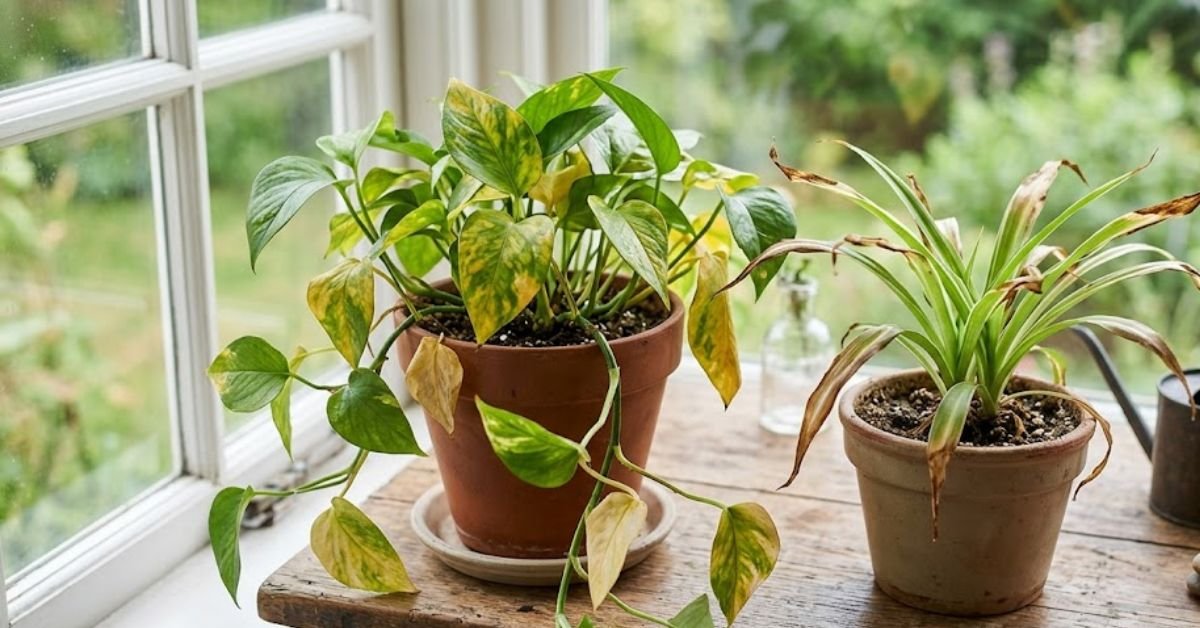
Yes. Finally, some good news. The Calathea is completely non-toxic to both cats and dogs. Even if your golden retriever decides to chew on the leaves, the only thing that will be hurt is your pride.
Personal Pro-Tip: Even non-toxic foliage can give a cat a stomach ache if they eat too much. I usually put a sprinkle of cayenne pepper on the topsoil to keep curious noses away.
FAQs About Plants That Die (Straight From Reddit & Quora)
I spend a lot of time reading panicked posts online. Here are the questions I see every single day.
Q1: Why do my plants that die always look fine one day and collapse the next? Because root rot happens underground. By the time the leaves collapse, the root system has already been dead for weeks.
Q2: Can I save a houseplant with no leaves left? Sometimes. If the stem is still firm and green, there is hope. If the stem is mushy, it’s garbage.
Q3: Does misting actually help prevent indoor plants from dying? Barely. Misting raises the humidity for about ten minutes. You are much better off using a pebble tray or a real humidifier.
Q4: How often should I fertilize fussy foliage? Only in the Spring and Summer. Stop fertilizing in the Fall and Winter when growth slows down naturally.
Q5: Is it okay to use water straight from the outside hose? In the Summer, hose water can be boiling hot if it’s been sitting in the sun. Always let it run cold first.
Q6: Why are there tiny bugs flying around my potting soil? Those are fungus gnats. They love wet dirt. Let the top two inches of your pot dry out completely to kill the larvae.
Q7: Should I cut off the dead yellow leaves? Absolutely. The plant is wasting energy trying to keep those dead leaves attached. Snip them off at the base with clean scissors.
Personal Pro-Tip: Don’t throw away your nursery pots. I always keep my tricky indoor greenery in their plastic nursery pots and drop those inside the decorative ceramic ones. It makes checking for sitting water so much easier.
Final Thoughts on Keeping Stubborn Foliage Alive
Look, everyone kills a few green things when they start gardening. I certainly have. The secret isn’t having some magical touch. It’s just an observation. Pay attention to your light, feel your potting soil before you water, and keep them away from your AC vents. You don’t have to keep bringing home plants that die. Adjust your habits, and your living room will look like a jungle in no time.

Amin Khalid is a professional horticulturist and the founder of LeafyWisdom. With a deep passion for home gardening and horticultural research, he specializes in providing practical, easy-to-follow care guides for indoor plants. Amin’s goal is to simplify gardening for everyone and help fellow plant lovers build their own thriving green spaces.

No responses yet