
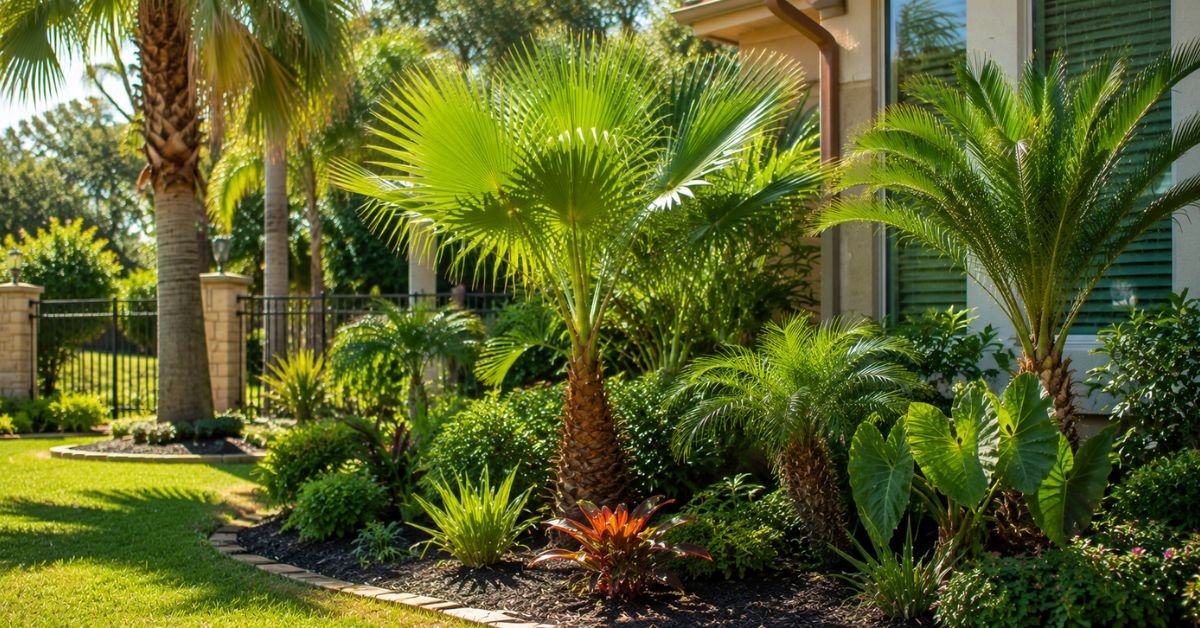
Everyone wants that lush, resort style backyard look. It feels like an instant vacation right in your own yard. But let’s be totally honest with each other here: Texas weather is a complete wild ride. One week it’s a blistering 105 degrees in Austin, and a few months later we’re facing a historic winter freeze up in Dallas that knocks out the power grid. I’ve spent over a decade as a professional horticulturist helping folks navigate this exact environmental insanity. If you are searching for the right palm plants texas nurseries offer that won’t immediately kick the bucket, you are in the right spot.
Let’s look at what actually works in our unique soil and climate so you can stop wasting hundreds of dollars on green investments that turn into sad brown sticks in a matter of weeks. It takes more than just digging a hole and hoping for the best.
The Lone Star Palm Sheet (For the Skimmers)
If you’re at the garden center right now and just need the fast facts, use this quick reference table.
| Palm Type | Best Texas Region | Cold Tolerance | Soil Preference |
| Windmill Palm | North / Central Texas | Down to 10°F (Zone 8a) | Needs loose, amended soil |
| Sabal Texana | South / Coastal Texas | Extremely heat tough | Tolerates heavy clay better |
| Pindo Palm | Most of Texas | Down to 15°F (Zone 8b) | Loves sandy, sharp drainage |
| Majesty Palm | Indoor Only | No frost tolerance | Strictly rich potting soil |
Personal Pro-Tip: Don’t just dig a hole in our brutal native clay and drop an outdoor palm straight into it. It will drown during the spring rains. I always build a slight mound or a raised earth berm for my outdoor landscape plantings. This gives the base of the tree a massive head start against standing water.
Choosing Palm Plants Texas Weather Won’t Easily Kill
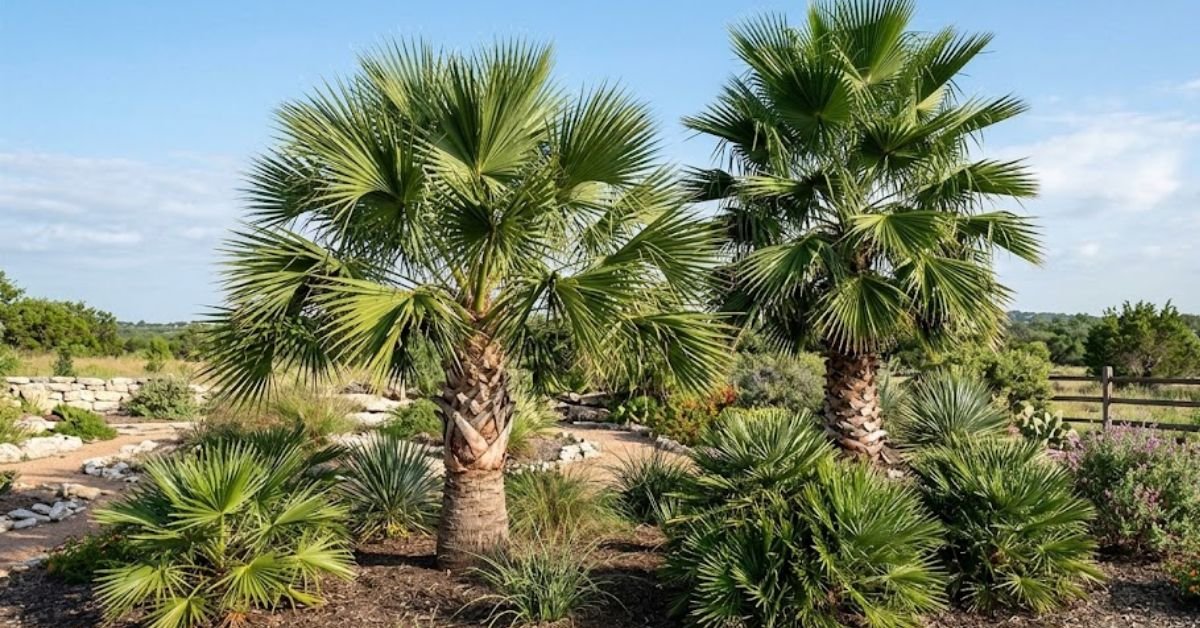
You cannot treat a yard in San Antonio the same way you treat a yard in El Paso or Amarillo. Texas spans multiple USDA Hardiness Zones from the freezing Zone 6 up in the Panhandle down to the true subtropical Zone 10 in McAllen. Most of us living along the busy I-35 corridor sit squarely in Zones 8a to 9a.
If you live in North Texas, cold-hardy choices are your only real option for the landscape. The Windmill Palm is my absolute go-to recommendation for this region. It looks incredibly tropical with its fan-shaped leaves, but it can easily shrug off a sudden ice storm that would melt a standard Florida queen palm to absolute mush.
For folks down near Houston or Corpus Christi, your biggest enemy isn’t the winter cold; it’s the intense summer humidity and sudden monsoon-style deluge rains. Native Sabals or dwarf palmettos are your best bets there because they evolved to handle the wet, heavy coastal plains.
Personal Pro-Tip: When shopping at big-box garden centers in the early Spring, look closely at the plant tags. Just because a store sells a tree locally does not mean it survives our winters. If the tag says Zone 10 and you live in Fort Worth, keep it in a heavy pot on wheels so you can drag it inside by late Fall.
Why Most Palm Plants Texas Homeowners Buy Drop Dead
We love our homes cool and our yards beautiful. Sadly, those two desires often clash when it comes to tropical greenery. In my years of consulting, I’ve noticed two primary killers that ruin these trees faster than anything else.
The Indoor AC Vent Danger
If you are trying to grow a tropical palm inside a typical American home, your central air conditioning is public enemy number one. Palms crave heavy, humid air to keep their fronds supple. Your central AC system works by stripping moisture out of the room to keep you comfortable.
I can’t tell you how many indoor parlor palms I’ve seen drop dead simply because they were placed directly under or over an AC vent. It blows freezing, bone-dry air directly over the foliage. This essentially freeze-dries the poor thing alive while it’s sitting in your living room.
Drowning in Raw Gumbo Clay
Outdoor selections face a very different, underground killer: suffocating roots. Much of our state is covered in thick, sticky, alkaline black clay often called “gumbo.” When you dump water from the garden hose onto raw clay, the water just sits there in the hole like a porcelain bathtub. The roots rot, the plant completely stops taking up nutrients, and it starves to death while standing in water.
[AC Vent blowing dry air] —> [Crispy, Brown Palm Leaves]
[Heavy Native Clay Soil] —> [Root Rot & Total Plant Collapse]
Personal Pro-Tip: If you’re growing an indoor parlor or majesty palm, keep it completely away from any airflow drafts. I use a cheap spray bottle filled with distilled water to mist my indoor varieties every single day during the peak summer months when the AC runs nonstop.
Troubleshooting Your Fading Palm Plants Texas Style
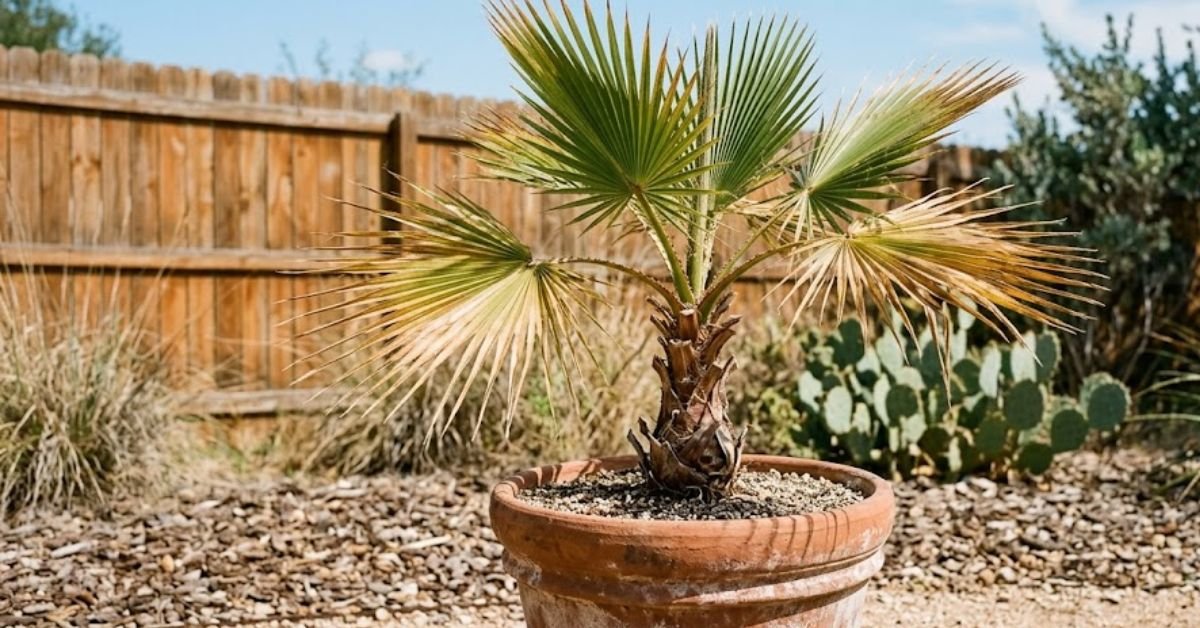
When things start going south, your palm will tell you. You just have to know how to read the leaves before the damage becomes permanent.
Yellowing Fronds
This is usually a loud cry for help regarding nutrients or drainage. Texas soils are notoriously alkaline because of all our underground limestone. This high pH locks up vital minerals like iron and magnesium. If your outdoor fronds are turning a pale, sickly yellow while the veins stay green, your soil is likely lacking the right food.
Crispy Brown Tips and The Chloramine Trap
Many growers notice the tips of their indoor palms turning a dry, crusty brown. A common piece of advice online is to let your tap water sit out overnight in a bucket so the chemicals can evaporate.
Do not fall for this trap. Major Texas metro water grids including Austin, Dallas, and Houston use stable chloramines rather than standard chlorine to treat their municipal water. Chloramines are chemically bound and will not off-gas or evaporate overnight, no matter how long you let the water sit.
Furthermore, our local water contains naturally high levels of mineral salts. Over time, these salts build up in your potting soil and burn the sensitive roots of indoor palms.
Personal Pro-Tip: If your indoor palms are showing severe mineral-burned tips, stop using water from the kitchen faucet entirely. Switch to collected rainwater or buy a few jugs of distilled water from the grocery store. Flush the potting soil thoroughly with this pure water to wash out the built-up municipal salts.
The Frost Protocol: How to Wrap Your Palm Before a Freeze
When a historic winter freeze or a major ice storm is forecast for North or Central Texas, don’t just sit on the porch and hope for the best. You need to protect the “spear” the delicate center growth point located at the very top of the palm trunk. If the spear freezes, gets wet, and rots, the entire palm dies. It cannot grow back from the roots like a perennial bush.
Follow this exact field-tested protocol to save your outdoor investment when the temperatures drop into the dangerous teens:
Step 1: Pull the Fronds Up
Gently gather all the upright fronds together toward the center sky. Tie them loosely with some heavy jute twine or a soft rope. This naturally bundles the leaves together, using the plant’s own foliage to shield and insulate the tender center bud from the biting wind.
Step 2: Wrap the Trunk
Wrap the main trunk and the core center bundle in multiple layers of breathable material. I highly recommend using natural burlap rolls, old heavy blankets, or a commercial frost blanket from the local nursery. Wrap it tight like a burrito to trap the natural heat radiating up from the ground.
Step 3: Avoid Raw Plastic
Never allow clear or black plastic sheeting to touch the green fronds directly. If the Texas sun comes out while the plastic is wet from overnight ice, it will rapidly heat up and literally cook the leaves underneath like a greenhouse. If you must use plastic to keep freezing rain off the burlap, make sure it is layered over the fabric, never directly against the plant tissue. Remove the entire wrapping system the very moment temperatures rise back safely above freezing.
Toxicity Warning: Are These Famous Palm Plants Texas Families Buy Safe for Pets?
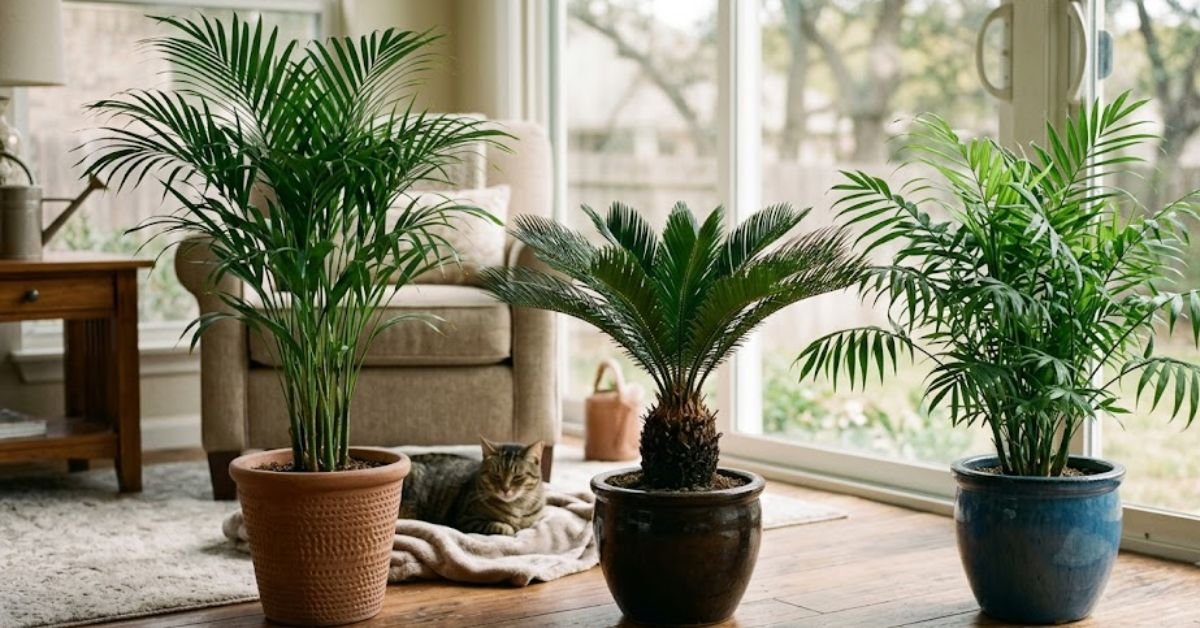
Good news here, for the most part. True palms like the Majesty, Parlor, Kentia, and Areca palms are completely non-toxic to your cats and dogs. Your cat might love shredding the dangling fronds for fun, but eating them won’t hurt their stomach.
However, there is a massive, life-threatening exception: The Sago Palm.
You see Sago palms all over landscapes from Austin down to San Antonio and the coast. Here is the catch: The Sago Palm is not a true palm. It is a prehistoric cycad, and every single part of it is incredibly poisonous to domestic pets. The small orange seeds are especially deadly. If you have a dog that loves to chew on sticks or digging in the yard, do not plant a Sago. It causes liver failure within hours.
Personal Pro-Tip: If you already have a Sago palm in your yard and own a curious pup, trim off the lower cones or seed pods the second they form in the center of the plant. Better yet, dig it up completely and replace it with a beautiful, pet-safe Windmill palm.
FAQs About Palm Plants Texas Gardeners Ask Me Every Year
Q1: Can palm plants texas nurseries sell survive a hard winter freeze? Only if you choose cold-hardy varieties like the Windmill, Needle, or Sabal palms. Subtropical choices like the Queen Palm or Majesty Palm will freeze to the ground if temperatures dip below the mid-20s for more than a few hours.
Q2: How often should I water a newly planted outdoor palm? For the first hot summer, water it deeply three times a week. Run your garden hose at a slow trickle near the base of the trunk for about 20 to 30 minutes. Once established after two years, they become remarkably drought-tolerant.
Q3: Should I cut off the lower brown fronds? Yes, but only when they are entirely dead and brown. Palms actively pull nutrients from their older leaves to feed the new growth pushing out of the top. If a frond is still halfway green, leave it alone. Once it’s totally crispy, snip it off near the trunk with clean shears.
Q4: Why does my indoor palm look like it has tiny spider webs on it? Those are spider mites. They love the dry, stagnant air created by your home’s cooling and heating system. Wipe the leaves down with a damp cloth and spray the entire plant with organic neem oil to get rid of them.
Q5: What is the best potting soil for container-grown palms? Use a high-quality, lightweight potting soil mix. I always stir in an extra handful of coarse perlite or sharp builder’s sand to make sure the water drains out of the bottom drainage holes instantly. Never use heavy backyard dirt in a pot.
Q6: Can I grow a palm tree in North Texas? Absolutely. You just have to be incredibly picky. Stick to the Windmill Palm or the Dwarf Palmetto. They handle the cold winters of Dallas and Fort Worth without needing massive structural protection every single time it drops below freezing.
Q7: My palm looks completely dead after a freeze. Should I cut it down? Wait until late Spring! I’ve seen many palms look totally fried and gray in February, only to push out fresh green spears from the center bud once the warm May weather rolls around. Give the center spear a gentle tug; if it doesn’t slide right out of the trunk, the tree is still alive.
My Final Take on Growing Palms in the Lone Star State
Look, gardening in our state isn’t always easy. Our weather is incredibly moody, and our native dirt can feel like solid concrete during a dry summer spell. But you do not have to watch your hard-earned landscaping investments turn into sad, lifeless debris.
Pick a variety that matches your specific Texas winter zone, fix your soil drainage before you ever drop the plant in the ground, and keep those indoor pots away from your blasting AC vents. Protect the center spear when the rare winter ice storms blow through. With a little patience and the right water, you’ll have a gorgeous, tropical paradise that can handle whatever the Texas sky decides to throw at it.

Amin Khalid is a professional horticulturist and the founder of LeafyWisdom. With a deep passion for home gardening and horticultural research, he specializes in providing practical, easy-to-follow care guides for indoor plants. Amin’s goal is to simplify gardening for everyone and help fellow plant lovers build their own thriving green spaces.

No responses yet