
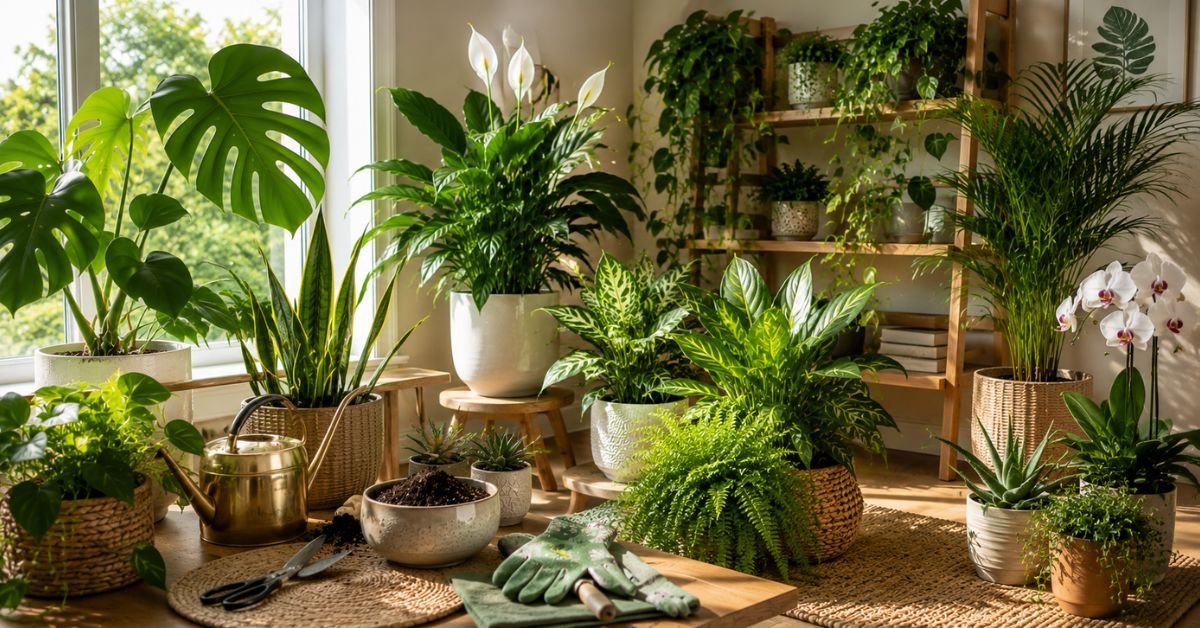
Successful plant care comes down to replicating a species’ native microclimate inside your living space by balancing light, water, potting soil, humidity, and airflow. Indoor plant care does not require a natural green thumb. It requires understanding how household environments (like summer air conditioning or winter central heat) affect soil moisture and foliage. As a professional horticulturist who has managed both commercial greenhouses and residential interiorscapes across USDA Hardiness Zones 5 through 8, I can tell you that most indoor plants die from over-attention rather than neglect. By learning to read your plant’s physical signals instead of following a rigid calendar schedule, you can keep virtually any houseplant flourishing year-round.
Quick-Reference Houseplant Care Guide
| Care Factor | Optimal Condition | Physical Signal to Watch For | Quick Solution |
| Light | Bright, indirect sunlight (3 to 6 feet from an East or South window) | Pale foliage, slow leaf expansion, leggy stems | Move closer to natural window light or add a grow bulb |
| Watering | Allow top 2 inches of potting soil to dry out between waterings | Yellowing bottom leaves, soft soggy stems, gnat activity | Allow soil to dry out completely; verify pot has drainage |
| Humidity | 45% to 60% relative humidity | Brown, crispy leaf margins or curled leaf edges | Group plants together or run a cool-mist humidifier |
| Temperature | 65°F to 75°F (shield from direct drafty AC vents) | Sudden leaf dropping or droopy stems | Shift pot away from active HVAC vents and exterior doors |
| Potting Mix | Airy potting soil enriched with perlite and bark | Standing surface water, soil stays wet past 10 days | Repot into fresh, chunky mix with proper pot drainage |
The Foundations of Indoor Plant Care in American Homes
Living spaces across the United States present distinct challenges for plant care. In my years consulting on indoor landscapes, the biggest obstacle growers face isn’t light. It is HVAC systems. Central air conditioning pulls moisture out of the air during hot summer months. Forced-air heating dries out interior rooms all winter long.
Understanding your home’s unique climate is essential. A plant sitting three feet from a south-facing window in Florida (USDA Zone 10) experiences vastly different heat intensity than the exact same plant in a Seattle apartment (USDA Zone 8).
Outside environmental conditions dictate indoor room dynamics. During winter months across Northern states, indoor humidity routinely drops below 20%. That is drier than most desert habitats. Recognizing how these seasonal shifts impact soil drying times is the foundation of long-term success.
Personal Pro-Tip: Don’t trust your eyes when judging light levels. Download a free light-meter app on your phone to measure Foot-Candles directly at leaf level. Most popular tropical houseplants require between 200 and 800 Foot-Candles to create energy effectively.
Mastering Houseplant Lighting and Exposure
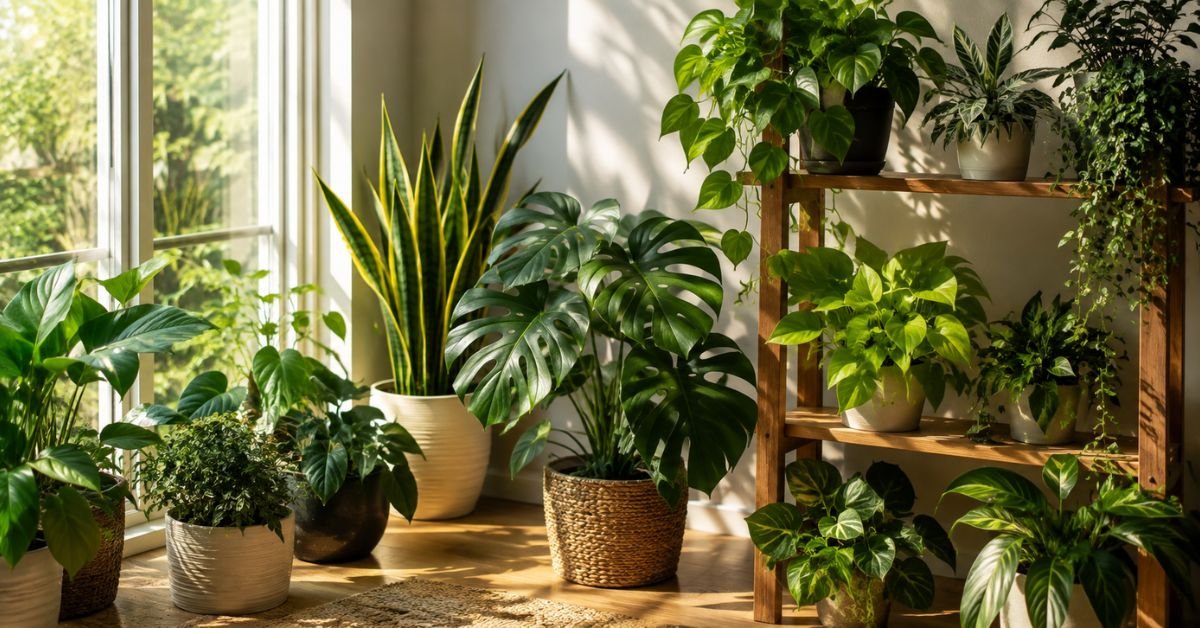
Light powers photosynthesis. Without adequate light, adjusting water or applying fertilizer will not save a declining plant.
South-Facing Windows
South exposures offer the strongest, most direct sunlight throughout the day. Cacti, succulents, and bird of paradise thrive in this spot. For tropical foliage like Monstera or Pothos, filter this harsh light with a sheer curtain to protect delicate leaf tissue from sunburn.
East-Facing Windows
This is my personal favorite spot for indoor plant care. East windows provide gentle morning sunlight that won’t scorch leaves, followed by bright indirect light for the rest of the day. Aroids, ferns, and calatheas do remarkably well near eastern glass.
West-Facing Windows
West windows deliver intense afternoon heat and strong light during summer months. Keep moisture-sensitive foliage slightly backed away from the window pane to protect leaves from thermal stress.
North-Facing Windows
North windows provide low to medium indirect light. Position resilient species here, such as Snake Plants, ZZ Plants, and Cast-Iron Plants.
Personal Pro-Tip: Dust acts as a literal sunblock on leaves. Wipe down foliage once a month with a soft microfiber cloth dampened with lukewarm water. Clean leaves absorb light much better and help keep pest populations low.
How to Master Houseplant Watering Without Root Rot
Overwatering causes roughly 80% of houseplant failures in American homes. When growers hear “overwatering,” they usually think it means giving a plant too much liquid at once. In reality, overwatering means watering too frequently, which deprives the root zone of oxygen.
Plant roots need oxygen just as much as they need moisture. When potting soil remains constantly waterlogged, beneficial soil oxygen is displaced, allowing anaerobic rot fungi to take over.
Discard calendar-based watering routines immediately. Never water a plant simply because it is “Watering Wednesday.” Soil dries out at varying speeds depending on ambient room temperature, humidity levels, pot material, and current season.
The 2-Inch Finger Test
Insert your index finger two inches deep into the potting soil. If the soil feels cool and damp, leave it alone for a few more days. If it feels dry, apply water thoroughly until liquid flows freely out of the container’s bottom drainage holes.
Tap water chemistry varies widely across US municipal systems. If your city tap water contains high levels of dissolved minerals, chlorine, or fluoride, sensitive houseplants like Spider Plants and Marantas can develop burnt leaf tips. Running water through a standard pitcher filter or letting tap water sit overnight helps reduce stress on delicate root systems.
Personal Pro-Tip: Always empty standing water from pot saucers 20 minutes after watering. Letting a pot sit continuously in a tray of runoff forces roots to reabsorb stagnant moisture, leading to suffocation.
Potting Soil Mixes and Container Care Essentials
Heavy garden soil from your yard should never be used inside a houseplant container. Native garden soil is far too dense, packs tightly inside pots, retains too much moisture, and lacks aeration.
For successful houseplant care, use a airy, well-draining potting soil mix. Standard tropical plants do best in a mixture containing 60% high-quality peat moss or coconut coir, 20% perlite for root aeration, and 20% coarse orchid bark for structural drainage.
Container Materials Matter
- Terracotta Pots: Unglazed porous clay breathes easily, allowing air and moisture to pass through container walls. Terracotta is ideal for succulents, cacti, and growers who tend to overwater.
- Plastic and Ceramic Pots: Non-porous materials lock in soil moisture much longer. These containers work well for ferns, calatheas, and other moisture-loving tropical species.
Regardless of aesthetic design, every pot must feature functional drainage holes at the base. Growing plants in closed containers without drainage is an unnecessary risk that almost always results in stagnant water accumulation.
Personal Pro-Tip: When upgrading pot size, only increase the container diameter by 1 to 2 inches. Placing a small plant into a massive pot creates a surrounding ring of excess soil that stays soggy for weeks, inviting fungal issues.
Avoiding Common Houseplant Care Mistakes
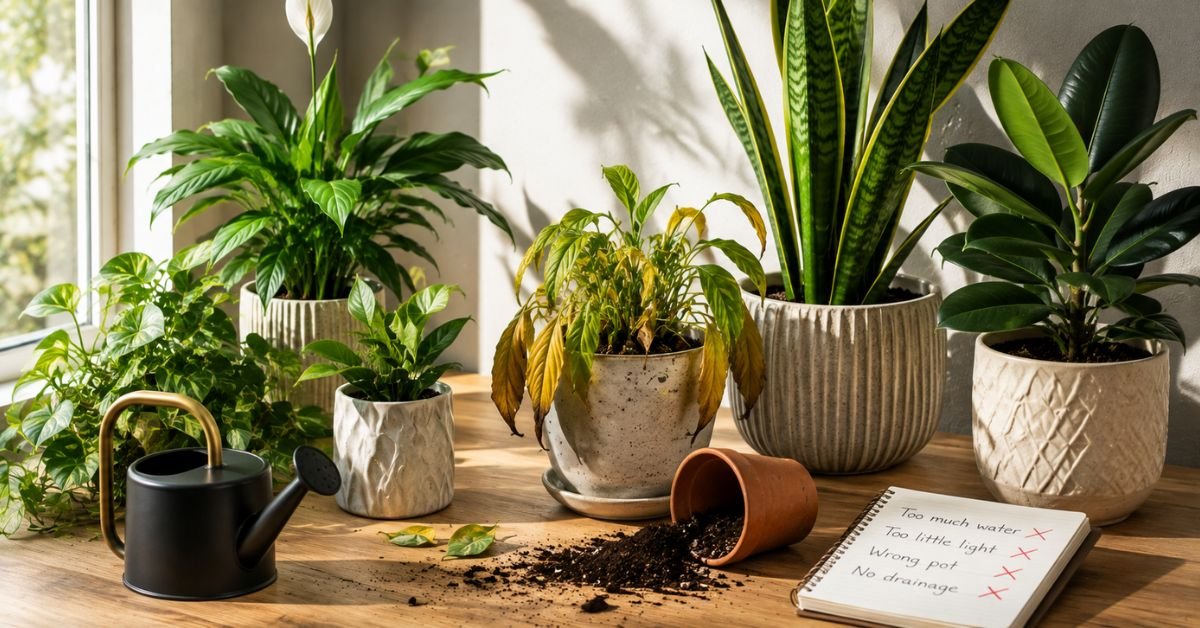
Even dedicated plant owners make subtle environmental mistakes. Here are four widespread habits that cause issues in American living rooms:
- Positioning Pots Near Active HVAC Vents: Cold air blasts from central AC units or scorching heat currents from radiator vents dehydrate leaf tissue rapidly. Maintain at least a four-foot buffer between plants and HVAC airflow.
- Fertilizing Unhealthy or Dormant Plants: Fertilizer provides structural building blocks, not medicinal cures. Applying synthetic fertilizers to a struggling or dormant plant causes chemical root burn. Apply fertilizer only during active spring and summer growth phases.
- Repotting Immediately After Purchase: Bringing a plant home from a greenhouse nursery causes environmental adjustment stress. Allow your new purchase to acclimate to your home’s natural light and humidity levels for 3 to 4 weeks before changing its pot or soil.
- Ignoring Seasonal Environmental Shifts: Plant care must adapt as seasons change. Sunlight duration drops during late autumn and winter, causing plant metabolism to slow. Reduce watering frequency and suspend fertilizer routines until spring returns.
Personal Pro-Tip: Cut recommended commercial fertilizer concentrations in half. University extension services frequently highlight that home growers tend to over-apply nitrogen fertilizers, which results in weak stem growth and leaf margin burn.
Houseplant Troubleshooting: Fix Yellow Leaves and Brown Tips
Your plants communicate their needs through visual leaf cues. Learning to read these physical signs allows you to correct environmental stress before it becomes severe.
Symptom: Lower Foliage Turning Yellow
- Primary Cause: Chronic overwatering, poor drainage, or oxygen-starved roots.
- Solution: Inspect the root system immediately. Healthy roots feel firm and look white or light tan; rotted roots appear dark, feel mushy, and smell foul. Trim away damaged roots and repot into fresh, aerated potting soil.
Symptom: Crispy Brown Leaf Edges
- Primary Cause: Low room humidity, underwatering, or mineral salt accumulation from tap water.
- Solution: Boost ambient room moisture using a cool-mist humidifier or group several plants together. Switch to filtered water or collected rainwater if your local tap water is heavily chlorinated.
Drooping or Wilting Stems
- Primary Cause: Extreme underwatering (dry soil) or severe root damage from overwatering (roots lose ability to transport water).
- Solution: Touch the soil. If bone dry, give the pot a deep bottom-soaking. If saturated, inspect for root issues.
Common Houseplant Pests
- Fungus Gnats: Small flies crawling near soil. Allow topsoil to dry out thoroughly between waterings, and treat soil with Bacillus thuringiensis israelensis (BTI) or an organic neem drench.
- Spider Mites: Fine webbing visible on leaf undersides. Wash foliage under a warm kitchen faucet and treat surfaces with insecticidal soap.
- Mealybugs: White cottony spots along stem nodes. Touch individual pests with a cotton swab soaked in 70% isopropyl rubbing alcohol to dissolve their protective wax coating.
Personal Pro-Tip: Isolate every new houseplant purchase in a separate room for two weeks. This simple quarantine practice stops hidden pests like spider mites or thrips from transferring onto your established plant collection.
Pet Safety and Houseplant Toxicity Guidelines
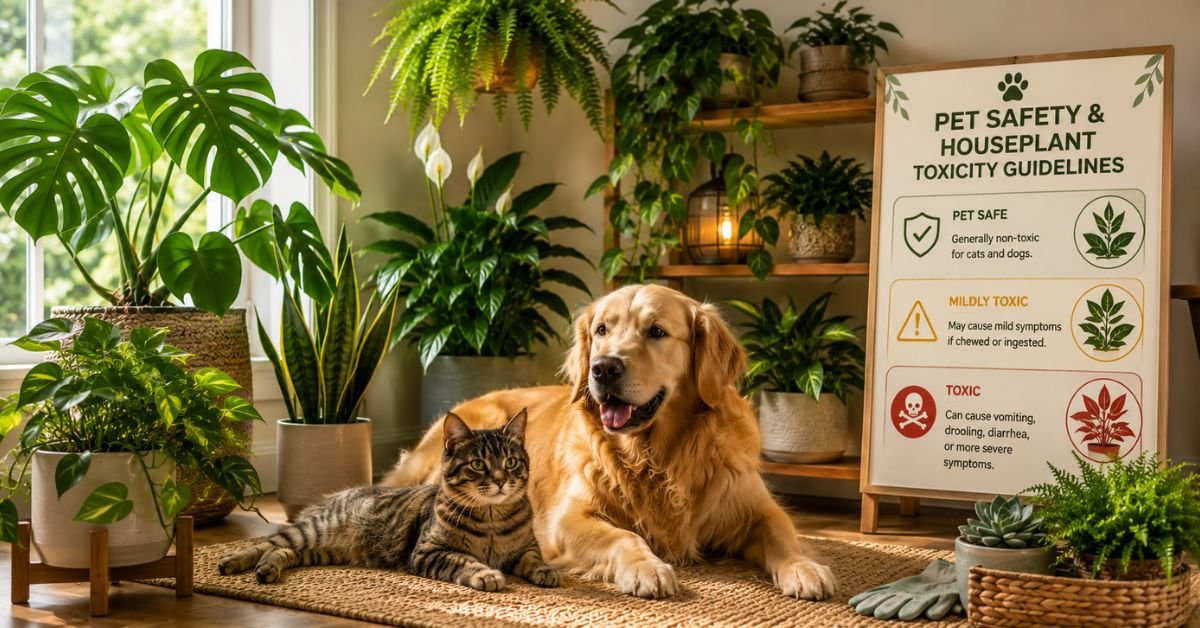
If your home includes curious cats or dogs, checking plant toxicity is a required safety measure. According to ASPCA animal poison control records, chewing common houseplants can trigger symptoms ranging from mild drooling to dangerous systemic distress.
High-Risk Toxic Houseplants
- True Lilies (Lilium and Hemerocallis species): Severe toxin hazard for cats; ingestion of tiny amounts of plant tissue, pollen, or vase water can cause acute kidney failure.
- Philodendrons, Pothos, and Monstera: Contain sharp calcium oxalate crystals that cause immediate mouth burning, excessive drooling, and swallowing difficulty if chewed.
- ZZ Plant (Zamioculcas zamiifolia) and Snake Plant (Sansevieria): Contain mild-to-moderate systemic irritants including saponins.
Pet-Safe, Non-Toxic Houseplant Alternatives
- Peperomia Varieties (Watermelon Peperomia, Peperomia Caperata)
- Boston Ferns and Maidenhair Ferns
- Hoya Species (Wax Plant)
- Pilea peperomioides (Chinese Money Plant)
- Prayer Plants (Calathea, Maranta)
Personal Pro-Tip: If dogs or cats like digging in pot soil, cover the open soil surface with smooth river stones (at least 1.5 inches in size). This stops digging behavior without blocking soil airflow or water drainage.
Frequently Asked Questions About Houseplant Care
Q1: How often should I water my indoor plants?
Watering frequency depends entirely on lighting, room temperature, pot type, and season rather than a rigid calendar. Test the top 1 to 2 inches of potting soil with your finger, and water only when that layer feels completely dry.
Q2: Why are the tips of my houseplant leaves turning brown?
Crispy brown leaf tips generally indicate low relative room humidity, underwatering, or mineral salt build-up from hard tap water. Using a cool-mist humidifier or switching to filtered water usually fixes the issue.
Q3: What is the best light exposure for general indoor plant care?
Bright, indirect light near an East or South-facing window protected by a sheer curtain works best for most tropical foliage. It delivers essential photosynthetic energy without burning leaf tissue.
Q4: How do I know when a houseplant needs repotting?
Clear signs a plant needs a larger pot include roots growing out of drainage holes, water running straight through without soaking in, or top-heavy stems falling over. Plan repotting during active spring or summer growth.
Q5: Can I use tap water for all my indoor houseplants?
Most common houseplants tolerate municipal tap water, but sensitive varieties like Calatheas and Spider Plants react poorly to dissolved chlorine and fluoride. Filtered water or tap water left out overnight prevents leaf burn.
Q6: How do I eliminate small black flies around my plant soil?
Those small flies are fungus gnats, which multiply in constantly damp topsoil. Allow the top two inches of soil to dry out between waterings and treat with BTI mosquito bits to disrupt gnat larvae growth.
Q7: Do houseplants need fertilizer applications during winter?
No, most houseplants enter a period of slow growth or semi-dormancy during winter months due to reduced daylight hours. Pause all synthetic fertilizer applications from late autumn through winter to avoid root burn.
Final Thoughts
Successful indoor plant care isn’t about memorizing complex rules or expecting pristine foliage on every leaf. Plants are dynamic organisms that continually adjust to their immediate environment. When a leaf turns yellow or drops off, do not panic. Treat it as a helpful communication signal indicating a simple adjustment is needed in light exposure, soil moisture, or airflow.
Start with forgiving plant varieties, observe your foliage during regular weekly check-ins, and build your confidence over time. With a little patience and attention to basic environmental needs, you can maintain a resilient indoor garden that brings fresh green energy into your space for years to come.
Now I would love to hear from you: What is the main plant care struggle you are running into at home right now? Leave a comment below with your specific plant type and room setup, and let’s work through a solution together!
Amin Khalid is a professional horticulturist and the founder of LeafyWisdom. With a deep passion for home gardening and horticultural research, he specializes in providing practical, easy-to-follow care guides for indoor plants. Amin’s goal is to simplify gardening for everyone and help fellow plant lovers build their own thriving green spaces.

No responses yet