
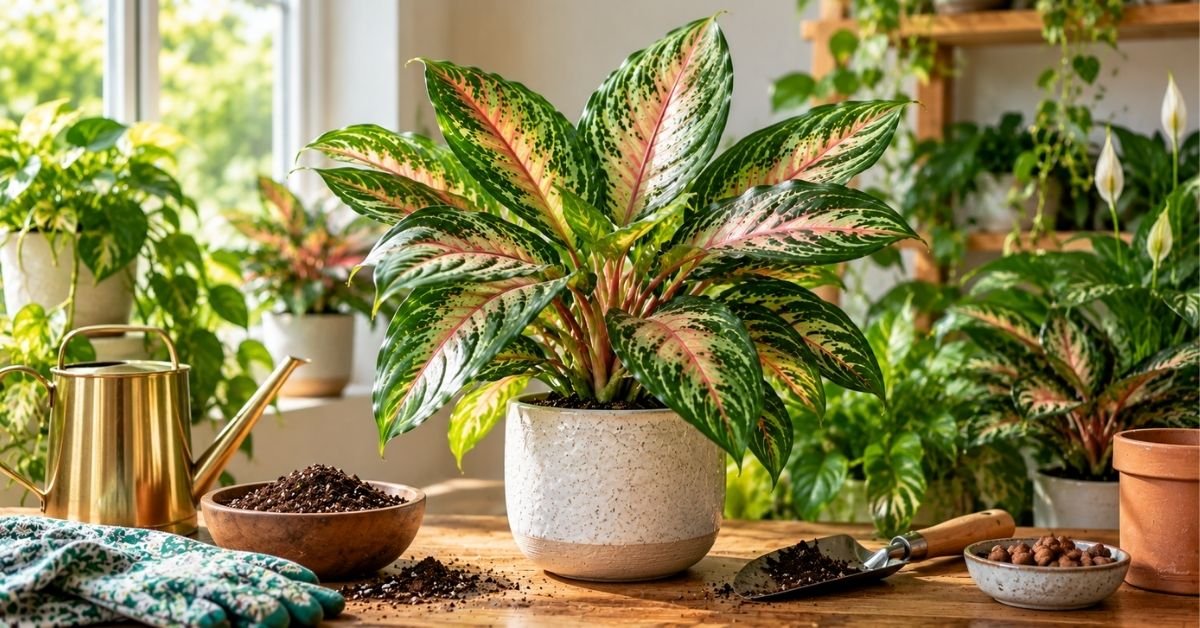
An aglaonema plant, commonly known as a Chinese Evergreen, is a low-maintenance tropical houseplant known for its striking, colorful foliage and its ability to tolerate low light conditions.
If you want a houseplant that looks incredibly exotic but is actually very forgiving, this is the one. I have grown dozens of these plants over my years as a horticulturist. They are easily one of the most reliable plants for the typical American home. Unlike demanding tropicals that require you to turn your living room into a humid jungle, the aglaonema adapts beautifully to our dry, air-conditioned spaces.
Here is exactly what you need to know to make your aglaonema flourish.
Quick Care Summary for the Aglaonema Plant
| Care Factor | My Expert Recommendation |
| Light Requirements | Low to bright indirect light. Red or pink varieties need more light to keep their color. |
| Watering Schedule | Water when the top 2 inches of soil dry out. Usually every 1 to 2 weeks. |
| Ideal Soil | Well-draining indoor potting soil mixed with perlite. |
| Temperature | 65°F to 80°F. Keep away from AC vents and drafty winter windows. |
| Toxicity | Toxic to cats, dogs, and humans if ingested. |
| USDA Hardiness | Zones 10a to 11b (Outdoors only in tropical climates). |
Light Requirements for Aglaonema Plants
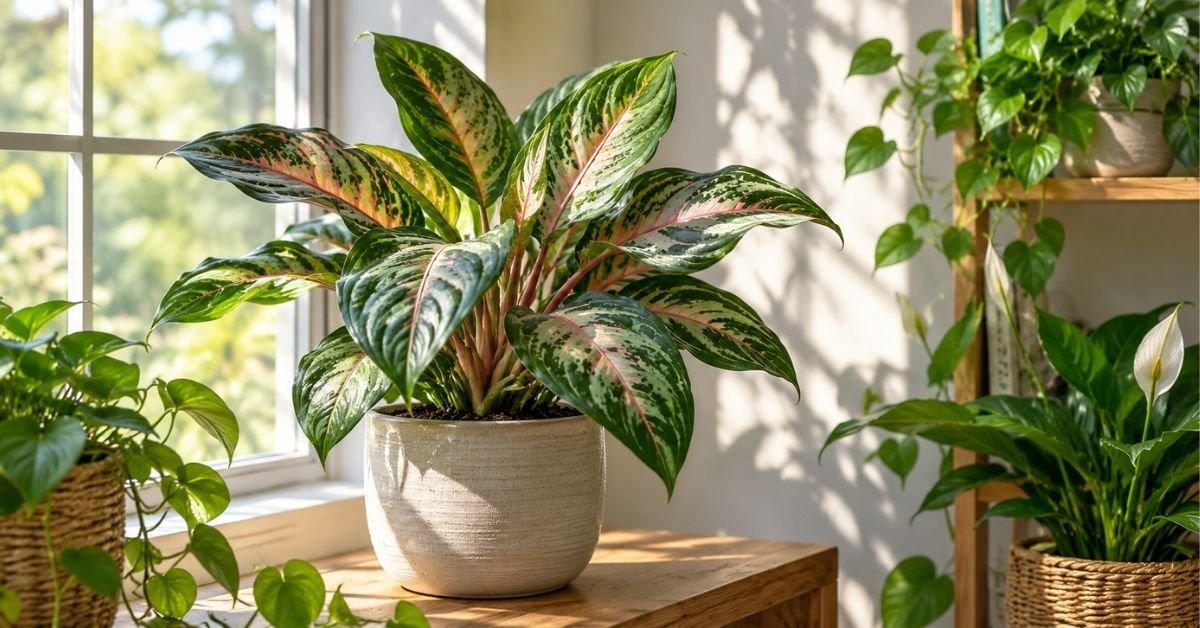
Understanding the light needs of your aglaonema plant comes down to looking at its leaves.
If you own a classic dark green variety like the ‘Silver Bay’, you have hit the low-light jackpot. These green varieties can survive in a dim north-facing window or an office with nothing but fluorescent overhead lights. They will grow slowly, but they will survive.
However, the rules change entirely if you own a colorful variety. Plants like the ‘Siam Aurora’ or ‘Red Valentine’ feature bright pink, red, or white variegation. These colorful aglaonema plants require bright, indirect light to maintain their vivid patterns. If you put a bright pink plant in a dark corner, it will start producing purely green leaves to overcompensate for the lack of sunlight.
Place your colorful varieties near an east-facing or west-facing window. You just need to make sure the harsh afternoon sun does not hit the leaves directly. Direct sunlight will scorch the foliage and leave permanent brown burn marks.
Personal Pro-Tip: I always rotate my aglaonema plant a quarter-turn every time I water it. Plants naturally reach toward the light source. If you never rotate the pot, your plant will eventually grow completely lopsided.
How Often Should You Water Your Chinese Evergreen?
Watering is where most people go wrong. The aglaonema prefers to dry out slightly between waterings.
You should wait until the top 2 to 3 inches of the potting soil are completely dry before you give it a drink. Depending on the season and your home environment, this usually translates to watering every 7 to 10 days in the spring and summer. During the winter, when the plant enters a dormant phase and the days are shorter, you might only need to water it every two weeks.
When you do water, water thoroughly. Take the plant to the sink and pour water over the soil until it runs freely out of the drainage holes at the bottom of the pot.
Be cautious about the water you use. Many city water supplies in the US treat faucet water with fluoride and chlorine. Aglaonema plants are highly sensitive to these chemicals. If you notice the tips of your leaves turning brown and crispy, your faucet water is likely the culprit.
Personal Pro-Tip: I fill up my watering can the night before I plan to water my plants. Leaving the water sitting out overnight allows a lot of the chlorine to evaporate. If your plant is still getting brown tips, switch to distilled water or collect rainwater.
Best Potting Soil and Fertilizer for Aglaonema Growth
Aglaonema plants are susceptible to root rot if they sit in soggy, heavy dirt. You need a potting soil that drains quickly but holds just enough moisture to keep the roots hydrated.
Do not use straight garden dirt or heavy compost. Instead, use a high-quality indoor potting soil. I like to create a custom mix for my Chinese Evergreens. I mix 3 parts standard indoor potting soil with 1 part perlite and 1 part orchid bark. The perlite and bark create tiny air pockets in the soil. This allows oxygen to reach the roots and lets excess water drain away quickly.
As for fertilizer, these plants are light feeders. You only need to fertilize them during their active growing season in the spring and summer. Use a balanced, water-soluble liquid houseplant fertilizer diluted to half-strength. Apply it once a month from April through August. Stop fertilizing entirely in the fall and winter.
Personal Pro-Tip: If you see a white, crusty buildup on the surface of your potting soil, you are over-fertilizing. That crust is salt buildup from the fertilizer. Flush the soil by running pure water through it for a few minutes to wash the salts away.
Common Mistakes When Growing an Aglaonema Plant
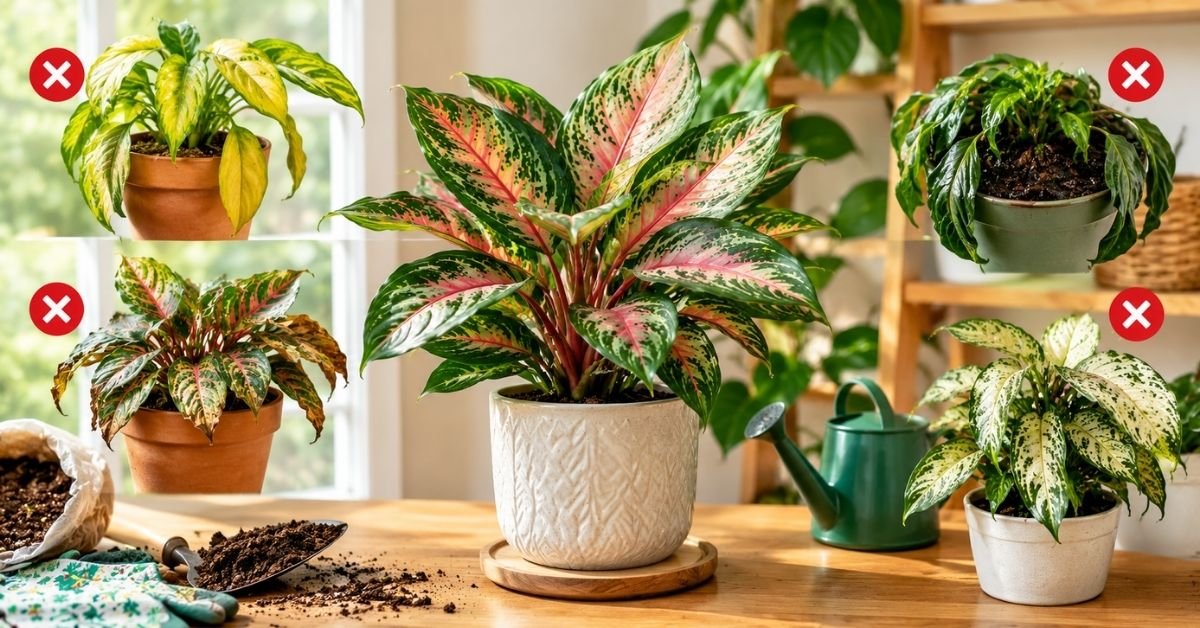
Even though the Chinese Evergreen is tough, our modern home environments can create invisible hazards for them.
The biggest mistake I see American indoor gardeners make is placing their aglaonema near climate control vents. We love our central air conditioning in the summer and forced-air heating in the winter. Your plant hates both.
Aglaonema plants are tropical. They despise sudden temperature drops and cold drafts. If your plant sits directly in the path of an AC vent, the cold, dry air will cause the leaves to droop and eventually drop off. Keep your plant in a spot where the temperature stays consistently between 65°F and 80°F.
Another major mistake is ignoring the dust. The large, wide leaves of an aglaonema plant act like giant dust catchers. A thick layer of dust blocks sunlight and prevents the plant from photosynthesizing properly. Wipe the leaves down with a damp microfiber cloth once a month.
Personal Pro-Tip: Never use commercial leaf shine sprays on an aglaonema. Those sprays clog the tiny pores on the leaves. Just use plain water and a soft cloth to keep them clean.
Troubleshooting Your Chinese Evergreen Plant
Plants communicate through their leaves. When something goes wrong, the foliage will tell you exactly what you need to fix.
Why are my aglaonema leaves turning yellow?
Yellow leaves are almost always a symptom of overwatering. If the lower, older leaves are turning yellow and mushy, check the soil. If it feels wet, stop watering immediately. Let the plant dry out completely. If the soil smells like rotting eggs, you likely have root rot and will need to repot the plant in fresh, dry potting soil.
Why are the tips of the leaves turning brown and crispy?
This is usually caused by a lack of humidity or a reaction to the minerals in your faucet water. Try moving the plant away from heaters and switching to filtered or distilled water.
Why are the stems getting long and leggy?
If your plant looks stretched out with large gaps between the leaves, it is desperate for light. The plant is literally reaching out trying to find the sun. Move it to a brighter location.
Why is my colorful aglaonema turning green?
The plant is not getting enough light. Red, pink, and white variations need bright indirect light to maintain their color. Move it closer to a window.
Personal Pro-Tip: It is completely normal for a plant to occasionally drop its oldest bottom leaf as it grows new leaves at the top. If just one old leaf turns yellow and dies, do not panic. Pluck it off and let the plant keep growing.
Toxicity Warning for Aglaonema Plants
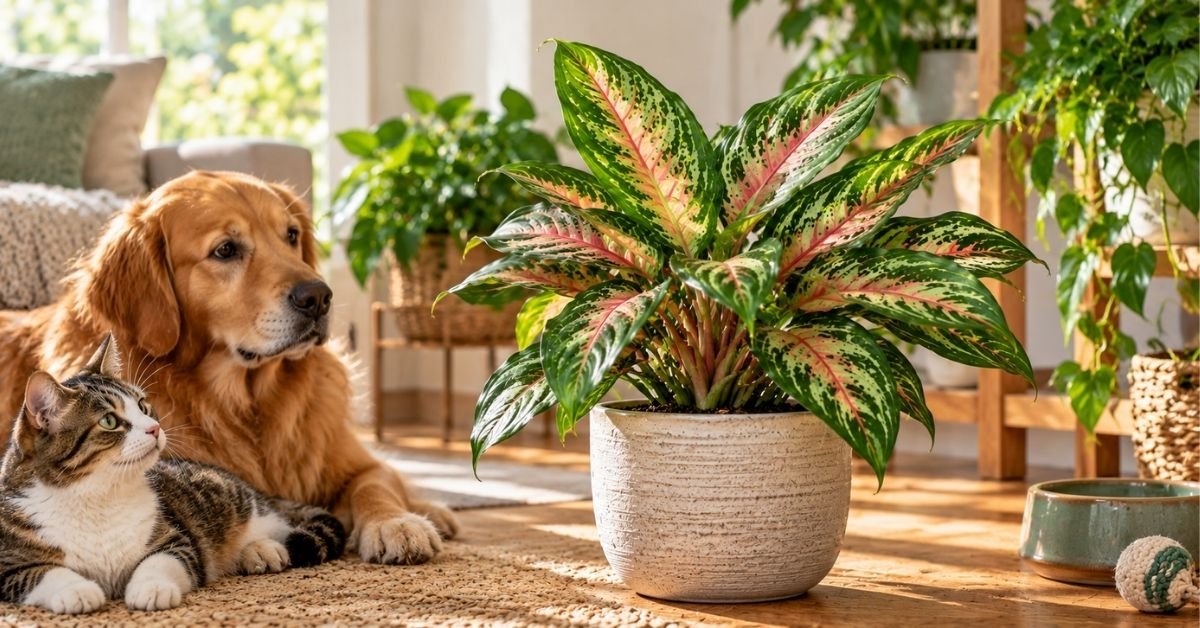
Before you bring a Chinese Evergreen into your home, you must consider the safety of your pets and children.
The aglaonema plant is toxic to cats, dogs, and humans. According to the ASPCA database, these plants contain insoluble calcium oxalate crystals. If a pet or a child chews on the leaves or stems, these microscopic crystals act like tiny needles.
Ingestion will cause intense burning and irritation in the mouth, lips, and tongue. It can also lead to excessive drooling, vomiting, and difficulty swallowing.
Personal Pro-Tip: If you have curious cats who like to chew on foliage, place this plant on a high shelf out of their reach. If you suspect your pet has eaten part of this plant, call your local veterinarian or an animal poison control center immediately.
Frequently Asked Questions About Chinese Evergreens
Q1: Can I put my aglaonema plant outside?
You can only keep this plant outdoors year-round if you live in USDA Hardiness Zones 10a to 11b. In other zones, you can move it to a shaded patio during the summer, but you must bring it indoors before temperatures drop below 60°F.
Q2: Should I mist my Chinese Evergreen?
Misting does not significantly raise the humidity in a room and can actually encourage fungal diseases on the leaves. A humidifier is a much better tool for adding moisture to the air.
Q3: How fast does an aglaonema grow?
They are generally slow to moderate growers. You can expect it to push out a few new leaves every month during the spring and summer growing season.
Q4: How do I propagate an aglaonema?
The easiest way is through stem cuttings. Cut a healthy stem right below a node, place the cutting in a glass of water, and wait for roots to develop over a few weeks before planting it in soil.
Q5: Does this plant bloom?
Yes. Mature plants will occasionally produce a small flower that looks like a pale green or white spathe. The flowers are not very impressive, and many people cut them off so the plant focuses its energy on growing leaves.
Q6: Does an aglaonema like to be root bound?
They do not mind being slightly snug in their pots. You usually only need to repot them every two to three years when the roots start poking out of the bottom drainage holes.
Q7: Can this plant grow in just water?
Yes. You can grow an aglaonema cutting in a vase of water indefinitely. You will just need to change the water weekly and occasionally add a few drops of liquid fertilizer to provide nutrients.
Final Thoughts on Growing Your Aglaonema Plant
Growing an aglaonema is an incredibly rewarding experience. They ask for very little but give back beautiful, lush foliage year-round. Start with a classic green variety if your home is dark, or try a vibrant red one if you have a great sunny window. Follow the basic watering rules, keep them away from your AC vents, and you will have a beautiful companion for years.
Have you tried growing a Chinese Evergreen in your home yet? Let me know about your experience in the comments below, or drop a question if you are struggling with brown tips or yellow leaves. I would love to help you get your plant back on track!

Amin Khalid is a professional horticulturist and the founder of LeafyWisdom. With a deep passion for home gardening and horticultural research, he specializes in providing practical, easy-to-follow care guides for indoor plants. Amin’s goal is to simplify gardening for everyone and help fellow plant lovers build their own thriving green spaces.

No responses yet