Category: Indoor Plants & Decor

  • Goldfish Plant Care: The Complete Guide to Indoor Blooms

    Goldfish Plant Care: The Complete Guide to Indoor Blooms

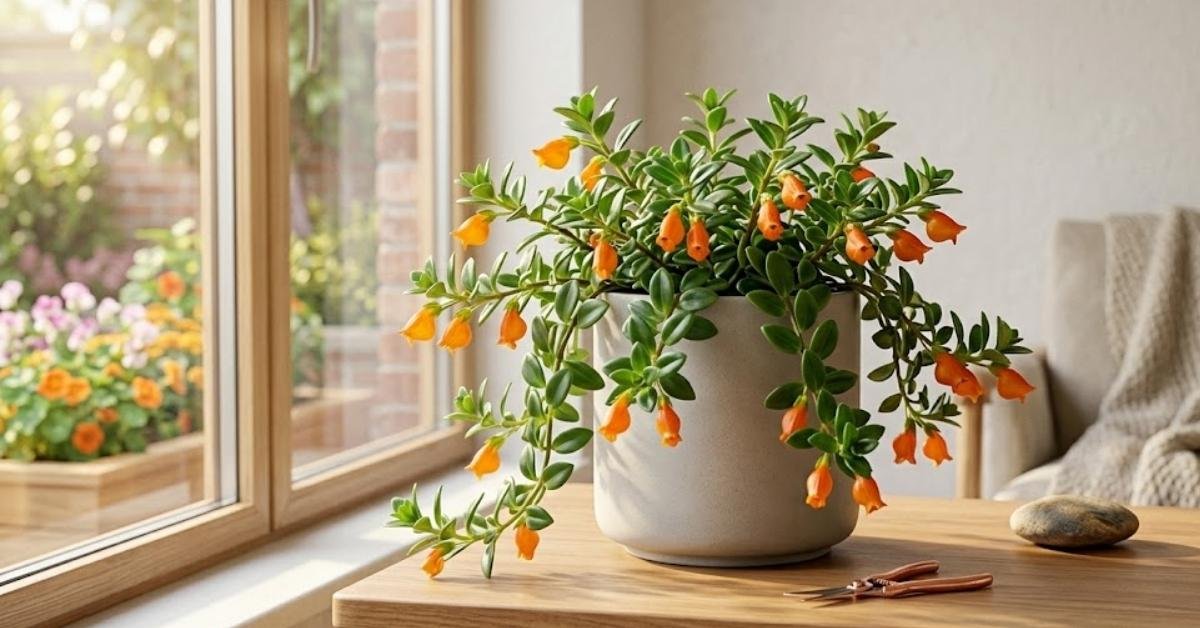
    Goldfish plant care (Nematanthus and Columnea care) is the key to growing one of the most unique flowering houseplants indoors. Known for its trailing vines and fish-shaped orange blooms, the goldfish plant needs the right balance of light, humidity, watering, and seasonal rest to thrive. In this complete guide, you’ll learn everything about goldfish plant care including how to make it bloom, pruning techniques, propagation methods, and common mistakes to avoid.

    Quick Care Cheat Sheet

    Care FactorRequirement
    LightBright indirect — east or west window (1,000–2,500 foot-candles)
    WaterWhen top 2 inches of soil feel dry; room-temperature water only
    Humidity50–60% RH; use a humidifier or pebble tray
    Temperature65°F–80°F (18°C–27°C) growing season; 60–65°F winter rest
    SoilFast-draining peat mix; African violet potting mix is ideal
    FertilizerHigh-phosphorus (10-30-10), half-strength, every 2 weeks in spring–summer
    RepottingEvery 1–2 years; slightly root-bound = more blooms
    ToxicityNon-toxic to cats, dogs, and humans

    What Is a Goldfish Plant? (The Snippet Definition)

    A modern vertical herb garden featuring three wall-mounted wooden planter boxes containing fresh mint, basil, and rosemary against a clean white brick wall.

    A Goldfish Plant is a tropical perennial houseplant from the Gesneriaceae family, the same family as African Violets. It’s named for its tubular orange-red blooms that mimic leaping fish. Native to the rainforests of Brazil and Central America, these plants are epiphytes in the wild; they grow on tree trunks rather than in soil, which explains a lot about how to care for them indoors.Goldfish Plant Care: Light Requirements

    Nematanthus vs. Columnea Which One Do You Have?

    Both plants share the “Goldfish Plant” nickname, but they have distinct personalities:

    Nematanthus gregarius The Low-Maintenance Cousin

    Waxy, succulent-like leaves and compact flowers. Forgiving of humidity fluctuations. The best choice for beginners.

    Columnea gloriosa The Showstopper

    Longer, softer stems (up to 3 feet), larger arched flowers, and a dramatic trailing habit in hanging baskets. More finicky about humidity but stunning when happy.

    Beginner Pick: Start with Nematanthus gregarius. It blooms more reliably and tolerates imperfect humidity far better than Columnea.

    The Science of the Bloom Light & Foot-Candles

    An infographic titled "The Science of the Bloom: Light & Foot-Candles" showing a Peace Lily plant next to a window with a light meter displaying 350 foot-candles.
    If your plant is nothing but a green vine with zero flowers, light is almost certainly the culprit. Goldfish plants need more light than most people think.

    The Technical Goal

    Aim for 1,000–2,500 foot-candles (10,000–25,000 lux).

    The Book Test

    If you cannot comfortably read a book in that spot at 4 PM without turning on a lamp, it is too dark for blooms.

    The Window Hierarchy

    • East Window — Perfection. Soft morning sun triggers flower production without scorching.
    • West Window — Great, but use a sheer curtain in summer to prevent afternoon heat spikes.
    • South Window — Fine with a sheer curtain; too intense without one.
    • North Window — Too dim. Supplement with a full-spectrum LED grow light for 12–14 hours daily.

    Watering the Epiphyte Way

    Because goldfish plants grow on trees in the wild, their roots are built for quick-dry cycles — not constantly moist soil. Overwatering is the leading cause of death.

    The Golden Rule: Never water on a schedule. Stick your finger in the soil — if the top 2 inches feel like a dry sponge, it is time to water.

    Water thoroughly until it drains freely from the bottom, then wait until the soil dries out again. In winter, stretch this to every 2–3 weeks.

    Cold Water Warning: Cold tap water shocks tropical roots and causes ring spots (chlorosis) on the leaves. Always use room-temperature, filtered water.

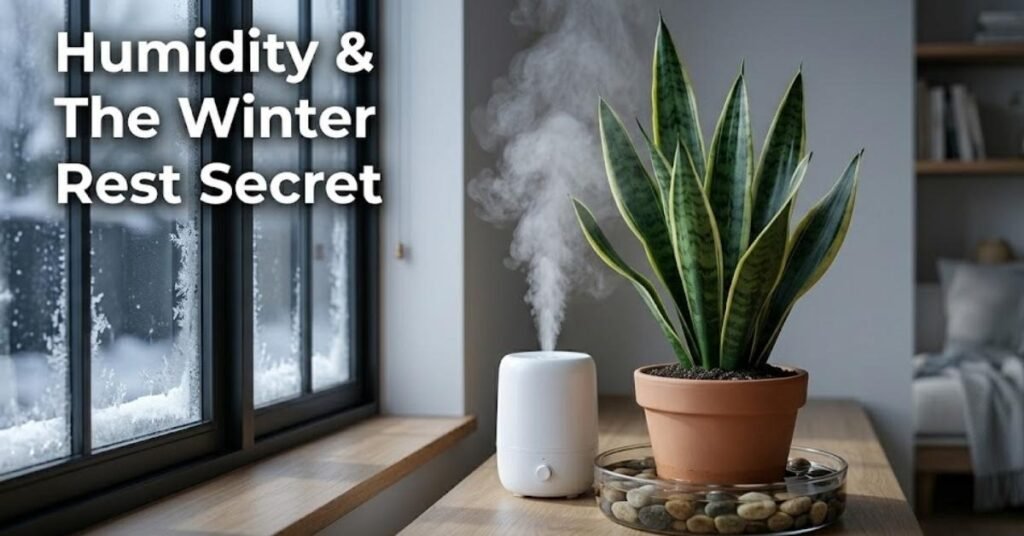
    Humidity & The “Winter Rest” Secret

    A large, vibrant Alocasia plant with massive heart-shaped green leaves in a terracotta pot, surrounded by a Monstera deliciosa and a Fiddle Leaf Fig in a bright, sunlit room.

    Most care guides tell you to keep goldfish plants warm and humid year-round. They are missing a critical piece of the puzzle.

    To trigger a massive flush of spring flowers, you need to mimic the tropical cool season — a technique experienced growers call the “winter rest.”

    Winter Rest Plan (December–February)

    Move the plant to a room that stays 60°F–65°F (15°C–18°C).
    Reduce watering — only enough to prevent shriveling.
    Stop fertilizer completely.
    Watch for spring bud explosion.

    Why This Works: The cool-dry rest mimics the natural seasonal dry period in Central and South American forests. The plant interprets it as a signal to reproduce — and responds with a spectacular bloom.

    Pruning for a “School of Fish”

    Left unpruned, a goldfish plant becomes leggy — long bare stems with few flowers. Regular pruning transforms it into a cascading waterfall of blooms.

    • When to prune: Immediately after the spring blooming cycle ends
    • The 1/3 Rule: Cut back the longest stems by one-third
    • Each cut forces the plant to branch into two new stems — more stems = more flower nodes
    • Save your cuttings — they root in 3–4 weeks

    Pro Tip: Pinch stem tips during the growing season to maintain bushiness. Make it a habit every few weeks.

    Fertilizing for Maximum Flowers

    The key is phosphorus, the middle number on a fertilizer label. High nitrogen pushes leafy growth at the expense of blooms.

    SeasonFertilizerFrequency
    Spring & SummerHigh-phosphorus liquid (10-30-10 or 15-30-15), half-strengthEvery 2 weeks
    FallBalanced (20-20-20), half-strengthOnce a month
    WinterNone — plant restingStop completely

    Advanced Troubleshooting & Pest Control

    SymptomDiagnosisPro Action Plan
    Dropping green leavesTemperature shockCheck for AC vents or drafty windows
    Sticky “honey” on leavesAphids or ScaleWipe with 70% isopropyl alcohol; follow with neem oil spray
    Silver/gray webbingSpider mitesIncrease humidity; spray neem oil
    Yellowing from baseOverwatering / root rotTrim brown roots; repot in fresh chunky mix
    No blooms, leggy growthInsufficient lightMove brighter or add grow light
    Brown leaf tipsLow humidity or tap waterRaise humidity; switch to filtered water

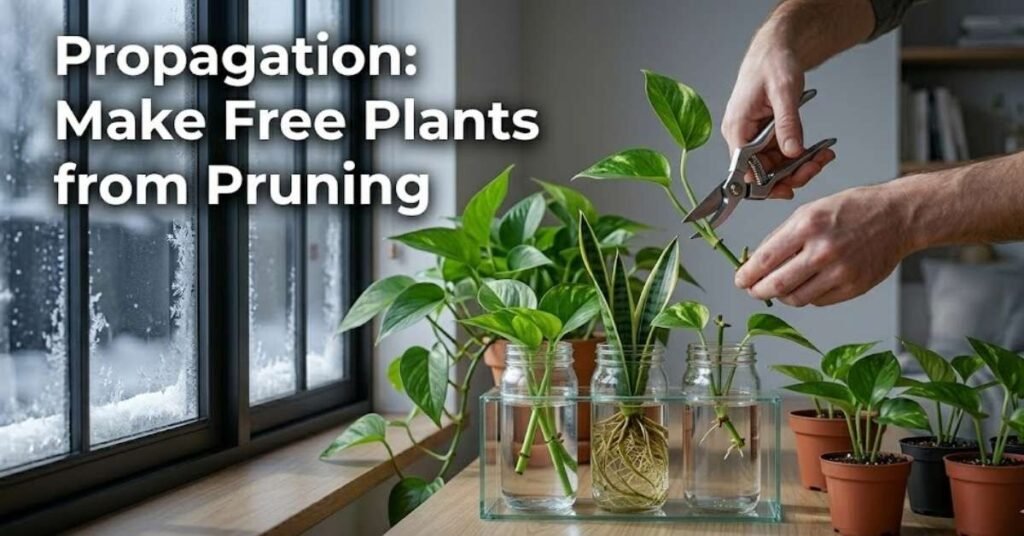
    Propagation Make Free Plants from Pruning

    A propagation station featuring three glass jars of water with plant cuttings, including a snake plant and pothos, next to a person using pruning shears to take a fresh stem cutting from a mother plant.

    Take a 4-inch cutting with at least two sets of leaves.
    Optional — dip in rooting hormone powder.
    Plant in a 50/50 mix of perlite and peat moss.
    Cover with a clear plastic bag to create humidity.
    Roots form in about 21 days.

    Keep warm (around 70°F / 21°C) in bright indirect light. Avoid direct sun.

    Pet & Child Safety

    Good news — goldfish plants are non-toxic to cats, dogs, and humans. They are among the safest flowering houseplants available. Still, discourage chewing as large quantities may cause mild stomach upset.

    Frequently Asked Questions

    Why will my goldfish plant bloom?

    Most common causes are low light, no winter rest, and high-nitrogen fertilizer. Increase brightness, allow cool rest, switch to high-phosphorus formula.

    How is Nematanthus different from Columnea?

    Nematanthus is compact and forgiving. Columnea is longer, softer, and needs higher humidity.

    Can I grow it outside?

    USDA Zones 10–11 yes, year-round in full shade. Other zones move outdoors in summer above 60°F nights.

    How do I know if I am overwatering?

    Yellowing from base, musty soil smell, soft stems, or wilting despite wet soil.

    How long does it live?

    With proper care — 5–10 years or more.

    Final Thoughts Your Path to a Blooming Goldfish Plant

    The goldfish plant has an undeserved reputation for being difficult. The truth — it has a few non-negotiable needs: bright indirect light, careful watering, good humidity, and a cool winter rest.

    Nail the light. Respect the winter rest. Prune after every bloom cycle.
    Do those three things consistently and you will be rewarded with wave after wave of cheerful, fish-shaped flowers.

    Have a question about your goldfish plant? Drop it in the comments we would love to help with proper goldfish plant care, your Nematanthus or Columnea can produce continuous waves of bright, fish-shaped blooms throughout the growing season.”

  • Rubber Plant Care: The Complete Guide to Growing Ficus elastica Indoors

    Rubber Plant Care: The Complete Guide to Growing Ficus elastica Indoors

    Rubber plant care (Ficus elastica care) is one of the easiest ways to grow a bold, tropical indoor tree that can thrive for years with the right conditions. Known for its large glossy leaves and forgiving nature, the rubber plant is perfect for both beginners and experienced plant lovers. In this complete guide, you’ll learn everything about rubber plant care including light, watering, pruning, propagation, and common mistakes to avoid.

    Quick Care Cheat Sheet

    Care FactorWhat Your Rubber Plant Needs
    LightBright indirect; east or west window — minimum 4–6 hrs/day
    WateringWhen top 2 inches of soil are dry; room-temp water only
    Humidity40–60% RH; tolerates average indoor levels
    Temperature60°F–85°F (15°C–29°C); never below 50°F
    SoilWell-draining indoor mix + perlite
    FertilizerBalanced liquid, half-strength, every 2–4 weeks (spring–summer)
    RepottingEvery 1–2 years in spring; 1–2 inches wider only
    ToxicityToxic if ingested; sap irritates skin

    What Is a Rubber Plant?

    Ficus elastica is a tropical evergreen tree native to southern Asia — India, Nepal, China, and Indonesia. In the wild it can reach 60–200 feet tall; indoors it usually grows 6–10 feet.

    It belongs to the Moraceae (fig) family alongside the Fiddle Leaf Fig and Weeping Fig. The name “rubber” comes from its milky-white latex sap, historically harvested as a source of natural rubber.

    Large, glossy oval leaves and a clean upright structure make it one of the most architectural indoor plants available.

    Popular Varieties Which One Do You Have?

    VarietyLeaf ColorDifficultyBest For
    Robusta / DecoraDeep glossy greenEasiestBeginners
    BurgundyNear-black with crimson midribEasyMoody interiors
    TinekeGreen + cream/white + pink new growthModerateBright rooms
    RubyDeep green + pink/cream marginsModerateCollectors

    Variety Tip: Variegated types (Tineke, Ruby) require brighter light. In low light, they gradually revert toward plain green.

    Light The Single Biggest Factor

    Light determines growth rate, leaf size, and structure.

    Window Placement Guide

    • East-Facing Window — Best all-round; gentle morning sun
    • West-Facing Window — Excellent; use sheer curtain in summer
    • South-Facing Window — Works 3–5 feet back or with sheer curtain
    • North-Facing Window — Usually too dim; add a full-spectrum grow light

    The Book Test: If you cannot comfortably read a book at 4 PM without turning on a lamp, it is too dark.

    Pro Tip: Rotate the pot a quarter turn each watering to prevent leaning.

    How to Water Correctly

    Overwatering is the number one killer.

    Golden Rule: Water only when the top 2 inches of soil feel dry. Drench fully until water drains out — then wait again.

    Use room-temperature water. Cold water shocks roots and can cause yellow ring spots.

    Seasonal Watering Guide

    SeasonFrequency
    Spring & SummerEvery 7–10 days
    FallEvery 10–14 days
    WinterEvery 2–3 weeks

    Always check soil before watering.

    Temperature, Humidity & Soil

    • Ideal range: 60°F–85°F
    • Never below 50°F
    • Avoid drafts and sudden temperature drops
    • Humidity: 40–60% ideal

    Soil Mix

    • 2 parts indoor potting mix
    • 1 part perlite
    • Always use drainage holes

    No drainage equals slow root rot.

    Pruning & The Physics of Notching

    Most guides stop at pruning. The real shaping tool is notching.

    Standard Pruning Controlling Height

    Cut just above a leaf node using clean pruners.

    • Prune in spring
    • Remove no more than one-third at once
    • Wear gloves — latex sap irritates skin
    • Blot sap with paper towel

    Result: branching occurs just below the cut.

    Notching Force Branching Without Cutting the Stem

    Notching interrupts downward auxin flow, activating a dormant bud below the wound.

    How to Notch — Step by Step

    Choose a dormant bud (small bump on stem).
    Make a shallow V-shaped cut above it (¼–⅓ into stem).
    Optional dust with rooting hormone.
    Pack moist sphagnum moss lightly into the cut.
    Place the plant in the brightest light and wait 4–8 weeks.

    Why It Works: Auxin suppression is interrupted, waking the bud.
    Why It’s Powerful: You control branch placement — even low on a bare trunk.

    Only notch in spring or early summer.

    Propagation — Two Reliable Methods

    Best done in spring or early summer.

    Method 1 — Stem Cuttings (Beginner-Friendly)

    Take 4–6 inch cutting with 2–3 leaves.
    Let the cut end sit for 30 minutes.
    Optional — dip in rooting hormone.
    Plant in 50/50 perlite + potting mix.
    Cover with a humidity dome or clear bag.
    Keep warm (70°F+).

    Roots form in 4–8 weeks.

    Remove lower leaves to prevent rot.

    Method 2 — Air Layering (Advanced, Larger Results)

    Air layering creates a rooted plant while still attached.

    Make an upward-angled cut one-third into a stem.
    Prop open with toothpick; add rooting hormone.
    Pack moist sphagnum moss around the wound.
    Wrap tightly with clear plastic.
    Keep moss moist.
    Roots form in 6–8 weeks.
    Cut below root mass and pot up.Good rubber plant care also depends on avoiding overwatering

    Best rescue method for tall, bare plants.

    5 Mistakes That Kill Rubber Plants

    MistakeFix
    OverwateringCheck soil every time
    Moving too oftenPick a spot and commit
    Pot too largeRepot only 1–2 inches wider
    Feeding in winterStop in late fall
    No drainageAlways use pots with holes

    Troubleshooting Guide

    SymptomCauseFix
    Sudden leaf dropTemperature shockCheck drafts
    Yellow lower leavesOverwatering or agingCheck soil
    Brown crispy tipsLow humidityRaise humidity
    Leggy growthLow lightMove brighter
    Sticky leavesScale or aphidsAlcohol + neem oil
    White crustSalt buildupFlush soil

    Toxicity — Pet & Child Safety

    Rubber Plants are toxic if ingested. Sap irritates skin and eyes.

    • Pets: vomiting, drooling, lethargy
    • Humans: rash or GI upset
    • Wear gloves when pruning
    • Keep out of reach

    Frequently Asked Questions

    Why is my plant dropping leaves?

    Most often relocation stress or drafts. Some lower leaf drop is normal aging.

    How fast does it grow?

    12–24 inches per year in good light during active growth.

    Is it the same as a Fiddle Leaf Fig?

    No. The Fiddle Leaf Fig (Ficus lyrata) is more temperamental. Ficus elastica is significantly more forgiving.

    Can it grow in low light?

    It can survive but will not thrive. Expect smaller leaves and slower growth.

    Does it clean indoor air?

    Yes. Research including NASA’s Clean Air Study identified Ficus elastica as effective at filtering common indoor pollutants.

    Final Thoughts

    The Rubber Plant combines tropical drama with genuine resilience.

    With proper light, careful watering, seasonal feeding, and techniques like notching and air layering, you can sculpt and multiply it, not just maintain it.

    Bright indirect light. Dry soil before watering. Feed in spring and summer. Protect from cold drafts.

    Follow those rules and your Ficus elastica will become a long-lived indoor tree that outlasts most furniture in your home.

    With consistent rubber plant care, your Ficus elastica can grow into a long-lasting indoor tree that enhances your home for years.

    Have a question? Drop it below and share this guide with a fellow plant lover. 

  • Terrarium Plants: The Complete Beginner’s Guide to Choosing, Growing, and Caring for Your Mini Garden

    Terrarium Plants: The Complete Beginner’s Guide to Choosing, Growing, and Caring for Your Mini Garden

    Terrarium plants are the foundation of a healthy miniature ecosystem. Choosing the right plants determines whether your terrarium thrives for years or fails within weeks. In this guide, you’ll discover the best terrarium plants for both closed and open setups, along with expert tips to keep them alive with minimal effort.

    Not every plant belongs in a terrarium. The best choices share three key traits:

    • Small size — they fit the space without overcrowding
    • Slow growth — they won’t outgrow the container in weeks
    • Low maintenance — they thrive with minimal fuss once established

    The most important rule before choosing any plant: decide on your terrarium type first. Closed and open terrariums are almost opposites in their conditions, and the plants that thrive in one will fail in the other.

    Closed vs. Open Terrariums — Know This Before You Buy a Single Plant

    This is the section most guides gloss over — and the reason most beginner terrariums fail.

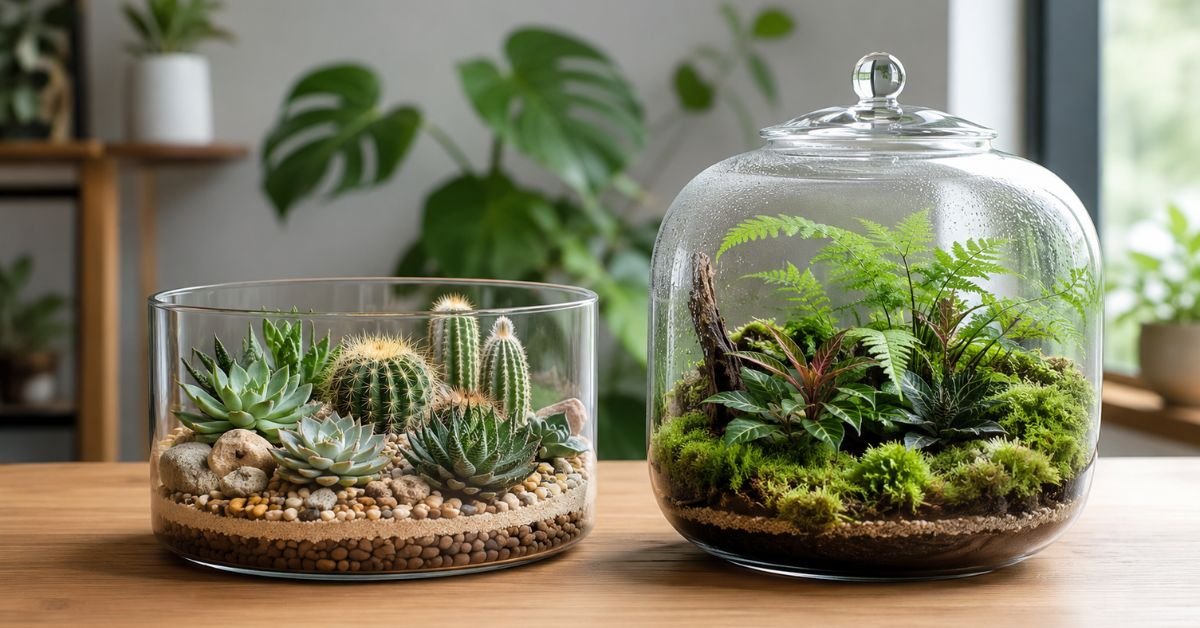
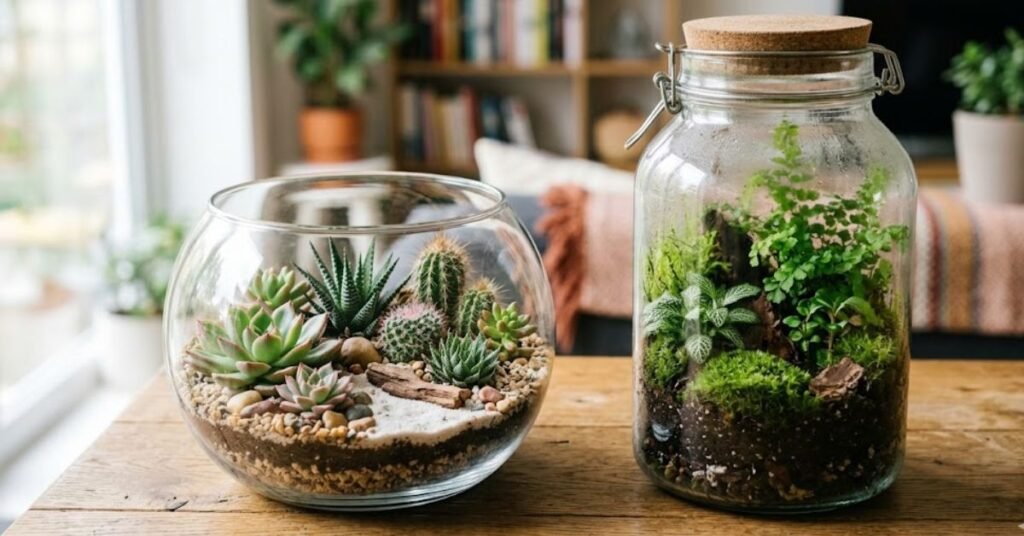
    FeatureClosed TerrariumOpen Terrarium
    HumidityVery high (70–90%)Low to medium (30–50%)
    AirflowMinimalGood
    WateringOnce a month or lessEvery 2–4 weeks
    Best PlantsFerns, moss, Fittonia, PileaSucculents, cacti, Haworthia
    LightBright indirect onlyDirect or bright indirect
    Self-sustaining?Yes — can go weeks untouchedNo — requires regular checks
    Beginner-friendly?VeryYes, but needs drier soil discipline

    Quick Care Summary Table

    Care FactorClosed TerrariumOpen Terrarium
    LightBright indirect (no direct sun)Bright indirect to gentle direct
    WaterMist lightly once a monthEvery 2–4 weeks when soil is dry
    SoilMoisture-retentive tropical mixSandy, fast-draining mix
    Drainage LayerPebbles + activated charcoalPebbles + sand
    Temperature65–80°F (18–27°C)60–85°F (15–29°C)
    FertilizerRarely — diluted liquid feed once in springOnce per season at half-strength
    RepottingEvery 2–3 yearsWhen roots crowd the container

    Best Plants for Closed Terrariums

    1. Fittonia (Nerve Plant) — Best Overall Beginner Pick

    Fittonia is the go-to plant for first-time terrarium builders. Its deep green leaves are criss-crossed with white, pink, or red veins — giving it a striking, mosaic-like look.

    It signals when it needs water by wilting dramatically, then springing back to life after a drink. This built-in alarm system makes it nearly impossible to kill.

    • Light: Low to medium indirect
    • Water: Keep soil moist
    • Size: 3–6 inches tall — perfect for small containers

    2. Moss — The Foundation of Every Great Closed Terrarium

    Moss is not just decoration — it is the backbone of a healthy closed terrarium ecosystem. It covers bare soil, retains moisture, filters the water cycle, and creates that lush, forest-floor look every terrarium builder aims for.

    Common terrarium mosses: Cushion Moss (Leucobryum), Sheet Moss (Hypnum), Mood Moss (Dicranum)

    • Light: Low — actually prefers shade
    • Water: Loves consistent moisture — never let it dry out fully
    • Size: Ground-hugging — won’t outcompete other plants

    3. Ferns — Instant Tropical Atmosphere

    Ferns bring height, texture, and a deeply tropical feel to closed terrariums. The trick is choosing compact varieties — large ferns like Boston Fern quickly outgrow small containers.

    Best compact fern choices:

    • Maidenhair Fern (Adiantum) — delicate, elegant, loves humidity
    • Button Fern (Pellaea rotundifolia) — tough, tolerant, stays small
    • Bird’s Nest Fern (Asplenium nidus) — glossy, bold, easy

    4. Peperomia — The Set-and-Forget Champion

    The entire Peperomia genus is practically born for terrariums. With hundreds of varieties available, there’s a trailing type, a compact mound type, and a bushy type for every design.

    They tolerate humidity, indirect light, and occasional neglect better than almost any other terrarium plant.

    Top picks: Peperomia caperata (ripple leaf), Peperomia rotundifolia (trailing jade), Peperomia prostrata (string of turtles)

    5. Pilea — Color, Texture, and Contrast

    Pilea varieties split neatly into two roles in a terrarium: statement plants (larger, feature foliage) and accent fillers (tiny, trailing).

    • Pilea involucrata (Friendship Plant) and Pilea mollis (Moon Valley) — statement plants with deeply textured leaves
    • Pilea glauca (Silver Sparkle) and Pilea depressa (Baby Tears) — delicate fillers that root wherever they touch soil

    6. Creeping Fig (Ficus pumila) — Self-Carpeting Easy Grower

    If you want a plant that practically installs itself, drop a Ficus pumila cutting into your terrarium and step back. It roots up fast in humid conditions, carpets bare surfaces, and creates a lush green backdrop for other plants.

    Keep it trimmed to prevent it from overwhelming smaller plants.

    Closed Terrarium Plants at a Glance

    PlantLightSizeBest RoleToxicity
    Fittonia (Nerve Plant)Low–Medium3–6 inForeground, colorNon-toxic
    Moss (various)LowGround coverBase layerNon-toxic
    Button FernMedium6–8 inMid-layerNon-toxic
    PeperomiaLow–Medium4–8 inMid-layer, fillersNon-toxic
    Pilea glaucaMedium2–3 inAccent fillerNon-toxic
    Creeping FigLow–MediumTrailingGround coverMildly irritant

    Best Plants for Open Terrariums

    Open terrariums have lower humidity, better airflow, and drier soil. They suit desert-adapted plants perfectly.

    Succulents — Easy, Colorful, Forgiving

    Succulents store water in their thick leaves, making them ideal for the drier open terrarium environment. Mix different shapes, sizes, and colors for a striking desert landscape.

    Top picks:

    • Echeveria — rosette form, many colors, very slow-growing
    • Haworthia — striped, architectural, tolerates low light (unusual for succulents)
    • Crassula (Jade Plant) — classic, drought-tolerant, long-lived

    Cacti — The Lowest Maintenance Option

    Slow-growing cacti are virtually foolproof in open terrariums. Use a mix of types — tall columnar, rounded barrel, and padded flat shapes — for a dramatic desert display.

    • Water every 3–4 weeks (less in winter)
    • Always use sandy, fast-draining soil
    • Use gloves when planting — obvious, but often forgotten

    Air Plants (Tillandsia) — No Soil Needed

    Air plants are epiphytes — they get nutrients from air and water, not soil. They can be placed on rocks, driftwood, or tucked into gaps in an open terrarium, creating a truly unique display.

    • Mist 2–3 times per week or soak for 20 minutes every 1–2 weeks
    • Keep in good indirect light with airflow
    • Never let them sit in standing water

    How to Build a Terrarium: Layer by Layer

    Getting the substrate layers right is what makes the difference between a thriving terrarium and a rotting one.

    Closed Terrarium Layers (Bottom to Top)

    1. Drainage layer (1–2 inches): Pebbles, gravel, or LECA
    2. Separation layer (thin): Mesh or sheet moss to prevent soil migration
    3. Activated charcoal (½ inch): Filters water, prevents mold and odor
    4. Substrate (2–3 inches): Moisture-retentive tropical potting mix
    5. Top dressing: Decorative moss, small stones, or bark

    Open Terrarium Layers (Bottom to Top)

    1. Drainage layer (1–2 inches): Coarse gravel or pebbles
    2. Activated charcoal (½ inch): Prevents fungal buildup
    3. Substrate (2–3 inches): Cactus/succulent mix or sandy loam
    4. Top dressing: Fine sand, decorative pebbles, or grit

    Terrarium Pest and Disease Guide

    ProblemSignsFix
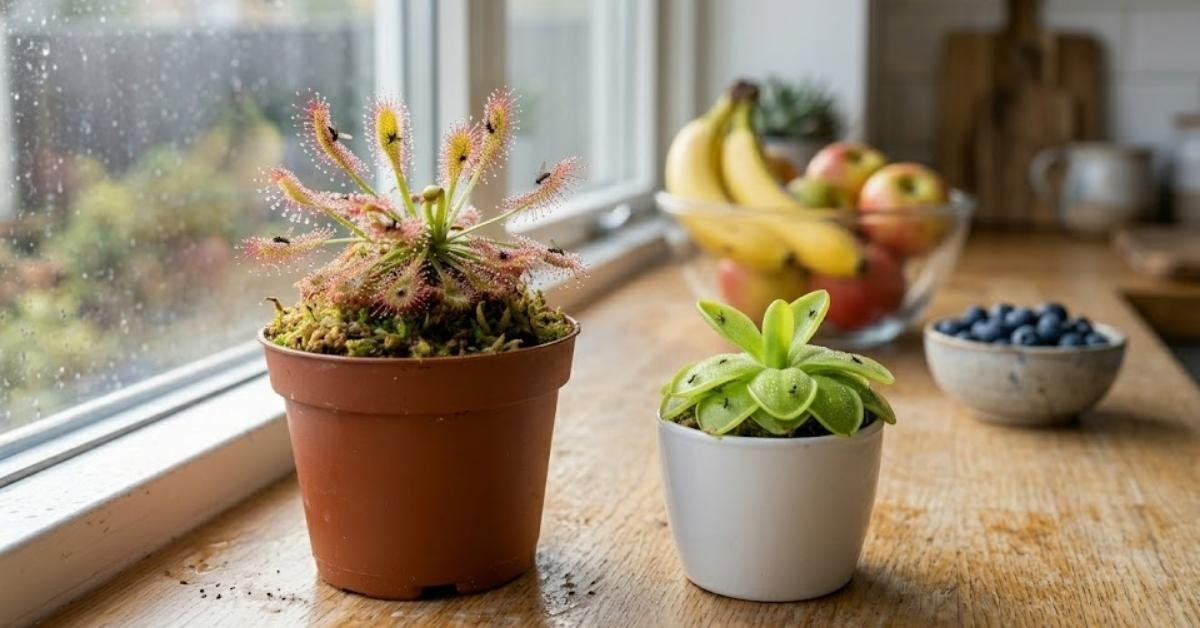
    Fungus GnatsTiny flies around soilLet soil dry; use yellow sticky traps; add carnivorous plant
    MealybugsWhite cotton clusters on leavesRemove with alcohol-dipped cotton swab; isolate affected plant
    Mold on SoilWhite fluffy patchesRemove lid; let air circulate for a day; reduce watering; add charcoal
    Algae on GlassGreen film on inside wallsToo much direct sun; move to bright indirect light; wipe glass
    Root RotWilting, slimy roots, bad smellRemove affected plant; let soil dry; improve drainage layer
    Condensation BuildupGlass completely fogged, water poolingRemove lid for a few hours; rebalance moisture level

    Seasonal Terrarium Care Guide

    SeasonClosed TerrariumOpen Terrarium
    Spring Check for overgrowth; trim if needed; light fertilizeResume watering; repot crowded plants; fresh top dressing
    Summer Keep out of direct sun; remove lid if overheatingWater slightly more; watch for pest activity
    Fall Minimal intervention; check moisture levelReduce watering frequency; check for root crowding
    Winter May need zero watering; reduce light exposureWater very sparingly; move succulents to brightest spot

    Plants to AVOID in Terrariums

    Most guides tell you what to use. Fewer tell you what not to use — and that’s often more valuable.

    PlantWhy It Fails
    PothosGrows too fast; takes over in weeks
    Peace LilyNeeds more space than terrariums allow
    Spider PlantSends out runners that crowd everything
    MintExtremely invasive; will dominate the container
    Regular BambooGrows too aggressively; breaks glass in some cases
    Carnivorous plants (most types)Need special substrate and different humidity than typical terrariums

    Common Beginner Mistakes to Avoid

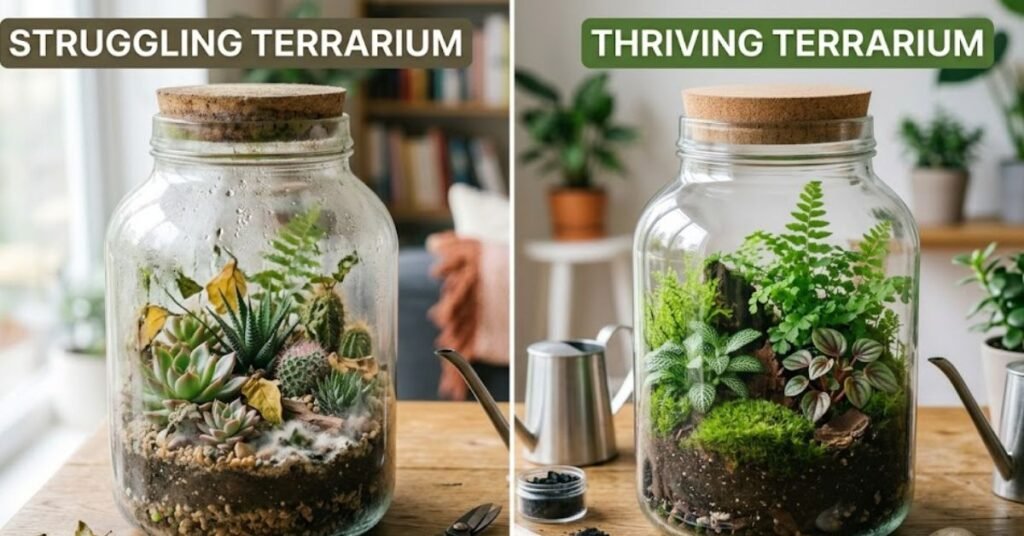
    1. Mixing closed and open terrarium plants Succulents and moss cannot coexist. One needs wet soil; the other dies in it. Always match every plant in the container to the same moisture and humidity needs.

    2. Skipping the charcoal layer Without activated charcoal, stagnant water in the drainage layer becomes a breeding ground for mold, bacteria, and bad odors. This one layer prevents most closed terrarium failures.

    3. Overwatering a closed terrarium A properly built closed terrarium with the right plants barely needs water. If the glass is consistently foggy and water is pooling at the base, you’ve over-watered. Remove the lid for a day or two to rebalance.

    4. Placing in direct sunlight, glass magnifies heat. Direct sun turns a terrarium into a slow cooker — scorching leaves and killing plants within days. Always use bright indirect light.

    5. Choosing fast-growing plants Plants like pothos or mint look fine for two weeks and then completely take over the container. Always choose confirmed slow growers and miniature varieties.

    6. Using regular potting soil without a drainage layer Standard potting soil in a sealed glass container with no drainage becomes waterlogged and anaerobic. Always build your substrate layer properly before planting.

    7. Not researching toxicity before buying Several common terrarium plants are toxic to pets and children. Asparagus Fern, Cycas, and Sago Palm are popular choices that can cause serious harm if ingested. Always check before buying.

    Toxicity Guide for Common Terrarium Plants

    PlantToxic to Pets?Toxic to Humans?
    Fittonia (Nerve Plant)Non-toxicNon-toxic
    PeperomiaNon-toxicNon-toxic
    Moss (most varieties)Non-toxicNon-toxic
    PileaNon-toxicNon-toxic
    Asparagus FernToxic to cats & dogsMildly irritant
    Creeping FigMildly toxicSkin irritant
    Succulents (most)Non-toxicNon-toxic
    HaworthiaNon-toxicNon-toxic

    FAQ: Terrarium Plant Questions Answered

    1. How often do I water a closed terrarium? A well-built closed terrarium may need watering as rarely as once a month — or even less in winter. The key sign is condensation: if you see some on the glass in the morning that clears by midday, moisture levels are perfect. If no condensation ever appears, mist lightly.

    2. Can I put succulents in a closed terrarium? No. Succulents need dry conditions, good airflow, and infrequent watering. The high humidity inside a closed terrarium causes them to rot quickly. Always pair succulents with open terrariums only.

    3. Why is my closed terrarium getting moldy? Mold usually means too much moisture, no activated charcoal in the substrate, or a plant that’s beginning to rot. Remove the lid to air it out, take out any decaying plant material, and consider adding charcoal to your substrate if you didn’t originally.

    4. What is the easiest terrarium plant for a beginner? Fittonia (Nerve Plant) is the top choice. It’s forgiving, visually striking, signals its water needs clearly, and thrives in the humid closed terrarium environment with minimal care.

    5. How long does a closed terrarium last? A well-built closed terrarium with the right plants can last for years — even decades with occasional maintenance. The world record for an unwatered closed terrarium is over 40 years.

    Conclusion

    The secret to a thriving terrarium is simple: match your plants to your container, build your substrate layers correctly, and resist the urge to overwater.

    Start with a closed terrarium using Fittonia, moss, and Peperomia — three forgiving, beginner-friendly plants that practically take care of themselves once established. Get that right, and you’ll be building more complex terrariums within months.

    Ready to start? Pick up a glass container with a lid, a bag of activated charcoal, and two or three Fittonia plants from your local nursery or garden center. Your first thriving mini-ecosystem is closer than you think.

    Have a question about your terrarium? Drop it in the comments — we answer every one.