
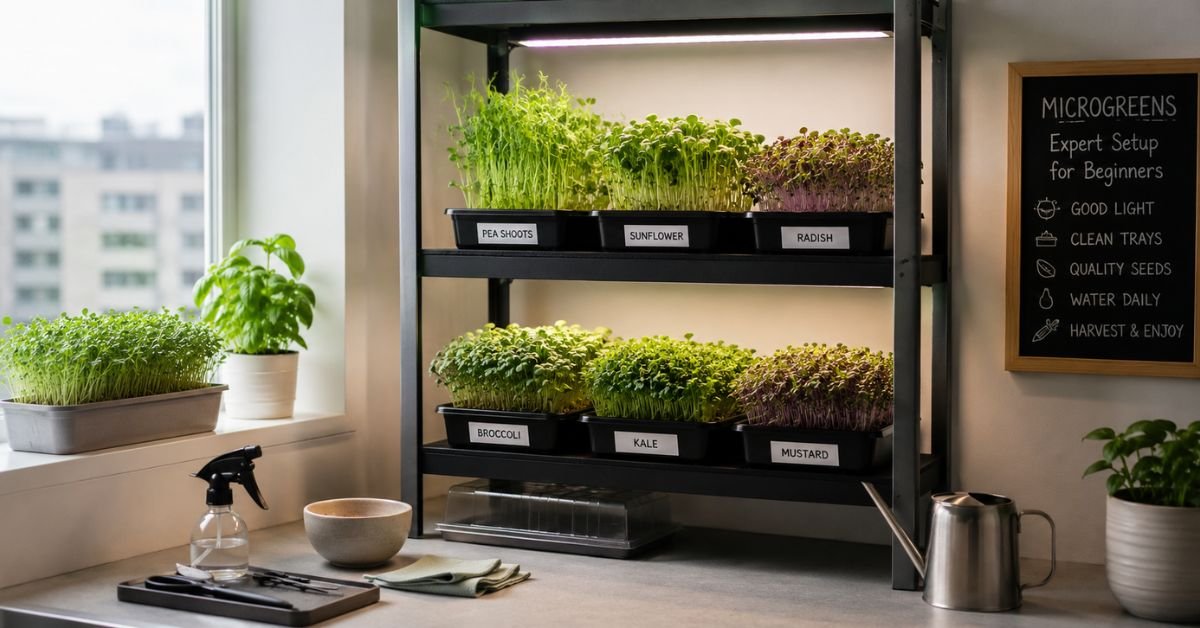
I remember staring at my tiny, cramped kitchen counter a few years ago, missing the massive backyard garden I had before moving to the city. I thought my days of fresh, homegrown produce were over. But in my years of growing plants indoors, I’ve found that you don’t need acres of land to get a massive harvest. If you’re wondering how to grow microgreens in small apartments, you are exactly where I was.
Whether you live in freezing USDA Zone 3 or sweltering Zone 9, apartment gardening completely flips the script. You control the seasons.
Quick Care Summary for Skimmers
| Requirement | Ideal Condition |
| Light | 4-8 hours of sunlight or a cheap LED grow light. |
| Water | Bottom-watering daily; keep soil moist but not soggy. |
| Soil | High-quality organic potting soil (avoid outdoor garden dirt). |
| Temperature | 65°F – 75°F (Standard US indoor room temp). |
| Harvest Time | 7 to 14 days after planting! |
Personal Pro-Tip: Don’t buy expensive “microgreen growing kits” right out of the gate. A shallow plastic takeout container with a few holes poked in the bottom works exactly the same as a $30 specialized tray.
Essential Supplies for Growing Microgreens in Small Apartments
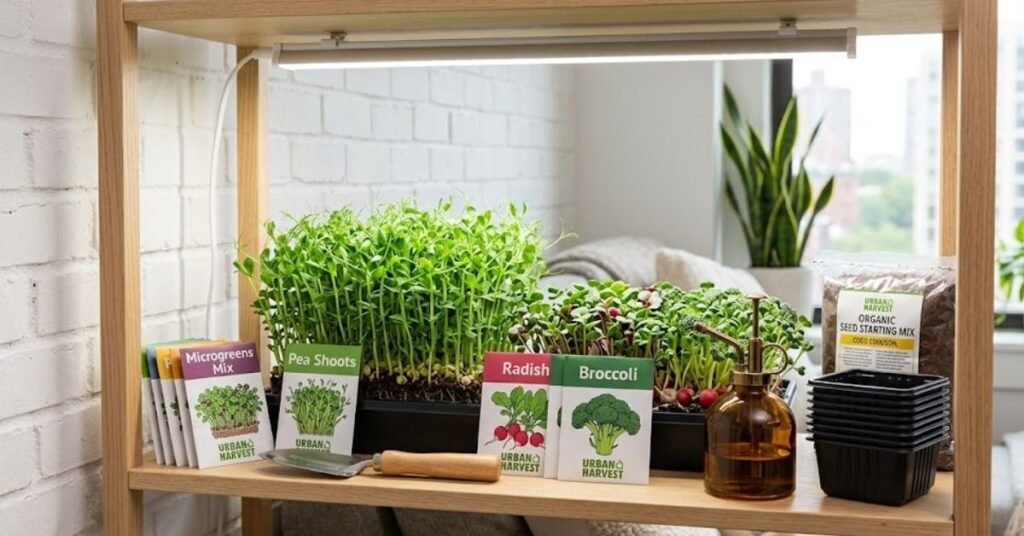
Figuring out how to grow microgreens in small apartments starts with the right gear. Because we don’t have the luxury of outdoor space, we have to mimic nature on a countertop.
You will need:
- Shallow Trays: Two per batch. One with drainage holes, one without (for the bottom).
- Potting Soil: A light, seed-starting potting soil. Don’t use heavy outdoor dirt; it won’t drain well in trays.
- Seeds: Radish, broccoli, and sunflower are incredibly easy for beginners.
- Spray Bottle: For misting the seeds with water straight from the faucet.
Personal Pro-Tip: I learned the hard way that heavily chlorinated city water from the faucet can sometimes stunt sensitive seeds. I like to fill a pitcher with tap water and leave it on the counter for 24 hours to let the chlorine evaporate before watering my greens.
Step-by-Step: How to Grow Microgreens in Small Apartments Year-Round
The secret to mastering how to grow microgreens in small apartments lies in the setup.
- Prep the Soil: Fill your top tray (the one with holes) with about an inch of potting soil. Tamp it down gently so it’s flat and even.
- Sow the Seeds: Sprinkle your seeds thickly across the soil. It should look like a crowded dance floor—much closer together than you’d ever plant outdoors.
- Water and Weight: Mist the seeds heavily. Then, place an empty tray on top of the seeds with a small weight (like a soup can) on it. This simulates being buried under heavy spring soil and makes the stems grow thick and strong. Keep them in the dark like this for 3-4 days.
- Let There Be Light: Once the seeds sprout and push the top tray up, remove the weight and put them near a sunny window or under a light.
Personal Pro-Tip: I love growing radishes in the Fall and Winter because they germinate incredibly fast, even if my apartment is a little drafty. They give that spicy, satisfying crunch when summer salads are long gone.
Common Mistakes When Cultivating Microgreens in Tight Spaces
When friends ask me why their indoor gardens fail, I usually find they are making one of two uniquely American home mistakes.
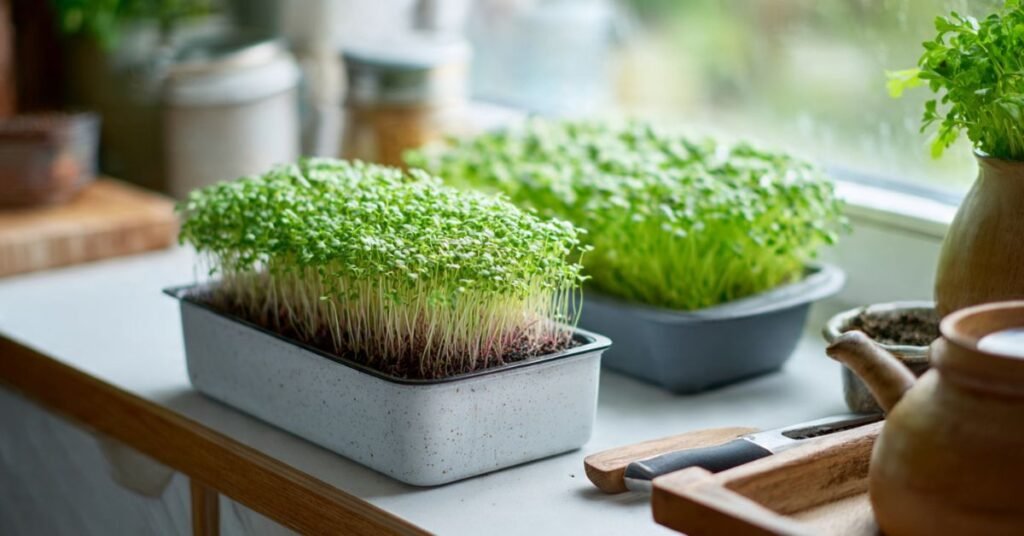
The biggest culprit is the air conditioning vent. In the summer, we blast the AC. If your microgreen tray is sitting right under an air conditioning vent, the constant flow of dry, cold air will suck the moisture right out of your potting soil, leaving your tiny sprouts crispy in a matter of hours.
The second mistake is overwatering from the top. Pouring water directly over delicate sprouts knocks them over and invites mold. Always bottom-water by pouring water into the solid bottom tray and letting the soil soak it up.
Personal Pro-Tip: Hold your hand over your microgreen tray. If you can feel a breeze from your AC or your winter heating vent, move the tray. Drafts are the enemy of baby plants.
Troubleshooting Your Apartment Microgreen Garden
Even when you know exactly how to grow microgreens in small apartments, things can get weird. Here is how I fix common issues:
- Leaves are turning yellow: Your plants are starving for light. If you are relying on a window, the winter sun might not be strong enough. Move them closer to the glass or grab a cheap LED bulb.
- Brown, crispy tips: This usually means uneven watering or low humidity. Make sure the edges of your tray aren’t drying out faster than the center.
- They are falling over and dying at the soil line: This is “damping off,” a fungal disease caused by poor airflow and soggy soil. Ease up on the water and put a small fan nearby to keep air circulating.
Personal Pro-Tip: If I notice a section of my tray looks a little weak or yellow, I literally rotate the tray 180 degrees. Plants stretch toward the light, and rotating them ensures an even, upright canopy.
Toxicity Warning: Are Indoor Microgreens Safe for Pets?
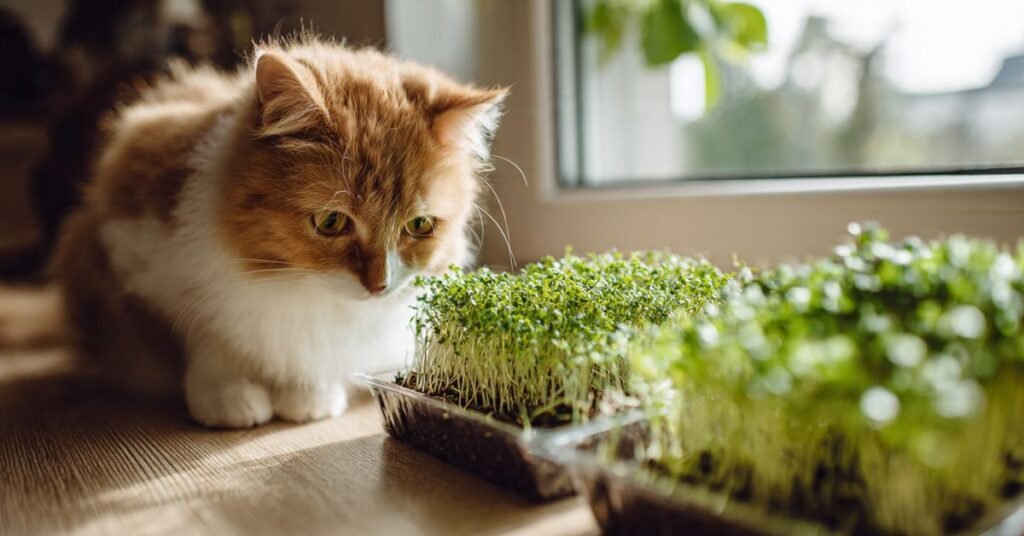
This is a huge deal for us apartment dwellers with furry roommates. Dogs and cats love to nibble on fresh greens, especially when they are sitting right on the kitchen island.
The good news? Most common microgreens like broccoli, kale, sunflower, and radish are completely safe and even healthy for cats and dogs.
The danger comes from the Nightshade family. Never grow tomato, pepper, eggplant, or potato microgreens. The stems and leaves of these plants contain solanine, which is highly toxic to dogs, cats, and humans! We only eat the fruit of these plants, never the foliage.
Personal Pro-Tip: My cat is obsessed with sunflower shoots. To keep her out of my main harvest, I actually grow a tiny, separate 2-inch pot of oat grass right next to my microgreens. It acts as a perfect decoy!
FAQs on How to Grow Microgreens in Small Apartments
I spend a lot of time on Reddit and Quora talking to fellow indoor gardeners. Here are the questions that pop up constantly about how to grow microgreens in small apartments.
Q1. Is that white fuzzy stuff mold or roots?
90% of the time, it’s root hairs! If the white fuzz is clinging tightly to the taproot and looks like a tiny caterpillar, it’s just the plant looking for water. If it looks like a spiderweb spreading across the top of the soil, that’s mold.
Q2. Can I use paper towels instead of potting soil?
You can, but I don’t recommend it. Paper towels dry out incredibly fast in air-conditioned apartments, and the plants won’t grow as thick or hold as much flavor compared to using a good potting mix.
Q3. Do I really need expensive grow lights?
Not at all. While a south-facing window is great, an ordinary LED shop light from the hardware store works perfectly. Just keep it about 2 inches above the plants.
Q4. How many harvests can I get from one seed?
Only one. Microgreens are harvested at the cotyledon (first leaf) stage. Once you snip the stem, the plant is done. You’ll need to compost the soil and start fresh.
Q5. Will my apartment smell like a farm?
Nope! Healthy microgreens just smell faintly of fresh earth and the vegetable they are (radish microgreens smell surprisingly like radishes!). If it smells foul or sour, you have mold from overwatering.
The Takeaway: Your Countertop is Your New Garden
When I first started looking into how to grow microgreens in small apartments, I honestly thought it would be a messy, complicated process that would ruin my kitchen counters. But as you can see, it really just comes down to a few basic supplies and about three minutes of your day. You don’t need a sprawling backyard in the suburbs or perfect spring weather to enjoy fresh, organic greens. You just need a little bit of space and the willingness to try.
Whether you are looking to upgrade your weekend salads, avoid those crazy premium prices at the grocery store, or just bring a little bit of vibrant, living energy into your indoor space, these tiny plants deliver massive results. Grab a tray, pick out some seeds, and get your hands a little dirty. You’ve got this!
Personal Pro-Tip: Take a photo of your tray on day one, and then another on day seven. Because you share a living space with your indoor garden and see it constantly, you might not notice the explosive daily growth. Comparing those two pictures is the absolute best motivation to keep planting your next batch!

Amin Khalid is a professional horticulturist and the founder of LeafyWisdom. With a deep passion for home gardening and horticultural research, he specializes in providing practical, easy-to-follow care guides for indoor plants. Amin’s goal is to simplify gardening for everyone and help fellow plant lovers build their own thriving green spaces.

No responses yet