
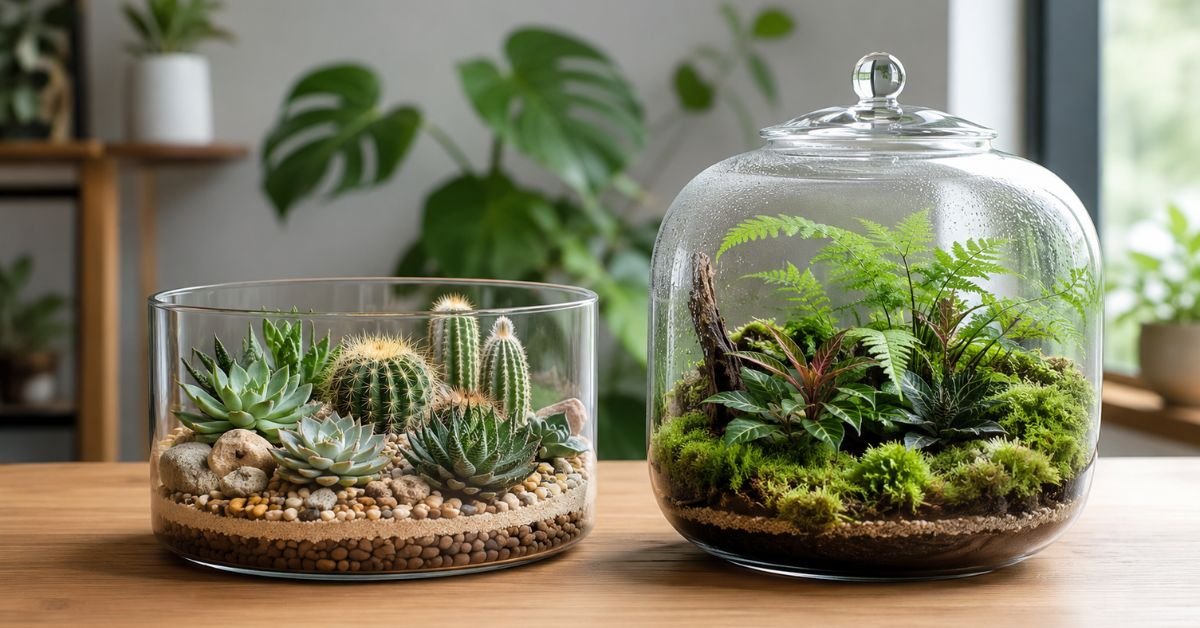
I still remember my first “glass grave.” It was a beautiful, vintage candy jar I’d stuffed with delicate ferns and moss, only to watch it turn into a swampy, molded mess within two weeks because I didn’t understand the airflow. Whether you’re a seasoned gardener or someone who usually kills “unkillable” plastic plants, choosing between an open vs closed terrarium which is better for beginners is the first real fork in the road.
In my years of consulting for indoor gardeners across the US—from the humid Southeast to the bone-dry high deserts—I’ve seen that your success depends less on your “green thumb” and more on picking the system that fits your lifestyle.
Quick Comparison: Open vs Closed Terrarium At a Glance
If you’re a “skimmer,” here is the high-level breakdown to help you decide on an open vs closed terrarium which is better for beginners.
| Feature | Open Terrarium | Closed Terrarium |
| Ideal Plants | Succulents, Cacti, Air Plants | Ferns, Mosses, Nerve Plants |
| Humidity Level | Low (Matches your room) | High (Self-sustaining cycle) |
| Watering Frequency | Once every 1–2 weeks | Once every few months |
| Maintenance | Medium (Needs manual watering) | Low (Once balanced) |
| Risk Factor | Low (Harder to “rot” plants) | High (Easy to overwater/mold) |
| Best For | “Forgetful” waterers | “Set it and forget it” lovers |
Defining the Basics: Open vs Closed Terrarium Which Is Better for Beginners?
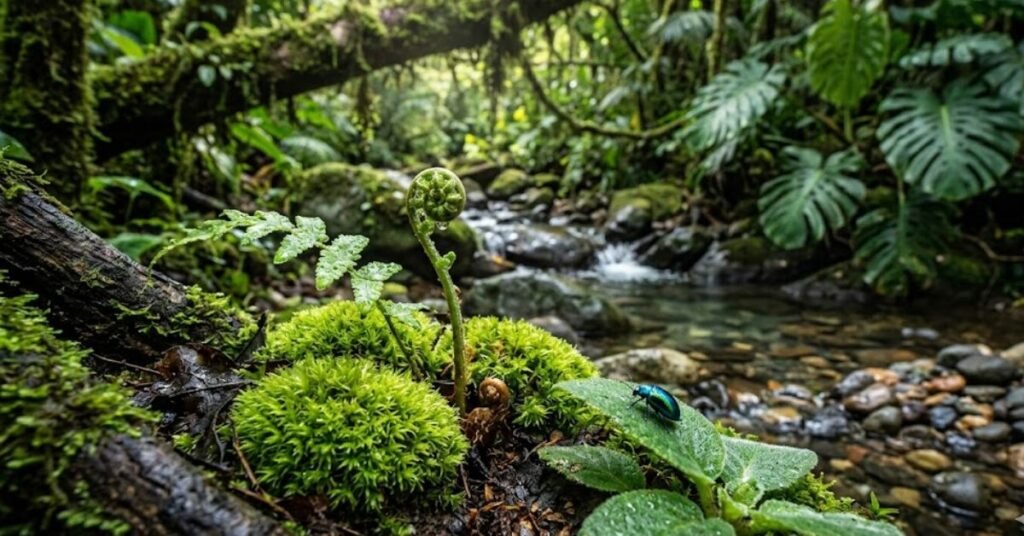
When we talk about an open vs closed terrarium which is better for beginners, we’re really talking about two completely different climates.
An open terrarium is essentially a glass planter with no lid. Think of it like a tiny, stylish desert. Because air circulates freely, moisture evaporates quickly. This makes it perfect for plants that hate “wet feet.”
A closed terrarium, on the other hand, is a sealed ecosystem. Moisture evaporates from the leaves, condenses on the glass, and “rains” back down into the soil. It’s a miniature rainforest.
Personal Pro-Tip: If you live in an area with heavy Air Conditioning (AC) use during US summers, your indoor air is likely very dry. This is actually great for open terrariums but can make balancing a closed one tricky if you keep it too close to a vent!
Why Your Home’s Environment Matters for the Beginner Debate
I’ve found that the “best” choice often depends on where you live. If you’re in USDA Hardiness Zone 9 or 10 (like Florida or Texas), the ambient humidity is already high, which helps closed terrariums thrive. However, if you’re up in Zone 4 (think Minnesota) and your furnace is blasting dry heat all winter, an open terrarium will dry out even faster than usual.
When deciding open vs closed terrarium which is better for beginners, consider your patience level. I always tell my clients: do you want to play “scientist” or “decorator”?
- The Scientist: Will love the closed terrarium’s water cycle.
- The Decorator: Will likely prefer the ease of an open succulent bowl.
Personal Pro-Tip: Never use a “tap” or faucet with softened water for your terrariums. The salts in softened water can build up in the glass and kill sensitive mosses. I always use distilled or rainwater for my builds.
Picking the Best Plants for an Open vs Closed Terrarium
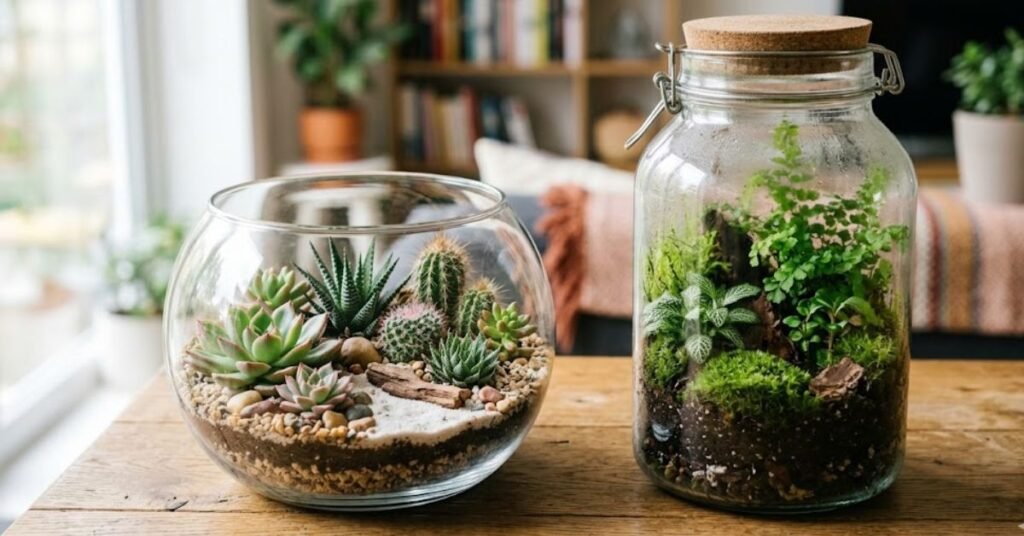
The biggest mistake I see beginners make is putting a cactus in a closed jar. That is a one-way ticket to a “mushy” cactus. When choosing an open vs closed terrarium which is better for beginners, your plant choice is non-negotiable.
Top Choices for an Open Glass Setup
- Echeveria & Jade: Classic American favorites that love the dry air.
- Zebra Haworthia: Very hardy and handles lower light than most succulents.
- Cacti: Only if you have a very wide-mouthed open container.
Best Beginner Plants for a Sealed Ecosystem
- Fittonia (Nerve Plant): They “faint” when they need water, making them great communicators.
- Lemon Button Fern: One of the hardiest ferns I’ve ever grown indoors.
- Sheet Moss: Essential for that “forest floor” look.
Personal Pro-Tip: When buying potting soil, don’t just grab the cheapest bag. For open terrariums, look for “Cactus and Succulent Mix.” For closed ones, I prefer a mix of peat moss, perlite, and a little horticultural charcoal to keep things fresh.
Common Pitfalls: Why Most Beginners Fail
After years of troubleshooting, I’ve noticed a few “American-specific” habits that lead to terrarium failure.
- The Greenhouse Effect: We love our big, sunny US windows. But if you put a closed terrarium in direct sunlight, the glass acts like a magnifying glass and literally cooks your plants.
- Over-loving (Overwatering): Most beginners treat an open terrarium like a standard houseplant. If you water it every day, you’ll rot the roots.
- No Drainage Layer: In a glass container with no hole at the bottom, water has nowhere to go. You must use a layer of gravel or pebbles at the bottom.
Personal Pro-Tip: If you see “fog” on the glass of your closed terrarium all day long, it’s too wet! Take the lid off for a few hours to let some moisture escape. You want a light mist in the morning, but clear glass by noon.
Troubleshooting Your Glass Garden
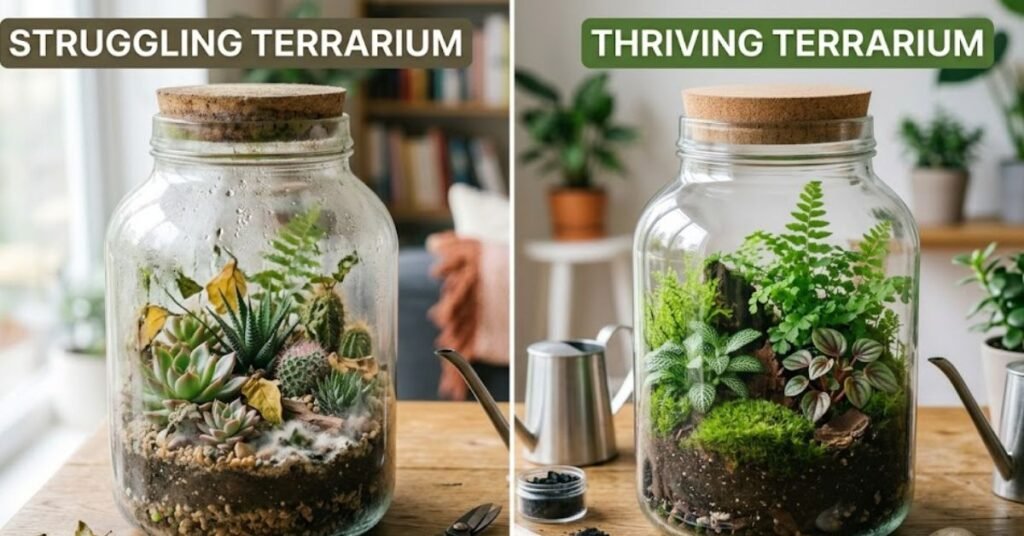
Is your project looking a little sad? Don’t panic. Here is how I fix the most common issues when debating open vs closed terrarium which is better for beginners.
- Yellowing Leaves: Usually a sign of overwatering. In an open terrarium, stop watering for two weeks. In a closed one, leave the lid off for 48 hours.
- White “Fuzz” (Mold): This happens in closed systems with no airflow. I suggest adding “Springtails” (tiny beneficial bugs) or simply removing the affected leaf and reducing humidity.
- Brown, Crispy Tips: Your open terrarium is likely too close to a heating vent or needs a drink.
Toxicity Warning: Is It Safe for Pets?
This is a huge deal for US pet owners. Many common terrarium plants are toxic if chewed.
- Safe (Pet-Friendly): Most Mosses, Peperomia, and Haworthia.
- Toxic (Keep Away): Ivy (Hedera helix), Peace Lilies, and some Ferns can cause stomach upset in cats and dogs.
Personal Pro-Tip: Always check the specific species on the ASPCA website before you build. I once had a client whose cat knocked over a beautiful open succulent bowl—luckily it was just a mess, not a trip to the vet!
FAQ: Everything You’re Asking About Open vs Closed Terrariums
Q1. Which one is actually easier to start with?
Honestly, an open vs closed terrarium which is better for beginners usually comes down to “open” being the winner. It’s more forgiving if you make a mistake with water.
Q2. Can I use moss in an open terrarium?
I wouldn’t recommend it. Moss needs constant humidity. In an open container, it usually turns into a crispy brown carpet within a week unless you mist it daily.
Q3. Do I ever need to fertilize my terrarium?
Hardly ever! I actually avoid it. You want your plants to stay small so they don’t outgrow the glass. Maybe a tiny bit of diluted liquid fertilizer once a year in the Spring.
Q4. How long do closed terrariums actually live?
If you balance the water correctly, they can live for years! I’ve seen some that haven’t been opened in a decade, though for a beginner, expect to “tinker” with it every few months.
Q5. Why is my open terrarium smelling like rotten eggs?
That is root rot. It means water is sitting at the bottom and the soil has gone anaerobic. You’ll need to repot with fresh potting soil and a better drainage layer.
Q6. Can I put bugs in my terrarium?
In a closed terrarium, yes! “Springtails” are a beginner’s best friend—they eat mold and keep the ecosystem clean. Avoid putting bugs in open terrariums; they’ll just wander into your living room.
Q7. Does the size of the glass matter?
Yes. For beginners, a medium-sized jar (about half a gallon or a quart) is the “sweet spot.” Tiny jars are hard to plant, and huge ones are hard to balance.
My Final Thoughts on open vs closed terrarium which is better for beginners
Ultimately, deciding on an open vs closed terrarium which is better for beginners comes down to how much you want to interact with your plants. I’ve found that most folks across the US from rainy Seattle to sunny Phoenix thrive when they match the jar to their own natural energy.
If you’re a “set it and forget it” person, a closed jar is a tiny miracle of nature. If you like to get your hands in the potting soil every now and then to check on things, go with an open design. Just remember: there’s no such thing as a failed project, only a “learning opportunity” for your next build!
Personal Pro-Tip: If you’re still torn on an open vs closed terrarium which is better for beginners, I suggest starting with an open one using a Zebra Haworthia. It’s tough as nails, handles the dry AC air in American homes perfectly, and won’t throw a fit if you forget to water it for a week while you’re away for the holidays. It’s the ultimate “low-stakes” entry into the hobby!
Amin Khalid is a professional horticulturist and the founder of LeafyWisdom. With a deep passion for home gardening and horticultural research, he specializes in providing practical, easy-to-follow care guides for indoor plants. Amin’s goal is to simplify gardening for everyone and help fellow plant lovers build their own thriving green spaces.

No responses yet