
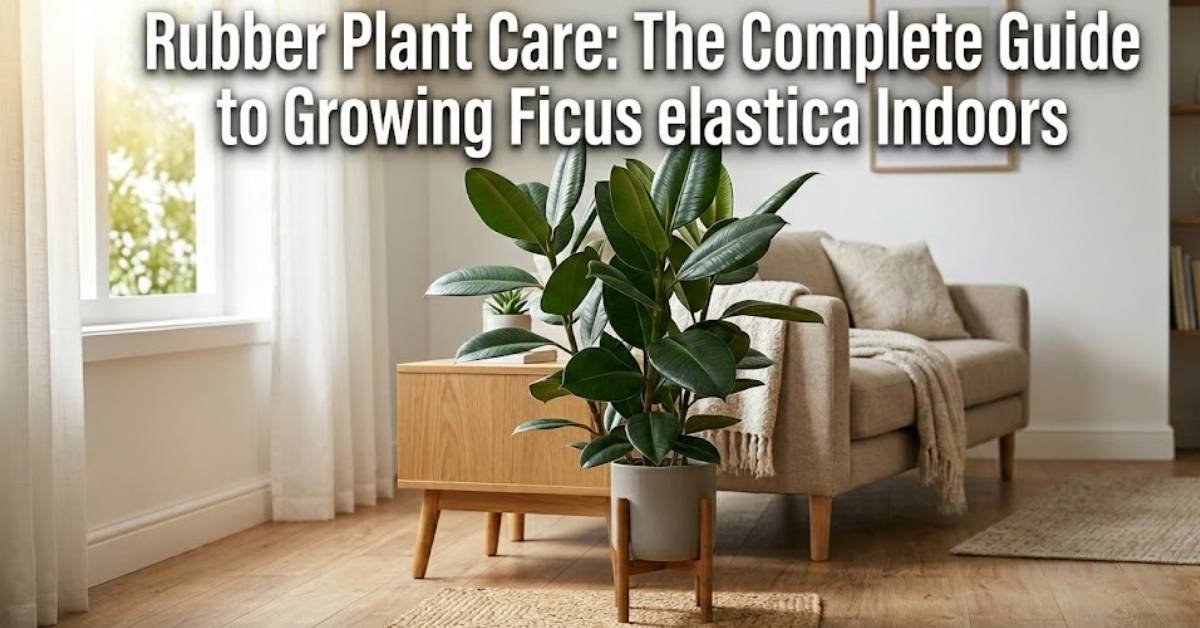
Rubber plant care (Ficus elastica care) is one of the easiest ways to grow a bold, tropical indoor tree that can thrive for years with the right conditions. Known for its large glossy leaves and forgiving nature, the rubber plant is perfect for both beginners and experienced plant lovers. In this complete guide, you’ll learn everything about rubber plant care including light, watering, pruning, propagation, and common mistakes to avoid.
Quick Care Cheat Sheet
| Care Factor | What Your Rubber Plant Needs |
| Light | Bright indirect; east or west window — minimum 4–6 hrs/day |
| Watering | When top 2 inches of soil are dry; room-temp water only |
| Humidity | 40–60% RH; tolerates average indoor levels |
| Temperature | 60°F–85°F (15°C–29°C); never below 50°F |
| Soil | Well-draining indoor mix + perlite |
| Fertilizer | Balanced liquid, half-strength, every 2–4 weeks (spring–summer) |
| Repotting | Every 1–2 years in spring; 1–2 inches wider only |
| Toxicity | Toxic if ingested; sap irritates skin |
What Is a Rubber Plant?
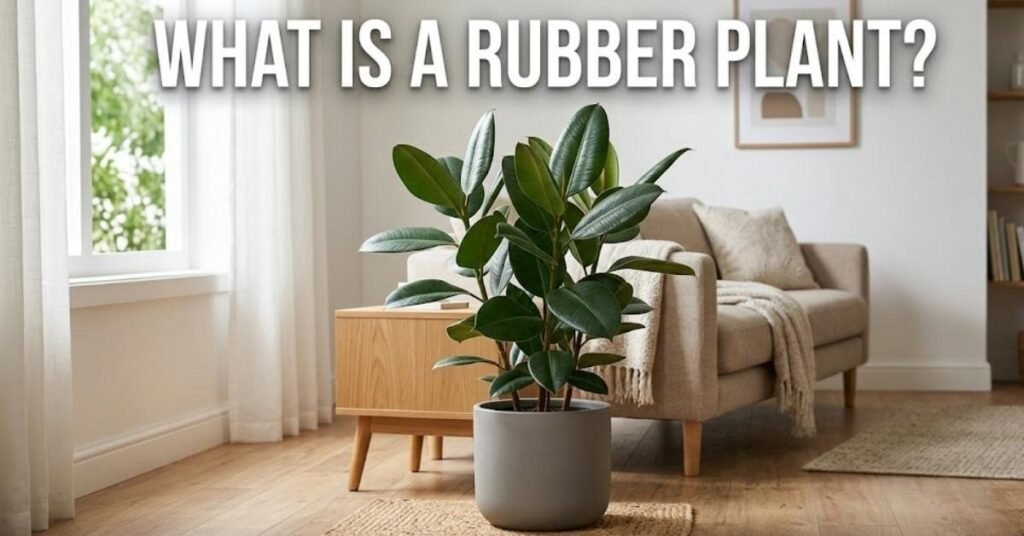
Ficus elastica is a tropical evergreen tree native to southern Asia — India, Nepal, China, and Indonesia. In the wild it can reach 60–200 feet tall; indoors it usually grows 6–10 feet.
It belongs to the Moraceae (fig) family alongside the Fiddle Leaf Fig and Weeping Fig. The name “rubber” comes from its milky-white latex sap, historically harvested as a source of natural rubber.
Large, glossy oval leaves and a clean upright structure make it one of the most architectural indoor plants available.
Popular Varieties Which One Do You Have?
| Variety | Leaf Color | Difficulty | Best For |
| Robusta / Decora | Deep glossy green | Easiest | Beginners |
| Burgundy | Near-black with crimson midrib | Easy | Moody interiors |
| Tineke | Green + cream/white + pink new growth | Moderate | Bright rooms |
| Ruby | Deep green + pink/cream margins | Moderate | Collectors |
Variety Tip: Variegated types (Tineke, Ruby) require brighter light. In low light, they gradually revert toward plain green.
Light The Single Biggest Factor

Light determines growth rate, leaf size, and structure.
Window Placement Guide
- East-Facing Window — Best all-round; gentle morning sun
- West-Facing Window — Excellent; use sheer curtain in summer
- South-Facing Window — Works 3–5 feet back or with sheer curtain
- North-Facing Window — Usually too dim; add a full-spectrum grow light
The Book Test: If you cannot comfortably read a book at 4 PM without turning on a lamp, it is too dark.
Pro Tip: Rotate the pot a quarter turn each watering to prevent leaning.
How to Water Correctly
Overwatering is the number one killer.
Golden Rule: Water only when the top 2 inches of soil feel dry. Drench fully until water drains out — then wait again.
Use room-temperature water. Cold water shocks roots and can cause yellow ring spots.
Seasonal Watering Guide
| Season | Frequency |
| Spring & Summer | Every 7–10 days |
| Fall | Every 10–14 days |
| Winter | Every 2–3 weeks |
Always check soil before watering.
Temperature, Humidity & Soil
- Ideal range: 60°F–85°F
- Never below 50°F
- Avoid drafts and sudden temperature drops
- Humidity: 40–60% ideal
Soil Mix
- 2 parts indoor potting mix
- 1 part perlite
- Always use drainage holes
No drainage equals slow root rot.
Pruning & The Physics of Notching
Most guides stop at pruning. The real shaping tool is notching.
Standard Pruning Controlling Height
Cut just above a leaf node using clean pruners.
- Prune in spring
- Remove no more than one-third at once
- Wear gloves — latex sap irritates skin
- Blot sap with paper towel
Result: branching occurs just below the cut.
Notching Force Branching Without Cutting the Stem
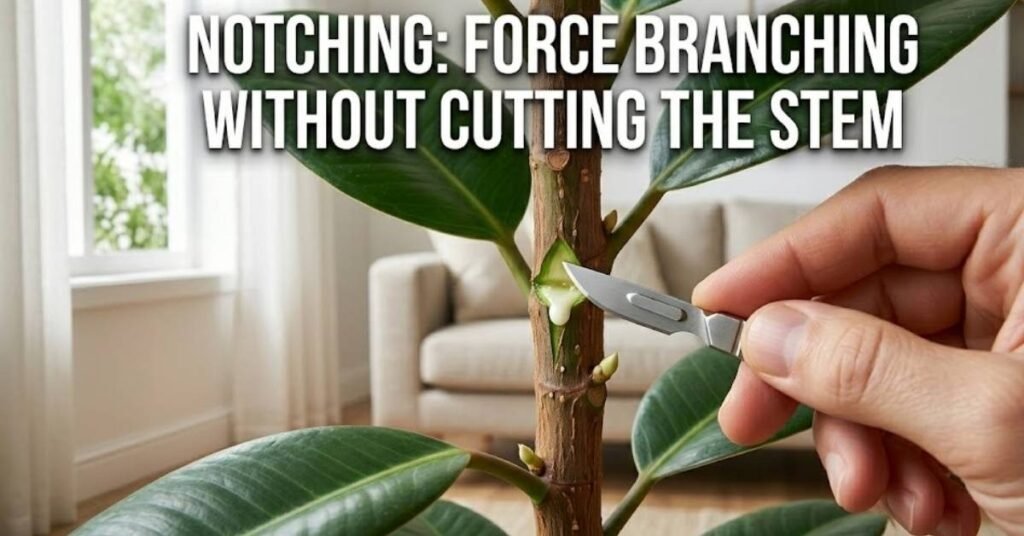
Notching interrupts downward auxin flow, activating a dormant bud below the wound.
How to Notch — Step by Step
Choose a dormant bud (small bump on stem).
Make a shallow V-shaped cut above it (¼–⅓ into stem).
Optional dust with rooting hormone.
Pack moist sphagnum moss lightly into the cut.
Place the plant in the brightest light and wait 4–8 weeks.
Why It Works: Auxin suppression is interrupted, waking the bud.
Why It’s Powerful: You control branch placement — even low on a bare trunk.
Only notch in spring or early summer.
Propagation — Two Reliable Methods
Best done in spring or early summer.
Method 1 — Stem Cuttings (Beginner-Friendly)
Take 4–6 inch cutting with 2–3 leaves.
Let the cut end sit for 30 minutes.
Optional — dip in rooting hormone.
Plant in 50/50 perlite + potting mix.
Cover with a humidity dome or clear bag.
Keep warm (70°F+).
Roots form in 4–8 weeks.
Remove lower leaves to prevent rot.
Method 2 — Air Layering (Advanced, Larger Results)
Air layering creates a rooted plant while still attached.
Make an upward-angled cut one-third into a stem.
Prop open with toothpick; add rooting hormone.
Pack moist sphagnum moss around the wound.
Wrap tightly with clear plastic.
Keep moss moist.
Roots form in 6–8 weeks.
Cut below root mass and pot up.Good rubber plant care also depends on avoiding overwatering
Best rescue method for tall, bare plants.
5 Mistakes That Kill Rubber Plants
| Mistake | Fix |
| Overwatering | Check soil every time |
| Moving too often | Pick a spot and commit |
| Pot too large | Repot only 1–2 inches wider |
| Feeding in winter | Stop in late fall |
| No drainage | Always use pots with holes |
Troubleshooting Guide
| Symptom | Cause | Fix |
| Sudden leaf drop | Temperature shock | Check drafts |
| Yellow lower leaves | Overwatering or aging | Check soil |
| Brown crispy tips | Low humidity | Raise humidity |
| Leggy growth | Low light | Move brighter |
| Sticky leaves | Scale or aphids | Alcohol + neem oil |
| White crust | Salt buildup | Flush soil |
Toxicity — Pet & Child Safety
Rubber Plants are toxic if ingested. Sap irritates skin and eyes.
- Pets: vomiting, drooling, lethargy
- Humans: rash or GI upset
- Wear gloves when pruning
- Keep out of reach
Frequently Asked Questions
Why is my plant dropping leaves?
Most often relocation stress or drafts. Some lower leaf drop is normal aging.
How fast does it grow?
12–24 inches per year in good light during active growth.
Is it the same as a Fiddle Leaf Fig?
No. The Fiddle Leaf Fig (Ficus lyrata) is more temperamental. Ficus elastica is significantly more forgiving.
Can it grow in low light?
It can survive but will not thrive. Expect smaller leaves and slower growth.
Does it clean indoor air?
Yes. Research including NASA’s Clean Air Study identified Ficus elastica as effective at filtering common indoor pollutants.
Final Thoughts
The Rubber Plant combines tropical drama with genuine resilience.
With proper light, careful watering, seasonal feeding, and techniques like notching and air layering, you can sculpt and multiply it, not just maintain it.
Bright indirect light. Dry soil before watering. Feed in spring and summer. Protect from cold drafts.
Follow those rules and your Ficus elastica will become a long-lived indoor tree that outlasts most furniture in your home.
With consistent rubber plant care, your Ficus elastica can grow into a long-lasting indoor tree that enhances your home for years.
Have a question? Drop it below and share this guide with a fellow plant lover.

Amin Khalid is a professional horticulturist and the founder of LeafyWisdom. With a deep passion for home gardening and horticultural research, he specializes in providing practical, easy-to-follow care guides for indoor plants. Amin’s goal is to simplify gardening for everyone and help fellow plant lovers build their own thriving green spaces.

No responses yet