
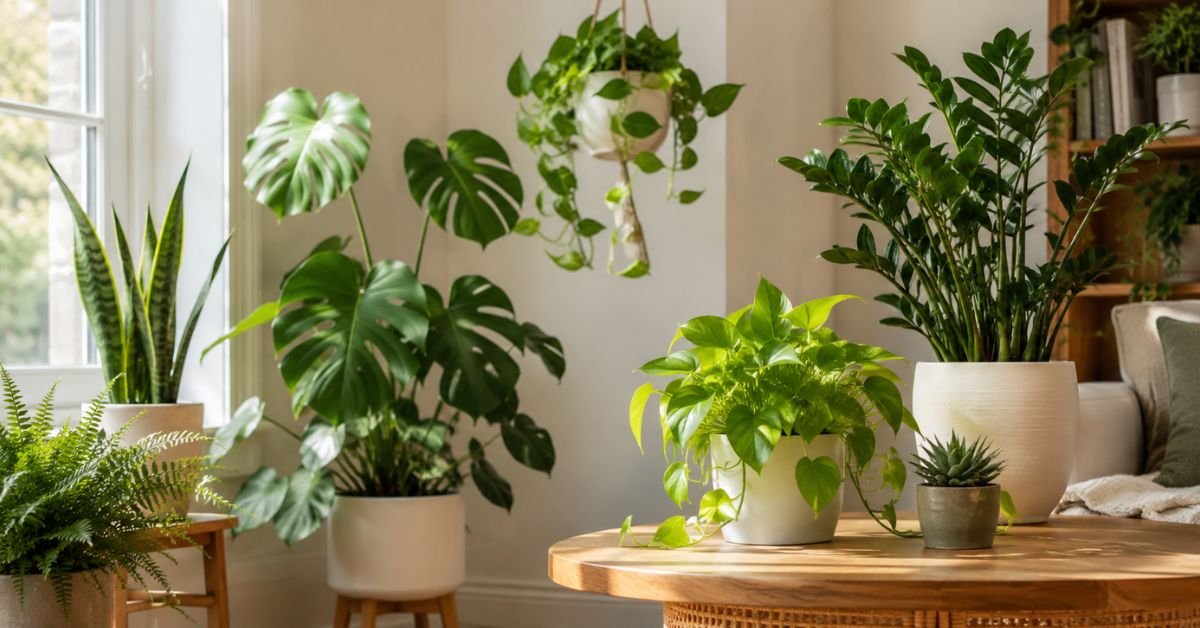
Finding the best house plants for your living space can feel completely overwhelming. As a horticulturist working across various US climates, I see this struggle daily. Specifically, people love bringing nature indoors but often choose the wrong green varieties.
You need resilient indoor plants, not just pretty Instagram photos. For example, your greenery must survive intense winter radiators and harsh summer air conditioning. Therefore, I designed this hands-on guide to help you find plants that truly thrive.
Quick Reference: The Ultimate Care Guide for the Best House Plants
If you are just skimming for quick answers, this table covers our top picks for American living rooms.
| Plant Name | Light Requirement | Watering Frequency | Pet Friendly? (ASPCA) | US Home Adaptability |
| Snake Plant | Low to Bright, Indirect | Every 3–4 weeks | No (Toxic to cats/dogs) | Thrives in dry AC air |
| Golden Pothos | Low to Bright, Indirect | Every 1–2 weeks | No (Toxic to cats/dogs) | Handles drafty rooms well |
| Monstera Deliciosa | Bright, Indirect | Every 1–2 weeks | No (Toxic to cats/dogs) | Needs a bit of extra humidity |
| Parlor Palm | Medium, Indirect | Every 1–2 weeks | Yes (Safe for pets) | Great for dimmer apartments |
What Makes the Best House Plants for American Homes?
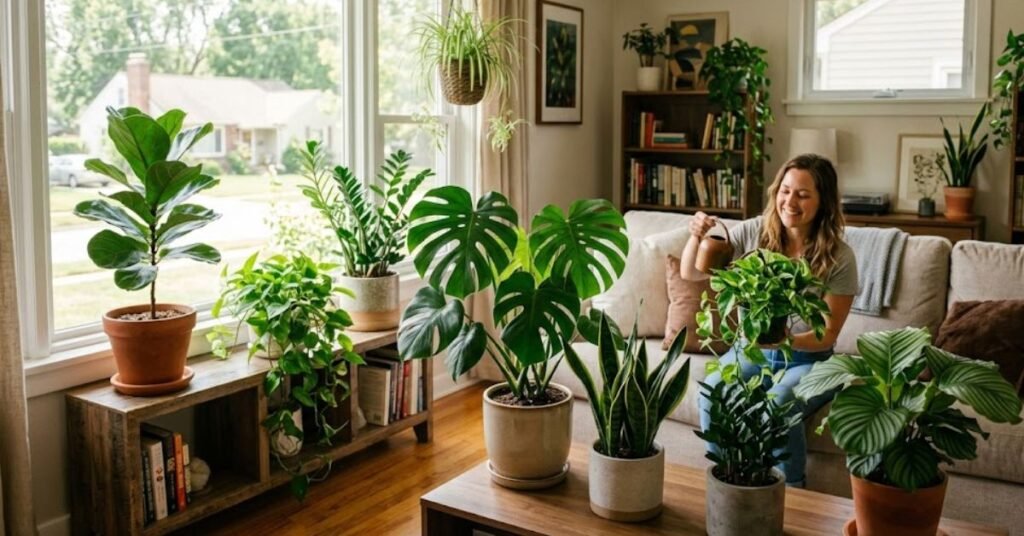
In my experience running plant consultation services, the biggest hurdle for indoor gardeners isn’t a lack of a green thumb; it’s a mismatch between the plant and the home’s climate.
In the US, our homes are heavily climate-controlled. Air conditioning units strip humidity from the air all summer, while forced-air heating systems bake our spaces in the winter. The best house plants are those robust enough to withstand these rapid humidity shifts without dropping all their leaves.
1. The Unkillable Snake Plant (Sansevieria)
Why it’s One of the Best House Plants for Beginners
I always tell people that if you think you kill every plant you touch, you haven’t tried a Snake Plant yet. These structural, upright beauties are native to arid regions, meaning they store water in their thick, leathery leaves. They are incredibly forgiving if you travel for work or simply forget they exist for a month.
Real-World Care Tips
- Light: They will survive in a dim corner of a basement apartment, but they truly thrive and grow faster in bright, indirect light near an east-facing window.
- Water: Treat this plant like a cactus. Let the potting soil dry out 100% all the way to the bottom of the pot before you even think about bringing it to the faucet.
Personal Pro-Tip
In my years of growing this plant, I’ve found that the number one killer is using heavy garden soil. Always use a well-draining potting soil mixed with a generous handful of perlite or coarse sand. If your home runs cold in the winter (below 65°F), cut your watering down to just once every five to six weeks.
2. Golden Pothos (Epipremnum aureum)
Caring for this Versatile Favorite Among the Best House Plants
If you want that lush, trailing “jungle vibe” on your bookshelves, Golden Pothos is your go-to. It grows incredibly fast during the Spring and Summer months, sending down long vines tipped with heart-shaped, variegated leaves.
Real-World Care Tips
- Light: Pothos loves moderate, indirect light. If you notice the beautiful yellow marbling turning solid green, it’s telling you it needs to be closer to a window.
- Water: Wait until the top two inches of the potting soil feel dry. If the leaves look slightly wilted or limp, that is your cue that it’s thirsty.
Personal Pro-Tip
Don’t let long Pothos vines just dangle forever. I like to clip the tips occasionally during the Spring growing season. This encourages the plant to branch out at the base, making the top of the pot look incredibly full and bushy rather than sparse. Plus, you can pop those clippings in a glass of water on your kitchen sill to grow roots for brand-new plants!
3. Monstera Deliciosa (The Swiss Cheese Plant)
Bringing Tropical Vibes to the Best House Plants Collection
Nothing makes a statement quite like a mature Monstera. Known for the dramatic splits and holes (fenestrations) in its massive leaves, this plant instantly anchors a room. While it looks exotic, it’s surprisingly resilient in standard US household conditions.
Real-World Care Tips
- Light: Monsteras are sun-worshipers compared to Pothos. Give them a spot right next to a bright window shielded by a sheer curtain, or a few feet away from a blazing southern exposure.
- Water: Water thoroughly when the top half of the potting soil is dry. Make sure water runs out of the bottom drainage holes, then empty the saucer so it doesn’t sit in stagnant pools.
Personal Pro-Tip
Because Monstera leaves have so much surface area, they act like little dust magnets in our homes. Dust blocks sunlight and slows down photosynthesis. Once a month, take a damp, soft microfiber cloth and gently wipe down both sides of every leaf. Your plant will reward you with much faster growth and bigger splits.
Common Mistakes Americans Make with the Best House Plants
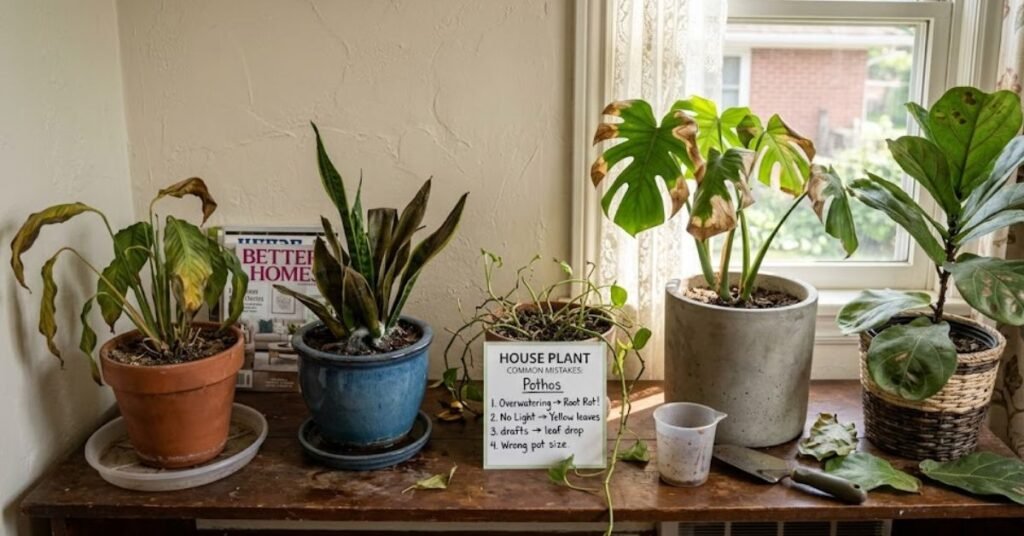
We love our plants, but sometimes we love them to death. Here are the most frequent missteps I see across American households:
- Blasting the AC or Heat Vents: Placing a tropical plant directly in the path of an air conditioning draft or a roaring heating vent will dry out the foliage in days, causing crispy, brown edges. Keep plants at least three to four feet away from any forced-air sources.
- The “Teacup” Watering Habit: Pouring a tiny sip of water over your plants every few days is a recipe for disaster. It causes shallow root systems. Instead, water deeply at the faucet until water runs out the bottom, then wait for the soil to dry out before doing it again.
- Ignoring USDA Zones for Seasonal Field Trips: Many indoor gardeners like to put their house plants out on the patio during the hot, humid summer months (great for USDA Zones 5–10). However, if you leave them out when night temperatures drop below 55°F in the Fall, you risk shocking the root systems and causing massive leaf drop when you bring them back inside.
Troubleshooting Guide: Saving Your Best House Plants from Common Issues
If your green friend is looking a little sad, don’t panic. Plants communicate through their leaves. Here is how to decode what they are saying:
Yellowing Leaves
- The Culprit: Usually, this means the root zone is drowning from overwatering.
- The Fix: Stop watering immediately. Check to make sure your pot has a drainage hole. If the potting soil feels like a soggy sponge, you may need to gently unpot the plant, shake off the wet dirt, and repot it into fresh, dry soil.
Crispy, Brown Leaf Tips
- The Culprit: Low humidity or hard tap water minerals building up in the soil.
- The Fix: If you live in an arid state or have heavy central heating, group your plants together to create a humid microclimate, or run a small humidifier nearby. If your local water is heavily chlorinated, try letting your water sit out in a pitcher overnight before using it, or use filtered water.
Crucial Toxicity Warning for Pet Owners
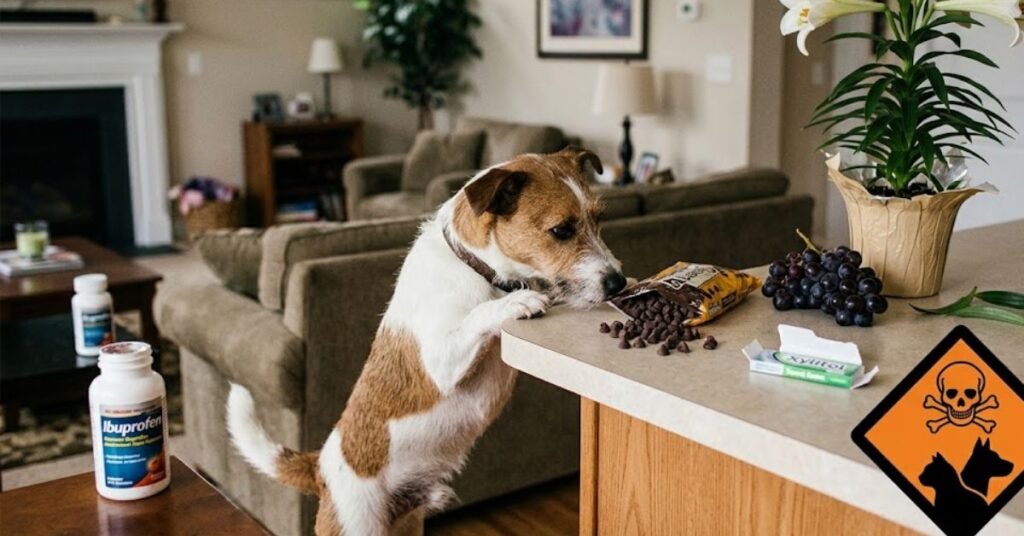
Before you head out to the nursery, please keep your furry family members in mind. Many popular indoor varieties contain insoluble calcium oxalates, which can cause intense oral irritation, drooling, and vomiting if chewed on by cats or dogs.
If you have curious pets who like to nibble on greenery, skip the Monstera, Pothos, and Snake Plants. Instead, look for completely non-toxic alternatives like Parlor Palms, Spider Plants, or Boston Ferns, which are fully cleared by the ASPCA.
Frequently Asked Questions About the Best House Plants
Q1How often should I fertilize my house plants?
Only fertilize during the active growing seasons of Spring and Summer. I recommend using a balanced, liquid indoor plant fertilizer diluted to half-strength once a month. Hold off completely during late Fall and Winter when the plant’s metabolic rate slows down.
Q2Do I really need a pot with a drainage hole?
Yes, absolutely. Growing a plant in a pot without a drainage hole is like driving a car without brakes—eventually, you will crash. Without a hole, excess water pools at the bottom, suffocating the roots and causing root rot, which is incredibly difficult to cure.
Q3Why is my plant growing long and skinny instead of full?
This is a phenomenon called “etiolation,” which is a fancy way of saying your plant is stretching out desperately looking for more light. Move it closer to a window or invest in a small LED grow light to help it grow more compactly.
Q4Can I use dirt from my backyard for indoor plants?
I strongly advise against this. Outdoor garden soil is full of heavy clay, weed seeds, and microscopic pests or fungus spores. Indoors, it packs down too tightly in a pot, suffocating indoor roots. Always stick to a bagged, sterile indoor potting soil mix.
Q5How do I get rid of those tiny little black bugs flying around my pots?
Those are fungus gnats. They lay their eggs in the top layer of consistently damp potting soil. The easiest fix is to let your soil dry out more between waterings, use yellow sticky traps to catch the adults, and water with a mix of water and a bit of mosquito bits (which contain a natural bacteria that kills the larvae).
Q6Should I mist my tropical house plants?
Misting only raises the humidity for a few fleeting minutes and can actually invite fungal leaf spot diseases if the air circulation is poor. If you want to raise humidity effectively, use a dedicated humidifier or place your pots on a tray filled with pebbles and water.
Q7How do I know when it’s time to repot my plant?
Look at the bottom of the pot. If you see roots curling tightly around the inside or poking aggressively out of the drainage holes, your plant is root-bound. Spring is the absolute best time to move it into a new container that is roughly two inches wider than its current home.
Final Thoughts
At the end of the day, creating a thriving indoor garden is all about observation. Plants don’t operate on a strict calendar; they respond to the light, warmth, and humidity of your specific room. Start with resilient varieties like Pothos or Snake Plants, get used to checking the moisture level of your potting soil with your index finger, and enjoy the process of turning your home into a living, breathing sanctuary.

Amin Khalid is a professional horticulturist and the founder of LeafyWisdom. With a deep passion for home gardening and horticultural research, he specializes in providing practical, easy-to-follow care guides for indoor plants. Amin’s goal is to simplify gardening for everyone and help fellow plant lovers build their own thriving green spaces.

No responses yet