Mastering banana plant care is essential if you want an instant Hawaiian jungle vibe at home. Consequently, many plant lovers buy these beauties without knowing their specific needs. However, dry indoor air quickly ruins those massive leaves.
Fortunately, this real world guide will save your sanity and transform your space. I have grown these dramatic beauties for decades. Therefore, I know exactly how to keep them healthy.
The Quick Care Cheat Sheet
If you are just looking for a fast reference while standing in the garden center, here is the quick breakdown.
| Care Factor | Outdoor Requirements | Indoor Requirements |
| Light | 6–8 hours of direct US sun | Brightest south-facing window |
| Water | Highly demanding; 1–2 inches weekly | Keep consistently moist, never soggy |
| Soil | Rich, well-draining yard soil | Premium well-draining potting soil |
| Temperature | Active growth above 65°F | Avoid AC vents and cold drafts |
| Hardiness | USDA Zones 5–11 (with winter care) | Year-round indoor comfort |
| Toxicity | Non-toxic to pets | Non-toxic to pets |
Mastering Banana Plant Care in US Homes and Yards
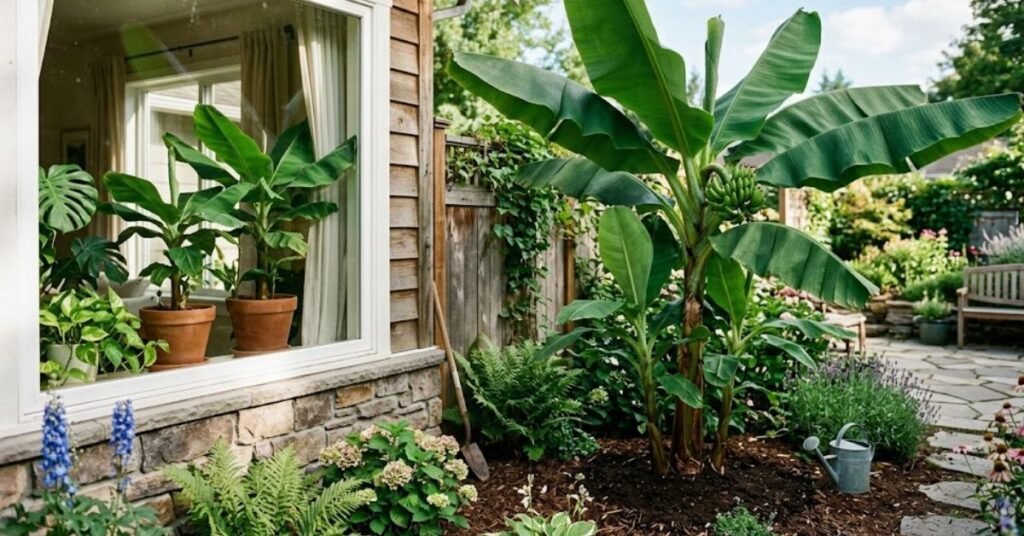
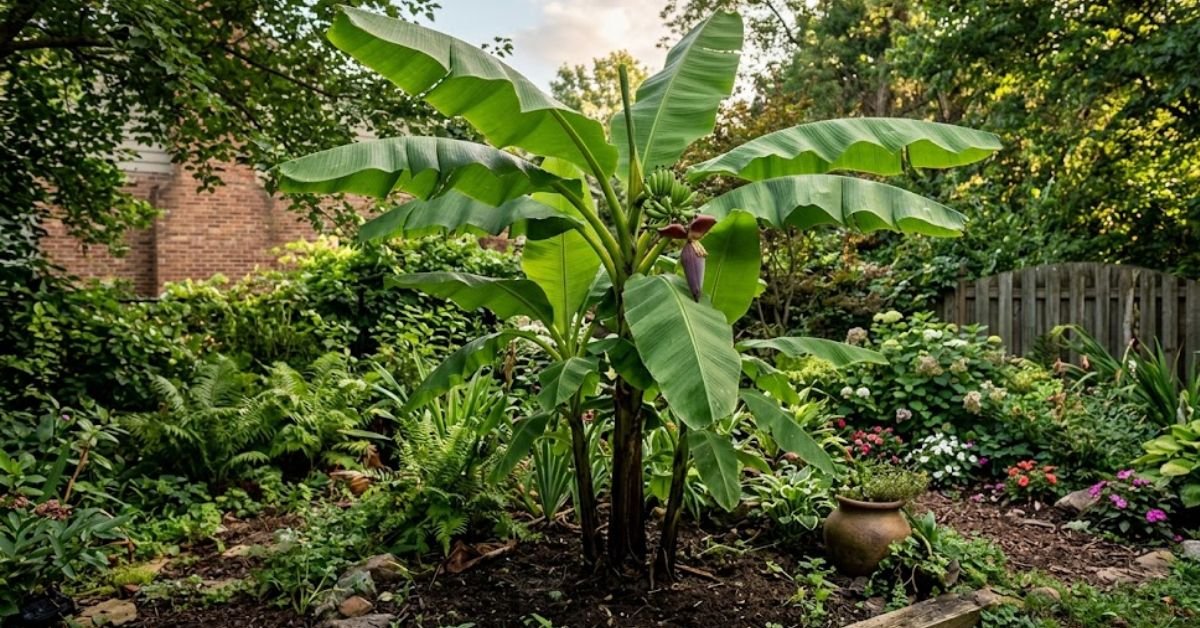
Growing a banana plant in the United States means wrestling with wild weather swings. If you live down in Florida or Southern California (USDA Zones 9–11), you can leave these giants in the ground all year without a second thought. They will grow rapidly and might even reward you with actual fruit.
But what if you live in Ohio, New York, or Colorado?
You have two choices. You can grow a cold-hardy variety like Musa basjoo directly in your yard (Zones 5–10), or you can keep a dwarf variety like the ‘Dwarf Cavendish’ in a container and move it around.
When Spring arrives and nighttime temperatures consistently stay above 50°F, I wheel my potted banana plants out onto the back patio. They absolutely love the intense summer sun. When Fall rolls around and the first frost threatens, they come right back inside.
Personal Pro-Tip
When moving your container banana plant outside in Spring, do not just blast it with full sun on day one. It will sunburn. Trust me, watching a giant leaf turn paper-white and dead is heartbreaking. Give it partial shade for a week first so it can acclimate to the intensity of the outdoor sun.
Essential Watering and Soil Secrets for Banana Plant Care
Bananas are basically giant structures made of water. Because their leaves are so massive, they sweat out moisture at a ridiculous rate. If you let the soil dry out completely, the plant will punish you by dropping its lower leaves faster than you can sweep them up.
Outdoors, you need to water them deeply. Indoors, it is a balancing act. You want the soil to feel like a wrung-out sponge.
Never use heavy garden soil for indoor containers. It packs down like brick, suffocates the roots, and causes root rot. I always mix high-quality potting soil with a few handfuls of perlite and orchid bark to keep things loose and airy.
When you water an indoor banana plant, haul it over to the kitchen sink or a bathtub. Run the faucet until the water is lukewarm never cold and drench the potting soil until water pours out of the drainage holes at the bottom.
Personal Pro-Tip
These plants are incredibly heavy feeders. They grow so fast you can almost watch it happen. During the peak summer growing season, I feed mine a balanced liquid fertilizer every single two weeks. If you skip the food, your banana plant will stall out and look pale.
Indoor Challenges: The Brutal Impact of Air Conditioning
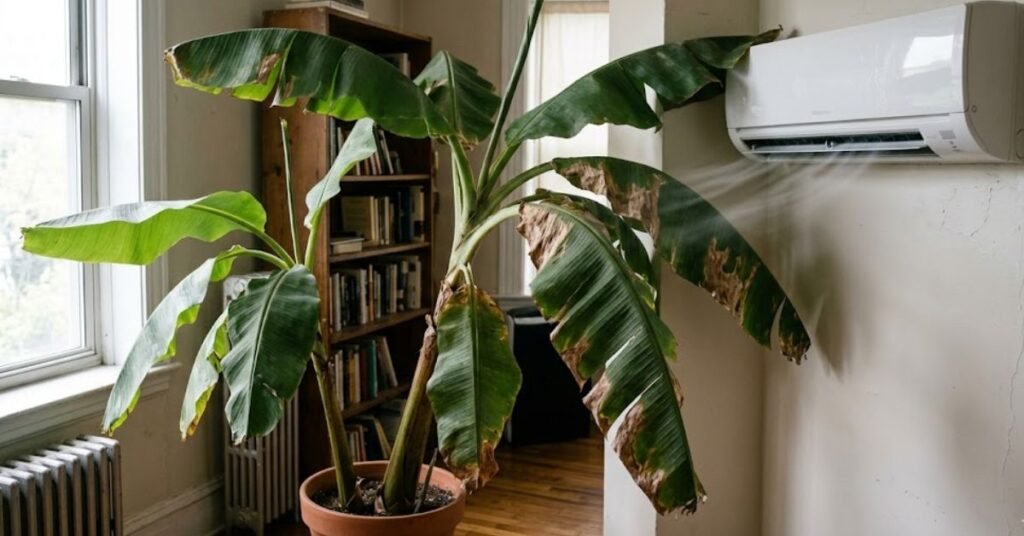
Here is the biggest secret to indoor banana plant care: your home’s HVAC system is your plant’s worst enemy.
Banana plants are native to humid rainforests. Your home’s air conditioning system is designed to strip moisture out of the air to keep you comfortable. When that dry, cold air blows directly onto a banana leaf, it destroys the tissue. The edges will turn brown, crispy, and start to split.
Keep your indoor pots far away from AC vents, drafty entryways, or old windows.
If your home sits below 40% humidity, you need to step in. A tiny misting bottle will not do anything for a plant this size.
Get a dedicated humidifier and place it right next to the pot.
Personal Pro-Tip
If you don’t want to run a humidifier all day, group your banana plant with other large houseplants like monsteras or ferns. Plants naturally release moisture through their leaves. By crowding them together, they create their own little humid microclimate. It works wonders.
Common Pitfalls in Banana Plant Care to Avoid
Why do most Americans fail with this plant?
Usually, it comes down to two things: drowning the roots in winter or freezing them in Spring.
During the winter months, your banana plant enters a semi-dormant rest state. Its growth slows to a crawl. If you keep watering it at the same heavy rate you did in July, the roots will sit in stagnant water and rot away. Cut your watering in half during the dark winter months.
Another major mistake is ignoring the pot size.
Because their root systems expand aggressively, they can become root-bound in a single season. If you notice water running straight through the pot without soaking in, or roots poking out of the bottom holes, it is time for a bigger container.
Personal Pro-Tip
Look closely at the base of your plant. You will see little baby banana plants popping up from the dirt. We call these “pups.” Don’t let too many grow in one indoor pot. They steal nutrients and water from the main trunk. Slice them off with a sharp knife and pot them up separately to give to your friends.
Troubleshooting Leaves: Yellowing and Brown Tips in Banana Plant Care
Your plant will talk to you through its leaves. You just need to know how to translate.
The Leaves are Turning Completely Yellow
If the lower, oldest leaves turn yellow and die, don’t panic. That is normal aging. But if the middle and top leaves are turning pale yellow, you are likely overwatering the plant, or the potting soil is trapped in a pot with zero drainage. Stop watering and let the top two inches of soil dry completely.
The Leaf Edges look Crispy and Brown
This is a classic cry for humidity. Your air is too dry, or you are letting the soil dry out too much between waterings. Double-check that the plant isn’t sitting in the direct path of an air conditioning vent.
Splitting Leaves
Outdoor banana leaves split naturally along their veins to prevent the wind from knocking the entire plant over. It is a survival mechanism. Indoors, if your leaves are splitting wildly, someone might be brushing against them too often in a high-traffic hallway. Move it to a quiet corner.
Personal Pro-Tip
Keep a damp cloth handy. Those giant leaves act like giant dust magnets. Dust blocks sunlight and invites spider mites. Wipe the leaves down once a month with lukewarm water from the faucet to keep them breathing easy.
Is Your Banana Plant Safe for Cats and Dogs?
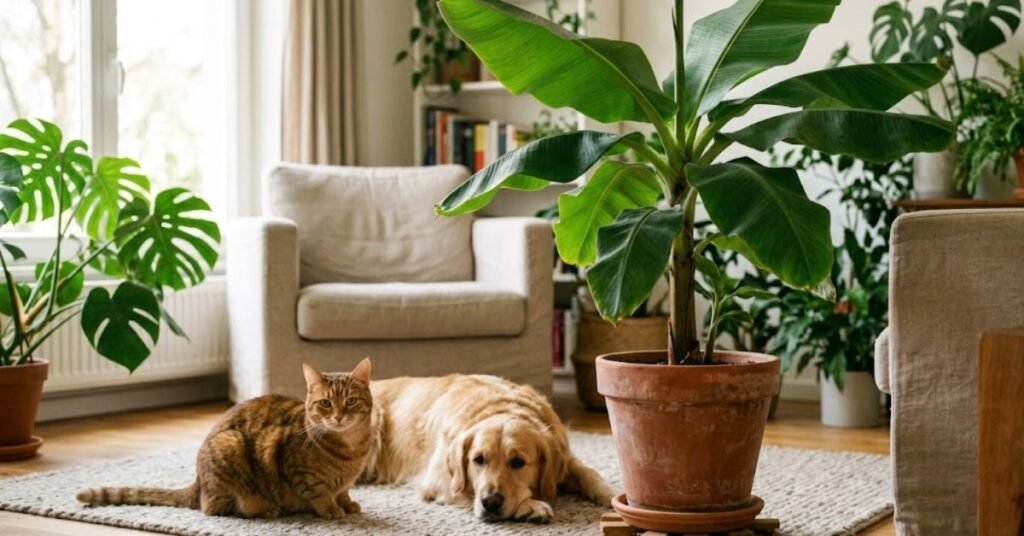
Good news for pet owners. Unlike many other tropical houseplants (looking at you, Peace Lilies and Dieffenbachia), true banana plants of the Musa family are completely non-toxic to dogs and cats according to the ASPCA.
If your curious cat decides to use a hanging leaf as a chew toy, or your dog bumps into the trunk, they will be perfectly fine. The worst that will happen is a ruined leaf and a bit of a mess to clean up on your floor.
Personal Pro-Tip
Even though it is non-toxic, swallowing large amounts of thick fibrous plant material can still give a puppy or kitten an upset stomach. If your pet won’t leave the lower leaves alone, elevate the pot on a sturdy plant stand out of their reach.
Frequently Asked Questions About Banana Plant Care
Q1. Will my indoor banana plant ever grow real bananas?
Highly unlikely. To produce edible fruit, a banana plant needs immense amounts of heat, 10 to 12 hours of blazing sun daily, and up to 15 months of uninterrupted growth. Standard US home environments simply don’t provide enough light intensity or heat for fruit production. Enjoy it for its stunning foliage instead.
Q2. How fast do these plants actually grow?
In summer, they are rockets. If you provide enough warmth, water, and fertilizer, a healthy banana plant can push out a brand-new, massive leaf every single week.
Q3. Can I leave my banana tree outside during winter in cold states?
Only if it is a Musa basjoo (Japanese Fiber Banana). If you live in a cold zone, you must cut the stalks down to about 12 inches after the first hard autumn frost, then cover the remaining stump with a massive pile of shredded leaves or mulch to protect the underground corm from freezing.
Q4. What are the tiny webs on the underside of my banana leaves?
Spider mites. They love the dry air found inside American homes during winter. Spray the plant down thoroughly in the shower to wash them away, then apply neem oil to the leaves.
Q5. Why is my banana plant “crying” water drops from its leaves?
This is a harmless process called guttation. When the soil is highly moist, the roots absorb water at night and push the excess out through tiny pores on the leaf tips. It is perfectly natural, though you might want to protect your hardwood floors!
Q6. Do I need to buy a special grow light for the winter?
If your home lacks a large, sunny south-facing window, a quality LED grow light will help immensely during the dark winter months. It keeps the plant from getting leggy and weak.
Q7. How deep should I plant a banana tree outdoors?
Plant it at the exact same depth it was sitting in its nursery container. Burying the main stem too deeply can invite rot right at the crown of the plant.
Final Thoughts
Banana plants require a little more attention than your average cast-iron succulent, but the visual payoff is absolutely worth the effort. Keep them warm, never let them starve for water, and guard them against dry indoor air conditioning. Do those three things right, and you will have a spectacular slice of the tropics right in your own living room.

Amin Khalid is a professional horticulturist and the founder of LeafyWisdom. With a deep passion for home gardening and horticultural research, he specializes in providing practical, easy-to-follow care guides for indoor plants. Amin’s goal is to simplify gardening for everyone and help fellow plant lovers build their own thriving green spaces.