
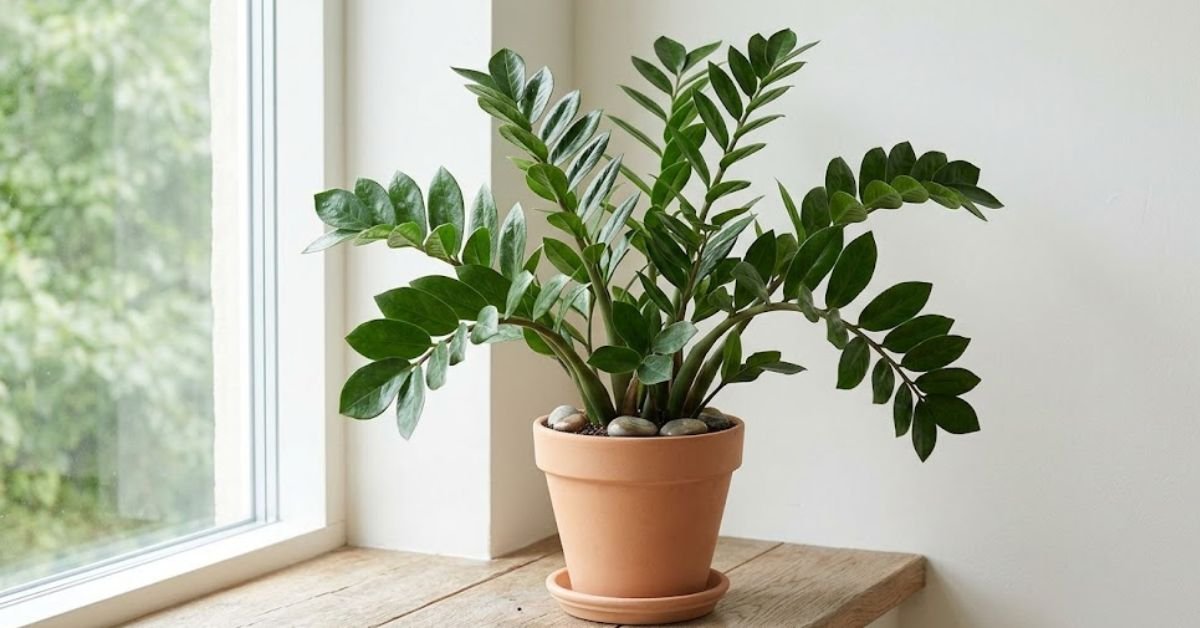
Let’s be brutally honest for a second: most houseplants behave like total divas, which is exactly why you need a realistic ZZ plant care guide that won’t overwhelm you with impossible rules. While other green companions demand perfectly balanced humidity and filtered water gathered from distant mountain springs, the ZZ plant (Zamioculcas zamiifolia) just handles life. It doesn’t throw a tantrum if you forget about it for a few weeks.
In my fifteen years of working in American greenhouses and troubleshooting leggy foliage for folks across the country, I’ve found that this species acts more like a loyal roommate than a needy pet. Whether you live in a dark basement apartment in Chicago or a sun-drenched home in Phoenix with the central air conditioning blasting 24/7, this plant genuinely wants to survive. But “indestructible” isn’t a dare. You can still mess it up if you make a few classic mistakes, so let’s lay down the foundational ground rules.
| Care Element | What the ZZ Plant Needs |
| Light | Low to bright indirect light (Avoid direct blazing sun) |
| Watering | Every 3 to 4 weeks (Let the soil dry out completely) |
| Soil Mix | Well-draining potting soil mixed with plenty of perlite |
| Temperature | 60°F to 85°F (Keep away from cold AC vents) |
| Fertilizer | Balanced houseplant food once in Spring and once in Summer |
| Toxicity | Toxic to cats, dogs, and humans (Contains calcium oxalate) |
Getting to Know Your Plant: A Realist’s ZZ Plant Care Guide
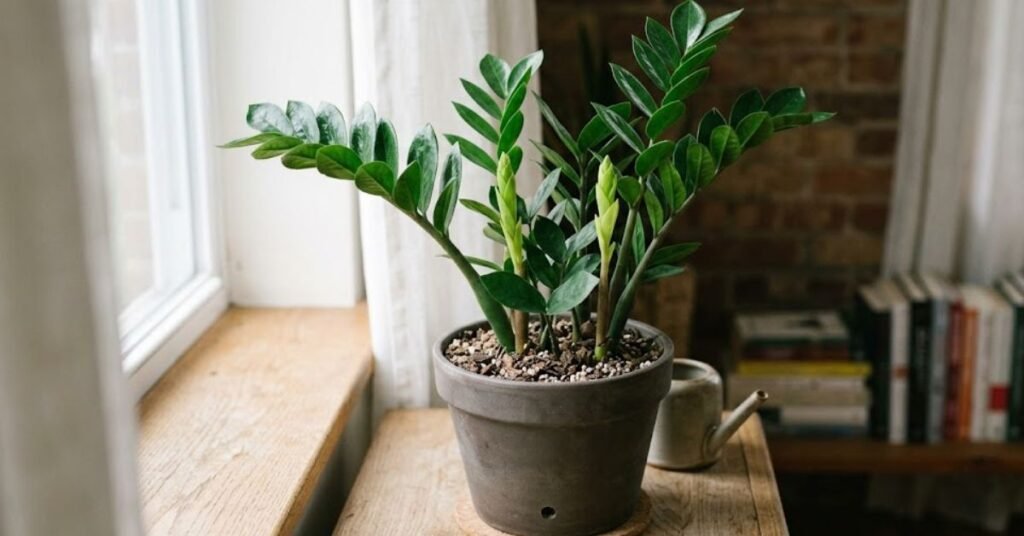
The ZZ plant is native to dry regions of East Africa. Why does this matter to you sitting in your living room? Because it evolved to survive long periods of absolute drought followed by sudden, heavy downpours.
Underneath the soil, the plant grows these thick, potato-like lumps called rhizomes.
These rhizomes are essentially internal water tanks. When you water the plant, the rhizomes suck up the moisture and store it for weeks. So when you forget to water it because life got busy, the plant just sips from its storage tanks.
Personal Pro-Tip: Think of your ZZ plant like a cactus in disguise. If you treat it like a tropical fern, you will kill it with kindness. Neglect is actually a form of love here.
How Much Light Does a ZZ Plant Actually Need?
One of the biggest reasons people look up a ZZ plant care guide is because they have a dark corner they want to brighten up.
Yes, this plant can survive in low-light environments, like an office with fluorescent bulbs or a north-facing window. But there is a difference between surviving and growing. In low light, your ZZ plant will grow incredibly slowly. If you notice it stretching out and getting floppy, it’s begging for more light.
Ideally, place it in a spot with bright, indirect sunlight. A few feet away from an east- or west-facing window is perfect.
Just keep it out of direct, harsh afternoon sun. Blazing sunlight will literally scorch those beautiful, glossy green leaves, leaving ugly brown burn marks.
Personal Pro-Tip: Every time you dust your furniture, take a damp cloth and wipe down the leaves of your ZZ plant. Dust blocks sunlight, which slows down photosynthesis. Keeping the leaves shiny keeps the plant healthy.
Master the Watering Routine for Your ZZ Plant
If you want to kill this plant, overwatering is your best weapon. It is the number one cause of death for indoor plants across America.
Because those underground rhizomes store water so well, the roots hate sitting in soggy potting soil. If the soil stays wet for too long, the rhizomes will rot, turn to mush, and the plant will collapse.
So, how often should you water?
Do not use a calendar. Instead, push your finger deep into the potting soil. If you feel any moisture at all, walk away. Wait until the soil is completely dry from top to bottom. In a typical US home with standard air conditioning running during the summer, this usually means watering every 3 to 4 weeks. During the winter, when the plant goes dormant, you might only water it once every two months.
When you do water, take it to the kitchen sink or faucet. Pour water thoroughly until it runs out of the drainage holes at the bottom of the pot. Let it drain completely, then put it back in its saucer. Never let the pot sit in a pool of standing water.
[Rhizomes store water] ➔ [Soil stays wet] ➔ [Rhizomes rot] ➔ [Plant dies]
Personal Pro-Tip: When in doubt, leave it dry. A thirsty ZZ plant will wrinkle slightly, which is easily fixed with a good soak. An overwatered ZZ plant will turn yellow and rot, which is much harder to save.
Choosing the Best Mix and Pot for Long-Term Success
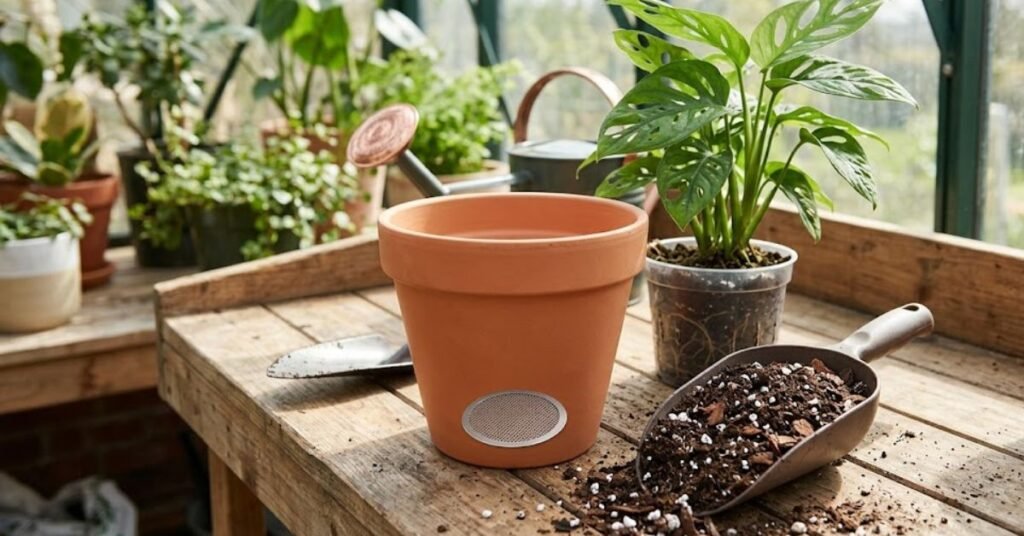
You cannot use heavy, dense garden soil for indoor containers. You need a mix that lets water flush through quickly and allows the roots to breathe.
Go to the garden center and grab a standard bag of high-quality indoor potting soil. Then, buy a small bag of perlite or coarse sand. Mix them together at a ratio of roughly three parts potting soil to one part perlite. This creates the perfect, chunky, fast-draining home for your plant.
As for the pot, drainage holes are non-negotiable. If your favorite decorative ceramic pot doesn’t have a hole in the bottom, keep the plant in its plastic nursery pot and slip that inside the pretty ceramic one.
Personal Pro-Tip: Terracotta pots are a lifesaver for chronic overwaterers. The porous clay breathes and helps draw excess moisture out of the soil much faster than plastic or glazed ceramic pots.
The Ultimate ZZ Plant Care Guide to Troubleshooting Problems
Even the toughest plants have bad days. If your plant is looking a little sad, use this quick diagnostic checklist to fix it.
Yellowing Leaves
If entire stems or multiple leaves are turning bright yellow, you are watering too much. Stop watering immediately. Pull the plant out of its pot and check the rhizomes. If they are firm, the plant will recover once the soil dries out. If they are mushy and smell bad, you have root rot. You’ll need to cut away the rotten parts and repot the healthy sections in fresh, dry soil.
Brown, Crispy Tips
This usually happens when the air in your home is incredibly dry, which is common in northern US states during the winter when the indoor heating kicks on. Move the plant away from direct heating vents.
Lean or Floppy Stems
If the stems are growing long, spindly, and falling over, the plant is searching for light. Move it closer to a window. Alternatively, if the plant has grown massive, the heavy stems might just need some support from a simple moss pole or plant stake.
Personal Pro-Tip: If a single leaf turns yellow and drops off near the very bottom of a stem, don’t panic. Old leaves die off naturally as the plant produces fresh new growth.
Crucial Toxicity Warning for US Pet Owners
We need to talk about safety because American homes are full of furry friends.
The ZZ plant contains calcium oxalate crystals. If a cat, dog, or curious toddler chews on the leaves, these microscopic crystals act like tiny shards of glass. It causes immediate irritation, swelling of the mouth and tongue, and potential vomiting.
It is not typically fatal, but it will absolutely cause a miserable trip to the vet or emergency room. Keep this plant up on a high shelf or on a heavy plant stand well out of reach of your pets. Wash your hands after handling or trimming the plant, as the sap can cause minor skin irritation for some people.
Personal Pro-Tip: If you have an aggressive plant-chewing pet, pass on the ZZ plant entirely and grab a Calathea or a Spider Plant instead. They are completely pet-safe.
Common Mistakes Americans Make with Indoor Greenery
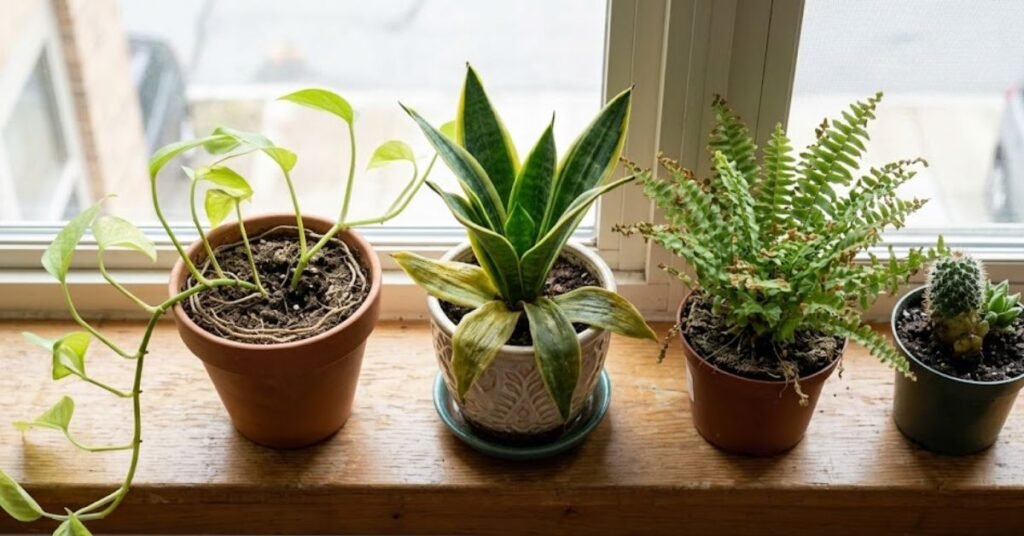
Why do folks still struggle despite reading a standard ZZ plant care guide? Here are the three most common environmental traps I see in modern homes:
- Blast Zones from Air Conditioning: Placing your plant directly in the path of a cold AC vent during July. The constant chilly draft shocks the tropical native.
- The “Sip” Watering Method: Giving the plant a tiny splash of water every week. This keeps the top layer of soil constantly damp (causing fungus gnats) while the deep roots and rhizomes stay bone dry. Always water deeply but infrequently.
- Assuming Outdoor Success Indoors: Attempting to grow this outdoors in northern states. The ZZ plant is only hardy outdoors in USDA Zones 10 and 11 (like Southern Florida or Hawaii). For the rest of the country, it must stay indoors as a houseplant once temperatures drop below 50°F.
Frequently Asked Questions
Q1: Can a ZZ plant live in a windowless room?
Yes, but only if the room has bright overhead fluorescent or LED lights turned on for at least 8 to 10 hours a day, like a typical corporate office. If it is a pitch-black closet or bathroom with the lights off, it will eventually waste away and die.
Q2: How fast do ZZ plants grow?
They are notoriously slow growers, especially during the darker winter months. You might only see a few new shoots pop up during the Spring and Summer growing season. Don’t worry, you aren’t doing anything wrong; they just like to take their time.
Q3: Why are the new stems on my plant pale green?
That is completely normal. Fresh new growth emerges as a bright, vibrant, almost neon green color. Over a few weeks, those leaves will naturally darken to match the deep, glossy green of the older stems.
Q4: Do I need to mist my ZZ plant to increase humidity?
No. Misting is unnecessary and can actually invite fungal diseases to form on the leaves. The ZZ plant adapts beautifully to the average dry air found inside most climate-controlled American homes.
Q5: When should I report my ZZ plant?
These plants actually enjoy being a bit root-bound. You only need to repot them every two to three years. A clear sign it’s time to upgrade is when the thick underground rhizomes start warping or cracking the sides of the plastic nursery pot.
Q6: Can I grow a new plant from just a single leaf?
You absolutely can. If a leaf accidentally falls off, push the stem end into a small pot of moist soil or drop it in a small jar of water. It takes patience—sometimes several months for a new rhizome to form—but it works.
Q7: What is a Raven ZZ plant?
The Raven is a highly sought-after cultivar of the standard ZZ plant. Its new growth starts out bright green, but turns a striking, dramatic dark purple-black color as the leaves mature. The care requirements are identical to the standard green version.
Final Thoughts
The beauty of this plant lies in its sheer resilience. It forgives our busy schedules, our dark apartments, and our dry winter air. Get the soil mix right, put it in a spot with some decent light, and severely limit your watering impulses. Do those three things, and your ZZ plant will happily occupy its corner of your home for a decade or more.

Amin Khalid is a professional horticulturist and the founder of LeafyWisdom. With a deep passion for home gardening and horticultural research, he specializes in providing practical, easy-to-follow care guides for indoor plants. Amin’s goal is to simplify gardening for everyone and help fellow plant lovers build their own thriving green spaces.

No responses yet