
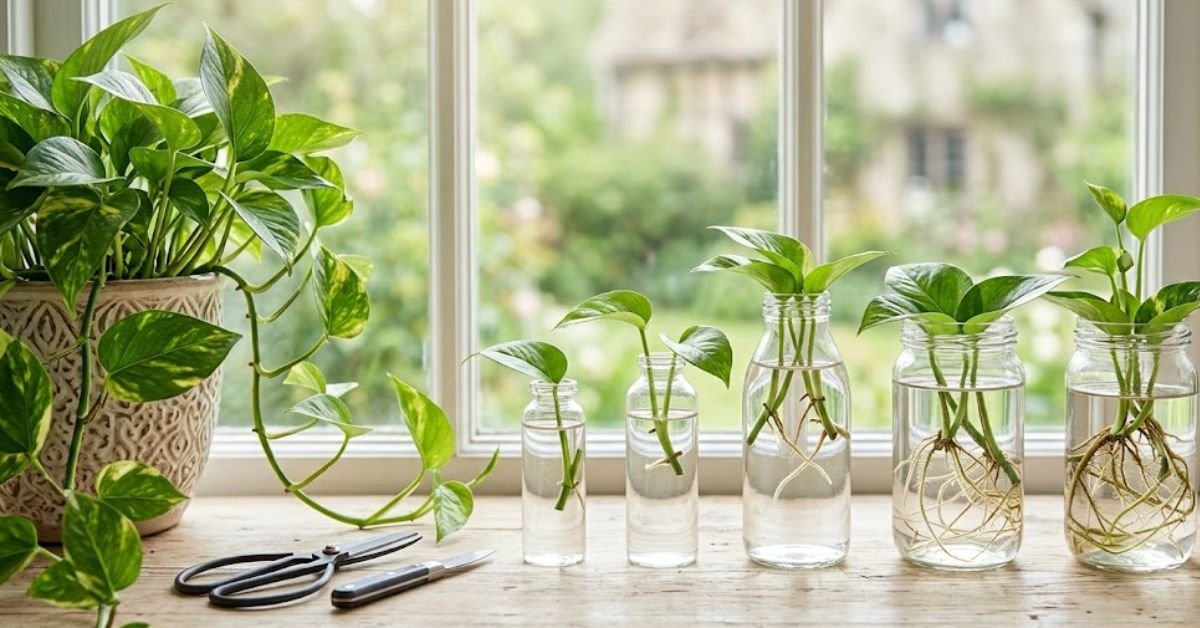
I remember the very first time I snipped a vine off my overgrown houseplant. I honestly had no clue what I was doing. But dropping that little green stem into a leftover jelly jar and watching the roots slowly push out over the next few weeks felt like absolute magic. If you are tired of spending twenty bucks a pop at the local garden center and want to multiply your indoor jungle for free, you are in the exact right place. Let’s talk about how to propagate pothos in water.
| Feature | Details |
| Method | Water Propagation |
| Water Type | Regular Faucet Water |
| Time to Root | 3 to 4 weeks |
| USDA Zones | Zones 10-12 (Outdoors), otherwise keep strictly inside! |
| Best Time | Spring and Fall |
Why Learning How to Propagate Pothos in Water is a Game Changer
I used to think multiplying plants required a degree in botany or a fancy greenhouse setup. Turns out, it’s incredibly easy. You just snip a piece and drop it in a cup. That’s really it. Plus, you don’t need to drag heavy bags of potting soil into your house right away.
It’s literally free plants.
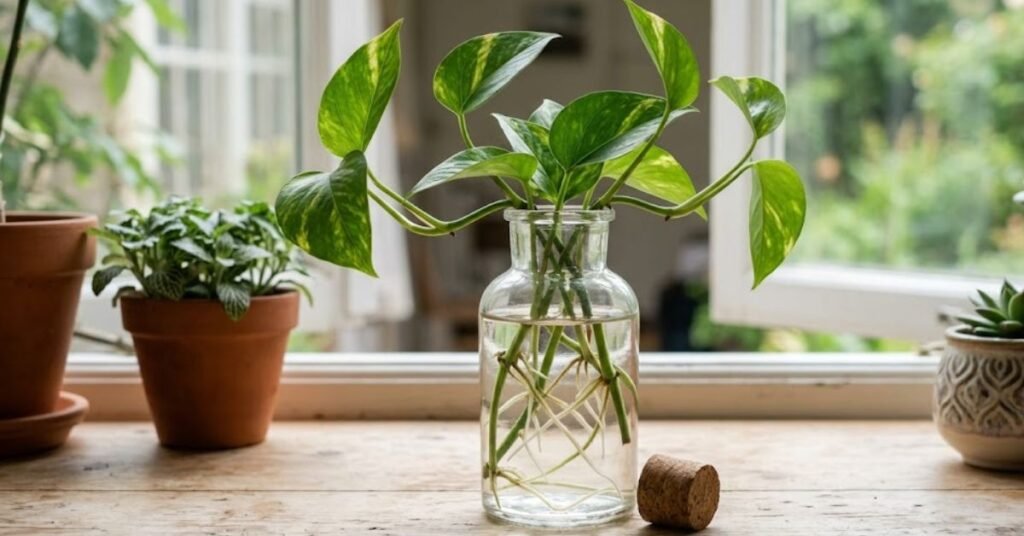
The standard way to do this is taking a tiny stem cutting—around 1 to 1.5 inches—with a single node and leaf attached. Usually, you’ll see roots forming in just under a month. It rarely ever fails.
Personal Pro-Tip: Please don’t stress about buying expensive rooting hormones. A clean pair of kitchen scissors and a leftover glass jar will do the trick perfectly.
Exactly How to Propagate Pothos in Water Without Failing
If you genuinely want to know how to propagate pothos in water, the secret is finding the “node.” Without a node, you get zero roots.
- Find the Node: Look closely at the vine. See those little brown bumps right near where the leaf attaches to the main stem? That is the node.
- Make the Cut: Snip roughly half an inch below that bump.
- Fill a Glass from the Faucet: Drop your fresh cutting right in. Make sure the node is completely submerged, but keep the actual leaf dry. You do not need pricey bottled water for this. Basic faucet water works beautifully.
- Place in Bright, Indirect Light: A windowsill is fantastic. Just keep it out of the blazing afternoon sun so you don’t accidentally cook the leaves.
Personal Pro-Tip: I like to use clear glass. Seeing the water level drop saves me from forgetting to top it off, and I highly recommend changing the water entirely once a week so the roots get fresh oxygen.
Common Mistakes Americans Make With Pothos Water Propagation
We love freezing cold houses in the summer. Our plants? Not so much.
The absolute biggest mistake I constantly see is folks putting their glass jars right under an air conditioning vent. Pothos hate cold drafts. That icy blast from your AC unit will totally shock the cutting and halt root growth. Keep your jars across the room from any vents.
Another massive issue is shocking them later on. Roots grown in liquid get very used to being wet. Because of this, they can completely crash when shoved directly into dry potting soil later on. Keep your dirt pretty damp for the first few weeks to ease the transition once you finally pot them up.
Personal Pro-Tip: If your home is blasting AC all summer long, move your propagation jars into the bathroom. The extra humidity and heat from warm showers is exactly what they want.
Troubleshooting Your Water-Propagated Pothos
Sometimes things go sideways. Here is exactly how to fix it when your plant looks sad.
Why is My Leaf Turning Yellow?
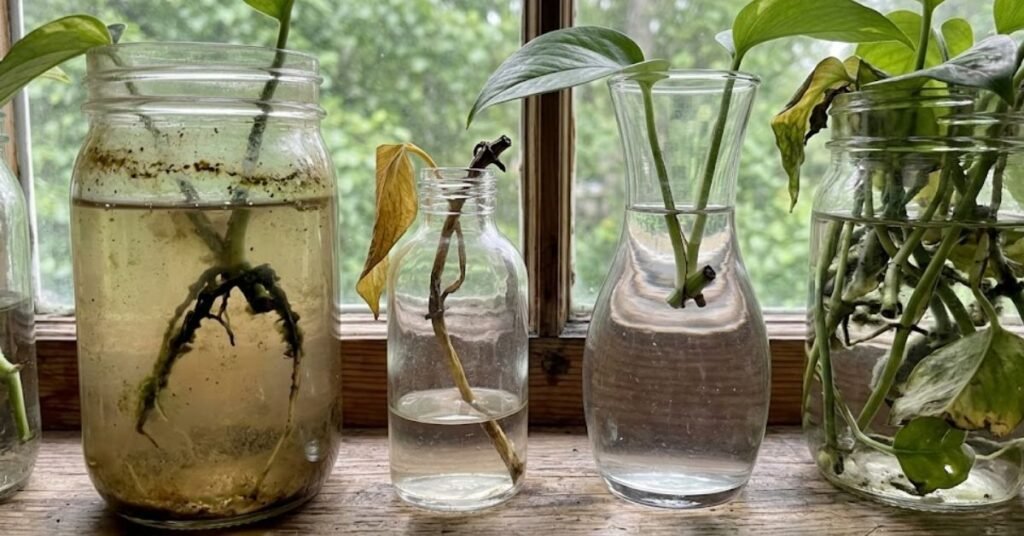
Rot. It is almost always rot. If the leaf on your cutting is yellowing and feeling mushy, you probably dunked the leaf itself in the water instead of just the bare node. Pull it out immediately, cut off the mushy garbage, and start over.
Why Do I Have Brown Tips on the Leaves?
This usually points to extreme lack of humidity or heavy chemical buildup. If your faucet water is heavily treated or super hard, you might see browning edges.
Personal Pro-Tip: If the stem turns black and squishy at the very bottom under the water, chop that part off fast. Rot spreads up the stem quickly.
Toxicity Warning: Are Pothos Safe for Dogs and Cats?
No. Not at all.
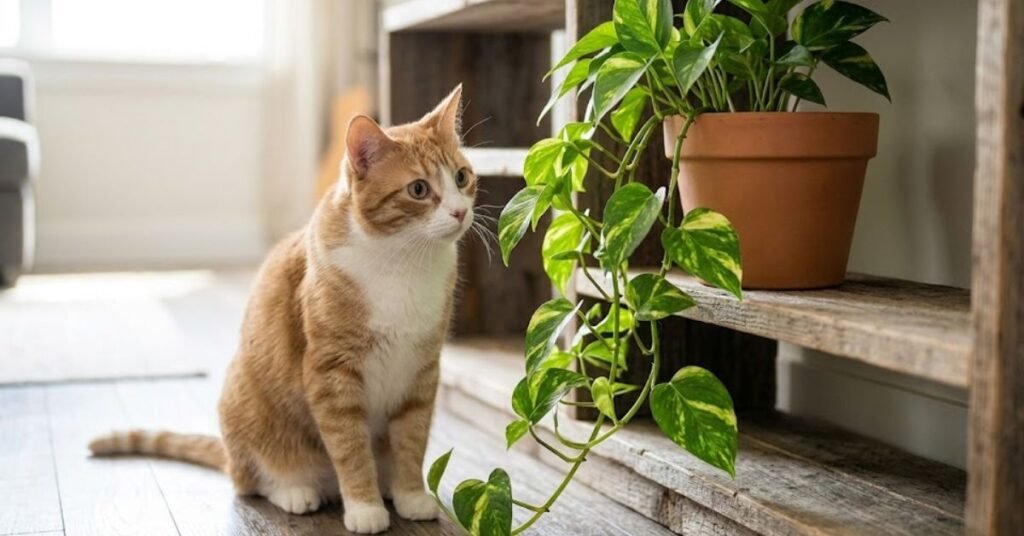
This is serious business for pet owners. Pothos contain insoluble calcium oxalates. If your dog or cat chews on a leaf, it causes severe mouth pain, swelling, drooling, and vomiting. Keep your jars high up on bookshelves where your furry friends cannot go.
Personal Pro-Tip: I keep all my toxic houseplants safely perched on top of my highest kitchen cabinets where my very curious orange cat can’t even attempt a jump.
FAQs About How to Propagate Pothos in Water
Q1: How long does it take to see roots?
You will usually spot little white nubs in about 10 to 14 days. Proper roots take about 3 to 4 weeks.
Q2: Can I leave my pothos in water forever?
You actually can. But it won’t grow nearly as fast. Water doesn’t have the heavy nutrients that potting soil does. If you want a huge, bushy vine, eventually move it to dirt.
Q3: Does the time of year matter?
Spring and Fall are the absolute best times for propagation because the mother plant is actively growing. Winter is tough because plant growth slows down dramatically in the shorter days.
Q4: Do I need rooting hormone to propagate pothos in water?
Nope. Pothos are basically weeds when it comes to rooting. They naturally produce enough of their own rooting hormone to handle it entirely themselves.
Q5: Why is my cutting doing absolutely nothing?
It might be sitting in a spot that is too dark or too cold. Move it to a slightly brighter, warmer area in your house.
Q6: Should I take cuttings from a long vine or a short one?
I prefer using a longer, somewhat leggy vine. You can chop a long vine into five or six individual node cuttings and start a whole new, massive pot.
Q7: How big should the roots be before planting in potting soil?
Wait until the roots are at least two inches long. Better yet, wait until those main roots start sprouting tiny secondary branching roots of their own.
Personal Pro-Tip: When potting up your rooted cuttings, group 5 or 6 of them together in a single 4-inch pot. A single cutting planted alone will just look like one sad, lonely string.
Final Thoughts
Growing new plants from cuttings is genuinely one of my favorite parts of indoor gardening. Now that you know exactly how to propagate pothos in water, you can turn one overgrown plant into a dozen gifts for your friends. Or just hoard them all and fill every empty corner of your own living room. Grab some scissors, find a node, and get to chopping. You’ve got this.

Amin Khalid is a professional horticulturist and the founder of LeafyWisdom. With a deep passion for home gardening and horticultural research, he specializes in providing practical, easy-to-follow care guides for indoor plants. Amin’s goal is to simplify gardening for everyone and help fellow plant lovers build their own thriving green spaces.

No responses yet