
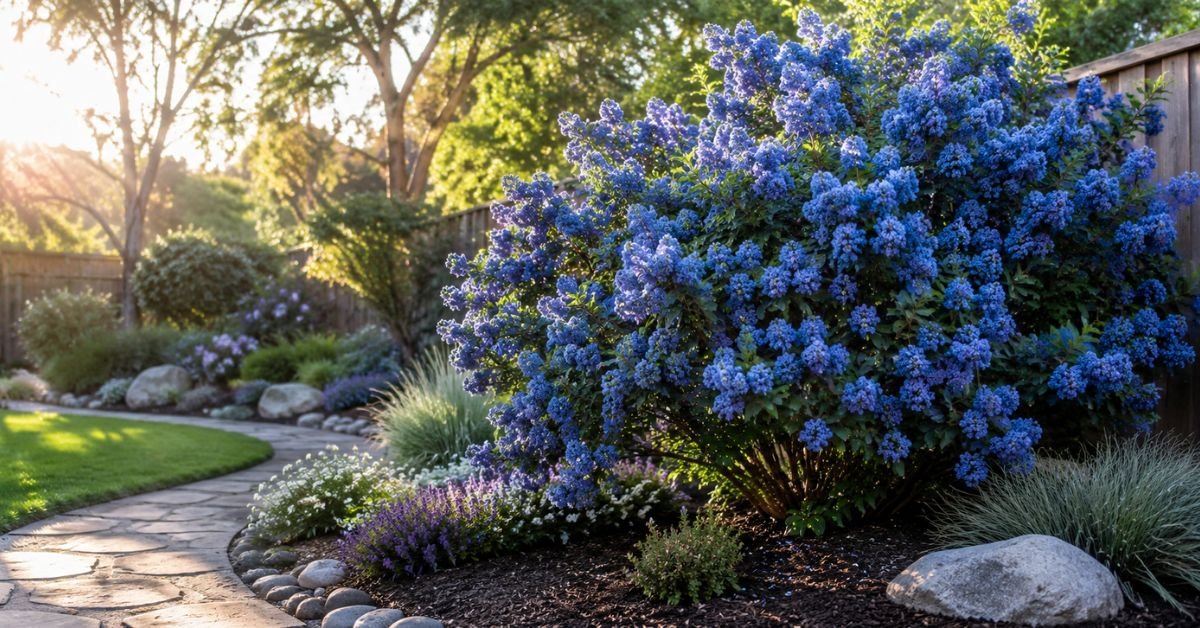
If you want to stop traffic in your neighborhood this spring, you need to plant something much bolder than the usual suburban hydrangea. I’m talking about California lilac plants. These stunning native shrubs produce explosions of electric blue flowers that literally make people pull their cars over to ask what you are growing. I have grown several of these in my own landscaping over the years. They are remarkably low-maintenance once you understand their wild nature. Let’s get into exactly how to grow them in your yard without the usual headaches.
| Feature | Requirement |
| Botanical Name | Ceanothus spp. |
| USDA Hardiness Zones | 7 – 10 (Varies by specific cultivar) |
| Sun Exposure | Full Sun (6+ hours direct light daily) |
| Soil Type | Well-draining, sandy, or gravelly |
| Water Needs | Low (Very drought-tolerant after year one) |
| Toxicity | Non-toxic to cats and dogs |
| Bloom Season | Mid-Spring to Early Summer |
Where Do California Lilac Plants Grow Best in the US
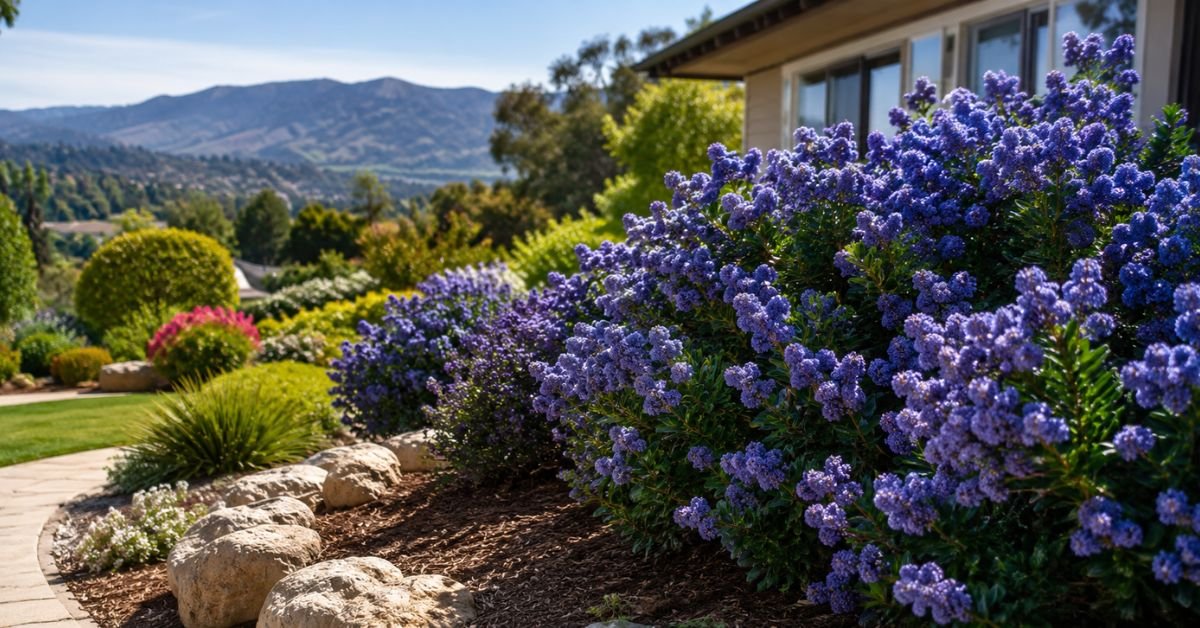
Despite the name, these shrubs aren’t actually true lilacs. They belong to the Ceanothus genus. Native to the American West Coast, they evolved to flourish in dry, sunny, and breezy environments. In my garden, these bushes become absolute bee magnets every single May.
Understanding your local US climate is the first hurdle. California lilac plants perform best in USDA Hardiness Zones 7 through 10. If you live in a region with brutal freezing winters like Zone 5, planting them outdoors in the ground year-round simply won’t work. However, if you are in the West, the Southwest, or temperate parts of the South, these evergreens will reward you heavily.
Personal Pro-Tip: Do not plant these anywhere near your outdoor air conditioning unit! The hot exhaust dry-blast will scorch the glossy leaves in a matter of days, leaving you with a brittle, dead bush. Put them in open beds where the natural breeze circulates.
Essential Sunlight and Potting Soil Needs for Ceanothus Shrubs
These shrubs demand the sun. You must place them where they catch at least six full hours of unshaded sunlight every single day. If you stick them in dense shade, the branches stretch out, get ugly and leggy, and refuse to produce flowers.
Soil drainage is where I see most American gardeners fail. Ceanothus hate wet feet.
In my early days of landscaping, I lost two expensive bushes because I planted them in heavy, unamended clay soil in my backyard. The roots literally suffocated. If your garden soil stays muddy days after a rainstorm, you need to fix it. Mix in crushed pumice, coarse builder’s sand, or pea gravel to speed up the drainage.
Growing one on a patio in a large container? Skip the standard, heavy garden dirt. Fill your pot with a fast-draining potting soil mixture blended specifically for succulents or Mediterranean plants.
Personal Pro-Tip: Always double-check the drainage holes on outdoor pots. If water pools near the base for even an hour, grab a power drill and add three or four more holes to the bottom of the planter.
How to Water California Lilac Plants Without Killing Them
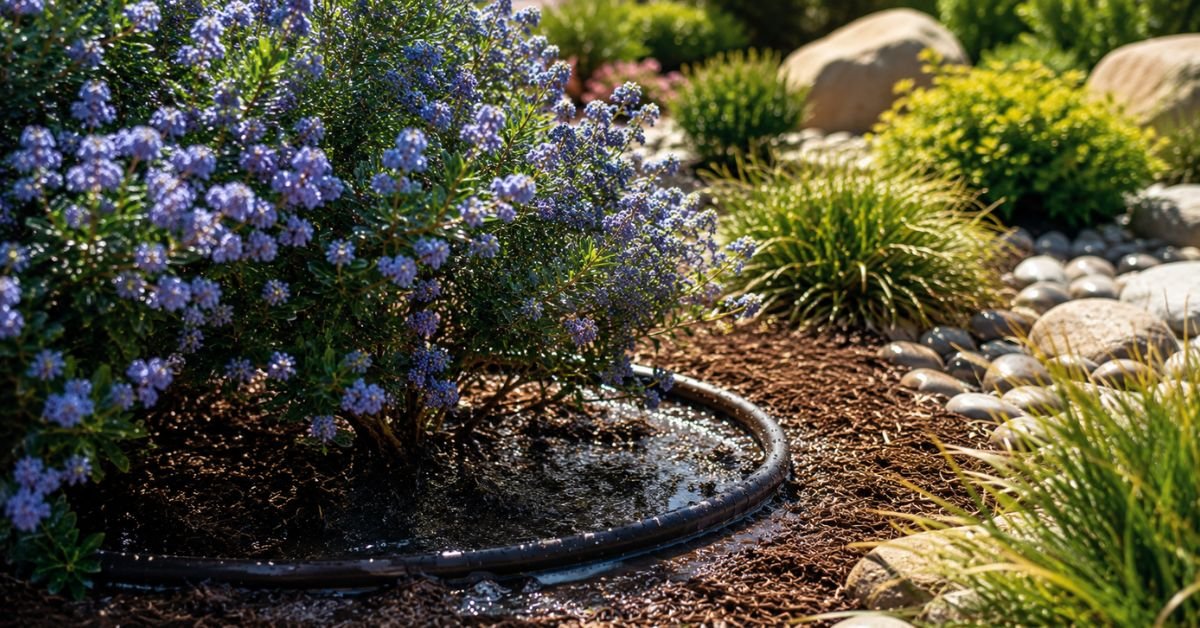
Here is the absolute golden rule for this plant: less is more.
During the first spring and summer after you plant it, your fresh shrub needs regular moisture to build a tough root system. Give it a deep soak about once a week during dry stretches. Fill your watering can right from the outdoor faucet and pour it slowly around the base.
Once established after the first year, stop babying it.
Summer irrigation in warm inland climates often triggers deadly fungal root rot. I almost never touch my established bushes with a hose once June arrives. Natural rainfall during fall and winter is usually completely sufficient.
Personal Pro-Tip: Never run automatic overhead sprinklers that blast the leaves every evening. Wet leaves sitting in warm summer night air will foster powdery mildew incredibly fast. Always water right at the soil level.
Common Mistakes Americans Make With These Blue Beauties
Why do so many homeowners struggle with this species? It usually happens because they treat it like a traditional English garden rose.
Here are the biggest pitfalls I see out in the field:
- Over-fertilizing: Pumping them with heavy nitrogen fertilizers produces soft, weak green leaves and absolutely zero flowers. It also shortens the plant’s lifespan. They actually prefer poor, lean soil.
- Hard Pruning: Never cut back into thick, old woody stems that lack green leaves. They will not sprout fresh shoots from old wood. Only trim the soft green stems lightly right after the spring flowers fade.
- Volcano Mulching: Piling heavy bark mulch directly against the main trunk traps moisture. This invites rot.
- Indoor Air Conditioning: Trying to grow a full-size Ceanothus inside your house under heavy central AC drops the humidity too fast and starves the plant of the intense UV light it craves.
Personal Pro-Tip: Keep your garden mulch at least four inches away from the base of the stem. I always create a bare “donut” of clean soil right around the trunk to let the crown breathe.
Troubleshooting Your California Lilac Plants
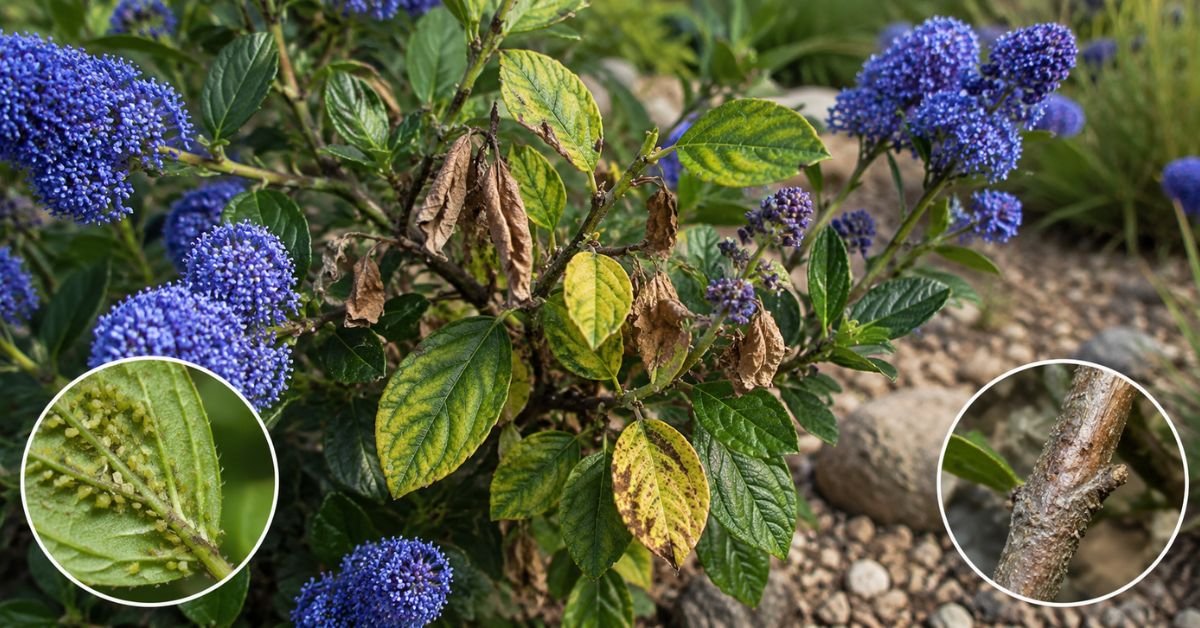
When things go wrong, your bush will give you obvious visual clues.
Yellowing Leaves
If the lower leaves turn pale yellow and drop off during early summer, you are overwatering. Period. Let the top three inches of soil bake dry completely before you even think about turning on the faucet.
Brown, Crispy Leaf Tips
Brown tips usually signal extreme dry heat combined with high winds, or a synthetic fertilizer burn. If you live in an inland valley where summer heat hits triple digits, provide some afternoon shade using taller companion trees. If you dumped fertilizer on it, flush the root zone heavily with fresh water.
Sudden Branch Collapse
If an entire stem suddenly wilts and turns brown while the rest of the plant looks fine, a soil pathogen has likely infected one side of the root system. Snip off the dead branch down to clean wood and completely stop all summer watering.
Personal Pro-Tip: I always wipe my pruning shears with rubbing alcohol between every single cut when removing dead branches. This stops you from accidentally spreading invisible diseases across healthy limbs.
Are Ceanothus Bushes Safe for Dogs and Cats?
Pet safety is a massive priority. The great news is that true california lilac plants (Ceanothus species) are completely non-toxic to dogs, cats, and horses.
Do not confuse this with the Persian lilac (Melia azedarach, also known as Chinaberry). Persian lilac is highly toxic to animals.
While Ceanothus isn’t poisonous, munching on the dense twigs or fibrous leaves can still cause a mild upset stomach in a bored puppy.
Personal Pro-Tip: If your dog loves digging around the base of your young garden shrubs, lay a piece of chicken wire flat over the soil and cover it lightly with coarse gravel. It stops digging paws instantly without hurting the plant.
Frequently Asked Questions About California Lilac Plants
Q1: How fast do they actually grow? Most cultivars grow moderately fast. You can expect them to add 12 to 24 inches of new growth per season until they hit their mature size.
Q2: Can I grow one in a container on my deck? Yes. Smaller dwarf varieties like ‘Centennial’ or ‘Diamond Heights’ do wonderfully in pots, provided you use a gritty, fast-draining potting soil.
Q3: Why is my bush not blooming this year? A lack of flowers almost always boils down to insufficient sunlight (getting less than 6 hours a day) or accidental exposure to high-nitrogen lawn fertilizer.
Q4: Do deer eat these shrubs? Generally, deer leave them alone because of their coarse, crinkly leaf texture. However, a starving deer in early spring might nibble the softest young shoots.
Q5: When is the best time to plant them in the US? Fall is the absolute best planting window in USDA Zones 8-10. This lets the roots establish during mild winter rains. Early spring is your backup option.
Q6: How long do they live? They are relatively short-lived compared to a maple or oak tree. Expect a healthy shrub to last between 10 to 15 years in a residential landscape.
Q7: Should I add compost to the planting hole? No. They fix their own nitrogen in the soil naturally through beneficial root microbes. Rich compost can actually shock them.
Personal Pro-Tip: Keep a cheap notebook in the garage tracking when your region’s last spring frost hits. Planting your new shrub exactly two weeks after that last freeze gives the roots the perfect head start before the brutal summer heat arrives.
Final Thoughts on Growing Ceanothus
Adding these shrubs to your yard is one of the smartest landscaping moves you can make. Give them relentless sun, poor soil, and keep the watering can away. They ask for almost nothing and give back brilliant blue color that completely transforms a spring garden. Respect their wild nature, avoid over-caring for them, and you will have a spectacular focal point for years to come.

Amin Khalid is a professional horticulturist and the founder of LeafyWisdom. With a deep passion for home gardening and horticultural research, he specializes in providing practical, easy-to-follow care guides for indoor plants. Amin’s goal is to simplify gardening for everyone and help fellow plant lovers build their own thriving green spaces.

No responses yet