
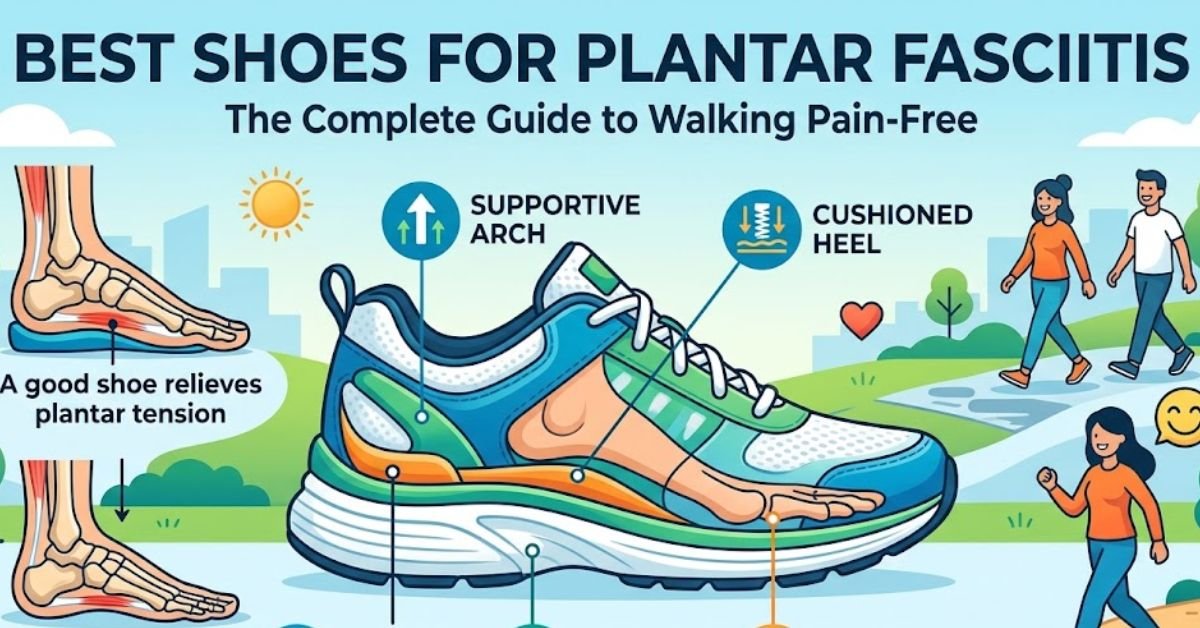
Best shoes for plantar fasciitis can make a huge difference in reducing heel pain and helping you walk comfortably again. If your first step in the morning feels painful, you are not alone.
Plantar fasciitis affects millions of people, and wearing the wrong shoes can make the condition much worse. Just like caring for indoor plants such as the Croton plant, choosing the right environment and support is essential for maintaining overall comfort and health.
What Is Plantar Fasciitis?
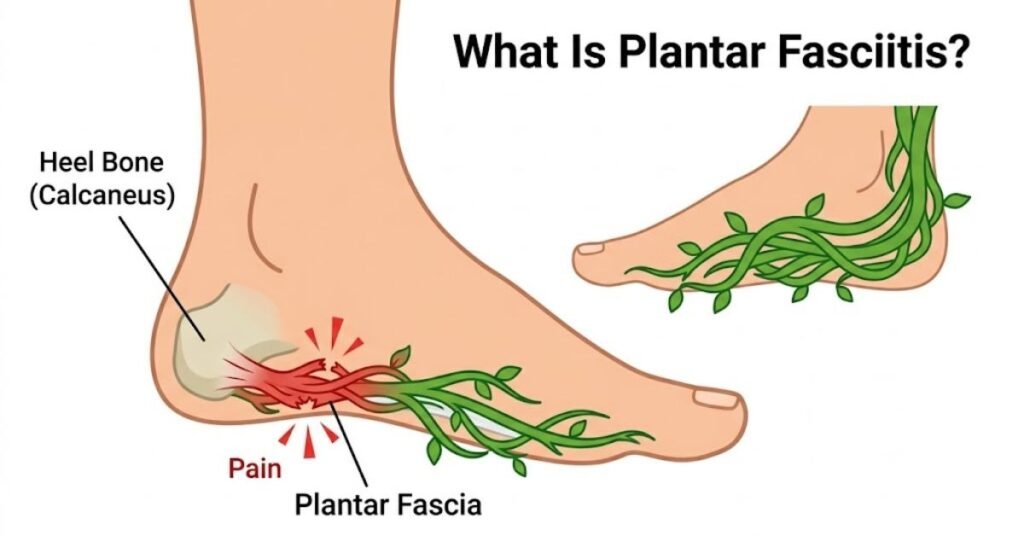
Your plantar fascia is a thick band of tissue that runs along the bottom of your foot, connecting your heel bone to your toes. Think of it like a rubber band.
When that rubber band is overstretched, tiny tears form. Those tears cause inflammation and pain especially in the heel.
The stabbing pain is usually worst:
- In the first few steps in the morning
- After sitting for a long time
- After standing for hours
- After exercise (not usually during)
The most common causes include:
- Flat feet or high arches — both can put abnormal stress on the fascia
- Tight calf muscles — pull on the heel and fascia
- Sudden increase in activity — too much, too fast
- Worn-out shoes — no support left in the midsole
- Hard surfaces — concrete floors, tile, asphalt
- Excess weight — more load on the fascia
Most cases improve with the right shoes, stretching, and rest. But many people make it worse by ignoring it or wearing the wrong footwear.
Why Shoes Matter So Much for Plantar Fasciitis
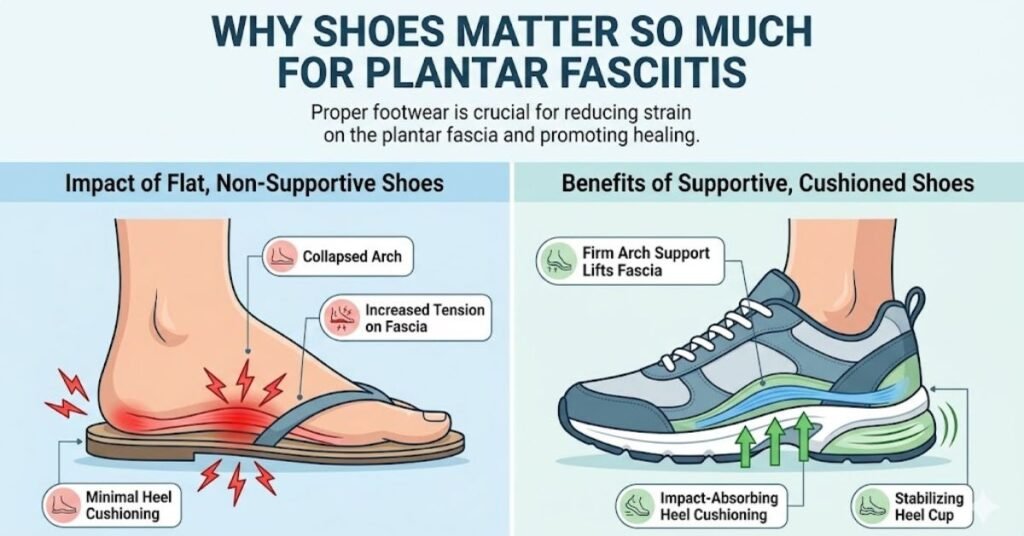
Many people think plantar fasciitis is just a “foot problem.” It is actually a load management problem.
The plantar fascia absorbs stress with every single step you take. A 150-pound person takes about 8,000 steps per day. That means your fascia handles over a million pounds of force daily.
The right shoe spreads that load more evenly, cushions the impact, and stops the heel from slamming down hard. The wrong shoe concentrates all that force on the already-irritated tissue.
Shoes cannot cure plantar fasciitis on their own. But they are the #1 tool that makes every other treatment more effective.
Quick Shoe Feature Comparison Table
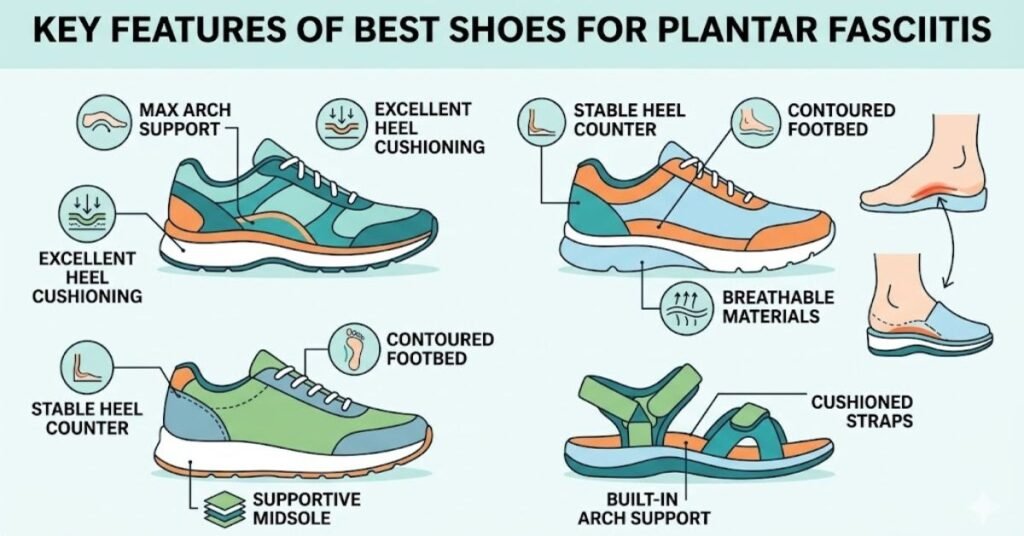
| Feature | Why It Helps | What to Look For |
| Arch Support | Distributes weight evenly | Matches your foot type (flat, neutral, high) |
| Heel Cushioning | Absorbs impact at landing | Gel, air, or dense foam in the heel |
| High Heel Drop (8–12mm) | Takes pressure off the fascia | Check brand specs; most running shoes qualify |
| Firm Midsole | Prevents over-sinking | Should not “bottom out” under body weight |
| Stiff Heel Counter | Reduces heel wobble | Press the back; it should barely move |
| Rocker Sole | Reduces toe-off strain | Curved bottom (HOKA, New Balance Fresh Foam) |
| Wide Toe Box | Reduces forefoot pressure | Toes should not feel squeezed |
Best Shoes for Plantar Fasciitis Top Picks by Category
We have organized these picks by how and where you use them. No single shoe is best for everyone.
Best Running Shoes for Plantar Fasciitis
#1 — Saucony Triumph 23
Best for: Daily running, long distances, recovery runs
Heel drop: 10mm | Stack height: 42.3mm heel
Price: ~$165
The Triumph 23 earns its top spot with a wide, stable base and a highly cushioned midsole that absorbs serious impact. The raised midsole sidewalls keep your foot centered during each stride and prevent excessive rolling (pronation) — one of the main triggers for fascia irritation.
What we love: Incredibly plush but not mushy. Stays supportive through mile 20.
Watch out for: The plush foam wears down after ~400–500 miles, so track your mileage.
#2 — HOKA Clifton 10
Best for: Runners with high arches, first-time PF shoe buyers
Heel drop: 5mm | Stack height: Maximal
Price: ~$145
The Clifton 10 is one of the most podiatrist-recommended shoes on this list. Dr. Priya Parthasarathy, a board-certified podiatrist, points to the Clifton for its generous heel cushioning to reduce stress on the feet, adding that it suits a multitude of foot types. The rocker geometry reduces toe-off strain beautifully. It carries the American Podiatric Medical Association (APMA) Seal of Acceptance.
What we love: Lightweight for a max-cushion shoe. Excellent for morning stiffness.
Watch out for: The 5mm drop is lower than ideal for severe flare-ups. Consider adding an orthotic insert.
#3 — Brooks Adrenaline GTS 24
Best for: Runners who overpronate, runners needing guidance
Heel drop: 12mm | Stack height: Moderate-high
Price: ~$140
Board-certified podiatric surgeon Dr. Miguel Cunha directs runners with plantar fasciitis to the Brooks Adrenaline GTS 24, pointing to its GuideRails technology that prevents pronation and shin rotation to ensure proper alignment — which he says is critical for reducing strain on the plantar fascia.
The 12mm drop is one of the highest on this list, making it an excellent choice when pain is at its worst.
What we love: Works for both neutral runners and overpronators. Extremely reliable.
Watch out for: Some runners find the GuideRails feel intrusive over shorter distances.
Best Walking Shoes for Plantar Fasciitis
#4 — HOKA Bondi 9 (Best Overall Walking Shoe)
Best for: All-day walkers, people with wide feet, post-recovery
Heel drop: 4mm | Stack height: 41.3mm heel
Price: ~$175
The Bondi 9 is the max-cushion king. Its shock absorption score is 15% above the average in lab tests. The wide heel base (104mm — nearly 14mm wider than average) gives unbeatable stability.
Dr. Cunha especially recommends the Bondi 9 for people with wide feet, noting that the wide and extra-wide options allow the foot to splay naturally without feeling jammed — which is crucial because natural foot positioning reduces pressure on joints and tendons.
What we love: Feels like walking on clouds. Available in wide widths.
Watch out for: Heavy at 10.7 oz (303g). Not for speed walkers.
#5 — ASICS Gel Kayano 32
Best for: Walkers who need firm stability, overpronators
Heel drop: 10mm | Stack height: 119.8/97.2mm base
Price: ~$160
The Kayano 32 uses ASICS’ 4D Guidance System — a softer foam section under the arch that provides custom-feeling support without harsh posting. In lab tests, it earned a 5/5 for torsional rigidity, meaning virtually no unwanted twisting under load.
What we love: The most stable walking shoe on this list. Excellent for people who feel their ankles rolling in.
Watch out for: Runs a little narrow. Try wide-width if you have wide feet.
#6 — Brooks Adrenaline GTS 24 (Walking Version)
Best for: Walkers who want a grippy, supportive everyday shoe
Heel drop: 12mm
Price: ~$140
The GuideRails extend along both sides of the midsole, creating a “bathtub” effect that keeps the foot centered. Grip scores are among the highest tested — great for wet sidewalks and mixed surfaces.
Best Casual / Everyday Shoes for Plantar Fasciitis
Most people with plantar fasciitis spend more hours in casual shoes than in running shoes. This is where many people go wrong — wearing flat, unsupportive everyday shoes all day long, then wondering why they hurt.
#7 — New Balance Fresh Foam 1080v14
Best for: All-day casual wear, standing at work
Heel drop: 8mm
Price: ~$165
The Fresh Foam midsole is bouncy and supportive without feeling overly stiff. A testing writer who evaluated the Fresh Foam line was impressed by the stability, breathability, and bouncy insoles, noting they would “be very kind to your knees, lower back and, naturally, feet and legs.”
#8 — ASICS Gel NYC
Best for: Lifestyle wear that does not look like a medical shoe
Heel drop: 10mm | Stack height: 34.8/24.8mm
Price: ~$110
The Gel NYC has above-average cushioning with a GEL insert in the heel and a firm 37.0 HA durometer midsole — which means it supports your foot instead of collapsing under it. The wide base offers stability during casual walking.
What we love: Actually looks stylish. Comfortable from the first wear.
Best Work & Dress Shoes for Plantar Fasciitis
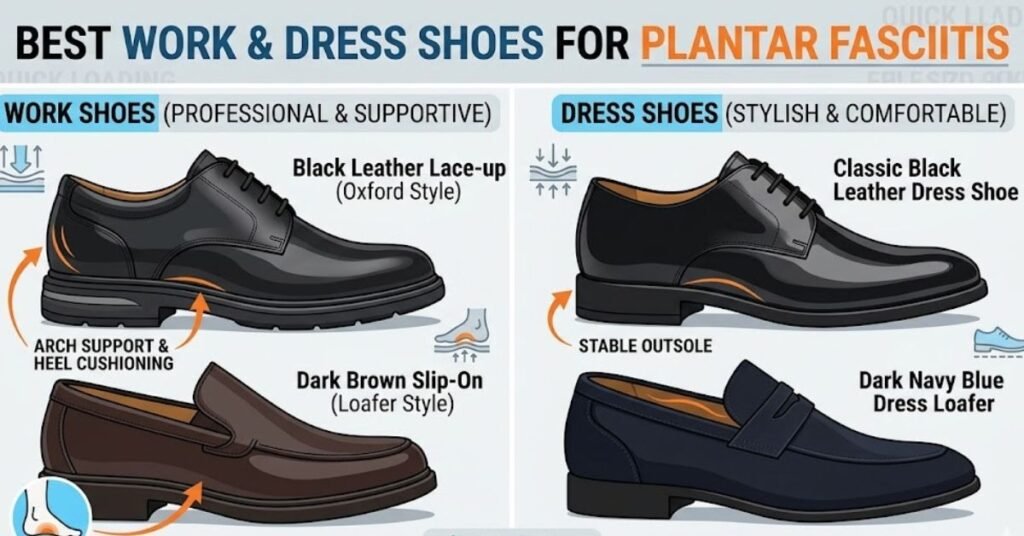
This is one of the biggest content gaps in most plantar fasciitis articles. People forget that 8+ hours in dress shoes can destroy all the progress made by wearing good sneakers at other times.
Key Features for Work Shoes:
- Look for a removable insole (so you can add a custom orthotic)
- Avoid heels over 1 inch
- Avoid completely flat, zero-support loafers and ballet flats
- Avoid pointed toe boxes — they compress the forefoot
- Look for cushioned footbeds with arch contouring
Recommended brands for dress/work contexts: Clarks (Cloudsteppers line), Dansko, Vionic, SAS, and Ecco. All offer supportive footbeds with proper arch cushioning in professional-looking styles.
Best Hiking Shoes for Plantar Fasciitis
When choosing hiking shoes, you want the same essentials as walking shoes — good arch support and cushion — but also durable, grippy outsoles that provide traction on different terrain. Good ankle support is also key to prevent injury that could worsen plantar fasciitis symptoms.
Top brands to consider: HOKA, Merrell, Keen, and Salomon all make hiking shoes with adequate stack height and arch support for plantar fasciitis patients.
Look for:
- At least 8mm heel drop
- Firm midsole (not trail-specific ultra-minimal)
- Ankle support (mid-cut or high-cut uppers)
- Rock plate if hiking on rocky terrain (protects against sharp impacts)
Shoes You Should AVOID with Plantar Fasciitis
This section alone could save you weeks of pain.
| Shoe Type | Why It Hurts |
| Flip flops | Zero arch support, no heel cushioning |
| Flat ballet flats | No arch support, hard sole |
| Barefoot/minimalist shoes | Increase load on the fascia avoid during flares |
| Old, worn-out sneakers | Midsole foam is “dead” no longer absorbs impact |
| High heels (over 1 inch) | Shorten the Achilles, increase toe-off strain |
| Canvas sneakers (Converse, Vans) | Flat, rigid, no cushioning |
| Going barefoot on hard floors | Hard surfaces with no shoe = maximum fascia stress |
Common Mistakes People Make When Buying Plantar Fasciitis Shoes
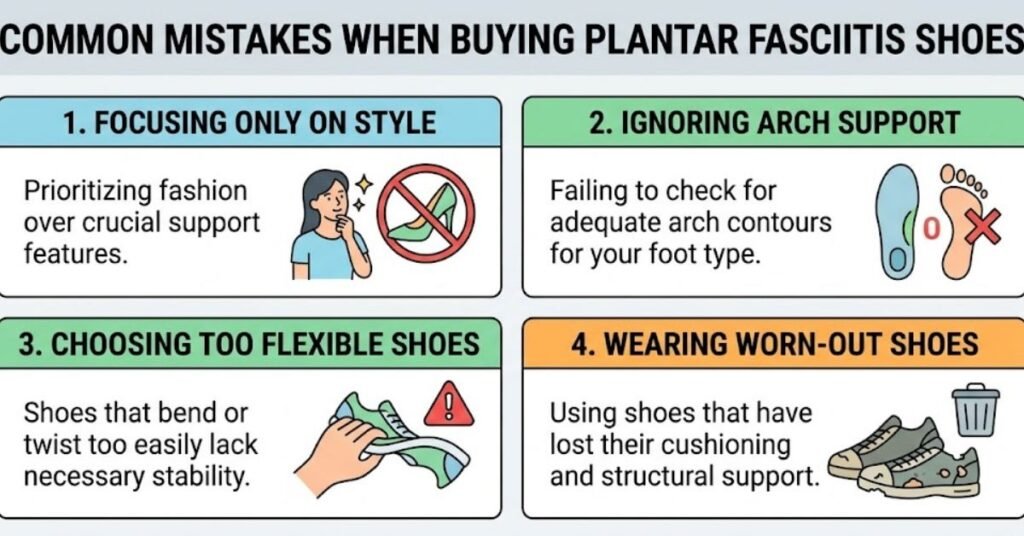
These are the mistakes we see most often — and they are all fixable.
Mistake #1: Buying the softest shoe they can find Soft does not equal supportive. An ultra-soft shoe lets your foot sink in and roll. Firm-yet-cushioned is the sweet spot.
Mistake #2: Ignoring heel drop Many stylish shoes and even some running shoes have 0–4mm drop. During a flare-up, this puts too much strain on the fascia. Always check the spec sheet.
Mistake #3: Continuing to wear old shoes, running shoe midsoles break down after 300–500 miles. If your shoes are over a year old and you walk/run regularly, the foam is likely dead — even if they look fine on the outside.
Mistake #4: Wearing bad shoes “just for a few hours” Plantar fasciitis does not care how short the trip is. An hour at a wedding in flat shoes can set back your recovery by weeks.
Mistake #5: Skipping insoles Even the best shoe sometimes needs an extra insert to match your specific arch. A $30–60 over-the-counter orthotic from brands like Superfeet or Powerstep can dramatically boost any shoe’s effectiveness.
Mistake #6: Not replacing shoes often enough If you are in recovery, you may need to replace shoes more frequently than the average person. Heavy walkers or runners should replace their main shoes every 4–6 months.
Mistake #7: Only fixing footwear and ignoring everything else shoes are just one piece of the puzzle. Calf stretches, plantar fascia stretches, night splints, and foot strengthening exercises are equally important.
How to Know If a New Shoe Is Working
After buying new plantar fasciitis shoes, here is what you should notice:
Within 1–3 days:
- Morning pain may not improve yet — but should not get worse
- First-step pain should start to feel a little less sharp
Within 1–2 weeks:
- Noticeable reduction in first-step heel pain
- Able to walk for longer without increasing pain
- Less pain after sitting for long periods
After 4–6 weeks:
- Significantly less heel pain overall
- May be able to resume light exercise
If you have been wearing the right shoes for 2 weeks and pain has not improved at all, consult a podiatrist. You may need custom orthotics, physical therapy, or further evaluation.
Do You Need Custom Orthotics?
Many people with plantar fasciitis eventually ask about custom orthotics. Here is a simple breakdown:
Try over-the-counter orthotics first:
- Superfeet Green or Blue (~$50–60)
- Powerstep Pinnacle (~$35–50)
- Tread Labs Dash insoles (~$75)
These work for 60–70% of people with mild to moderate plantar fasciitis.
Consider custom orthotics if:
- Over-the-counter orthotics have not helped after 6–8 weeks
- You have very flat feet or severe high arches
- You have other foot conditions (bunions, leg length discrepancy)
- A podiatrist recommends them
Custom orthotics cost $300–800 but are often covered by insurance and can be used in multiple pairs of shoes.
Plantar Fasciitis Shoe Guide by Foot Type
Your foot type matters as much as the shoe brand.
| Foot Type | Recommended Shoe Type | Features to Prioritize |
| Flat feet (overpronation) | Motion control or stability | Firm medial post, GuideRails, structured arch |
| High arches (underpronation) | Cushioned neutral | Deep arch support, max heel cushioning, soft midsole |
| Neutral arch | Neutral cushioned | Balanced cushion, firm heel counter |
| Wide feet | Wide-width options | Extra toe box room, wide base (HOKA Bondi, Saucony wide) |
| Heavy runners/walkers | Max cushion stability | High stack height, firm midsole, motion control |
Stretching Routine to Pair With Your New Shoes
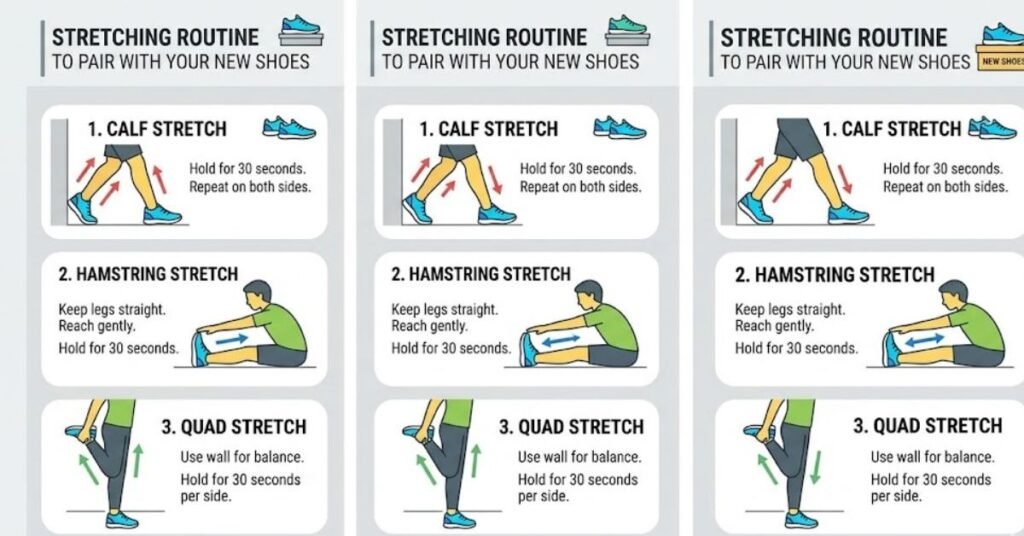
New shoes help most when combined with a daily stretching routine. Some of the best stretches include taking the toes in one hand, gently bending them back toward the shin, and with the other hand massaging the base of the heel and along the plantar fascia, holding for 15–30 seconds.
The Essential 3-Stretch Routine (takes 5 minutes):
1 — Plantar Fascia Stretch (before getting out of bed)
- Sit on the edge of the bed
- Cross one foot over your knee
- Pull your toes gently back toward your shin
- Hold 30 seconds, repeat 3 times
2 — Calf Stretch (against a wall)
- Stand facing a wall, hands flat against it
- Back leg straight, front knee slightly bent
- Push back heel firmly into floor
- Hold 30 seconds each leg
3 — Towel Stretch (morning routine)
- Sit on the floor with legs straight
- Loop a towel around the ball of your foot
- Gently pull the towel toward you
- Hold 30 seconds, repeat 3x
Some people also find night splints helpful — worn while sleeping to keep the foot in a dorsiflexed position, which helps stretch the plantar fascia overnight.
When to See a Doctor
See a podiatrist if:
- Pain is severe and prevents normal walking
- You have had symptoms for more than 3 months
- Pain is getting worse, not better, despite good shoes and stretching
- You feel numbness, tingling, or burning (could indicate nerve involvement)
- You have swelling or bruising around the heel (could be a stress fracture)
Treatment options a podiatrist might recommend include:
- Custom orthotics
- Corticosteroid injections
- Physical therapy
- Extracorporeal shockwave therapy (ESWT)
- In rare cases, surgery
Quick Care Summary Table
| Situation | Best Shoe Choice | Key Feature |
| Morning flare-up pain | HOKA Clifton 10 or Bondi 9 | Rocker sole + max cushion |
| Running with PF | Saucony Triumph 23 | Wide stable base + high heel drop |
| Walking all day | HOKA Bondi 9 | Shock absorption + wide base |
| Overpronation | Brooks Adrenaline GTS 24 | GuideRails stability tech |
| Work/dress shoes | Vionic or Dansko | Removable insole + arch contour |
| Hiking | HOKA Speedgoat or Merrell Moab 3 | Grip + arch support |
| Tight budget (<$100) | Brooks Ghost 16 | Best value stability cushion |
| Wide feet | HOKA Bondi 9 Wide | Extra-wide option available |
Frequently Asked Questions
Q1: Can I run with plantar fasciitis, or should I stop completely?
You don’t always need to stop. Cut mileage by 50%, run on softer surfaces, and wear supportive shoes. If pain worsens, take a full rest week.
Q2: How long does plantar fasciitis take to heal?
Mild cases heal in 6–8 weeks. Moderate cases can take 6–12 months. Early use of supportive shoes speeds recovery.
Q3: Are HOKA shoes good for plantar fasciitis?
Yes. HOKA’s rocker sole and cushioning reduce strain and impact. Bondi 9 and Clifton 10 are popular choices.
Q4: Is there a difference between men’s and women’s shoes?
The support features are the same. The main difference is fit — women often need a narrower heel. Focus on proper fit first.
Q5: Should I use orthotics and new shoes?
Start with supportive shoes. If pain continues after 2 weeks, add OTC orthotics. See a podiatrist if needed.
Q6: What should I wear at home?
Avoid walking barefoot on hard floors. Wear cushioned, supportive slippers or indoor shoes.
Q7: Are expensive shoes always better?
Not always. $100–$175 shoes usually offer the best support and durability. Structure matters more than price..
Conclusion
Plantar fasciitis is painful and frustrating, but it’s highly treatable when you take the right steps. The shoes you wear every day play a major role in recovery not just running shoes, but also work shoes, casual pairs, and even house slippers. Start by identifying your foot type (flat, neutral, or high arch), then choose shoes with an 8–12mm heel drop, a firm yet cushioned midsole, and a supportive heel counter. If needed, add a quality insole for extra arch support. Pair supportive footwear with a simple daily stretching routine and replace worn-out shoes regularly. With consistency and smart choices, most people recover fully and return to normal activity.

 using WordPress and
No responses yet