
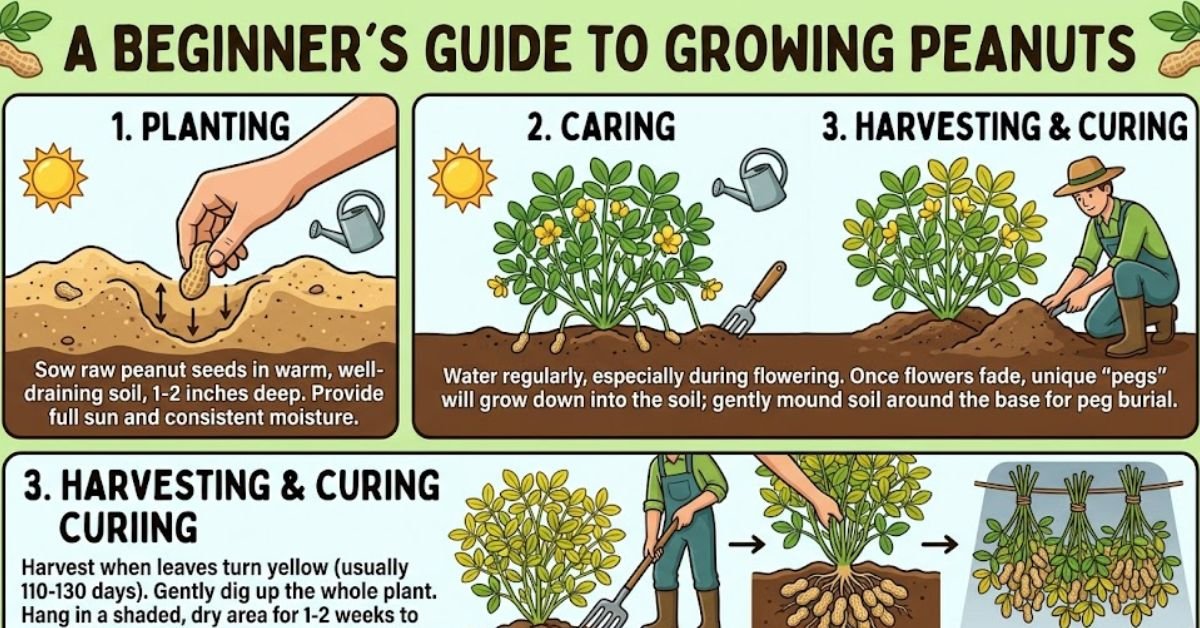
The peanut plant is not actually a nut — it is a legume closely related to peas and beans, and they grow underground. The peanut plant originated in South America over 3,500 years ago and is now widely cultivated in home gardens and commercial farms in warm climates.
What makes peanuts unique is their growth process: the plant flowers above ground, but the pods form underground. After pollination, a peg-like stem grows downward into the soil, where the peanut pod develops. This rare process is called geocarpyhttps://en.wikipedia.org/wiki/Geocarpy.
Quick Care Summary
| Care Factor | Requirement |
| Light | Full sun, 6–8 hours daily |
| Soil | Loose, sandy loam, pH 5.8–6.2 |
| Water | 1 inch per week; increase during flowering |
| Temperature | Soil >65°F; grows best 70–95°F |
| Spacing | Seeds 4–6 inches apart; rows 24–36 inches |
| Depth | Plant seeds 2 inches deep |
| Days to Harvest | 100–140 days (varies by variety) |
| Fertilizer | Calcium at flowering; avoid high nitrogen |
| Mulching | Light mulch around base (not under plant) |
| Toxicity | Safe for humans; potentially harmful to dogs |
Peanut Plant Varieties: 4 Types You Should Know
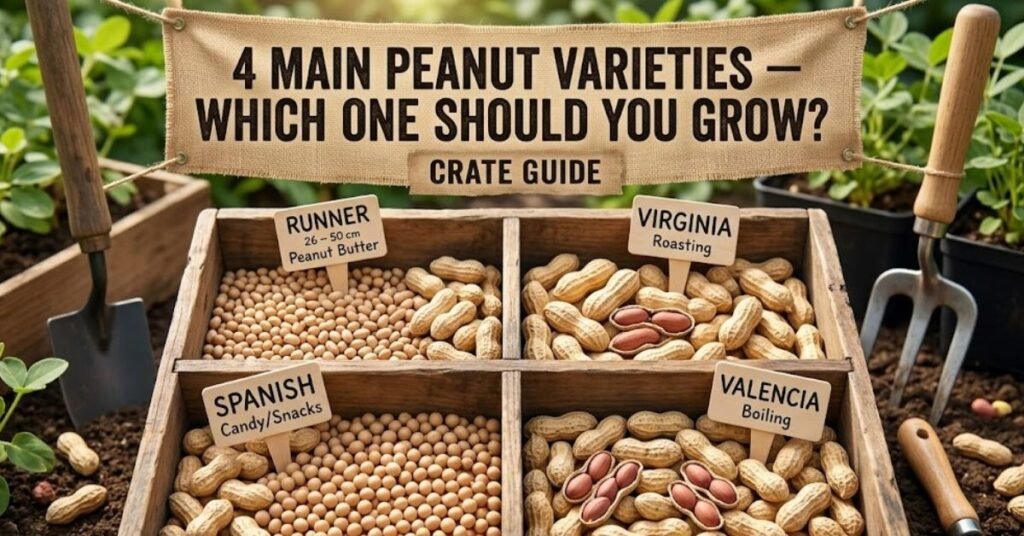
Choosing the right variety for your climate and purpose is essential:
| Variety | Size | Days to Harvest | Best For | Notes |
| Virginia | Large | 130–140 | Roasting, snacking | Popular, great flavor |
| Runner | Medium | 130–150 | Peanut butter | Highest commercial yield |
| Spanish | Small | 120 | Candy, oil | Reddish skin, faster harvest |
| Valencia | Medium | 75–90 | Boiling fresh | Ideal for short-season climates |
Pro Tip: In northern regions, select Valencia or fast-maturing varieties. Start seeds indoors 3–4 weeks before the last frost date.
How to Plant a Peanut Plant Step by Step
Step 1: Choose the Right Time
Plant outdoors 2–3 weeks after the last frost, when soil temperature is at least 65°F. Cold soil can cause seed rot.
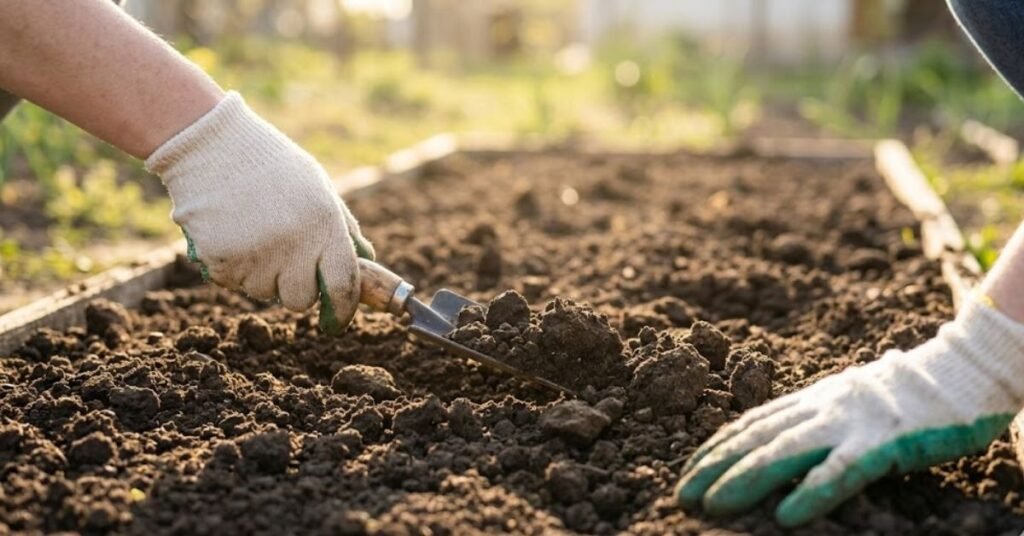
Step 2: Prepare the Soil
Peanuts prefer loose, well-draining sandy soil:
- Loosen soil 6–8 inches deep
- Mix in compost
- Maintain pH 5.8–6.2
- Amend heavy clay with sand and compost
Step 3: Prepare Seeds
- Use raw, unroasted peanuts or untreated seed peanuts
- Optionally apply bacterial inoculant to fix nitrogen
Step 4: Plant the Seeds
- Plant 2 inches deep, 4–6 inches apart
- Rows 24–36 inches apart
- Water gently after planting
- Seeds germinate in 5–10 days
Peanut Plant Care Guide for Beginners
Watering
- Keep soil consistently moist, especially from flowering to pod development
- Stop watering 10–14 days before harvest
Hilling
- When plants reach 6 inches, mound loose soil around the base
- Repeat every few weeks
- This helps pegs grow downward into soil and increases yield
Mulching
- Apply 2-inch straw or grass layer around plants (not beneath)
- Retains moisture, controls weeds, prevents soil hardening
Fertilizing
- Avoid high-nitrogen fertilizers
- Use calcium-rich fertilizer during flowering
- Bacterial inoculant reduces fertilizer needs
Peanut Plant Seasonal Care Guide
| Season | Key Tasks |
| Spring | Start seeds indoors, prep soil, plant after frost |
| Early Summer | Hill plants, regular watering, apply mulch |
| Mid-Summer | Flowers appear, increase water, apply calcium fertilizer, watch pests |
| Late Summer | Pegging begins, keep soil moist, hand-weed |
| Fall | Stop watering 2 weeks before harvest, harvest before frost |
Peanut Plant Pests and Diseases (Complete Guide)
Common Pests
| Pest | Signs | Solution |
| Aphids | Sticky leaves, curled growth | Neem oil or insecticidal soap |
| Armyworms | Holes in leaves | Bacillus thuringiensis (Bt), encourage predators |
| Wireworms | Tunnels in pods | Beneficial nematodes |
| Thrips | Silver scars on leaves | Overhead watering, insecticide if severe |
| Velvetbean Caterpillar | Skeletonized leaves | Natural predators |
Common Diseases
- Early & Late Leaf Spot: Brown/black spots; rotate crops, avoid overhead watering, apply fungicide
- Tomato Spotted Wilt Virus (TSWV): Caused by thrips; use resistant varieties and control thrips
- Root Rot / Aflatoxin: Caused by wet soil; harvest and cure peanuts properly
Growing a Peanut Plant in Containers
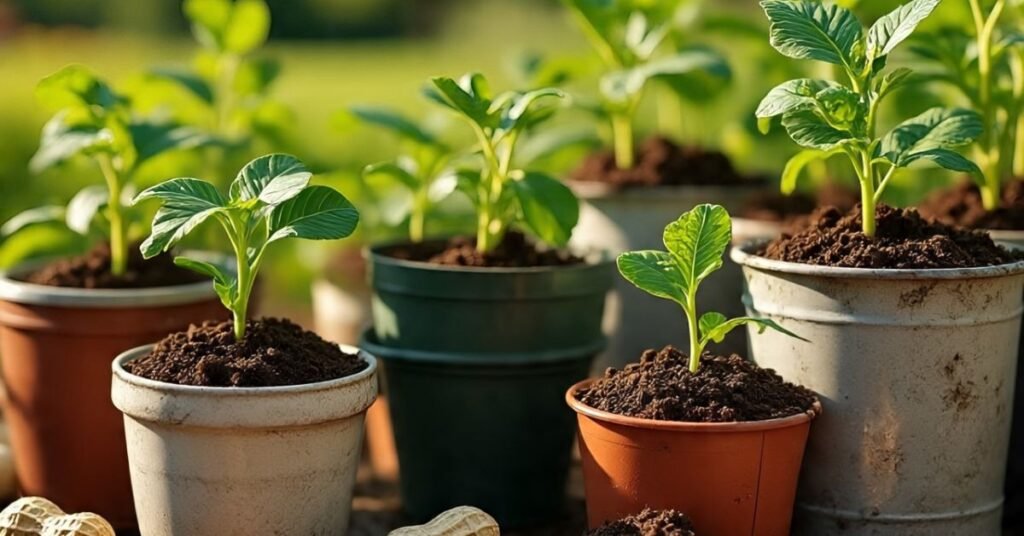
- Pot 18–20 inches wide and 18 inches deep per plant
- Well-draining mix with perlite
- Full sun exposure
- Water frequently
- Slightly lower yield than garden-grown
Harvesting Peanuts
Signs of Readiness
- Leaves yellowing and dropping
- Pod shell shows dark veining
- Kernels firm
How to Harvest
- Stop watering 10–14 days before harvest
- Loosen soil, lift entire plant
- Dry plants in sun for 1 week
- Remove pods, cure in ventilated area for 2–3 weeks
Storage
- Store in cool, dry place
- In-shell peanuts: 6–12 months
- Shelled peanuts: refrigerate or freeze
Toxicity
- Safe for humans unless allergic
- Peanut plant leaves can upset pets’ digestion; avoid pet contact
- Ensure peanuts are fully cured to prevent aflatoxin
Common Beginner Mistakes
- Planting in cold soil
- Skipping hilling
- Deep weeding near base
- Watering until harvest
- Using high-nitrogen fertilizers
- Harvesting too late
- Storing undried peanuts
FAQ,s
Q1: How long to harvest?
A: 100–140 days, Valencia 75–90 days
Q2: Can I grow store-bought peanuts?
A: Only raw, unroasted peanuts; treated seeds perform better
Q3: How many peanuts per plant?
A: 25–50 in good conditions
Q4: Do peanuts come back every year?
A: No, they are annuals
Q5: Why are leaves yellowing?
A: Normal late-season yellowing or water/nutrient issues
Q6: Is the peanut plant easy to grow?
A: Yes, the peanut plant is beginner-friendly if grown in warm soil with proper care.
Conclusion
Growing peanuts is rewarding. With the right variety, soil, watering, and care, you can enjoy fresh, homegrown peanuts straight from your garden.

Amin Khalid is a professional horticulturist and the founder of LeafyWisdom. With a deep passion for home gardening and horticultural research, he specializes in providing practical, easy-to-follow care guides for indoor plants. Amin’s goal is to simplify gardening for everyone and help fellow plant lovers build their own thriving green spaces.