
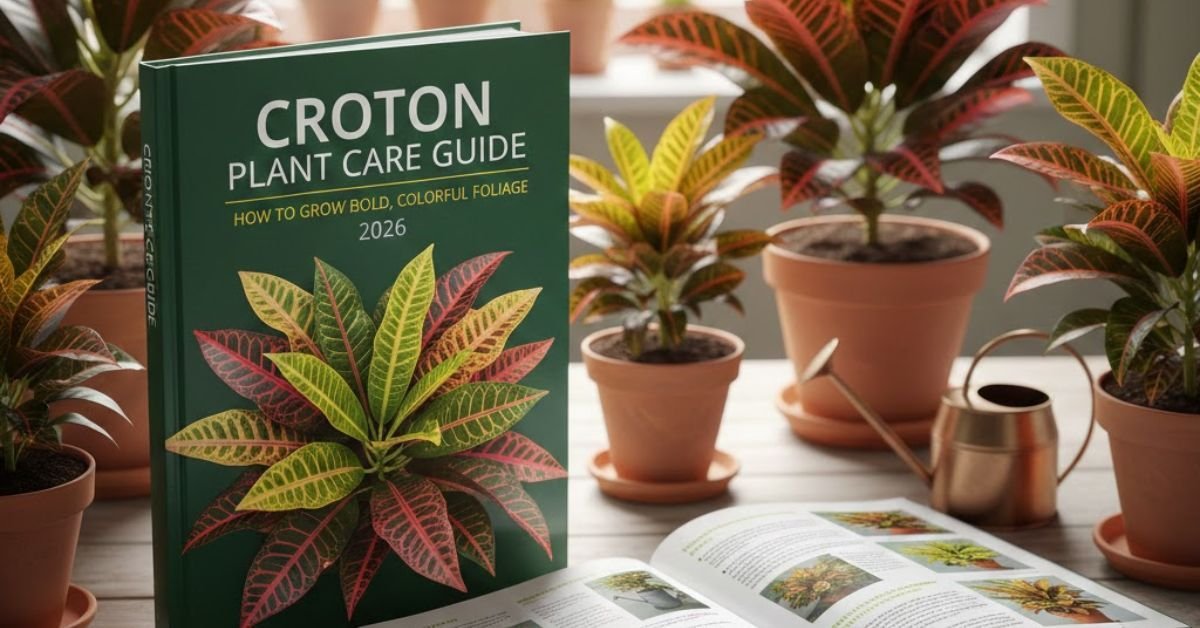
Croton plant care is essential for anyone who wants their tropical plants healthy and vibrant. In this croton plant care guide, we’ll cover everything from light and watering to humidity and fertilizer, helping your croton leaves stay bold and colorful indoors or outdoors
Quick Care Summary
| Care Factor | Details |
| Scientific Name | Codiaeum variegatum |
| Light | Bright, indirect to direct sun (4–6 hrs/day) |
| Water | When top 2 inches of soil are dry |
| Humidity | 50% or more preferred |
| Temperature | 60–85°F; never below 50°F |
| Fertilizer | Balanced liquid; monthly in spring/summer |
| Toxicity | Toxic to pets and humans |
| Hardiness | Outdoors in USDA zones 9–12 only |
| Difficulty | Moderate |
What Is a Croton Plant?
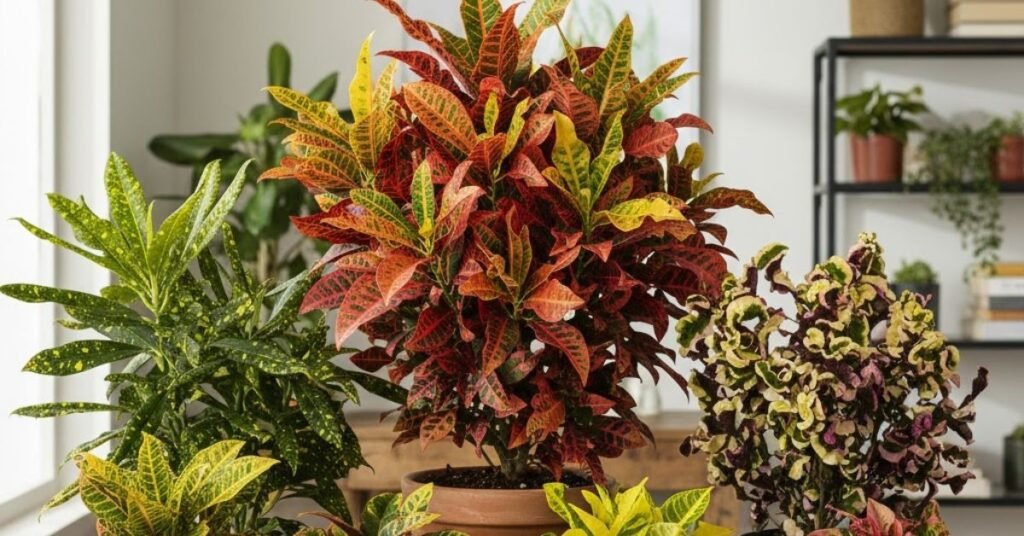
The croton (Codiaeum variegatum) is a tropical evergreen shrub native to Southeast Asia and the Pacific Islands. Indoors it stays compact — usually 2–4 feet tall. Outdoors in warm climates, it can reach 6–10 feet.
What sets it apart is the foliage. Deep green, bright yellow, fiery orange, red, and purple can all appear on the same plant at once — sometimes on the same leaf.
Popular varieties:
| Variety | Leaf Shape | Key Feature |
| Petra | Broad, oval | Bold yellow, orange, and red veins |
| Mammy | Long, twisted | Deep green, red, orange, and purple |
| Gold Dust | Narrow | Dark green with yellow speckles |
| Oakleaf | Oak-shaped | Bronze with yellow and red veins |
Light — The Secret to Vibrant Color
More light = more color. This is the most important rule for crotons.
In low light, leaves slowly fade to plain green. The plant survives but loses all its drama.
- Indoors: At least 4–6 hours of bright, indirect light per day
- Best spots: East or west-facing windows
- Avoid: Deep shade or north-facing windows — leaves will green out within weeks
Proper croton plant care means giving your plant enough bright, indirect light. Without adequate sunlight, even the best croton plant care routine won’t maintain vibrant leaf colors
How to Water a Croton
Crotons like consistently moist soil — but hate sitting in soggy conditions.
The method: Push your finger 2 inches into the soil. If it’s dry at that depth, water thoroughly until it drains from the bottom. Empty the saucer after 30 minutes.
- Spring/summer: Every 5–7 days
- Fall/winter: Every 10–14 days
Signs of underwatering: Wilting leaves, crispy brown edges, soil pulling from the pot sides
Signs of overwatering: Yellow leaves, mushy stem base, sour-smelling soil
Humidity — The Step Most Guides Skip

Crotons are tropical and prefer humidity of 50% or higher. Most homes run at 30–50%, which can stress the plant.
Signs of low humidity: Brown, crispy leaf tips and unexpected leaf drop.
How to boost it:
- Set the pot on a pebble tray filled with water
- Mist leaves 2–3 times per week with room-temperature water
- Group tropical plants together — they raise humidity around each other
- Use a small humidifier near the plant
Soil, Repotting & Fertilizing
Soil: Well-draining, slightly acidic mix (pH 5.5–6.5). Combine standard potting soil with 20–30% perlite.
Repotting: Every 2 years, or when roots escape drainage holes. Always repot in spring. Wear gloves — the sap irritates skin.
Fertilizing:
- Spring through late summer: balanced liquid fertilizer once a month
- Fall: every 6–8 weeks
- Winter: stop completely — the plant is resting
Avoid high-nitrogen fertilizers. They push fast green growth and actually mute the leaf colors.
Is Croton Toxic?
Yes — and this detail is missing or vague in most guides.
All parts of the plant are toxic — leaves, stems, roots, and especially seeds.
| Risk | Details |
| Dogs & Cats | Vomiting, diarrhea, drooling, lethargy |
| Humans (sap contact) | Skin rash and irritation |
| Humans (ingestion) | Nausea, vomiting, diarrhea |
If your pet eats croton, call the ASPCA Poison Control: (888) 426-4435 immediately.
Always wear gloves when pruning or repotting, and keep out of reach of young children.
Pest & Disease Quick Guide
| Problem | Signs | Fix |
| Spider Mites | Fine webbing, dull leaves | Neem oil; increase humidity |
| Mealybugs | White cottony clusters | Alcohol swab; insecticidal soap |
| Scale Insects | Brown bumps on stems | Scrape off; horticultural oil |
| Root Rot | Yellow leaves, mushy base | Repot; trim black roots; improve drainage |
| Powdery Mildew | White dusty coating | Neem oil spray |
Seasonal Care Guide
| Season | What to Do |
| Spring | Resume monthly fertilizing; repot if needed; increase watering |
| Summer | Water more often; mist leaves; watch for spider mites |
| Fall | Reduce watering and fertilizing; bring outdoor plants inside before 55°F |
| Winter | Stop fertilizing; water every 10–14 days; keep above 60°F; use humidifier |
Common Beginner Mistakes
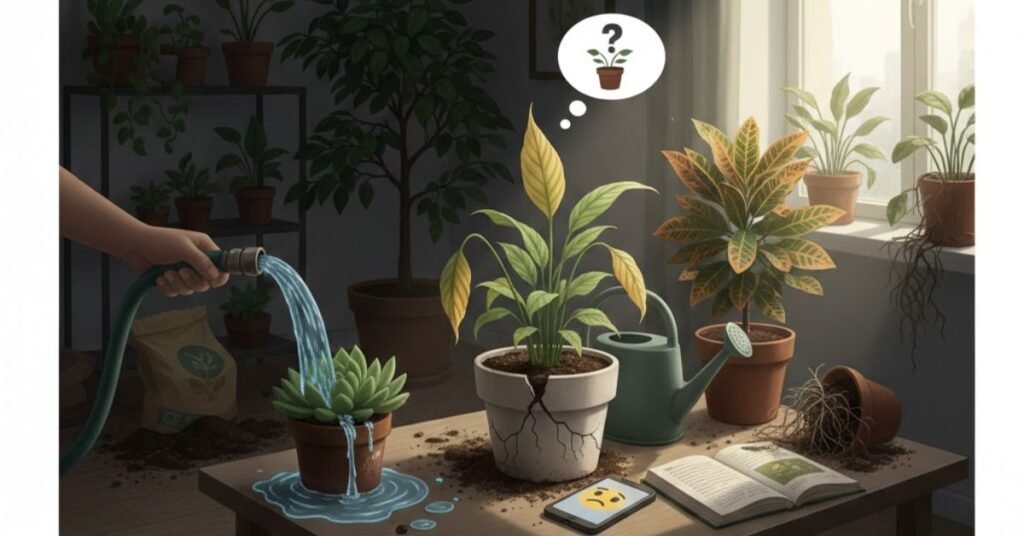
Moving the plant constantly. Every move triggers leaf drop. Pick a bright, permanent spot and leave it there.
Not enough light. Medium-light rooms will slowly drain the color from the leaves. This plant needs a genuinely bright spot.
Overwatering. Always check the soil first. Moist is good — soggy is dangerous.
Ignoring humidity. Crispy brown tips are almost always a humidity problem, not a watering problem.
Fertilizing in winter. The plant is resting. Stop feeding from November through February.
Panicking about leaf drop. A newly bought or recently moved croton will drop leaves. This is normal. Give it 2–3 weeks to settle in.
Troubleshooting
| Symptom | Cause | Fix |
| Leaves turning green | Too little light | Move to a brighter spot |
| Yellow leaves | Overwatering | Check soil; improve drainage |
| Brown crispy tips | Low humidity or fluoride in water | Boost humidity; use filtered water |
| Leaf drop | Stress from moving or drafts | Find a stable permanent location |
| Stunted growth | Low light or no fertilizer | Move closer to window; resume feeding |
FAQ
Q: Why is my croton dropping leaves? Almost always stress from being moved or a change in environment. Give it 2–3 weeks to settle before assuming something is wrong.
Q: How do I make my croton more colorful? Give it more light. Bright indirect sun for 4–6 hours a day restores vivid color. Outdoors in zones 9–12, full sun produces the most intense colors.
Q: How often should I water? Check the soil, not the calendar. Water when the top 2 inches feel dry — roughly every 5–7 days in summer, every 10–14 days in winter.
Q: Is croton safe for pets? No. It is moderately toxic to dogs, cats, and horses. Keep it out of reach and call your vet if ingested.
Q: Can I grow croton outdoors? Yes, in USDA zones 9–12. In cooler climates, grow in a container and bring it inside before the first frost.
Q: Why are my leaf tips brown? Low humidity is the most common cause. Add a pebble tray or humidifier. Fluoride in tap water also causes tip browning — switch to filtered water.
Q: How big do crotons get? Indoors, 2–4 feet. Outdoors in tropical climates, 6–10 feet. Prune in early spring to control size and encourage bushier growth.
Conclusion
The croton’s reputation for being difficult is mostly undeserved. Find it a bright, stable spot, keep the humidity up, and water carefully without overdoing it — and it will reward you with some of the most spectacular foliage of any houseplant you can own with these croton plant care tips, your tropical plant will thrive year-round, rewarding you with bold, colorful foliage

Amin Khalid is a professional horticulturist and the founder of LeafyWisdom. With a deep passion for home gardening and horticultural research, he specializes in providing practical, easy-to-follow care guides for indoor plants. Amin’s goal is to simplify gardening for everyone and help fellow plant lovers build their own thriving green spaces.

No responses yet