
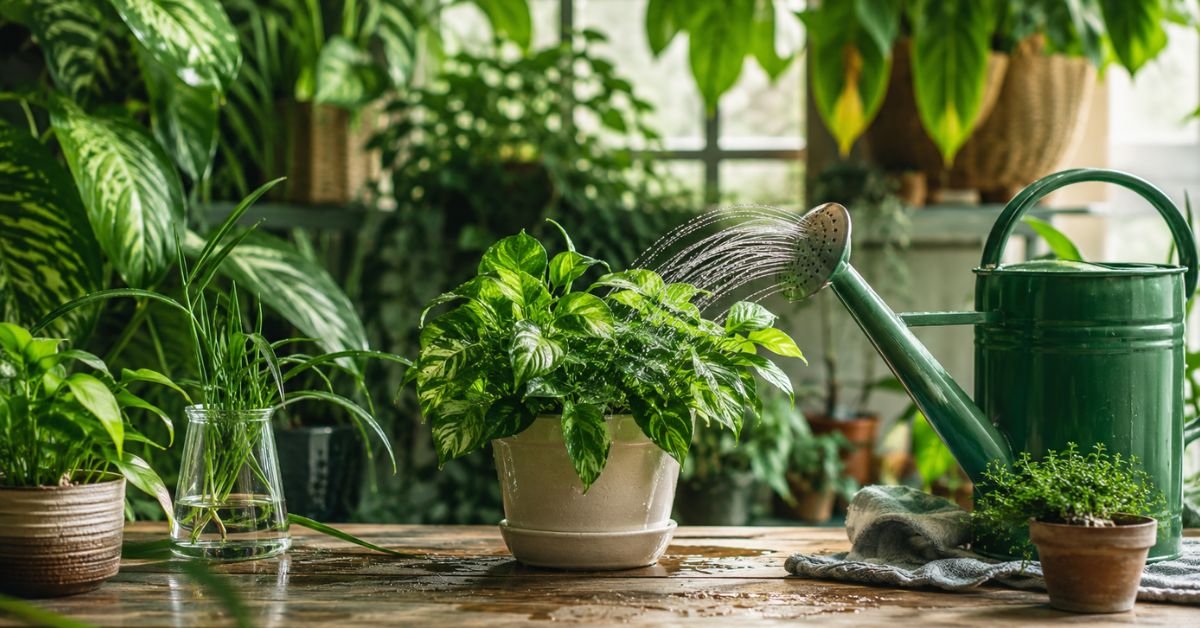
Let’s get one thing straight right away: a successful water management plant strategy is the single most important factor keeping your indoor greenery alive. Most folks don’t actually have a black thumb—they just don’t know how water actually behaves inside a pot, or how to handle the dry air of winter heating and summer AC.
The Quick Care Cheat Sheet
| Factor | Your Action Plan | Why It Matters |
| Potting Soil Blend | High-quality potting soil mixed with 30% perlite or pumice. | Creates essential air pockets so roots can breathe. |
| Water Treatment | Use a cheap aquarium de-chlorinator or distilled water. | Faucet water has chloramine, which does not evaporate overnight. |
| Moisture Check | The wooden chopstick or finger test (2 inches deep). | Prevents premature watering and root rot. |
| Climate Control | Shield plants from direct AC vents and heater drafts. | Forced air rapidly saps moisture and stresses leaves. |
Personal Pro-Tip: Don’t just blindly water on Sundays because it’s your day off. Lift the pot first. If it feels unusually light, the soil is dry. If it’s heavy, leave it alone.
Why Your Home Needs a Custom Water Management Plant Strategy
When you buy a pothos or a monstera at a local garden center in Ohio or Georgia, it usually comes with a generic plastic tag. “Water once a week,” it says. That tag is lying to you.
It has to. It doesn’t know where you live, what USDA Zone you’re in, or how you run your home.
For instance, during a brutal Texas summer, your air conditioning runs almost non-stop. That AC unit doesn’t just cool the air; it strips moisture out of it. Your potting soil will dry out way faster than you think. Conversely, if you’re up in Zone 6 during the freezing winter months, your forced-air heating is blasting dry heat. The top of the soil might look dry, but the bottom of the pot could still be a swamp.
We have to stop watering on a rigid calendar schedule. Your home’s microclimate changes with the seasons. In the Spring, as days get longer and plants kick into active growth, they drink more. In the Fall, they slow down. If you keep the same schedule year-round, you are setting yourself up for heartbreak.
Personal Pro-Tip: I like to do a quick walk-through of my house every Wednesday. I don’t water everything. I just inspect. If a pot feels light, it gets carried to the sink. If it’s heavy, I pass it by.
The Physics of the Pot: The Science Behind Indoor Water Management Plant Habits
To truly master how you water, we need to talk about basic physics. This isn’t just about pouring liquid from a watering can; it’s about how water behaves inside a confined space under the influence of two competing forces: gravity and capillary action.
Capillary action is the physical phenomenon where water flows into narrow spaces, defying gravity entirely. It’s how water climbs up a paper towel when you dip the corner in a spill. Inside your pot, capillary action is what allows the roots to draw water upward to maintain turgor pressure. Turgor pressure is the internal fluid pressure that keeps your plants standing upright instead of flopping over like wet spaghetti.
But gravity is always pulling downward. When these two forces meet in a container, they create what scientists call a Perched Water Table.
This is a layer at the very bottom of the pot where the soil stays permanently saturated. Why? Because the capillary pull of the soil particles is stronger than gravity’s ability to pull the water out through the drainage hole.
Let’s bust a massive gardening myth right now. For decades, well-meaning gardeners have suggested putting a layer of gravel or broken terracotta pieces at the bottom of a pot without drainage holes to “create drainage.”
Please, do not do this.
When you put coarse gravel underneath fine potting soil, you don’t create drainage. Because of how water moves through different textures, the water actually refuses to cross the boundary into the gravel until the soil above it is completely saturated. You have essentially moved the perched water table higher up in the pot. You’ve made the usable soil space smaller and brought the soggy, root-rotting zone right up to your plant’s sensitive roots.
Always use pots with actual drainage holes. Let gravity do its job.
Personal Pro-Tip: If you have a gorgeous decorative ceramic pot with no holes, use it as a cachepot. Keep your plant in a cheap plastic nursery pot that does have holes. Slip it inside the fancy pot. When it’s time to water, take the plastic pot to the kitchen sink, water it thoroughly, let it drain completely for ten minutes, and then pop it back into its decorative home.
Common Pitfalls in Household Water Management Plant Design
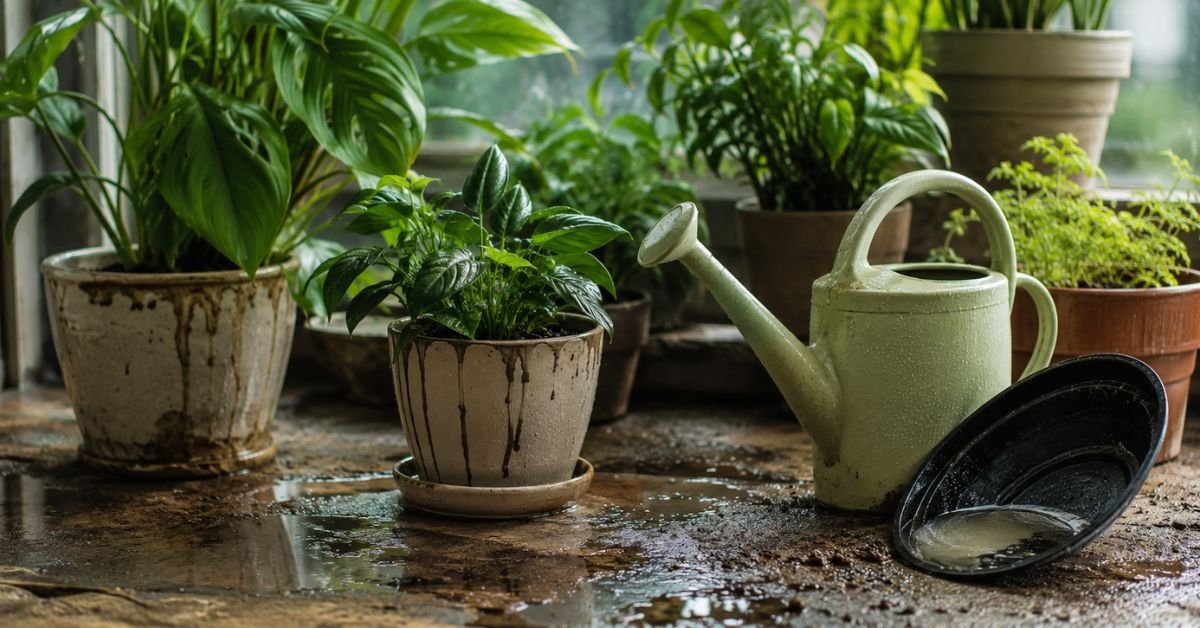
Let’s talk about that faucet. Most people assume tap water is perfectly fine for all plants. For some tough species like snake plants or spider plants, it is. But for sensitive beauties like Calatheas, Dracaenas, or peace lilies, our tap water is a chemical minefield.
In the old days, cities treated water with chlorine gas. You could easily leave a pitcher of water on your counter overnight, and the chlorine would evaporate into the air. Today, most US municipalities use chloramine because it’s more stable. The catch? Chloramine does not evaporate. If you let tap water sit out for 24 hours, you still have chloramine in it. This chemical buildup eventually burns delicate root systems.
Another massive error is using a dense, heavy garden soil inside a container. Garden soil from your backyard belongs in the ground. In a pot, it packs down tightly like concrete, suffocating the roots and trapping water indefinitely. Always use a dedicated indoor potting soil, and mix in plenty of coarse perlite or orchid bark to keep things airy.
Personal Pro-Tip: If you notice your tap water has a strong chemical scent, buy a cheap bottle of aquarium water conditioner. Just a single drop in your watering can will instantly neutralize chloramine and heavy metals, saving your plants from chemical burn.
Troubleshooting Your Dynamic Water Management Plant Problems
Your plants are constantly speaking to you. You just need to learn the language. When something goes wrong with your watering, the foliage will show you the signs.
- Yellowing Leaves: Are the bottom leaves turning yellow and feeling soft or limp? You’re looking at classic overwatering. The roots are drowning, and they are starting to rot. If the soil smells sour or moldy, you need to act fast. Gently slide the plant out of its pot, cut away any black, mushy roots, and repot it in fresh, dry potting soil.
- Drooping Stems: If the leaves are drooping but feel dry and paper-thin, your plant is parched. Give it a deep, thorough watering.
- Crispy Brown Tips: This is usually caused by low humidity (often from winter heating or summer AC vents) or mineral buildup from tap water. Cut those brown tips off with clean scissors, but leave a tiny sliver of brown so you don’t cut into the live green tissue.
Personal Pro-Tip: If your potting soil has dried out completely, it might become hydrophobic. When you pour water on it, the water will just run down the inside of the pot and out the bottom without actually soaking the soil. To fix this, use the “bottom-watering” method. Fill your sink with a few inches of water, set the pot in it, and let it drink from the bottom for 30 minutes until the top of the soil feels damp.
Keeping Pets Safe: A Crucial Part of Your Water Management Plant Blueprint
Before you bring any new green baby home, you have to think about your fur babies. Many incredibly common houseplants are highly toxic to cats and dogs.
Plants like Monsteras, Pothos, and English Ivy contain calcium oxalate crystals. If a curious cat or dog chews on a leaf, these microscopic crystals act like tiny shards of glass, causing severe mouth irritation, drooling, swelling, and vomiting. If you have pets that love to nibble on salad, stick to safe options like Boston Ferns, Parlor Palms, or Peperomias.
Personal Pro-Tip: If you really want to keep a toxic plant, hang it high. Hanging macrame baskets are a great way to keep pothos or philodendrons completely out of reach of jumping cats and curious pups.
FAQs: Real Solutions for Your Water Management Plant Routine
Here are the questions I get asked most often by plant parents across the country.
Q1: How do I know exactly when to water? Don’t rely on a calendar. Stick your index finger two inches deep into the soil. If it feels cool and damp, wait. If it feels dry and dusty, it’s time. You can also use a wooden chopstick—insert it into the soil, pull it out, and if soil sticks to it like wet cake batter, the pot is still wet.
Q2: Is rainwater better than tap water? Absolutely. Rainwater is naturally soft, free of municipal chemicals, and slightly acidic, which indoor plants love. If you can collect it in a rain barrel, your plants will thank you.
Q3: Does misting my plants help with overall humidity? Not really. Misting only raises the humidity for a few minutes. It also leaves wet spots on the leaves, which can invite fungal diseases. If you want to boost humidity, run a small humidifier nearby.
Q4: Should I water from the top or the bottom? Both methods have merits. Top-watering is great for flushing out built-up fertilizer salts. Bottom-watering ensures the entire root ball gets evenly saturated without compacting the soil. I like to alternate between the two.
Q5: What is the best pot material for proper drainage? Terracotta is my personal favorite because it’s porous. It allows air and water to pass through the walls, helping the soil dry out faster. Plastic and glazed ceramic trap moisture, which is fine for ferns but dangerous for succulents.
Q6: Why is my plant drooping even though the soil is wet? This is a major red flag. It usually means the roots have already rotted from overwatering. When the roots die, they can no longer absorb water, so the plant droops from dehydration even though it’s sitting in mud.
Q7: Should I change my watering habits during the winter? Yes, significantly. Most plants go semi-dormant in the winter. Because they aren’t growing actively and the days are shorter, they use far less water. Cut your watering frequency in half compared to your summer schedule.
Final Thoughts
Getting a handle on how water moves and how your plants react to your home’s unique climate takes some practice. You might lose a leaf or two along the way, but that is just part of the learning process. Keep an eye on the soil, skip the gravel, and protect your plants from drafts. With a little patience, you will find your rhythm.

Amin Khalid is a professional horticulturist and the founder of LeafyWisdom. With a deep passion for home gardening and horticultural research, he specializes in providing practical, easy-to-follow care guides for indoor plants. Amin’s goal is to simplify gardening for everyone and help fellow plant lovers build their own thriving green spaces.

No responses yet