You don’t need a PhD in biochemistry to master the vital chemistry plants rely on to stay green and healthy. But here is a secret most gardening blogs won’t tell you: every time you water, fertilize, or move a pot, you are running a miniature chemical laboratory.
When you look at a lush fiddle-leaf fig or a bright bed of hydrangeas, you might just see pretty leaves. But beneath the surface, there’s a complex world of biological reactions happening every single second.
As a professional horticulturist, I constantly see folks struggle because they ignore this invisible science. They buy expensive fertilizers, dump municipal faucet water on sensitive roots, and wonder why their plants look like sad, brown-tipped twigs.
Let’s change that. When you grasp the actual science of your soil and water, you stop guessing. You start knowing.
Quick Chemistry Cheat Sheet
| Chemical Parameter | What It Controls | Ideal Range (US Homes & Gardens) | Quick Solution |
| Soil pH | Nutrient availability (can the plant actually eat?) | 6.0 to 7.0 for most plants (Hydrangeas/Blueberries like 4.5 to 5.5) | Use sulfur to lower pH; add garden lime to raise it |
| Nitrogen (N) | Chlorophyll production & leafy green growth | High in Spring, lower in Fall | Feed organic fish emulsion |
| Phosphorus (P) | ATP energy transfer, root growth, & blooms | Balanced throughout the growing season | Add bone meal to the potting soil |
| Potassium (K) | Stomata regulation & water balance | Steady supply year-round | Feed kelp meal or organic potash |
| Dissolved Salts | Osmosis (water moving into roots) | Low buildup | Flush the container soil with filtered water |
Why Understanding the Chemistry Plants Rely on is Your Ultimate Gardening Superpower
Plants are literally factories that run on solar-powered chemical reactions.
In my years of growing professionally across various USDA Hardiness Zones, I’ve found that most gardeners treat their soil like a simple sponge. They think it just holds water and sits there. In reality, your soil is a highly active chemical marketplace.
Through the chemical process of photosynthesis, plants take carbon dioxide from your living room air and water from the soil, using light energy to synthesize glucose:
$$6CO_2 + 6H_2O \xrightarrow{\text{light}} C_6H_{12}O_6 + 6O_2$$
But this reaction speed is heavily dependent on temperature. If you live in USDA Zone 5 and experience a sudden cold snap in early Fall, the chemical reactions inside your outdoor perennials slow to a crawl. The same thing happens indoors when your plants get blasted by chilly drafts.
Personal Pro-Tip: Don’t fertilize your outdoor plants late in the Fall. In cooler USDA zones, plants need to transition into dormancy. Adding nitrogen late in the season forces soft, chemically weak new growth that will freeze and rot at the first frost.
Demystifying the Soil Chemistry Plants Need to Feed
Many home gardeners think that dumping fertilizer into a pot fixes everything. It doesn’t.
If your soil pH is off, those expensive nutrients remain chemically locked in the soil particles. The plant’s roots physically cannot absorb them. Think of it like trying to eat a steak that is locked inside a safe.
Most plants prefer a slightly acidic to neutral pH (around 6.0 to 7.0). In this sweet spot, the chemical bonds between soil particles and vital elements like nitrogen, phosphorus, and potassium are loose enough for roots to pull them away.
Let’s look at the actual soil chemistry plants require to take up these nutrients. Soil particles have a net negative electrical charge. Many crucial nutrients, like ammonium ($NH_4^+$) and potassium ($K^+$), have positive charges. They stick to the soil like magnets. When you water your plants, hydrogen ions in the water swap places with these nutrients, releasing them into the root zone.
Personal Pro-Tip: Never use raw backyard clay soil in your indoor containers. It lacks the complex organic buffers found in high-quality potting soil. Potting soil is formulated to maintain a stable, spongy chemical environment that prevents dangerous pH swings.
Decoding the Water Chemistry Plants Drink From Your Faucet
Water is not just $H_2O$.
The water flowing from your household faucet is packed with chemical additives. Municipalities treat drinking water with chlorine and chloramine to kill bacteria. While great for humans, these chemicals can be incredibly harsh on sensitive houseplants.
Fluoride is also commonly added to municipal water. Over time, fluoride accumulates in the tips of plant leaves, disrupting their metabolic chemistry.
If you have “hard” well water, it contains high levels of calcium and magnesium carbonates. Over time, as you water your pots, the liquid evaporates, leaving white, crusty mineral salts on the soil surface and the rims of your pots. This salt buildup acts like a chemical sponge, pulling water away from the plant’s roots through reverse osmosis.
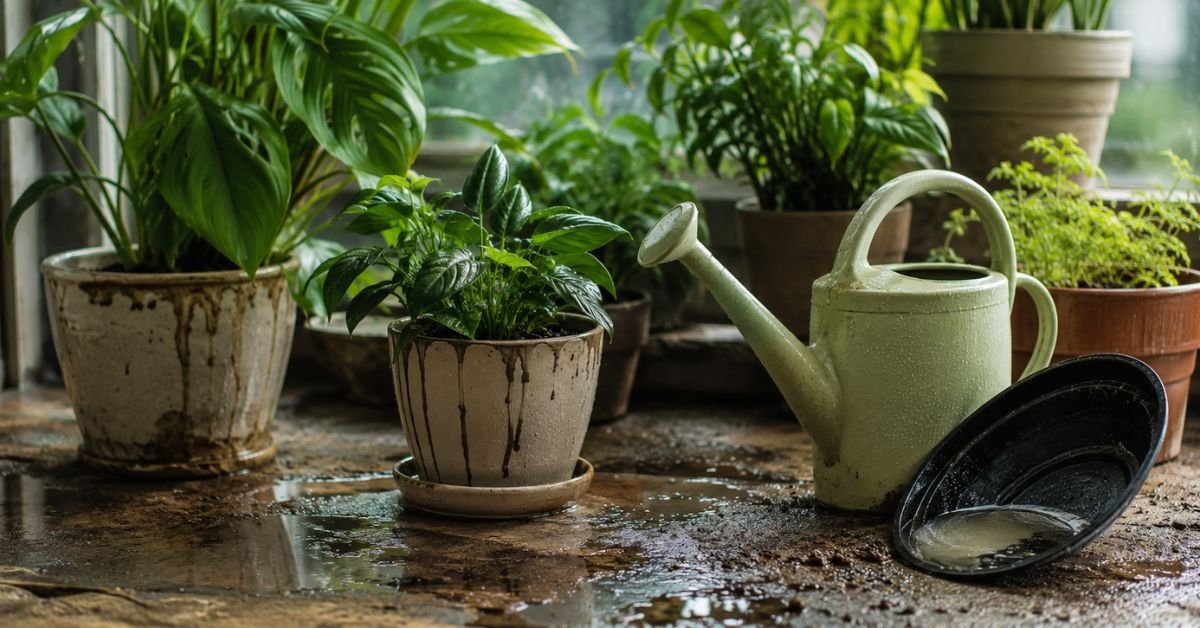
Personal Pro-Tip: If you see white crust forming on your potting soil, take the plant to your sink or bathtub. Turn on the faucet to a gentle, lukewarm stream and let water run completely through the pot for five minutes. This “leaches” the excess salt chemistry out of the container.
How Air Conditioning Disrupts the Cellular Chemistry Plants Use to Breathe
Most American homes run air conditioning during hot Summer months. This creates a challenging environment for indoor plants.
Air conditioning strips moisture from the air, dropping indoor humidity levels down to desert-like percentages. To survive, plants use specialized microscopic pores on their leaves called stomata.
The opening and closing of these pores is a beautiful display of potassium chemistry. When potassium ions pump into the guard cells surrounding the stomata, water follows, causing the cells to swell and open the pore so the plant can breathe.
When dry AC drafts hit your plant, it panics. It rapidly pumps potassium out of those cells to close the pores and prevent water loss. But when the pores are closed, the plant cannot take in carbon dioxide. Photosynthesis stops. The plant essentially starves itself to keep from drying out.
Personal Pro-Tip: Keep your houseplants completely out of the direct path of AC vents. If you cannot avoid it, group your plants close together on a shallow tray filled with pebbles and water. This creates a localized humid microclimate, buffering the dry air.
Common Pitfalls in the Chemistry Plants Experience
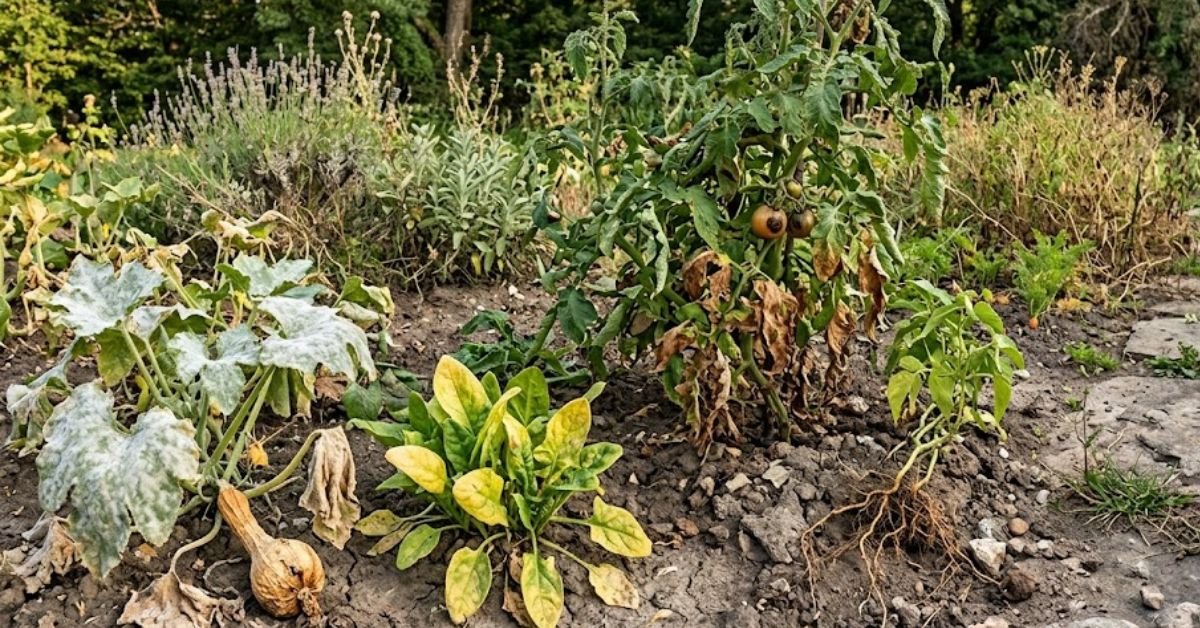
Let’s be honest. We’ve all killed a plant or two.
In my experience, American gardeners usually fail not because they don’t care, but because they over-correct. Here are the most common chemical mistakes I see:
- The “More is Better” Fertilizer Trap: Dumping synthetic fertilizer into a dry pot of potting soil creates a highly concentrated chemical solution. It literally sucks moisture out of the root cells, causing chemical “root burn.”
- Ignoring the Faucet Factor: Watering directly with cold, chlorinated water straight from the faucet shocks the roots and halts metabolic processes.
- Overwatering Acid-Loving Plants: Constantly soggy soil lacks oxygen. This lack of oxygen shifts the chemical environment to an anaerobic state, creating toxic compounds and rotting the roots.
Personal Pro-Tip: When using liquid chemical fertilizers, always dilute them to half the recommended strength on the label. It is far easier to correct a slight nutrient deficiency than it is to save a plant with chemically fried roots.
Troubleshooting Plant Chemistry: Leaf Signs and Fast Fixes
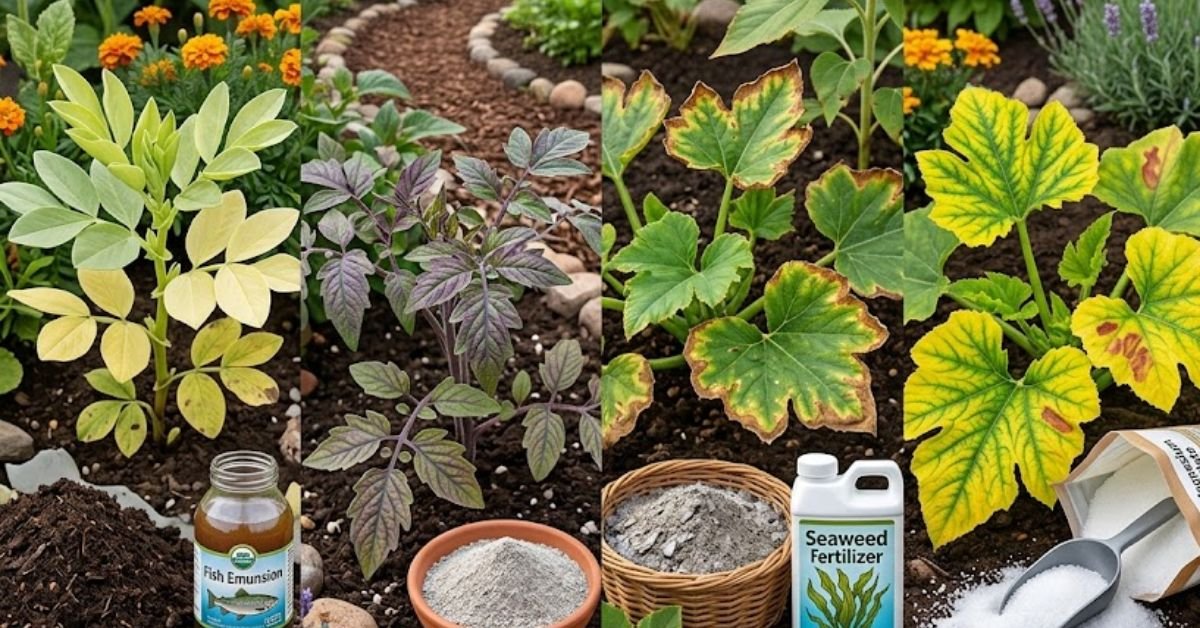
Your plants are constantly communicating their internal chemical balance to you. You just need to know how to read the signals.
- Symptom: Yellowing Lower Leaves (Nitrogen Deficiency)
- The Science: Nitrogen is highly mobile. When a plant runs low, it chemically strips nitrogen from its older, bottom leaves to feed the fresh, new growth at the top.
- The Fix: Feed with a liquid nitrogen booster like organic fish emulsion or blood meal.
- Symptom: Crispy, Brown Leaf Tips (Fluoride or Salt Toxicity)
- The Science: Plants transpire water out of their leaves. Chemical impurities like fluoride and salts cannot evaporate, so they get pushed to the very edges of the leaf, burning the tissue.
- The Fix: Switch to distilled water or rainwater, and flush the potting soil thoroughly to wash away salt buildup.
- Symptom: Dark Purple Leaf Veins (Phosphorus Deficiency)
- The Science: Without phosphorus, plants cannot properly transfer cellular energy. This chemical bottleneck often causes leaves to turn an eerie, dark purplish-green.
- The Fix: Scratch a handful of bone meal into the topsoil and water it in.
Personal Pro-Tip: Don’t immediately cut off yellowing leaves unless they are completely dead. The plant is still actively recycling the mobile nutrients from those leaves to support its new growth. Let the leaf dry up naturally before removing it.
Toxicity Warning: The Chemical Defense Systems of Common Houseplants
Plants cannot run away from predators.
Because they are rooted in place, they have evolved a brilliant, highly complex array of chemical defense mechanisms to survive. Many of our favorite indoor houseplants are packed with defense compounds that can be dangerous to our furry family members.
For example, plants in the Araceae family (like Monsteras, Pothos, and Philodendrons) contain microscopic, needle-like crystals of calcium oxalate. When chewed, these crystals physically inject themselves into the mouth and throat tissues of cats and dogs, causing intense burning, swelling, and severe drooling.
Other plants, like English Ivy, contain bitter chemical saponins that cause severe gastrointestinal distress.
Always research the defensive chemistry of any plant before bringing it into a home with pets.
| Plant Name | Chemical Defense Compound | Toxicity Level (Pets) | Safe Alternative |
| Monstera Deliciosa | Insoluble Calcium Oxalate | Moderate (Severe mouth irritation) | Parlor Palm |
| Sago Palm | Cycasin (Highly toxic carcinogen) | Extreme (Liver failure) | Ponytail Palm |
| Pothos (Devil’s Ivy) | Insoluble Calcium Oxalate | Moderate | Swedish Ivy |
| Snake Plant | Saponins | Low to Moderate (Vomiting) | Cast Iron Plant |
Personal Pro-Tip: If you suspect your pet has chewed on a chemically toxic plant, do not wait for symptoms to show. Rinse their mouth gently with cool water to flush away remaining crystals, and call your veterinarian immediately.
FAQs: Your Top Questions About the Chemistry Plants Rely On
Q1: Can I use coffee grounds to alter my soil chemistry?
Yes, but don’t just dump raw coffee grounds onto your potting soil. Raw grounds are highly acidic, but they also pack a ton of caffeine, which can actually stunt root growth. Instead, compost them first. Composting breaks down the caffeine while preserving the organic nitrogen your plants need.
Q2: Why are the leaves on my Hydrangea turning pink instead of blue?
This is pure soil chemistry at play! The color of your hydrangea blooms is controlled by the availability of aluminum in the soil. In acidic soil (pH below 5.5), aluminum is chemically soluble, allowing the plant to absorb it and turn the flowers blue. In neutral or alkaline soil, aluminum is locked away, resulting in pink blooms.
Q3: How do I know if my soil pH is wrong without a fancy lab test?
You can do a quick, fun kitchen chemistry experiment. Grab two soil samples from your garden. Pour vinegar over the first sample. If it fizzes, your soil is alkaline. Pour a baking soda and water mixture over the second sample. If it fizzes, your soil is acidic. If neither reacts, you are sitting close to a neutral pH.
Q4: Does letting tap water sit out for 24 hours really remove chemicals?
Only partially. Letting water sit in an open container allows chlorine gas to dissipate into the air. However, many modern US municipal water systems now use chloramine instead of chlorine. Chloramine is highly stable and will not evaporate out of the water, no matter how long you let it sit. For chloramine, you need a high-quality carbon filter.
Q5: Why do my outdoor plants look pale yellow after a heavy rainstorm?
Heavy, prolonged rainfall can literally wash soluble nutrients—especially highly mobile nitrogen—deep down into the ground, completely out of reach of your plant’s root zone. This chemical depletion is called leaching. A light feeding with an organic, fast-acting liquid fertilizer will quickly restore their color.
Q6: Can plants recognize and chemically communicate with each other?
Absolutely. When attacked by pests like spider mites, many plants release volatile organic compounds ($VOCs$) into the air. Nearby plants detect these airborne chemicals and immediately begin synthesizing their own defensive chemical compounds, preemptively boosting their pest resistance before the bugs even arrive.
Q7: What is the white mold on my terracotta pots, and is it dangerous?
Don’t worry, it isn’t mold! It is actually a harmless chemical buildup called efflorescence. Terracotta is porous, so as water evaporates through the clay walls of the pot, it leaves behind dissolved mineral salts from your tap water and fertilizer. You can easily scrub it off with a stiff brush and some household vinegar.
Final Thoughts
Gardening is a continuous, living science experiment.
When we transition from simply “watering things” to understanding the chemical relationships happening between soil, water, and leaf, we become much more resilient caretakers. Next time you look at a struggling plant, don’t just reach for a quick fix. Stop, observe, and ask yourself what the chemistry of the plant is trying to tell you.
With a little patience and some basic soil science, you will have a flourishing, chemically balanced green sanctuary in no time.
For a fantastic look at how specific plants use their chemical defenses and aromatic oils to naturally repel garden pests without toxic sprays, check out this guide on 7 Common Plants That Obliterate Garden Pests. This video breaks down how companion planting works underground and aboveground to protect your yard using pure botanical chemistry.

Amin Khalid is a professional horticulturist and the founder of LeafyWisdom. With a deep passion for home gardening and horticultural research, he specializes in providing practical, easy-to-follow care guides for indoor plants. Amin’s goal is to simplify gardening for everyone and help fellow plant lovers build their own thriving green spaces.