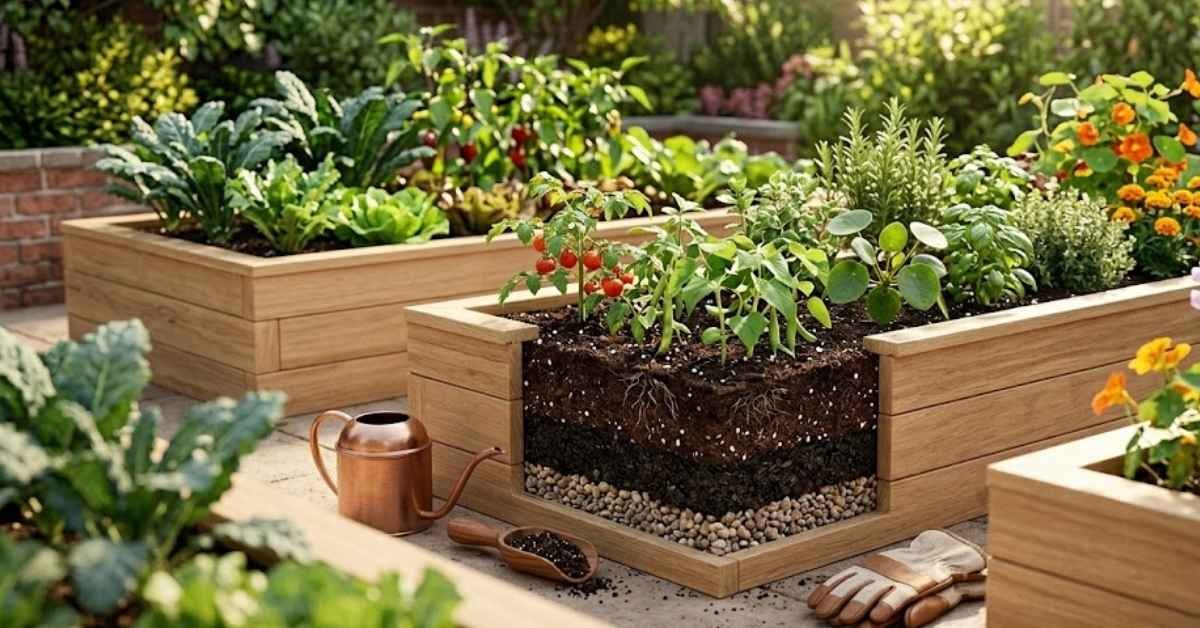
Planter Boxes: The Complete Guide to Choosing, Filling and Growing is your complete introduction to successful container gardening in small spaces. Planter boxes let you grow fresh vegetables, herbs, and greens on balconies, patios, and rooftops without needing a traditional garden. This guide explains everything from materials and soil to drainage, watering, and long-term plant health so you can avoid common beginner mistakes and grow with confidence this article, Planter Boxes: The Complete Guide to Choosing, Filling and Growing, explains every important decision from materials to soil so you avoid common beginner mistakes.
Quick Reference Cheat Sheet
| Factor | What You Need to Know |
| Best materials | Cedar and redwood (durable, food-safe); plastic (lightweight); galvanized metal (modern, needs liner) |
| Minimum depth | 6 to 8 inches herbs and lettuce · 10 to 12 inches most vegetables · 14 to 18 inches tomatoes · 18 inches or more potatoes and squash |
| Drainage | At least one hole per square foot of base; elevate box off ground |
| Soil | Never garden soil; use quality potting mix plus compost and perlite |
| Watering | When top 1 inch of soil is dry; more in summer, less in winter |
| Fertilizing | Slow-release at planting plus liquid feed every 2 to 3 weeks in growing season |
| Sun | Most vegetables and herbs need 6 or more hours of direct sun daily |
Planter Box Materials: The Honest Comparison
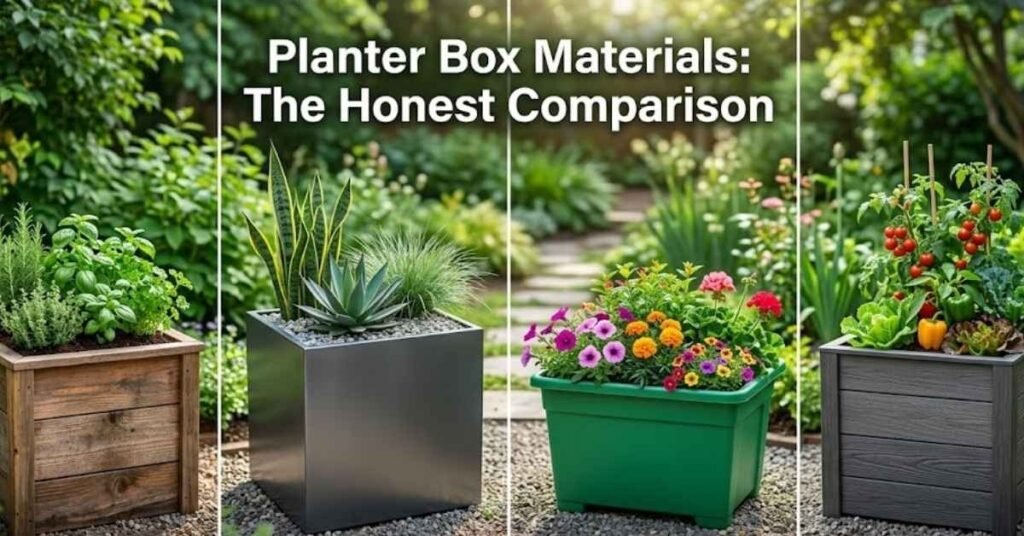
The material you choose affects lifespan, watering frequency, food safety and weight.
| Material | Lifespan | Weight | Food Safe | Best For |
| Cedar | 10 to 15+ years | Medium | Yes, naturally | Best all-round outdoor choice |
| Pine or Fir | 3 to 5 years | Medium | Yes if untreated | Budget builds; short-term use |
| Plastic | 5 to 10 years | Very light | Yes | Balconies, weight-restricted spaces |
| Galvanized Metal | 15 to 20 years | Heavy | Yes if lined | Modern aesthetic |
| Fabric or Grow Bag | 2 to 3 years | Very light | Yes | Budget option; excellent drainage |
Treated Lumber Warning: Never use pressure-treated lumber for edible crops. Preservative chemicals can leach into soil. Choose cedar, redwood or untreated wood lined with landscape fabric.
How Deep Should a Planter Box Be?
Too shallow and roots hit the bottom and reduce production. Always match the depth to the deepest-rooted plant you are growing.
| Plant Type | Examples | Minimum Depth |
| Shallow herbs and greens | Basil, chives, lettuce, spinach, arugula | 6 to 8 inches |
| Bush vegetables | Peppers, eggplant, bush beans, kale | 10 to 12 inches |
| Tomatoes and root vegetables | Tomatoes, carrots, beets, radishes | 14 to 18 inches |
| Deep-root crops | Potatoes, squash, blueberry, dwarf citrus | 18 to 24 inches |
Deep Box Tip: If your box is very deep, fill the bottom third with empty plastic bottles or foam packing peanuts wrapped in landscape fabric. This reduces potting mix needed and improves drainage.
Drainage: Why It Makes or Breaks Your Box
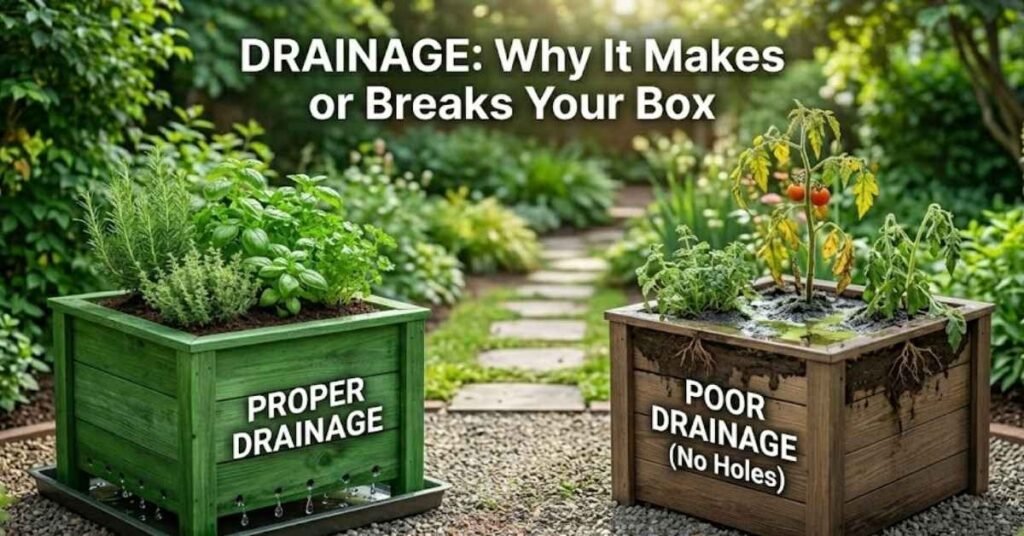
Poor drainage is the leading cause of planter box failure.
• Drill at least one drainage hole per square foot of base area, minimum half-inch diameter
• Elevate the box one to two inches off the ground using feet, bricks or a stand
• Never leave standing water in a saucer under outdoor boxes
Gravel Myth: Placing gravel at the bottom does not improve drainage. It creates a saturated layer in the root zone. Fill the entire box with potting mix plus perlite instead. Cover holes with landscape fabric to stop soil loss.
The Right Soil Mix
Garden soil compacts inside containers and blocks airflow. Always use a potting mix.
Proven Formula
2 parts quality potting mix
1 part compost
1 part perlite
Many commercial potting mixes already contain perlite and slow-release fertilizer. Check the label before adding more. Refresh soil every season with 1 to 2 inches of compost. Replace completely every 2 to 3 years as you continue learning Planter Boxes: The Complete Guide to Choosing, Filling and Growing, you’ll notice that depth, drainage and soil quality are the real foundation of success.
Watering and Fertilizing
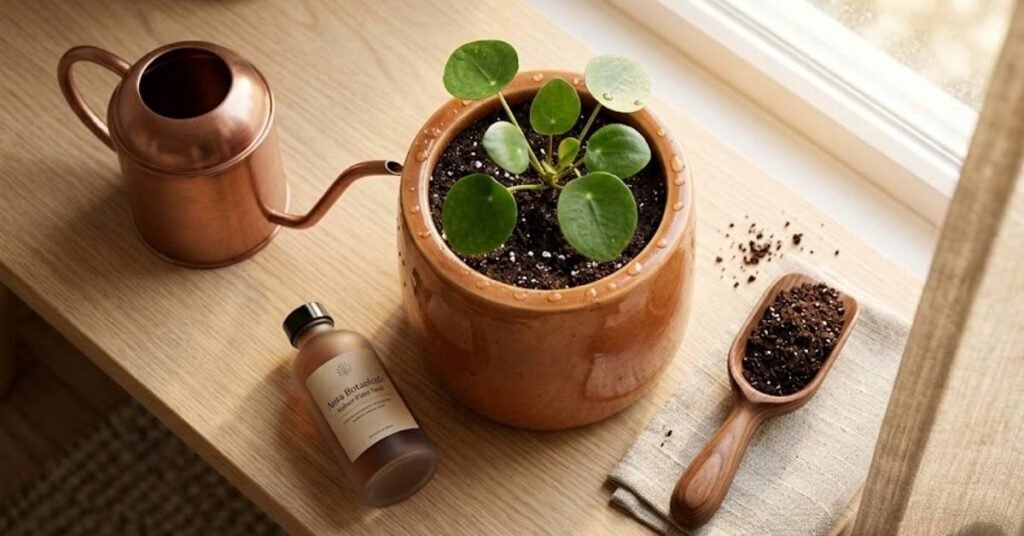
Containers dry out faster than in-ground beds.
The Finger Test: Push your finger one inch into the soil. If dry, water thoroughly until it drains from the bottom. If it’s still damp, wait. In summer heat, daily watering may be necessary.
Fertilize with slow-release granules mixed into the top three inches at planting. Supplement with liquid balanced fertilizer at half-strength every 2 to 3 weeks during the growing season. Stop feeding in late fall and winter.
Salt Build-Up: White crust on soil means fertilizer salts accumulating. Flush with plain water for several minutes once per month.
Seasonal Care at a Glance
| Season | Watering | Key Tasks |
| Spring | Resume and check daily | Refresh soil, replant, restart fertilizing |
| Summer | Often daily | Mulch surface, monitor pests, deadhead |
| Fall | Reduce frequency | Plant cool crops, final light feeding |
| Winter | Once weekly or less | Protect or store wooden boxes, stop feeding |
Winter Warning: Planter boxes freeze from all sides. Wrap wooden boxes or move them to sheltered locations during hard frosts.
Six Mistakes That Ruin Planter Boxes
| Mistake | The Fix |
| Using garden soil | Use potting mix with perlite |
| Box too shallow | Match depth to deepest plant |
| No drainage holes | Drill at least one per square foot |
| Gravel layer at bottom | Remove and use full potting mix instead |
| Overwatering | Use finger test |
| Using treated lumber | Choose cedar, redwood or untreated wood |
Common Pests and Fixes
| Pest | Spot It | Fix |
| Aphids | Clusters on new growth | Spray with water or insecticidal soap |
| Fungus Gnats | Tiny flies near soil | Let soil dry more; use sticky traps |
| Spider Mites | Fine webbing and yellowing leaves | Neem oil spray |
| Slugs | Holes in leaves overnight | Copper tape or manual removal |
| Root Rot | Wilting despite moist soil | Repot in fresh dry mix |
Frequently Asked Questions
Do planter boxes need drainage holes?
Yes for outdoor boxes. For indoor boxes, empty saucers after watering.
What is the best soil for a planter box?
Two parts potting mix, one part compost, one part perlite.
How do I stop my box drying too fast?
Mulch surface, water deeply, add coir and consider partial shade.
Can vegetables grow without direct sunlight?
Leafy greens manage within 4 to 5 hours. Fruiting crops need 6 to 8 hours minimum.
What wood should I use?
Cedar or redwood are best. Avoid pressure-treated lumber for edible crops.
Final Thoughts
A planter box gives you complete control over the most important factors in gardening: soil quality, drainage, nutrition and placement. Unlike in-ground gardens, where you must work with whatever soil and conditions you have, a planter box allows you to create the ideal growing environment from the start. You choose the right potting mix, ensure proper drainage, adjust feeding schedules and position the box for optimal sunlight. That level of control dramatically increases your chances of success, especially in small spaces like balconies, patios or rooftops.
When the foundation is right, plants grow stronger roots, resist disease more effectively and produce better yields. Even a single well-prepared planter box can provide fresh herbs, leafy greens or vegetables throughout the season. With thoughtful setup and consistent care, a compact container can deliver surprisingly abundant harvests while fitting comfortably into almost any living space.To sum up, Planter Boxes: The Complete Guide to Choosing, Filling and Growing gives you everything needed to design, fill and maintain productive planter boxes that actually thrive in real conditions.

Amin Khalid is a professional horticulturist and the founder of LeafyWisdom. With a deep passion for home gardening and horticultural research, he specializes in providing practical, easy-to-follow care guides for indoor plants. Amin’s goal is to simplify gardening for everyone and help fellow plant lovers build their own thriving green spaces.