
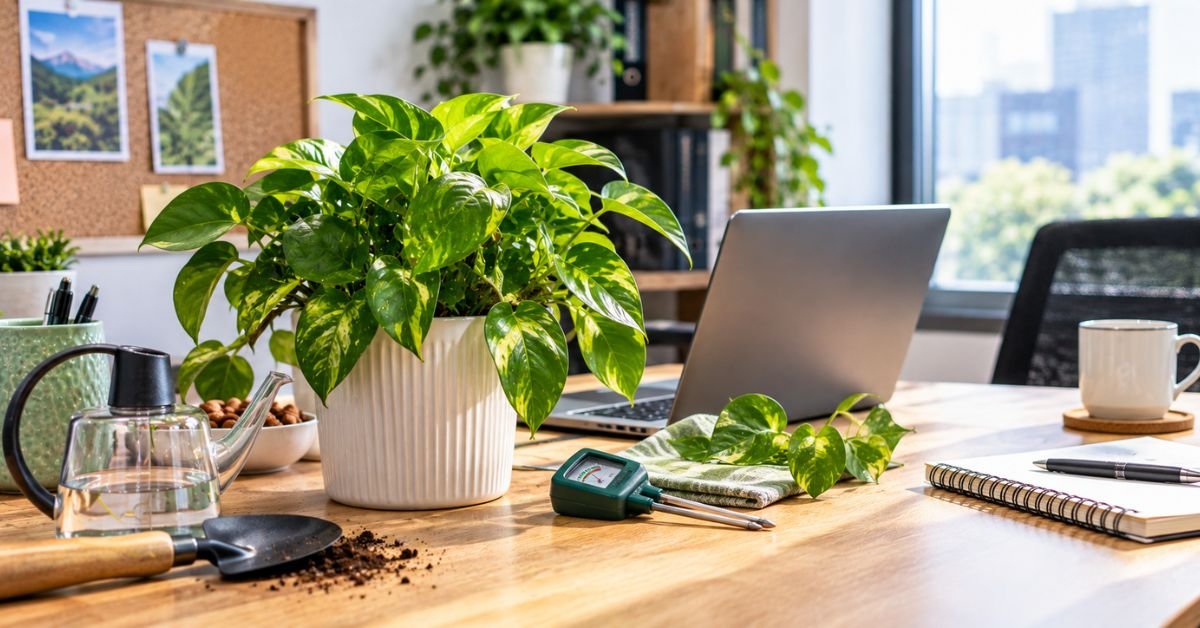
What is the secret to keeping an office plant alive under harsh fluorescent lights? To successfully grow an office plant, you must provide it with bright indirect light or a dedicated LED grow bulb, allow the potting soil to completely dry out before watering again, and keep the pot completely shielded from active air conditioning vents.
I have spent years working as a commercial horticulturist here in the US. I walk through corporate buildings every week and see the exact same tragic scenario. Someone brings a beautiful green vine into their cubicle. They water it every morning with leftover water from their coffee mug. Then they watch it slowly turn into a mushy yellow mess by Friday.
We are going to stop that cycle right now. You do not need a magical green thumb to keep workspace greenery alive. You just need to understand the mechanical reality of commercial buildings. This guide will teach you how to pick the right dirt, how to navigate aggressive heating systems, and how to stop your coworkers from accidentally drowning your favorite desk greenery.
Quick Care Matrix for Your Office Plant
| Care Element | Best Practice | Common Workspace Mistake |
| Lighting | Bright indirect window sun or dedicated LED | Assuming dark cubicles provide enough light |
| Watering | Drench only when the top two inches are dry | Watering daily or using chilled water cooler water |
| Airflow | Stable room temperatures around 70 degrees | Placing the pot directly under a cold AC vent |
| Soil Mix | Fast draining indoor potting soil with perlite | Using heavy garden dirt that traps moisture |
Personal Pro-Tip: Do not let your pot sit in a puddle of stagnant water on your desk. Keep a small stack of paper towels nearby. Ten minutes after you water the soil, soak up any extra water that has collected in the bottom saucer.
The Truth About Cubicle Lighting Needs
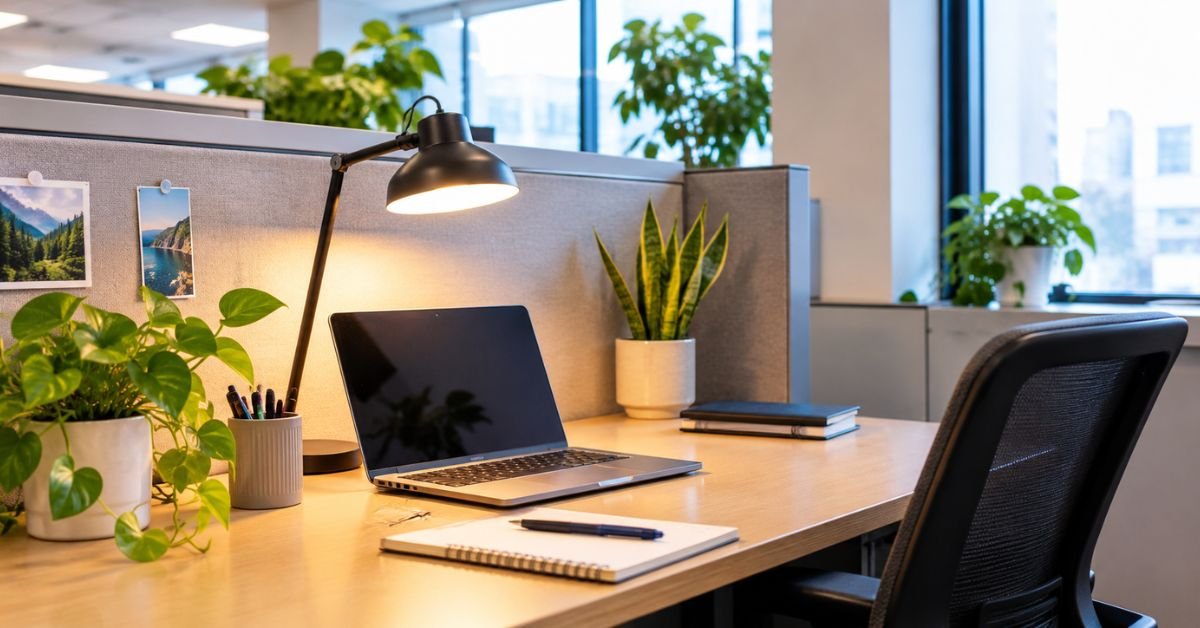
Commercial lighting is highly deceptive. To human eyes, a brightly lit open concept floorplan seems like plenty of light. To a leafy vine, those standard ceiling panels are practically a dark cave.
Plants need specific spectrums of light to trigger photosynthesis. If your desk is more than ten feet away from a real window, your greenery is slowly starving. Low light varieties will survive in windowless rooms for a few months, but they will eventually stop growing entirely.
If you do not have a window seat, you need to bring in artificial help. Buy a small, full spectrum LED grow bulb and clip it to your monitor stand or desk partition. Point it directly at the leaves and leave it on for about eight hours a day. This simple fix gives the foliage the exact energy it needs to maintain its color.
Personal Pro-Tip: Dust is a massive problem in commercial spaces. A thick layer of gray dust will coat your leaves every few weeks and block out whatever little light is available. Wipe the foliage down gently with a damp microfiber cloth at the end of every month.
Top Foolproof Choices for Your Office Plant Collection
I always get asked which species actually survive the corporate environment. You want varieties that tolerate neglect and inconsistent schedules.
The Snake Plant is an absolute powerhouse for beginners. It features thick, upright leaves designed to retain moisture for long periods. The snake plant can often go several weeks without watering. It handles bright indirect light and dim corners equally well.
The ZZ Plant is another incredibly tough option. It produces glossy green foliage and uses underground rhizomes to store its own water reserves. It is incredibly forgiving if you forget your watering schedule during a busy work week.
Pothos is a highly adaptable trailing vine that grows rapidly. You can drape it over your monitor or let it hang from a high shelf. Just make sure the dirt dries out between waterings.
Personal Pro-Tip: Always buy your desk greenery from a dedicated local nursery instead of a big box hardware store. Nursery stock is generally healthier, pest-free, and potted in better soil from day one.
Solving the Watering Problem for Office Plants
The fastest way to kill an office plant is by letting your coworkers help you take care of it. Overwatering is the absolute leading cause of death for indoor greenery. If you water a pot on Monday, and the person at the next desk thinks it looks thirsty on Wednesday, the roots will rot from suffocation. University extension experts note that most indoor greenery prefers evenly moist but never soggy dirt.
You must establish strict boundaries. Put a sticky note on the pot that says you are the only person allowed to water it.
When it is actually time to water, use the finger test. Push your index finger two inches deep into the soil. If it feels wet, do not add a single drop. When the dirt feels completely dry and dusty, take the entire pot to the breakroom sink. Run lukewarm water from the faucet directly over the soil until it streams out of the bottom drainage holes.
Do not use water from the breakroom water cooler. That water is usually chilled. Blasting delicate tropical roots with ice cold water causes massive thermal shock. Always use room temperature tap water. If your municipal tap water smells heavily of chlorine, fill a cup and let it sit on your desk overnight so the chemicals evaporate before pouring it into the dirt.
Personal Pro-Tip: Never use leftover tea or black coffee to water your dirt. I see this happen constantly in cubicles. Coffee changes the acidity of the soil rapidly and promotes heavy fungal mold growth right on your desk.
Navigating Aggressive HVAC Vents
Commercial heating and cooling systems are incredibly aggressive. Corporate buildings are designed to blast cold air conditioning all Summer and pump dry heat all Winter.
Tropical houseplants are genetically designed to live in stable, humid jungle environments. When you place a pot directly under a ceiling air vent, the sudden drop in temperature shocks the cellular structure of the leaves. The foliage will panic and drop to conserve energy.
Winter heating is just as bad. The forced hot air strips all the natural humidity out of the room. Your leaves will develop dry, crispy brown edges that crack when you touch them.
You must position your desk greenery strategically. Map out where the air vents are located in your workspace. Place your pots in a neutral zone where the air remains still. If you cannot escape the dry winter heat, bring a small pebble tray to work. Fill a shallow dish with gravel and water, then place the pot on top of the gravel. As the water evaporates, it creates a tiny humid microclimate right around the leaves.
Personal Pro-Tip: Do not use aerosol spray misters in a shared workspace. Misting only raises the humidity for about five minutes. You will also likely end up spraying water droplets all over your coworker’s expensive electronics.
Building the Best Potting Soil Mix
Research from various university agricultural extension programs consistently shows that poor drainage is the leading cause of houseplant failure. Commercial nurseries pack their inventory in heavy peat moss because it retains water during shipping. If you keep that same dense dirt in a climate controlled corporate building, it will stay wet for weeks and drown your root system.
You need to repot your new greenery the weekend before you bring it into work. You want a chunky, aerated dirt mix that drains rapidly.
I always mix my own batch using a simple recipe. Mix 50 percent standard indoor potting soil, 30 percent chunky perlite, and 20 percent coarse orchid bark. The perlite and bark create physical air pockets under the dirt. These pockets allow the roots to breathe oxygen and prevent dangerous bacteria from multiplying in the dark.
Personal Pro-Tip: Do not repot into a container that is massive. The new pot should only be one to two inches wider than the root ball. A pot that is too large holds too much wet dirt, leading directly to root rot.
Troubleshooting Sick Workspace Greenery
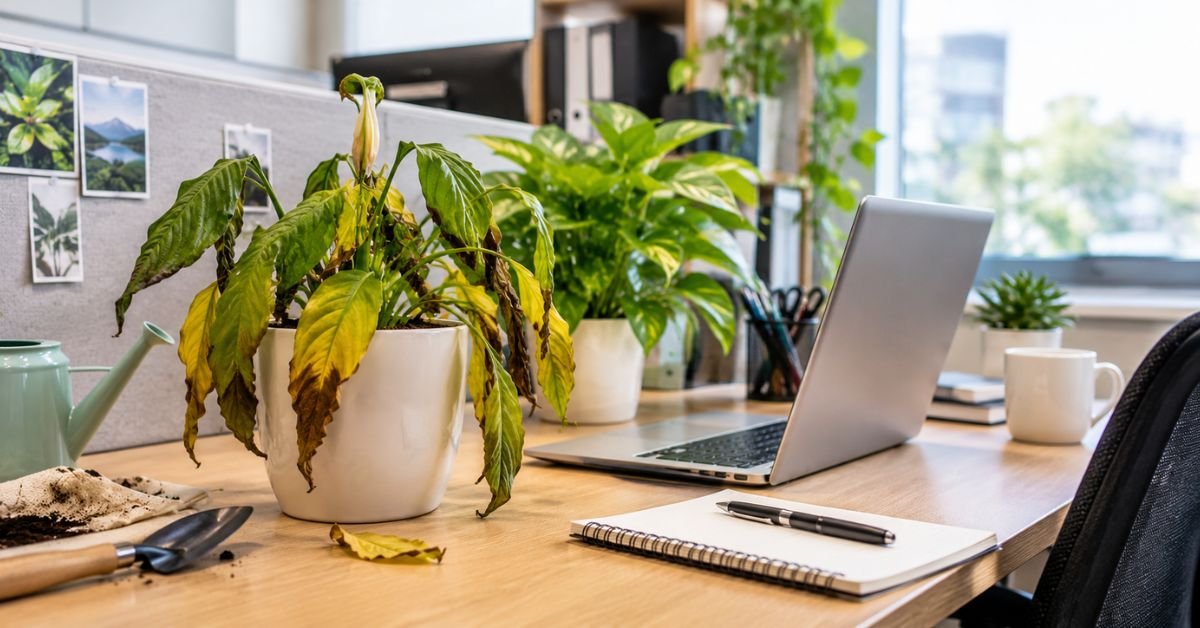
Plants communicate their stress very clearly. You just need to know how to read the visual signs before the damage becomes permanent. Let us look at the most common issues you will face at your desk.
Why Is My Office Plant Turning Yellow?
If the lowest leaves turn soft, mushy, and bright yellow, you are dealing with a severe overwatering issue. The roots are rotting in wet mud. Stop watering immediately. Check the bottom of your pot to ensure the drainage holes are not blocked. Allow the dirt to dry out completely before you even think about using the faucet again.
Fixing Crispy Brown Tips
Dry brown tips are a classic sign of low humidity or chemical burn from tap water. Corporate buildings run massive heating systems in the Fall and Winter that destroy ambient moisture. Try switching to filtered water or letting your tap water sit out overnight. If the problem continues, move the pot to a pebble tray to increase local humidity.
Banishing Office Plant Pests
Tiny black bugs flying around your monitor screen are fungus gnats. They lay their eggs in wet dirt. Coworkers absolutely hate fungus gnats. To stop an infestation, you must let the top three inches of soil dry out completely between waterings. The gnat larvae cannot survive in dry dirt.
Personal Pro-Tip: If you see sticky white webbing where the leaves meet the stem, you have spider mites. Take the pot home immediately. Spider mites spread like wildfire in dry commercial buildings. Wash the leaves thoroughly with insecticidal soap in your shower.
Toxicity and Safety With Your Office Plant
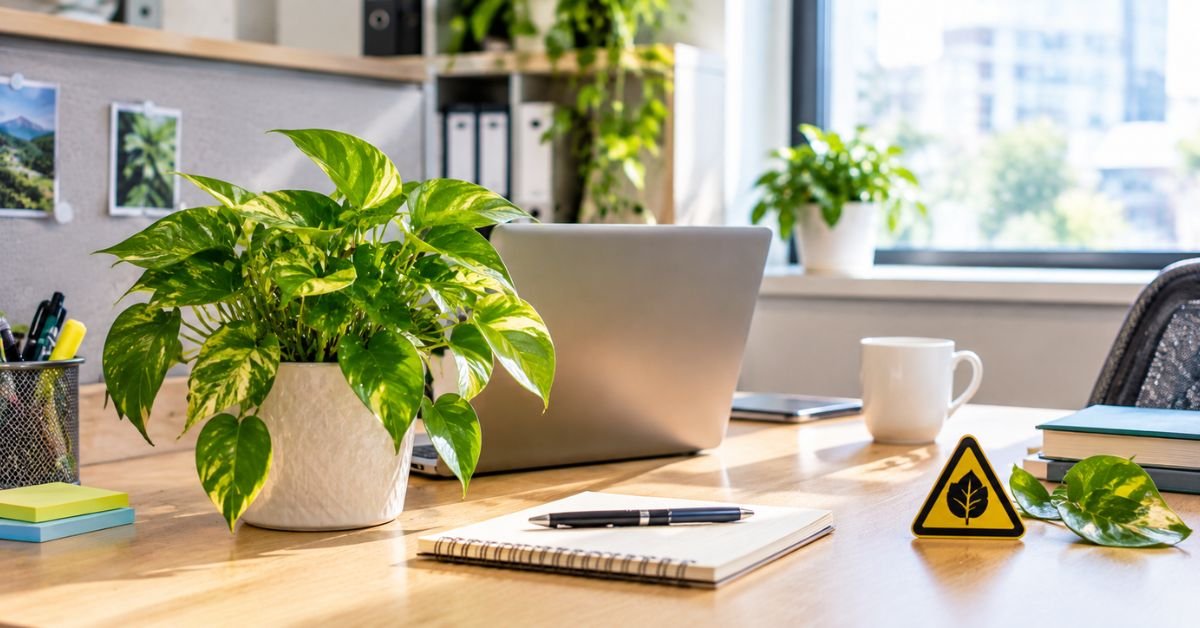
You might not have pets in your cubicle, but toxicity is still a major factor to consider in a shared environment.
According to the ASPCA animal poison control database, many popular desk varieties contain sharp calcium oxalate crystals. This includes common choices like pothos vines, ZZ plants, and peace lilies. If someone brushes against a snapped stem and gets the sap on their skin, it can cause severe contact dermatitis and burning rashes.
Many people also have intense allergies to pollen. Never bring heavily scented blooming flowers into a shared space. Stick to foliage varieties with zero fragrance. If your company allows dog friendly office days, you must keep toxic greenery pushed to the absolute back edge of your desk where curious snouts cannot reach them.
Personal Pro-Tip: If you accidentally snap a leaf and get sticky white sap on your fingers, go to the restroom and wash your hands with warm water and soap immediately. Do not rub your eyes under any circumstances.
Frequently Asked Questions About the Office Plant
Q1: Can I leave my office plant alone during a two week vacation?
Yes, but you need to prepare it first. Water it thoroughly the day before you leave. Move it away from hot windows into a shadier spot so it uses less water while you are gone.
Q2: Are succulents good for windowless cubicles?
No. Succulents are desert natives that require hours of intense, direct sunlight every single day. If you put a succulent in a windowless room, it will stretch out, turn pale, and die within two months.
Q3: How often should I fertilize my desk greenery?
Only fertilize during the active growing seasons of Spring and Summer. Use a standard liquid houseplant fertilizer diluted to half strength once a month. Stop feeding entirely during the Fall and Winter when growth naturally slows down.
Q4: Can a plant survive freezing temperatures if I leave it by the window in winter?
No tropical foliage can survive freezing drafts. The cold temperatures burst the plant cells, turning the leaves into black mush. Pull your pots at least three feet away from icy window panes.
Q5: What is the best USDA Hardiness Zone for keeping these outside?
Most common desk varieties can only survive outdoors year round in USDA Zones 10 through 12. In any other zone across the country, they must remain indoors where temperatures are strictly controlled.
Final Thoughts on Keeping Cubicle Greens Alive
Growing an impressive office plant is entirely possible if you respect the limitations of your building. You have to be proactive about lighting and incredibly strict about your watering schedule.
Protect your foliage from the freezing blasts of the air conditioning vents. Keep your coworkers away from your watering can. Always use a chunky soil mix that drains fast. Once you get these basic mechanics right, your desk will look like a lush jungle while everyone else is staring at bare gray walls.
Have you ever successfully revived a dying cubicle vine? Are you currently battling a stubborn case of fungus gnats at work? Drop a comment below and share your exact setup, or ask a question if you need help diagnosing a sad desk leaf!

Amin Khalid is a professional horticulturist and the founder of LeafyWisdom. With a deep passion for home gardening and horticultural research, he specializes in providing practical, easy-to-follow care guides for indoor plants. Amin’s goal is to simplify gardening for everyone and help fellow plant lovers build their own thriving green spaces.

No responses yet