
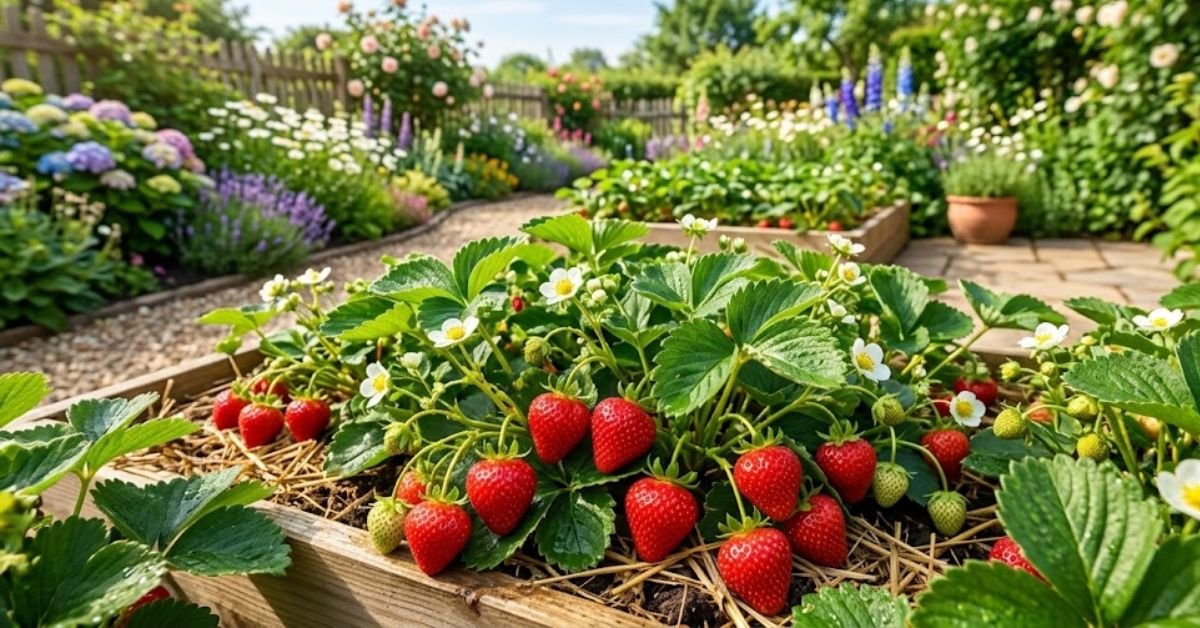
I have grown just about every berry you can think of over the past twenty years in my backyard. While June-bearers are fantastic for a massive, sudden wave of fruit, they can quickly overwhelm a busy home gardener. That is exactly why I always recommend planting everbearing strawberry plants instead. These resilient beauties do not dump their entire harvest on you in a single week. Instead, they provide a steady, highly manageable yield of sweet berries from late Spring right up until the first autumn frost hits. In my years of trial and error across different USDA zones, I’ve found that success is incredibly easy if you get the fundamentals right. Let’s get your patch started.
| Care Factor | Requirements for Everbearing Strawberry Plants |
| Sunlight | Full sun (6 to 8+ hours of direct sunlight daily) |
| USDA Hardiness Zones | Zones 4 through 9 (varies slightly by cultivar) |
| Soil Conditions | Well-drained potting soil or fertile sandy loam (pH 5.5 to 6.8) |
| Watering | 1 to 1.5 inches per week; keep soil evenly moist but never waterlogged |
| Fertilizer | Balanced 10-10-10 or organic berry food every 4 to 6 weeks |
| Pet Safety | 100% non-toxic to dogs and cats |
Why Grow Everbearing Strawberry Plants in Your Backyard?
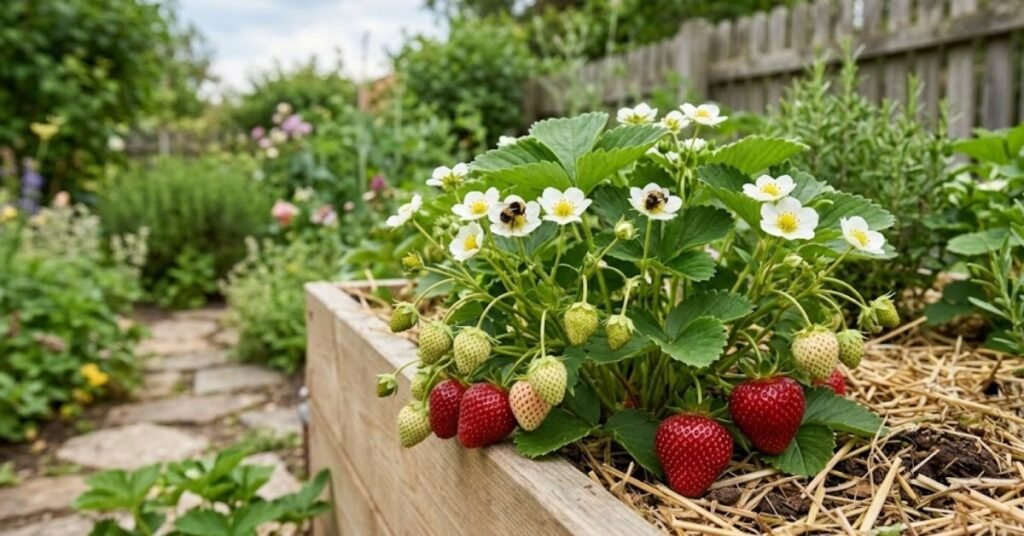
I have grown just about every berry you can think of over the past twenty years. June-bearers are fantastic if you want a massive, sudden wave of fruit to make jams all at once. But if you want to walk out to your backyard patio in late August and pick a handful of sweet berries for your morning cereal, you need everbearing strawberry plants.
They do not overwhelm you with a giant harvest in one week. Instead, they give you a steady, highly manageable yield from late Spring right up until the first frost hits in the Fall.
Personal Pro-Tip: When your bare-root bundles arrive in the mail in early Spring, do not let them sit around and dry out. I always soak my bare-root strawberry roots in a bucket of room-temperature water for about an hour right before they go into the ground. It wakes them up instantly and cuts down on transplant shock.
How to Set Up Your Everbearing Strawberry Plants for Success
Getting the initial planting depth right will save you months of absolute heartbreak. I see too many home gardeners treat these like standard nursery perennials, burying them way too deep in the mud.
Sunlight and Climate for Everbearing Strawberry Plants
These plants absolutely demand full sun. We are talking about a bare minimum of six to eight hours of unfiltered, direct sunlight hitting those leaves every single day. If you live down south in a scorching hot region like Texas or Georgia, give them a spot with light afternoon shade. Extreme summer heat over 85°F can cause them to temporarily pause their fruit production.
If you are starting your runners or bare-roots early indoors on a sunny windowsill, pay close attention to your home environment. Air conditioning vents blowing dry, freezing air directly onto the young leaves will stunt their growth or completely shrivel up the new flower buds before they can bloom.
Soil and Watering Secrets
Strawberries hate wet feet. If you are planting in containers, traditional strawberry jars, or hanging baskets, grab a premium, loose potting soil mixed with a bit of perlite rather than heavy garden soil. The water needs to run right out the bottom drainage holes freely.
When you turn on the faucet to water your patch, aim the nozzle directly at the base of the plant. Try your best not to soak the leaves. Wet foliage is an open invitation for powdery mildew, leaf spot, and gray mold to ruin your crop.
Personal Pro-Tip: Plant so that the exact midpoint of the crown—the swollen, woody area where the roots meet the green stems—is completely level with the top of the soil surface. If you bury the crown, it rots and dies within weeks. If you leave it sticking out too high, the top roots dry out and the plant fails.
Common Mistakes Americans Make with Everbearing Strawberry Plants

Let’s talk about why people fail with these plants. The single biggest mistake I see in American backyards is letting a brand-new plant produce fruit too early in its lifecycle.
It hurts to do it, I know. But when your new plants throw out their very first beautiful white flowers in April or May, you must pinch them off. Keep pinching off every single blossom for the first six weeks after planting.
Why? Because you want the young plant to dump every ounce of its energy into building a massive, resilient root system. If you let it produce berries immediately, the plant stays tiny, weak, and exhausted for the rest of the summer.
Another classic error is overwatering out of panic during a heatwave. People assume that because fruit is juicy, the soil needs to stay muddy. Strawberry roots will rot incredibly fast if they sit in stagnant water.
Personal Pro-Tip: Always mulch your strawberry beds with clean wheat straw or pine needles. This keeps the heavy, developing fruit off the bare, damp ground, saving your harvest from turning into a mushy, bug-eaten mess. It also does a phenomenal job of keeping the soil cool during dry July heatwaves.
Troubleshooting Everbearing Strawberry Plants Issues
Gardening is rarely a perfect science. You will probably encounter a few bumps along the road, but most issues can be fixed with quick, simple adjustments.
- Leaves turning yellow with bright green veins: This is usually iron chlorosis. It happens when your soil is too alkaline. Strawberries prefer a slightly acidic pH. Test your dirt, or feed them an organic fertilizer designed for acid-loving small fruits.
- Brown, crispy leaf margins and tips: Check your moisture levels. If the soil is bone dry, they need a deep, thorough drink. However, if this happens to patio container plants positioned right next to an active home air conditioning exhaust or window unit, dry air currents are the culprit. Move the pots away from the draft.
- Deformed, tiny, or misshapen berries: This almost always points to poor pollination. If it rains for a week straight in Spring and the bees cannot fly, the fruits will not form correctly. Don’t sweat it—the next wave of flowers will produce gorgeous berries once the weather clears.
Personal Pro-Tip: Keep a sharp eye out for birds. They love bright red berries just as much as you do. The absolute minute I see the first hint of pink blush on my fruit, I throw lightweight bird netting over the entire patch. Otherwise, local robins will strip your plants clean before breakfast.
Is Growing Everbearing Strawberry Plants Safe for Pets?
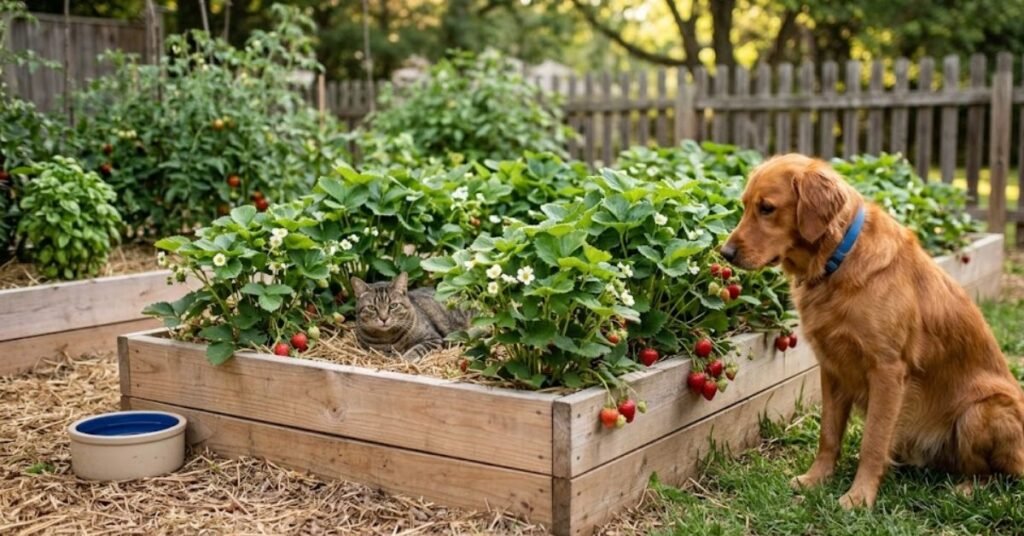
Here is some fantastic news for those of us with furry family members: everbearing strawberry plants are completely non-toxic to dogs and cats. The ASPCA officially lists the entire plant leaves, stems, and fruit as completely safe.
If your dog sneaks into the garden patch and gobbles down a few ripe berries or munches on a stray leaf, there is absolutely no need to panic.
Just monitor them to ensure they don’t eat an excessive amount of raw green leaves, as a sudden overload of fiber can cause a minor upset stomach, but the plant itself contains no harmful toxins.
Personal Pro-Tip: If you apply commercial organic fertilizers to your strawberry beds, keep your pets indoors for at least 24 to 48 hours. Dogs are heavily attracted to the potent smell of organic soil amendments like bone meal, blood meal, or fish emulsion, and they will try to dig up your plants to eat the fertilizer.
Frequently Asked Questions About Everbearing Strawberry Plants
Q1Do everbearing strawberry plants produce runners?
Yes, they do, but far fewer than June-bearing varieties. They put almost all of their daily energy into making flowers and fruit instead of cloning themselves. I highly recommend clipping off the few runners they do make during their first year to keep the mother plant strong and highly productive.
Q2How many years do these strawberry plants last before replacing?
A well-maintained patch will give you excellent harvests for about three to four years. After that point, the older plants naturally lose their vigor, and the overall berry size drops off significantly. I usually plan ahead and start a fresh secondary patch with new bare-roots every three years so my backyard never runs out of fruit.
Q3Can I grow everbearing varieties successfully in USDA Zone 4?
Absolutely. Popular cold-hardy varieties like Albion, Seascape, and Evie 2 handle the freezing winters of Zone 4 beautifully. You just need to give them a thick 4-inch blanket of straw mulch in late Fall once the ground freezes solid to protect the crowns from severe winter injury and frost heaving.
Q4Why are my homegrown strawberries sour instead of sweet?
This almost always comes down to a lack of intense sunlight or bad timing with water. If the weather has been cloudy and overcast for a week, the plant cannot manufacture enough sugars. Overwatering your plants right before you pick the fruit will also dilute the natural sugars, making the berries taste watery and tart.
Q5When should I fertilize my strawberry patch?
I feed my plants every four to six weeks starting in early Spring as soon as new green growth pops up. Use a balanced, organic berry food. Stop applying all fertilizer by late August so the plant does not push out tender new leaf growth right before the autumn frost arrives.
Q6Can I grow these strawberries entirely indoors?
It is incredibly tough but possible if you use high-intensity LED grow lights. Standard indoor household lighting is simply not strong enough for these plants to set sweet fruit. Also, remember that since there are no bees in your living room, you will have to manually pollinate the flowers using a small, soft paintbrush.
Q7What is the actual difference between everbearing and day-neutral strawberries?
Technically speaking, classic everbearing types produce two to three distinct waves of fruit a season, while modern day-neutrals ignore day length completely and produce continuously. Today, most American nurseries use these terms interchangeably on plant tags, and both types will give you consistent fruit all summer long.
Final Thoughts
Growing your own food is deeply rewarding, and starting out with a patch of these continuous producers is one of the smartest moves a home gardener can make. It does not take a degree in agriculture to get a beautiful harvest just plenty of bright sunshine, incredibly well-draining soil, and a little bit of discipline to pinch those early blossoms. Give them a try this Spring, and you will be enjoying fresh, homegrown treats all the way until the autumn chill sets in.

Amin Khalid is a professional horticulturist and the founder of LeafyWisdom. With a deep passion for home gardening and horticultural research, he specializes in providing practical, easy-to-follow care guides for indoor plants. Amin’s goal is to simplify gardening for everyone and help fellow plant lovers build their own thriving green spaces.

No responses yet