
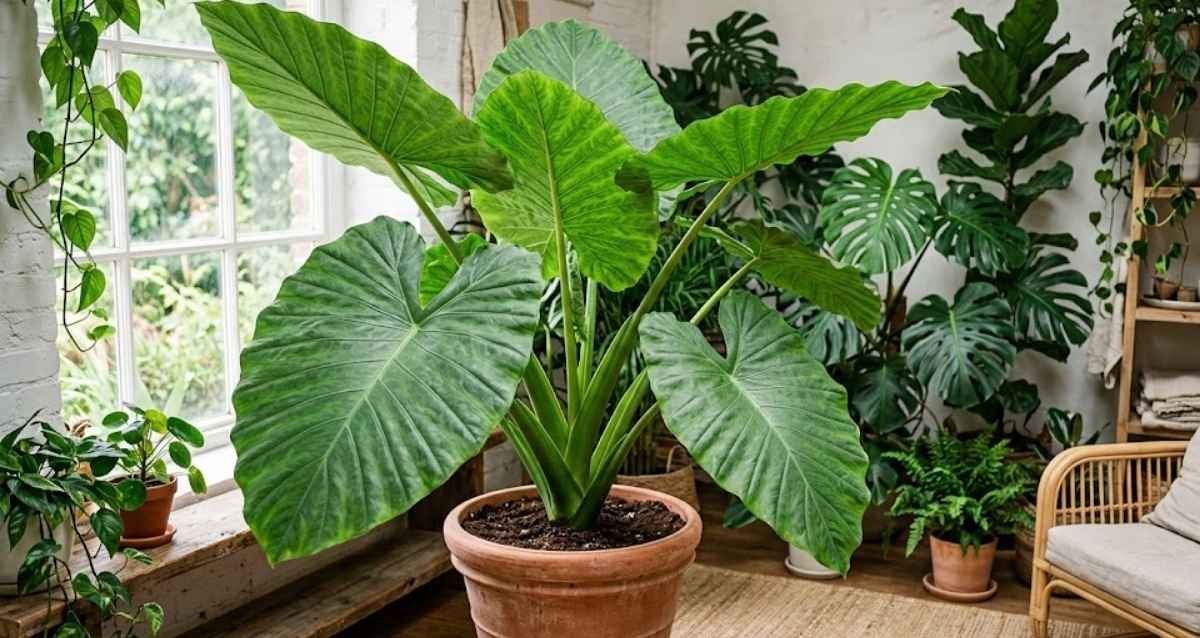
Elephant ear plant care is essential for anyone looking to grow these bold, tropical statement plants successfully. Known for their massive, dramatic leaves and fast growth, elephant ear plants can instantly transform both indoor and outdoor spaces into a lush, jungle-like environment. However, proper elephant ear plant care requires understanding that this name refers to multiple plant types, including Alocasia, Colocasia, and Xanthosoma, each with slightly different needs. From choosing the right soil mix to managing water, light, and humidity, mastering elephant ear plant care is the key to achieving healthy plants with oversized foliage that thrives season after season.
Quick Care Summary
| Requirement | Ideal Range |
| Light | Bright, filtered light; avoid harsh midday sun |
| Water | Consistently moist soil (never waterlogged) |
| Soil | Rich, aerated Aroid mix (pH 5.5–6.5) |
| Temperature | 65°F–90°F (growth slows below 60°F) |
| Humidity | 50%+ (essential for indoor Alocasia) |
| Fertilizer | High-nitrogen feed every 2 weeks in growing season |
| Toxicity | Toxic if ingested (calcium oxalate crystals) |
Understanding the Genera: Alocasia vs. Colocasia vs. Xanthosoma
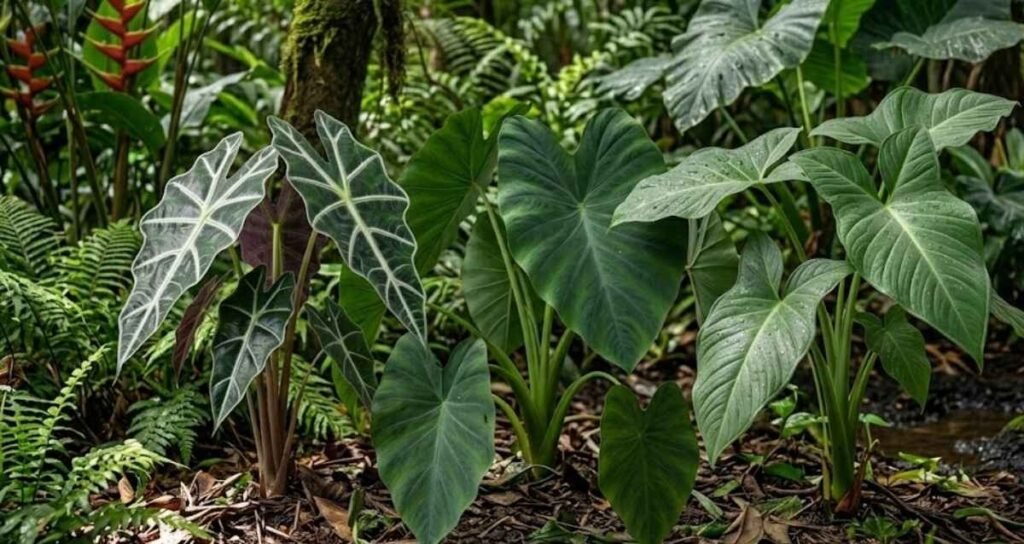
Colocasia (Downward-Facing Leaves)
Colocasia, often known as taro, typically has leaves that angle downward. Species such as Colocasia esculenta naturally grow along riverbanks and tolerate very wet soil. They thrive in consistently moist conditions and are ideal for garden beds or large outdoor containers.
Alocasia (Upright Leaves)
Alocasia varieties usually hold their leaves upright or outward. Many popular houseplants fall into this genus. Unlike Colocasia, they dislike soggy soil and are highly prone to root rot if overwatered. They require excellent drainage and higher humidity indoors.
Xanthosoma (Arrow-Shaped Leaves)
Xanthosoma is less common but prized for its arrow-shaped foliage and thick texture. Varieties such as Xanthosoma sagittifolium often feature dramatic coloring and strong structural form.
The Ideal Aroid Soil Mix
Standard potting soil is often too dense. Over time it compacts, restricting airflow and suffocating roots. Elephant ears perform best in a chunky, well-draining Aroid mix that mimics rainforest soil.
Recommended Mix
- 40% high-quality potting soil
- 20% perlite or pumice
- 20% orchid bark
- 10% horticultural charcoal
- 10% worm castings
This combination balances moisture retention with essential airflow.
Container Requirements for Indoor Alocasia
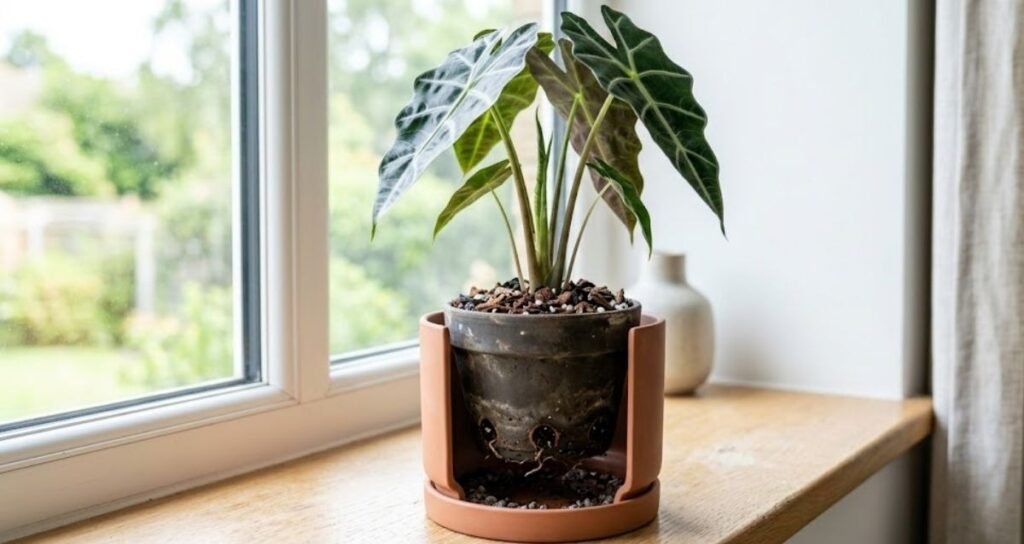
Choosing the right pot is critical for indoor success.
Proper Pot Size
Select a container only 2 inches wider than the root ball. Oversized pots retain excess moisture, increasing the risk of rot.
Material Selection
- Terracotta: Ideal for heavy waterers; absorbs excess moisture.
- Glazed ceramic or plastic: Retains moisture longer; useful for drier environments.
- Heavy base: Larger varieties such as Alocasia macrorrhizos require stability to prevent tipping.
Drainage Is Non-Negotiable
Always use pots with drainage holes. Decorative containers without holes should be used only as outer cachepots.
Propagation Methods
Elephant ears naturally multiply, making propagation straightforward.
Dividing Offsets
- Wait until the offset has at least two leaves.
- Remove the plant from its container.
- Locate the connecting root between mother and offset.
- Cut with a sterilized blade, ensuring the baby has roots.
- Repot into a fresh Aroid mix and maintain warmth and humidity.
Dividing the Corm
For mature plants:
- Slice the tuber into sections with at least one visible growth eye.
- Allow sections to dry for 24–48 hours to callous.
- Plant with the growth eye facing upward.
Callousing prevents rot and significantly improves success rates.
The Three Pillars of Growth
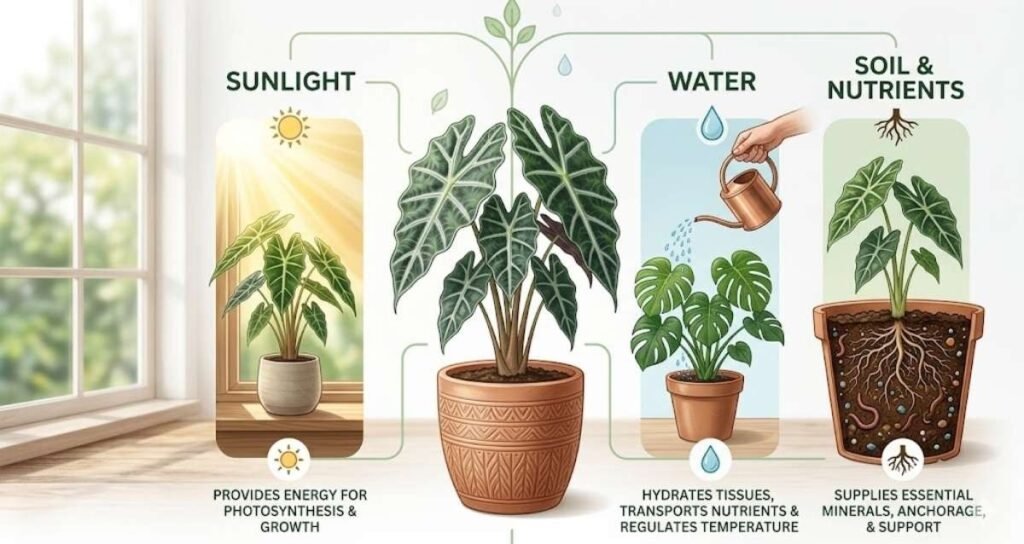
Light
Provide bright, indirect light. Morning sun is ideal; harsh afternoon sun may scorch leaves.
Water
- Colocasia: Keep soil consistently moist.
- Alocasia: Allow the top 2 inches to dry slightly between watering.
Avoid stagnant water at all costs.
These tropical plants thrive best in bright, indirect light similar to their natural rainforest environment.
Feeding
Elephant ears are heavy feeders. Use a nitrogen-forward fertilizer such as 20-10-10 or 10-5-5 every two weeks during spring and summer. Discontinue feeding during winter dormancy.
Seasonal Care and Overwintering
In climates below 40°F, winter protection is necessary.
- After the first light frost, allow foliage to die back naturally.
- Cut stems down to 3 inches.
- Dig up bulbs and brush off soil without washing.
- Store in dry peat moss or sawdust at approximately 50°F.
- Replant when soil temperatures reach 65°F in spring.
This dormancy period preserves energy for the next growing cycle.
Troubleshooting Common Issues
Yellowing Leaves
Older lower leaves yellow naturally. If new growth yellows, reduce watering.
Leaf Drooping
Usually indicates thirst or insufficient light. If soil is wet and drooping persists, inspect roots for rot.
Spider Mites
Common in dry indoor air. Increase humidity and treat promptly with neem oil.
Guttation
Water droplets at leaf tips are normal and indicate healthy hydration.
Frequently Asked Questions
1. Why is my plant dripping water?
This is called guttation, a natural process where the plant releases excess moisture through its leaves.
2. How fast do they grow?
In peak summer, a healthy Colocasia esculenta can produce a new leaf every 7–10 days.
3. Are they safe for pets?
No. All parts contain calcium oxalate crystals and should be kept away from pets and children.
4. Can they grow in full sun?
Only in humid northern climates. In intense southern sun, the foliage can scorch or burn.
5. Do they need large pots?
They need stability, not excessive soil volume. Increase pot size gradually as the plant grows.
6. Can they grow from seed?
It’s possible, but unreliable. Division is a faster and more consistent method.
Conclusion
Elephant ears are statement plants that reward precision. By selecting the correct genus, using an aerated soil mix, choosing appropriate containers and understanding dormancy cycles, you can cultivate dramatic, oversized foliage season after season.
Regular leaf cleaning improves photosynthesis and reduces pest pressure. With proper care, your plant will become the focal point of any space.

Amin Khalid is a professional horticulturist and the founder of LeafyWisdom. With a deep passion for home gardening and horticultural research, he specializes in providing practical, easy-to-follow care guides for indoor plants. Amin’s goal is to simplify gardening for everyone and help fellow plant lovers build their own thriving green spaces.

No responses yet