
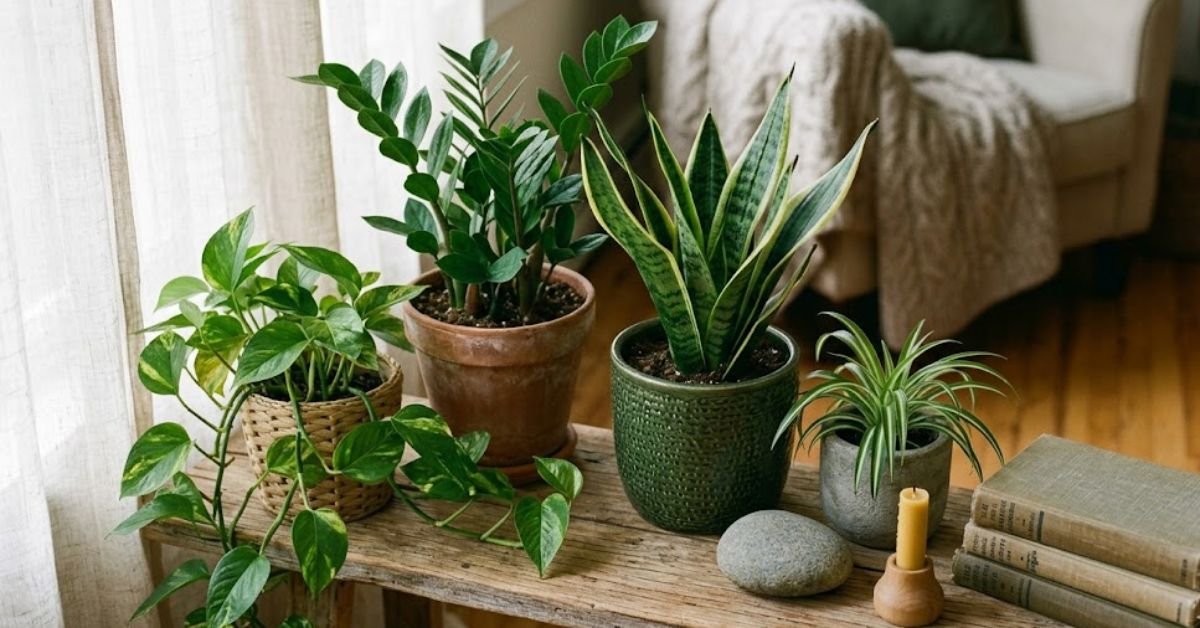
If you are looking for fresh wellness nook plant ideas to transform a quiet corner of your home into a relaxing oasis, you have likely realized that keeping indoor greenery alive in a typical American household is harder than it looks on social media. I have spent over two decades rescuing houseplants from the brink of collapse and designing indoor green spaces across the United States. If there is one thing I have learned, it is that a relaxation corner isn’t about throwing a random assortment of pretty pots together and hoping for the best. It requires intention. It is about stepping away from your laptop, ignoring the constant ping of notifications, and taking a deep breath of clean air.
Quick Reference: Choosing Your Wellness Nook Plant Ideas
For the skimmers out there, here is a quick-glance breakdown of the best living contenders for your sanctuary space.
| Plant Common Name | Light Requirement | Watering Frequency | Pet Safety (ASPCA Standard) | Best Visual Feature |
| Snake Plant (Sansevieria) | Low to Bright Indirect | Every 3–4 weeks | Toxic to Cats & Dogs | Architectural, upright lines |
| Golden Pothos | Low to Bright Indirect | When top 2 inches dry | Toxic to Cats & Dogs | Trailing, cascading vines |
| Bird’s Nest Fern | Medium Indirect + Humid | Weekly (keep evenly moist) | Safe for Pets | Rosette of wavy green fronds |
| Parlor Palm | Medium Indirect | When top half of soil dries | Safe for Pets | Feathery, tropical canopy |
| Peace Lily | Low to Medium Indirect | Weekly (it wilts when thirsty) | Toxic to Cats & Dogs | Elegant white spathes |
Personal Pro-Tip: Don’t just buy a plant because it looks good on a shelf in the local nursery. Grab the pot, hold it at eye level right where you plan to sit at home, and see how it affects your sightline. Your wellness space needs to feel open and protective, not claustrophobic or crowded.
Designing a Sanctuary: Why Wellness Nook Plant Ideas Matter
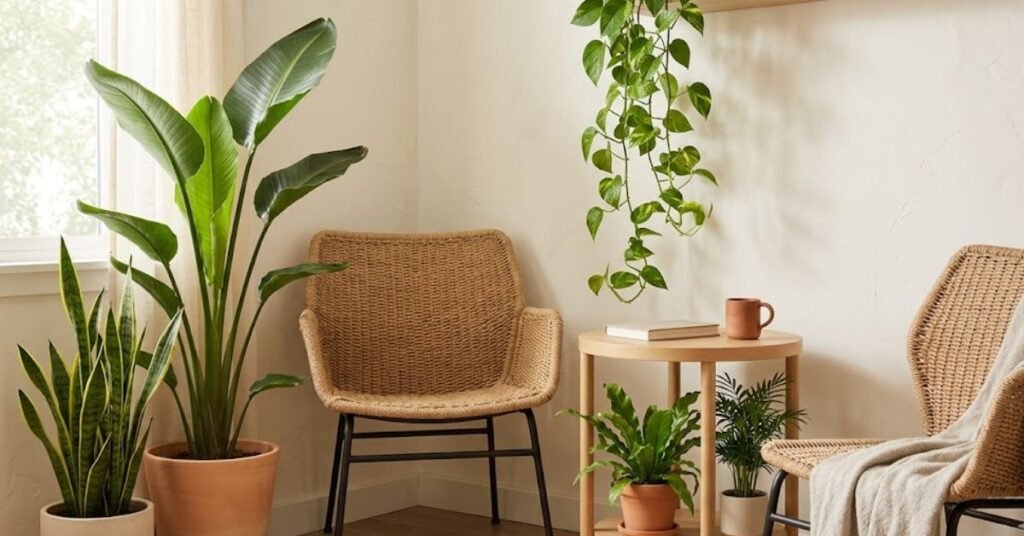
Human beings possess an innate need to connect with nature. Psychologists call it biophilic design. I call it staying sane. When you integrate deliberate wellness nook plant ideas into your layout, you aren’t just decorating a corner. You are constructing a living micro-sanctuary specifically engineered to lower your cortisol levels.
In my years of consulting for residential clients from New England down to southern California, I have watched people completely transform their daily mental health routines just by changing a single corner of their home. They stop checking headlines first thing in the morning. Instead, they sit in a cozy accent chair, look at the fresh unfurling leaf of a cascading vine, and just exist for ten quiet minutes.
How Air Conditioning Affects Your Indoor Greenery
Here is something the glossy decor magazines never tell you: American HVAC systems are absolute plant killers. During our brutal summer months, central air conditioning strips moisture straight out of the air. This dry environment turns lush tropical leaves into crispy brown tinder.
If you set your thermostat to 68°F and your wellness nook sits directly underneath an AC vent, your plants will suffer. The constant draft mimics a freezing winter wind, causing the plant’s pores to snap shut and stunting its growth. Keep your sanctuary at least five feet away from any direct air streams.
Personal Pro-Tip: If your favorite relaxation chair simply has to be near a vent due to room constraints, deflect the air away using a cheap magnetic vent cover from the hardware store. Your skin and your leaves will thank you for the break from the dry draft.
The Best Wellness Nook Plant Ideas for Every Light Level
Light is food for your plants. Period. Before you spend a single dime at the garden center, spend a Saturday tracking how the sun hits your chosen relaxation spot.
Low-Light Champions for a Cozy Space
If your sanctuary is tucked away in a north-facing room or a dark corner of a studio apartment, you need survivalists.
- The Snake Plant: This is the ultimate set-it-and-forget-it green companion. It handles dark corners beautifully and produces clean oxygen all night long.
- Cast Iron Plant (Aspidistra elatior): It earned its name for a reason. Dark rooms, low humidity, and minor neglect won’t faze it. It provides a rich, dark green backdrop that grounds a space visually.
Personal Pro-Tip: In my own low-light reading corner, I wipe my Snake Plant’s leaves down with a damp microfiber cloth every single month. Dust blocks what little light is available in a dark room, so keeping them clean keeps them functioning.
Bright Light Statement Plants for Sunny Corners
If you are lucky enough to have a massive south-facing or west-facing window, you can go bold with your wellness nook plant ideas.
- Bird of Paradise (Strelitzia nicolai): This plant screams luxury and drama. The massive, paddle-shaped leaves catch the afternoon sun beautifully, creating tiny moving shadows that are incredibly meditative to watch.
- Fiddle-Leaf Fig (Ficus lyrata): A bit temperamental, yes, but unmatched in visual impact. It creates an organic canopy right over your seating area, making you feel completely cocooned.
Personal Pro-Tip: Bright windows get incredibly hot in July and August. Pull your large statement plants back a foot or two from the glass during peak summer weeks to prevent the intense sun from literally scorching the foliage.
Common Mistakes Americans Make With Wellness Nook Plant Ideas
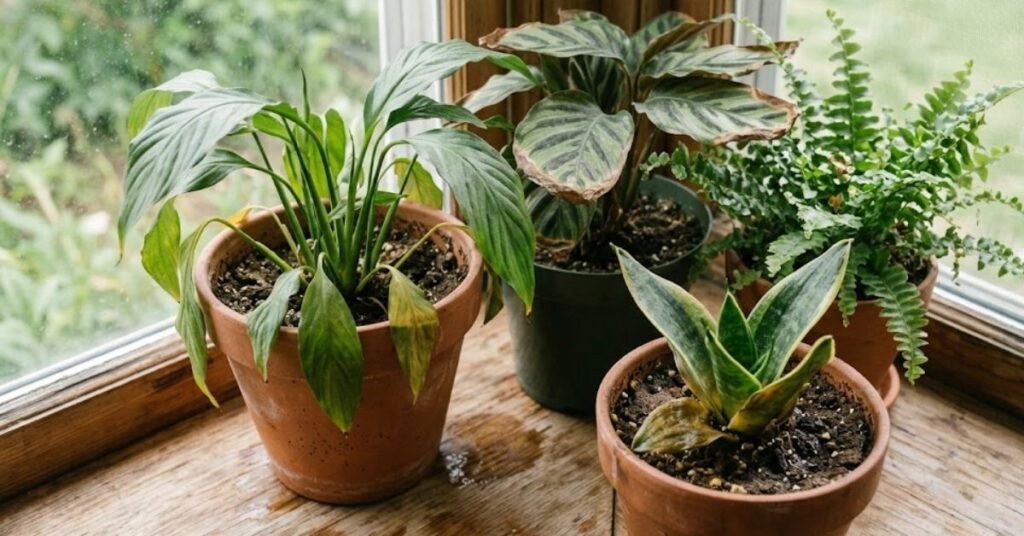
Why do so many indoor gardening projects fail within the first two months? It usually boils down to three distinct habits I see across American households.
First, using cheap, heavy dirt from the backyard. Never scoop up outdoor garden soil for an indoor container. It packs down tight like cement inside a pot, suffocating the roots. Always use a high-quality, lightweight potting soil mix blended with perlite or orchid bark to keep things airy.
Second, the “calendar watering” trap. Watering every single Tuesday without checking the soil condition is a recipe for root rot. Your home’s microclimate changes constantly. Factors like whether the winter furnace is running or if it is a humid Fall afternoon completely alter how fast soil dries out.
Finally, ignoring the drainage hole. Beautiful ceramic pots sold at trendy decor stores often come without a hole at the bottom. If you pour water into a sealed pot, it pools at the base. The roots sit in stagnant water, starve of oxygen, and rot away silently while you wonder why the leaves are dropping.
Personal Pro-Tip: Keep your plants in their plastic nursery liners and drop that inside your beautiful, hole-less ceramic cover pots. When it’s time to water, take the plastic liner to the bathroom faucet, let it drain completely in the sink, and pop it back into its decorative home. No mess, no root rot.
Troubleshooting Your Wellness Oasis
When your relaxation spot starts showing signs of distress, it completely ruins the calming vibe. Here is how to diagnose and fix the two most common issues instantly.
Leaves Turning Yellow
If the lower leaves are turning a pale, mushy yellow, you are almost certainly overwatering. The soil is waterlogged. Stop watering immediately. Let the pot dry out completely until the top three inches of soil feel like dust. If the entire plant is turning pale yellow simultaneously, it might actually need more light to process the water it has.
Brown, Crispy Tips
This is the classic hallmark of low humidity or chemical sensitivity. If you use municipal city water straight from the faucet, the built-in chlorine and fluoride can build up in the leaf tips over time, burning them.
Alternatively, your winter heating system is pumping bone-dry air into the room. Snip off the ugly brown tips with sharp scissors following the natural curve of the leaf never cut directly into the healthy green tissue.
Personal Pro-Tip: Don’t waste your time misting your plants with a spray bottle. It only raises humidity for about ten minutes and can invite fungal diseases. Instead, buy a small, sleek ultrasonic humidifier and tuck it right behind your chair.
Safety First: The Crucial Toxicity Warning
Before finalizing your setup, we have to talk about our four-legged family members. Many popular interior design plants contain insoluble calcium oxalates. If a curious cat or a bored dog decides to chew on them, it leads to severe oral irritation, drooling, and swelling.
- High Risk: Monsteras, Pothos, Snake Plants, Fiddle-Leaf Figs, and Peace Lilies are all toxic to pets. If you have animals, these must be placed high up on floating shelves or heavy plant stands completely out of reach.
- 100% Safe Alternatives: Stick to the ASPCA-approved good guys. Calatheas (Prayer Plants), Spider Plants, Boston Ferns, Parlor Palms, and Hoyas give you that exact same lush jungle aesthetic without any of the emergency vet bills.
Personal Pro-Tip: Even if a plant is labeled non-toxic, consuming large quantities of plant fiber can still give your dog or cat an upset stomach. I keep a small pot of organic wheatgrass (cat grass) right on the floor of my nook to give my pets their own safe green treat to chew on, keeping them away from my main display.
Frequently Asked Questions About Wellness Nook Plant Ideas
Q1How many plants do I actually need to create a functional wellness nook?
You don’t need a literal greenhouse. Even one or two thoughtfully placed plants can completely alter the energy of a small space. Start with one large statement plant on the floor to anchor the corner, and one trailing plant on a shelf to introduce movement. Quality and strategic placement matter far more than sheer numbers.
Q2Which plants are best for absorbing indoor air toxins in a small space?
While the famous NASA study proved plants like Snake Plants and Peace Lilies filter toxins, you would need an absolute jungle to replicate the power of a mechanical air purifier. Think of them as psychological air purifiers. They clean up the vibe of the room, increase oxygen levels slightly, and boost your mental state. For actual smoke or heavy dust, use a HEPA filter alongside your greenery.
Q3Can I use artificial grow lights if my relaxation corner has zero windows?
Absolutely. Gone are the days of ugly, blinding pink fluorescent tubes. The market is full of gorgeous, warm-white LED grow bulbs that fit standard light fixtures. You can screw one right into a stylish reading lamp. Just keep it on a plug-in timer for 12–14 hours a day to simulate natural daylight cycles.
Q4How do I prevent little bugs from flying around my relaxation area?
Those are fungus gnats. They don’t bite, but they are incredibly annoying when you are trying to meditate. They breed in the top layer of constantly wet soil. The fix is simple: let your soil dry out significantly more between waterings. You can also cover the top soil with a half-inch layer of clean sand or fine gravel to prevent the adults from laying eggs.
Final Thoughts on Crafting Your Sanctuary
Building your own personal retreat is a slow, rewarding journey. It isn’t something you buy fully formed out of a catalog or recreate perfectly from a single social media post. Let it evolve naturally. Start with a comfortable place to sit, check your light levels, select two or three resilient green companions that match your actual lifestyle, and build up from there. The goal is to create a living space that looks after you, just as much as you look after it.

Amin Khalid is a professional horticulturist and the founder of LeafyWisdom. With a deep passion for home gardening and horticultural research, he specializes in providing practical, easy-to-follow care guides for indoor plants. Amin’s goal is to simplify gardening for everyone and help fellow plant lovers build their own thriving green spaces.

No responses yet