
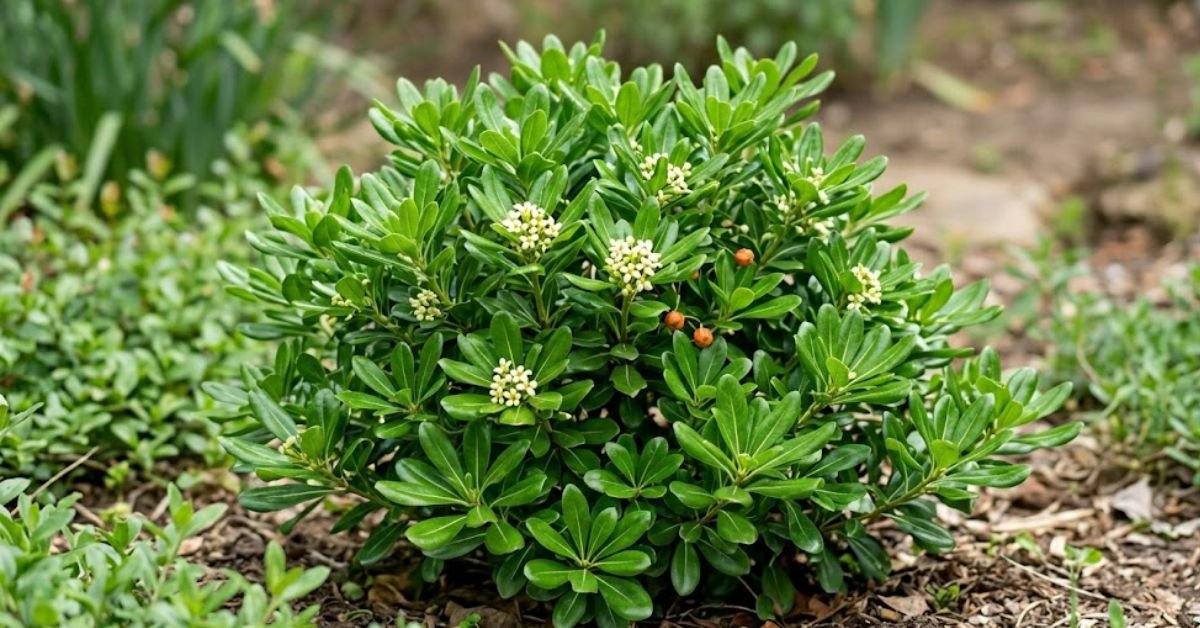
If you want a dependable, gorgeous evergreen shrub that can take a beating from coastal salt or survive a hot southern summer, the Pittosporum plant is your absolute best option. I have spent years putting these woody shrubs into both expansive backyard landscapes and tight patio containers. They are incredibly versatile, and below is my raw, honest breakdown of how to make sure your plant flourishes without the usual headaches.
Quick Care Cheat Sheet for Your Pittosporum Plant
For those who just want the fast facts before heading out to the local nursery, here is the basic care framework.
| Care Factor | Requirements |
| USDA Hardiness Zones | Best in Zones 8 through 11 |
| Light Exposure | Full sun to partial shade (Variegated types love afternoon shade) |
| Watering Schedule | Deeply weekly during dry spells; very drought-tolerant once established |
| Ideal Soil Type | Well-draining soil (Hates wet feet!) |
| Container Substrate | High-quality, well-aerated potting soil |
| Major Dislikes | Soggy roots, sub-zero winter blasts, and direct air conditioning drafts |
Personal Pro-Tip: Don’t treat container-grown varieties like yard shrubs. If you bring one indoors for the winter, place it far away from your home heating vents or cold entryways.
What Is a Pittosporum Plant and Where Does It Grow Best?
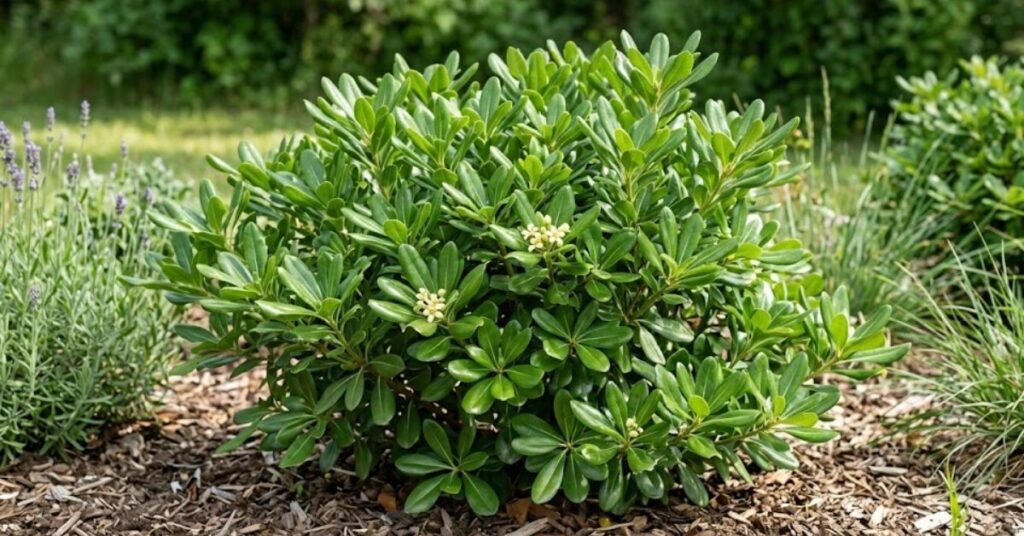
Often referred to as Mock Orange or Japanese Laurel, the pittosporum plant is native to eastern Asia but has found a massive fan base across the United States. I see them everywhere from the coastal Carolinas down to Florida, and all across Texas and California. They feature leathery, glossy leaves that look great 365 days a year. In the Spring, they burst with tiny white or cream flowers that smell exactly like orange blossoms.
If you live in USDA Hardiness Zones 8 to 11, you can leave this shrub in the ground all year.
For folks living up North in Zone 7 or lower, you will need to treat this as a container plant. Bring it inside before the first hard freeze hits in the Fall.
Personal Pro-Tip: When I plant these along windy coastal property lines in the South, I always give them extra space. The sea breeze is great, but they need room to breathe to avoid trapped humidity.
Common Mistakes Americans Make with the Pittosporum Plant
Look, I see the same three mistakes over and over again in American yards.
First, people plant them in heavy clay or low spots where rainwater pools. If the roots sit in water, the plant will rot and die. It’s that simple.
Second, folks who grow them in pots on patios often use regular garden soil. Never do that. Always use a loose, high-quality potting soil from the garden center to ensure proper drainage.
Third, is the indoor climate issue. When people bring a potted pittosporum plant inside for the winter, they tend to park it right under an air conditioning or heating vent. The continuous blast of dry air sucks the moisture right out of the leaves, causing a massive leaf drop.
Personal Pro-Tip: If your home’s central air conditioning blasts a dry draft directly onto your indoor greenery, move your pots to a corner or an enclosed porch. They like humidity, not forced air.
Troubleshooting Common Pittosporum Plant Issues
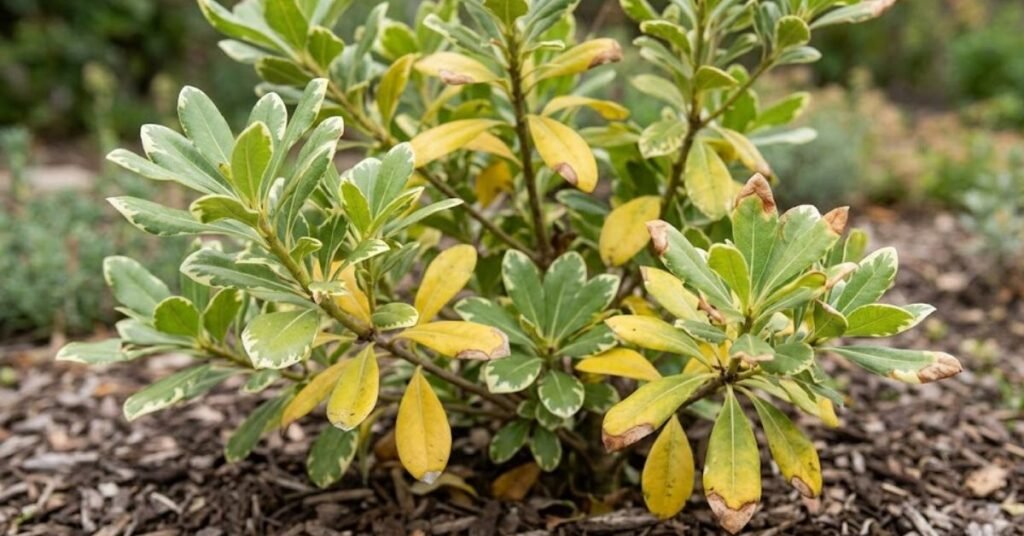
When something goes wrong, the leaves will tell you immediately. Here is what my decades of dirt-under-the-fingernails experience has taught me to look for:
Leaf Turning Yellow?
This is almost always a drainage warning. Pop your head down and look at the ground. Is the soil muddy? If it’s a potted plant, did you forget to empty the saucer under the pot? Stop watering immediately and let the top two inches of potting soil dry out completely. If it’s in the ground, you might need to transplant it to a higher mound.
Brown Tips on Leaves?
This usually signals a lack of water during intense summer heatwaves, or it means the water you are using from the outdoor faucet has a high salt content. Give the plant a slow, deep soak right at the base of the stem early in the morning. Avoid overhead watering, which triggers fungal spots.
Sooty Mold or Sticky Residue?
If the leaves look shiny and sticky, or if a black soot-like fungus is spreading, you have a pest problem. Aphids, scale insects, or mealybugs are sucking the sap out of your plant. Grab a bottle of neem oil or insecticidal soap and spray the entire plant thoroughly, making sure to hit the undersides of the leaves.
Personal Pro-Tip: Always check the drainage holes in your container before doing anything drastic. If they are clogged with root debris, clear them out with a stick to let the water escape.
Toxicity Warning: Is the Pittosporum Plant Safe for Pets?
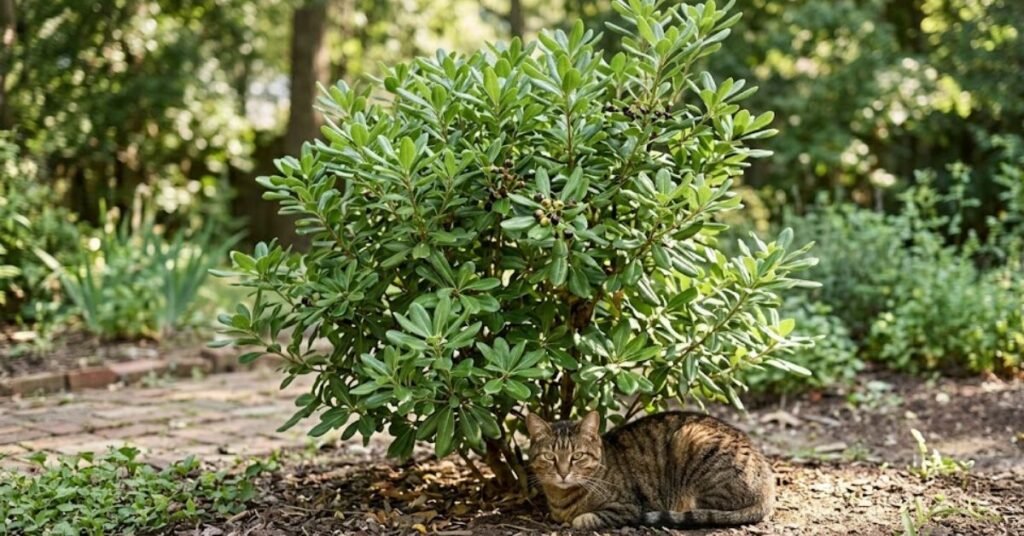
Good news for pet parents. According to the ASPCA, the Japanese pittosporum plant is classified as non-toxic to dogs, cats, and horses.
You do not have to panic if your puppy decides to chase a lizard into the middle of the bush.
With that said, I always tell my clients to discourage their animals from chewing on the foliage. Ingesting large quantities of any dense, leathery leaf can cause a mild upset stomach or vomiting simply because it is tough for their digestive tract to break down.
Also, the seeds can be quite sticky, so keep an eye out if your long-haired cat likes to lounge under the branches.
Personal Pro-Tip: Even though it’s safe, my golden retriever loves to push his tennis ball deep into our backyard hedge. I always wash the sticky flower sap off his fur with regular pet soap so it doesn’t cause mats or tangles.
Frequently Asked Questions About the Pittosporum Plant
Q1. Can you grow a pittosporum plant indoors?
Yes, you can, but it requires a lot of light. Place it by your brightest south-facing window. You also need to watch out for the dry air caused by winter heating or summer AC units; using a humidifier nearby helps immensely.
Q2. How often should I water a newly planted shrub?
For the first growing season, water it deeply twice a week if it doesn’t rain. Once those roots stretch out into the surrounding soil, it becomes highly drought-tolerant and can usually rely on natural rainfall.
Q3. Why are the leaves on my variegated variety turning completely green?
This is called reversion. Sometimes the plant decides to produce solid green leaves because they are better at photosynthesizing light. Whenever I see a solid green branch popping out of a variegated bush, I snip it off at the base immediately to keep the pattern uniform.
Q4. When should I prune my pittosporum plant?
Always trim it right after it finishes blooming in the late Spring or early Summer. If you prune it too late in the Fall or winter, you will accidentally cut off all of next year’s flower buds, missing out on that incredible fragrance.
Q5. What is the best fertilizer to use?
Honestly, they aren’t heavy feeders. I usually throw a balanced, slow-release granular fertilizer around the base of the plant in early Spring. That gives it all the nutrients it needs for the entire growing season.
Q6. Can it handle frost?
stablished bushes are pretty tough and can easily handle a light frost down to 20°F. However, if a severe freeze is on the horizon, it’s best to throw a burlap sack or frost cloth over the foliage to protect those delicate tips from harsh winter windburn.
Q7. Why does my plant have white, cottony blobs on the stems?
Those are mealybugs. They look like tiny pieces of cotton and love to hide in the joints of the branches. Blast them off with a sharp stream of water from your garden faucet, then treat the area with horticultural oil.
Personal Pro-Tip: When taking cuttings to propagate new starts in late summer, use clean pruning shears dipped in rubbing alcohol. It prevents the accidental spread of fungal leaf spot from branch to branch.
Final Thoughts on Growing the Pittosporum Plant
If you want a low-maintenance, architecturally beautiful evergreen that won’t require constant babysitting, you cannot go wrong with this selection. Just give it plenty of sunshine, ensure the water flows away from the roots, and protect it from harsh indoor vents. It will easily reward you with decades of structure and intoxicating springtime fragrances.
Personal Pro-Tip: If you’re still on the fence about choosing a specific variety, look for ‘Wheeler’s Dwarf’ if you have a small yard, or grab ‘Variegatum’ if you need a splash of creamy white color to brighten a dark corner of your property.

Amin Khalid is a professional horticulturist and the founder of LeafyWisdom. With a deep passion for home gardening and horticultural research, he specializes in providing practical, easy-to-follow care guides for indoor plants. Amin’s goal is to simplify gardening for everyone and help fellow plant lovers build their own thriving green spaces.


10 Responses
When some one searches for his vital thing, so he/she needs to be available that in detail,
thus that thing is maintained over here.
Thank you for your thoughtful comment! 😊 I’m glad you found the detailed information helpful. I always try to make the content clear, practical, and useful for anyone searching for reliable answers. I really appreciate your support! 🌿
I really love your site.. Pleasant colors & theme. Did you make this site yourself?
Please reply back as I’m hoping to create my own website
and would love to know where you got this from or what the theme is called.
Thank you!
Thank you so much! 😊 Yes, I built the site myself using WordPress. The design is based on the **Kubio** theme/builder, which I customized to fit the site. I’m really glad you like the colors and overall look!
Best of luck with your website I hope you have fun building it! 🌿
Simply desire to say your article is as astounding. The clearness in your post is just
cool and i could assume you are an expert on this subject.
Fine with your permission allow me to grab your feed to keep updated
with forthcoming post. Thanks a million and please keep up the enjoyable work.
Thank you so much for the wonderful feedback! I’m really glad you found the article clear and useful. You’re more than welcome to follow along and stay updated with new posts. I truly appreciate your support and kind words!
I take pleasure in, cause I found just what I used to be having a look for.
You have ended my four day long hunt! God Bless you man. Have a
great day. Bye
I’m really happy that you finally found what you were looking for after such a long search. Wishing you all the best, and have a wonderful day too!
You are so cool! I don’t suppose I have read a single thing like
this before. So good to discover someone with some original
thoughts on this subject. Really.. thank you for starting this up.
This web site is something that is needed on the internet,
someone with a bit of originality!
Thank you so much for the kind words! I really appreciate you taking the time to leave such a thoughtful comment. I’m glad you found the content useful and a little different from what you usually see online. Your support means a lot to me!