
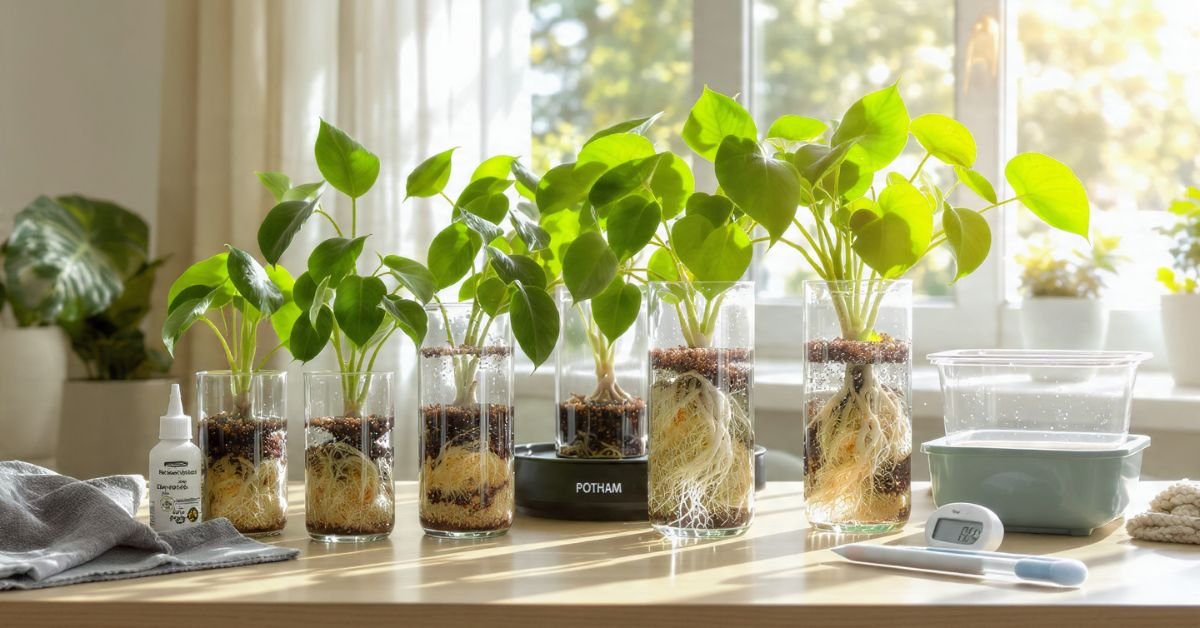
As a horticulturist who has spent countless hours turning my home into an indoor jungle, I get asked all the time about the quickest way to multiply plants. If you’re staring at a freshly snipped vine and wondering how to propagate pothos in water faster, you’re in exactly the right place.
In my years of growing this resilient plant, I’ve found that while they practically grow themselves, getting those initial roots to pop out quickly takes a few specific tricks. Pothos (Epipremnum aureum) thrives outdoors in USDA Hardiness Zones 10-12, but for the rest of us in the US, it is the ultimate low-maintenance houseplant.
Let’s dive into my personal playbook so you can turn one trailing vine into a dozen before the season ends.
Quick Care Table for Propagating Pothos
| Care Factor | My Expert Recommendation |
| Water | Room-temperature water straight from the faucet (let it sit for 24 hrs to off-gas chlorine). |
| Light | Bright, indirect light. A south-facing window with a sheer curtain is prime real estate. |
| Temperature | 70°F – 80°F. Keep away from AC drafts and heating vents. |
| Timeline | Roots typically appear in 7–14 days with the right tricks. |
| Potting Up | Move to standard potting soil once roots are 2 to 3 inches long. |
Personal Pro-Tip: I like to use clear glass jars (like old mason jars or jelly jars) instead of opaque mugs. It lets me monitor root progress without constantly pulling the fragile cutting out of the water!
The Basics: How to Propagate Pothos in Water Faster
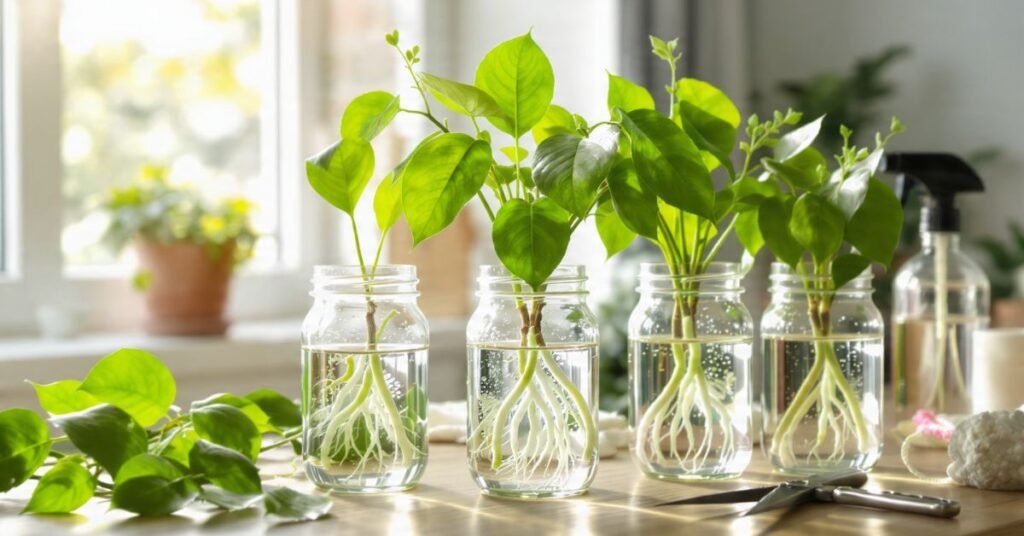
The key to speeding up root growth isn’t magic—it’s mostly about giving the plant the optimal environment to switch from “leaf-growing mode” to “root-growing mode.”
Step 1: Taking the Perfect Cutting
I can’t stress this enough: roots will only grow from a node. That’s the little brown nub on the stem where the leaf attaches. Grab your sharpest shears and make a clean, 45-degree cut about a quarter-inch below that node. If you just stick a leaf stem in water without a node, it’ll stay green for months but never give you a single root.
Step 2: Prepping Your Water Container
Fill your jar with room-temperature water. If you live in an area with heavy tap water, let it sit on the counter overnight. This allows the chlorine to evaporate, which can sometimes burn or slow down delicate new roots.
Step 3: Finding the Sweet Spot for Lighting
Light is your best friend here. Toss your cutting into a warm spot with bright, indirect sunlight. During the Spring and early Fall, natural sunlight near a window is usually enough. If you’re trying this in the dead of winter, a cheap LED grow light can cut your waiting time in half.
Personal Pro-Tip: Remove the bottom leaf of your cutting before dunking it. You never want leaves submerged in your water because they’ll rot, turning your jar into a bacterial soup that ruins your chances of fast roots.
Secret Tricks to Speed Up Pothos Rooting
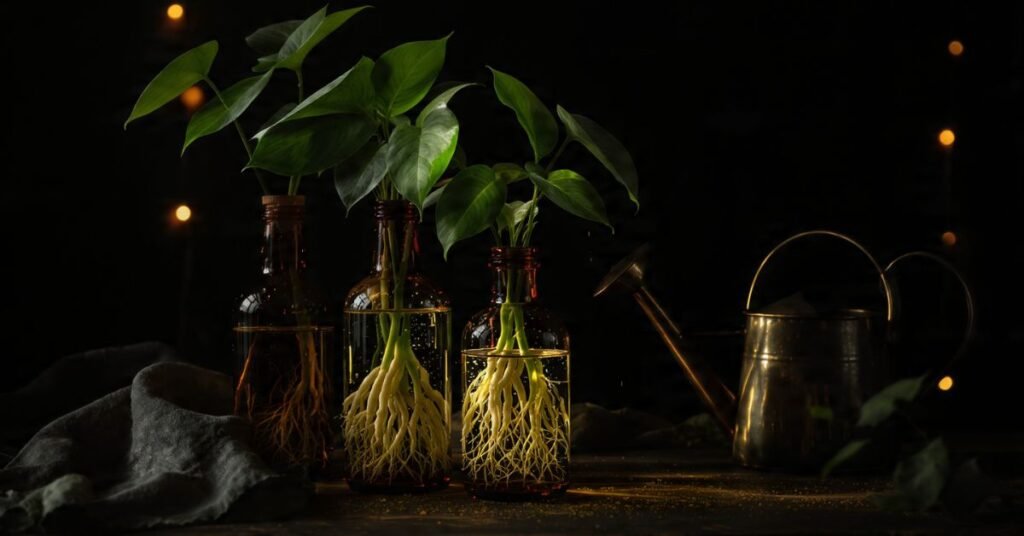
I love a good propagation experiment, and over the years, I’ve picked up a couple of unconventional tricks that genuinely shave days off the rooting timeline.
Stop Changing the Water Every Day
The internet loves to tell you to change your propagation water daily. Don’t do it! When you stick a pothos cutting in water, it releases natural rooting hormones. If you dump that water out every single day, you are literally throwing away the exact hormones your plant is using to grow. I only change the water if it gets cloudy or smelly. Otherwise, I just top it off straight from the faucet.
The Tradescantia or Willow Trick
If you really want to know how to propagate pothos in water faster, add a cutting from a Tradescantia (inch plant) or a willow branch into the same jar. These plants are notorious for producing an insane amount of rooting hormones. They’ll share the wealth with your photos and speed up the entire process.
Personal Pro-Tip: If your house is cold, wrap the bottom of the glass jar in a dark piece of paper or foil. Roots naturally grow in the dark (underground), and blocking the light around the stem can sometimes trick the node into pushing roots out quicker.
Common Mistakes When Rooting Pothos in Water
Even though this plant is incredibly forgiving, I still see a lot of folks in the US struggle because of our typical home environments.
The AC Vent Trap
We love our air conditioning, but pothos cuttings despise it. Placing your jar directly under or over an AC vent will blast the cutting with cold, dry air. This shocks the plant into dormancy, meaning those roots are going to take their sweet time. Keep your jars in a cozy, draft-free spot.
Waiting Too Long for Potting Soil
It’s fun to watch roots grow in water, but leaving them there for six months makes the transition to potting soil incredibly hard. Water roots are much thinner and more fragile than soil roots. Once those roots hit the 2-inch mark, get them into a chunky, well-draining potting soil.
Personal Pro-Tip: When you finally move your cutting from water to potting soil, keep the dirt a little moister than you normally would for the first week. It helps ease the transplant shock while the plant adjusts from living in liquid to living in dirt!
Troubleshooting Propagated Pothos
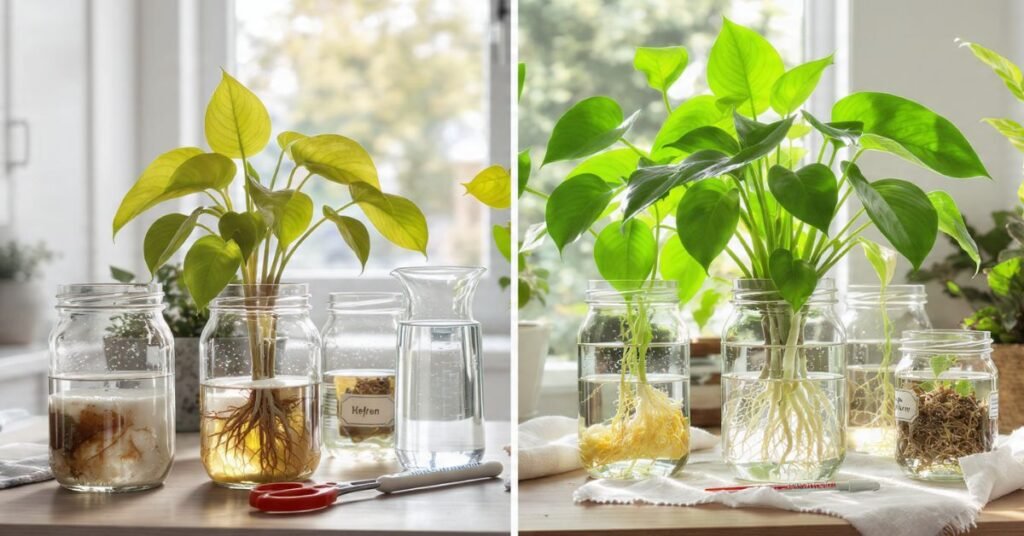
Things don’t always go perfectly, and that’s perfectly fine. Here’s how I handle the usual hiccups:
- Leaves turning yellow: This usually means the cutting is putting all its energy into making roots and sacrificing an older leaf to do it. It can also mean there’s too much direct, scorching sunlight hitting the jar. Pull it back a few inches from the window.
- Brown, mushy tips on the stem: This is stem rot. It happens when bacteria takes over. Pull the cutting out, snip off the mushy brown part with sterile scissors, wash the jar thoroughly with soap, and start fresh with clean water.
- Zero roots after a month: Check your temperature. If the room is below 65°F, the plant thinks it’s winter. Move it to a warmer spot or set it on a seed-starting heat mat.
Personal Pro-Tip: I like to add a single drop of liquid kelp fertilizer to the water if the cutting is looking a bit sad. It gives it a tiny nutrient boost without burning the delicate node.
Toxicity Warning: Is Pothos Safe for Dogs and Cats?
Let’s have a quick, serious chat about our furry friends. As a pet owner myself, I always keep my pothos out of reach. Pothos contain insoluble calcium oxalate crystals.
If your dog or cat decides to chew on a leaf, these microscopic crystals act like tiny needles. It causes immediate pain, swelling of the mouth and tongue, drooling, and vomiting. It’s rarely fatal, but it is incredibly uncomfortable for them. Keep those propagation jars on high shelves or in rooms where your pets don’t hang out.
Personal Pro-Tip: I hang my propagation stations on the wall using damage-free picture hanging strips and test tubes. It looks like cool, living wall art, and my cats can’t even dream of reaching them!
FAQs on How to Propagate Pothos in Water Faster
I spend an embarrassing amount of time in plant forums, and these are the questions I see pop up constantly from everyday growers.
Q1. Why is my pothos taking so long to root in water?
It usually boils down to light and temperature. If your cutting is sitting in a chilly room or a dim corner, it’s going to drag its feet. Move it closer to a bright window!
Q2. Should I use rooting hormone powder in water?
You don’t need to, and honestly, powder rooting hormone gets gross and gunky in water. If you want a boost, use a liquid rooting stimulant or just rely on the natural hormones the plant produces.
Q3. Can I propagate a pothos leaf without a node?
No. A leaf stuck in water might look pretty for a while, but without the node (that little bump on the stem), the plant physically lacks the cells required to push out roots.
Q4. How often should I change the water for my pothos cuttings?
Only when it looks cloudy or algae starts forming. Otherwise, just top off the evaporated water to keep the natural rooting hormones concentrated in the jar.
Q5. Does the size of the cutting matter?
Yes! I like to take cuttings that are 4 to 6 inches long with 2 to 3 leaves. If the cutting is too long, the plant exhausts itself trying to keep all those leaves alive instead of growing roots.
Q6. Can I use bottled water instead of faucet water?
You can, but it’s a waste of money. Standard tap water is perfectly fine once the chlorine dissipates. Distilled water actually lacks the trace minerals that plants love, so I’d avoid that.
Q7. How long should pothos roots be before planting in potting soil?
Aim for 2 to 3 inches. If you wait until the jar is entirely filled with a massive root system, the plant will have a tough time adjusting to the density of dirt.
Personal Pro-Tip: Keep an eye out for “secondary roots” (tiny roots branching off the main white root). Once you see those, it’s the absolute perfect time to pot them up!
Final Thoughts on Faster Pothos Propagation
Learning how to propagate pothos in water faster is basically a rite of passage for any plant parent. It’s incredibly rewarding to watch a tiny green cutting transform into a robust, trailing vine. Just remember to grab a healthy node, provide plenty of bright, indirect sunlight, and avoid blasting it with the AC.

Amin Khalid is a professional horticulturist and the founder of LeafyWisdom. With a deep passion for home gardening and horticultural research, he specializes in providing practical, easy-to-follow care guides for indoor plants. Amin’s goal is to simplify gardening for everyone and help fellow plant lovers build their own thriving green spaces.

No responses yet