
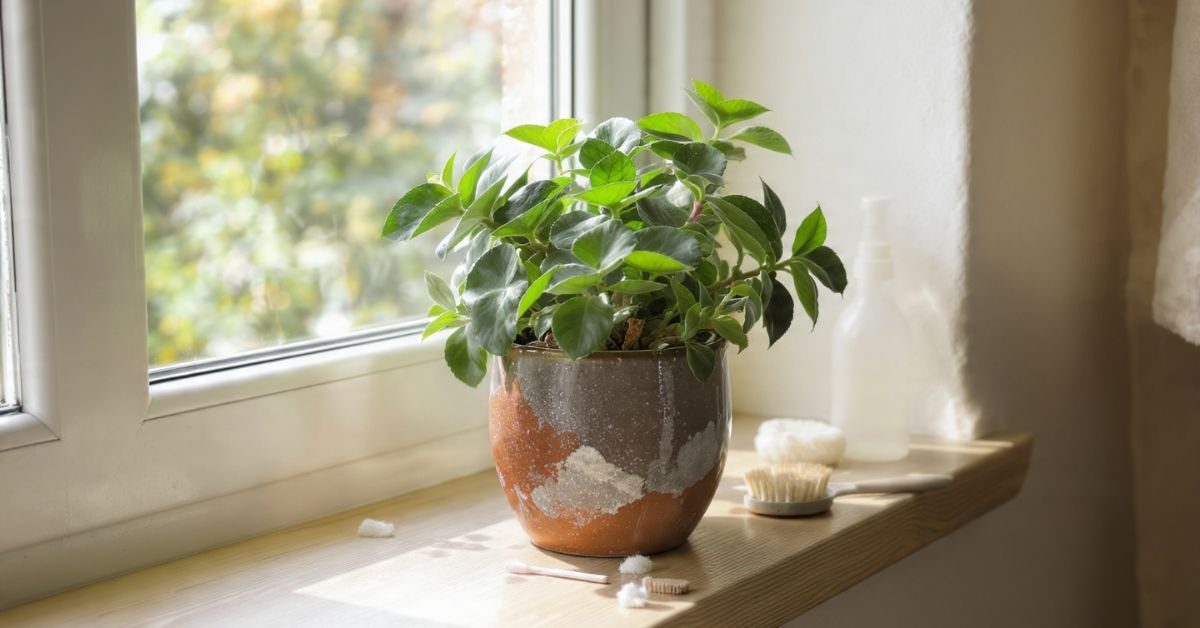
As an American horticulturist who has spent years coaxing Echeverias and haworthias to thrive in everything from humid Florida sunrooms to dry, air-conditioned New York apartments, I know the heart-sink feeling of spotting something “off” on a prized plant. One morning you’re admiring your Jade, and the next, you’re staring at mysterious white spots on succulent leaves.
Before you panic and reach for the trash can, take a breath. Most of the time, these spots are either a minor “oops” in your care routine or a common pest that we can handle with stuff you probably already have under your kitchen sink.
Quick Care Reference for Healthy Succulents
| Care Factor | Ideal Setting (US Standard) | Why it Matters |
| Light | 6+ hours of bright, indirect sun | Prevents stretching and fungal growth. |
| Watering | “Soak and Dry” method | Prevents root rot and edema. |
| Soil | Fast-draining potting soil (Cactus mix) | Crucial for drainage in indoor pots. |
| Temperature | 60°F – 80°F | Avoid placing directly near AC vents or heaters. |
| Airflow | High (use a small fan if needed) | Prevents powdery mildew in humid zones. |
Identifying White Spots on Succulent Leaves: Is it Pests or Disease?
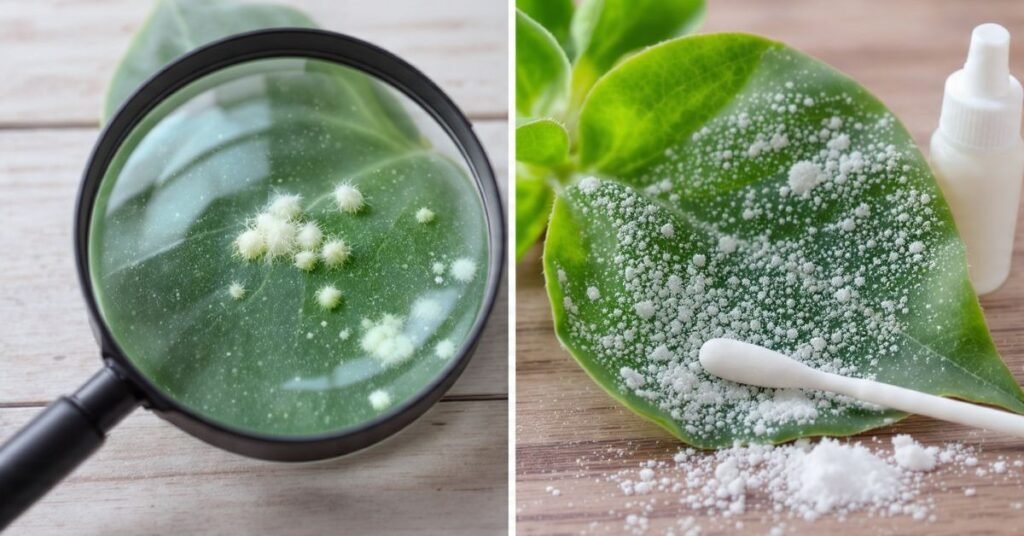
The first thing I do when I see white spots on succulent leaves in my collection is the “rub test.” If the spot wipes away easily like flour, it’s likely a fungal issue. If it’s sticky or moves, we’ve got bugs.
The Cottony Culprit: Mealybugs and White Spots on Succulent Leaves
In my experience, the most frequent cause of white spots is the mealybug. These tiny, white, fluff-covered insects love to hide in the nooks and crannies where the leaf meets the stem. They look like little bits of wet cotton or lint. If left unchecked, they suck the sap out of your plant, causing it to wither.
Personal Pro-Tip: Keep a bottle of 70% isopropyl alcohol and some Q-tips nearby. When I see a “cotton ball” on my succulents, I dab it immediately. The alcohol dissolves their waxy coating and kills them on contact without hurting the plant.
Powdery Mildew: That Weird Dust-Like White Spotting on Succulent Leaves
If the white spots on succulent leaves look like someone accidentally spilled powdered sugar on them, you’re likely dealing with powdery mildew. This is a fungal infection that thrives when the air is stagnant and humid—common in Southern states or during “shoulder seasons” (Spring/Fall) when you might not have your AC or heater running to circulate the air.
Personal Pro-Tip: I’ve found that a simple mix of one tablespoon of baking soda and a half-teaspoon of liquid soap in a gallon of water works wonders as a preventative spray.
Hard Water Deposits (Efflorescence)
Sometimes, those white spots on succulent leaves aren’t “alive” at all. If you’re watering your plants straight from the faucet, minerals like calcium and magnesium can build up. As the leaf “perspires” (a process called transpiration), the water evaporates and leaves the salt behind. These spots are usually gritty and circular.
Common US Mistakes That Cause White Spots on Succulent Leaves
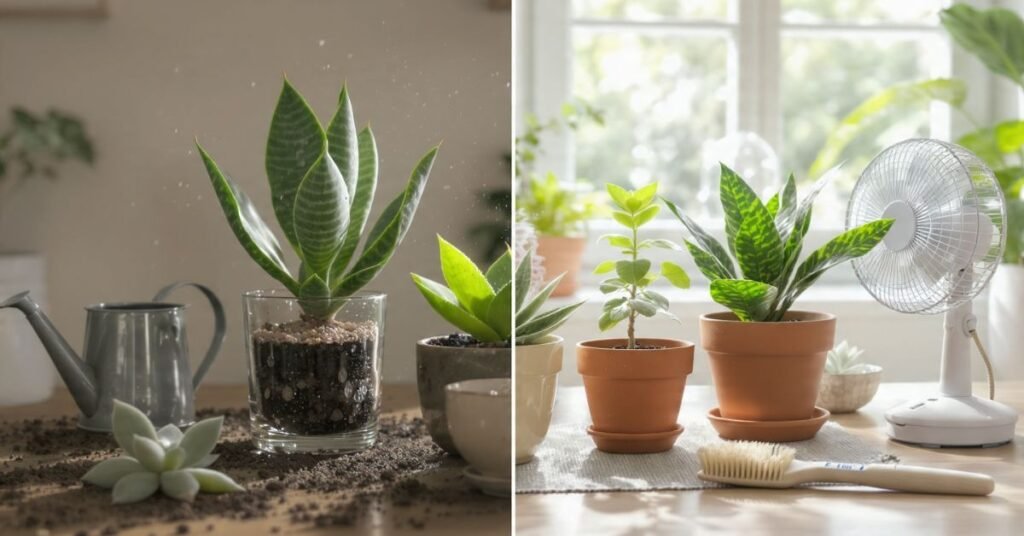
Why do Americans usually struggle with this? Often, it’s our indoor environments.
- The AC Vent Trap: We love our climate control, but placing a succulent directly in the path of an air conditioning vent creates a micro-climate of cold, dry air. This can stress the plant, making it more susceptible to powdery mildew or causing “edema”—where the plant takes up too much water too fast, and the cells literally burst, leaving behind white or corky scars.
- Using “Standard” Potting Soil: Many of my clients use regular potting soil meant for petunias. In a pot, this stays wet far too long. I always tell people: “Succulents hate wet feet.” Use a dedicated cactus/succulent mix or amend your soil with perlite.
- The “Damp Fall” Syndrome: In USDA zones 7-9, our Falls can be incredibly damp. If you leave your plants outside during these humid stretches without enough breeze, those white spots on succulent leaves (fungus) will show up overnight.
How to Treat White Spots on Succulent Leaves Naturally
I prefer to keep things organic, especially if you have kids or pets.
- Neem Oil: This is the “Gold Standard” for American gardeners. It treats both pests like mealybugs and fungal issues like mildew. Spray your plants in the evening—if you do it during the day, the Texas or California sun will literally “fry” the oil onto the leaves.
- The “Sink Shower”: Sometimes, a forceful jet of water from your kitchen faucet is enough to knock off a minor mealybug infestation. Just make sure the plant dries out completely afterward.
Personal Pro-Tip: Always isolate a “spotted” plant. I have a “Plant Hospital” (a separate shelf in a different room) where I keep any plant showing white spots on succulent leaves until I’m 100% sure the issue is gone.
Troubleshooting Guide: Beyond the White Spots
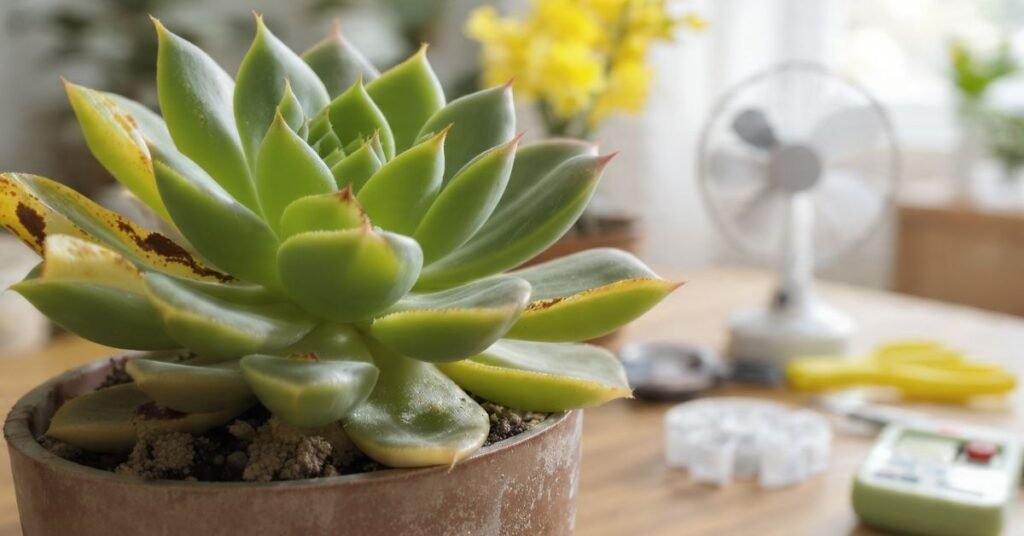
- Leaves turning yellow? Usually a sign of overwatering. Check the soil—if it’s soggy, stop watering immediately.
- Brown, crispy tips? Your plant might be getting “sunburned” or the AC is sucking the moisture out of it. Move it a few feet back from the window or vent.
- Bottom leaves falling off? If they are drying up and falling off naturally, that’s just growth! If they are mushy and falling off, you’ve got rot.
Toxicity Warning: Is it Safe for Cats and Dogs?
This is a huge deal for US pet owners. Many common succulents like Jade (Crassula ovata) and Aloe Vera are actually toxic to cats and dogs if ingested, causing vomiting or lethargy.
If you have a “nibbler” at home, stick to pet-safe options like Echeveria, Haworthia (Zebra Plant), or Burro’s Tail. Always check the ASPCA website if you aren’t sure.
FAQs: What People Actually Ask About White Spots
Q1. Can I use tap water for my succulents?
You can, but if you have “hard water,” you’ll see those white mineral spots. I like to let my water sit out overnight before using it, or use a filter.
Q2. Are the white spots on my Jade plant normal?
Jade plants are famous for “sweating” minerals. If the spots are small, white, and regular, it’s likely just mineral deposits from your faucet.
Q3. Will white spots kill my plant?
If it’s mealybugs or fungus, yes, eventually. If it’s mineral deposits or scarring from an AC vent, it’s mostly a cosmetic issue.
Q4. How often should I check for pests?
I do a “Leaf Check” every time I water (usually every 10-14 days). Look closely at the center of the rosette.
Q5. Why are the spots only on the bottom leaves?
This is often where humidity stays trapped or where pests first crawl up from the soil.
Q6. Can I use dish soap on my succulents?
Only use “pure” soaps (like Castile soap). Many modern American dish soaps have degreasers that can strip the protective “wax” (farina) off succulent leaves.
Q7. Does the USDA zone matter for indoor plants?
Yes! If you’re in a humid zone (like Zone 9 in Florida), you’ll need more airflow than someone in a dry zone (like Zone 7 in Arizona) to prevent white spots on succulent leaves caused by fungus.
Final Thoughts
Finding white spots on succulent leaves doesn’t mean you’re a bad “plant parent.” It’s just the plant’s way of talking to you. Whether it’s telling you the humidity is too high, the water is too “hard,” or it’s picked up a few uninvited mealybug guests, most of these issues are easily fixable with a little patience and some household staples. Keep an eye on your airflow, use the right potting soil, and your greens will be back to their vibrant selves in no time!

Amin Khalid is a professional horticulturist and the founder of LeafyWisdom. With a deep passion for home gardening and horticultural research, he specializes in providing practical, easy-to-follow care guides for indoor plants. Amin’s goal is to simplify gardening for everyone and help fellow plant lovers build their own thriving green spaces.

No responses yet