
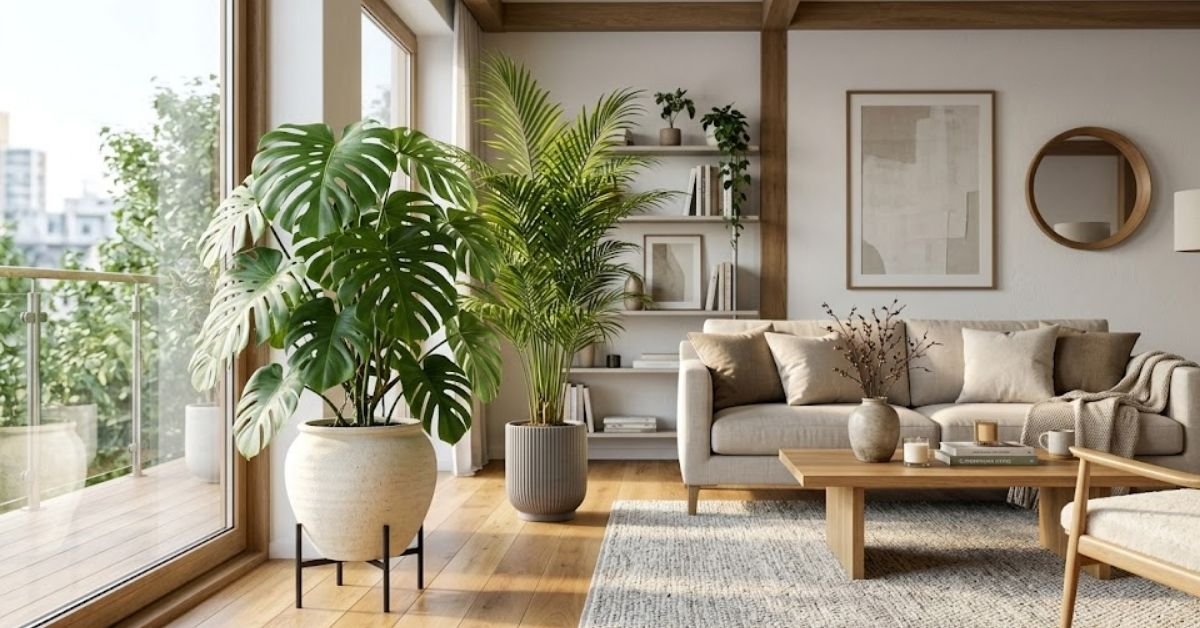
I’ve seen indoor plants transition from mere hobbies to essential architectural elements. Whether you’re navigating the humidity of the South or the dry radiator heat of a Northeast winter, successful aesthetic room decor ideas with indoor plants require a marriage of design and biology. This guide focuses on practical, US-centric strategies to elevate your home using greenery.
Essential Care & Aesthetics Quick-Reference
| Plant Name | Design Vibe | Light Requirement | Water Strategy | Pet Safety |
| Monstera Deliciosa | Tropical/Statement | Bright Indirect | Dry top 3″ of potting soil | Toxic |
| Fiddle Leaf Fig | Architectural/Modern | High Indirect | Dry top 2″ completely | Toxic |
| Snake Plant | Minimalist/Clean | Low to High | Monthly (approx.) | Toxic |
| Parlor Palm | Traditional/Soft | Medium Indirect | Keep slightly moist | Safe |
Personal Pro-Tip: Always check your USDA Hardiness Zone if you plan to move plants to a porch. For most of the US, “Indoor Season” starts the moment night temperatures dip below 55°F.
High-Impact Aesthetic Room Decor Ideas with Indoor Plants
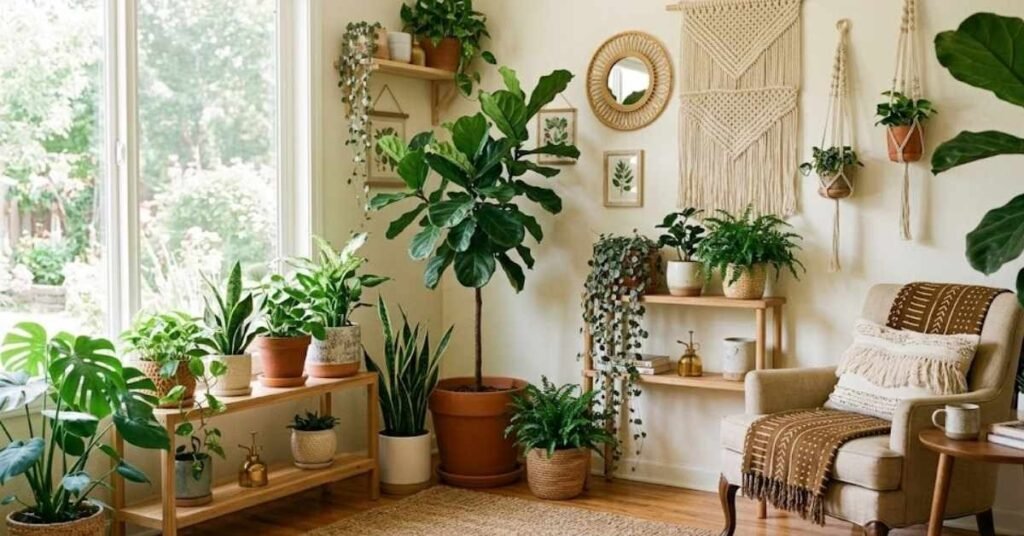
1. The Vertical “Living Wall” with Trailing Vines
To maximize square footage in smaller US apartments, utilize vertical space. Using Golden Pothos or Heartleaf Philodendron on floating shelves creates a cascading “living curtain” effect.
- Design Tip: Use matte-finished ceramic pots in a single color palette to keep the look cohesive rather than cluttered.
2. Sculptural Anchoring with Monstera Deliciosa
A mature Monstera serves as a living sculpture. I recommend training these plants up a moss pole early on. This prevents the “leggy” sprawl common in home environments and encourages the iconic leaf fenestration (splits) that define the aesthetic.
- Design Tip: Place these in corners opposite your primary light source to allow the leaves to face the room.
3. The Minimalist Trio: Snake Plants
For modern American interiors, the Snake Plant (Dracaena trifasciata) offers unbeatable vertical lines. Grouping three plants of varying heights in cylindrical planters creates a sophisticated, tiered look that requires minimal intervention.
Personal Pro-Tip: Don’t just buy a plant; buy a “cachepot.” Keep the plant in its plastic nursery pot and drop it into a decorative ceramic container. This makes drainage management a breeze and protects your hardwood floors from water damage.
Why “Aesthetic” Plants Fail in American Homes
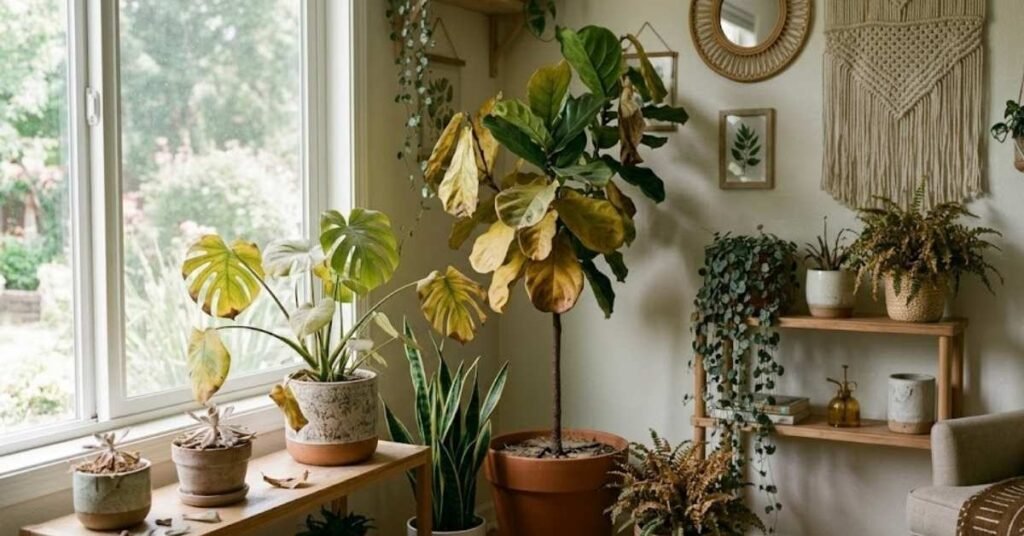
Even the best-looking plant won’t save a room if it’s dying. Here are the three most common environmental killers I encounter in US households.
The HVAC Conflict
Central air conditioning and forced-air heating are the primary enemies of indoor greenery. Tropical plants thrive in 50%+ humidity; your AC unit strips that away.
- The Fix: Never place a plant directly in the draft path of a vent. If your leaves are browning at the tips, your HVAC is likely “freeze-drying” the foliage.
The “Garden Soil” Error
I often see beginners use “Garden Soil” or “Compost” meant for outdoor beds in their indoor pots. In the stagnant air of a home, this heavy soil compacts, leading to root rot.
- The Fix: Use a high-quality potting soil amended with perlite or orchid bark to ensure the roots can breathe.
Freezing Faucet Shock
In the winter, US tap water can drop to near-freezing temperatures. Pouring 40°F water directly onto the roots of a tropical plant causes cellular shock, leading to leaf drop.
- The Fix: Fill your watering can the night before. This allows the water to reach room temperature and lets harsh chemicals like chlorine dissipate.
Troubleshooting & Maintenance
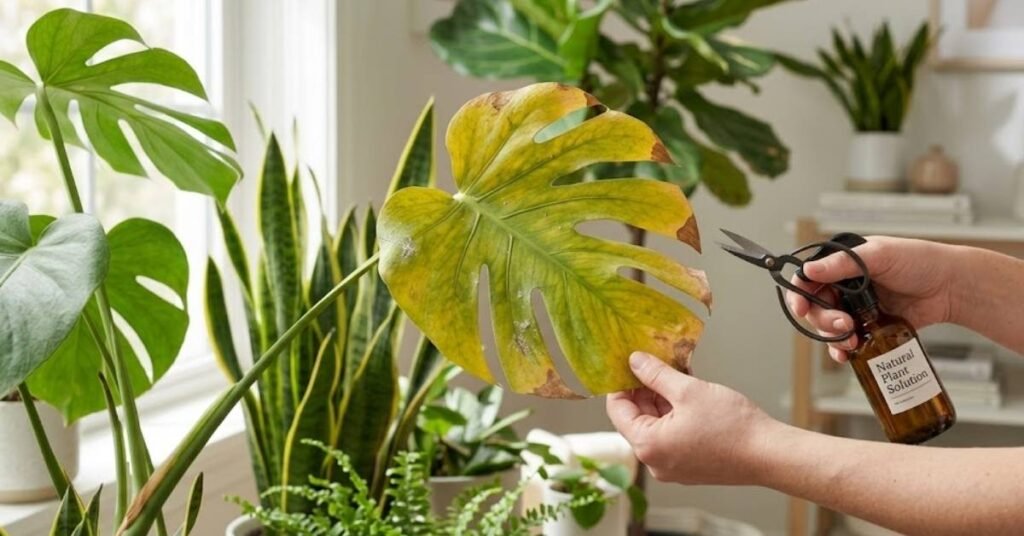
Yellowing Leaves (The Overwater Signal)
If your aesthetic room decor plants are turning yellow, you are likely loving them to death. Soggy soil prevents oxygen from reaching the roots.
- Solution: Stick your finger two inches into the soil. If it’s damp, put the watering can down.
Leggy Growth (The Light Starvation)
When a plant becomes “stretched out” with large gaps between leaves, it’s searching for sun.
- Solution: Move the plant closer to a South or West-facing window. In darker rooms, supplement with a 6500K LED grow light.
Personal Pro-Tip: Treat your plants like your furniture—dust them! Dust buildup on large leaves like the Fiddle Leaf Fig blocks light and invites spider mites. A quick wipe with a damp microfiber cloth once a month keeps the “aesthetic” look sharp and the plant healthy.
Crucial Toxicity Warning for Pet Owners
Many trending plants—including Monsteras, Snake Plants, and ZZ Plants—are toxic to cats and dogs. As an owner of an inquisitive orange tabby, I’ve learned that “out of reach” isn’t always enough.
Safe Alternatives for a Pet-Friendly Aesthetic:
- Bird’s Nest Fern: Great for bathrooms.
- Kentia Palm: Perfect for a dramatic corner.
- Spider Plants: Ideal for hanging baskets.
FAQ: Styling and Survival
1. How do I stop fungus gnats?
These pests love moist topsoil. Bottom-water your plants by letting them sit in a tray of water for 20 minutes, keeping the top inch of soil dry where gnats lay eggs.
2. Is my tap water safe?
Generally, yes. However, if you see salt buildup (white crust) on your pots, switch to distilled water or a faucet filter.
3. What is the best “low-light” aesthetic plant?
The ZZ Plant is the undisputed king. It can thrive in a windowless office, though it will grow much slower.
4. How do I choose the right pot size?
Never “up-size” a pot by more than 2 inches in diameter. Too much extra soil holds excess water, which leads to rot.
5. Why is my Fiddle Leaf Fig dropping leaves?
These are the “divas” of the plant world. They hate change. If you move it, even three feet, it may drop leaves in protest. Pick a spot with bright indirect light and leave it there.
6. Do I need to fertilize in the winter?
No. In most of the US, indoor plants go semi-dormant in the winter. Resume a balanced liquid fertilizer routine in the Spring (March/April).
7. Can I use “leaf shine” products?
Avoid them. They clog the plant’s pores (stomata). Use plain water and a soft cloth for a natural, healthy glow.
The Verdict: Design with Life in Mind
Bringing nature indoors is a journey that requires both an eye for design and a respect for biology. After years of diagnosing brown leaves and lopsided stems, I can tell you that the most aesthetic room decor with indoor plants comes from plants that are actually thriving. When you choose species that match your light levels and protect them from the harsh drafts of American HVAC systems, the “decor” takes care of itself.
Don’t strive for a perfect, frozen-in-time Pinterest photo. Instead, aim for a space that feels alive, breathable, and uniquely yours. Whether it’s a single, majestic Fiddle Leaf Fig in your living room or a sprawling Pothos in your bedroom, these green companions do more than just look good—they make a house feel like a home.In the end, aesthetic room decor ideas with indoor plants are less about decoration and more about creating a living, breathable space.
Final Pro-Tip: The best “aesthetic” advice I can give is to buy plants you actually love, not just the ones that are currently trending. When you have a genuine connection to your greenery, the care feels less like a chore and more like a rewarding ritual. Happy planting!

Amin Khalid is a professional horticulturist and the founder of LeafyWisdom. With a deep passion for home gardening and horticultural research, he specializes in providing practical, easy-to-follow care guides for indoor plants. Amin’s goal is to simplify gardening for everyone and help fellow plant lovers build their own thriving green spaces.

No responses yet