
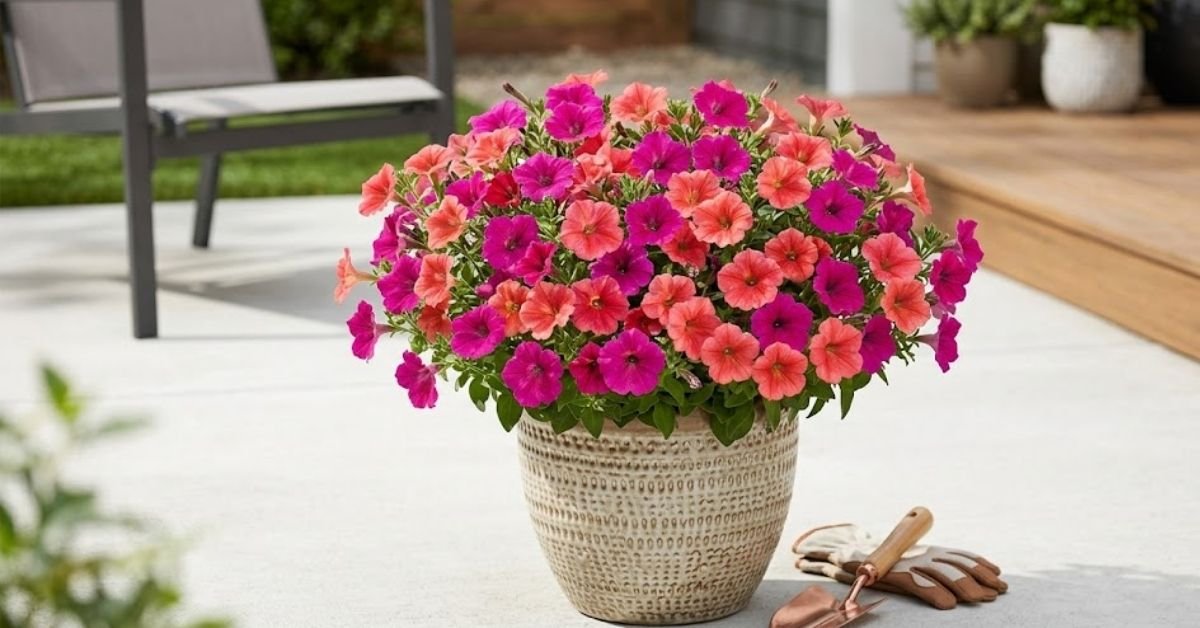
How to Care for Petunia Firefly is something every plant lover should understand before bringing this glowing beauty into their home. In my 15 years of working with ornamental plants across the US—from humid Georgia gardens to cooler Oregon nurseries—I’ve learned that this isn’t a typical petunia. The Firefly Petunia requires a more intentional care approach if you want to maintain its famous luminous effect.
Unlike standard garden petunias, this bioengineered plant depends heavily on light exposure, proper watering, and balanced feeding to stay healthy and vibrant. If you want that soft glowing “moonlight” effect at night, getting the basics right from day one is essential.
Quick Care Guide: The Firefly Petunia at a Glance
| Feature | Requirement |
| Light | 6+ hours of bright, direct sunlight (the “fuel” for the glow) |
| Watering | Consistent moisture; avoid soggy “wet feet” |
| USDA Zones | Annual in most of US; Perennial in Zones 10-11 |
| Soil | High-quality, well-draining American potting soil |
| Fertilizer | Balanced liquid feed every 2 weeks |
| Toxicity | Safe/Non-toxic for cats and dogs (USDA cleared) |
Getting Started: How to Care for Petunia Firefly in Your Home
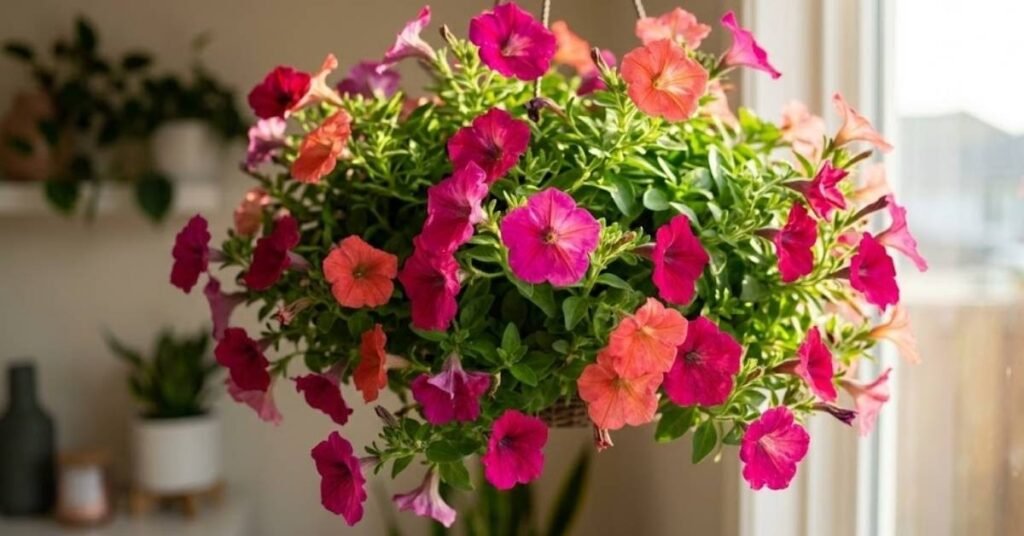
When your Firefly arrives, it’s usually in a dark shipping box. The first thing I tell everyone is: don’t panic. It might look a little “sleepy” or pale. In my experience, these plants are incredibly resilient, but they are light-hungry.
If you’re keeping it indoors, remember that our modern American homes are built to stay cool, but the dry air from your air conditioning can zap the moisture right out of these leaves. Keep it away from those AC vents!
Personal Pro-Tip: When you first unbox it, give it a “sip” of water from the faucet (room temperature, please!) and place it in a bright window, but keep it out of the scorching midday sun for the first 48 hours while it acclimates.
Light Requirements: How to Care for Petunia Firefly’s Glow
The most common question I get is: “Why isn’t my plant glowing?” The answer is almost always light. The bioluminescence is powered by the plant’s metabolism. If the plant isn’t photosynthesizing efficiently during the day, it won’t have the energy to glow at night.
I’ve found that a south-facing window is your best bet indoors. If you’re planting outdoors for the Spring, ensure it’s getting at least 6 hours of full sun.
Personal Pro-Tip: If you live in a particularly cloudy state like Washington or Ohio, don’t be afraid to supplement with a simple LED grow light. I’ve noticed a 20% increase in glow brightness just by adding 4 hours of supplemental light in the evening.
Watering Wisdom: How to Care for Petunia Firefly Without Drowning It
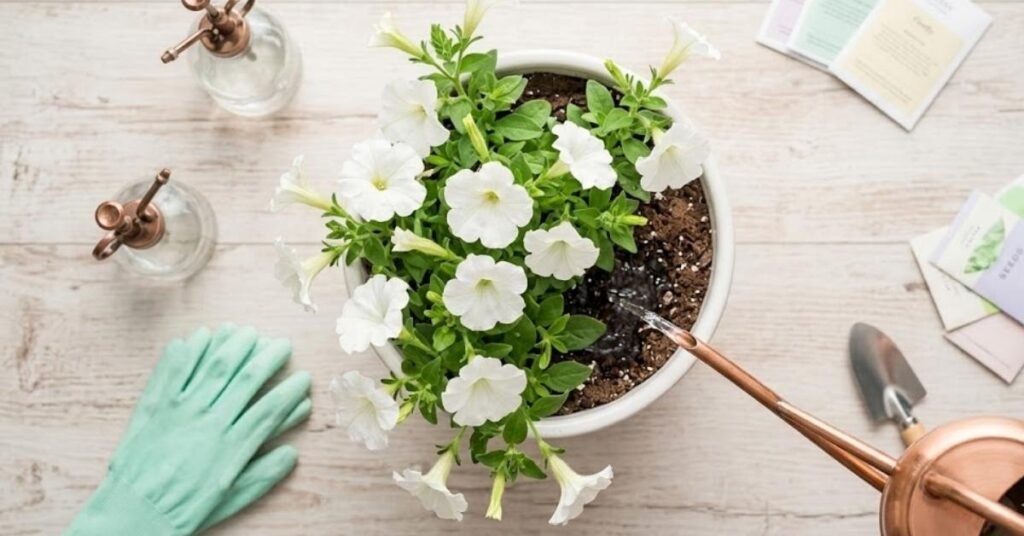
Most Americans kill their plants with kindness—specifically, too much water. For the Firefly, you want the soil to feel like a wrung-out sponge.
When you stick your finger an inch into the potting soil, it should feel dry before you head to the faucet. If you see the stems getting “mushy,” you’re overdoing it.
Personal Pro-Tip: Always water at the base of the plant. Getting water on the fuzzy leaves can lead to “powdery mildew,” a common fungus we see in humid US summers.
Common Mistakes Americans Make with This Plant
I’ve consulted on thousands of gardens, and we Americans tend to make the same three mistakes with specialty petunias:
- The “AC Blast”: Placing the plant directly under or over an air conditioning vent. This drops the humidity to desert levels, causing the flowers to drop prematurely.
- Using Garden Dirt in Pots: Never use “topsoil” from your yard in a container. It’s too heavy. Stick to a light, airy potting soil mix found at your local garden center.
- Ignoring the “Deadhead”: If you don’t pinch off the wilted, spent flowers, the plant puts energy into making seeds instead of making more glowing blooms.
Feeding for Brilliance: How to Care for Petunia Firefly Nutrients
To keep that glow strong, the plant needs “fuel.” I recommend a standard 10-10-10 or 20-20-20 water-soluble fertilizer. In my own garden, I’ve seen that a half-strength dose every two weeks works better than a full dose once a month.
Personal Pro-Tip: Avoid “high nitrogen” fertilizers if you want more flowers. Too much nitrogen gives you a giant green bush with zero glowing blossoms. Look for “Bloom Booster” formulas.
Troubleshooting: How to Care for Petunia Firefly When Things Go Wrong
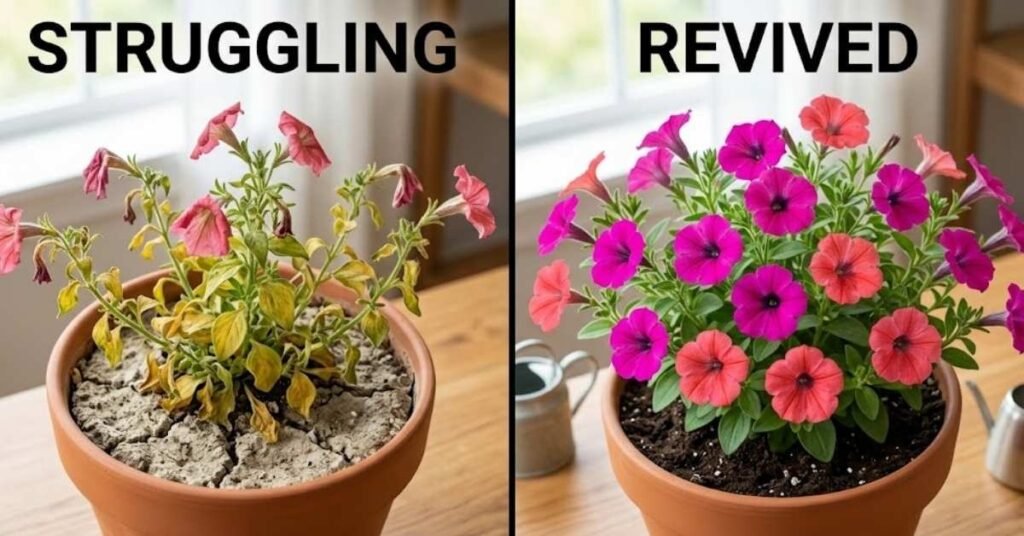
If you see yellow leaves at the bottom of the plant, don’t freak out. Usually, the plant is just shedding old growth. However, if the whole plant looks limp despite the soil being wet, you likely have root rot.
- Yellow Leaves: Usually a sign of overwatering or a nitrogen deficiency.
- Leggy Stems: Your plant is “stretching” for light. Move it to a sunnier spot.
- Sticky Leaves/Pests: Check for aphids. A quick spray of Neem oil (available at any US hardware store) usually fixes this.
Personal Pro-Tip: If your Firefly looks “leggy” or thin in mid-summer, don’t be afraid to give it a haircut! Trim the stems back by about one-third. It feels mean, but it will grow back bushier and brighter within two weeks.
Toxicity and Safety
One of the best things about the Firefly Petunia is that it has been rigorously tested. As a pet owner myself (my Golden Retriever loves to “inspect” my garden), I was relieved to find that these are non-toxic to cats and dogs. They are safe to have on your kitchen counter or your backyard patio.
My Final Thoughts on the Firefly Petunia
Wrapping things up, how to care for Petunia Firefly isn’t just about standard gardening; it’s about nurturing a piece of living technology. In my 15 years of getting my hands dirty across the US, I’ve rarely seen a plant that sparks as much genuine wonder as this one. It’s a conversation starter that turns your patio or living room into a scene straight out of a dream.
The key to success is remembering that this plant is a high-performance machine. Give it the sunlight it craves to “charge,” keep it away from the harsh dry air of your air conditioning, and don’t be afraid to give it that mid-season “haircut” to keep it lush. If you treat it with a little extra intention, it will reward you every single night with that signature, ethereal glow.
Whether you’re a seasoned gardener in a humid USDA Zone 9 or a beginner trying to brighten up a small apartment, the Firefly Petunia is a sturdy, safe, and breathtaking addition to your collection. Grab your watering can, find your sunniest window, and get ready to see your garden in a whole new light.
FAQs: Real Questions from the Gardening Community
1. Does the glow ever “run out”?
No. Unlike “glow-in-the-dark” toys, this is a biological process. As long as the plant is healthy and growing, it will glow for its entire life.
2. Can I plant my Firefly in the ground?
Yes, if you are in a warm climate. However, for most of the US, I recommend keeping it in a pot so you can bring it inside when the Fall frost hits.
3. Why does it glow brighter in some spots?
The most intense glow usually happens in the new growth and the flowers. I’ve observed that the “throat” of the flower often has the most concentrated light.
4. Do I need special water for it?
Regular water from your faucet is fine. If your city water is heavily chlorinated, let it sit out in a pitcher overnight before watering.
5. How long do the flowers last?
Individual blooms usually last about 5–7 days, but the plant will continuously produce new ones throughout the growing season if you deadhead them.
6. Is the glow visible in a bright room?
Not really. You’ll need a dim or dark room to see the effect. It’s most stunning at dusk or in a completely dark bedroom.
7. Can I take cuttings to grow more?
Technically yes, but remember that these are patented plants. Growing them for your own home is fine, but you cannot legally sell them.

Amin Khalid is a professional horticulturist and the founder of LeafyWisdom. With a deep passion for home gardening and horticultural research, he specializes in providing practical, easy-to-follow care guides for indoor plants. Amin’s goal is to simplify gardening for everyone and help fellow plant lovers build their own thriving green spaces.

No responses yet