
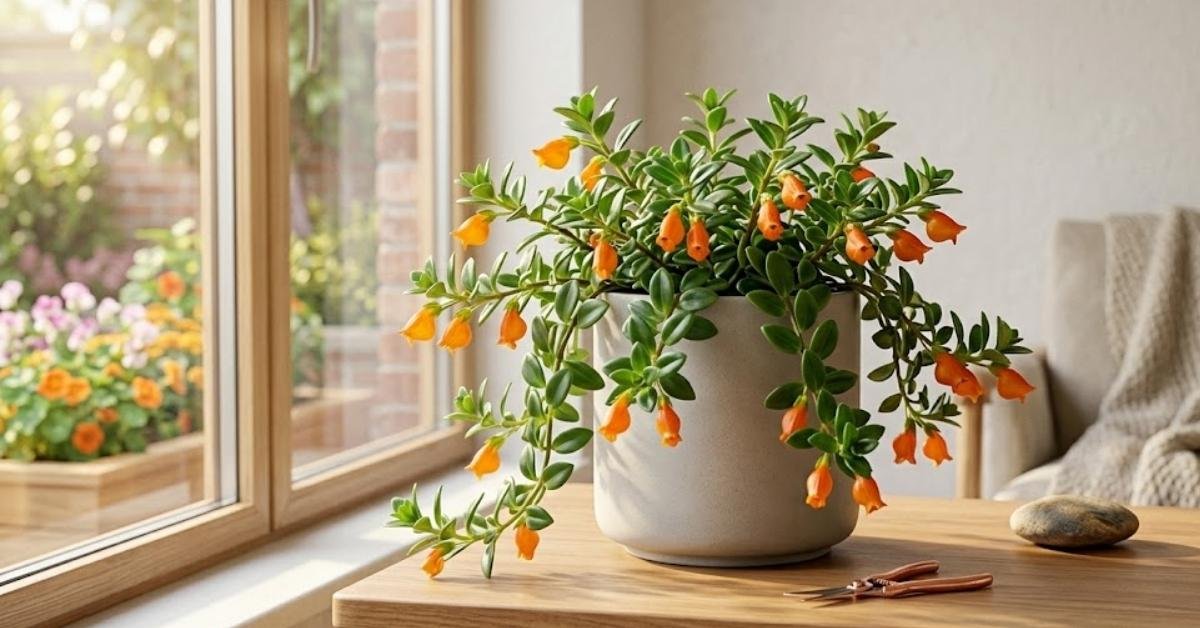
Goldfish plant care (Nematanthus and Columnea care) is the key to growing one of the most unique flowering houseplants indoors. Known for its trailing vines and fish-shaped orange blooms, the goldfish plant needs the right balance of light, humidity, watering, and seasonal rest to thrive. In this complete guide, you’ll learn everything about goldfish plant care including how to make it bloom, pruning techniques, propagation methods, and common mistakes to avoid.
Quick Care Cheat Sheet
| Care Factor | Requirement |
| Light | Bright indirect — east or west window (1,000–2,500 foot-candles) |
| Water | When top 2 inches of soil feel dry; room-temperature water only |
| Humidity | 50–60% RH; use a humidifier or pebble tray |
| Temperature | 65°F–80°F (18°C–27°C) growing season; 60–65°F winter rest |
| Soil | Fast-draining peat mix; African violet potting mix is ideal |
| Fertilizer | High-phosphorus (10-30-10), half-strength, every 2 weeks in spring–summer |
| Repotting | Every 1–2 years; slightly root-bound = more blooms |
| Toxicity | Non-toxic to cats, dogs, and humans |
What Is a Goldfish Plant? (The Snippet Definition)
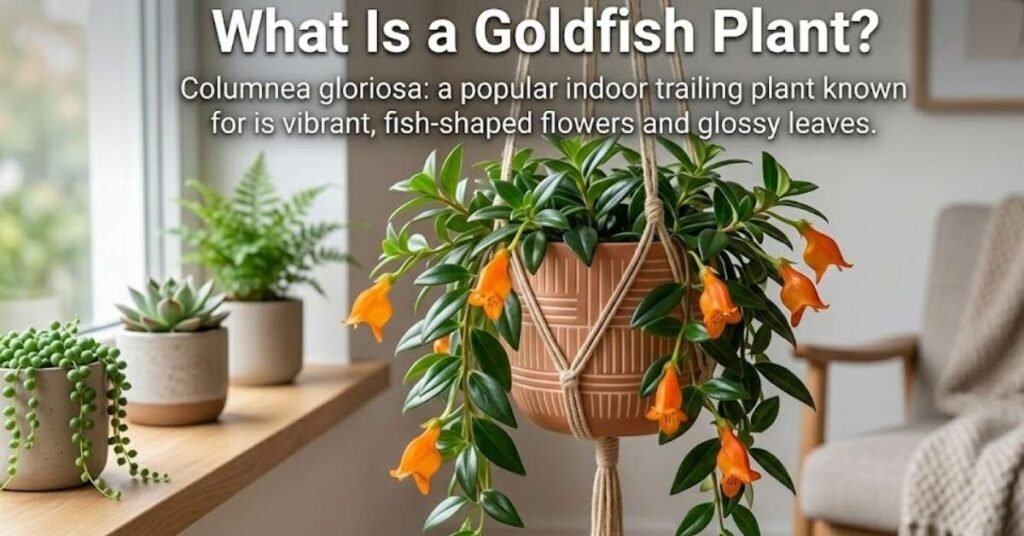
A Goldfish Plant is a tropical perennial houseplant from the Gesneriaceae family, the same family as African Violets. It’s named for its tubular orange-red blooms that mimic leaping fish. Native to the rainforests of Brazil and Central America, these plants are epiphytes in the wild; they grow on tree trunks rather than in soil, which explains a lot about how to care for them indoors.Goldfish Plant Care: Light Requirements
Nematanthus vs. Columnea Which One Do You Have?
Both plants share the “Goldfish Plant” nickname, but they have distinct personalities:
Nematanthus gregarius The Low-Maintenance Cousin
Waxy, succulent-like leaves and compact flowers. Forgiving of humidity fluctuations. The best choice for beginners.
Columnea gloriosa The Showstopper
Longer, softer stems (up to 3 feet), larger arched flowers, and a dramatic trailing habit in hanging baskets. More finicky about humidity but stunning when happy.
Beginner Pick: Start with Nematanthus gregarius. It blooms more reliably and tolerates imperfect humidity far better than Columnea.
The Science of the Bloom Light & Foot-Candles

If your plant is nothing but a green vine with zero flowers, light is almost certainly the culprit. Goldfish plants need more light than most people think.
The Technical Goal
Aim for 1,000–2,500 foot-candles (10,000–25,000 lux).
The Book Test
If you cannot comfortably read a book in that spot at 4 PM without turning on a lamp, it is too dark for blooms.
The Window Hierarchy
- East Window — Perfection. Soft morning sun triggers flower production without scorching.
- West Window — Great, but use a sheer curtain in summer to prevent afternoon heat spikes.
- South Window — Fine with a sheer curtain; too intense without one.
- North Window — Too dim. Supplement with a full-spectrum LED grow light for 12–14 hours daily.
Watering the Epiphyte Way
Because goldfish plants grow on trees in the wild, their roots are built for quick-dry cycles — not constantly moist soil. Overwatering is the leading cause of death.
The Golden Rule: Never water on a schedule. Stick your finger in the soil — if the top 2 inches feel like a dry sponge, it is time to water.
Water thoroughly until it drains freely from the bottom, then wait until the soil dries out again. In winter, stretch this to every 2–3 weeks.
Cold Water Warning: Cold tap water shocks tropical roots and causes ring spots (chlorosis) on the leaves. Always use room-temperature, filtered water.
Humidity & The “Winter Rest” Secret

Most care guides tell you to keep goldfish plants warm and humid year-round. They are missing a critical piece of the puzzle.
To trigger a massive flush of spring flowers, you need to mimic the tropical cool season — a technique experienced growers call the “winter rest.”
Winter Rest Plan (December–February)
Move the plant to a room that stays 60°F–65°F (15°C–18°C).
Reduce watering — only enough to prevent shriveling.
Stop fertilizer completely.
Watch for spring bud explosion.
Why This Works: The cool-dry rest mimics the natural seasonal dry period in Central and South American forests. The plant interprets it as a signal to reproduce — and responds with a spectacular bloom.
Pruning for a “School of Fish”
Left unpruned, a goldfish plant becomes leggy — long bare stems with few flowers. Regular pruning transforms it into a cascading waterfall of blooms.
- When to prune: Immediately after the spring blooming cycle ends
- The 1/3 Rule: Cut back the longest stems by one-third
- Each cut forces the plant to branch into two new stems — more stems = more flower nodes
- Save your cuttings — they root in 3–4 weeks
Pro Tip: Pinch stem tips during the growing season to maintain bushiness. Make it a habit every few weeks.
Fertilizing for Maximum Flowers
The key is phosphorus, the middle number on a fertilizer label. High nitrogen pushes leafy growth at the expense of blooms.
| Season | Fertilizer | Frequency |
| Spring & Summer | High-phosphorus liquid (10-30-10 or 15-30-15), half-strength | Every 2 weeks |
| Fall | Balanced (20-20-20), half-strength | Once a month |
| Winter | None — plant resting | Stop completely |
Advanced Troubleshooting & Pest Control
| Symptom | Diagnosis | Pro Action Plan |
| Dropping green leaves | Temperature shock | Check for AC vents or drafty windows |
| Sticky “honey” on leaves | Aphids or Scale | Wipe with 70% isopropyl alcohol; follow with neem oil spray |
| Silver/gray webbing | Spider mites | Increase humidity; spray neem oil |
| Yellowing from base | Overwatering / root rot | Trim brown roots; repot in fresh chunky mix |
| No blooms, leggy growth | Insufficient light | Move brighter or add grow light |
| Brown leaf tips | Low humidity or tap water | Raise humidity; switch to filtered water |
Propagation Make Free Plants from Pruning
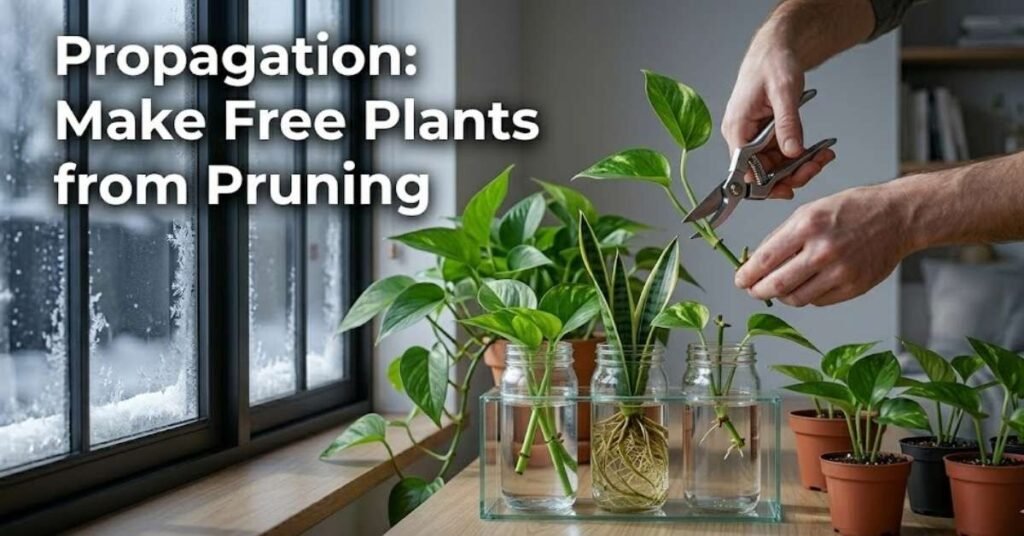
Take a 4-inch cutting with at least two sets of leaves.
Optional — dip in rooting hormone powder.
Plant in a 50/50 mix of perlite and peat moss.
Cover with a clear plastic bag to create humidity.
Roots form in about 21 days.
Keep warm (around 70°F / 21°C) in bright indirect light. Avoid direct sun.
Pet & Child Safety
Good news — goldfish plants are non-toxic to cats, dogs, and humans. They are among the safest flowering houseplants available. Still, discourage chewing as large quantities may cause mild stomach upset.
Frequently Asked Questions
Why will my goldfish plant bloom?
Most common causes are low light, no winter rest, and high-nitrogen fertilizer. Increase brightness, allow cool rest, switch to high-phosphorus formula.
How is Nematanthus different from Columnea?
Nematanthus is compact and forgiving. Columnea is longer, softer, and needs higher humidity.
Can I grow it outside?
USDA Zones 10–11 yes, year-round in full shade. Other zones move outdoors in summer above 60°F nights.
How do I know if I am overwatering?
Yellowing from base, musty soil smell, soft stems, or wilting despite wet soil.
How long does it live?
With proper care — 5–10 years or more.
Final Thoughts Your Path to a Blooming Goldfish Plant
The goldfish plant has an undeserved reputation for being difficult. The truth — it has a few non-negotiable needs: bright indirect light, careful watering, good humidity, and a cool winter rest.
Nail the light. Respect the winter rest. Prune after every bloom cycle.
Do those three things consistently and you will be rewarded with wave after wave of cheerful, fish-shaped flowers.
Have a question about your goldfish plant? Drop it in the comments we would love to help with proper goldfish plant care, your Nematanthus or Columnea can produce continuous waves of bright, fish-shaped blooms throughout the growing season.”

Amin Khalid is a professional horticulturist and the founder of LeafyWisdom. With a deep passion for home gardening and horticultural research, he specializes in providing practical, easy-to-follow care guides for indoor plants. Amin’s goal is to simplify gardening for everyone and help fellow plant lovers build their own thriving green spaces.

No responses yet