
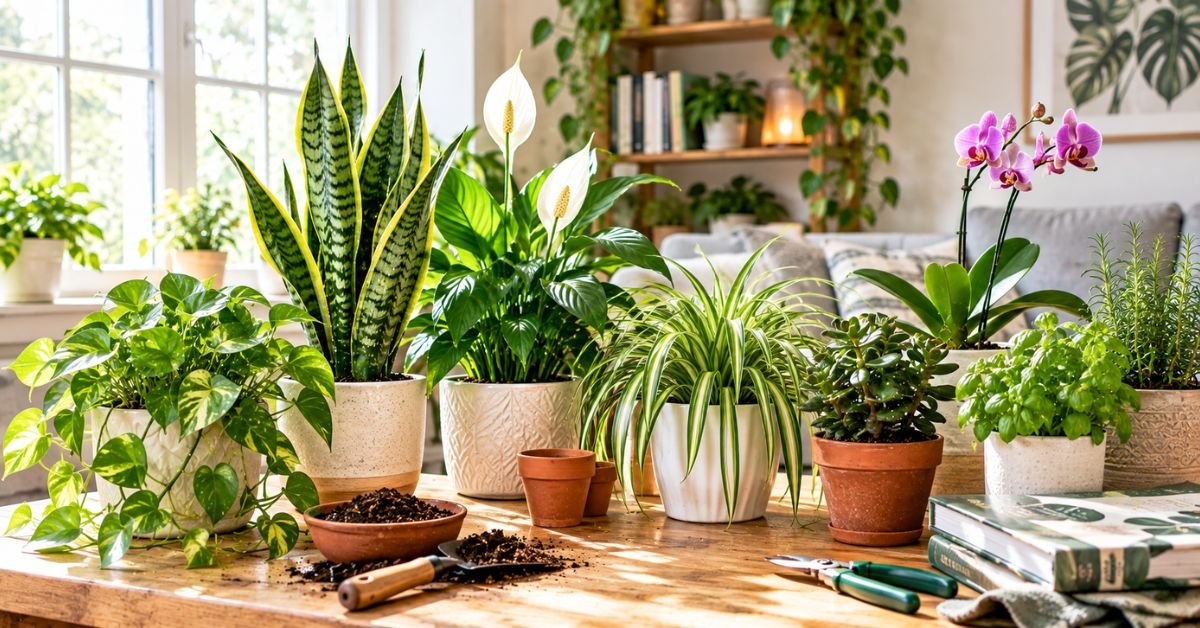
What are the absolute best common house plants for a beginner? If you want reliable indoor greenery, the most foolproof common house plants are the Snake Plant, ZZ Plant, Golden Pothos, and Aloe Vera. These specific varieties easily tolerate the dry air from central heating and the erratic watering schedules typical of busy American households.
I have spent years working as a horticulturist consulting with indoor gardeners. The biggest problem beginners face is information overload. You do not need a list of forty random tropical species. You need to know which specific plants will actually survive in your living room. A plant that looks beautiful in a humid Florida greenhouse will often drop all its leaves the moment you place it near a blasting air conditioning vent in a dry apartment.
We are going to skip the generic lists. Instead, I will break down exactly how to match the most popular indoor greenery to the exact lighting and temperature realities of your home.
Quick Care Matrix for Popular Indoor Plants
| Plant Category | Best Environment | Top Recommendations |
| The Indestructibles | Almost anywhere away from direct sun | Snake Plant, ZZ Plant |
| Low-Light Survivors | North-facing windows or offices | Golden Pothos, Cast Iron Plant |
| Sun Worshippers | Bright south-facing windowsills | Aloe Vera, Jade Plant |
| Standard Rule | Always check soil moisture before watering | Use the Two-Inch Finger Test |
Personal Pro-Tip: Keep your new plants in their cheap plastic nursery pots. Dropping that plastic container inside a heavy decorative ceramic pot makes taking the plant to the sink for watering incredibly easy.
Decoding Light for Common House Plants
Lighting is the single most misunderstood part of indoor gardening. Most care tags simply say “bright indirect light” without explaining what that actually means.
Beginners often put a fern in a dark corner because they assume “indirect” means “away from windows.” This slowly starves the root system. On the flip side, putting a delicate tropical leaf right against a scorching south-facing glass pane in July will result in severe sunburn.
You need to measure the actual light energy hitting your walls. I teach my clients to use the Shadow Test. Hold your hand about twelve inches above your desk or table at noon on a sunny day. Look at the shadow your hand casts. If the shadow has sharp, crisp edges, you have bright direct light. The shadow is fuzzy but clearly visible, you have bright indirect light. If you can barely see a shadow at all, you have a low-light situation.
Personal Pro-Tip: Your home lighting changes drastically with the seasons. A tree outside your window might block all the sun in the summer but let intense light through in the winter when the leaves fall off. Adjust your pots accordingly in November and April.
The Indestructible Common House Plants for Beginners
If you have a history of killing greenery, you need to start with desert-adapted species that do not care if you forget about them.
The ZZ Plant (Zamioculcas zamiifolia) and the Snake Plant (Sansevieria) are the undisputed champions of neglect. Both of these store massive amounts of water in their thick leaves and underground rhizomes. You can place them in a bright room or a dark hallway. They do not care.
In my own home, I water my Snake Plant maybe once every five weeks. The only realistic way to kill these two species is by giving them too much attention and keeping their soil soggy. They prefer a chunky, fast-draining potting soil that dries out completely between waterings.
Personal Pro-Tip: Do not expect rapid growth from these tough varieties. Because they are adapted to survive harsh conditions, their metabolism is incredibly slow. You might only see one or two new leaves an entire calendar year.
The Best Everyday Houseplants for Low-Light Apartments
Not everyone has a house full of giant, sun-drenched windows. If you live in an apartment with north-facing windows or work in a cubicle, you need shade-dwelling survivors.
The Golden Pothos is my absolute favorite trailing vine for dim spaces. In its native tropical habitat, it grows entirely under the dark shade of massive jungle canopies. It will happily drape over your bookshelves or kitchen cabinets. Just keep in mind that its bright yellow variegation will fade to solid green if the light gets too low. The plant does this to maximize chlorophyll production to survive the darkness.
Another phenomenal choice is the Cast Iron Plant (Aspidistra elatior). It earned its name by surviving the dark, smoke-filled parlors of the Victorian era. It grows long, dark green leaves and easily handles massive temperature swings. If you turn your thermostat way down when you leave for work in the winter, this plant will not even flinch.
Personal Pro-Tip: Plants in dark corners process water much slower than plants in the sun. A Pothos in a dark room might only need water every three weeks, while the same plant in a bright window might need it every seven days.
Sun-Loving Common Indoor Plants for Bright Windows
If you have a massive, unobstructed south or west-facing window, you have a prime location for desert succulents.
Aloe Vera and Jade Plants are staples in American homes. They demand intense ultraviolet light to keep their compact, upright shapes. If you stick a Jade plant on a dark coffee table, its stems will grow incredibly long and weak as it stretches out looking for the sun.
These plants need a very gritty potting soil heavily cut with perlite or coarse sand. When the summer temperatures rise, these species drink more heavily. However, during the short, dark days of winter, they enter a state of dormancy. You should cut your watering schedule in half from November through March.
If you decide to move these plants outside to your patio during the summer months, check your local USDA Hardiness Zone. If you live in Zones 4 through 8, you must bring them back indoors well before the first autumn frost hits.
Personal Pro-Tip: Never move a houseplant directly from your living room into full outdoor summer sun. The sudden shock of raw ultraviolet light will bleach and burn the foliage. Acclimate them slowly over a week under a shaded patio roof first.
Watering Mistakes That Destroy Most Common House Plants
Let us address the biggest lie in indoor gardening. You should never water your plants on a strict weekly calendar schedule.
Watering every Sunday morning regardless of the soil condition causes massive root rot. Your home environment is not static. Central heating system sucks moisture out of the air in January. Your AC unit blasts cold, dry drafts in July. These climate control systems dramatically alter how fast potting soil dries out.
Instead of a calendar, use the Two-Inch Finger Test. Stick your index finger into the dirt up to your second knuckle. If it feels wet or damp, walk away. Do not add a single drop. If it feels completely dry, take the pot to the kitchen. Run room-temperature faucet water deeply through the soil until it pours out the bottom drainage holes.
Personal Pro-Tip: City faucet water often contains heavy amounts of chlorine and fluoride. If you notice the tips of your leaves turning brown and crispy despite proper watering, try switching to filtered water or rainwater for a few weeks to flush the salt buildup out of the dirt.
Troubleshooting Popular Indoor Plant Problems
Your plants will always tell you what they need visually. You just have to learn how to read their foliage.
Yellowing leaves are the most common issue beginners panic over. If the bottom leaves of your plant turn soft, mushy, and bright yellow, you are overwatering. The roots are suffocating in mud and cannot absorb oxygen. Stop watering instantly and make sure your pot actually has drainage holes in the bottom.
Conversely, if the edges of the leaves are turning crispy, brown, and cracking like dry paper, the plant is dehydrated. This usually happens when a pot is placed directly over an active heating register. The constant flow of hot air strips away humidity. Move the plant away from the draft and give the roots a deep soak in the sink.
If the plant looks stringy, pale, and is dropping its leaves entirely, it is starving for light. Simply moving the pot three feet closer to a window can completely reverse this decline in a matter of weeks.
Personal Pro-Tip: Dropping a single yellow leaf at the very bottom of the stem is a totally natural aging process. The plant is just abandoning old foliage to push energy into fresh top growth. Cut the ugly leaf off and ignore it.
Pet Toxicity: Which Common House Plants Are Safe?
Veterinary emergencies involving indoor plants happen far too often. Many of the most popular varieties sold at big box hardware stores carry hidden dangers.
According to data from the ASPCA animal poison control center, plants containing insoluble calcium oxalates are highly irritating to cats and dogs. The Golden Pothos, ZZ Plant, and Snake Plant all fall into this toxic category. If a pet chews on the stems, it triggers intense oral burning, excessive drooling, and vomiting. I always recommend keeping these toxic varieties high up on bookshelves or suspended in hanging macrame planters.
If you have pets that refuse to leave your greenery alone, you must buy verified non-toxic varieties. The Cast Iron Plant, Boston Fern, Spider Plant, and most Peperomias are entirely safe.
Personal Pro-Tip: Even non-toxic plants can cause an upset stomach if your cat decides to eat an entire leaf. To keep pets away, try placing a few fresh lemon or orange peels on top of the potting soil. Most cats hate the smell of strong citrus.
Frequently Asked Questions About Everyday Houseplants
Q1: Should I report my new plant as soon as I bring it home from the store?
Absolutely not. Moving from a greenhouse to a retail store to your living room causes massive environmental shock. Leave it in its original plastic pot for at least a month to let it acclimate to your home lighting.
Q2: Is it safe to water my indoor plants with ice cubes?
No. Tropical roots are highly sensitive to freezing temperatures. Dropping ice cubes on the soil shocks the root system and damages the cellular structure of the plant.
Q3: Do these plants actually purify the air in my house?
While plants do process toxins, university extension tests prove you would need dozens of plants crammed into a single small room to replicate the famous NASA clean air study. Buy them for mental health benefits, not as air filters.
Q4: How often do I need to apply liquid fertilizer?
Feed your actively growing plants once a month from early spring through late summer using a standard indoor liquid fertilizer diluted to half strength. Never fertilize during the dark winter months.
Q5: What is bottom watering and should I try it?
Bottom watering involves placing your plastic nursery pot into a bowl of water and letting the dirt soak it up through the bottom holes for twenty minutes. It is a fantastic way to ensure the root ball gets evenly saturated.
Q6: Why are there tiny black flies crawling out of my potting soil?
Those are fungus gnats. They lay their eggs in the top layer of dirt when it stays constantly wet. Let the top two inches of your soil dry out completely to kill off the larvae.
Q7: Will leaving tap water out overnight remove all the bad chemicals?
Leaving a watering can out for 24 hours will allow chlorine gas to evaporate into the air. However, it does absolutely nothing to remove fluoride or heavy mineral salts.
Final Thoughts on Keeping Your Indoor Jungle Alive
Success with indoor gardening does not require a magical green thumb. It simply requires paying attention to your home environment. Stop watering on a strict calendar, keep your pots away from aggressive air conditioning vents, and match your species to the actual light levels in your rooms. Once you respect these basic rules, even the most notorious plant killers can turn their living space into a lush oasis using common house plants.
Have you had terrible luck with a specific houseplant in the past, or do you have a favorite indestructible variety that survives everything? Drop a comment below to let me know, or ask a question if you need help diagnosing a sick plant right now!

Amin Khalid is a professional horticulturist and the founder of LeafyWisdom. With a deep passion for home gardening and horticultural research, he specializes in providing practical, easy-to-follow care guides for indoor plants. Amin’s goal is to simplify gardening for everyone and help fellow plant lovers build their own thriving green spaces.

No responses yet