
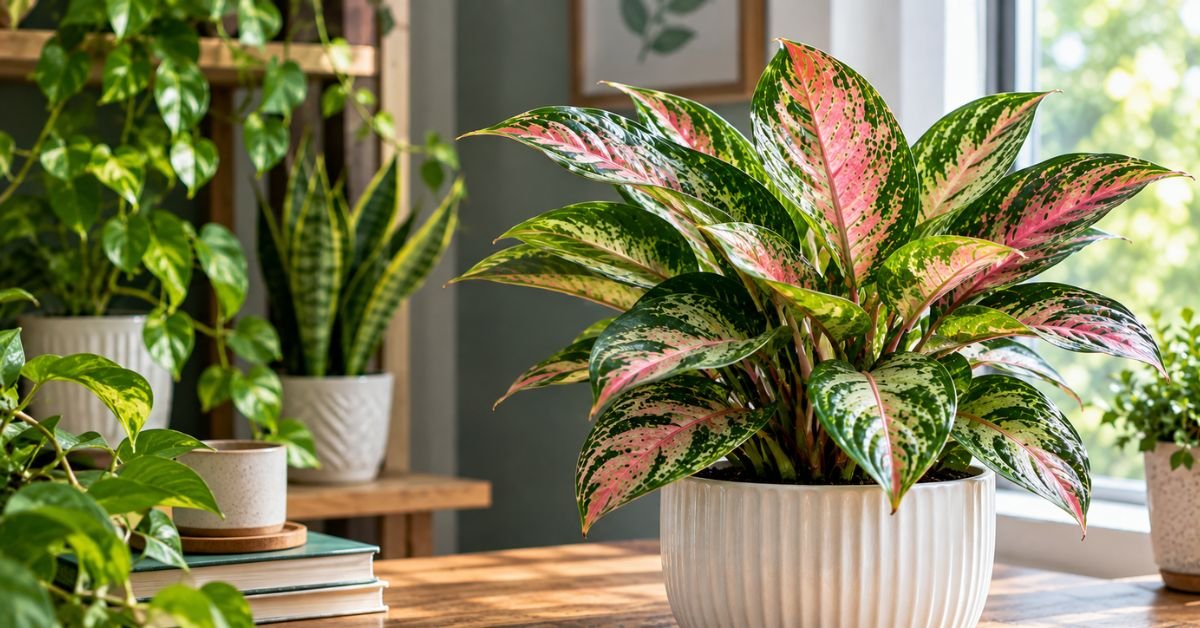
Aglaonema plant care boils down to three core habits: placing the plant in moderate indirect light, letting the top two inches of potting soil dry out between waterings, and keeping it away from cold air drafts. Known everywhere as the Chinese Evergreen, this tropical foliage plant ranks among the most resilient houseplants available to American growers today. Whether you picked up a classic dark green variety from a local nursery or brought home a striking pink cultivar from a big-box garden center, mastering its daily routine takes very little effort once you understand its natural preferences.
I have grown dozens of these plants over the past fifteen years in drafty apartments, humid greenhouses, and climate-controlled living rooms across the country. They are remarkably forgiving. However, I still see people run into trouble with simple, avoidable errors like waterlogged soil or blasted central air conditioning.
This guide breaks down practical, real-world advice to help your plant stay healthy and green without guesswork.
At-a-Glance Aglaonema Plant Care Summary
For anyone needing quick reference points right now, here is the essential care breakdown for your Chinese Evergreen:
- Light Requirements: Medium to bright indirect light is ideal. Dark green varieties handle lower light, while pink or red types need bright indirect sunlight to preserve their color. Avoid direct afternoon sun.
- Watering Routine: Water thoroughly only when the top two inches (or top 50%) of potting soil feel dry. Never let the roots sit in stagnant water.
- Potting Soil Blend: Use a well-draining, chunky mix composed of indoor potting soil, perlite, and coarse orchid bark. Heavy outdoor garden dirt will smother the root system.
- Temperature Range: Keep temperatures between 65°F and 85°F year-round. Protect the plant from cold drafts below 55°F and direct air streams from AC units.
- Humidity Levels: Aim for 45% to 70% humidity. Standard indoor home air works fine, but dry winter furnace heat requires extra moisture support.
- Fertilizer Schedule: Apply a balanced liquid houseplant food diluted to half strength once a month during spring and summer. Stop feeding completely during autumn and winter.
- Pet Safety Warning: Highly toxic to cats and dogs due to insoluble calcium oxalate crystals. Keep pots out of reach of pets.
Personal Pro-Tip: Do not worry if your plant pushes out small, spath-like white blooms during late spring. These flowers are harmless, but they drain vital energy. I always snip them off at the base with clean shears so the plant puts its full strength into producing lush leaves instead.
Understanding Your Aglaonema Plant (Chinese Evergreen)

Native to the tropical rainforest floors of Southeast Asia, the Chinese Evergreen grows under thick jungle canopies. In its natural setting, it stays shaded by taller trees, growing in warm, damp, organic leaf litter.
Understanding that tropical background makes indoor houseplant care much easier. It explains why these plants dislike harsh, direct sunlight and why cold air stops them in their tracks.
In the United States, Aglaonemas are grown almost exclusively as indoor houseplants. Unless you live in the southernmost tip of Florida, Southern California, or Hawaii (USDA Hardiness Zones 10 through 11), your plant needs to stay indoors for most or all of the year.
Lighting Requirements for Aglaonema Plant Care Success
Lighting is where many houseplant owners get confused, mostly because different foliage colors demand different light levels.
Dark green varieties like Aglaonema ‘Maria’ or Aglaonema ‘Emerald Bay’ tolerate low light remarkably well. They adapt easily to interior offices, North-facing rooms, or spots set back several feet from windows.
If you own a colorful cultivar like Aglaonema ‘Siam Aurora’, ‘Pink Dalmatian’, or ‘Lady Valentine’, low light will not work over time. Red, pink, and yellow leaves need brighter conditions to generate their vibrant pigments. Dark green types flourish in low to medium indirect light, such as a North window or an interior room desk. Pink and red types require bright indirect light only, such as an East window or a shielded South window. Without enough light energy, bright foliage fades back to dull green, and the growth turns leggy and weak.
Place colorful varieties near an East-facing window where they can catch soft morning light. A South or West-facing window works too, provided you diffuse the sunlight with a sheer curtain or set the pot three to five feet back from the glass. Direct afternoon sun will scorch the leaves, leaving brown, crispy patches that never recover.
Personal Pro-Tip: Rotate your pot a quarter-turn every time you water. Aglaonemas lean heavily toward light sources over time. Rotating keeps the growth balanced and prevents the plant from looking lopsided.
How Often Should You Water Your Aglaonema Plant?

Overwatering is the single fastest way to kill a Chinese Evergreen. These plants have thick, semi-succulent stems and fleshy root systems that retain moisture efficiently. They prefer drying out slightly over staying constantly wet.
I use a simple touch test before grabbing my watering can. Insert your finger two inches deep into the potting soil. If it feels cool and damp, do not water, wait 3 to 5 days and recheck. If it feels dry and dusty, water thoroughly by soaking until water runs freely out of the drainage holes at the bottom of the pot.
Your watering frequency changes with the seasons. During hot summer months when the plant actively grows, you might water every 7 to 10 days. During winter, when indoor light decreases and plant metabolism slows down, you might only water once every 2 to 3 weeks.
Water quality matters too. If your house has hard tap water packed with minerals, you may notice small white deposits on the leaf margins or crisp yellow edges. Letting tap water sit out overnight in an open container, or using filtered water, keeps the foliage looking clean.
Personal Pro-Tip: Always empty the drainage saucer fifteen minutes after watering. Allowing your pot to sit in a pool of runoff water leads straight to root rot.
Potting Soil and Drainage Needs for Chinese Evergreens
Never plant your Chinese Evergreen in dense, heavy garden soil straight from your yard. Outdoor soil compacts quickly in containers, traps excess moisture, and smothers root systems.
An ideal potting mix needs to balance moisture retention with rapid drainage. You can buy a commercial indoor potting soil and customize it easily at home.
Here is my favorite DIY soil blend for Aglaonemas:
- 2 parts quality indoor potting soil
- 1 part perlite or pumice (for aeration)
- 1 part coarse orchid bark (for chunky structure)
- A small handful of horticultural charcoal (keeps the soil fresh)
This combination allows water to pass through effortlessly while keeping just enough dampness for the roots to drink.
Always select a pot with at least one functional drainage hole. Plastic nursery pots tucked inside decorative ceramic planters (cachepots) work brilliantly. When it comes time to water, take the plastic pot out, soak the soil at your kitchen sink, let it drain completely, then drop it back into the decorative pot.
Personal Pro-Tip: When repotting, only increase the container size by one or two inches in diameter. Aglaonemas actually prefer slightly snug quarters. Putting a small plant in an oversized pot leaves too much wet soil around the roots, increasing rot risk.
Temperature, Humidity, and US Home Environment Factors
Because these are tropical natives, they excel in temperatures between 65°F and 85°F. They handle average US household climates quite well, but two common home fixtures cause trouble: central air conditioning and heating vents.
During hot summers, running your AC creates cold draft zones. Great home spots include placing your pot 3 to 5 feet from an East or North window, or on a desk receiving indirect light. Bad home spots include placing the plant directly under an air conditioning vent, right next to a cold winter door, or pressed against hot afternoon window glass. If an Aglaonema sits directly in the path of a blowing air vent, the chilling breeze will cause leaves to curl, droop, and drop off. Keep your plant away from direct airflow paths.
In winter, central heating dries out indoor air significantly, dropping humidity below 30%. While Aglaonemas tolerate dry air better than delicate ferns or Calatheas, very low humidity causes brown, papery leaf tips.
To boost ambient moisture around your plant:
- Group several houseplants together to form a natural microclimate.
- Set the pot on a tray filled with pebbles and water, making sure the bottom of the pot stays above the water line.
- Run a small cool-mist room humidifier nearby during cold winter months.
Outdoor summering is an option if you live in places like the Midwest, Mid-Atlantic, or South. You can place your plant outside on a shaded porch once nighttime temperatures stay consistently above 60°F. Bring it back indoors well before the first autumn cold snap.
Personal Pro-Tip: If temperatures drop below 50°F, even briefly during shipping or a move, the leaves will turn black and mushy from chilling injury. Protect your plant with paper bags or warm transport boxes when moving it during winter.
Fertilizer Schedule for Optimal Aglaonema Growth
Chinese Evergreens are not heavy feeders. Feeding too much fertilizer damages tender roots and leaves brown burn marks on the foliage tips.
Feed your plant only during its active growing window, which runs from early spring through early autumn.
Use a balanced liquid houseplant fertilizer, such as an N-P-K ratio of 10-10-10 or 20-20-20. Dilute the solution to half strength of what the manufacturer recommends on the bottle. Apply this liquid food once every 4 to 6 weeks after watering the soil thoroughly first.
Never apply fertilizer to bone-dry soil, as concentrated minerals can scorch thirsty roots.
Stop all fertilizing completely during late fall and winter. The plant rests during these darker months, and unused nutrients accumulate in the soil as toxic salts.
Personal Pro-Tip: Once every spring, flush the soil by running lukewarm tap water through the pot for two full minutes at your sink. This flushes out accumulated fertilizer salts and mineral crusts.
Propagating Chinese Evergreens Step by Step
Propagating an Aglaonema is surprisingly easy, and it is a great way to turn a tall, leggy plant into multiple full pots.
You have two main methods: division or stem cuttings. Division works best for thick, bushy plants, while stem cuttings work best for older plants that have developed long, bare stems.
Method 1: Plant Division (Best for Bushy Plants)
- Slide the mature plant gently out of its pot.
- Carefully loosen the root ball with your fingers to expose individual stems and root clumps.
- Gently pull apart a section of the plant that has its own established roots and at least two or three healthy leaves.
- Repot the divided section into a fresh, well-draining potting soil mix in a small pot.
- Water lightly and keep the new plant in warm, bright indirect light until it roots firmly.
Method 2: Water Propagation Stem Cuttings
- Using a clean, sterilized knife or pruning shears, cut a healthy stem section 4 to 6 inches long, just below a leaf node.
- Remove the lower leaves so the bottom two inches of stem are bare.
- Place the stem in a glass jar filled with clean, room-temperature water.
- Set the jar in a warm spot with bright indirect light.
- Replace the water every 5 to 7 days to keep it clean and oxygenated.
- Once roots grow 2 inches long (usually within 4 to 6 weeks), plant the cutting into regular potting soil.
Personal Pro-Tip: Dip the cut end of your stem into a little powdered horticultural charcoal or rooting hormone before placing it in water. It prevents bacterial rot while encouraging faster root development.
Common Aglaonema Plant Care Mistakes American Houseplant Owners Make
Even seasoned plant parents make mistakes. Knowing what to watch out for keeps your Chinese Evergreen looking its best.
- Drowning Roots in Un-drained Pots: Planting directly into containers without drainage holes traps water at the bottom. The roots rot quickly, leaving stems mushy and weak.
- Placing Plants in Cold AC Drafts: Setting a pot directly under an air conditioning vent in July causes sudden leaf dropping and stem shock.
- Exposing Foliage to Direct Sun: Leaving your plant on a hot West-facing window sill scorches the leaves, turning patches tan or bleached white.
- Over-potting into Massive Containers: Moving a 4-inch plant straight into a 10-inch pot leaves too much wet soil around the roots, causing fungal problems.
- Ignoring Dust Accumulation on Leaves: Broad leaves collect dust quickly in homes. Dust blocks sunlight and clogs plant pores, slowing growth down significantly. Wipe leaves down monthly with a damp microfiber cloth.
Personal Pro-Tip: Mix a drop of gentle liquid castile soap into warm water when wiping down leaves. It cleans off household dust while deterring potential insect pests naturally.
Troubleshooting Aglaonema Plant Problems
When your plant runs into trouble, it communicates through its leaves. Here is how to diagnose and fix the most common issues immediately:
Yellow, Drooping Bottom Leaves
This symptom signals overwatering and soil that remains wet for too long. Stop watering immediately and let the top half of the pot dry out completely. If the problem continues, remove the plant from its pot and inspect the roots. Trim off any dark, mushy roots and repot in fresh, dry soil.
Brown, Crispy Leaf Tips
Dry tips point to low indoor humidity or mineral buildup from hard tap water. Increase room moisture by setting up a pebble tray or running a humidifier nearby. Switch to filtered water or let tap water rest in an open container for 24 hours before watering.
Faded, Dull Foliage Color
Fading colors mean your plant is not getting enough light. This happens frequently with pink, red, or variegated varieties kept in dark corners. Relocate the pot closer to a bright, indirect light source like an East-facing window.
Browning Leaf Edges and Scorched Spots
Crispy brown patches in the middle of leaves indicate sunburn from direct sunlight exposure. Move your plant out of direct sun rays or place a sheer drape over the window to diffuse incoming light.
Soft, Black, Mushy Stems
Mushy stems mean advanced root rot or severe cold damage. Cut away all decayed tissue using sterile shears. Repot any remaining firm, healthy stems into fresh, dry soil and keep the plant in a warm, draft-free location.
Cotton-like White Spots on Leaf Joints
White cottony masses indicate a mealybug infestation. Dab individual pests directly with a cotton swab dipped in 70% rubbing alcohol. For larger outbreaks, wash the leaves thoroughly with insecticidal soap or neem oil spray.
According to horticulture extension research at land-grant universities, common houseplant pests like mealybugs and spider mites build up rapidly in dry indoor air. Inspecting leaf undersides regularly allows you to catch tiny pests early.
Personal Pro-Tip: If your plant suffers severe root rot, do not throw it away immediately. Cut off all black, slimy roots, soak the remaining firm roots in a solution of 1 part 3% hydrogen peroxide to 4 parts water for 5 minutes, then repot in fresh, well-draining soil.
Aglaonema Plant Toxicity and Pet Safety

You must exercise caution if you share your home with pets.
According to data published by the ASPCA (American Society for the Prevention of Cruelty to Animals), all varieties of Aglaonema contain insoluble calcium oxalate crystals.
When a cat or dog chews on stems or leaves, these microscopic needle-like crystals release into mouth tissues and the digestive tract.
Symptoms of pet ingestion include:
- Immediate oral irritation and burning sensation
- Excessive drooling and pawing at the mouth
- Swelling of the tongue, lips, and throat
- Difficulty swallowing or vomiting
While ingestion is rarely fatal, it causes distress for animals. Keep your Chinese Evergreen out of reach on high shelving, plant stands, or hanging displays if you have curious pets.
Personal Pro-Tip: If your cat loves chewing on green leaves, grow a small tray of organic wheatgrass (pet grass) near their feeding station. Giving them a safe alternative keeps them away from your tropical houseplants.
Frequently Asked Questions About Aglaonema Plant Care
Q1: Is an Aglaonema plant good for low light?
Yes, dark green varieties adapt very well to low-light environments like offices or North-facing rooms. However, bright pink or red varieties need medium to bright indirect light to retain their foliage colors.
Q2: Why are my Aglaonema plant leaves turning yellow?
Yellow leaves are most often caused by overwatering and soil that remains wet for too long. Check the bottom roots for rot, adjust your watering schedule, and let the top two inches of soil dry out between soakings.
Q3: How often should I water my Chinese Evergreen?
Water whenever the top two inches of potting soil feel dry to the touch. This usually means watering every 7 to 10 days in summer, and every 2 to 3 weeks during winter resting months.
Q4: Can I use tap water for my Aglaonema plant?
Yes, but hard tap water containing high levels of minerals, chlorine, or fluoride can cause brown tips on leaf edges. Using filtered water or leaving tap water open overnight helps prevent mineral burn.
Q5: Why is my pink Aglaonema plant losing its red and pink color?
Fading color indicates that your plant is not receiving enough ambient light. Move your pink or red Chinese Evergreen closer to an East-facing window to boost foliage pigmentation naturally.
Q6: How big do Aglaonema plants get indoors?
Indoors, most Aglaonema varieties grow slowly to a mature height and width of 1 to 3 feet. Their compact, mounding growth habit makes them ideal for tabletops, desks, and floor stands.
Q7: Is Aglaonema toxic to cats and dogs?
Yes, the ASPCA notes that Aglaonema plants are toxic to cats and dogs because they contain insoluble calcium oxalate crystals. Ingestion causes oral irritation, drooling, and swallowing difficulty.
Final Thoughts on Keeping Your Chinese Evergreen Healthy
Growing a Chinese Evergreen should be an enjoyable, low-stress experience. These forgiving plants do not demand constant attention, and they easily handle minor care mistakes while rewarding you with striking indoor foliage year after year. Focus on providing gentle indirect light, letting the soil breathe between waterings, and keeping your pot away from cold winter drafts.
What variety of Aglaonema are you currently growing at home? If you are running into any specific care issues or have questions about repotting, drop a comment below and let me know. I answer reader questions directly and would love to help you keep your plants growing strong!

Amin Khalid is a professional horticulturist and the founder of LeafyWisdom. With a deep passion for home gardening and horticultural research, he specializes in providing practical, easy-to-follow care guides for indoor plants. Amin’s goal is to simplify gardening for everyone and help fellow plant lovers build their own thriving green spaces.