Day: June 3, 2026

  • The No-Nonsense Guide on How to Grow Microgreens Indoors

    The No-Nonsense Guide on How to Grow Microgreens Indoors

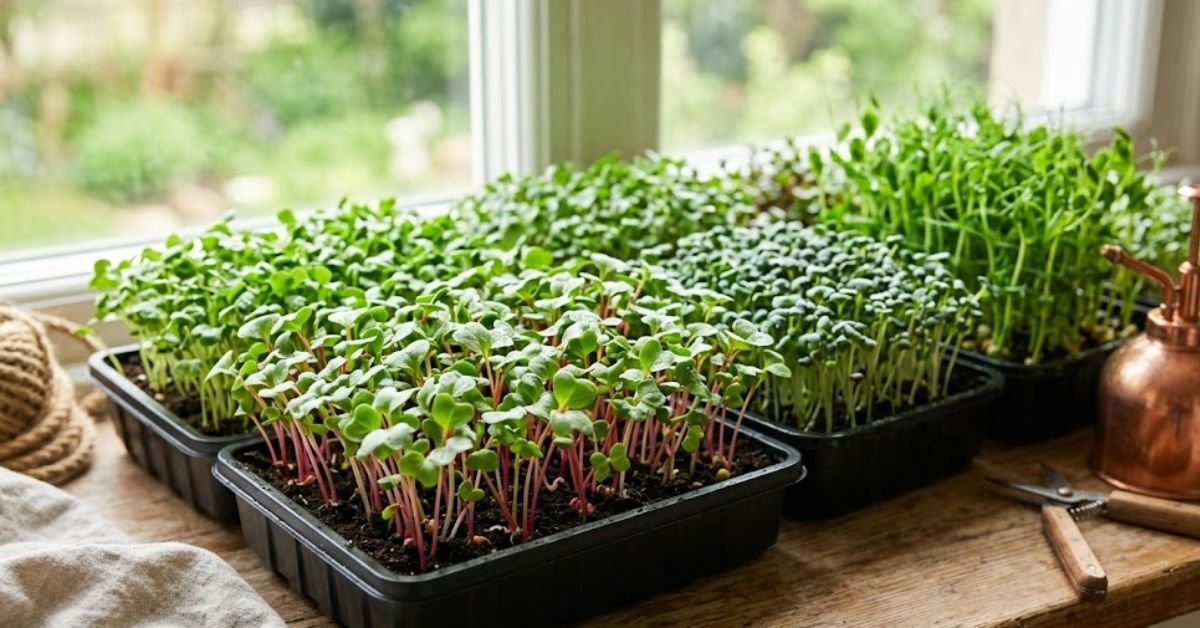
    Growing your own food doesn’t require an acre of land or an expensive greenhouse setup. If you want to learn how to grow microgreens indoors, this practical guide cuts through the noise to show you exactly how to get a heavy, nutrient-dense harvest right on your kitchen counter with minimal gear.

    Growth FactorIndoor Target / Requirement
    Best MediumHigh-quality, fine-textured potting soil or seed-starting mix
    Lighting12–16 hours daily (LED grow lights or a bright South-facing window)
    Watering MethodBottom-watering via the faucet; keep damp, never soggy
    Ideal Temperature65°F to 75°F (Keep clear of central heating/AC vents)
    Blackout Phase2 to 4 days under an upside-down tray with a light weight
    Days to Harvest7 to 14 days for most varieties (e.g., Radish, Broccoli, Peas)

    I remember the first time I tried to grow a tray of broccoli greens on my kitchen counter during a brutal winter up in USDA Hardiness Zone 5. My home furnace was running non-stop, blasting dry, hot air across the living room. Within four days, my beautiful little seedlings looked like tiny, withered pieces of straw. I learned the hard way that indoor gardening has its own distinct set of rules.

    If you want to master how to grow microgreens indoors, you don’t need a massive backyard or a green thumb. Honestly, anyone can do it right next to their kitchen sink. Let’s break down exactly how to get a heavy harvest of crisp greens in less than two weeks without overcomplicating things.

    Why You Should Learn How to Grow Microgreens Indoors
    Why You Should Learn How to Grow Microgreens Indoors
    Why You Should Learn How to Grow Microgreens Indoors

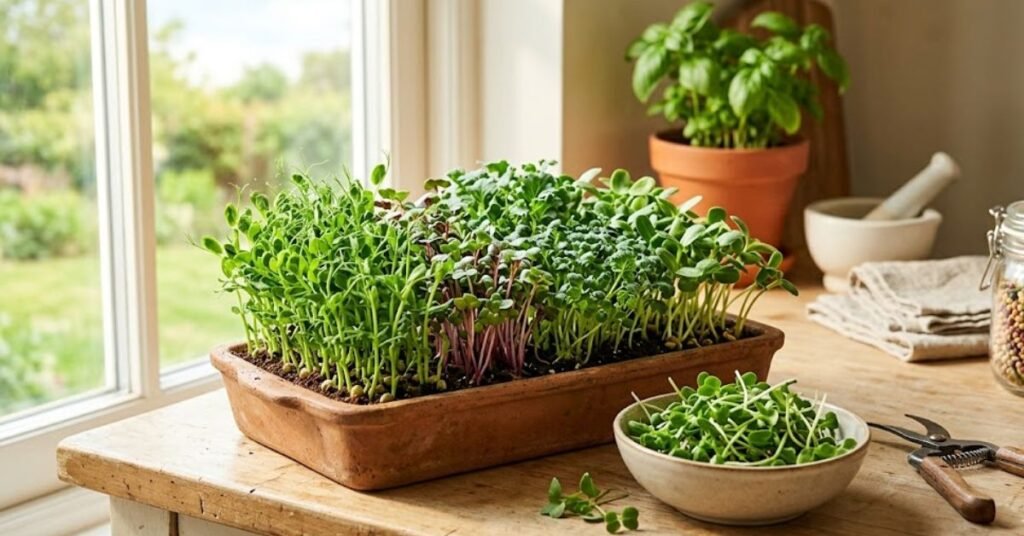
    They are essentially super-concentrated versions of adult vegetables. Think about it: a tiny radish shoot can pack more punch and intense flavor than a full-grown radish from the grocery store. Plus, buying those tiny plastic clamshells at Whole Foods or your local supermarket will easily run you five or six bucks for a measly ounce.

    When we handle the process at home, we spend pennies per batch. When we look at the logistics of how to grow microgreens indoors, it really comes down to controlling your immediate countertop environment. It is an easy, satisfying win.

    Personal Pro-Tip

    Don’t start with complicated, expensive setups. Grab some basic radish or broccoli seeds first. They are incredibly forgiving, germinate in a flash, and give you that quick win you need to build up your confidence.

    The Step-by-Step Blueprint on How to Grow Microgreens Indoors

    Let’s get our hands dirty. It doesn’t take much space, but it does require an orderly process.

    Selecting Your Trays and Potting Soil

    Forget about backyard dirt. You need a clean, fine-textured indoor potting soil or a dedicated seed-starting mix. If your potting soil has massive chunks of wood or heavy bark, those tiny seeds will struggle to push their roots down.

    I prefer shallow plastic trays specifically the standard 1020 trays you find at any local garden center or hardware store. You want one tray with drainage holes and one solid tray without holes to nestle it inside.

    Personal Pro-Tip

    If you don’t want to buy professional plastic garden trays, just poke some drainage holes in the bottom of an empty plastic berry clamshell from the grocery store. It works beautifully for small kitchen batches.

    Sowing Seeds While Learning How to Grow Microgreens Indoors

    Here is where most beginners hesitate. When you plant regular garden vegetables, you space seeds inches apart. With microgreens, we throw that rule out the window. We want a dense carpet.

    Fill your tray with about an inch or two of moistened potting soil. Pat it down lightly so it’s flat like a tabletop, but don’t pack it tightly like a brick. Sprinkle your seeds evenly across the surface. They should be close, like sprinkles on a doughnut, but not piled on top of each other in heaps. Mist them thoroughly with a spray bottle using water straight from your kitchen faucet.

    Personal Pro-Tip

    For larger seeds like peas or sunflowers, soak them in a mason jar of water for about 8 to 12 hours before planting. This softens the hard outer shell and shaves days off your total growth time.

    Managing the Crucial Dark Blackout Period

    Once your seeds are sown and misted, they need darkness and a bit of pressure to build strong roots. Don’t put them under the light yet. Instead, cover the seeds with an upside-down tray or a piece of clean cardboard to block out all ambient light.

    I even like to place a light weight like a small brick or a heavy book—right on top of the covering tray. It sounds crazy, but forcing the sprouts to push against a physical weight makes them grow thicker, stronger stems. Check them once a day to ensure the soil isn’t drying out.

    Personal Pro-Tip

    Keep the blackout area warm, ideally around 70°F. If your house is cold during a northern winter, place the tray on top of your refrigerator. The ambient heat from the fridge motor provides a perfect, gentle warmth.

    Setting Up Light for Your Countertop Trays

    After 3 to 4 days, you will lift the cover and see pale, yellowish, somewhat squished sprouts. Don’t panic. This is exactly what they should look like. Now they need light to start producing chlorophyll and turn a vibrant green.

    A bright, South-facing window can work if you get at least 6 hours of direct sun. However, if you live in a place with gray, cloudy winters, a simple LED grow light suspended a few inches above the tray is a game-changer. Leave the lights on for about 12 to 16 hours a day.

    Personal Pro-Tip

    Do not let your grow lights sit too far away. If the light source is two feet above the tray, your microgreens will grow tall, skinny, and floppy as they stretch for it. Keep LEDs just 4 to 6 inches above the canopy.

    Common Mistakes to Avoid When Learning How to Grow Microgreens Indoors
    Common Mistakes Grow Microgreens Indoors
    Common Mistakes Grow Microgreens Indoors

    I have seen countless home gardeners fail because they treat these tiny greens like standard houseplants. They aren’t.

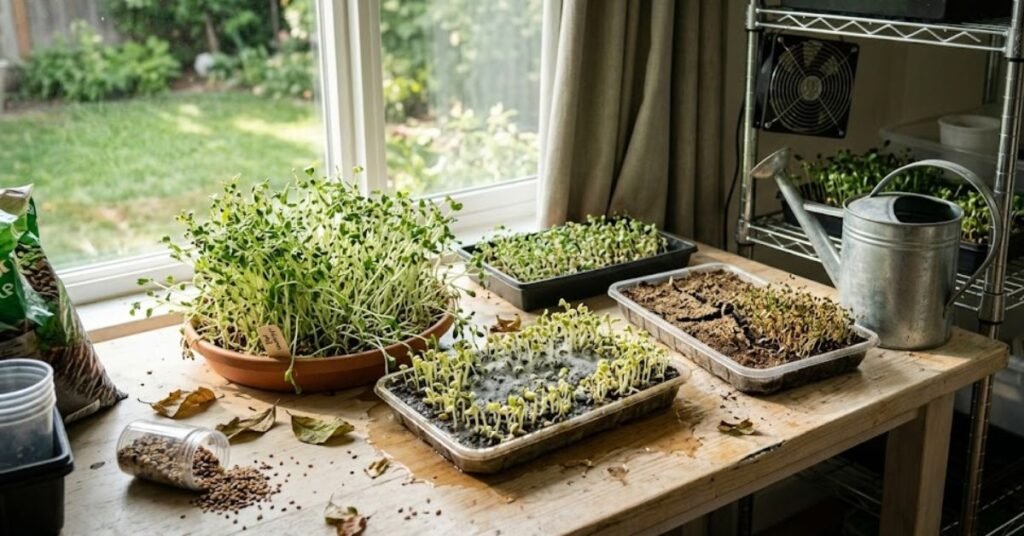
    The biggest killer? Air conditioning and heating vents. If you place your tray directly under or over an active HVAC vent, the moving air will completely parch the soil or chill the plants, leading to sudden stunting.

    Another massive mistake is watering from the top once the greens have sprouted. Dumping water directly onto the fragile leaves matts them down and traps moisture, which is an open invitation for fungal issues. Always water from the bottom by pouring water directly into the outer, solid tray and letting the soil wick it up.

    Personal Pro-Tip

    Get into the habit of picking up your grow tray. If it feels feather-light, it’s time to add water to the bottom tray. If it feels heavy, leave it alone. Your hands are the best moisture meters.

    Troubleshooting When Figuring Out How to Grow Microgreens Indoors

    Let’s look at the issues that pop up most frequently on gardening forums.

    • Fuzzy White Stuff on the Soil: Beginners often mistake root hairs for mold. Look closely under a flashlight. If the fuzz is only tightly hugging the main root stem, those are beneficial root hairs searching for water. If the fuzz is web-like, spreading across multiple plants, and looks like a cobweb, it’s mold.
      • The Fix: Increase your room’s air circulation with a small desk fan. If mold takes over early, spray it lightly with a diluted mix of food-grade hydrogen peroxide and water.
    • Yellowing Leaves: If your greens remain pale yellow after two days under the light, they aren’t getting enough intensity, or the room is too cold.
      • The Fix: Move your light source closer or move the setup away from a drafty winter window.
    • Falling Over / Wilting: This is almost always a sign of severe dehydration.
      • The Fix: Add water to the bottom tray immediately. They usually perk back up within a couple of hours if you catch them early enough.

    Personal Pro-Tip

    If a batch gets completely overrun by thick gray mold, do not try to save it. Toss the soil into your compost pile, wash the tray thoroughly with soap, and start fresh. It happens to everyone at some point.

    Microgreens Pet Toxicity Warning: Are They Safe for Cats and Dogs?
    Microgreens Pet Toxicity Warning Are They Safe for Cats and Dogs
    Microgreens Pet Toxicity Warning Are They Safe for Cats and Dogs

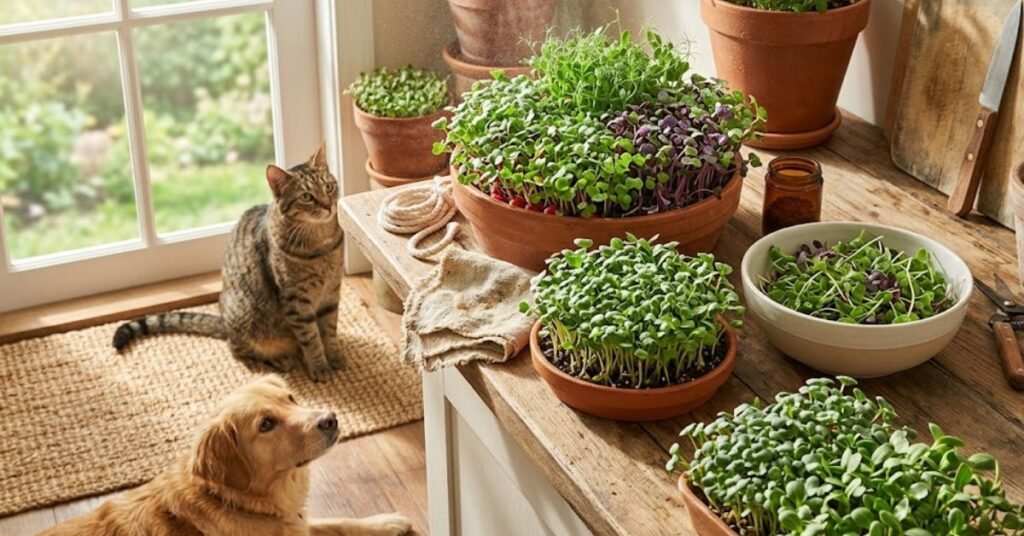
    As a pet owner, I always check plant safety before bringing anything into my living space. Most common microgreens like broccoli, radish, sunflower, and pea shoots are completely non-toxic and safe for cats and dogs. In fact, many cats love nibbling on crunchy pea shoots.

    However, you must avoid growing nightshade family crops as microgreens. Never grow tomatoes, peppers, or eggplants as microgreens. Their sprouts contain solanine, a toxic alkaloid that can make your pets (and you) incredibly sick. Stick to safe brassicas, legumes, and grains.

    Personal Pro-Tip

    If your cat views your microgreen trays as a personal salad bar, place a wire mesh dome or an extra plastic crate upside down over the greens during the light phase to keep curious paws away.

    Frequently Asked Questions About How to Grow Microgreens Indoors

    Q1Can I reuse the potting soil for a second batch?

    I highly advise against it. The old root mats left behind will decay, creating a breeding ground for mold and fungal pathogens that will destroy your next round of seeds. Always use fresh, clean potting soil for every single tray.

    Q2Do I need to add fertilizer to my indoor microgreen trays?

    No. This is the beauty of the process. A seed contains all the energy and nutrients required to grow its first set of leaves. Because we harvest them so early, supplemental fertilizers are completely unnecessary.

    Q3How long do microgreens take to grow from start to finish?

    Most varieties are ready to harvest in 7 to 14 days. Radishes are lightning-fast and can be ready in a week, while slower herbs like cilantro or basil might take up to three weeks.

    Q4Can I grow microgreens using water from my home faucet?

    Yes, standard faucet water is perfectly fine. If your municipal water has a heavy chlorine smell, let it sit out in an open pitcher for 24 hours before watering your plants so the chlorine can naturally dissipate.

    Q5Why are my microgreens growing so tall and leggy?

    They are starving for light. When the light source is too weak or too far away, the seedlings stretch their stems upward as fast as possible to reach it, making them weak and prone to falling over.

    Q6How do I harvest my indoor microgreens cleanly?

    Grab a sharp pair of kitchen scissors or shears. Hold a small bunch of the greens gently by the tips and snip the stems about a quarter-inch above the soil line to avoid getting dirt in your harvest.

    Q7Do microgreens grow back after you cut them?

    Generally, no. Since you are cutting off the growing tip and the first leaves, the plant cannot generate new growth. Pea shoots are the rare exception; if you leave a node at the base, they might throw out a small second flush, but it’s usually best to compost the tray and replant.

    Personal Pro-Tip

    After harvesting, don’t wash your greens until right before you eat them. Storing damp microgreens in the fridge makes them turn into a slimy mess within 48 hours. Keep them dry in a container lined with a clean paper towel.

    Final Thoughts

    Getting a steady supply of fresh greens right inside your home is incredibly rewarding. It cuts down your grocery bill, bypasses whatever is happening with outdoor weather, and keeps your kitchen feeling alive all year round. Start small, watch your watering, and enjoy the crisp crunch of your home-grown harvest.

  • The Green Sleep Sanctuary: My Practical Guide to Biophilic Bedroom Design Plants

    The Green Sleep Sanctuary: My Practical Guide to Biophilic Bedroom Design Plants

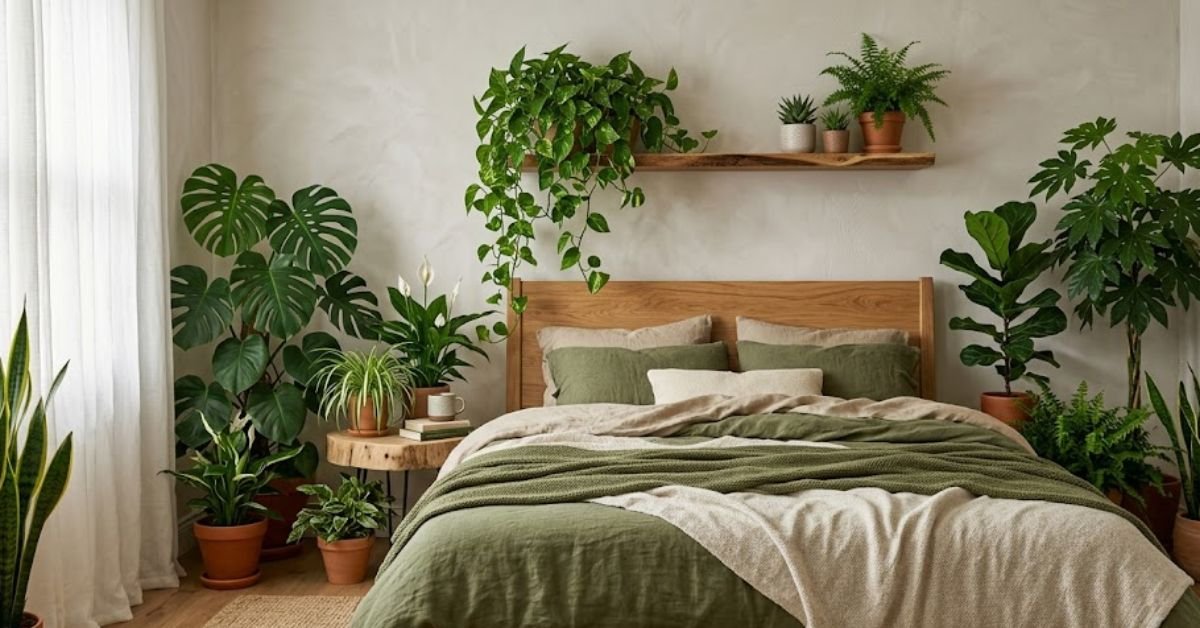
    Look, we spend roughly a third of our lives staring at our bedroom ceilings, yet most of our sleep spaces feel more like sterile, dry drywall boxes than relaxing sanctuaries. Over my twenty years working as a horticulturist, I’ve seen how adding a few well-chosen pieces of greenery can completely transform a room from cold to deeply restorative. It’s not just about aesthetic decor; it’s about creating a living ecosystem that helps you breathe easier and unwind after a brutal day. Let’s cut through the generic internet fluff and look at how to choose the right biophilic bedroom design plants that will actually survive your home environment.

    Quick Care Guide for Biophilic Bedroom Design Plants

    Plant VarietyLight RequirementsWatering FrequencyPet Friendly?Ideal Bedroom Placement
    Snake PlantLow to Bright IndirectEvery 3–4 weeksNoNightstand or empty corner
    Golden PothosModerate to Low IndirectEvery 1–2 weeksNoFloating shelf or high dresser
    Peace LilyLow to Medium IndirectWeekly (when leaves sag)NoCorner away from direct rays
    Spider PlantBright IndirectEvery 1–2 weeksYesHanging basket or windowsill

    Personal Pro-Tip: Don’t buy six plants all at once. Grab one. See how it handles your bedroom’s specific environment for a month before adding roommates.

    Best Choices for Biophilic Bedroom Design Plants

    Best Choices for Biophilic Bedroom Design Plants
    Best Choices for Biophilic Bedroom Design Plants

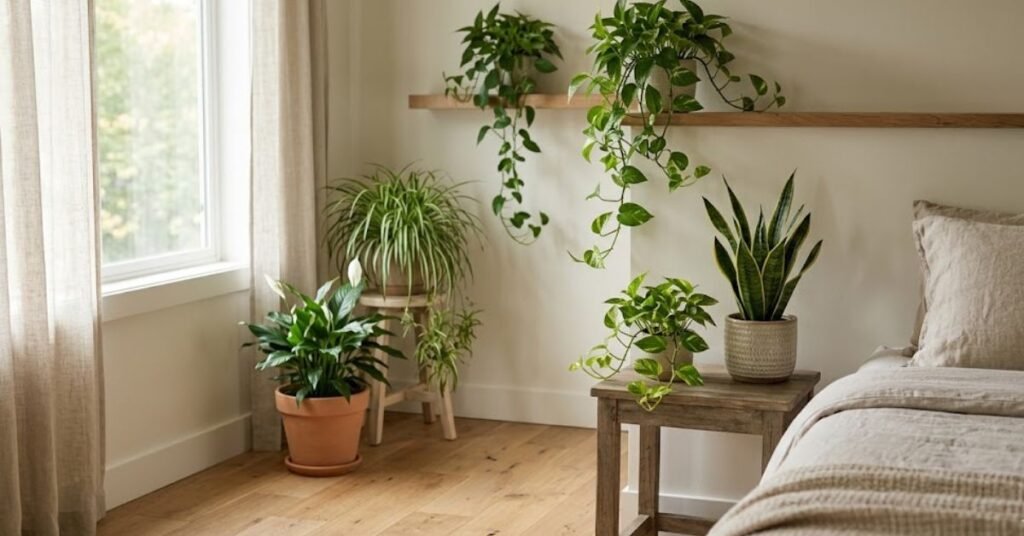
    When you are picking out your biophilic bedroom design plants, matching the species to your actual lifestyle is everything. Bedrooms present a unique challenge because we tend to keep them darker and cooler than our living rooms.

    Let’s look at the absolute best candidates for your sleep space.

    The Indestructible Snake Plant (Sansevieria)

    This is my top recommendation for beginners. It looks like architectural art. Unlike most plants that release carbon dioxide when the sun goes down, the Snake Plant keeps pumping out clean oxygen all through the night. I love keeping one right on my bedside table. It handles neglect like a champ.

    Personal Pro-Tip: If you live in warmer regions like USDA Hardiness Zones 8 through 10, you can actually give your bedroom Snake Plant a massive growth spurt by letting it sit outside on a shaded porch during the humid summer months. Just bring it back inside before the cool Fall air hits.

    The Cascading Golden Pothos (Epipremnum aureum)

    If you want that lush, jungle-canopy aesthetic, this trailing vine is your best bet. It grows fast and tolerates almost anything. I remember a couple of years back when I put a gorgeous Golden Pothos right on top of my bedroom armoire. Within a few months, the vines were gracefully framing my closet door. It breaks up the rigid, boxy lines of standard American bedroom furniture beautifully.

    Personal Pro-Tip: Propagating Pothos is incredibly easy. Snip a vine just below a leaf node, drop it in a jar of water from your kitchen faucet, and you’ll see roots in ten days. Free plants for your guest bedroom.

    Light Needs for Biophilic Bedroom Design Plants

    Light is the fuel. No light, no life.

    Many people buy their greenery based purely on how it looks in a brightly lit greenhouse or nursery store, only to watch it slowly decline in a dark room. You have to read your windows.

    • South and West-facing windows: These give you intense, bright light. Great for your Spider Plants, but it will absolutely scorch a Peace Lily.
    • North and East-facing windows: These offer gentle, cool morning light or low indirect light all day. This is the sweet spot for your Snake Plants and Pothos.

    If your bedroom has tiny windows or faces a brick wall, don’t give up. You can easily cheat by using a stylish floor lamp fitted with a full-spectrum LED grow bulb. Run it on a timer for 8 hours during the day while you’re at work, and your plants will stay perfectly happy.

    Personal Pro-Tip: Rotate your pots a quarter-turn every single week. Plants naturally bend toward the glass to chase the light. If you don’t rotate them, they will grow lopsided and look awkward.

    Core Mistakes to Avoid with Biophilic Bedroom Design Plants

    Core Mistakes to Avoid with Biophilic Bedroom Design Plants
    Core Mistakes to Avoid with Biophilic Bedroom Design Plants

    Many Americans struggle to keep their greenery healthy because our homes are heavily climate-controlled. We love our comfort, but our plants often pay the price.

    The biggest killer I see? Overwatering.

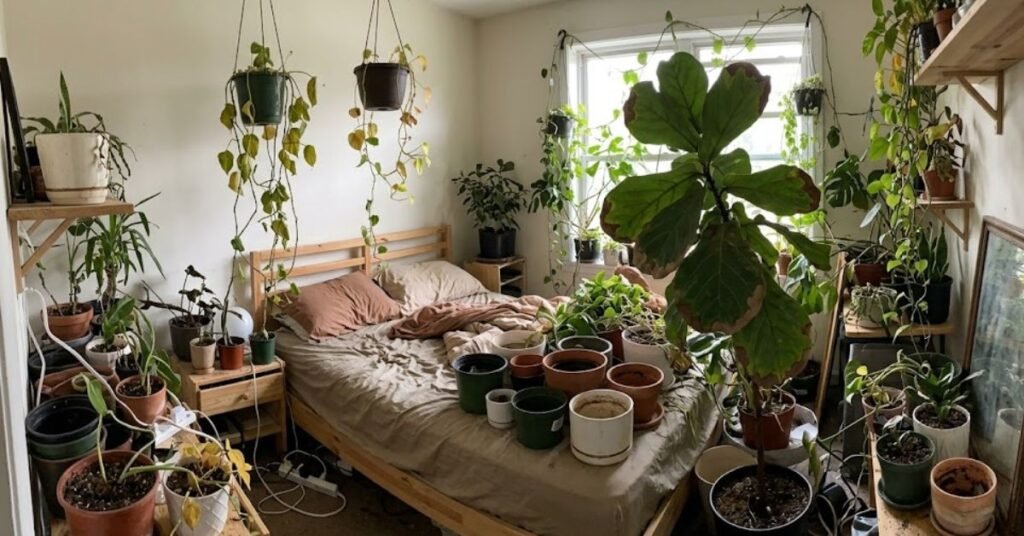
    People think love means water. It doesn’t. In an indoor setting, roots need oxygen just as much as water. If the soil stays constantly muddy, the roots literally suffocate and rot away.

    Another massive issue is using the wrong dirt. Never grab dirt from your backyard garden for an indoor pot. It packs down too tightly and traps moisture. Always buy a high-quality, well-draining indoor potting soil mixed with perlite or pumice.

    Personal Pro-Tip: Before you grab the watering can, push your index finger two inches deep into the soil. If it feels damp or cool, put the can down. Check it again in three days.

    How Central Air Conditioning Affects Your Room Layout

    We need to talk about your HVAC system. Our powerful American central air conditioning systems are absolute kryptonite to tropical indoor flora. In the peak of summer, that ice-cold, bone-dry air blowing straight from an AC vent will dry out leaves faster than you can count. It mimics a harsh frost.

    If you position a Peace Lily or Pothos directly in the path of a roaring air vent, the leaves will get crisp, turn black, and drop off within two weeks. Keep your greenery at least four to five feet away from any supply registers.

    Personal Pro-Tip: If your bedroom layout forces a plant close to a vent, use a magnetic air deflector on the register to redirect the cold air flow along the floor instead of straight at your greenery.

    Troubleshooting Guide for Biophilic Bedroom Design Plants

    Plants can’t speak, but they do send very clear distress signals. Learning to read these signs will save you a lot of heartbreak and money.

    Let’s look at what yellow leaves and brown tips mean:

    Yellowing Leaves

    If the lower leaves turn pale yellow and feel mushy, you are almost certainly overwatering. The roots are drowning. Stop watering immediately, pull the plastic nursery pot out of its decorative ceramic sleeve, and let the potting soil dry out completely in a bright spot. On the flip side, if the leaves are yellow, dry, and crispy all over, the plant is completely parched.

    Brown Tips

    This is usually a humidity issue. Most of these species come from humid tropical understories. When we run our indoor heating during the winter or blast the AC in July, the relative humidity inside a standard American home drops below 30%. The plant loses moisture from its leaf tips faster than the roots can supply it. Take a pair of clean shears and snip the brown tips off following the natural curve of the leaf, then mist the plant or use a small bedroom humidifier.

    Personal Pro-Tip: Never let your pots sit in a puddle of water inside their decorative dishes. After watering at the bathroom faucet, let the excess drain out completely for ten minutes before putting the pot back in your bedroom.

    Pet Toxicity Warnings for Biophilic Bedroom Design Plants

    Pet Toxicity Warnings for Biophilic Bedroom Design Plants
    Pet Toxicity Warnings for Biophilic Bedroom Design Plants

    As a pet parent myself, safety comes first. Before you bring any new green life into your sleeping quarters, you must know what your cats and dogs can access.

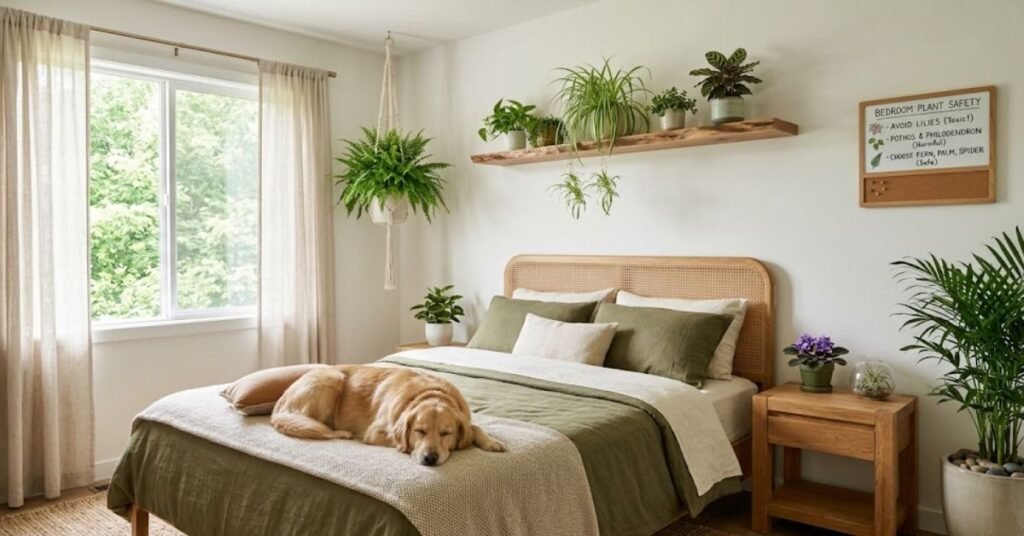
    Many common choices contain insoluble calcium oxalate crystals. If a curious cat or a bored dog decides to chew on a Snake Plant or a Peace Lily, it can cause severe mouth irritation, drooling, vomiting, and difficulty swallowing.

    If your pets love to sample your greenery, stick exclusively to the Spider Plant. It is completely non-toxic. Oddly enough, cats are heavily attracted to Spider Plants because the leaves contain compounds that mimic a mild hallucinogenic effect, similar to catnip. They might get a little goofy, but it won’t hurt them.

    Personal Pro-Tip: If you absolutely must have a Pothos but own a curious cat, utilize your vertical space. Use a ceiling hook to hang the basket completely out of your pet’s jumping range.

    Real Reddit & Quora FAQs on Biophilic Bedroom Design Plants

    Q1. Can I keep a snake plant in a completely windowless bedroom?

    No. No plant can survive in pitch darkness forever. A snake plant will survive longer than most because its metabolism is incredibly slow, but eventually, it will starve from a lack of light. If your room has zero natural light, you must install a grow light.

    Q2. Why is my cat acting weird after chewing on my bedroom spider plant?

    Don’t panic. Spider plants are safe for cats, but they actually contain a mild hallucinogenic property that makes felines feel a little “high.” Your cat is likely just enjoying the buzz. Still, move the plant out of reach to save your foliage from getting shredded.

    Q3. How do I water plants without ruining my wooden bedroom furniture?

    Never water your plants while they are sitting directly on wood furniture. I always take my pots to the bathroom faucet or kitchen sink, give them a good soak, let them drain out completely, and wipe the bottom of the pot before returning them to the bedroom. Using cork coasters under your planters also saves your wood finishes from condensation stains.

    Q4. Will bedroom plants actually improve my sleep quality or air?

    Yes, but let’s keep it real. While they do filter toxins and produce oxygen at night, you would need an actual jungle about 15 to 20 large plants in a single room—to match the air purification of a basic HEPA filter. The biggest benefit to your sleep quality is psychological; seeing nature lowers your heart rate and cortisol levels.

    Q5. My bedroom gets freezing in the winter because we turn off the heat at night. Will my plants die?

    Most tropical houseplants get stressed if temperatures drop below 55°F. If your room regularly hits those low numbers during a freezing winter night, your plants will slow their growth significantly and might drop leaves. Keep them away from chilly window glass during those cold snaps.

    Q6. Do I need to fertilize indoor plants during the fall and winter?

    Skip the fertilizer from October through February. Because the days are shorter, indoor greenery goes into a semi-dormant resting phase. Pushing them to grow with fertilizer during the winter results in weak, leggy stems. Wait until the first warm days of Spring to start feeding them again.

    Q7. How do I get rid of tiny black bugs flying around my bedroom potting soil?

    Those are fungus gnats. They love wet, rotting organic matter in overwatered potting soil. The easiest fix is to let your soil dry out completely between waterings, which kills their larvae. You can also place yellow sticky traps directly on the soil surface to catch the adults.

    Final Thoughts on Designing Your Personal Oasis

    Getting your bedroom setup to look like a high-end magazine cover takes a bit of strategy, but it is entirely worth the effort. Bringing nature into the space where you rest your mind at night is one of the most rewarding adjustments you can make to your home layout.

    Listen to what your plants are telling you. Watch how the light moves across your walls as the seasons shift from Spring to Fall. By building a genuine connection with your indoor ecosystem, you create a space that feels deeply restorative, peaceful, and uniquely yours.