
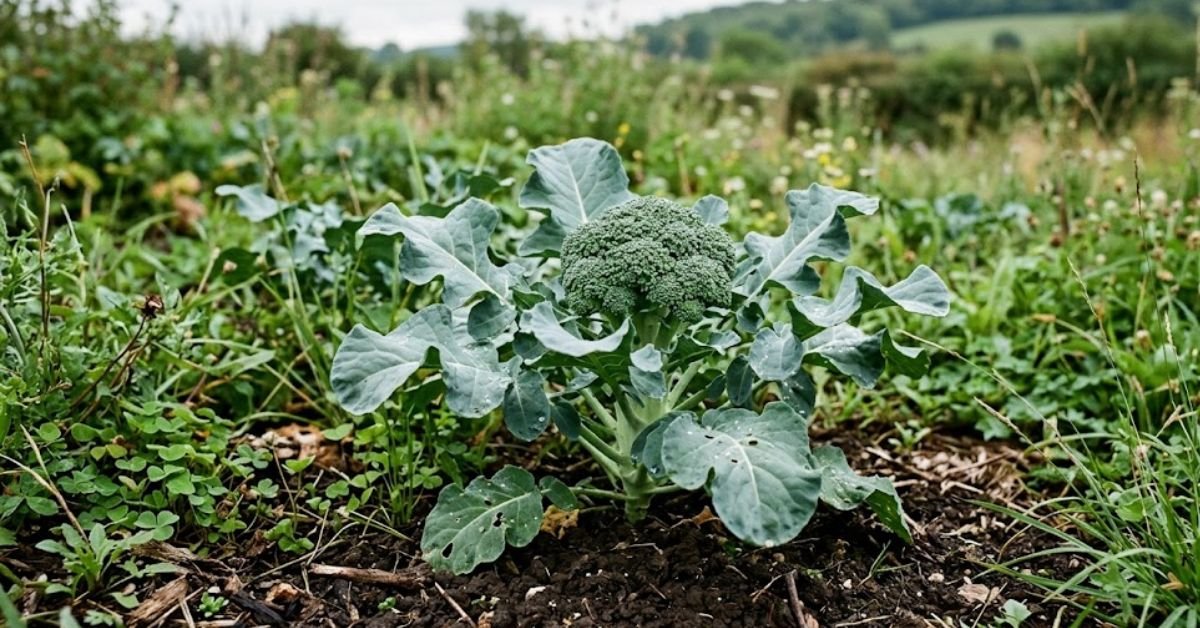
You can successfully grow a healthy broccoli vegetable plant inside your home instead of relying on standard houseplants. For example, most indoor gardeners stick to classic, non-edible options like sprawling pothos or moody fiddle leaf figs. However, you can easily shift your strategy to cultivate crisp, fresh florets right in your living room.
Quick Care Cheat Sheet for Skimmers
| Care Requirement | Ideal Conditions |
| Light | 12-16 hours of bright LED grow lights. |
| Water | Keep soil consistently moist like a wrung-out sponge. |
| Soil | Rich, well-draining potting soil (never heavy garden dirt). |
| Temperature | 60°F to 68°F (Avoid baseboard heaters!). |
| Humidity | 40% – 50% (Standard US home humidity is usually fine). |
| Toxicity | Non-toxic to cats, dogs, and kids (ASPCA safe). |
Can You Really Grow a Broccoli Vegetable Plant Indoors?
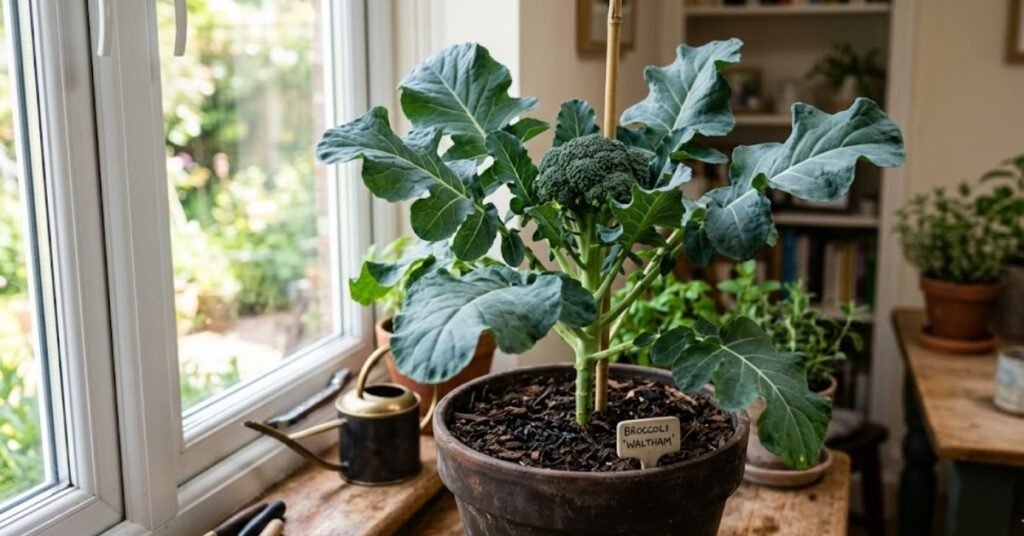
The short answer is a resounding yes. The long answer is yes, but you have to pick the right variety. You cannot grab standard seeds meant for a massive farm field and expect them to behave in a 10-inch pot sitting in your living room.
Indoor growers need compact, fast-maturing varieties. Look for seeds labeled ‘Di Cicco’ or ‘Waltham 29’. These stay relatively manageable. The biggest hurdle you will face isn’t just space; it is temperature. Standard American homes are kept around 72°F year-round. A broccoli vegetable plant hates being hot. If it feels too much heat from your forced-air vents, it will panic, bolt, and sprout yellow flowers before giving you a nice green head to eat.
Personal Pro-Tip: “Always keep your indoor brassicas far away from baseboard heaters or floor vents. I ruined my very first indoor crop because the hot air from the furnace tricked the plants into thinking it was mid-summer. Keep them in a cool spare bedroom or a chilly basement corner!”
Lighting Your Broccoli Vegetable Plant Without the Sun
Forget your south-facing window. Seriously. Unless you live in a glass greenhouse, window light passing through standard double-pane glass during a gray Midwest winter is incredibly weak.
To get a tight, dense crown, your broccoli vegetable plant requires intense, overhead light. Without it, the stem will stretch out looking for the sun, becoming “leggy” and weak. You need a full-spectrum LED grow light positioned exactly 4 to 6 inches above the top leaves. Leave it on for 12 to 16 hours a day. Think of it as manufacturing your own private summer day, right inside your house.
Personal Pro-Tip: “Don’t guess if your light is close enough. Use the back-of-the-hand test. Hold your hand right above the top leaves. If the light feels uncomfortably hot on your skin after a minute, it’s too close and will scorch your broccoli. If it feels slightly warm, you are in the sweet spot.”
Watering Your Broccoli Vegetable Plant Like a Pro
Watering is where most indoor gardeners completely ruin things. The dry air from your furnace acts like a giant sponge, sucking moisture out of the top layer of your potting soil incredibly fast.
You stick your finger in, feel dry dirt, and panic-water. Meanwhile, the bottom of the pot is a swamp. Your broccoli vegetable plant will develop root rot and collapse. Instead of obsessing over a schedule, water by weight. Lift the pot. Does it feel light and airy? Time to water. Does it feel heavy like a wet brick? Walk away. When you do water, run it under the faucet until it drains out the bottom, ensuring the entire root ball gets a drink. You want the soil to feel exactly like a wrung-out kitchen sponge—damp, but not dripping.
Personal Pro-Tip: “Never let your plant sit in a saucer full of runoff water. I like to use a turkey baster to suck up the excess water from the drip tray ten minutes after I water. It saves your floors and saves your roots from suffocating.”
Soil and Fertilizer Secrets for the Broccoli Vegetable Plant
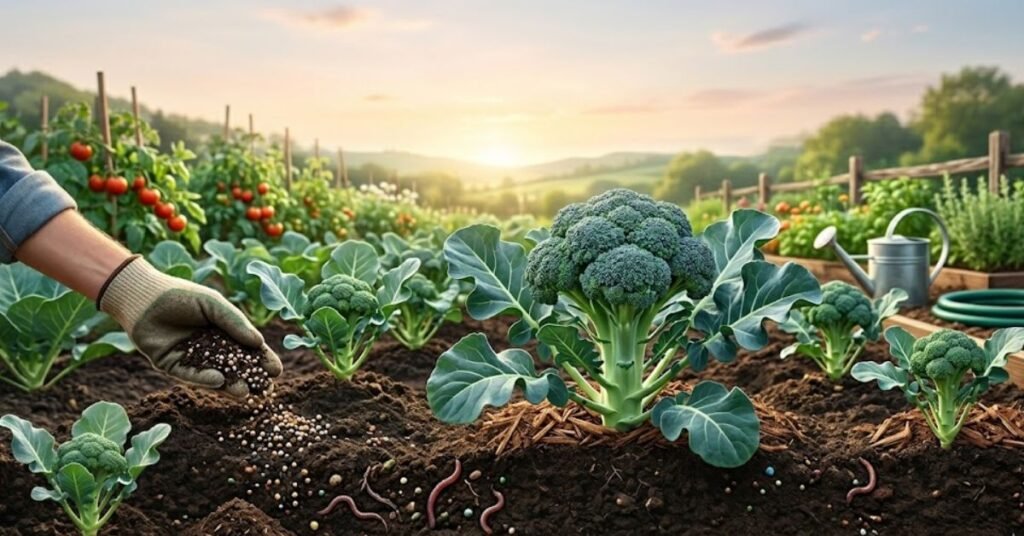
Do not go outside, dig up a bucket of yard dirt, and bring it inside. Outdoor dirt is dense and packed with pests. You need a high-quality, indoor-specific potting soil amended with plenty of perlite for drainage. Imagine the perlite like chocolate chips in cookie dough; you want them scattered everywhere to keep the soil fluffy.
Because your broccoli vegetable plant is trapped in a container, it relies 100% on you for food. About four weeks after the seeds sprout, start hitting them with a balanced liquid fertilizer every two weeks. Dilute it to half-strength. Too much fertilizer will burn the roots, but too little will result in a pathetic, tiny broccoli head.
Personal Pro-Tip: “Broccoli is a heavy feeder, especially when it comes to nitrogen. I always mix a handful of worm castings into the top layer of my potting soil right when the plant starts forming its central head. It provides a slow, gentle nutrient boost every time I water.”
Common Mistakes When Growing a Broccoli Vegetable Plant Inside
We all mess up. Here is what usually trips people up when they try to grow this crop indoors:
- Tiny Pots: A 6-inch decorative pot is cute for a succulent. It is a death sentence for a hungry vegetable. You need an 8-inch to 12-inch container minimum.
- Stagnant Air: Indoor air gets stale. Without wind, the stems stay weak. Point a small oscillating fan at your plants on a low setting. This mimics the outdoor breeze and thickens up the main stalk.
- Ignoring Drafts: Central AC blasts are freezing. While broccoli likes it cool, a direct icy blast from a vent will shock the plant and stunt its growth entirely.
Troubleshooting Your Broccoli Vegetable Plant: Quick Fixes
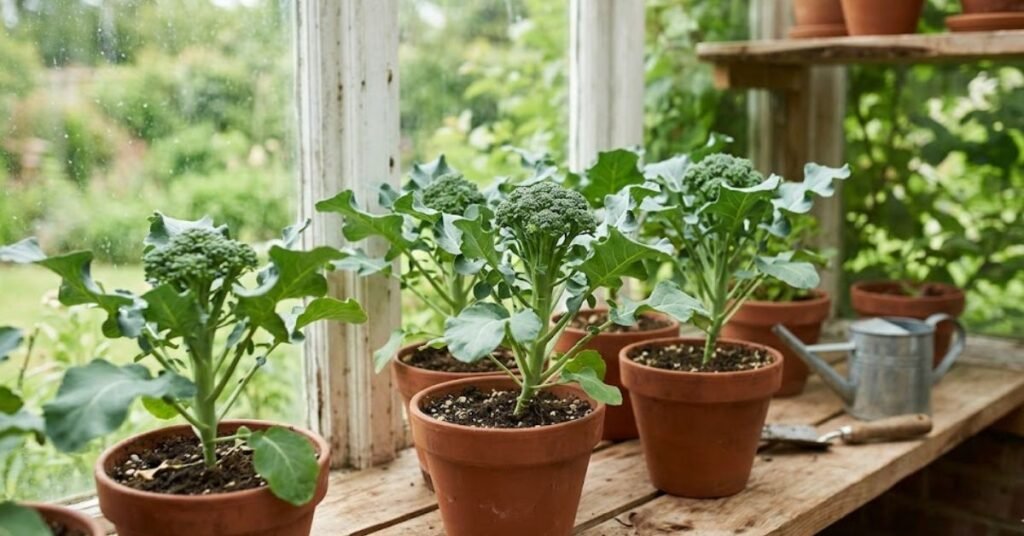
Even with perfect care, things get weird. Let’s fix them before it’s too late.
- The leaves are turning yellow: You are overwatering, or the plant is starving for nitrogen. Check the pot weight. If it’s heavy, let it dry out. If it’s dry, feed it.
- The head is splitting and flowering: It is way too hot in your house. The plant is bolting to drop seeds before it dies. Harvest whatever you can immediately, even if it’s small, before it turns entirely into yellow flowers.
- Crispy brown leaf tips: The humidity is too low. Winter heating systems dry the air down to 20%. Move the plant away from the heat source or group it with other plants to create a microclimate.
Toxicity: Is the Broccoli Vegetable Plant Safe for Pets?
Good news for the zoo you call a living room. According to the ASPCA, the entire broccoli vegetable plant is non-toxic to dogs, cats, and humans.
However, let’s use some common sense. If your golden retriever sneaks into your grow room and eats three pounds of raw broccoli leaves, they are going to have severe gastrointestinal distress. It isn’t poisonous, but it will cause a legendary amount of gas. Keep the plants elevated if you have curious pets who like to chew on green things.
Frequently Asked Questions About the Broccoli Vegetable Plant
Q1. How long does it take to get a harvest indoors?
Patience is required. From seed to a harvestable head, you are looking at roughly 80 to 100 days depending on your indoor temperatures and lighting setup.
Q2. Can I eat the leaves too?
Absolutely. The leaves are incredibly nutritious. Treat them exactly like kale or collard greens. You can sauté them with a little garlic and olive oil.
Q3. Why does my house smell a little weird?
Brassicas have a distinct smell. As the plant matures, especially if it gets too warm, it might release a faint cabbage-like odor. Keeping a fan on helps disperse this.
Q4. Do I need to hand pollinate my indoor broccoli?
No! We eat the un-opened flower buds. You actually want to harvest the head before the yellow flowers open. Pollination is only necessary if you are trying to collect seeds for next year.
Q5. Should I cut the main head or pull the whole plant?
Always cut the main head off with a sharp knife, leaving the base of the plant in the pot. Many varieties will shoot out smaller “side shoots” a few weeks later, giving you a second, smaller harvest.
Q6. Is standard room temperature okay?
It’s barely acceptable. If your house sits at 75°F, your broccoli will struggle. Try to find the coolest room in the house, ideally hovering between 60°F and 65°F.
Q7. Can I reuse the potting soil after I harvest?
You can, but you shouldn’t use it for another brassica right away. Broccoli drains a lot of nutrients from the dirt. Mix that used soil into your outdoor garden beds or use it for lighter-feeding houseplants after adding some fresh compost.
Final Thoughts on Your Indoor Harvest
Growing a broccoli vegetable plant inside your house is the ultimate indoor gardening challenge. It forces you to master your home’s microclimates, outsmart dry heating vents, and control your lighting like a pro. While most people stick to basic houseplants, you are actively pushing the boundaries of what a living room can produce. It takes a bit of extra grit and attention, but snapping off fresh, crisp florets in the middle of winter makes every bit of effort completely worth it. Set up your lights, drop your seeds, and go prove the traditional outdoor growers wrong.

Amin Khalid is a professional horticulturist and the founder of LeafyWisdom. With a deep passion for home gardening and horticultural research, he specializes in providing practical, easy-to-follow care guides for indoor plants. Amin’s goal is to simplify gardening for everyone and help fellow plant lovers build their own thriving green spaces.