
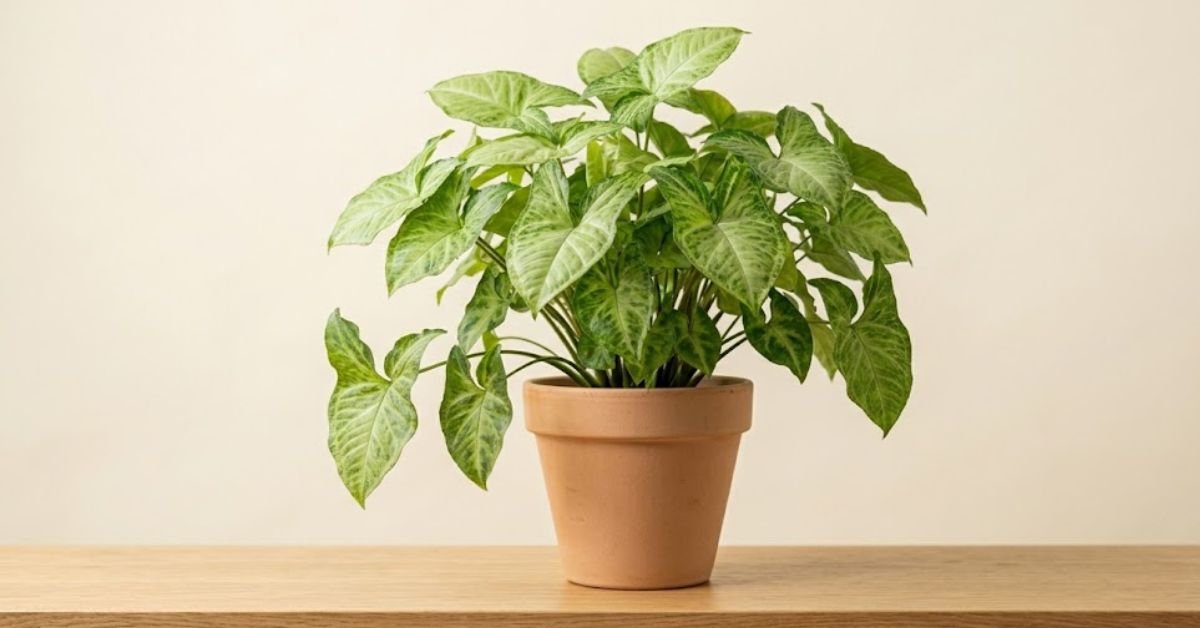
Arrowhead plant care is simple, making the arrowhead plant (Syngonium podophyllum) one of the most beginner-friendly and adaptable houseplants in 2026. Loved for its fast growth, colorful varieties, and forgiving nature, it fits perfectly in modern homes, small apartments, and plant-filled shelves.
Whether you’re a first-time plant parent or expanding your indoor jungle, this complete guide to arrowhead plant care covers everything: light, watering, soil, humidity, toxicity, propagation, seasonal care, and troubleshooting.
What Is an Arrowhead Plant?
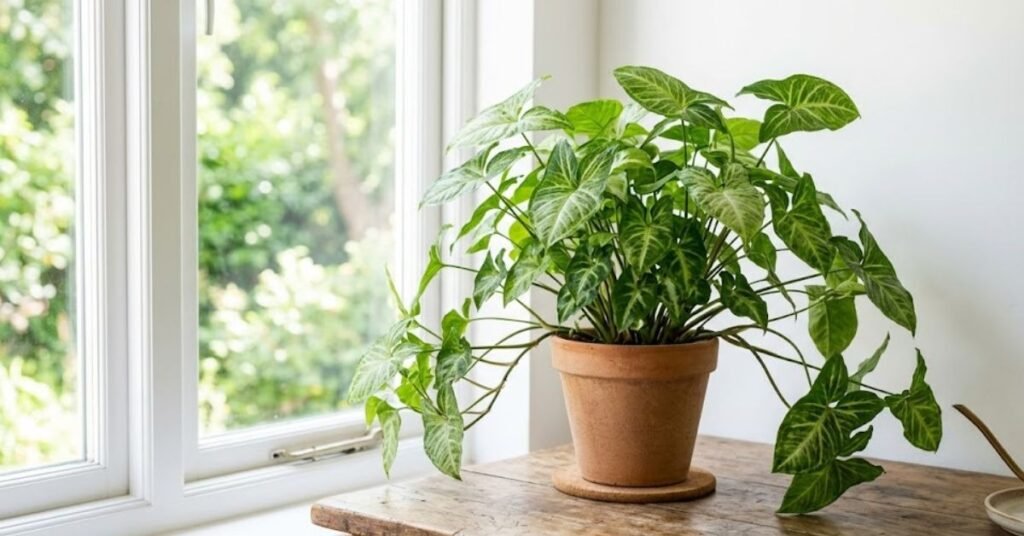
Syngonium podophyllum is a tropical vine native to Central and South America. In the wild, it climbs trees using aerial roots. Indoors, it can grow as:
- A bushy tabletop plant
- A trailing hanging plant
- A climbing plant on a moss pole
Why It’s So Popular in 2026
- Comes in pink, white, green, and variegated varieties
- Tolerates moderate neglect
- Grows quickly
- Easy to propagate
- Works in both bright and medium light
Young plants have classic arrow-shaped leaves. As they mature (especially when climbing), leaves become larger and develop multiple lobes.
Quick Care Requirements (At a Glance)
| Factor | What It Needs |
| Light | Bright, indirect light |
| Water | When top 1 inch of soil is dry |
| Humidity | 50–60% preferred |
| Temperature | 60–80°F (15–27°C) |
| Soil | Well-draining, airy mix |
| Fertilizer | Monthly (spring–summer) |
| Toxicity | Toxic to pets & humans |
Arrowhead Plant Light Requirements
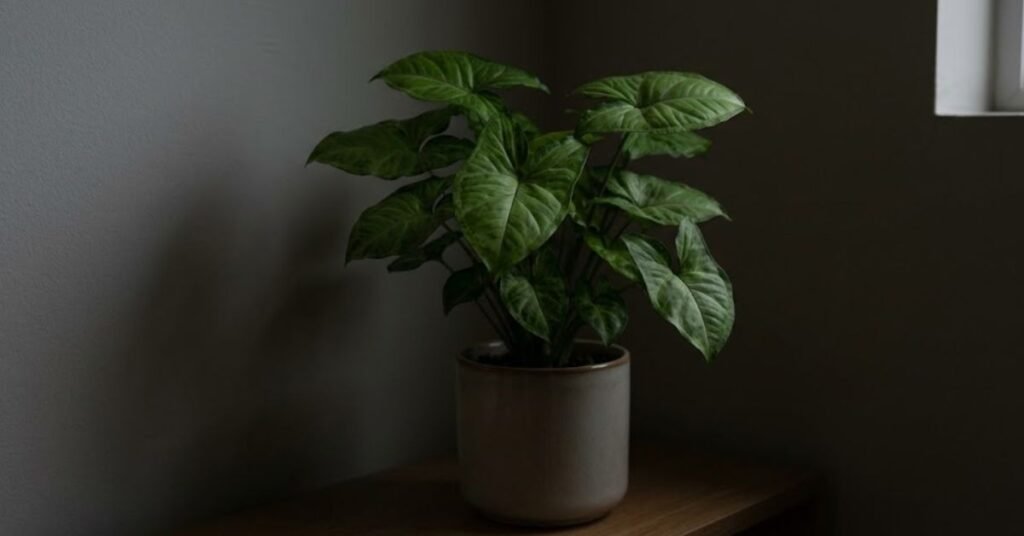
Light is the biggest factor affecting growth and color.
Ideal Lighting
Bright, indirect light near:
- East-facing window
- A few feet from a south-facing window
- Behind sheer curtains
Can It Grow in Low Light?
Yes — but growth slows, and variegated or pink varieties may revert to green. Stems may stretch and become leggy.
Signs It Needs More Light
- Long, stretched stems
- Large gaps between leaves
- Loss of variegation
- Pale foliage
Too Much Sun?
Direct afternoon sun causes:
- Brown crispy patches
- Bleached leaves
- Curling edges
Rotate the plant every few weeks for even growth.
How to Water an Arrowhead Plant Properly
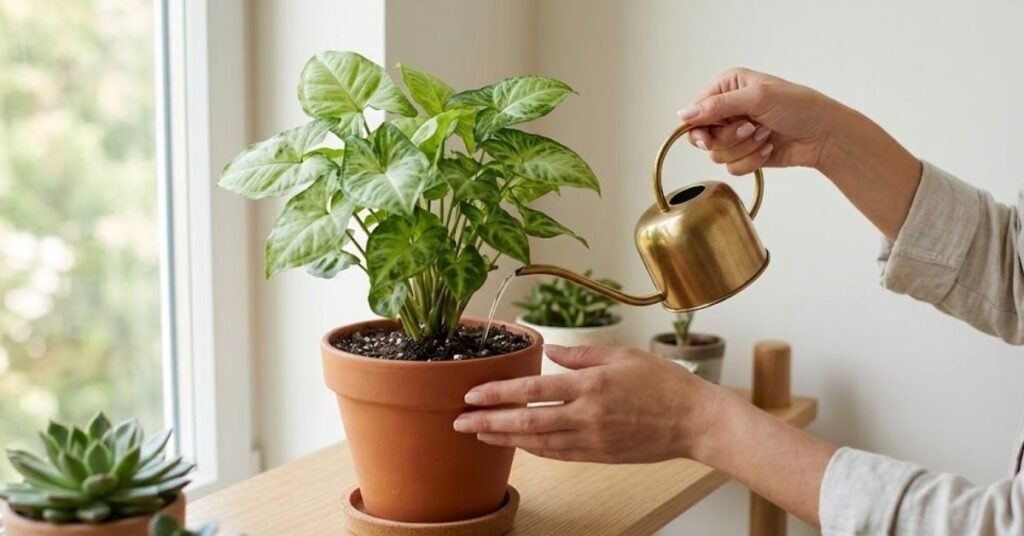
Overwatering is the most common mistake.
The Correct Method
- Insert your finger 1 inch into the soil.
- If dry — water thoroughly.
- If moist — wait a few days.
Overwatering is the most common mistake in indoor plant care, including plants like croton.
How Often to Water
- Spring/Summer: Every 5–7 days (depending on light & temperature)
- Fall/Winter: Every 10–14 days
Signs of Overwatering
- Yellow lower leaves
- Mushy stems
- Sour-smelling soil
- Drooping despite wet soil
Signs of Underwatering
- Dry, curling leaves
- Crispy edges
- Soil pulling away from pot sides
Best Soil Mix for Arrowhead Plants
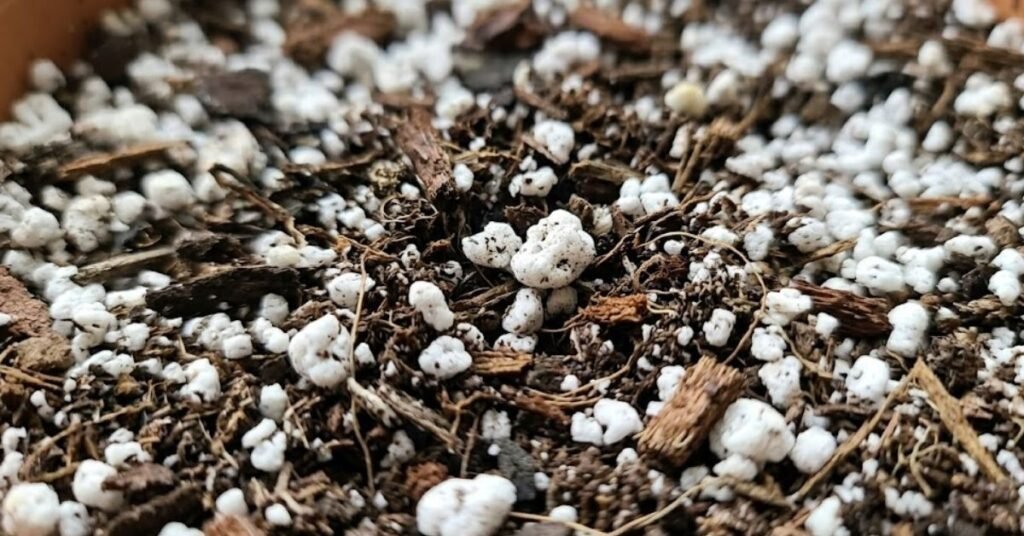
Good drainage is essential.
Ideal Soil Recipe
- 50% indoor potting mix
- 30% perlite
- 20% coco coir or orchid bark
This creates airflow around roots and prevents rot.
Choosing the Right Pot
- Always use drainage holes
- Terra cotta dries faster
- Plastic retains moisture longer
When repotting, increase pot size by only 1–2 inches.
Humidity and Temperature Needs
Being tropical, this plant prefers humidity above 50%.
How to Increase Humidity
- Use a small humidifier
- Group plants together
- Place on a pebble tray
- Keep away from heaters
Temperature Range
Ideal: 60–80°F (15–27°C)
Avoid temperatures below 55°F (13°C).
Cold drafts and air conditioners can cause leaf drop.
Is the Arrowhead Plant Toxic?
Yes. Syngonium podophyllum contains calcium oxalate crystals.
Toxic To:
- Cats
- Dogs
- Humans (if ingested)
Possible Symptoms
- Burning sensation in mouth
- Drooling
- Vomiting
- Swelling
Keep the plant out of reach of pets and children. Place on high shelves or in hanging planters.
How to Propagate an Arrowhead Plant
Propagation is simple and beginner-friendly.
Water Propagation (Most Popular Method)
- Cut just below a leaf node.
- Remove lower leaves.
- Place nodes in water.
- Keep in bright, indirect light.
- Change water weekly.
Roots appear in 2–4 weeks. Pot when roots reach 1–2 inches.
Soil Propagation
You can plant the cutting directly into moist soil. Keep humidity high during the first few weeks.
Best Time to Propagate
Spring and early summer during active growth.
Seasonal Care Guide
Spring
- Resume regular watering
- Begin monthly fertilizer
- Repot if rootbound
- Propagate cuttings
Summer
- Increase watering frequency
- Boost humidity
- Check for pests
- Avoid harsh afternoon sun
Fall
- Reduce watering
- Stop fertilizing
- Prepare for lower light
Winter
- Water less frequently
- No fertilizer
- Protect from cold drafts
- Use humidifier if heating dries air
Common Arrowhead Plant Problems and Solutions
Yellow Leaves
Usually overwatering. Let soil dry and inspect roots.
Brown Tips
Low humidity or mineral buildup. Use filtered water and raise humidity.
Leggy Growth
Move closer to a brighter window.
Root Rot
Remove plant from pot, trim black roots, and repot in fresh dry soil.
Common Pests
- Spider mites
- Mealybugs
- Fungus gnats
Wipe leaves regularly and inspect undersides. Neem oil works as a preventive treatment.
Frequently Asked Questions
Q1How fast does an arrowhead plant grow?
Quite fast in spring and summer several inches per month under good conditions.
Q2Can it grow in water permanently?
Yes. Change water weekly and add diluted liquid fertilizer monthly.
Q3Does it need a moss pole?
Not required, but climbing encourages larger, more mature leaves.
Q4How do I make it bushier?
Pinch growing tips regularly. You can also plant multiple cuttings in one pot.
Final Thoughts
The arrowhead plant continues to be one of the best indoor plants for beginners in 2026. It’s adaptable, fast-growing, and available in stunning color varieties with the right arrowhead plant care routine, your podophyllum will thrive for years indoors
If you remember just three rules, you’ll succeed:
- Don’t overwater
- Provide bright, indirect light
- Maintain moderate humidity
Follow those basics, and your Syngonium podophyllum will reward you with lush, vibrant growth for years.

Amin Khalid is a professional horticulturist and the founder of LeafyWisdom. With a deep passion for home gardening and horticultural research, he specializes in providing practical, easy-to-follow care guides for indoor plants. Amin’s goal is to simplify gardening for everyone and help fellow plant lovers build their own thriving green spaces.