
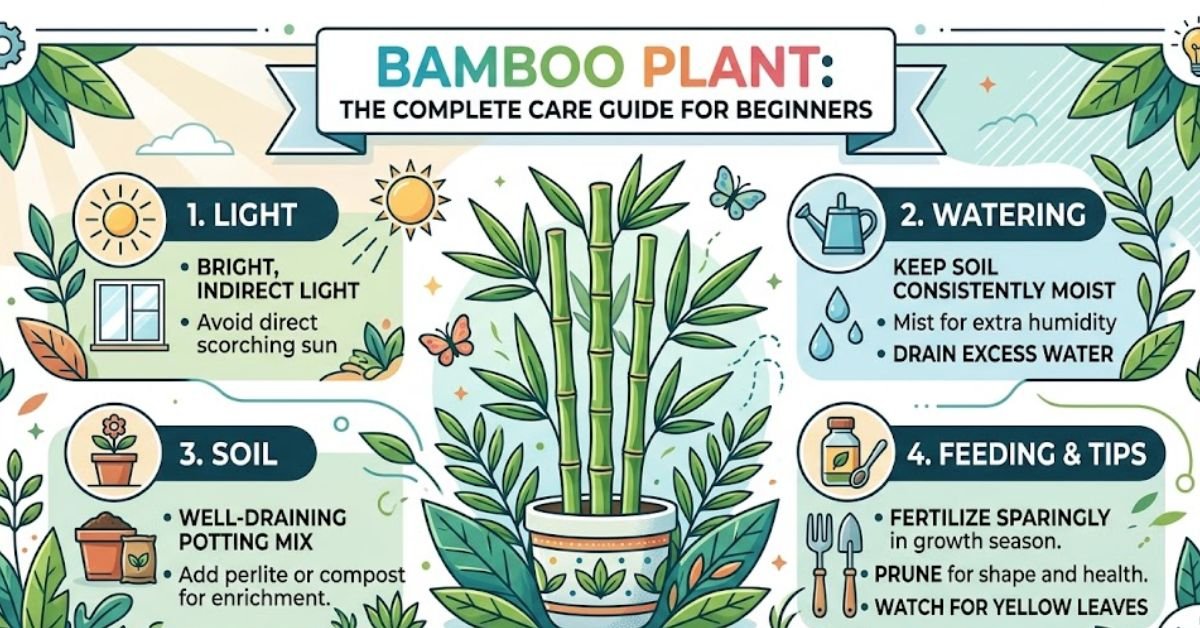
Bamboo is a versatile and striking plant that can transform any garden or indoor space. Whether you’re drawn to the towering outdoor bamboo or the elegant, compact lucky bamboo, each type has unique care needs. Understanding the differences and proper care techniques is key to keeping your bamboo healthy and thriving for years this complete bamboo plant care guide will help you understand how to grow and maintain both lucky bamboo and true bamboo easily
Bamboo Plant Care Quick Summary
| Care Factor | True Bamboo (Outdoor) | Lucky Bamboo (Indoor) |
| Light | Full sun (6+ hours) | Bright, indirect light |
| Water | 1 inch/week | Fresh water every 7–10 days |
| Soil | Moist, well-draining | Pebbles + water, or light potting mix |
| Temperature | 60–95°F | 65–90°F |
| Fertilizer | Balanced; twice a year | Diluted liquid; every 2 months |
| Pet Safe? | Yes | Mildly toxic |
| Difficulty | Easy–Moderate | Very Easy |
These basic bamboo plant care tips make it easy for beginners to keep their plants healthy.
True Bamboo vs Lucky Bamboo Care Guide
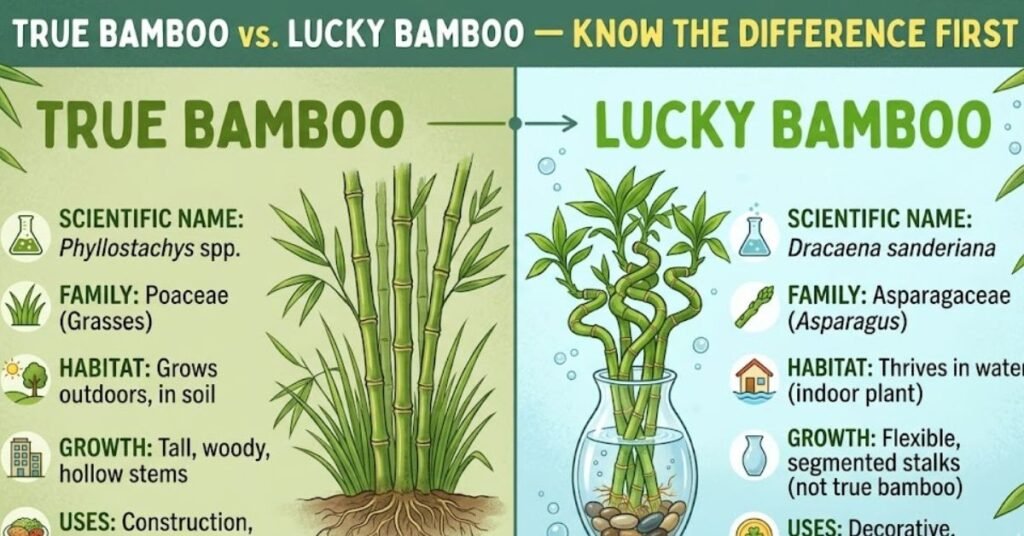
This is the #1 mistake beginners make. There are two completely different plants sold as “bamboo.”
True bamboo (Bambusoideae) is a fast-growing grass. It produces hollow canes, grows outdoors, and can shoot up several feet per season.
Lucky bamboo (Dracaena sanderiana) is NOT real bamboo. It’s a tropical houseplant from West Africa, related to asparagus. It grows in water or light soil and thrives indoors.
They have completely different care needs — so knowing which one you have is essential before doing anything else.
Types of True Bamboo for Better Plant Care
If you’re planting outdoors, you need to know this before you dig a single hole.
Running bamboo spreads aggressively underground via roots called rhizomes. It needs a root barrier to stay contained and can spread several feet per year. Great for privacy screens in large spaces.
Clumping bamboo grows slowly outward — just a few inches per year. No barrier needed. Perfect for small gardens, patios, and containers.
Bamboo Plant Light Requirements (Sunlight Guide)
True bamboo: Loves full sun — at least 6 hours of direct sunlight per day. Most species also tolerate part shade, but growth will be slower. In very hot climates, some afternoon shade protects leaves from burning.
Lucky bamboo: Needs bright, indirect light only. Direct sun will scorch and curl the leaves. A north or east-facing window works well. A sheer curtain filters harsh afternoon light nicely.
How to Water Bamboo Plants (Essential Care Tips)

True Bamboo
Aim for at least 1 inch of water per week. Water deeply — slow and thorough — so moisture reaches the roots.
- First 4 weeks after planting: Water daily to help roots establish
- After establishment: Supplement rainfall only during dry periods
Signs of underwatering: Leaves curl inward, tips turn brown Signs of overwatering: Leaves yellow, base feels mushy, soil smells bad
Lucky Bamboo in Water
- Change the water every 7–10 days
- Always use distilled or rainwater — tap water contains chlorine and fluoride that yellows leaves
- Keep water high enough to cover roots at all times
- Clean the container every 2–3 months to prevent algae
Lucky Bamboo in Soil
- Let the top inch of soil dry out between waterings
- Water thoroughly, then let it fully drain
- Never let the pot sit in standing water
Best Soil for Bamboo Plant Care
True bamboo grows best in slightly acidic, loamy, well-draining soil (pH 6.0–6.5).
How to plant:
- Dig a hole 1.5–2x wider than the root ball
- Mix 50% compost into the existing soil
- Plant so the top of the root mass is level with the ground
- Add 2–3 inches of mulch on top
- Water deeply right after planting
Pro Tip: Don’t rake up fallen bamboo leaves. They break down and return silica — a key bamboo nutrient — directly back into the soil.
Lucky bamboo in soil: Use a light potting mix with 20% perlite for drainage. Avoid dense, heavy soils that hold water.
Bamboo Plant Fertilizer Guide
True bamboo is a heavy feeder. It responds best to high-nitrogen fertilizer.
- Apply a balanced granular fertilizer (10-10-10) in spring and again in late summer
- Sprinkle around the base — not touching the canes — and water in well
- Organic mulch works as a natural slow-release alternative
Lucky bamboo needs very little feeding — over-fertilizing is a common killer.
- Use liquid fertilizer diluted to 1/4 strength
- Feed once every 2 months only
- For water-grown plants, add just a few drops to the water
Bamboo Plant Care and Pet Safety Guide
This is one of the most searched questions — and the answer depends entirely on which plant you have.
| Plant | Safe for Pets? |
| True Bamboo (Bambusoideae) | Non-toxic (ASPCA confirmed) |
| Lucky Bamboo (Dracaena sanderiana) | Mildly toxic — causes vomiting, lethargy |
| Heavenly Bamboo (Nandina domestica) | Toxic — keep away from all pets |
If your pet eats lucky bamboo, contact your vet or the ASPCA Poison Control Hotline: (888) 426-4435.
Bamboo Plant Care Mistakes to Avoid
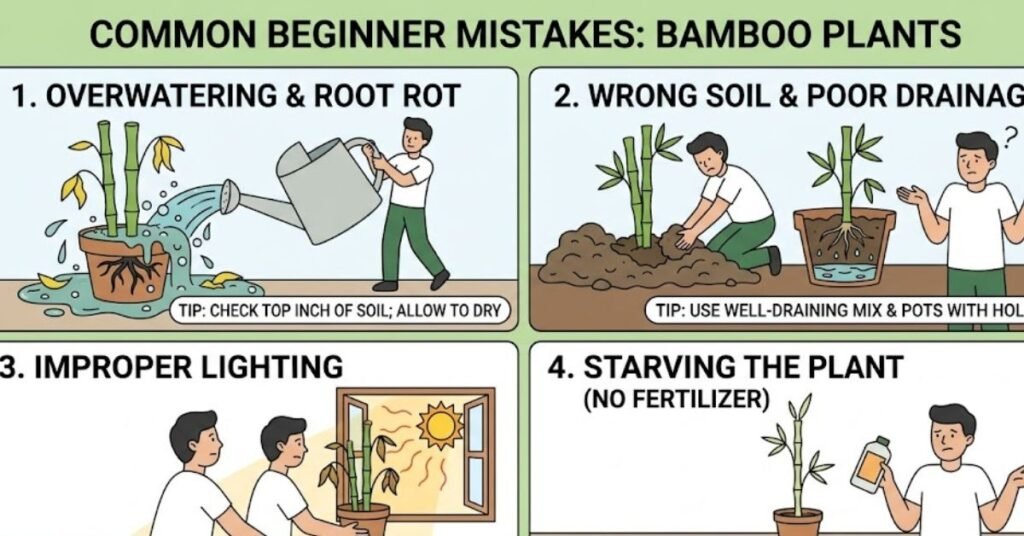
Not knowing your bamboo type. Running bamboo without a root barrier can spread into neighboring yards within a few seasons.
Using tap water for lucky bamboo. Chlorine and fluoride cause those trademark yellow tips. Switch to distilled or rainwater.
Overwatering outdoor bamboo. Deep but infrequent watering is better than frequent shallow watering.
Over-fertilizing lucky bamboo. Always dilute to 1/4 strength. Feed every 2 months — not more.
Pruning at the wrong time. Never prune in late summer — it stimulates tender new growth right before winter. Wait until late winter or early spring.
Avoiding these mistakes is essential for successful bamboo plant care
Seasonal Care Guide
| Season | True Bamboo | Lucky Bamboo |
| Spring | Fertilize; water new shoots daily | Resume regular watering |
| Summer | Deep water during heat waves; watch for pests | Keep away from AC vents and hot windows |
| Fall | Second fertilizer round; add mulch | Move away from drafty windows |
| Winter | Wrap young plants; 6 inches of mulch; reduce watering | Keep above 50°F; avoid cold drafts |
Pest & Disease Quick Guide
| Problem | Signs | Fix |
| Spider mites | Fine webbing, yellow speckling | Neem oil spray; increase humidity |
| Aphids | Sticky residue, distorted growth | Wipe with damp cloth; diluted neem oil |
| Mealybugs | White cottony clusters | Alcohol-soaked cotton swab |
| Root rot | Mushy base, bad smell | Improve drainage; repot; trim black roots |
| Fungal spots | Dark spots on canes | Copper-based fungicide or remove cane |
Troubleshooting Yellow Leaves
Yellow leaves are the most common complaint — here’s how to diagnose it fast:
- Tap water → Switch to distilled water (lucky bamboo)
- Overwatering → Let soil dry out; check drainage
- Too much direct sun → Move to indirect light
- Over-fertilizing → Flush soil with water; reduce feeding frequency
- Root rot → Repot; trim damaged roots
FAQ
Q: How fast does bamboo grow? Giant species can grow up to 3 feet per day at peak. Most garden varieties add 1–3 feet per week in spring. Lucky bamboo grows just a few inches per year.
Q: Can bamboo grow indoors? True bamboo doesn’t thrive indoors long-term — it needs full sun. Lucky bamboo is the ideal houseplant.
Q: Is bamboo invasive? Running bamboo can be invasive without a root barrier. Some varieties are restricted in certain U.S. counties. Clumping bamboo is not invasive.
Q: How do I stop bamboo from spreading? Install a high-density polyethylene (HDPE) root barrier at least 24–30 inches deep around the planting area. Check and trim escaping rhizomes every spring.
Q: Why are my lucky bamboo leaves yellow? Almost always tap water. Switch to distilled or rainwater immediately.
Q: How long does lucky bamboo live? With proper care, 5–10+ years. The key is clean water, indirect light, and minimal fertilizer.
Q: Does bamboo need a lot of sun? True bamboo: yes — 6+ hours preferred. Lucky bamboo: no — indirect light only.
Conclusion
Bamboo is one of the easiest plants to grow once you understand what you’re working with. The single most important step is knowing whether you have true bamboo or lucky bamboo — everything else follows from there.
Give outdoor bamboo full sun, deep watering, and rich mulch. Give lucky bamboo indirect light, clean distilled water, and minimal fertilizer. Do those two things right, and your bamboo will thrive for years.
By following this bamboo plant care guide, you can grow healthy and beautiful bamboo plants for years

Amin Khalid is a professional horticulturist and the founder of LeafyWisdom. With a deep passion for home gardening and horticultural research, he specializes in providing practical, easy-to-follow care guides for indoor plants. Amin’s goal is to simplify gardening for everyone and help fellow plant lovers build their own thriving green spaces.