
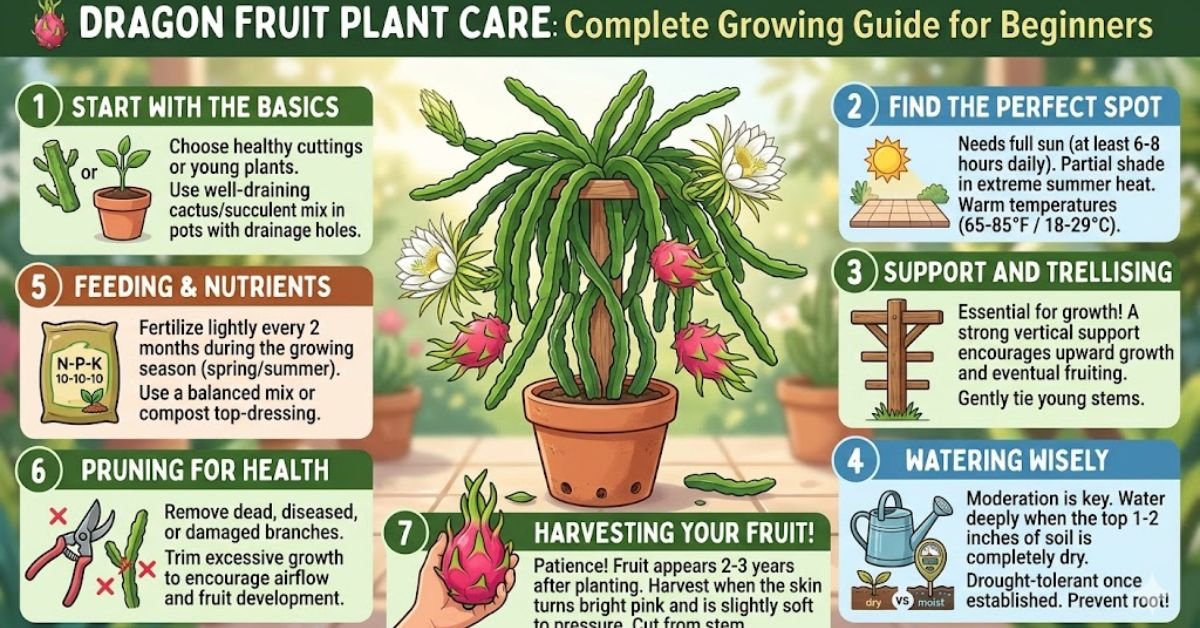
Dragon fruit looks exotic but it’s actually one of the easier fruiting plants to grow. This guide covers everything from soil and support to pollination, harvesting, and the mistakes that stop most beginners from ever seeing fruit.
Quick Care Summary
| Care Factor | Details |
| Scientific Name | Hylocereus undatus (white flesh) / H. costaricensis (red flesh) |
| Plant Type | Tropical climbing cactus |
| Light | Full sun — 6–8 hours per day |
| Water | When top 3 inches of soil are dry |
| Soil | Sandy, well-draining (pH 6–7) |
| Temperature | 65–85°F; never below 32°F |
| Support | Trellis, post, or stake required |
| Toxicity | Non-toxic to humans and pets |
| Hardiness Zones | Outdoors year-round in zones 10–12 |
| Years to First Fruit | 2–3 years from cutting; 5–7 from seed |
| Difficulty | Easy–Moderate |
Dragon Fruit Plant Explained (Beginner’s Care Guide)?
Dragon fruit is a tropical climbing cactus from Mexico and Central America. Like many tropical plants, dragon fruit shares similar care needs with ornamental plants such as crotons It produces large, dramatic flowers and bright, heavy fruit. Unlike desert cacti, it loves some humidity and needs more water than most people expect.
The flowers open for just one night they’re enormous, white, and fragrant. Without bats or moths to pollinate them naturally, you’ll need to hand-pollinate to get fruit.
Common Varieties
| Variety | Flesh Color | Self-Fertile? |
| H. undatus | White | No — needs a partner |
| H. costaricensis | Red/Purple | No — needs a partner |
| H. megalanthus (Yellow) | White | Yes |
| American Beauty | Pink | Yes |
Pro Tip: If growing just one plant, choose a self-fertile variety like Yellow Dragon Fruit or American Beauty. Non-self-fertile types need two compatible plants to produce fruit.
Sunlight
Dragon fruit needs 6–8 hours of full sun per day. Without it, the plant grows but never flowers or fruits.
- Best outdoor spot: south-facing wall, fence, or open bed
- Indoors: within 1 foot of a south-facing window, or use a grow light 12–14 hours/day
- In extreme heat (100°F+): afternoon shade protects stems from burning
Watering
Dragon fruit is more water-tolerant than most cacti but overwatering still kills it.
The rule: Water deeply, then wait until the top 3 inches of soil are completely dry before watering again.
- Spring/summer: About once a week
- Fall/winter: Once every 2–3 weeks
Signs of overwatering: Soft, mushy stems; yellow discoloration; foul-smelling soil
Signs of underwatering: Wrinkled or shriveled stems; no new growth
Soil, Support & Fertilizing
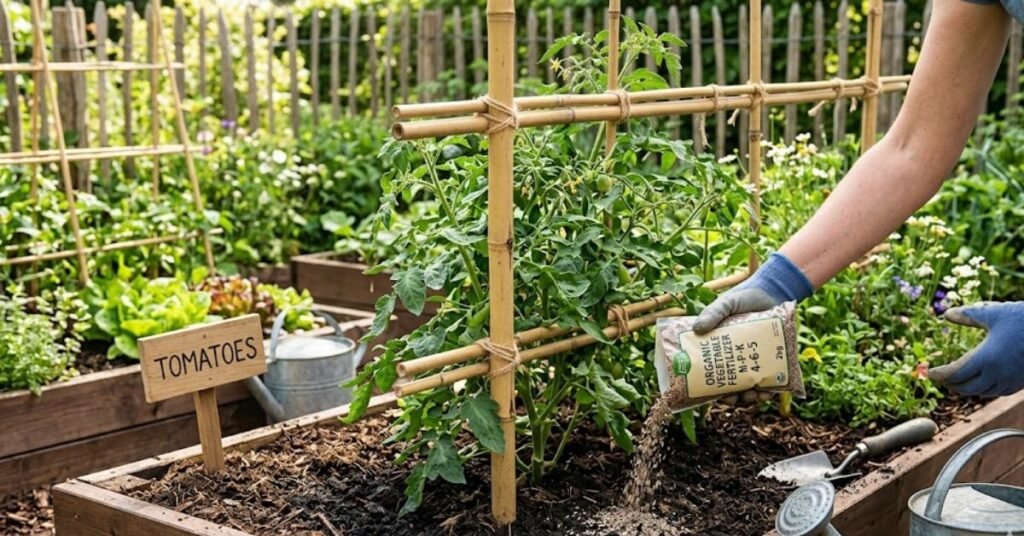
Soil: Use a 50/50 mix of cactus potting mix and compost. Add perlite in humid climates. Avoid standard potting soil — it holds too much water.
Support: Dragon fruit is a climber. Without support it sprawls and rarely fruits. Use a 6–8 foot post, stake, or strong trellis. A fully loaded plant can weigh 25–50 lbs — the structure must be solid and well-anchored.
Fertilizing:
- Balanced fertilizer (10-10-10) every 4–6 weeks in spring and summer
- Avoid high-nitrogen formulas — they push green growth and reduce flowering
- Stop fertilizing completely in winter
Pollination — The Step Nobody Explains
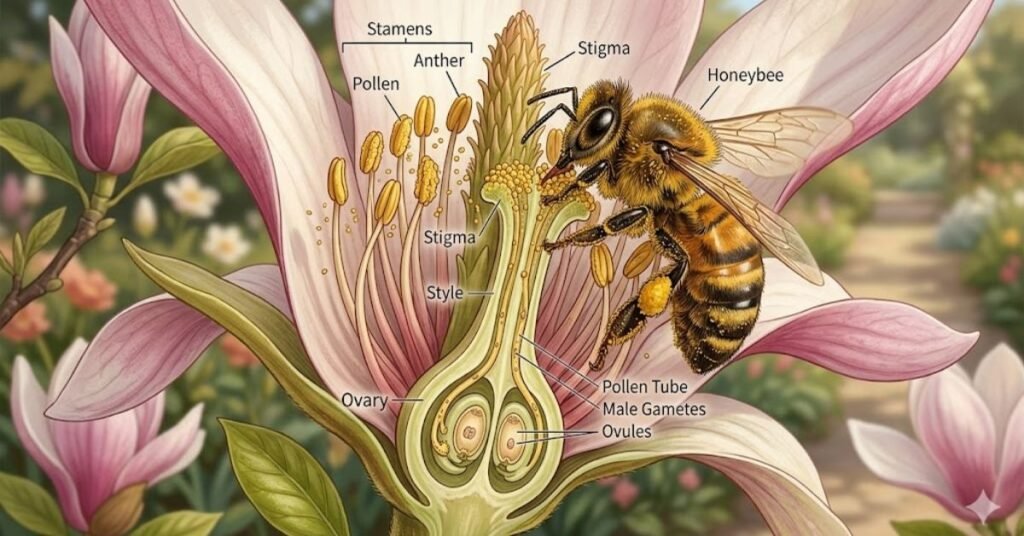
This is the main reason people grow beautiful plants that never produce fruit.
Most varieties are not self-fertile. Pollen from one open flower must reach the stigma of another. Each flower opens for just one night — you have an 8–12 hour window.
How to Hand-Pollinate
- Go out after dark — flowers open fully after sunset
- Find the stamen (the yellow pollen-covered parts surrounding the center)
- Find the stigma (the multi-tipped structure in the middle)
- Use a small paintbrush or Q-tip to collect pollen from the stamen
- Transfer it directly onto the stigma of another open flower (or the same flower if self-fertile)
If successful, the base of the flower swells into fruit within a few days. If the flower drops off within 2–3 days without swelling, pollination fails — try again with the next bloom.
When to Harvest
After pollination, fruit takes 30–50 days to ripen. Look for these signs:
- Skin has fully developed its color (bright pink/red or yellow)
- The wing-like flaps on the skin start to wither slightly
- Fruit feels mildly soft when gently squeezed — like a ripe avocado
Cut with clean scissors or shears, leaving about 1 inch of stem. Ripe fruit keeps in the refrigerator for 2–3 weeks.
Seasonal Care Guide
| Season | What to Do |
| Spring | Resume watering and fertilizing; repot if needed; check trellis |
| Summer | Water weekly; hand-pollinate night flowers; watch for pests |
| Fall | Reduce watering; prune dead or crowded stems |
| Winter | Minimal watering; no fertilizer; protect from frost; bring containers inside below 40°F |
Pest & Disease Solutions
| Problem | Signs | Fix |
| Root/Stem Rot | Mushy stems; foul smell | Cut away rot; improve drainage; copper fungicide |
| Aphids | Sticky residue; distorted growth | Insecticidal soap spray |
| Scale Insects | Brown bumps on stems | Scrape off; horticultural oil |
| Mealybugs | White cottony clusters | Alcohol swab; neem oil |
| Sunscald | White patches on stems | Shade cloth in extreme heat |
Common Beginner Mistakes
Starting from seed. Seeds take 5–7 years to fruit. Always start from a cutting (2–3 years to fruit).
Planting one non-self-fertile variety. You’ll never get fruit. Buy two compatible plants or choose a self-fertile variety.
Overwatering. It’s a cactus. When in doubt, wait another week.
No support structure. A plant without a trellis or post sprawls and rarely fruits.
Missing the pollination window. Flowers open one night only. Check your plant on summer evenings and be ready to hand-pollinate.
Heavy clay soil. Roots rot fast without drainage. Use raised beds or amend heavily with grit and compost.
Troubleshooting
| Symptom | Cause | Fix |
| No flowers | Too little light or plant too young | Full sun; wait until 2+ years old |
| Flowers but no fruit | Pollination failure | Hand-pollinate next bloom; add second variety |
| Yellow/mushy stems | Overwatering or rot | Reduce watering; treat with fungicide |
| Wrinkled stems | Underwatering | Water deeply and consistently |
| Slow growth | Low light or no fertilizer | Full sun; resume feeding in spring |
FAQ,s
Q: How long does dragon fruit take to grow? From a cutting, expect fruit in 2–3 years. From seed, 5–7 years. Always use cuttings.
Q: Can I grow dragon fruit in a pot indoors? Yes — use a 15–25 gallon container, a strong support pole, and a grow light or very sunny window. Fruiting indoors is possible but requires extra effort.
Q: Do I need two plants? Most varieties do. Self-fertile types like Yellow Dragon Fruit and American Beauty can produce fruit with just one plant.
Q: Is dragon fruit toxic to pets? No. Dragon fruit is non-toxic to dogs, cats, and humans. The spines can cause physical injury, but the plant itself is safe.
Q: Why won’t my plant flower? Most likely insufficient sunlight or an immature plant. Ensure 6–8 hours of full sun daily and give it time — most plants don’t flower before 2–3 years old.
Q: How often should I water? About once a week in summer. Every 2–3 weeks in winter. Always let the top 3 inches of soil dry out first.
Q: How do I know when to pick the fruit? Fully colored skin, slightly withered wing flaps, and a gentle give when pressed. Harvest 30–50 days after pollination.
Conclusion
Dragon fruit rewards patient growers with one of the most spectacular plants in home gardening. Get the basics right full sun, fast-draining soil, a solid trellis, and a hand-pollination plan and you’ll be harvesting your own exotic fruit within a couple of seasons.

Amin Khalid is a professional horticulturist and the founder of LeafyWisdom. With a deep passion for home gardening and horticultural research, he specializes in providing practical, easy-to-follow care guides for indoor plants. Amin’s goal is to simplify gardening for everyone and help fellow plant lovers build their own thriving green spaces.