

I’ve spent years designing landscapes from the embers of the Wine Country to the wind-swept canyons of Malibu. If there’s one thing I’ve learned, it’s that creating the best fire resistant plants for California gardens isn’t about stripping your yard down to gravel—it’s about building a strategically hydrated, intelligently spaced ecosystem that can actually withstand wildfire conditions.
In this guide, we’re going deep. We’ll cover the best fire resistant plants for California gardens, the new legal requirements of AB 3074, and the hidden “Ladder Fuel” traps that most homeowners walk right past.
Quick Care & Compliance Table
| Zone | Distance | Requirement | Best Plant Types |
| Zone 0 | 0–5 ft | Ember-Resistant Zone (AB 3074) | None (Hardscape/Succulents in pots) |
| Zone 1 | 5–30 ft | Lean, Clean, & Green | Lavender, Sage, Redbud |
| Zone 2 | 30–100 ft | Reduced Fuel Zone | Oaks, Ceanothus, Toyon |
| Watering | Year-round | Keep foliage “turgid” (plump with water) | Native-compatible drip or overhead |
The New “Zone Zero”: Navigating AB 3074 in Your Garden
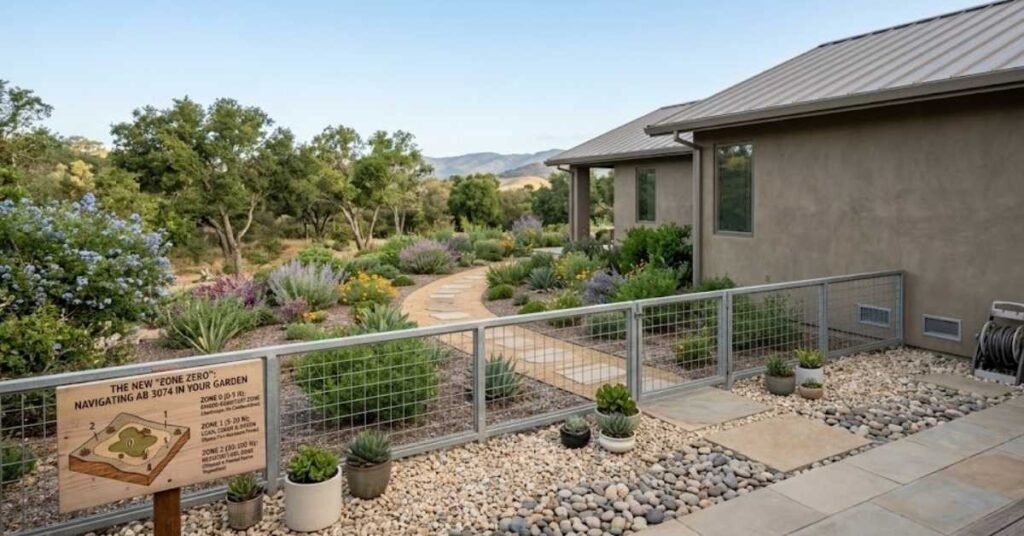
As of 2026, California law (AB 3074) has changed the game for the first five feet around your home. This is the “Ember-Resistant Zone.” Research showed that most homes don’t burn from a wall of fire, but from embers landing in dry “fuel” right against the foundation.
To stay compliant and safe, the best fire resistant plants for California gardens in this 0–5 ft zone are actually… none. I know, it’s a tough pill for a gardener to swallow. But for this zone, you want hardscape (gravel, pavers) or very low-growing, succulent groundcovers that are kept impeccably clean.
Personal Pro-Tip
If you can’t live without green near your window, use “islands” of succulents in thick ceramic pots. If a fire approaches, these “water tanks” won’t carry the flame to your siding, and the pots act as a secondary barrier.
Breaking the Chain: Eliminating “Ladder Fuels”
This is where most DIYers fail. You can have the best fire resistant plants for California gardens, but if you arrange them like a staircase, you’ve built a fire ladder. “Ladder fuels” are low-growing shrubs or tall grasses situated directly under the canopy of a tree.
In my years of consulting, I’ve seen small fires on the ground “climb” up a lavender bush, catch a low oak limb, and suddenly you have a crown fire 30 feet in the air.
How to fix it:
- The 3x Rule: Keep a vertical gap between the top of your shrubs and the lowest tree branches that is at least three times the height of the shrub.
- Limbing Up: Prune your large trees (like Coast Live Oaks) so the lowest branches are at least 6 to 10 feet off the ground.
Personal Pro-Tip
When you’re pruning in the Fall, look at your garden from a “cat’s eye view.” If a cat can jump from a shrub to a branch, a fire can too. Cut those bridges!
Top Species Picks for Your Fire-Wise “Pillar” Garden
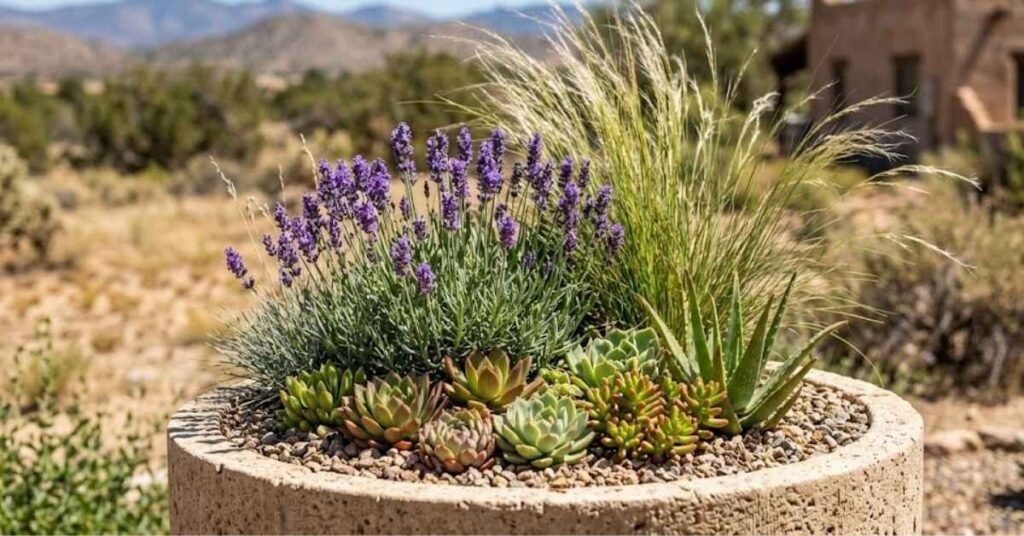
To be truly effective, the best fire resistant plants for California gardens should be grouped by their water needs and their “cleanliness.”
1. The Hydration King: Island Morning Glory (Calystegia macrostegia)
A California native that stays incredibly lush. Because it’s a vine/groundcover, it stays low to the earth, making it an excellent choice for Zone 1 (5–30 ft).
2. The Silver Shield: White Sage (Salvia apiana)
Sages are often misunderstood. While they have oils, a healthy, well-hydrated White Sage has thick, leathery leaves that resist ignition far better than non-native ornamental grasses.
3. The Deciduous Guard: Western Redbud (Cercis occidentalis)
Unlike evergreens that hold dry needles year-round, the Redbud is “clean.” In the Winter, it’s just bare wood, and in the Spring, it’s a burst of moisture-rich flowers and leaves.
Common Mistakes in California Fire-Scaping

Living with Air Conditioning often makes us forget how dry our outdoor plants are getting.
- The “Dead Inside” Syndrome: Plants like Lavender or Rosemary look green on the outside but are full of dry, dead twigs on the inside. This is “hidden fuel.”
- The Wrong Mulch: Never use “Gorilla Hair” (shredded redwood bark). It’s essentially tinder. Use large-format rock or 2-inch wood chips kept moist.
- Ignoring the Faucet: Even a fire-resistant plant becomes flammable if it’s drought-stressed. In Summer, give your fire-shield plants a deep soak once a week.
Personal Pro-Tip
Use your garden hose to wash the dust off your plants once a month. Dust isn’t just ugly; it acts as a “wick” for flying embers. A clean, wet leaf is a fire-resistant leaf.
Troubleshooting Your Fire-Safe Landscape
- Yellowing Leaves: Usually overwatering. California soil (especially clay) doesn’t drain fast. Switch to a “pulse” watering setting on your timer.
- Woody Centers: If your sage or lavender is more brown than green inside, it’s time for a “renewal prune.” Do this in early Spring to encourage fresh, water-heavy growth.
- Leaf Drop: If your “fire-resistant” tree is dropping leaves in July, it’s stressed. That leaf litter on the ground is a massive fire risk. Rake it immediately.
Toxicity & Safety for California Pets
- Safe: California Fuchsia, French Lavender, Coneflower.
- Toxic: Oleander (Incredibly fire-resistant, but lethal to dogs/horses), Sago Palm.
Personal Pro-Tip
If you live in an area with high fire risk, you might be tempted to plant Oleander as a hedge. Don’t. It’s one of the most toxic plants in the USA. Stick to Toyon—it’s native, fire-resistant, and much safer for your pups.
FAQ: What Every Californian Needs to Know
1. Is Zone 0 (0–5 ft) mandatory for everyone?
As of 2026, it is mandatory for homes in “Very High Fire Hazard Severity Zones.” Check the CAL FIRE map for your specific address.
2. Can I keep my mulch near the house?
Under AB 3074, you should replace wood mulch within 5 feet of the house with non-combustible materials like gravel, rock, or decomposed granite.
3. Why are “ladder fuels” so dangerous?
They turn a manageable ground fire into a catastrophic tree-top fire that can leap over roads and firebreaks.
4. How do I choose the best fire resistant plants for California gardens in the shade?
Look for Coral Bells (Heuchera) or California Iris. They have high moisture content and thrive in the cooler parts of your yard.
5. Does “drought-tolerant” mean “fire-resistant”?
No. Many drought-tolerant plants (like Junipers or Eucalyptus) are full of volatile oils and are extremely flammable.
6. What is the “Zero to Five” rule?
It’s the simplest way to remember AB 3074: zero combustible material within five feet of your home’s foundation.
7. Can I keep my trees in Zone 0?
Yes, but they must be “limbed up” so no branches are within 10 feet of your chimney or touching your roof.
Final Thoughts
Building a garden with the best fire resistant plants for California gardens is an act of love for your home and your community. By following AB 3074 and managing your ladder fuels, you aren’t just making a prettier yard—you’re making a stand against the wildfire cycle. Keep your plants hydrated, your gravel clean, and your “defensible space” wide.
Do you have a specific corner of your yard that needs a fire-safe makeover? I’d love to help you pick the right species for your zone!

Amin Khalid is a professional horticulturist and the founder of LeafyWisdom. With a deep passion for home gardening and horticultural research, he specializes in providing practical, easy-to-follow care guides for indoor plants. Amin’s goal is to simplify gardening for everyone and help fellow plant lovers build their own thriving green spaces.

No responses yet