
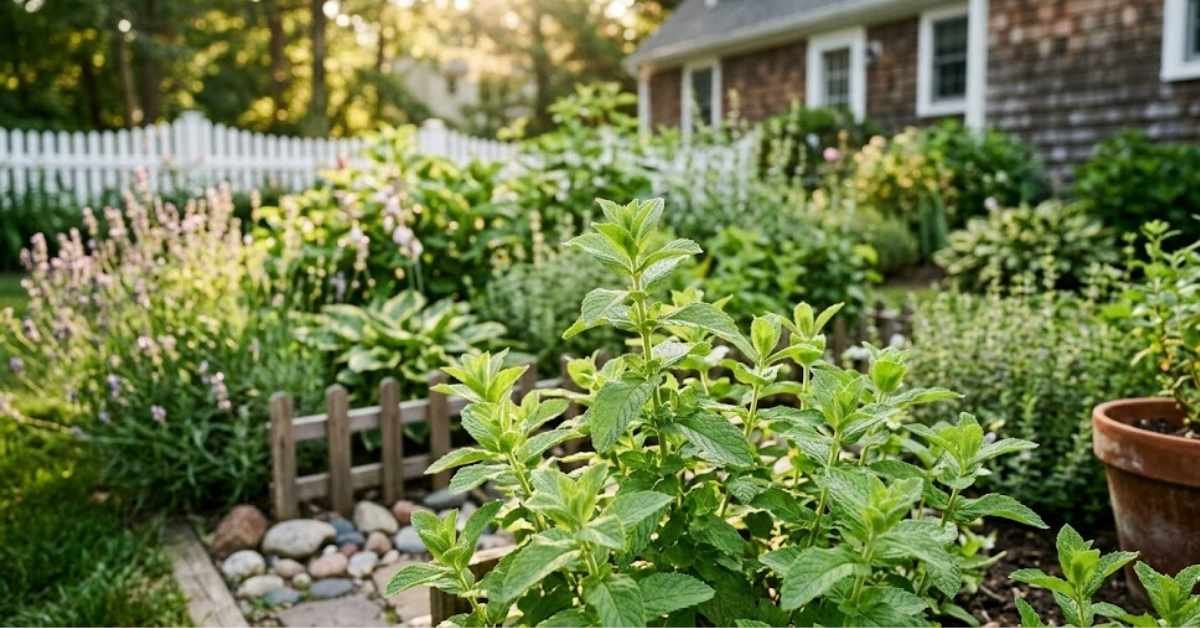
If you’re looking for an herb that smells like a crisp fall orchard and grows vigorously enough to make you look like a master gardener, the apple mint plant (Mentha suaveolens) is your answer. With its fuzzy, light green leaves and sweet, fruity aroma, it’s a fantastic addition to both indoor pots and outdoor garden beds.
Let’s dive into everything you need to know about keeping your apple mint plant thriving, from surviving the blast of summer air conditioning to prepping for winter frosts.
Quick Care Guide for Your Apple Mint Plant
If you’re a skimmer, here is the quick-and-dirty breakdown of what your plant needs to survive and thrive in a typical US climate.
| Care Need | The Details |
| USDA Hardiness Zones | 5 to 9 (Dies back in winter, returns in spring) |
| Light | Full sun to partial shade (Part shade is best in hot Southern states) |
| Water | Keep evenly moist; water when the top inch of soil is dry |
| Soil | Rich, well-draining potting soil |
| Temperature | 55°F to 75°F indoors; tolerates outdoor heat if well-watered |
Personal Pro-Tip: > When buying a starter plant at your local nursery, gently rub a leaf between your fingers. If it doesn’t immediately release a strong, sweet apple scent, pass on it. You want a plant with vigorous essential oil production right from the start!
Planting Your Apple Mint Plant: Indoor & Outdoor Tips
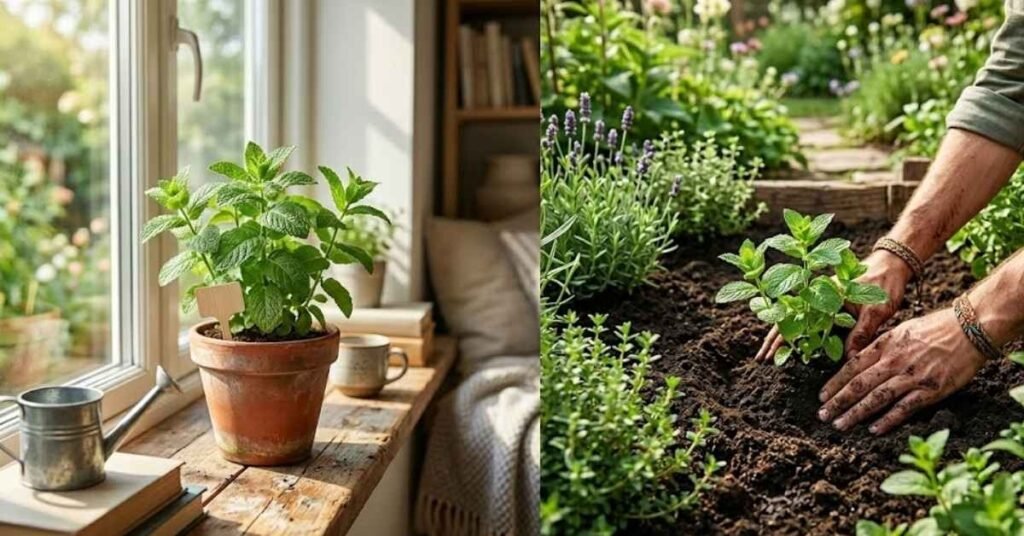
The apple mint plant is famously easy to grow, but where you plant it matters. In the US, it thrives as a perennial in USDA Zones 5 through 9. If you live further north (like Zone 4 or below), you’ll want to treat it as an annual or bring it indoors before the first deep freeze.
If you’re planting outdoors, do it in the spring after the last frost or in early fall. But here is the golden rule of the mint family: Keep it contained. Apple mint spreads aggressively via underground runners. If you plant it directly into your garden bed without a barrier, it will absolutely take over your yard.
For container growing, skip the dense outdoor dirt and use a high-quality, well-draining indoor potting soil.
Personal Pro-Tip: > If you really want an apple mint plant in your outdoor garden bed, bury an entire plastic nursery pot (with the bottom cut out) into the ground, leaving about an inch of the rim above the soil line. Plant the mint inside it. This stops the roots from staging a hostile takeover of your tomatoes!
Sunlight and Soil Needs for the Apple Mint Plant
Outdoors, your apple mint plant will love full sun, but if you live in a scorching climate (like Texas or Arizona), afternoon shade is a lifesaver. It keeps the delicate, fuzzy leaves from crisping up.
Indoors, place your pot near a bright, South- or West-facing window. If it doesn’t get enough light, the stems will get “leggy”—meaning long, weak, and sparse on leaves.
Personal Pro-Tip: > Rotate your indoor apple mint plant a quarter-turn every time you water it. Since it aggressively reaches for the sun, this keeps the plant growing full and bushy instead of leaning heavy to one side.
Watering and Feeding Your Apple Mint Plant
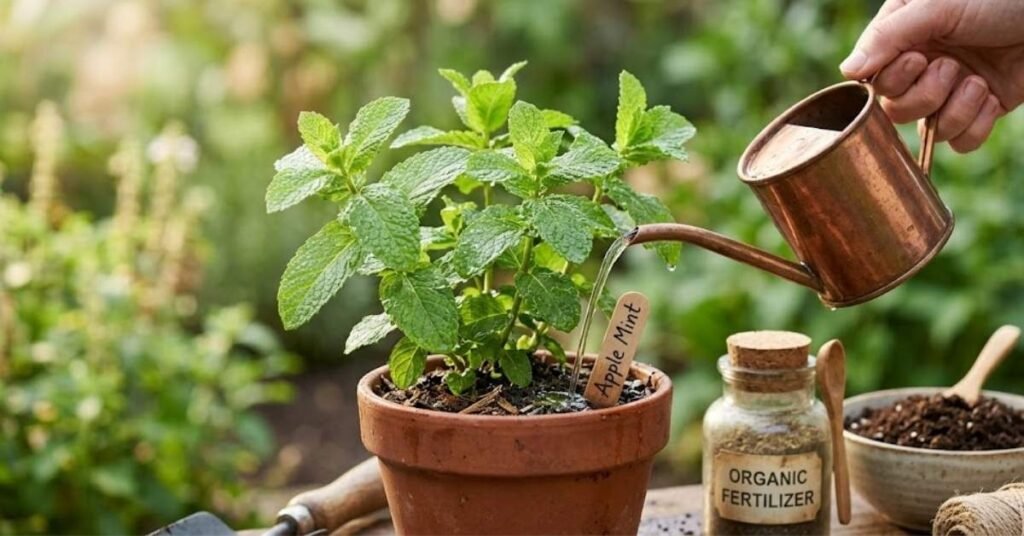
Apple mint loves moisture. You never want the soil to turn bone-dry, but you also don’t want it sitting in a swamp.
Check the soil with your finger. When the top inch feels dry, take the pot to the sink and run room-temperature water directly from the faucet over the soil until it drains out the bottom. Let it drain completely before putting it back on its saucer.
During the active growing season (Spring and Summer), you can feed your apple mint plant with a diluted, balanced liquid fertilizer once a month. Stop feeding in the fall and winter when the plant naturally slows down.
Personal Pro-Tip: > If you notice the water from your faucet simply pooling on top of the soil and rolling down the sides of the pot, your potting soil has become hydrophobic. Soak the entire pot in a bowl of water for 20 minutes to rehydrate the soil from the bottom up!
Common Mistakes When Caring for an Apple Mint Plant in the US
We see a lot of well-meaning plant parents accidentally ruin their herbs. Here are the biggest pitfalls to avoid:
- The AC Vent Death Trap: Central air conditioning is standard in most US homes, but your apple mint plant hates it. Blasting cold, dry air directly onto the plant will strip its moisture, causing the leaves to shrivel and drop. Keep it away from vents and drafty windows.
- Suffocating Roots: Planting mint in pots without drainage holes is a guaranteed death sentence. Root rot will set in within weeks.
- Over-Fertilizing: Mint doesn’t need heavy feeding. Too much fertilizer will make the plant grow incredibly fast, but it will lose its signature apple flavor and scent.
Personal Pro-Tip: > Group your indoor apple mint plant with other humidity-loving plants, or set it on a pebble tray filled with water. The natural evaporation helps counteract the dry air in our air-conditioned or heated homes.
Troubleshooting Apple Mint Plant Problems
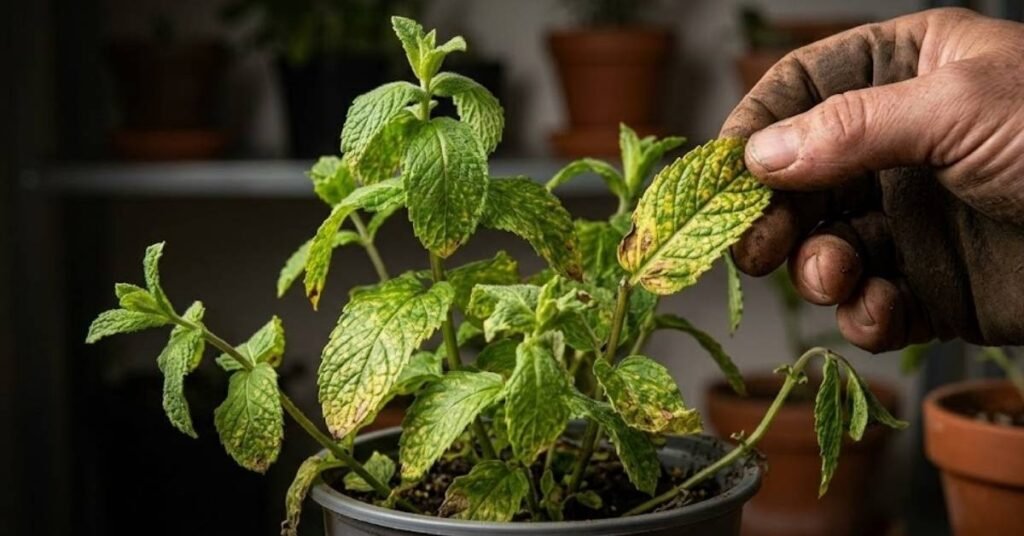
Even the toughest plants run into trouble. Here is how to fix the most common issues:
- Why are my apple mint plant leaves turning yellow? Yellowing leaves usually point to overwatering or poor drainage. Check the bottom of your pot. If it’s sitting in a puddle, dump the excess water immediately and let the soil dry out a bit more before your next watering.
- Why does my apple mint plant have brown, crispy tips?
- This is a classic sign of low humidity or underwatering. If the soil is dry, give it a good soak. If the soil is moist, the air in your house is likely too dry (check those AC vents!).
- Why is there a white powdery coating on the leaves?
- This is powdery mildew, a fungal issue common in humid, stagnant environments. Improve airflow around the plant, make sure you are watering the soil (not splashing the leaves), and remove any heavily affected foliage.
Personal Pro-Tip: > When trimming away sick or dying leaves, always sanitize your scissors with a little rubbing alcohol first. This prevents you from accidentally spreading fungal spores to other parts of your plant.
Is the Apple Mint Plant Toxic to Cats and Dogs?
Yes. This is crucial for US pet owners to know. The ASPCA lists mint species (including the apple mint plant) as toxic to dogs, cats, and horses.
The essential oils that make the plant smell so good to us can cause vomiting, diarrhea, and weakness in our pets if ingested in large amounts. If you have curious cats who love to nibble on houseplants, keep your apple mint out of reach, perhaps in a hanging basket or on a high, inaccessible shelf.
Personal Pro-Tip: > If you have a pet that relentlessly hunts down your plants, skip growing mint indoors altogether. Try growing pet-safe herbs like basil or thyme on your windowsill instead!
7 Frequently Asked Questions About the Apple Mint Plant
Q1. How do you harvest apple mint without killing it?
Never take more than one-third of the plant at a time. Snip the stems just above a leaf node (the little bump where leaves grow out). This actually encourages the plant to branch out and grow bushier!
Q2. Can an apple mint plant survive winter?
Outdoors in USDA Zones 5-9, yes. The top foliage will die back completely after a hard frost, but the roots survive underground. Just clear away the dead leaves, and it will sprout fresh new growth in the spring.
Q3. Why does my apple mint plant smell less like apples now?
Usually, this happens because the plant has started flowering, or it’s getting too much fertilizer. Pinch off the flower buds as soon as you see them to keep the plant’s energy focused on producing flavorful leaves.
Q4. Does the apple mint plant repel bugs?
Yes and no. The strong scent can help deter some pests like cabbage moths and aphids in an outdoor garden, but it isn’t a magical bug-proof shield.
Q5. How fast does an apple mint plant spread?
Incredibly fast. In ideal outdoor conditions, a single plant can send out runners and take over a several-foot area in just one growing season. Always use containers!
Q6. Can I grow an apple mint plant from a grocery store cutting?
Yes! If you find fresh apple mint in the produce aisle, snip the bottom off a stem, strip the lower leaves, and stick it in a glass of water on your windowsill. You’ll see roots forming in about a week.
Q7. What’s the best way to use apple mint leaves?
Because of its sweet profile, it’s incredible in iced tea, muddled into mojitos, tossed into summer fruit salads, or dried to make soothing hot teas for the colder months.

Amin Khalid is a professional horticulturist and the founder of LeafyWisdom. With a deep passion for home gardening and horticultural research, he specializes in providing practical, easy-to-follow care guides for indoor plants. Amin’s goal is to simplify gardening for everyone and help fellow plant lovers build their own thriving green spaces.

No responses yet