
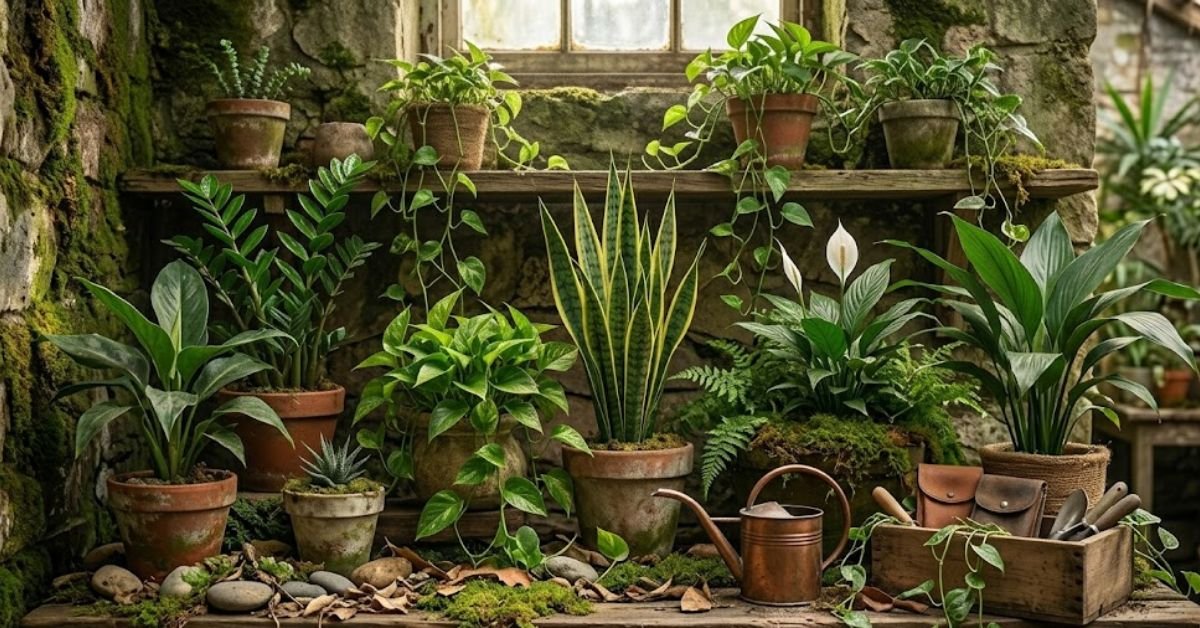
Finding the best low-light office plants for windowless rooms can transform a gloomy cubicle into a vibrant sanctuary. Many professionals believe that plants require natural sunlight to survive. However, specific species thrive using only artificial office lighting. Consequently, you can maintain a lush workspace without any windows at all.
Let’s be honest: working in a windowless office or a basement cubicle can feel a bit like living in a submarine. I’ve spent years consulting for office managers across the US from rainy Seattle to humid Miami and the number one question I get is, “Can I actually grow anything here without a window?”
The answer is a resounding yes. While no plant grows in total darkness (they aren’t mushrooms, after all), many species are perfectly happy “eating” the light from your overhead fluorescent or LED fixtures. I’ve seen Pothos vines thrive for a decade under nothing but office ballasts.
Below is my curated list of the best low-light office plants for windowless rooms, designed to survive the unique “climate” of an American office—think blasting AC in the summer and bone-dry heaters come fall.
Quick Care Comparison Table
| Plant Name | Light Need | Watering Frequency | “Forgetfulness” Level |
| Snake Plant | Low / Artificial | Every 3–4 weeks | High (Hard to kill) |
| ZZ Plant | Low / Artificial | Every 3–4 weeks | Extreme (Thrives on neglect) |
| Pothos | Low / Artificial | Every 1–2 weeks | Medium (Will wilt to tell you) |
| Cast Iron Plant | Very Low | Every 1–2 weeks | High (Tough as nails) |
| Peace Lily | Low / Medium | Weekly | Low (A bit of a drama queen) |
My Top Recommendations for the Best Low-Light Office Plants for Windowless Rooms
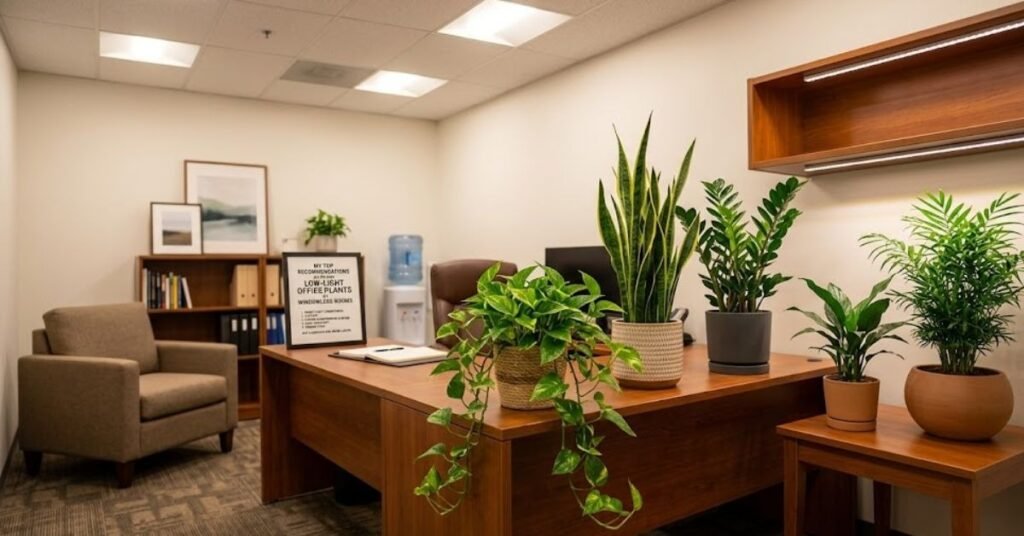
In my time at the nursery, I’ve realized that we often overthink plant care. We want to “nurture” our plants by watering them every time we walk by with a half-empty coffee mug. In a windowless room, that is a death sentence. Because there’s no sun to evaporate moisture, the soil stays damp much longer.
These plants are my top picks because they have adapted to survive on the forest floor or in harsh climates where light is a luxury. They are “slow burners”—they don’t need much fuel to keep their leaves green and your workspace feeling human.
The Snake Plant: A Top-Tier Choice Among Best Low-Light Office Plants for Windowless Rooms
If you want something that looks like modern art and requires the effort of a plastic plant, look no further. The Snake Plant (Dracaena trifasciata) is the gold standard for best low-light office plants for windowless rooms. Its architectural, sword-like leaves grow vertically, so it won’t take up your precious desk real estate.
In my experience, the biggest threat to a Snake Plant isn’t the lack of sun—it’s the faucet. Because these plants store water in their thick, waxy leaves, they only need a drink once the potting soil is bone-dry all the way to the bottom.
Personal Pro-Tip: If your office is particularly chilly because of the AC vents, go for the ‘Zeylanica’ or ‘Black Coral’ varieties. They handle the “office tundra” better than the variegated yellow types.
ZZ Plants: Why They Lead the List of Best Low-Light Office Plants for Windowless Rooms
The ZZ Plant (Zamioculcas zamiifolia) is practically a “set it and forget it” machine. Its leaves are so glossy they almost look polished, which helps reflect the dim artificial light of a windowless room back into its system.
I’ve had clients leave these in conference rooms that stay dark all weekend, and they come back Monday looking better than the employees. They grow from potato-like “rhizomes” under the soil that store water for emergencies.
Personal Pro-Tip: Don’t be alarmed if your ZZ plant doesn’t grow for months. In low light, they enter a “holding pattern.” They aren’t dying; they’re just being patient. Resist the urge to fertilize them to “force” growth in the winter—wait until spring!
Pothos: The Versatile Favorite for Best Low-Light Office Plants for Windowless Rooms
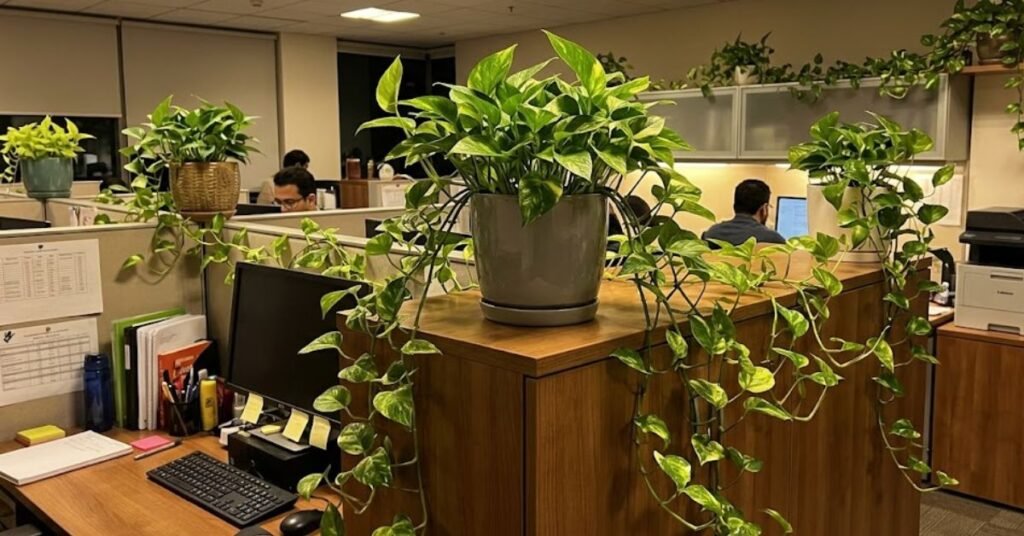
You’ve seen this plant everywhere for a reason. Pothos is the quintessential “cubicle vine.” It’s incredibly communicative. When it’s thirsty, the leaves go limp and look sad; give it a splash of water from the office faucet, and it perks up within hours.
While “Golden Pothos” is the most common, I personally love the ‘Jade’ variety for windowless rooms. Since it has more chlorophyll (the green stuff) and less variegation (the white/yellow spots), it is much more efficient at processing low levels of light.
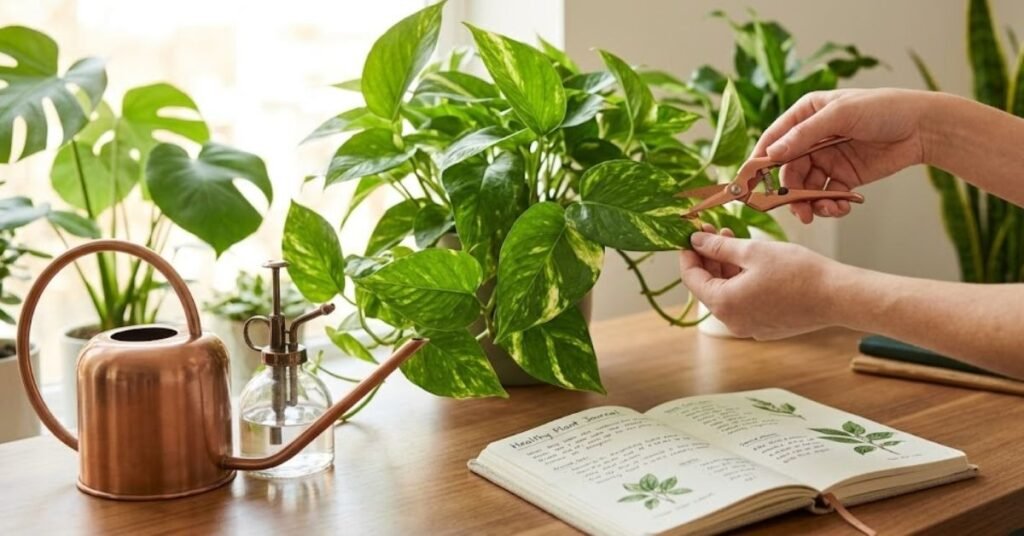
Personal Pro-Tip: If your Pothos starts looking “leggy”—meaning long vines with very few leaves—don’t be afraid to give it a haircut. Snipping the ends encourages the plant to bush out at the top, keeping your desk looking lush instead of stringy.
Peace Lilies: Managing Expectations for Best Low-Light Office Plants for Windowless Rooms
Peace Lilies are famous for their elegant white blooms, but here is the “expert secret”: In a windowless office, your Peace Lily will likely stop flowering. Producing flowers takes a massive amount of energy. When the plant is living on artificial light alone, it switches to “survival mode,” focusing all its energy on keeping its dark green leaves healthy. I’ve seen so many people think they are failing because the white spathes disappear, but as long as the leaves are glossy and upright, your plant is perfectly happy being a foliage-only resident.
Personal Pro-Tip: Because Peace Lilies love humidity, they often struggle with dry office air. If the tips of the leaves start to brown, it’s not a watering issue—it’s a “dry air” issue. Try placing the pot on a tray of pebbles with a little water to boost the local humidity.
Why Many Americans Struggle with Office Plants in Windowless Rooms
The number one killer of office greenery isn’t a lack of light—it’s Death by Cubicle Climate. Here are the three most common mistakes I see:
- The “Monday Morning” Overwater: We feel guilty leaving plants over the weekend, so we drown them on Monday. In a room with no sun, that water just sits there, leading to root rot.
- AC Vent Placement: Most US offices have powerful HVAC systems. If your plant is directly under a vent blowing 68°F air, it’s going to get “freeze-dried.” Move it at least three feet away from any direct drafts.
- Using the Wrong Soil: Never use “garden soil” from your backyard. Use a high-quality, well-draining potting soil (look for mixes with perlite or peat moss) to ensure the roots can breathe.
Troubleshooting Common Issues with Your Windowless Office Plants
- Yellow Leaves: Usually a sign of overwatering. Check the bottom of the pot. If it’s sitting in a puddle inside a decorative “cachepot,” dump it out immediately.
- Brown, Crispy Tips: This is usually due to low humidity caused by the building’s air conditioning. Try a quick misting, or better yet, group a few plants together to create a micro-climate.
- Dusty Foliage: In an office, dust builds up fast. If the leaves are dusty, they can’t “breathe” or take in light. Every few months, take a damp paper towel and gently wipe the leaves down.
Safety First: Toxicity and Your Pets
If you’re a “hybrid” worker and might bring these plants home, or if your office is pet-friendly, pay attention to these warnings:
- Snake Plants & ZZ Plants: Toxic if chewed. They contain calcium oxalate crystals that can cause mouth irritation and tummy troubles for cats and dogs.
- Pothos & Peace Lilies: Mildly toxic; keep them high on a shelf where curious paws can’t reach.
- Cast Iron Plant: Completely non-toxic! This is the “Gold Medal” winner for pet safety.
Frequently Asked Questions About Growing Plants Without Windows
Q1. Can a plant really survive on 100% artificial light?
Yes, but only certain ones. Most “low-light” plants evolved under dense jungle canopies. To them, your overhead office lights are just a steady, dim sun.
Q2. Should I leave the office lights on 24/7?
Actually, no. Plants have a “circadian rhythm” just like we do. They need a period of darkness to process the energy they gathered during the day. 8–12 hours of light is perfect.
Q3. Do I need a special “grow light”?
For the plants on this list, usually no. Standard LED office panels provide enough of the spectrum for them to survive. However, if your plant looks like it’s reaching toward the nearest light source, a small $15 “clip-on” grow light can work wonders.
Q4. How do I know when to water if I can’t see the soil?
The “Finger Test” is your best friend. Stick your finger two inches into the potting soil. If it feels even slightly damp, walk away. Only water when it’s dry to the touch.
Q5. Why is my plant growing so slowly?
Light is food for plants. In a windowless room, they are on a “diet.” They won’t grow at the same rate as a plant in a sunny spring garden, and that’s okay!
Q6. Can I use tap water from the office faucet?
In most US cities, yes. However, if your city treats water heavily with chlorine (you can usually smell it), let a pitcher of water sit on your desk overnight before using it.
Q7. Is it okay to move my plant to a window every weekend?
I don’t recommend it. Plants “acclimate” to their environment. Moving them back and forth creates “light shock,” which can cause leaves to drop. Pick a spot and let them settle in.
Final Thoughts from the Greenhouse
When selecting the best low-light office plants for windowless rooms, the most important thing to remember is that you are creating an artificial ecosystem. Don’t expect your office ZZ plant to look like a tropical rainforest specimen overnight. These plants are built for endurance, not speed.
If you treat your plants as quiet companions rather than demanding projects—and respect the “dry soil” rule—you’ll find that even the darkest cubicle can become a sanctuary. Whether you’re in a high-rise in NYC or a home office in a basement in the Midwest, a little green goes a long way for your mental health.

Amin Khalid is a professional horticulturist and the founder of LeafyWisdom. With a deep passion for home gardening and horticultural research, he specializes in providing practical, easy-to-follow care guides for indoor plants. Amin’s goal is to simplify gardening for everyone and help fellow plant lovers build their own thriving green spaces.

No responses yet