
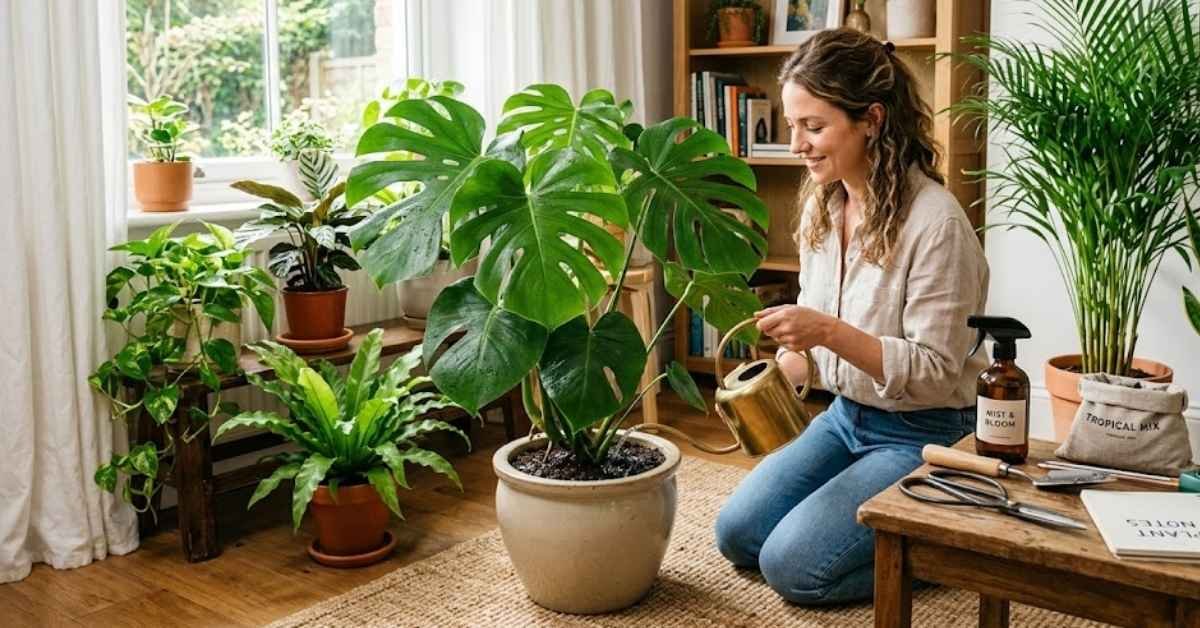
This tropical plant care guide will help you understand exactly what your indoor plants need to grow healthy, strong, and vibrant throughout the year. Tropical plants originally come from warm rainforest environments where they naturally grow under filtered sunlight, high humidity, and rich, well-draining soil. Because of this, their care requirements are quite different from typical houseplants, especially when it comes to light exposure, watering habits, humidity levels, and temperature control. In this guide, you’ll learn how to recreate those natural conditions inside your home so your plants don’t just survive—but truly thrive.
Quick Care Snapshot Tropical Plants
| Care Factor | What They Need | Priority |
| Light | Bright, indirect light (most varieties) | High |
| Water | Top 1–2 inches dry before watering | High |
| Humidity | 50–70% preferred | High |
| Temperature | 65–85°F; min 55°F | Medium |
| Soil | Well-draining, organic-rich potting mix | Medium |
| Fertilizer | Monthly, spring–fall only | Medium |
| Toxicity | Many varieties toxic to pets & kids | Critical |
Light: What Tropical Plants Actually Want
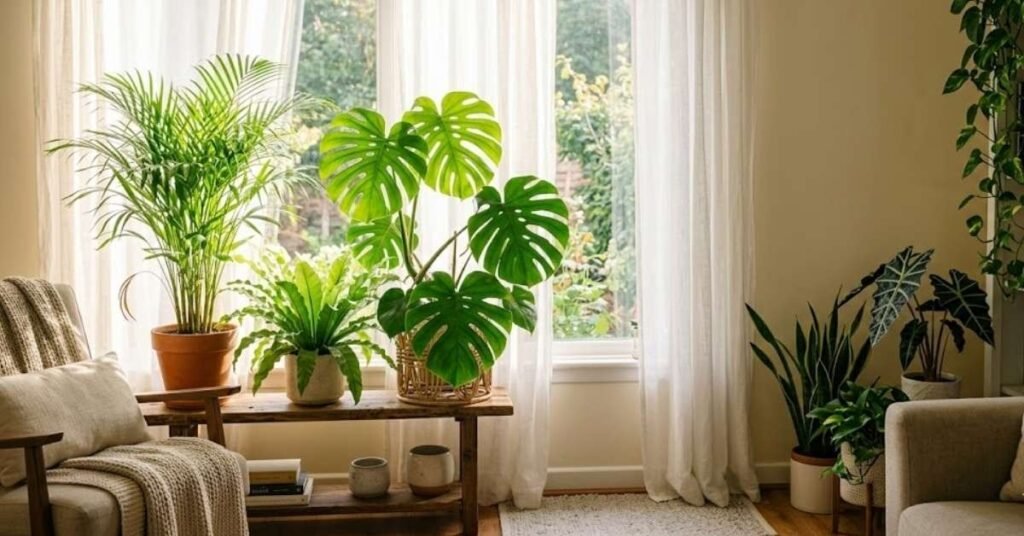
Most tropical plants evolved under a thick forest canopy—filtered, dappled light, not blasting sun. Indoors, that means bright, indirect light: a spot 2–4 feet from a large east- or south-facing window is often ideal.
Light: What This Tropical Plant Care Guide Actually Says
- Direct Sun: Midday sun through a window can scorch leaves, causing bleached patches and crispy edges.
- Low Light: A dark corner leads to leggy, weak growth and loss of color.
Pro Tip: No good natural light? A quality LED grow light on a 12-hour timer is a game-changer for low-light apartments.
How to Water Tropical Plants (Without Killing Them)
Overwatering kills more tropicals than any other cause. The finger test never fails: push your finger 1–2 inches into the soil. If it’s dry, water thoroughly until it drains from the bottom. If it feels damp, wait.
Warning: If your tap water is heavily treated with fluoride or chlorine, let it sit overnight or switch to filtered water. Many plants (like Calatheas) develop brown tips from chemical buildup.
Humidity and Temperature
Tropical plants thrive in 60–90% humidity. Average homes sit at 30–45%. Signs of low humidity include brown crispy tips and curling leaves.
Effective Ways to Boost Humidity:
- Cool-mist humidifier: The gold standard for plant health.
- Pebble tray: Place a tray of pebbles and water under the pot (don’t let the pot touch the water).
- Plant grouping: Cluster tropicals together to create a shared humid microclimate.
- Temperature: Keep plants between 65–85°F. Keep them away from AC vents and heaters.
Best Tropical Plants for Beginners Comparison
| Plant | Light | Difficulty | Toxic to Pets? | Best Feature |
| Monstera deliciosa | Bright indirect | Easy | Yes (mild) | Dramatic split leaves |
| Pothos | Low–Bright | Very easy | Yes | Thrives on neglect |
| Bird of Paradise | Bright–Direct | Moderate | Yes (mild) | Stunning height |
| Calathea | Low–Medium | Moderate | No | Exotic leaf patterns |
| Hibiscus | Full sun | Easy (outdoor) | No | Bold summer blooms |
| Snake Plant | Low–Bright | Very easy | Yes (mild) | Indestructible |
Toxicity Warning: Always verify a plant’s toxicity status via the ASPCA database before bringing it into a home with pets or children.
Seasonal Care Calendar
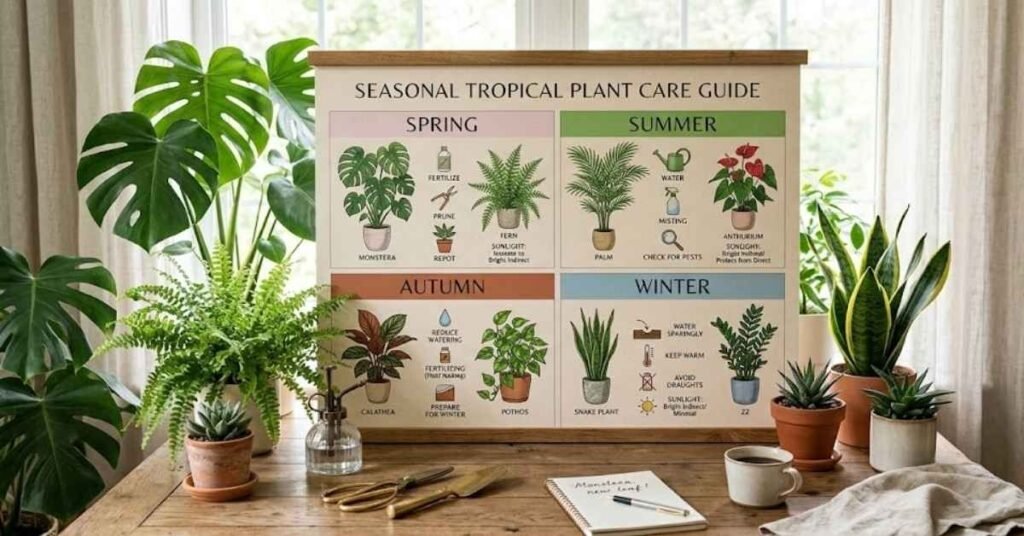
Spring: Grow Mode
- Resume watering and start fertilizing.
- Repot if the plant has outgrown its container.
- Propagate cuttings for new plants.
Summer: Peak Growth
- Water frequently and boost humidity.
- Move hardy varieties outdoors if desired.
- Inspect weekly for pests.
Fall: Wind Down
- Reduce watering frequency.
- Stop fertilizing by October.
- Bring outdoor plants back inside before temps drop below 55°F.
Winter: Rest
- Water only every 10–14 days.
- Run a humidifier to combat dry indoor heat.
- Avoid pruning or repotting.
Pest & Disease Solutions
| Problem | Signs | Fix |
| Spider Mites | Tiny webbing, dusty leaves | Wipe leaves; Neem oil every 7 days |
| Mealybugs | White cottony fluff | 70% isopropyl alcohol on a swab |
| Scale | Brown bumps; sticky residue | Scrape off; horticultural oil |
| Root Rot | Wilting + soggy soil | Repot; trim rotten roots; improve drainage |
Common Beginner Mistakes to Avoid
- Watering on a Fixed Schedule: Always check the soil moisture first; don’t just water because it’s “Monday.”
- Ignoring Winter Humidity: Heating systems dry out the air. Don’t wait for leaves to turn brown before acting.
- Fertilizing in Winter: Plants are resting. Unused fertilizer builds up as salt, burning the roots.
- Choosing the Wrong Pot Size: A pot that is too large stays wet too long. Only go up 1–2 inches in diameter.
FAQ: Quick Hits
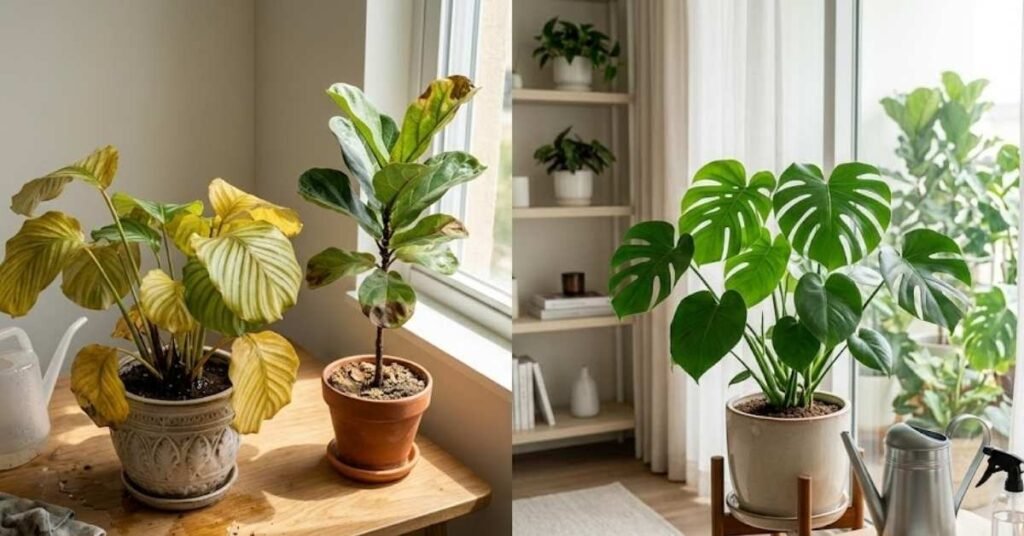
- Why are my leaves yellow? Usually overwatering. If the soil is soggy, back off. If it’s bone-dry, it’s thirsty.
- How do I check humidity? Look at the tips. Brown and crunchy means the air is too dry.
- Is tap water okay? For Pothos, yes. For “divas” like Calatheas, no. Use filtered or rain water to avoid chemical burn.
- Should I fertilize in winter? No. Plants rest when it’s dark and cold. Feeding them now can fry the roots.
- When should I report? Every 1–2 years, specifically in Spring to give them a head start for the growing season.
Conclusion: The Bottom Line
Success with tropical plants isn’t about luck — it’s about recreating rainforest conditions inside your home. Prioritize the “big three”: bright, indirect light; elevated humidity; and always checking soil moisture before watering. Avoid over-caring during their winter dormancy, and monitor regularly for early signs of pests. Stay consistent, keep your routine simple, and your 2026 indoor jungle will flourish with surprisingly minimal effort.To sum up this tropical plant care guide, success with tropical plants depends on light, humidity, and proper watering habits.

Amin Khalid is a professional horticulturist and the founder of LeafyWisdom. With a deep passion for home gardening and horticultural research, he specializes in providing practical, easy-to-follow care guides for indoor plants. Amin’s goal is to simplify gardening for everyone and help fellow plant lovers build their own thriving green spaces.

No responses yet