

Tired of mowing a lawn that keeps dying in shady spots? Struggling with a muddy slope every time it rains? Ground cover plants are the perfect solution for these common problems. These low-growing, spreading plants carpet your soil, block weeds, prevent erosion, and add year-round beauty to your garden. And the best part? Most ground cover plants are nearly maintenance-free after the first season.
What Are Ground Cover Plants?
Ground cover plants are low-growing plants — usually under 12–18 inches tall — that spread naturally to fill open soil. They grow in clumps, creep along the ground, or send out runners to cover wide areas over time.
Think of them as living mulch and many of them flower.
Why Use Ground Cover Plants?
- Stop weeds – Dense growth blocks sunlight so weeds can’t sprout
- Prevent erosion – Roots hold soil on slopes and hills
- Save water – Shaded soil dries out more slowly
- Cut maintenance – No mowing, less weeding, no re-mulching
- Add beauty – Color, texture, and seasonal interest all year
- Support wildlife – Many attract bees, butterflies, and birds
How to Choose the Right Ground Cover

Before buying any plant, answer these four questions:
1. How much sun does the area get?
- Full sun = 6+ hours of direct sunlight per day
- Part shade = 3–6 hours
- Full shade = under 3 hours
2. What’s your soil like?
- Sandy (drains fast) vs. clay (holds water) vs. loam (ideal)
- Wet vs. dry vs. average moisture
3. What USDA Hardiness Zone are you in?
- Check your zone at planthardiness.ars.usda.gov
- This tells you which plants survive your winters
4. Will there be foot traffic?
- Most ground covers can’t handle regular foot traffic
- Creeping thyme and blue star creeper are walkable exceptions
Quick Comparison Table: Top 12 Ground Cover Plants
| Plant | Sun | USDA Zones | RHS Rating | Height | Water Needs | Pet Safe? |
| Creeping Thyme | Full sun | 4–9 | H5–H6 | 2–4 in | Low | Yes |
| Ajuga (Bugleweed) | Part shade | 3–9 | H6–H7 | 4–6 in | Medium | No |
| Creeping Phlox | Full sun | 3–9 | H6 | 4–6 in | Low | Yes |
| Pachysandra | Full shade | 4–8 | H5–H6 | 6–8 in | Low | No |
| Sedum (Stonecrop) | Full sun | 3–9 | H6–H7 | 2–6 in | Very Low | No |
| Vinca minor | Part shade | 4–8 | H6 | 4–6 in | Low | No |
| Sweet Woodruff | Full shade | 4–8 | H6 | 8–12 in | Medium | Yes |
| Epimedium | Part/Full shade | 5–9 | H5–H6 | 6–12 in | Low | No |
| Ice Plant | Full sun | 5–10 | H3–H4 | 3–6 in | Very Low | Yes |
| Hostas | Full shade | 3–9 | H6–H7 | 12–24 in | Medium | No |
| Lamb’s Ear | Full sun | 4–9 | H5–H6 | 8–12 in | Low | Yes |
| Creeping Jenny | Part shade | 3–9 | H6 | 2–4 in | Medium | No |
The Best Ground Cover Plants (Detailed Guide)
For Full Sun Areas
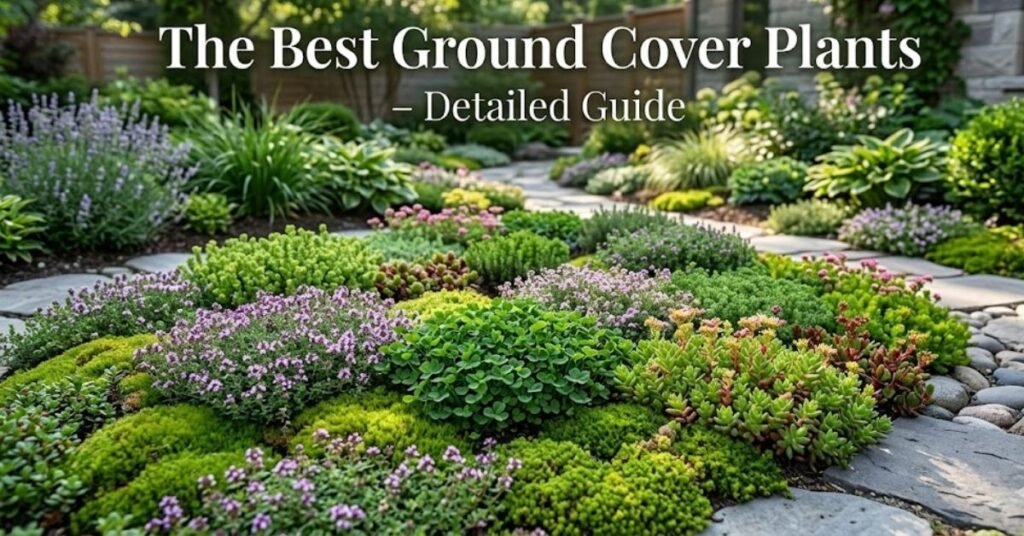
Creeping Thyme (Thymus serpyllum) One of the most popular ground covers for good reason. It grows just 2–4 inches tall, produces tiny purple flowers in summer, and smells wonderful when brushed. It’s drought-tolerant once established and can even handle light foot traffic. Plant it between stepping stones or along pathways. Zones 4–9.
Creeping Phlox (Phlox stolonifera) In spring, creeping phlox explodes with color — white, pink, lavender, or purple blooms completely cover the foliage. After flowering, it stays as a tidy evergreen mat for the rest of the year. Great for slopes and rock gardens. Zones 3–9.
Sedum (Stonecrop) (Sedum spp.) The ultimate plant for hot, dry, rocky spots where nothing else survives. Sedum stores water in its fleshy leaves and almost never needs watering once it’s settled in. ‘Dragon’s Blood’ adds striking red foliage. Zones 3–9.
Ice Plant (Delosperma spp.) Vivid magenta, pink, or yellow daisy-like flowers cover this succulent all summer. Excellent for slopes in warm climates. Very drought-resistant. Zones 5–10.
For Shade and Part Shade
Pachysandra (Pachysandra terminalis) The go-to shade ground cover for a reason. It thrives in dry, deep shade under trees where almost nothing else grows. It spreads steadily and creates a clean, tidy look. Almost zero maintenance after planting. Zones 4–8.
Ajuga (Bugleweed) (Ajuga reptans) Fast-spreading with striking bronze, purple, or variegated foliage and bold blue flower spikes in late spring. A great choice if you want ground coverage fast. Keep it away from lawns — it can spread aggressively. Zones 3–9.
Sweet Woodruff (Galium odoratum) A charming woodland plant with delicate white spring flowers and fresh, hay-like fragrance. Works beautifully under trees and pairs well with hostas. Deer-resistant too. Zones 4–8.
Epimedium (Bishop’s Hat) (Epimedium spp.) One of the best ground covers for dry shade — a notoriously tough spot. Heart-shaped leaves and delicate spring flowers in red, white, yellow, or purple. Very drought-tolerant once established. Zones 5–9.
For Slopes and Erosion Control
Creeping Juniper (Juniperus horizontalis) A tough evergreen shrub that hugs the ground and controls erosion on steep banks. It handles poor soil, drought, and harsh winters without complaint. Zones 3–9.
Crown Vetch (Coronilla varia) Aggressive spreader that quickly covers large slopes. Excellent for banks along roadsides or areas too large to manage any other way. Note: it can become invasive — check with your local extension office first. Zones 3–9.
How to Plant Ground Covers: Step-by-Step
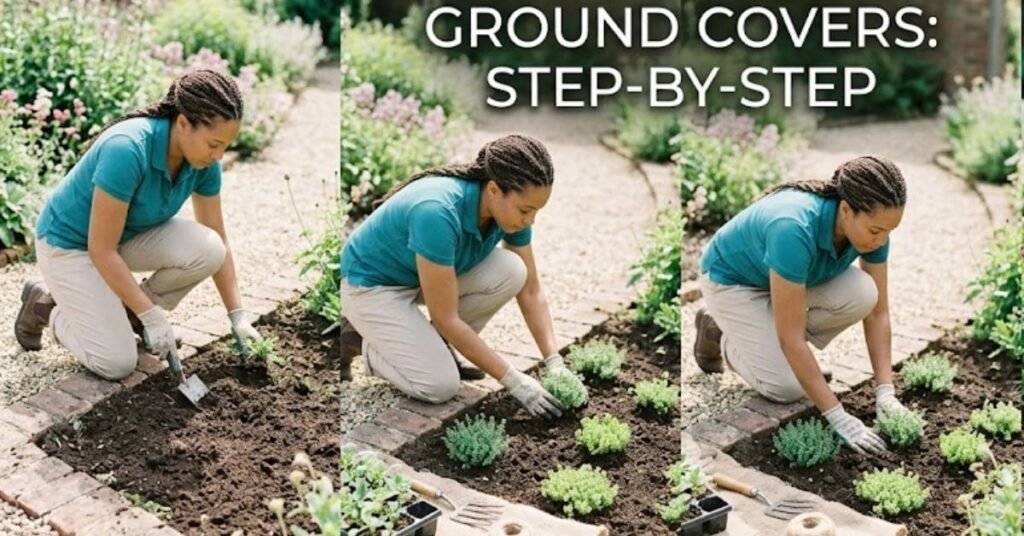
Step 1: Prepare the Soil
Remove all weeds before planting. This is the most important step. Any weeds left behind will compete with your new plants and win in the early months.
Options to clear weeds:
- Hand-pull or use a hoe
- Smother with cardboard (sheet mulching) for 4–6 weeks
- Apply a non-selective herbicide and wait 2 weeks before planting
Till or loosen the top 4–6 inches of soil. If your soil is very poor, mix in a 2-inch layer of compost.
Step 2: Plan Your Spacing
Spacing matters a lot. Too close together wastes money. Too far apart leaves gaps for weeds to fill.
General spacing guide:
- Small plants (under 6 in): space 6–12 inches apart
- Medium plants (6–12 in): space 12–18 inches apart
- Larger spreading types: space 18–24 inches apart
Use this simple formula to estimate how many plants you need:
Area in square feet ÷ (spacing in feet × spacing in feet) = number of plants
Step 3: Plant Correctly
- Dig a hole slightly wider than the root ball
- Set the plant so the crown (where roots meet stems) sits at soil level
- Fill in around the roots and firm the soil gently
- Water thoroughly right after planting
Step 4: Mulch Between Plants
Apply a 2-inch layer of mulch between plants right after planting. This keeps moisture in and holds back weeds while your ground cover fills in. You’ll need less mulch each year as plants spread and close the gaps.
Step 5: Water Regularly for the First Season
Most ground covers need consistent moisture for the first 4–8 weeks while roots establish. After that, most are quite drought-tolerant.
Seasonal Care Guide
Spring
- Remove any dead or winter-damaged foliage
- Apply a slow-release balanced fertilizer (10-10-10 works well)
- Top up mulch where it has broken down
- Divide or trim plants that have overgrown their boundaries
Summer
- Water during extended dry spells, especially for young plants
- Deadhead flowers to encourage fresh blooms (if desired)
- Check for pests or disease — act early if you spot problems
Fall
- Cut back deciduous ground covers after the first frost
- Plant new ground covers in early fall — roots establish well in cool soil
- Do not fertilize after early September (encourages tender growth that gets frost-damaged)
Winter
- Leave evergreen ground covers alone — they still protect soil
- In Zone 5 and colder, protect borderline plants with a light straw mulch after the ground freezes
- Plan any new beds or replacements for spring
Common Beginner Mistakes to Avoid
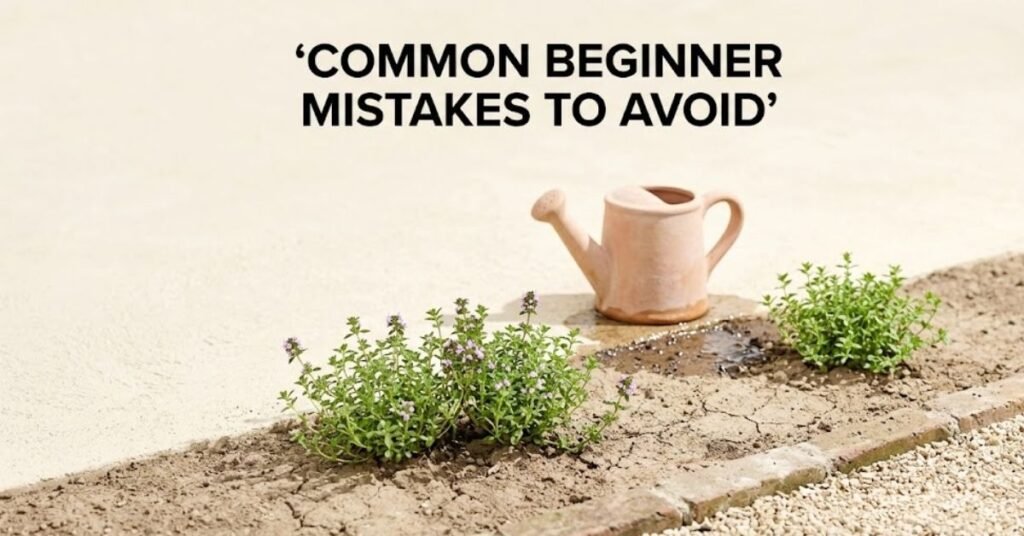
1. Not removing weeds first. The biggest mistake of all. Weeds already in the soil will push through your ground cover for years if not fully removed before planting.
2. Planting the wrong plant for your conditions. A sun-loving plant in full shade will struggle and never fill in. Always match plants to locations.
3. Spacing plants too far apart. Gaps stay open for years. Follow spacing guidelines — wider than you think feels wrong, but plants fill in.
4. Planting invasive species. Some ground covers (English ivy, goutweed, Japanese knotweed) spread so aggressively they become serious problems. Research your choice before buying.
5. Skipping the mulch. Newly planted ground covers leave bare soil exposed. Mulch is essential in the first year to control weeds while plants fill in.
6. Overwatering established plants. Most ground covers are drought-adapted. Once established, too much water causes root rot.
7. Not containing spreading types. Ajuga, creeping Jenny, and vinca can escape into lawns and garden beds. Use edging or plant barriers to keep them where you want them.
Pro Tips & Troubleshooting
Quick wins from the garden:
- Mix 3–4 ground covers together for a natural, disease-resistant look
- Use pachysandra, sweet woodruff, or epimedium under trees where grass fails
- Creeping thyme and blue star creeper handle light foot traffic between stepping stones
- Mulch alone beats weed fabric — fabric blocks spreading roots
- One spring fertiliser application is all most established plants ever need
Spot a problem? Fix it fast:
| Symptom | Cause | Fix |
| Yellowing leaves | Overwatering | Reduce watering, improve drainage |
| Brown dry patches | Drought or wrong sun | Water more, reassess plant placement |
| White powdery coating | Powdery mildew | Better airflow + neem oil |
| Slime trails | Slugs / snails | Iron phosphate bait |
| Plants dying in patches | Crown rot | Improve drainage, replant higher |
Quick Care Summary Table
| Task | When | How Often |
| Watering (new plants) | First 8 weeks | 2–3x per week |
| Watering (established) | During drought | As needed |
| Fertilizing | Early spring | Once per year |
| Mulching | Spring or fall | Annually (top up) |
| Trimming/edging | Spring or fall | 1–2x per year |
| Weed check | Spring through fall | Monthly |
| Dividing overcrowded plants | Fall or early spring | Every 3–4 years |
Frequently Asked Questions (FAQ)
Q1: How long does it take for ground cover plants to fill in? Most fill in within one growing season for small areas, or 2–3 seasons for larger spaces. Fast spreaders like ajuga and creeping jenny close gaps quickest.
Q2: Can ground cover plants replace a lawn? Yes — creeping thyme, micro-clover, and moss all work well as lawn alternatives with far less maintenance. Most won’t tolerate heavy foot traffic, so keep a path or stepping stones for regular routes.
Q3: Are ground cover plants safe for pets? Not all. Creeping thyme, sweet woodruff, and lamb’s ear are generally safe. Ajuga, vinca, pachysandra, and sedum are toxic to dogs and cats. Always verify before planting in a pet-accessible area.
Q4: Which ground cover grows fastest? Ajuga, creeping jenny, and vinca minor spread quickest — but manage their edges or they’ll escape into lawns.
Q5: What works in deep dry shade under trees? Pachysandra, epimedium, and sweet woodruff all handle dry, rooty, shaded soil well. Amend with compost at planting time for best results.
Conclusion
Ground cover plants are one of the smartest investments you can make in your yard. One-time planting effort. Years of low-maintenance beauty. Less mowing.
The key is choosing the right plant for your specific spot — sun, shade, slope, soil, and climate all matter. Start with just one area: maybe that bare patch under your tree, or the slope you dread mowing. Plant it right, keep weeds out for the first season, and watch it transform.
Ready to start? Pick one plant from the table above that matches your conditions and order 6–10 plants for a small test area. Most online nurseries ship in spring — perfect timing for a new planting.

Amin Khalid is a professional horticulturist and the founder of LeafyWisdom. With a deep passion for home gardening and horticultural research, he specializes in providing practical, easy-to-follow care guides for indoor plants. Amin’s goal is to simplify gardening for everyone and help fellow plant lovers build their own thriving green spaces.

No responses yet