
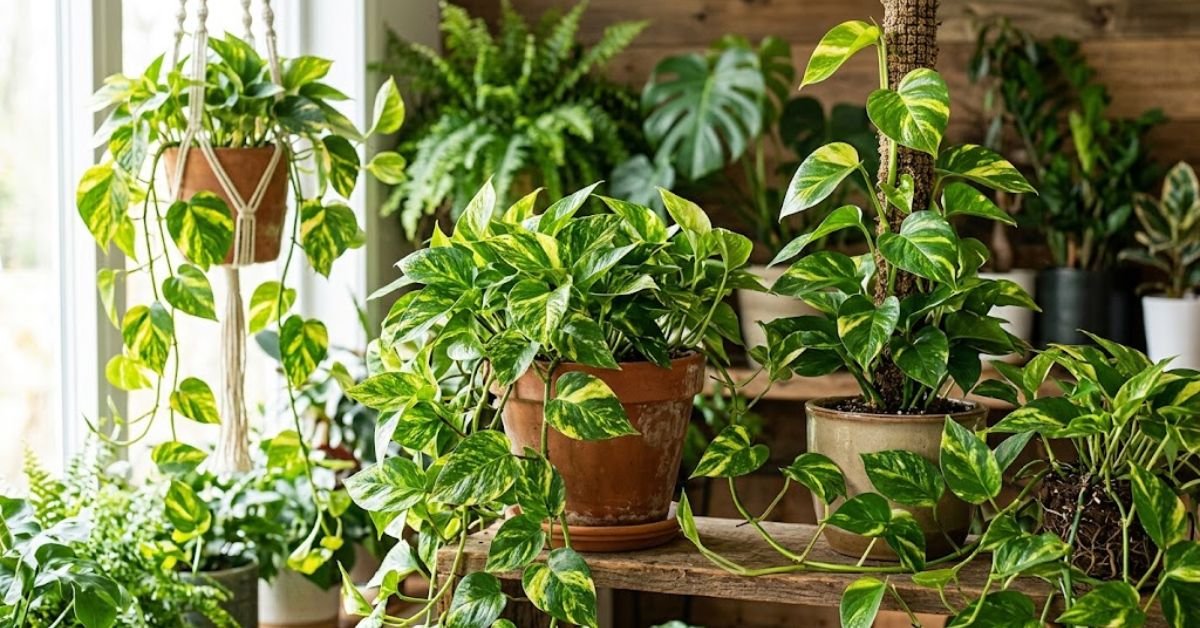
How do you care for a golden pothos plant so it actually keeps its bright yellow colors? To keep your golden pothos plant healthy, place it in bright indirect sunlight, let the top two inches of potting soil dry out completely before watering, and maintain a room temperature between 65 and 85 degrees Fahrenheit.
I have spent years working as a horticulturist across the US. I see this specific vine everywhere. People put them in dark office cubicles, windowless bathrooms, and gloomy basement apartments. Then they wonder why the leaves turn solid green and the stems get incredibly stringy.
This guide is going to fix that completely. We are going to cover exactly how to grow this classic houseplant properly. I will show you how to mix the right dirt, how to force the plant to grow massive leaves, and how to read the signs when things go wrong.
Quick Care Matrix for the Golden Pothos Plant
| Care Element | Best Practice | Common Mistake |
| Light | Bright indirect sun | Dark corners cause lost yellow color |
| Water | Soak only when top 2 inches are dry | Watering on a strict weekly schedule |
| Soil | Well draining indoor potting soil with perlite | Using heavy outdoor garden dirt |
| Temperature | 65 to 85 degrees Fahrenheit | Putting pots next to AC vents |
Personal Pro-Tip: Never let the nursery pot sit in a saucer full of drained water. Dump the excess water after ten minutes so the roots can breathe and avoid fungal infections.
Proper Lighting for Your Golden Pothos Plant
Most Americans buy this vine because the nursery tag says it tolerates low light. That statement is only half true. It will technically survive in a dark room. It just will not look good.
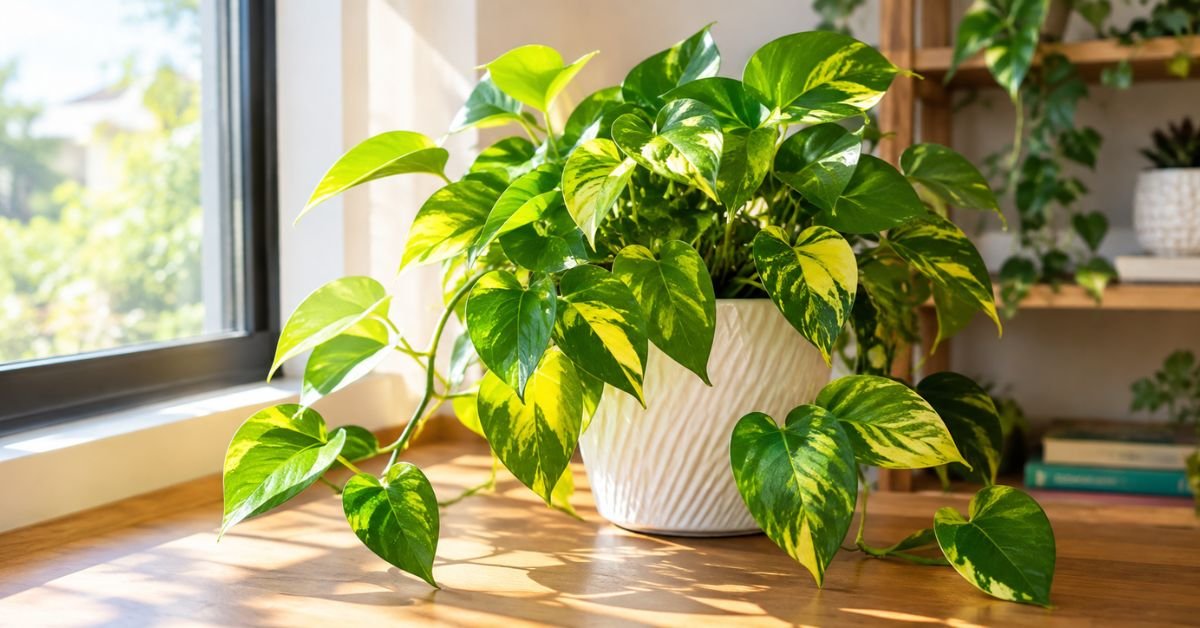
If you want those beautiful yellow and cream streaks, the plant needs energy. Bright indirect light is the absolute secret to vivid variegation. The yellow parts of the leaf lack chlorophyll. If the plant does not get enough light, it panics. It will start producing solid green leaves just to capture whatever tiny amount of light is available in the room.
Put your pot near an east facing window. The gentle morning sun is perfect. If you only have south or west facing windows, pull the plant back a few feet so the harsh afternoon sun does not scorch the foliage.
Personal Pro-Tip: If your golden pothos plant starts growing leaves that are pure green, it is starving for light. Move it closer to a bright window to get the golden variegation back on the new growth.
Watering Your Golden Pothos Vine Correctly
Overwatering kills more indoor plants than anything else. You cannot water this vine every Sunday just because you have free time.
The environment in your home changes constantly. Central heating in the Winter dries out the air incredibly fast. Air conditioning in the Summer changes evaporation rates. Your plant might need water every five days in July, but it might go three full weeks without a drop in December.
Use the finger test. Stick your index finger two inches deep into the potting soil. If it feels wet or cool to the touch, walk away. When it feels dusty and completely dry, take the pot to your kitchen sink. Turn on the faucet and let lukewarm water run through the dirt until it pours out the bottom drainage holes.
Many US cities use heavy chlorine and fluoride in municipal tap water. If the tips of your leaves are turning brown, your tap water might be too harsh. Fill your watering can and let it sit on the counter overnight. This allows the chlorine chemicals to evaporate before you water the roots.
Personal Pro-Tip: These plants hate cold shocks. Blasting tropical roots with freezing water straight from the tap will cause the leaves to droop. Always use room temperature water.
The Best Soil Mix for Pothos Growth
You need to get the root system access to oxygen. Bagged potting soil from the local hardware store is usually too dense. It holds way too much moisture for tropical vines.
I always mix my own dirt for these specific plants. I use a simple recipe that mimics their natural rainforest environment. take 50 percent standard indoor potting soil, 30 percent perlite, and 20 percent coarse orchid bark.
This creates tiny air pockets in the dirt. Those air pockets prevent fungal rot and let the roots expand quickly. When you water this mix, the excess moisture drains out almost instantly.
Personal Pro-Tip: Spring is the absolute best time to repot. The days are getting longer and the plant is waking up from winter dormancy. Never repot in late Fall unless it is an absolute emergency.
Common Mistakes When Growing a Golden Pothos Plant
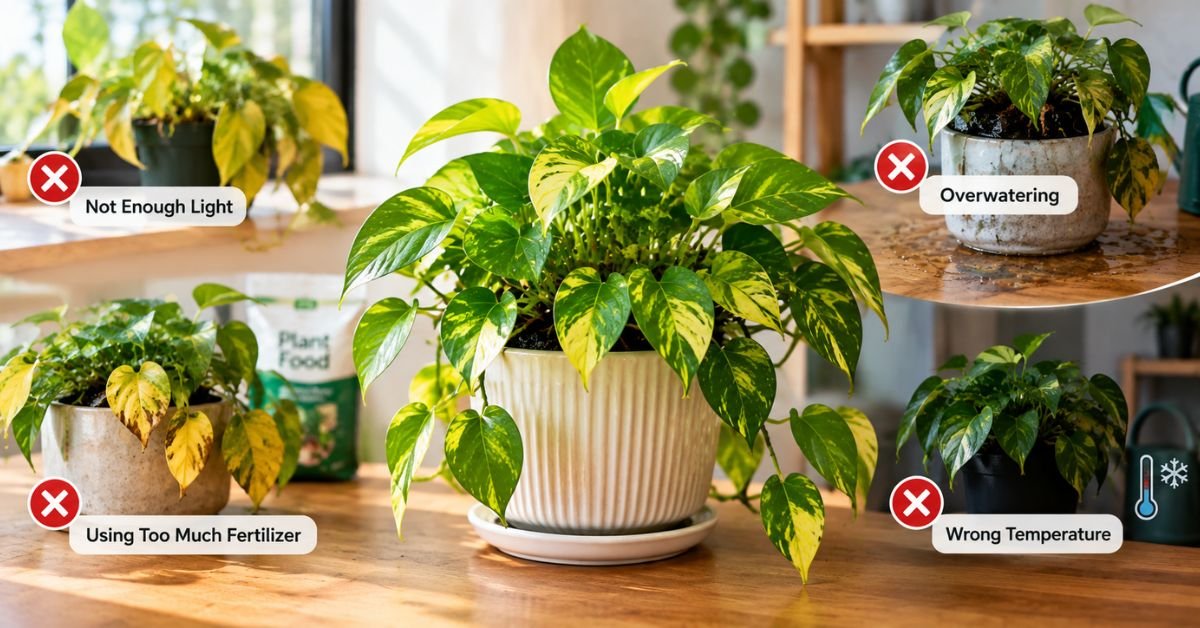
We do a lot of weird things to our houseplants here in the US. The biggest mistake is placing these vines directly above heating radiators or right in front of AC vents.
The sudden blasts of hot or cold air cause massive cellular stress. The plant will drop its oldest leaves almost immediately to conserve energy. Keep them in a stable environment away from aggressive drafts.
Another big mistake is letting them trail downward forever. In nature, these plants climb up tree trunks toward the canopy. When they trail down off a bookshelf, gravity pulls the growth hormones away from the tip. The leaves get smaller and smaller as the vine gets longer.
If you want giant leaves, give the plant a wooden cedar plank or a damp moss pole to climb. As the aerial roots attach and climb upward, the leaves will double or triple in size.
Personal Pro-Tip: Wipe the leaves down with a damp cloth once a month. Household dust blocks sunlight and invites spider mites to build webs on the stems.
Troubleshooting Golden Pothos Plant Symptoms
Your plant will tell you exactly what is wrong if you pay close attention to the foliage.
Yellow leaves that feel soft and mushy mean you are drowning the roots. You need to stop watering immediately and let the soil dry out. If the yellow leaves are dry and crispy at the edges, you are underwatering. You might also have drastically low humidity in your house.
Sometimes the top base of the plant gets totally bald. This happens when the oldest leaves die off near the dirt. You can fix a bald pot crown by using a soil pinning trick. Take a long vine attached to the plant, loop it back around the top of the soil, and pin the stem down firmly with a metal paperclip. Keep the dirt slightly damp. Those pinned nodes will grow new roots and shoot up fresh leaves to fill out the empty space.
If you see tiny black bugs flying around the soil, you have fungus gnats. They breed in wet dirt. The easiest way to get rid of them is to let the top three inches of soil dry out completely between waterings. The gnat larvae cannot survive in dry dirt.
Personal Pro-Tip: Black spots on the stems usually indicate cold damage. Make sure your plant foliage is not touching a freezing glass windowpane during the winter months.
Is the Golden Pothos Plant Toxic to Pets?
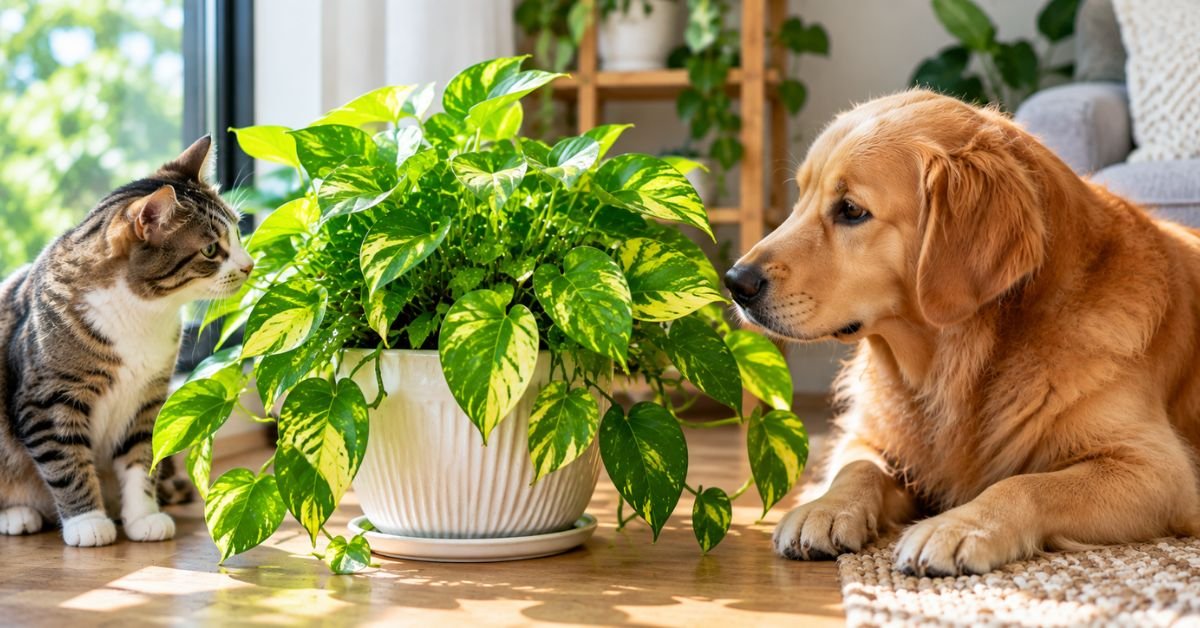
Yes. You need to be very careful if you have animals at home. According to the ASPCA animal poison control database, this plant is toxic to both dogs and cats.
The stems and leaves contain sharp microscopic calcium oxalate crystals. If a curious cat chews on a leaf, those tiny crystals embed directly into their mouth, tongue, and throat. It causes severe burning sensations, excessive drooling, and vomiting.
Keep your vines trimmed high up on tall shelves or in ceiling hanging baskets where animals cannot reach them. If your dog eats a large amount of the foliage, call your local vet clinic right away for professional guidance.
Personal Pro-Tip: I use heavy decorative river rocks placed on top of my potting soil to stop my cats from digging in the dirt. It works perfectly and looks great.
7 Frequently Asked Questions About Golden Pothos Care
Q1: Can a golden pothos plant live outside in the US?
Yes, but only in very warm tropical climates. The USDA Hardiness Zones for this specific plant are 10 through 12. In colder zones, it must come inside before Fall temperatures drop below 50 degrees Fahrenheit.
Q2: How fast does this vine grow indoors?
Under bright indirect light, these vines are incredibly aggressive growers. You can expect about 12 to 18 inches of new stem growth every single month during the active Spring and Summer growing seasons.
Q3: Can I grow this plant entirely in tap water?
Yes. You can cut a stem just below a brown node and place it in a glass of water. It will grow white water roots and live in the glass for years, but the foliage will grow much slower than it would in soil.
Q4: Why are my pothos leaves curling inward?
Curling leaves are the ultimate sign of severe thirst and dehydration. Check your potting soil immediately. If it is bone dry, place the entire pot in a bowl of water for thirty minutes to let it soak up moisture from the bottom holes.
Q5: Do I need to fertilize my golden pothos plant?
Yes, they appreciate regular feeding. Use a standard liquid houseplant fertilizer diluted to half strength once a month from Spring through late Summer. Stop feeding them entirely during the Winter dormancy period.
Q6: What is the difference between this and a Philodendron?
They look very similar but have different leaf shapes and textures. A golden pothos plant has thicker leaves with a waxy texture and an asymmetrical shape. Heartleaf philodendrons have thinner, perfectly symmetrical leaves with a matte finish.
Q7: How do I make my plant bushy instead of stringy?
You have to prune it regularly. Take clean, sharp scissors and cut the long stringy vines just above a leaf node. The plant will naturally branch out from that fresh cut and create a much fuller look at the top of the pot.
Final Thoughts on Golden Pothos Plant Care
Growing these trailing vines is incredibly rewarding once you understand their basic mechanical needs. You just need to respect their absolute need for bright light and avoid the temptation to overwater them on a strict schedule.
Give them a chunky, aerated soil mix, keep them far away from your AC vents, and watch them take over your living room. A healthy, climbing pothos is a stunning piece of living architecture for any home.
Do you have a pothos vine that keeps losing its bright yellow color, or have you figured out a clever way to display your trailing stems? Drop a comment below and share your exact setup, or ask a question if you need some help fixing a stubborn plant!

Amin Khalid is a professional horticulturist and the founder of LeafyWisdom. With a deep passion for home gardening and horticultural research, he specializes in providing practical, easy-to-follow care guides for indoor plants. Amin’s goal is to simplify gardening for everyone and help fellow plant lovers build their own thriving green spaces.

No responses yet