
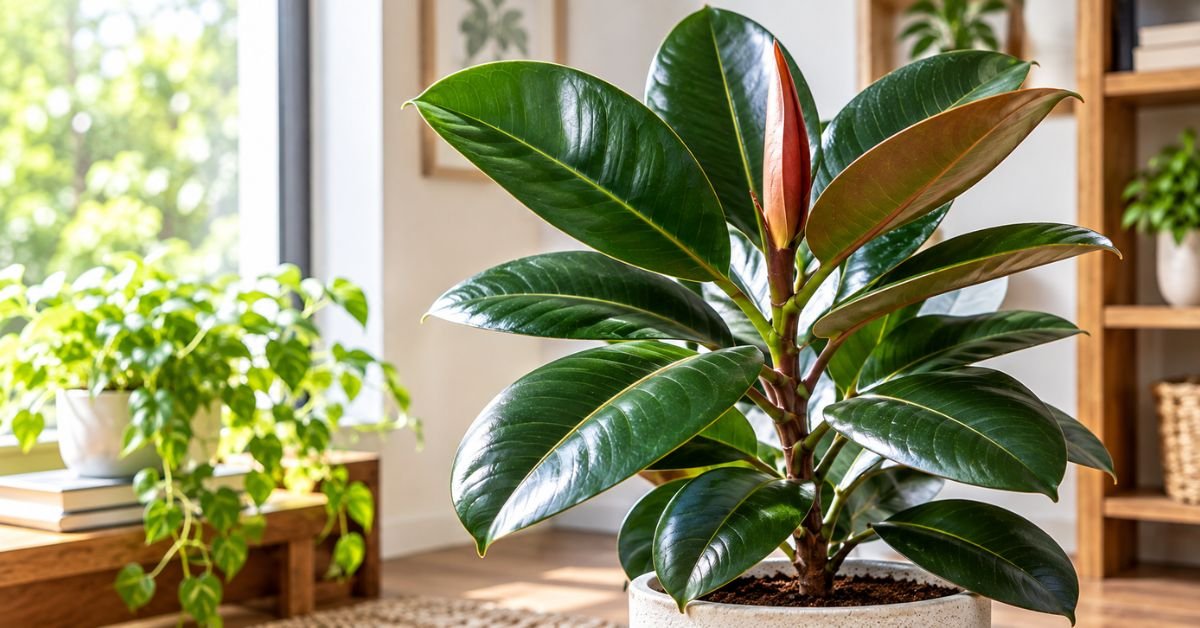
How do you care for a Ficus elastica indoors without it dropping all its leaves? To successfully keep a rubber tree plant alive, you must provide it with bright light from a south or west-facing window, allow the top two inches of potting soil to dry completely before watering, and strictly protect it from air conditioning vents and cold winter drafts.
I have spent years working as a horticulturist and consulting with indoor gardeners across the US. The rubber tree plant is easily one of the most purchased structural houseplants in the country. People see massive, bushy specimens in interior design magazines and immediately buy a small one for their apartment. A year later, they are left with a single, wobbly six-foot stem holding three sad leaves at the very top.
We are going to fix that today. This is not a generic list of botanical facts. I will teach you exactly how to prune this plant so it branches out, how to properly clean those massive dust-magnet leaves, and how to avoid the sudden leaf drop that ruins so many of these beautiful trees.
Quick Care Matrix for Your Rubber Tree Plant
| Care Element | Exact Requirement | Common Pitfall |
| Light | Bright, indirect to partial direct sun | Placing it in a dark corner causes immediate leaf drop |
| Water | Soak deeply only when top two inches are dry | Watering on a strict weekly schedule causes root rot |
| Soil | Fast-draining indoor potting soil | Heavy garden dirt suffocates the root system |
| Temperature | 65 to 85 degrees Fahrenheit | Cold drafts below 55 degrees will kill the foliage |
Personal Pro-Tip: Buy a heavy ceramic or terracotta pot for this specific species. Because they grow tall and top-heavy, a lightweight plastic nursery pot will easily tip over and dump dirt all over your carpet the second a cat bumps into it.
Decoding Light for Your Rubber Tree Plant

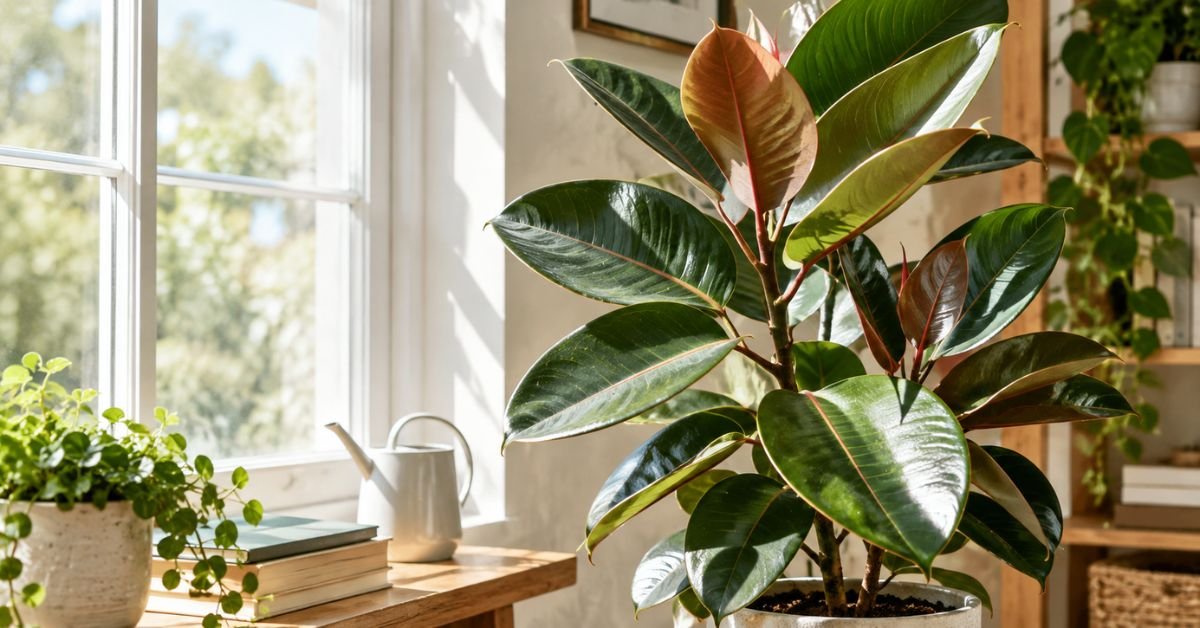
Lighting is the number one reason these plants fail in American homes. The Ficus elastica is a canopy tree in its natural habitat in Southeast Asia. It is genetically programmed to seek out intense tropical sun.
When you bring a rubber tree plant into an average living room, it immediately goes into shock if placed more than five feet away from a window. You need to put this plant directly in front of an unobstructed east, west, or south-facing window. A few hours of direct morning or late afternoon sun will actually make the burgundy and variegated varieties produce much deeper, richer colors.
If your plant is stretching out, looking spindly, and growing smaller leaves than it used to, it is starving for light. The plant is literally sacrificing leaf size to spend all its energy growing taller to find the sun.
Personal Pro-Tip: Rotate your pot 90 degrees every time you water it. These plants aggressively lean toward their light source. If you never rotate the container, you will end up with a permanently crooked trunk that will eventually snap under its own weight.
Watering Your Rubber Tree Plant Correctly
Let us kill the worst piece of indoor gardening advice right now. You cannot water this plant every Sunday morning just because it fits your schedule.
Your central heating systems and AC units constantly change the humidity and temperature of your home. In July, your plant might need water every six days. In late December, it might go three full weeks without needing a single drop. If you water it on a rigid schedule, you will drown the roots.
Use the two-inch finger test. Push your index finger into the potting soil up to the second knuckle. If the dirt feels damp or sticks to your skin, do not water it. Check back in a few days. When that top layer feels completely dry and dusty, take the plant to the kitchen sink. Run lukewarm faucet water over the soil until it pours out of the bottom drainage holes. Let it drain entirely before putting it back on its saucer.
Personal Pro-Tip: These plants hate cold water. Blasting tropical roots with freezing water straight from the tap can shock the system. Always fill your watering can and let it sit on the counter for a few hours so it reaches room temperature.
Forcing Branches on Your Rubber Tree Plant
This is the secret technique most beginners never learn. If you leave a rubber tree plant alone, it will just grow straight up into a single, awkward pole. To get that lush, bushy look you see on Instagram, you have to force it to branch out using a method called notching.
The plant has a dominant growth hormone at the very top tip of the main stem. This hormone suppresses side branches. To break that dominance, you need to trick the plant. Find a node. A node is the slight bump on the trunk where a leaf attaches or used to attach.
Take a very sharp, sterilized knife. Make a shallow, diagonal cut just above the node, cutting about one-quarter of the way into the trunk. Do not cut the stem completely off. This small wound disrupts the hormone flow and forces the plant to push out a brand new branch right at that node.
Personal Pro-Tip: The best time to notch your plant is early Spring when the days are getting longer. The plant is waking up from winter dormancy and has massive amounts of energy to push out new growth.
Dealing with the Toxic Latex Sap
We need to talk about the mess. The Ficus elastica is called a rubber tree for a reason. Its vascular system is filled with a thick, sticky, bright white latex sap.
The second you cut the trunk, accidentally snap a leaf, or even scratch the stem, this sap will pour out rapidly. It is incredibly sticky and dries into a hard rubber almost instantly. It will permanently ruin your clothes, stain your rugs, and cause severe skin irritation if you do not wash it off your hands immediately.
Whenever you plan to prune or notch your plant, lay down old newspapers around the base. Have a damp, warm rag ready. As soon as you make a cut, press the damp rag against the wound and hold it there for about thirty seconds. The moisture helps coagulate the sap and stops the bleeding quickly.
Personal Pro-Tip: Wear cheap disposable gloves when handling this plant during pruning sessions. If you do get the dried latex on your skin, rubbing alcohol is the only effective way to break it down and remove it.
Common Mistakes with Your Rubber Tree Plant
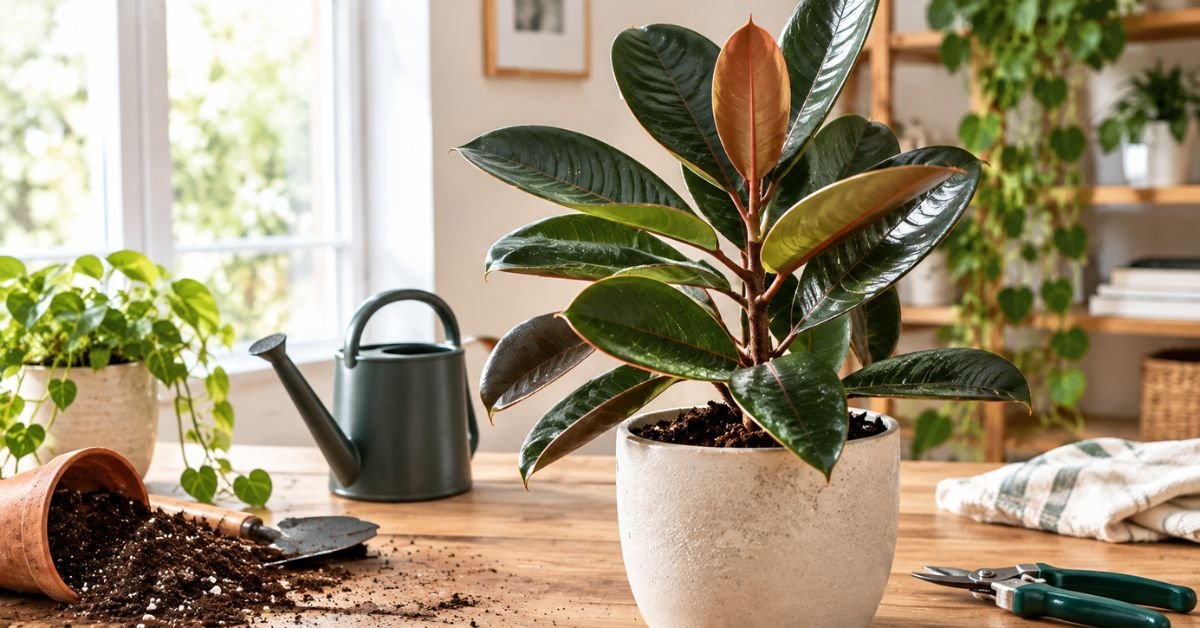
The massive, waxy leaves of this plant are its best feature. They are also massive dust magnets. In an average home, a layer of gray dust will cover the foliage within a month. This dust literally blocks sunlight from reaching the chloroplasts, starving the plant.
The biggest mistake people make is buying commercial leaf shine aerosol sprays from the hardware store. These sprays are entirely made of mineral oil and silicone. They make the leaves look incredibly shiny for a week, but they permanently clog the microscopic pores on the leaves. The plant slowly suffocates and dies.
Instead, create a natural cleaning solution. Mix a few drops of fresh lemon juice into a bowl of warm water. Take a soft microfiber cloth, dip it in the water, wring it out completely, and gently support the underside of the leaf while you wipe the top. Do this once a month to keep the plant breathing properly.
Personal Pro-Tip: Do not use mayonnaise or milk to clean your plant leaves, despite what old gardening blogs claim. These dairy products rot at room temperature and will make your living room smell absolutely terrible while attracting fruit flies.
Troubleshooting Rubber Tree Plant Problems
Your plant will clearly communicate what is wrong if you know how to read the signs.
If the lowest, oldest leaves turn soft, mushy, and bright yellow before falling off, you have an overwatering problem. The roots are rotting in wet mud and cannot absorb oxygen. You must stop watering immediately. Check the bottom of your decorative pot to ensure the plant is not sitting in a puddle of stagnant water.
If the leaves get crispy, brown edges that crack when you touch them, your air is far too dry. This usually happens in the winter when central heating systems strip all the moisture from the indoor air. Move the plant away from any heating registers.
The most frustrating issue is sudden, massive leaf drop. If perfectly green, healthy-looking leaves just start popping off the stem and falling to the floor, the plant has experienced temperature shock. You likely placed it too close to an icy window pane in January or directly in the path of an air conditioning vent in July. Move it to a stable location immediately.
Personal Pro-Tip: If your plant drops a ton of leaves due to cold shock, do not panic and throw it away. The trunk is still alive. Fix the location, maintain your watering routine, and new branches will eventually sprout from the bare nodes.
Rubber Tree Plant Toxicity and Pets
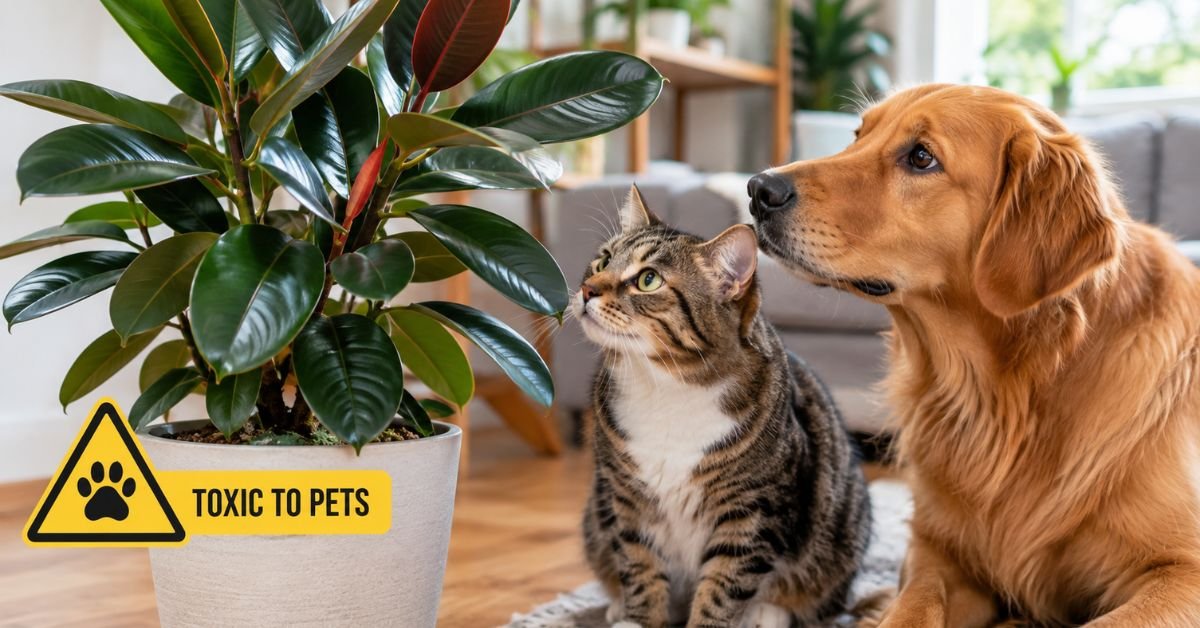
Before you bring this gorgeous plant into your home, you must consider your animals.
According to the ASPCA animal poison control database, the Ficus elastica is toxic to dogs, cats, and horses. The danger comes entirely from the white latex sap inside the stems and leaves. If a curious cat chews on a leaf, the sap is released directly into their mouth.
The latex contains specific enzymes that cause intense burning and irritation to the gastrointestinal tract. Symptoms of ingestion include excessive drooling, vomiting, pawing at the mouth, and diarrhea. While it is rarely fatal to larger dogs, it can cause severe dehydration in small cats.
If you have pets that actively chew on your greenery, you should skip this plant entirely. If your pets generally ignore your indoor jungle, just place this heavy pot on a sturdy plant stand to keep the lower leaves out of their direct line of sight.
Personal Pro-Tip: You can deter cats from digging in the potting soil by covering the dirt surface with heavy decorative river rocks. They cannot dig through the heavy stones to use the pot as a litter box.
Frequently Asked Questions About the Rubber Tree Plant
Q1: Can I put my rubber tree plant outside in the summer?
Yes, but you must do it slowly. Move it to a completely shaded patio first for a week to let it acclimate to the outdoor temperatures before slowly introducing it to morning sunlight.
Q2: Why are the new leaves on my plant coming in so small?
Small new growth is the primary indicator of light starvation. Move the pot three feet closer to your brightest window to give it the energy required to produce massive leaves.
Q3: Does the rubber tree plant actually produce real rubber?
While the sap contains latex, the Ficus elastica is not the tree used for commercial tire production today. The commercially harvested rubber tree is the Hevea brasiliensis.
Q4: How do I know when it is time to repot my plant?
Look at the drainage holes on the bottom of your nursery pot. If thick, white roots are actively circling the bottom or poking out of the holes, the plant is rootbound and needs a pot that is two inches wider.
Q5: Can I grow a new plant from a leaf cutting?
A single leaf stuck in dirt will root and stay green for years, but it will never grow a trunk. You must have a piece of the main stem with a node attached to propagate a full new plant.
Q6: What USDA Hardiness Zones support this plant outdoors year-round?
The Ficus elastica can only survive outdoors year-round in USDA Zones 10 through 12, as any frost will kill the cellular structure of the trunk.
Q7: Should I use a humidifier next to this plant?
While they enjoy average household humidity, placing a humidifier directly next to the leaves can encourage fungal infections. Keeping the room around 50% humidity is perfectly fine.
Final Thoughts on the Rubber Tree Plant
Mastering indoor horticulture is rarely about luck. It is about understanding the natural environment your plant came from and recreating it inside your living room. Protect your plant from aggressive cold drafts, keep it away from dark corners, and never water it until the top layer of dirt is completely dry. Once you understand the notching technique to force new branches, you will be able to grow a stunning, architectural rubber tree plant that rivals any magazine photo.
Have you ever tried the notching trick on your own plants, or are you currently dealing with a frustrating case of sudden leaf drop? Drop a comment below with your exact situation, or ask a question if you need immediate help diagnosing a stubborn Ficus!

Amin Khalid is a professional horticulturist and the founder of LeafyWisdom. With a deep passion for home gardening and horticultural research, he specializes in providing practical, easy-to-follow care guides for indoor plants. Amin’s goal is to simplify gardening for everyone and help fellow plant lovers build their own thriving green spaces.

No responses yet